
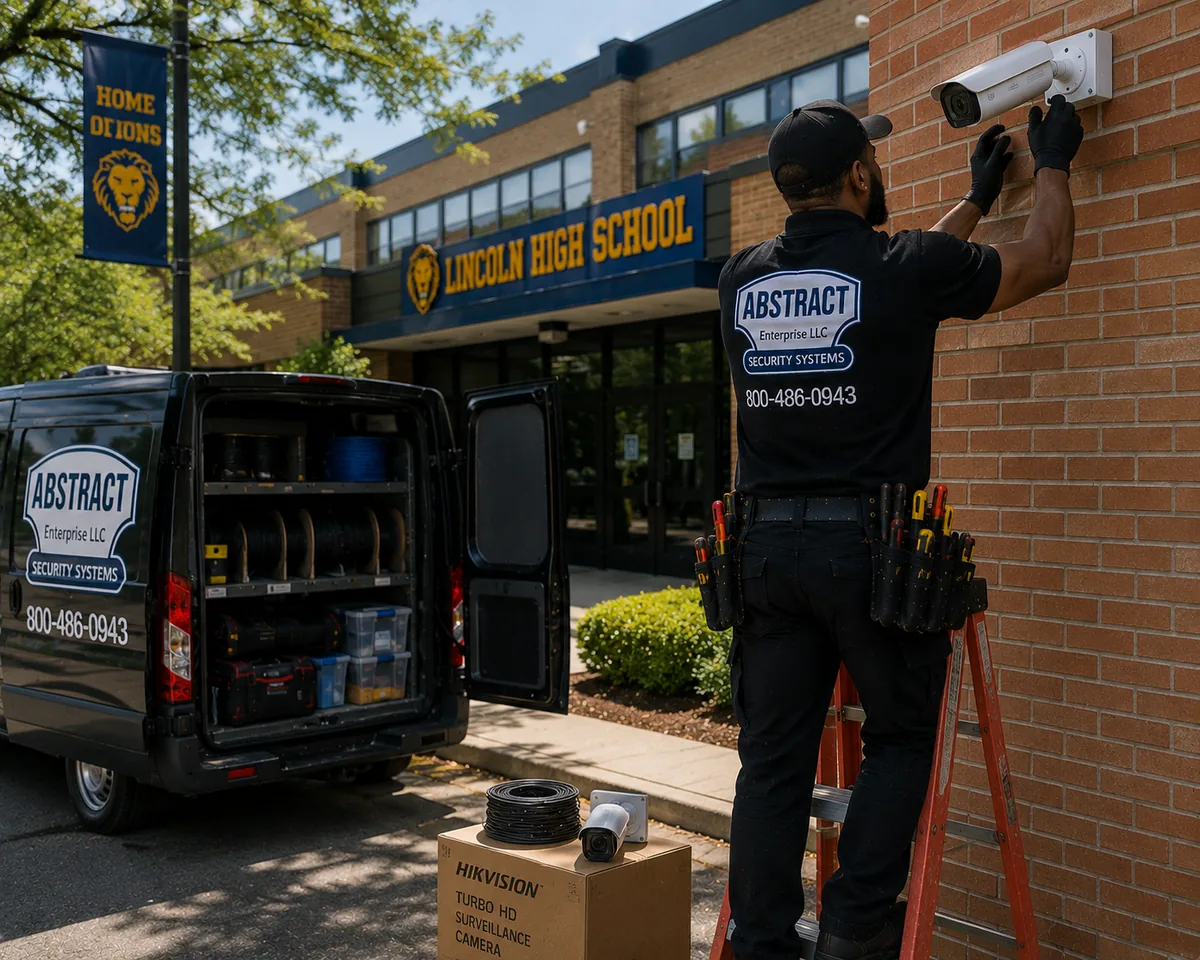
You can drive Putnam’s whole educational map in a morning. Six public districts — Carmel, Mahopac, Brewster, Putnam Valley, and the two little river-village systems, Haldane in Cold Spring and Garrison’s K-8 under the Highlands. A parish presence in the population centers. A handful of genuine independents — a small Episcopal school in Brewster, a progressive school by the river at Cold Spring. Residential and farm-based special-education campuses in the eastern county whose programs draw students from three states, where barns, paddocks, and animal facilities are part of the classroom. Daycares and preschools tucked into every lake hamlet from Mahopac Falls to Lake Carmel to Putnam Lake. Scout reservations and summer camps in the woods of Kent and Putnam Valley. That’s the county — and here’s the thing about a county this size: every one of those institutions is small enough that a single incident is personal, and remote enough that the response won’t beat the recording. The districts buy security through bonds and BOCES. Everyone else calls a contractor directly, and most of them have learned to ask whether the contractor actually works up here.
Abstract Enterprises Security Systems does — NYS-licensed low-voltage contractor, Lic #12000287431, installing and repairing school camera systems across all six Putnam towns. We build for the county’s real conditions: wooded properties where the driveway is a quarter mile of trees and the first camera decision is the approach, watershed-adjacent campuses where DEP land on the property line shapes what can be trenched and mounted where, farm and animal-program campuses where coverage must respect barns, paddocks, and therapy-animal areas while still answering for every student, hiker and trail traffic spilling onto river-village school grounds on autumn weekends, small buildings that deserve engineering instead of a leftover four-camera kit, and winters that find every unsealed gland by February. Grant work ships on federally compliant hardware, NPSE filings come pre-formatted for the desk that reads them, each configuration is built inside New York’s statewide school facial-recognition ban, and the commercial terms hold steady: fixed written quote, half down to schedule, three-year warranty on AESS-supplied products, zero recurring charges.
- NYS Lic #12000287431, insured — Putnam surveys booked within one business day
- Small-campus, farm-program, and wooded-property work is our county specialty
- Owned systems only — the school keeps hardware, footage, and every password
Why Putnam’s Small Schools Take Cameras Seriously
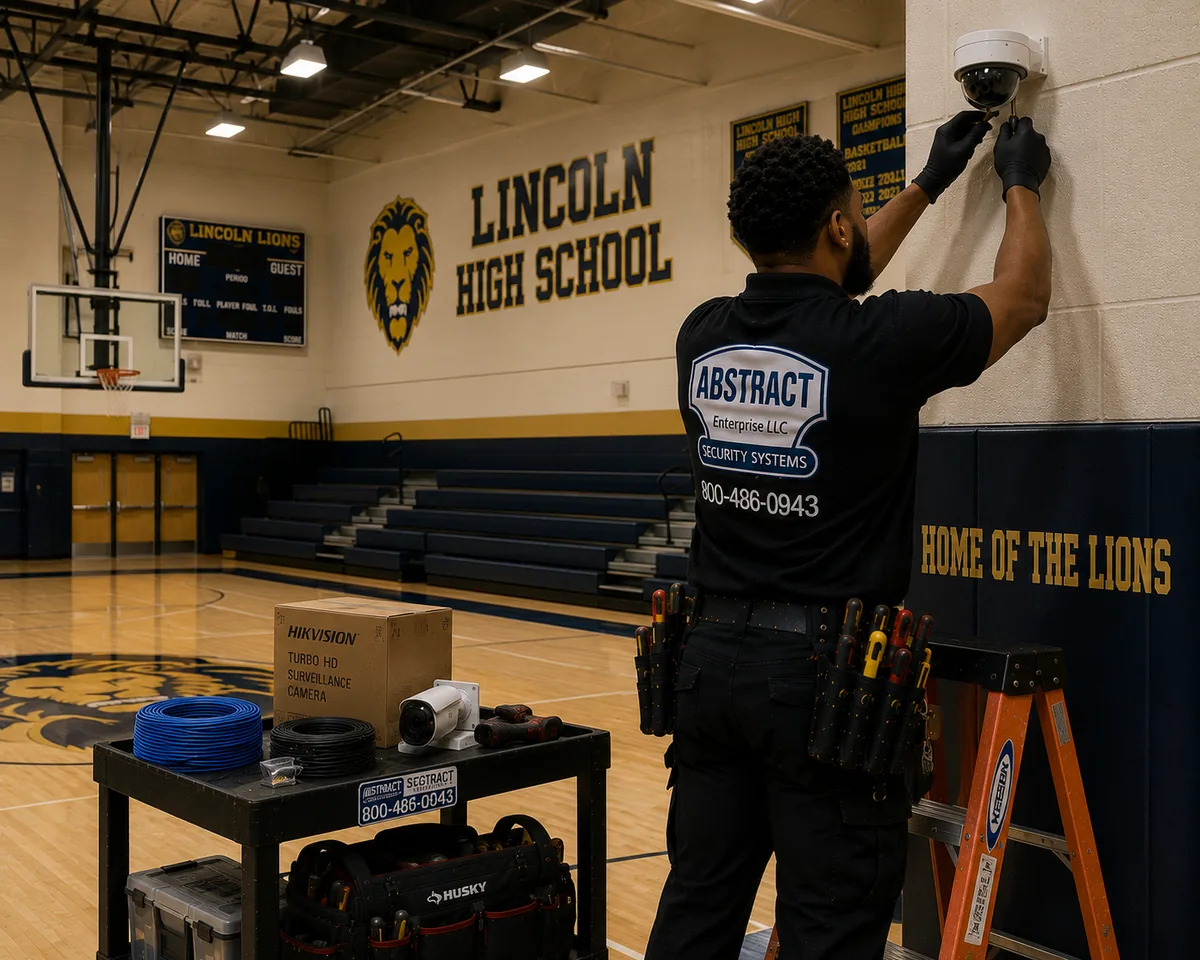
Because distance does the math for them. A campus in Kent or Putnam Valley can be honest minutes from the nearest patrol car even on a good night — the Sheriff’s Office and the town departments cover a lot of woods with a few units — and everyone who runs a building up here has internalized what that means: the camera system isn’t a supplement to response, it frequently is the response. Identification, timeline, preserved evidence, delivered to a deputy who arrives after the fact. Schools that understand this stop buying cameras as decor and start specifying them as the instrument that will actually close the incident.
Because small institutions carry the same liability as big ones. A twelve-classroom river-village school answers to the same statutes, the same licensing reviewers, the same insurance renewal questionnaires, and the same courtroom evidence standards as a two-thousand-student campus — with a fraction of the administrative staff to manage it. When something happens at a small school, there’s no security department to absorb it; there’s a principal, a secretary, and whatever the recorder captured. We build systems where what the recorder captured is complete, exportable in two minutes, and documented well enough that one person can operate the whole thing.
And because the county’s own ledger keeps writing entries. Playground and field damage discovered on Monday mornings. Break-ins timed to summer weeks when buildings sit empty in the trees. Cars worked over in trailhead-adjacent lots while their owners hiked. Equipment sheds pried at lake-hamlet daycares. Paddock gates and animal areas tested after hours at the farm campuses. Dismissal-line disputes where a hundred cars squeeze through a hamlet intersection built for thirty. Behind each entry, the same eventual question from an adjuster, a licensor, or the Sheriff’s Office — is there footage? — and the two-minute answer we install for.
Putnam School Camera System Down Right Now?
Recorder dead, channels black, a drive failing, video owed to an adjuster or the Sheriff’s Office — call and a crew rolls today, Mahopac to Cold Spring to Brewster. Most Putnam school repairs finish on the first visit.
Call the Repair Line: (845) 640-3835Camera Systems Scaled to Putnam Properties
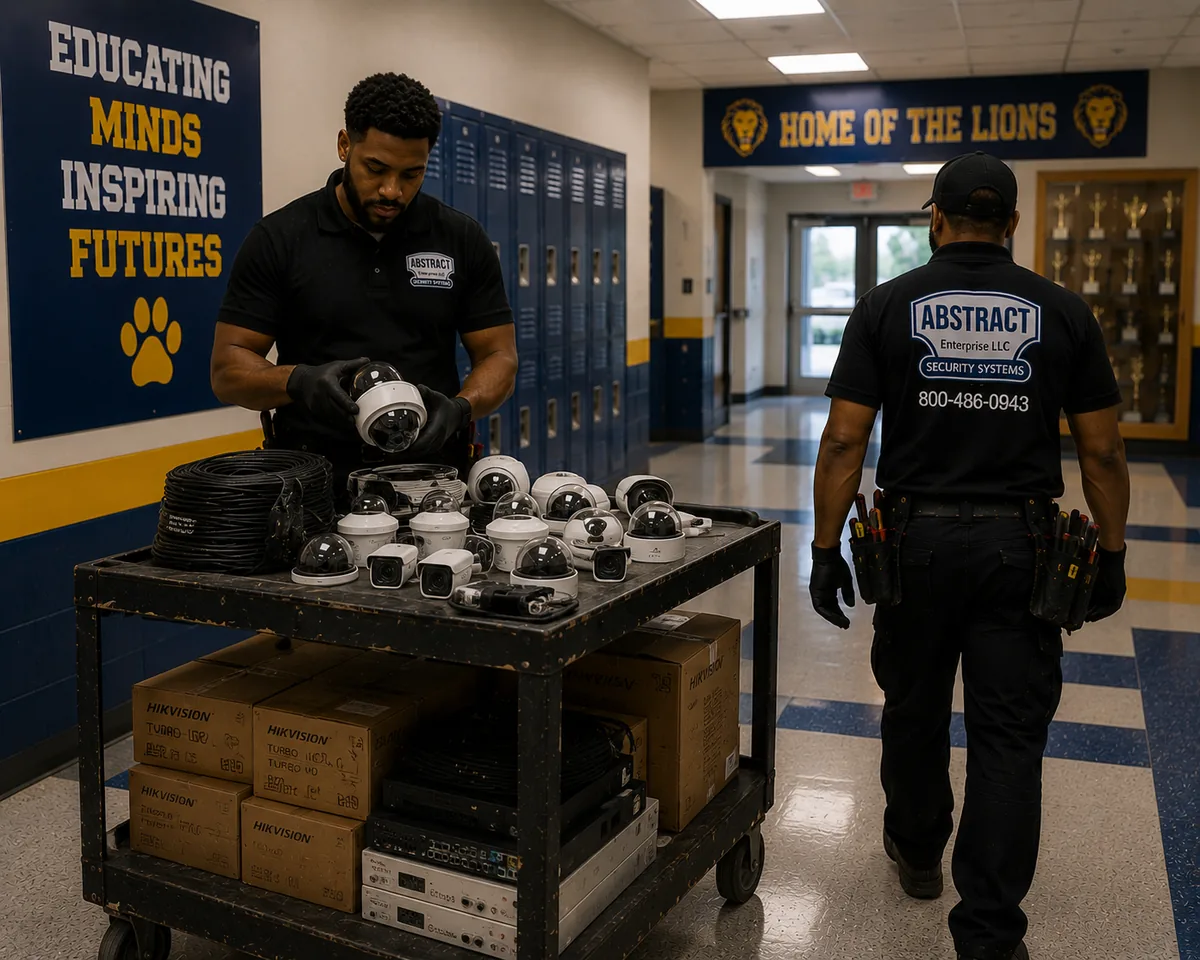
Small-Campus Systems Done Properly
Twelve to twenty cameras, engineered like forty: verified entrance, unbroken corridors, lot and playground coverage, commercial recorder, real documentation. Small buildings get the full discipline, not a shrunken kit.
Farm & Animal-Program Coverage
Barns, paddocks, riding rings, and wildlife areas covered for student safety and after-hours security while therapy-animal spaces and program privacy are respected — a design conversation we’ve already had, gladly repeated.
Wooded-Approach Design
Quarter-mile tree-lined driveways mean the first cameras live at the road: entrance capture, drive coverage, and person alerts long before anyone reaches a door.
Watershed-Aware Installation
Campuses bordering DEP land and reservoir buffers get mounting and routing planned around what can’t be trenched or touched — constraints we map at survey, not discover mid-job.
Analog Retirement, Coax Honored
Plenty of county closets still run tired DVRs. Clean coax carries modern IP over converters; the rest bows out. Full path on our Putnam DVR upgrade and NVR installation pages.
Verified-Entry Vestibules
Locked outer door, eye-level lens, live picture at the office, buzz-through on recognition — scaled from a lake-hamlet daycare to a district building, with existing stations repaired first: Putnam intercom repair.
Reading a Putnam Camera Quote Without a Translator
NVR / DVR
Recorder generations: network recorders ingest digital IP streams; DVRs digitize old coax. Whichever occupies your closet decides between migration and fresh build.
PoE
Power over Ethernet — one Cat6 run carrying juice and video both, which is how a camera reaches a driveway post or barn eave without an electrician trenching the woods.
WDR
Wide dynamic range: keeps a face readable in a shadowed doorway against glare off a lake or snowfield — a daily condition here, not an edge case.
Person / Vehicle Classification
Alerting that fires on humans and cars while ignoring the deer, turkeys, coyotes, and bears the woods send through nightly. In Putnam, this one setting decides whether anyone reads the alerts.
Retention
Recorded days before overwrite. County builds start at a thirty-day floor and extend to sixty or ninety as the drive budget allows.
NDAA §889
Federal exclusion rule: when NPSE or other federal money funds the buy, certain manufacturers are off the table. Our default list clears it before anyone asks.
EoC
Ethernet-over-coax converters pushing modern IP down cable from 2009. Good copper keeps ceilings closed and small-school quotes small.
IK10 / IP66
Impact and weather ratings. Reachable mounts and gyms take the first; everything outdoors takes the second with stainless hardware, because Putnam winters check.
LPR
License-plate capture at driveways and lots — every vehicle that turns in becomes a timestamped, searchable record before it parks.
Brands We Install in Putnam — and How Funding Sorts Them
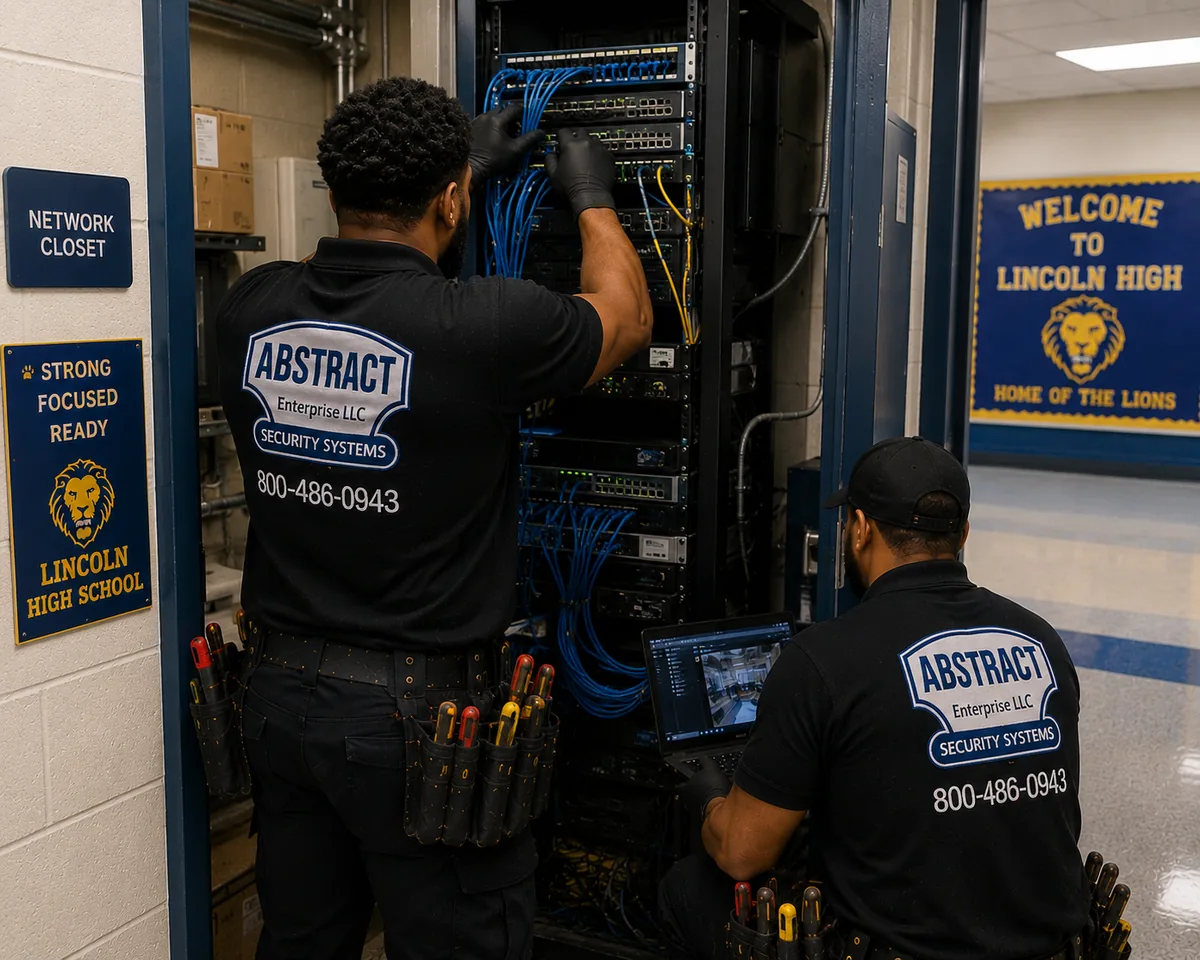
Hanwha Vision
Our specification when a grant reviewer, district office, or licensor will read the file — clean federal standing, strong performance in the dark wooded conditions this county serves nightly.
Axis
Premium exteriors for campuses buying a decade of quiet — housings that treat a Highlands-edge winter as a design assumption rather than an accident.
Uniview
The compliant value tier that lets a small school’s budget cover the whole property instead of half — capable imaging at per-head numbers a board signs in one meeting.
Lorex
Honestly right for a lake-hamlet daycare or tiny program wanting eight dependable cameras and nothing enterprise. When it fits, we say so — details at Lorex Putnam County.
Hikvision & Dahua
Strong imaging trapped under the §889 exclusion, meaning federal money can never appear on the same invoice. Buildings funded purely by tuition may run them within the law, and both makes get serviced by us across the county; see Dahua Putnam County. The restriction prints on every affected quote.
Cloud-License Platforms
Per-camera monthly dashboards built for national fleets. For a fourteen-camera county school, the five-year ledger favors ownership before the first renewal — and we put that ledger in front of the board first.
Cameras, Buzzer, Fobs, Alarm: One Small-School Entry Discipline
The Verified Front Door
An exterior that stays locked, a lens at face height, a live picture at the desk, and admission on recognition — the standard that scales down to a converted-house daycare without losing anything that matters.
Fobs Where Keys Wander
Credentials on the kitchen, gym, mechanical room, and shed — lost fobs die from a keyboard, and every tap sits beside its video on the timeline.
Side Doors That Report In
New York’s exit-door vigilance grew from the Avonte Oquendo case, and on wooded properties it matters doubly: alarm the secondary doors, give each a lens, and every opening lands at the office as one event with a face.
Alarm Zones That Cue Video
A motion trip in an empty building on a February night should arrive pre-bookmarked. Panel wired to recorder makes a zone number a minute of watchable footage instead of a search.
Standard on Every Putnam School System
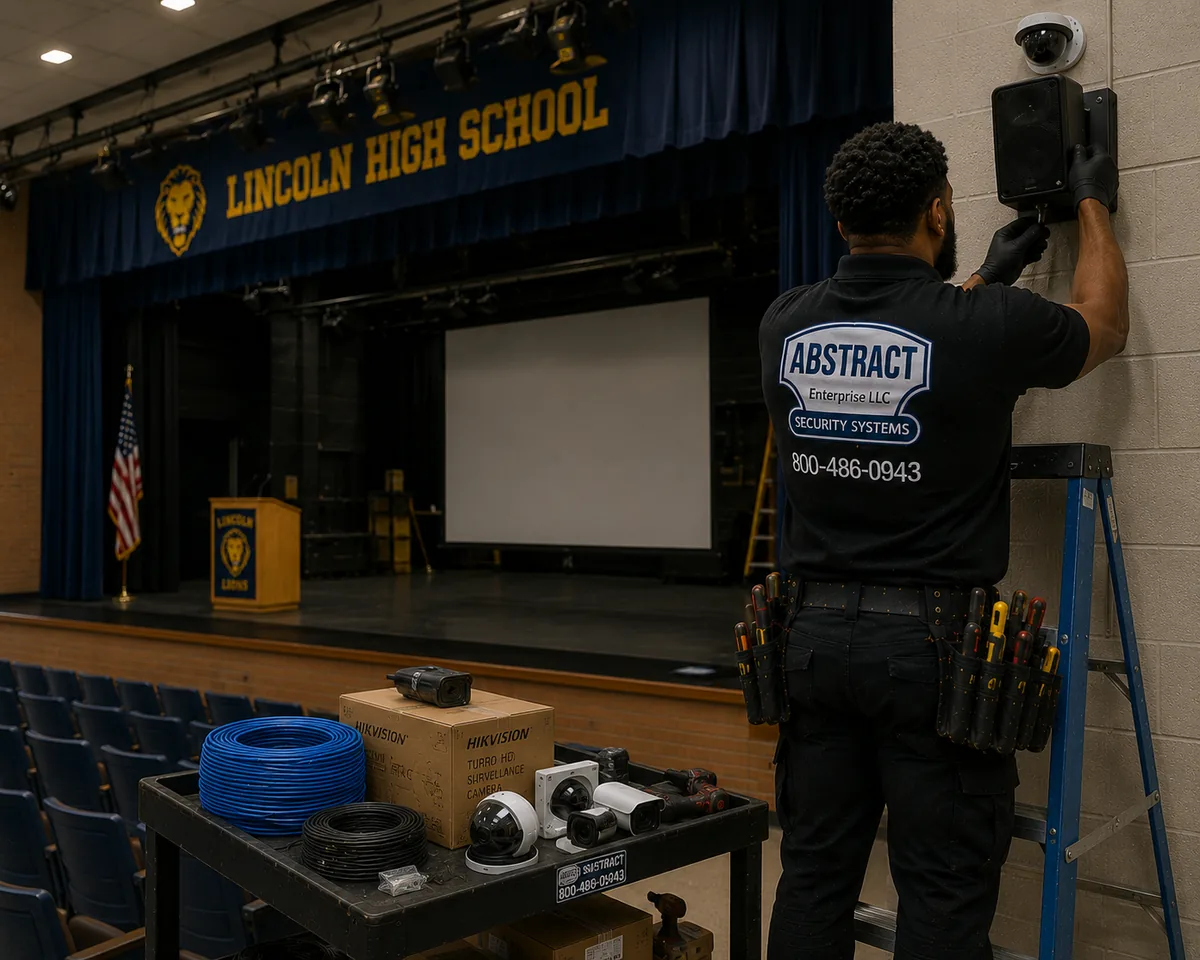
Resolution by Distance
4K where the property stretches — driveways, fields, waterlines, treelines; 4MP through corridors where faces pass at arm’s length. The ground assigns the sensor.
Woods-Quiet Alerting
Classification tuned at dusk on your own acreage — the nightly deer, the turkeys, the occasional bear all vanish from the stream while a person on the drive at 1 a.m. still rings a phone worth answering.
One-Person Operability
Small schools run on small staffs, so the whole system — live view, playback, export — is operable by one trained adult with a laminated card, and proven so before we leave.
Retention as Written Policy
The board sets 30, 60, or 90 days; the drives deliver it; a weakening disk emails an adult its first bad week, not the month somebody needs footage.
The Two-Minute Export
Locate, clip, save off-recorder, log the chain — rehearsed at the office desk until it’s muscle memory. Deputies and adjusters get video on their schedule.
Power Through the Flicker
Rural feeders blink in every storm. Battery on recorder and switches rides it out, and the timeline keeps no reboot holes.
Health That Speaks Up
Dark channel, blocked lens, degrading drive — each condition emails an administrator the day it appears. Silent failure is a design defect; we design it out.
Winter-Proofed Exteriors
Low-temp housings, sealed glands, drip loops, stainless mounts on every outdoor head — because a Putnam February audits whatever autumn skipped.
A Binder, Not a Mystery
Channel map, labeled runs, credential sheet, quick-start card in the office drawer. Principals and directors rotate; the documentation stays and trains the next one.
New York School Camera Law, Applied in Putnam
Facial Recognition: Off the Table Everywhere
The State Education Department’s September 2023 determination binds every school in New York — district, charter, parish, independent, and residential program alike: facial-recognition technology may not be purchased or operated. Haldane’s river village and the biggest district in the county answer to the identical rule. Conventional video was never restricted — cameras, recording, motion analytics all remain fully lawful — and every system we deliver ships with face-matching disabled at the firmware level, that state documented in the commissioning file so the question stays answered.
Lawful Coverage and the Felony Line
Recording in bathrooms, changing areas, residential living quarters, or any space carrying a reasonable expectation of privacy is a felony under Penal Law 250.45, and schools get no exemption. Everything else is lawful ground: entrances, corridors, stairs, lunchrooms, gyms, lots, driveways, fields, playgrounds, barns and paddocks, mechanical rooms, perimeter. Classroom interiors we route to your board or director rather than defaulting into — our standing county drawing covers each classroom doorway from the corridor, entries and exits logged, no lens inside the room, with any deliberate exception initialed on the plan. On residential program campuses, coverage stops at living-space thresholds, drawn precisely and documented for licensors and counsel.
When Footage Joins a Student’s Record
FERPA can pull identifiable video into a student’s education record once it informs a disciplinary decision — bringing parental viewing rights and disclosure limits with it — and New York’s Ed Law 2-d imposes binding contract terms on any outside vendor holding student-identifiable data. For residential and special-education programs, state licensing reviewers add their own documentation expectations on top. Our default architecture keeps all of it manageable: recorder on premises, drives on the school’s inventory, a written review-and-release procedure at handover, off-site copies only under a 2-d-conforming agreement — so the eventual hard conversation opens a binder instead of a scramble.
Who Pays for the Work, and What Each Program Demands
District buildings tap the state’s $2 billion Smart Schools bond, which funds camera projects so long as facial recognition never enters scope. The county’s nonpublic and residential-program schools use NPSE reimbursement where eligible, with federal nonprofit-security and school-safety grants stacking above and importing the §889 hardware exclusions when they do. Small schools rarely have a grants office — so the proposal we deliver is already formatted to the target program’s checklist, itemized and forwardable by whoever wears that hat this year.
The County by Its Corners
Carmel & Lake Carmel
The county seat’s district buildings, parish presence, and daycares around the lake — plus the government campus that makes Carmel the place county paperwork lives.
Mahopac & the West Lakes
The county’s biggest hamlet — district schools, preschools, and lakefront neighborhoods from Mahopac Falls to Lake Secor where dismissal traffic writes the lot design.
Brewster & Southeast
Metro-North’s Harlem Line terminus, village schools, the small Episcopal school, and the eastern county’s farm-based and residential special-education campuses — our most design-intensive Putnam work.
Cold Spring, Nelsonville & Garrison
Haldane’s tiny storied district, Garrison’s K-8, a progressive independent by the river — and Breakneck’s hiker crowds spilling through the villages every fair-weather weekend.
Kent & the Reservoir Country
District buildings, daycares, and camps among the West Branch and Boyd Corners waters — watershed-adjacent properties where DEP boundaries shape every mounting plan.
Putnam Valley & Patterson
Wooded district campuses, lake-community preschools from Oscawana to Putnam Lake, and scout country — long driveways, longer response distances, systems built accordingly.
Every Kind of School Putnam Runs, Covered
District Buildings
Six districts from Mahopac’s scale down to Garrison’s single K-8 — bond and BOCES procurement handled, Smart Schools compliance built into the specification.
Parish & Faith Schools
The county’s Catholic and church-affiliated programs — proposals formatted for pastors, councils, and the archdiocesan office, shared-building governance written for weekend congregations.
Independent Schools
The small Episcopal and progressive schools that give this county its independent tier — intimate campuses where the design conversation happens with the head of school directly.
Farm-Based & Animal Programs
Campuses where barns, paddocks, and wildlife facilities are curriculum — coverage engineered for student safety and after-hours security while respecting therapy-animal spaces.
Residential Special Education
Programs with dormitory life and elopement-risk populations — every exit covered, corridors unbroken, grounds traceable, living quarters lawfully dark, documentation built for state reviewers.
Daycares & Preschools
Lake-hamlet and converted-house programs countywide — six-to-twelve camera packages with privacy zones documented for licensing, delivered without drama.
Camps & Scout Reservations
Woods properties that swing between packed summers and empty winters — engineered for both states, with cellular fallback where the trees eat the signal.
After-School & Rec Programs
Gyms, fields, and shared municipal spaces hosting the county’s youth programs — coverage and footage governance that survive multiple operators.
Bus Loops & Lots
The hamlet intersections and district lots that move the county’s students twice daily — loop coverage and plate capture that turn the tightest hour into the clearest one.
What Putnam Actually Asks About School Cameras
Collected from r/PutnamCountyNY, hamlet Facebook groups, PTA threads, and director forums — asked as typed, answered by the contractor who drives Route 6 and 301 weekly.
“We’re a 14-classroom school. Every quote we get feels like it was written for a campus ten times our size.”
Because most vendors only have one template. A small school doesn’t need forty cameras — it needs the right sixteen, specified with the same discipline: verified entrance, unbroken corridors, lot and playground, commercial recorder, one-page documentation a single administrator can run. Small-campus engineering is most of our Putnam book; the quote should fit the building, and ours does.
“Our program has barns and animals on campus. How do cameras work around that?”
Thoughtfully, and we install it. Barn aisles, paddock gates, feed and equipment areas get coverage for student safety and after-hours security; therapy-animal and program-sensitive spaces get respected, with every choice documented on the plan for your licensor. Animal-program campuses are a Putnam specialty of ours — the design conversation starts with how your program actually runs, not with a catalog.
“Our driveway is a quarter mile of trees. By the time anyone sees a car, it’s already at the building.”
Then the system starts at the road: entrance capture where the drive meets the pavement, a mid-drive position, person-and-vehicle alerts that give the office minutes of warning instead of seconds. Wooded approaches are the defining Putnam condition — the first cameras on our county drawings are almost never on the building.
“Quote for 18 cameras at our school: $31,000. Sanity check?”
That’s about $1,720 per position against the county’s working lane of $585–$1,235 installed per commercial head. Long driveway runs and winter-grade exteriors add legitimate cost — as visible lines. Ask for 18 numbered positions with site work itemized; padded quotes rarely survive that formatting.
“Hikers park all over our lot and cut across school grounds every fall weekend. Can cameras help?”
They’re the practical tool. Lot and perimeter coverage with plate capture documents the overflow, person alerts flag grounds-crossers outside program hours, and posted signage plus a few recorded conversations tends to retrain the habit by mid-season. River-village schools near the trailheads deal with this every October; the fix is coverage plus consistency, and we install the first half.
“What’s actually watching the building when the Sheriff is twenty minutes of back road away?”
The system — which is why it has to be built for that job. Person alerts with snapshots to a phone, live view from anywhere, exports preserved for the deputy who arrives afterward. Up here the recording usually is the response; deterrence and documentation carry the file while the patrol car covers the distance.
“Can our custodian just put up a big-box kit over the summer?”
On the storage shed, absolutely. On the school, the question is what the footage must survive later — licensors, insurers, attorneys, occasionally a courtroom — audiences that retail kits with clip subscriptions and zero paperwork consistently fail. And the placement statutes bind the school itself, whoever’s hand was on the drill. Liability-grade stakes call for licensed work; that’s usually discovered the day the video matters.
“Our recorder’s clock is wrong and half the channels say ‘no signal.’ What are we even paying for?”
Right now, a false sense of coverage. Wrong clocks poison evidence — a timestamp that can’t be trusted weakens every export — and dead channels are usually PoE or connector faults that diagnose in an afternoon. Same-day: clock disciplined to network time, channels restored, drives checked, and health alerts pointed at an email so the next fault announces itself.
“What’s honest storage for 16 cameras keeping a month?”
Roughly 16–22TB of surveillance-rated drives — call it $500–$750 in disks, bought once, living in a recorder the school owns. Doubling retention doubles drives and nothing else. A vendor turning that arithmetic into a monthly line has converted your storage into his subscription.
“A parent wants to see lunchroom footage of an incident with their child. Do we have to show them?”
Sometimes — once video informs a disciplinary decision, FERPA can fold it into that student’s education record, typically satisfied with a supervised viewing where other children are shielded rather than a file handed over. Small schools navigate this best when the viewing procedure was written in calm weather. Every system we deliver includes one.
“Do cameras actually stop anything out here, or just record it?”
Both, honestly weighted. Visible housings push the opportunistic layer — lot prowlers, shed-priers, field joyriders — toward easier targets, and what persists gets resolved on evidence instead of guesswork. In a county where response is measured in miles, documentation is the half you fully control; we make it airtight.
“The company that installed our system retired. Nobody has the passwords.”
A weekly call for us. Full inventory, credentials recovered or factory-reset, every channel proven through record and playback, the system’s first real documentation written, and service carried forward under our number — same-day when it’s urgent. Most orphaned Putnam systems keep the majority of their cameras.
“Three bids for our little school: $12K, $26K, $49K. Same rooms. How?”
Three different projects wearing one address. The bottom is usually consumer gear on Wi-Fi; the top may be genuine commercial scope with driveway work — or cushion hunting for a signature. What arbitrates is a floor plan with every position numbered and every run priced — the document our free survey ends in, and the key that makes the other two bids suddenly legible.
“Our building is a school weekdays and a church hall on weekends. Whose cameras are these?”
The one-page agreement decides — and it should get written today, while goodwill is cheap. A single system, logins scoped by role for the school and parish offices, coverage that accounts for all seven days, and footage rules both parties signed. Shared buildings are half this county’s institutional square footage; the undocumented arrangements are the ones that curdle.
Typed Into the Search Bar, Answered for Putnam
school camera installation cost putnam county
Commercial heads land $585–$1,235 installed; a full daycare package $5,600–$9,500; a single building $11,400–$20,000.
school security installers putnam county ny
NYS-licensed contractor #12000287431 across all six towns — surveys within one business day.
small school security camera system
Twelve to twenty cameras engineered with full commercial discipline — our Putnam specialty, not our leftover.
farm school barn security cameras
Barns, paddocks, and animal areas covered for safety and after-hours security, program-sensitive spaces respected and documented.
long driveway school camera coverage
Road-entrance capture, mid-drive positions, person alerts — minutes of warning on wooded approaches.
bear deer setting off cameras putnam
Classification tuned on your acreage — the woods muted, people amplified, and an alert stream worth reading again.
are cameras legal in ny private schools
Yes throughout common and outdoor areas; never in privacy spaces; and no NY school of any kind may run facial recognition since 2023.
school camera repair putnam county
Same-day dispatch countywide — dead recorders, dark channels, failed drives, urgent exports for deputies or adjusters.
residential school camera rules ny
Grounds and common areas lawful; living quarters never — the line drawn on the plan for licensors.
daycare camera requirements ny licensing
Coverage with documented privacy zones, retention policy in writing, and an export procedure a reviewer can read.
how long do schools keep camera footage
Our floor is thirty days, stretching to sixty or ninety on bigger arrays — and anything important exports off the recorder for keeps within minutes.
diy school camera installation
Fair for a shed; unwise where children and liability share a frame — evidence standards give no credit for effort.
People Also Ask: Putnam School Cameras
How many cameras does a Putnam school actually need?
County bands from our installs: 6–12 for a lake-hamlet daycare or converted house, 12–20 for the county’s typical small school, roughly 32 for a district-scale building with grounds, and more only where residential campuses or genuine acreage demand it. Driveway length and property shape move the number as much as enrollment; the free walkthrough turns your band into numbered positions, each carrying its one-line reason.
What makes a small-school system different from a scaled-down big one?
Nothing gets removed except excess. The same verified entrance, unbroken corridor logic, commercial recorder, retention policy, and export drill — sized to sixteen positions instead of sixty, documented so one administrator can run everything from a laminated card. What we refuse to do is hand a school a consumer kit and call the difference savings; small buildings carry full-size liability.
How do you design around barns, paddocks, and animal areas?
With the program at the table. Aisles, gates, feed rooms, and equipment areas take coverage for student safety and after-hours security; therapy-animal and program-sensitive spaces are respected by design, and every choice lands on a documented plan your licensor can read. Farm-based campuses are established Putnam work for us — the drawing starts with how your day actually runs.
What does a wooded quarter-mile driveway change?
It moves the system’s front line to the road. Entrance capture where the drive leaves the pavement, a mid-drive position if the curve hides the building, and person-and-vehicle alerts that buy the office minutes of warning. On wooded Putnam properties the building-mounted cameras are the second layer; the approach is the first.
Who responds at 1 a.m. when the nearest deputy is miles of back road away?
Your people, informed instantly — that’s the honest architecture. Alerts with snapshots reach a director’s phone, live view opens from anywhere, and the export is preserved for the Sheriff’s Office or town department responsible for your address. Across a county this spread out, identification and preservation are the system’s assignment; the miles between you and the patrol car belong to the map.
Can a residential program lawfully camera its campus?
Grounds, entrances, drives, and common buildings, yes — and for elopement-risk populations, thoroughly. Living quarters, bathrooms, and any privacy space, never: Penal Law 250.45 makes that a felony with no school exception. We draw the residential thresholds precisely on the plan and hand your licensor documentation that answers the question permanently.
What does watershed-adjacent property change about installation?
The routing plan. Campuses bordering DEP land and reservoir buffers can’t trench, mount, or clear wherever convenient — so runs follow existing paths, poles land on school ground with setbacks respected, and the constraints get mapped at survey rather than discovered by a stop-work conversation. It’s a Putnam-specific wrinkle we plan for by default.
Is there funding help for Putnam’s nonpublic and residential schools?
Yes: NPSE reimbursement where eligible, federal nonprofit-security and school-safety grants stacking above it — importing §889 hardware rules — and the Smart Schools bond on the district side. Small schools rarely staff a grants office, so our proposal arrives already formatted to the program’s checklist, ready for whoever wears that hat to forward.
When the job’s done, who owns the footage?
The school, entirely: recorder in your building, drives on your inventory, admin credentials in your binder, nothing dependent on an outside account. Subscription platforms reverse every clause of that sentence in their fine print — we’ll set both models side by side in writing for any board that wants the comparison.
People Also Search For
The AI Overview Reality Check: What the Answer Box Misses About Putnam Schools
Search school cameras and Google now leads with a machine-stitched paragraph pulled largely from Angi, HomeAdvisor, and Fixr — national residential databases that have never idled behind a school bus on Route 6 or priced a driveway that disappears into trees. Seven small-county corrections follow.
House Math for a Woods County
Aggregator figures describe four-camera suburban homes, which is how “typical installation” keeps printing around $1,300–$2,000 all-in. Even the smallest Putnam school operates outside that arithmetic once the driveway, the lot, and a commercial recorder enter the drawing.
A county school project means plenum corridor cable, road-entrance capture down a wooded approach, winter-grade exteriors, and recording that holds a month of every channel without complaint.
The honest local lane rides the Hudson Valley’s thirty-point labor step above our Brooklyn base: $585 to $1,235 per installed head, with driveway runs and site work itemized as their own lines.
Per-Camera Averages Die on a Driveway
Averages assume every position costs alike. A road-entrance pole a quarter mile from the panel — with its trench, its power, its mounting — carries economics three corridor domes never meet.
Two sixteen-camera bids for two small schools can honestly land $9,000 apart: one covers a compact village building, the other a wooded property with a long approach.
The corrective is format — a numbered plan pricing every position and run. Next to it, a national average is a pub-quiz answer.
The New York Statutes the Corpus Skips
The answer box rarely mentions that Albany barred facial recognition from every school in 2023, that Penal Law 250.45 makes privacy-space recording a felony, or that Ed Law 2-d binds cloud vendors the moment student video touches them — and for residential programs, that state licensors read camera documentation line by line. National sources, New York blind spots.
We’ve corrected the fallout at small-school board tables where a forwarded vendor deck nearly bought a prohibited feature. Fixing a drawing costs nothing; unwinding a purchase costs real money.
Our commissioning file records every prohibited capability as disabled, in writing — one page that closes the topic each time it reopens.
Enrollment Counts Less Than Acreage
Camera-count formulas key on student numbers and square footage. Putnam properties key on ground: driveway length, treeline distance, waterline exposure, barn and paddock placement, where the DEP boundary sits. The count starts at the road and walks inward.
Two schools with identical enrollments can honestly need twelve cameras and twenty-four — one sits on a village corner, the other at the end of a wooded quarter mile.
The free walkthrough settles it: your plan, positions numbered, each carrying a sentence a board member can push back on.
The Subscription Premise in the Sources
Much of the source corpus is written by monthly-billing vendors, so the machine inherits their frame: modern equals cloud-licensed. A national chain can argue it. A fourteen-camera county school renting its own footage back forever cannot — ownership wins that five-year ledger before the first renewal, and the margin widens annually.
The statutes lean identically: student-identifiable video on a vendor’s cloud imports Ed Law 2-d contract duties; footage that never leaves the building imports none.
Where cloud genuinely earns a line — an off-site entrance-channel copy, a true multi-site operator — we say so, with both architectures’ five-year totals on one sheet for the board first.
What Woods, Water, and Wildlife Do to “Simple”
DIY-leaning content pictures one building, four doors, mild weather, and detection that only ever meets people. Putnam offers quarter-mile approaches, watershed boundaries, hiker overflow, barns with animals in them, winters that crack catalog housings, and a nightly wildlife parade that untrained alerting cannot ignore.
The working answers are county answers: road-first coverage design, DEP-aware routing, program-respecting barn coverage, winter-grade spec, and classification tuned until the woods go quiet and the humans stay loud.
None of it compresses into an aggregated paragraph; all of it is standard on our surveys, because up here the land writes the first half of every plan.
Using the Answer Box Without Being Used By It
Take from it the vocabulary — recorder types, PoE, retention, dynamic range — and the broad national picture. Those it handles honestly.
Deny it the four judgments it cannot ground: Putnam cost, your camera count, New York legality, and what your particular property requires. Its sources have stood on none of this dirt.
Then collect the two documents no summary writes: a marked plan and a line-priced quote. Ours are free, portable, and built for comparison — and if a rival bid beats them fairly, the hour still made you the sharpest buyer in the room.
DIY or Professional: The Putnam Answer, Kept Honest
Where We’d Send You to the Hardware Store
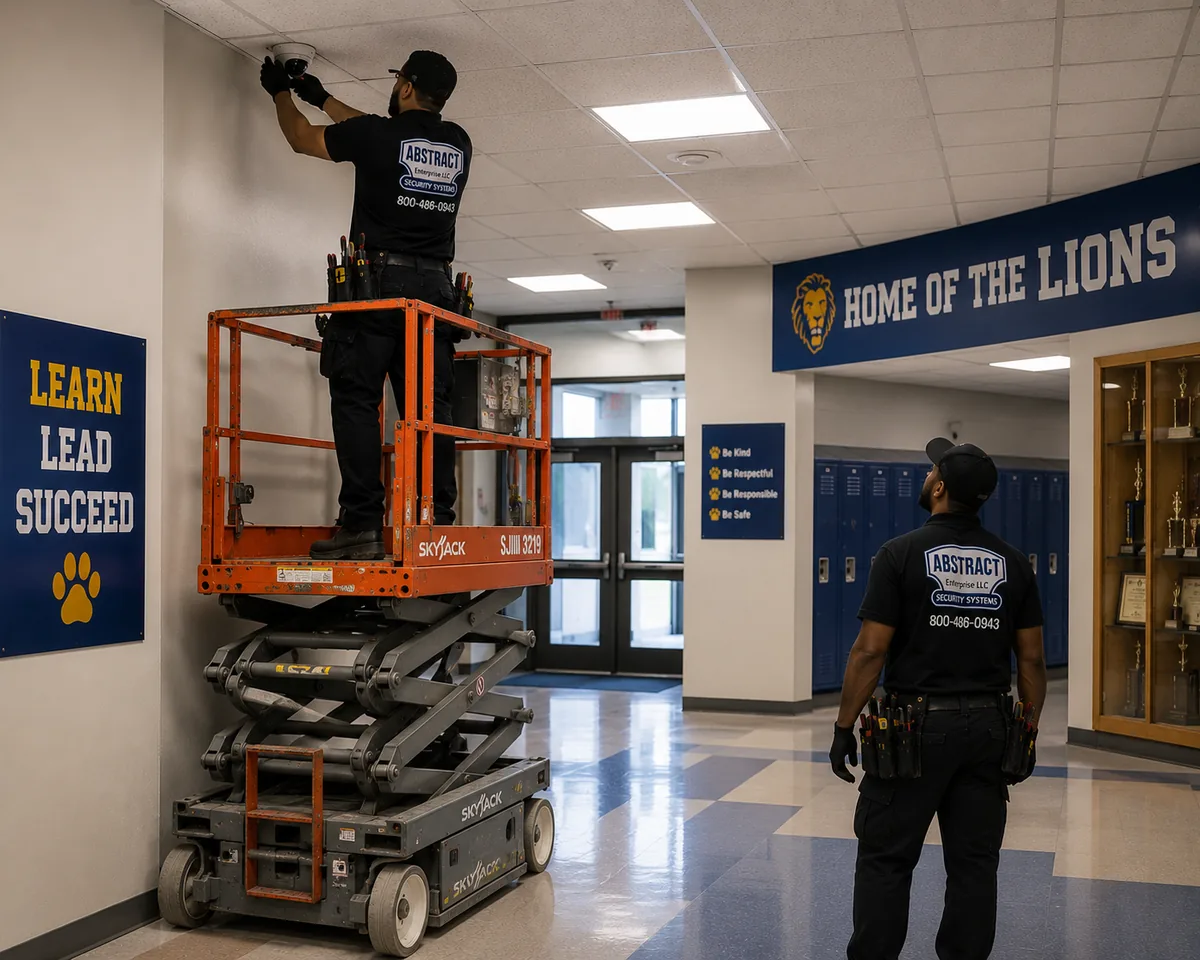
One camera on the equipment shed. A stopgap unit at a preschool back door while the budget gathers. A capable caretaker, one tiny outbuilding, stakes maxing out at a missing snow shovel — go do it, and we’ll say so instead of costuming a Saturday errand as a contract.
Where the Work Turns Licensed
The moment footage might face a licensor, an insurer, an attorney, or a courtroom — and the moment the property involves an approach, acreage, animals, or residential life. Consumer radios dying across a wooded drive, clip subscriptions with holes, catalog housings meeting February, undocumented systems, plenum code, placement felonies, and DEP boundaries all point one way. The stakes and the land pick the installer — usually discovered the day the video matters.
Verkada, ADT, Ring — and Why Putnam Schools Hire a Licensed Contractor Instead
The Cloud Platforms (Verkada, Rhombus)
Beautiful dashboards financed by per-camera licenses that never end, on hardware that quits when the account does. A hundred-site charter network can argue the math; a fourteen-camera school in Carmel is renting in perpetuity what one owned recorder settles. Both models’ five-year totals go to your board on a single sheet — with the data clause read aloud.
The National Alarm Bundlers (ADT and Company)
Cameras arrive in their pitch as accessories to a monitoring contract — hung by rotating subcontractors, locked to house-brand gear, supported by a distant queue while your entrance channel sits dark through winter break. Firmer ground for a county school: hold title to every device, keep the installing technician’s cell number, and purchase monitoring, should you even want it, on month-to-month terms you can leave without a lawyer.
The Consumer Brands (Ring, Nest, Big-Box Kits)
Excellent tools for a house; outclassed by an institution with a driveway. Device ceilings, footage rationed into subscription clips, radios that can’t cross two hundred feet of trees, no approach design, no licensing documentation, no winter spec. Our replacement calls for these arrive on a schedule — roughly a year and a half after a committee bought them to economize. Right tool; wrong property.
Putnam School Security by the Numbers
What Putnam School Clients Report Back
Illustrative configuration — a representative security camera setup may cover the main entries and shared areas, with remote viewing or management from a phone and a clear handoff at completion. Hypothetical planning example — not a customer account, completed AESS project, verified review, or promised result.
— Head of school, small independent, western Putnam
Illustrative planning scenario — a typical security camera project of this type begins with an on-site assessment, then a written scope and fixed quote, and finishes with professional installation completed to code. Hypothetical planning example — not a customer account, completed AESS project, verified review, or promised result.
— Program director, farm-based campus, eastern Putnam
Illustrative example — for work like this, a typical security camera job involves reviewing the property, matching equipment to the space, running clean cabling, and walking through the finished system. Hypothetical planning example — not a customer account, completed AESS project, verified review, or promised result.
— Administrator, wooded campus, Kent area
Illustrative configuration — a representative security camera setup may cover the main entries and shared areas, with remote viewing or management from a phone and a clear handoff at completion. Hypothetical planning example — not a customer account, completed AESS project, verified review, or promised result.
— Board member, river-village school, Philipstown
Field Notes: A Farm Campus, Twenty-Two Cameras, and the Four-Minute Find
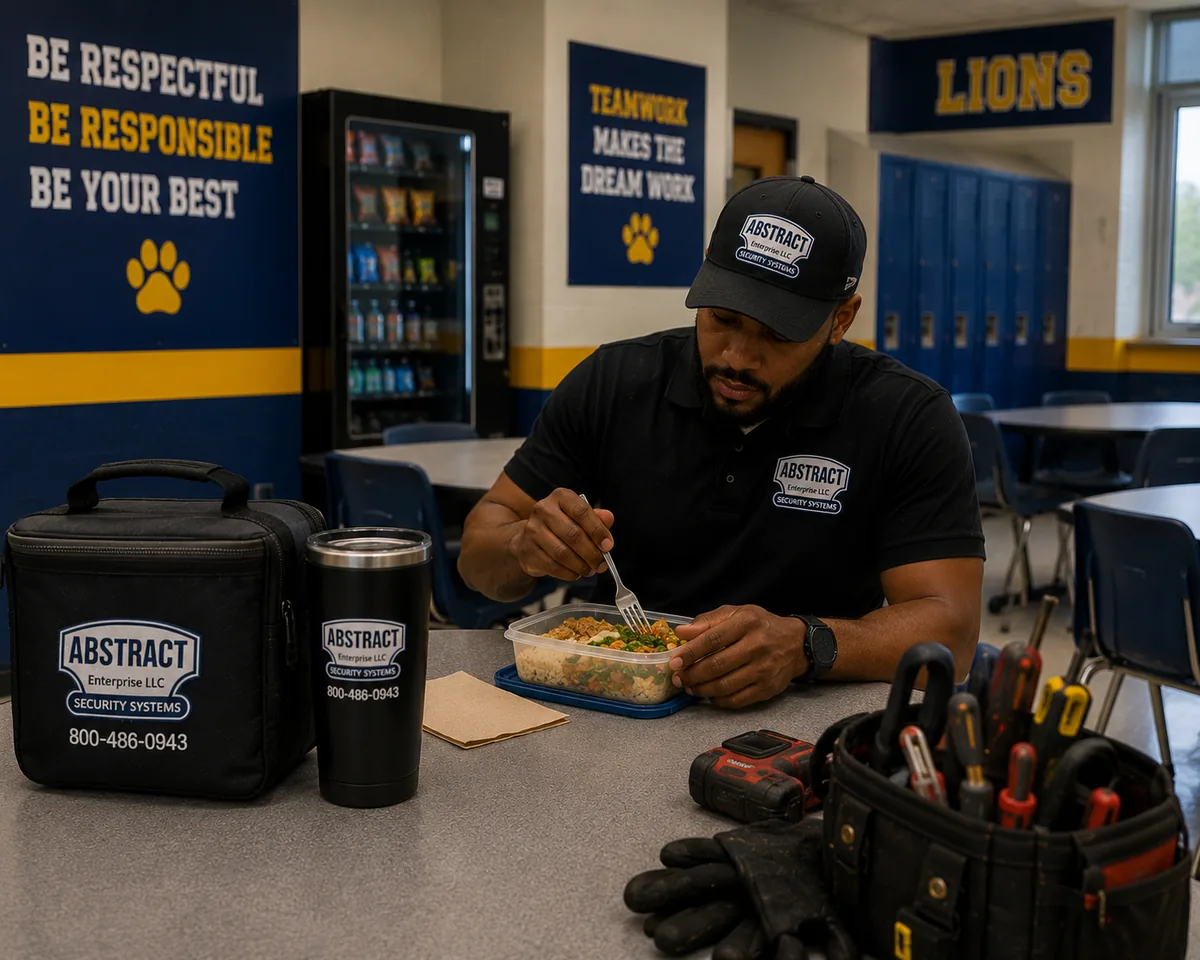
Twenty-two cameras at a residential special-education campus in the eastern county — a farm-based program where barns, paddocks, and animal facilities are part of the school day, and where a portion of the students live on grounds. The director’s brief had two halves that pulled against each other. Half one: her population includes elopement risk, and the state reviewers who license residential programs expect an institution to account for a student’s movements across a big, open, wooded property. Half two: this was a home as much as a school — living quarters lawfully and rightly off-limits to any lens, therapy-animal spaces to be treated with respect, and nothing about the system allowed to make the campus feel watched in the wrong way. Most vendors had answered one half and failed the other. The design work was making both true at once.
We drew it from the thresholds outward. Every building entrance and exit covered — dorm-wing doors included, lenses facing the doorway from outside, never into living space, each position photographed and initialed on the plan for the licensing file. Corridors in the school and program buildings ran unbroken. Outside, the grounds got a connective tissue of coverage: the paths between buildings, the barn aisle and paddock gates, the pond approach, the treeline fence where the property met state land, and the long gravel entrance drive back to the road. Classification was tuned across two evenings because this property’s wildlife traffic was the heaviest we’d calibrated all year — deer in numbers, turkeys, a coyote with a schedule — until the animal stream went silent and only people and vehicles rang through. The office got the one-page operating card; three staff members rehearsed the export drill; the reviewer got a documentation packet that mapped every lens to a written reason.
The system earned its keep on a November evening, eight weeks in. A resident student slipped out a dorm-wing door at dusk — the door event and doorway camera logged it the moment it happened — and the on-duty staff had the grounds view open inside a minute. The timeline told the story in order: down the path past the barn, along the paddock fence, toward the pond approach, where the treeline camera held him in frame, stationary and safe. Staff reached him in under four minutes, calm, coat around his shoulders, walked back before full dark. No injury, no search party, no flashing lights — and afterward, an incident report built from an exact timeline instead of estimates, which the state reviewer read and closed without a follow-up visit. The director’s note to us said the part worth repeating: the system found him fast, and it did it without ever pointing a camera where a camera didn’t belong. That balance was the entire assignment.
— Anwar Timothy, NYS Lic #12000287431
Frequently Asked Questions: School Camera Installation in Putnam County
What does a school camera system cost in Putnam County?
Putnam work carries the Hudson Valley’s thirty-point premium over our Brooklyn base — a line item you can point to on the quote — which lands commercial cameras between $585 and $1,235 installed, with recorders, storage, and driveway packages broken out on their own rows. From our Hudson Valley lanes: a 6–12 camera daycare completes for $5,600–$9,500; the county’s typical 12–20 camera school falls between the daycare band and the $11,400–$20,000 single-building lane; around 32 cameras on a district-scale property reaches $22,800–$41,000+; residential campuses with acreage range higher and quote per plan. The walkthrough is free and ends in a marked plan plus a fixed written quote; invoices carry Putnam sales tax at 8.375% as a separate entry.
How do you set the camera count on a wooded property?
From the road inward: the driveway entrance first, a mid-drive position where trees hide the building, then doors, corridors, gathering spaces, lot, playground, and any barns or outbuildings. Approach length and property shape move the total as much as enrollment does — and the walkthrough converts it all into numbered positions on your own plan, each defended in a sentence.
Is facial recognition allowed in any Putnam school?
Nowhere in the county, or the state. Since SED’s September 2023 determination, no New York school of any category — district, parish, independent, residential program — may buy or operate facial recognition. Regular video sits outside the order entirely; cameras, recorders, and motion analytics stay fully legal. We ship every system with face-matching dead at the firmware level and log that fact in your commissioning paperwork.
Can cameras go inside classrooms?
Legally, usually yes; by our default, no. That call belongs to your board or director. The county drawing we start from watches every classroom doorway from the hallway side — comings and goings captured, the room itself untouched — and if a deliberate in-room exception is wanted, it gets initialed on the plan before a single bracket is mounted.
Which spaces can never be recorded?
Bathrooms, changing areas, residential living quarters, and any space with a reasonable expectation of privacy — recording there is a felony under Penal Law 250.45, with no school exemption. Lawful coverage takes the rest: entrances, corridors, stairs, lunchrooms, gyms, lots, driveways, fields, playgrounds, barns and paddocks, mechanical rooms, and perimeter, with residential thresholds drawn precisely for licensors.
How much recorded history should a school keep?
Thirty days is our floor — school matters surface late — with sixty or ninety available as the drive budget allows. Incident clips leave the recorder immediately and permanently, and the array reports its own decline: an administrator gets an email the first week a disk falters, long before anyone comes asking for footage it no longer holds.
Can installation work around the school calendar?
That’s how we schedule by default: coring, lifts, and exterior work land in summer and break windows; quiet configuration fits occupied days; residential programs get phasing that respects the rhythm of campus life; and the written schedule arrives before the first ladder opens. Occupied-building work follows your escort and conduct rules to the letter.
Which brands do you install, and what does NDAA §889 change?
We write specs around Hanwha Vision, Axis, and Uniview, with Lorex reserved for the small programs it honestly suits. Because §889 forbids federal dollars from buying certain makes — Hikvision and Dahua included — any grant-touched project is drawn on cleared hardware from the opening sketch. And whatever brand a previous installer left on your walls, we’ll service and upgrade it without a lecture.
What funding can Putnam schools use for camera work?
On the district side, the $2 billion Smart Schools bond funds camera work whenever facial recognition is kept entirely out of the project; on the nonpublic and residential-program side, NPSE reimbursement applies where eligibility holds, and the federal nonprofit-security and school-safety programs layer above it — bringing their §889 hardware restrictions wherever they land. Our proposals arrive formatted to the target program’s checklist — built for schools without a grants office.
Will the cameras tie into our buzzer and alarm?
Nearly always. The buzzer release marries to the entrance lens, burglar-panel zones flag the recording timeline, and fob taps sync to video by timestamp — one entry discipline instead of three finger-pointing vendors. All of it ships inside base scope, none of it on a change order.
Do you repair or take over systems from other installers?
Weekly, across all six towns. A same-day truck handles failed recorders, black channels, PoE faults, weakening drives, and any export a deputy or adjuster is standing by for — and the large majority of those visits end with the problem solved. Systems whose installers vanished get absorbed completely: equipment censused, logins retrieved or wiped, every channel walked through capture and playback, a binder created where none existed, and our sticker on the rack from then on.
Are your technicians licensed and suited to school settings?
Yes to both — the license is NYS low-voltage #12000287431 and insurance is full. Your screening, escort, and conduct requirements become our crew rules on day one, noisy phases are kept off the instructional clock entirely, and we’ll hand you small-school references from around the region to call before any paper is signed.
School Camera Pricing in Putnam County
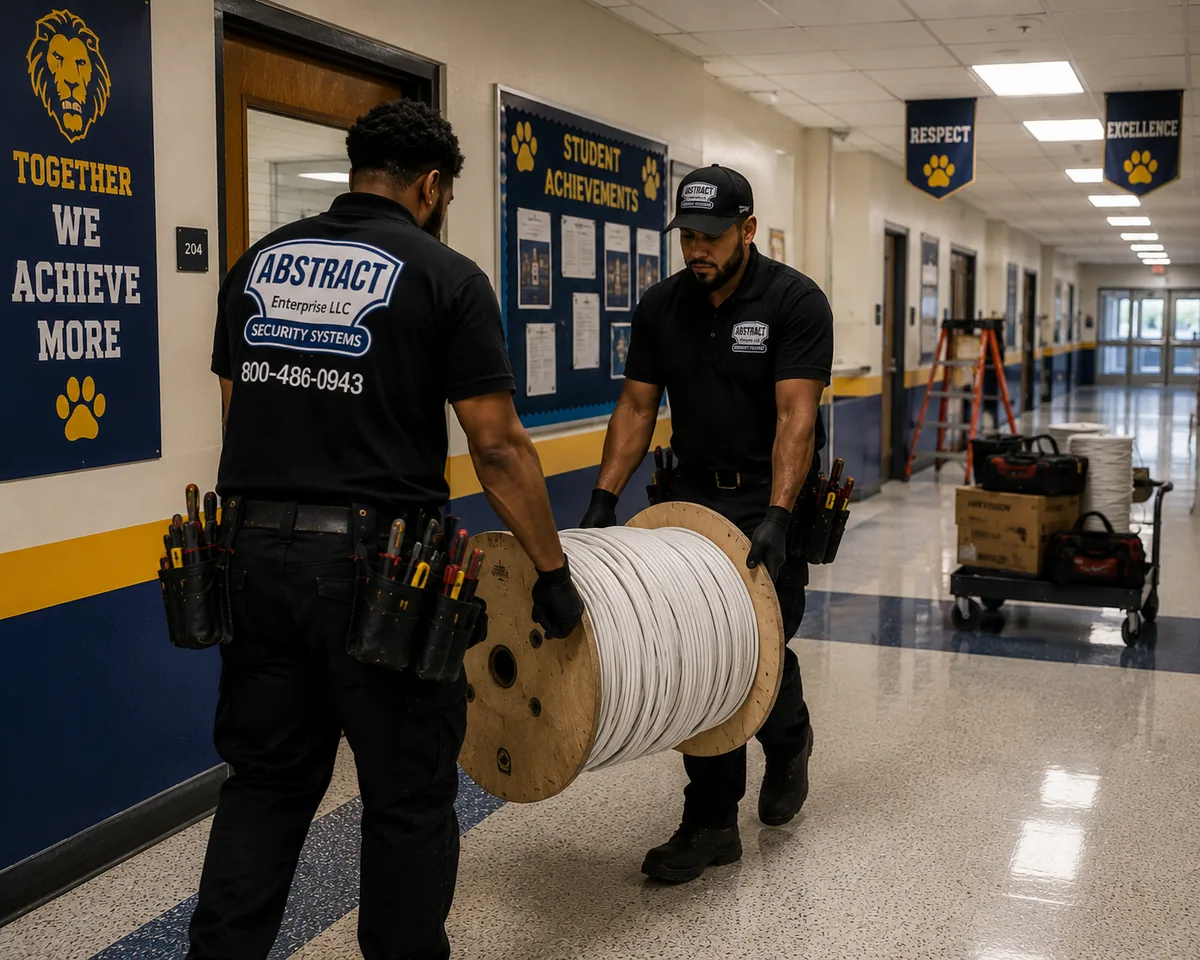
Putnam labor prices on a thirty-point band over our Brooklyn baseline — shown as its own visible line — and on this county’s wooded, spread-out properties, driveway runs and farm-area work carry their own lines too. Most Putnam schools live in the first two tiers below; the lanes are planning aids, and the binding figure is the fixed written quote after the free walkthrough. Invoices carry Putnam sales tax (8.375%) as a separate entry.
| Project Tier | Typical Scope | Installed Range |
|---|---|---|
| Daycare / Playgroup | 6–12 cameras: entry, play areas, pickup, converted house or building wing | $5,600 – $9,500 |
| Single-Building School | Around 16 cameras: verified entrance, corridors, lunchroom, lot face | $11,400 – $20,000 |
| Multi-Wing Building | Around 32 cameras: wings, gym, grounds, priority doors, full egress | $22,800 – $41,000+ |
| Residential / Farm Campus | Grounds, drives, barns, paddocks, dormitory thresholds, treelines | $45,000 – $120,000+ |
| College / Institutional | Phased building-by-building rollouts on a shared backbone | Quoted per phase; $250,000+ full campus |
| Line Item | What It Covers | Notes |
|---|---|---|
| Commercial IP camera, installed | Camera, bracket, dedicated Cat6 run, termination, aiming, configuration | $585 – $1,235 each |
| NVR + storage | Recorder and drives sized to channel count and your retention policy | $800 – $7,000+ by scale |
| Driveway / approach package | Road-entrance capture, mid-drive position, long-run cabling or wireless link | Engineered per approach; priced at survey |
| Farm & animal-area package | Barn aisle, paddock gates, feed and equipment areas — program-respecting design | Scoped with your program; quoted at survey |
| Winter hardware uplift | Cold-rated housings, sealed cable entries, drip loops, stainless fasteners | +$40 – $70 per exterior camera |
| Deposit & warranty terms | Fifty percent books the calendar, balance at completion; AESS-supplied products covered three years | Post-warranty service $195/hr, 3-hr min ($585) |
Abstract Enterprises Security Systems provides a three-year warranty on products supplied by AESS for normal wear and tear. It does not cover existing or customer wiring, customer-supplied equipment, lightning or other acts of God, power outages or surges, physical damage or unplugging, internet, router or phone changes, or camera readjustments requested after completion. After the warranty period, service is $195 per hour with a three-hour minimum ($585).
Start Your Putnam School Camera Quote
Putnam Coverage: All Six Towns
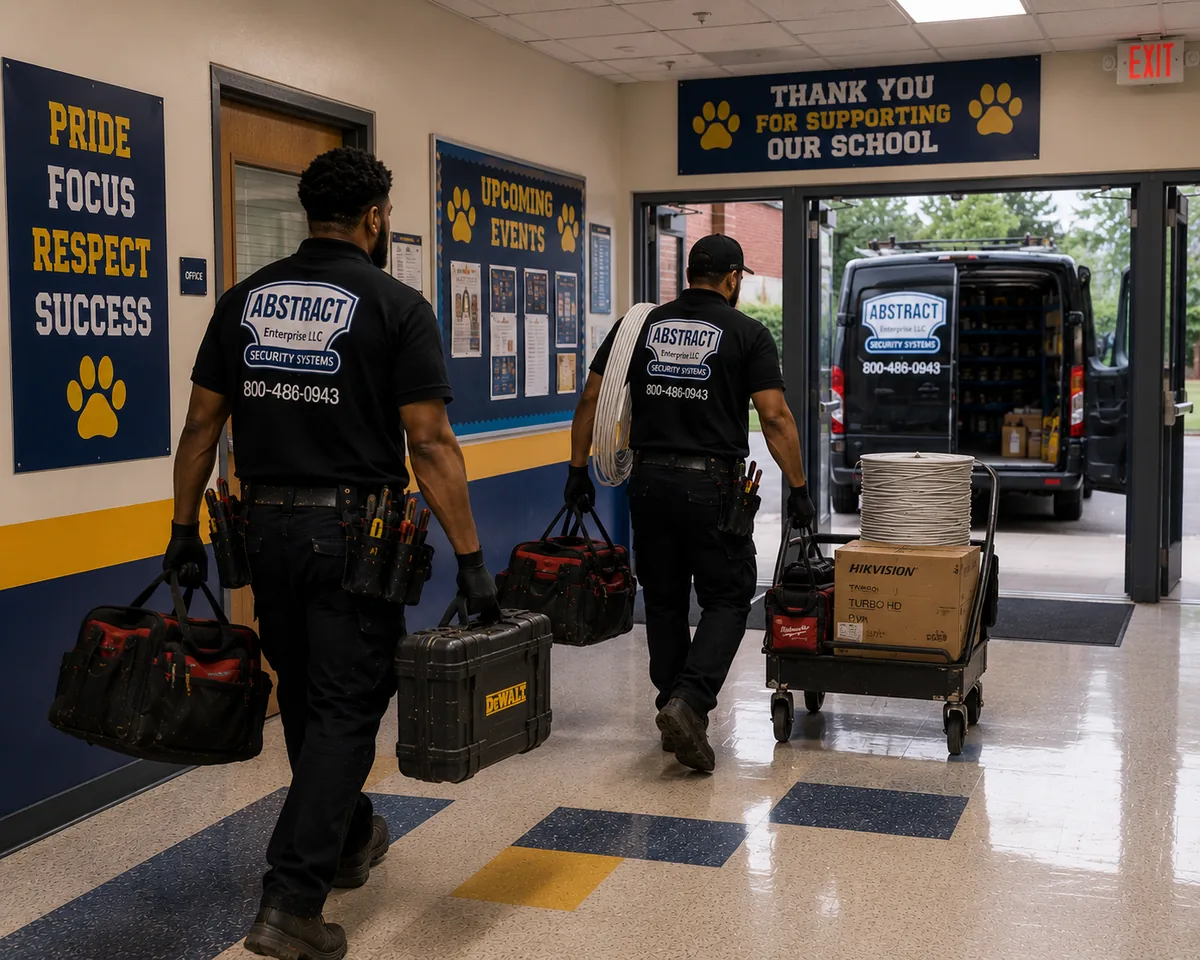
We install and repair school camera systems across every Putnam community: Carmel, Carmel Hamlet, Lake Carmel, Mahopac, Mahopac Falls, Lake Secor, Baldwin Place, Brewster, Brewster Hill, Southeast, Putnam Lake, Patterson, Towners, Kent, Kent Cliffs, Kent Lakes, Lake Carmel’s north shore, Putnam Valley, Adams Corners, Oscawana Lake, Lake Peekskill, Cold Spring, Nelsonville, Garrison, and Continental Village. County camera hub: Putnam County security camera installation. Regional hub: School Security Cameras Hudson Valley. Neighboring counties: Westchester and Orange. Dutchess County arrives next in this silo; every hamlet above books through this page today.
How the Options Compare for Putnam School Work
| AESS (Us) | National Integrator | Alarm Bundler | General Electrician | DIY | |
|---|---|---|---|---|---|
| County fluency: small campuses, woods, watershed, farms | Weekly route knowledge | Learned on your invoice | Catalog assumptions | Best guess | None |
| NY school law: FR ban, 250.45, Ed 2-d, licensing files | Drawn in and documented | Usually adequate | Barely surfaced | Not his trade | Your problem |
| Response when a channel dies | Same-day, all six towns | Ticket and wait | Distant call tree | His calendar | A forum thread |
| Equipment & footage ownership | The school’s, outright, no recurring | Owned at enterprise rates | Chained to their contract | Owned, undocumented | Held by a subscription |
| Funding paperwork: NPSE, nonprofit-security, SSBA | Pre-formatted per program | Enterprise boilerplate | A flyer | None | None |
| 3-year warranty on AESS-supplied products | ✓ | Negotiated | Narrow | Rare | — |
Putnam School Problems We Solve Every Month
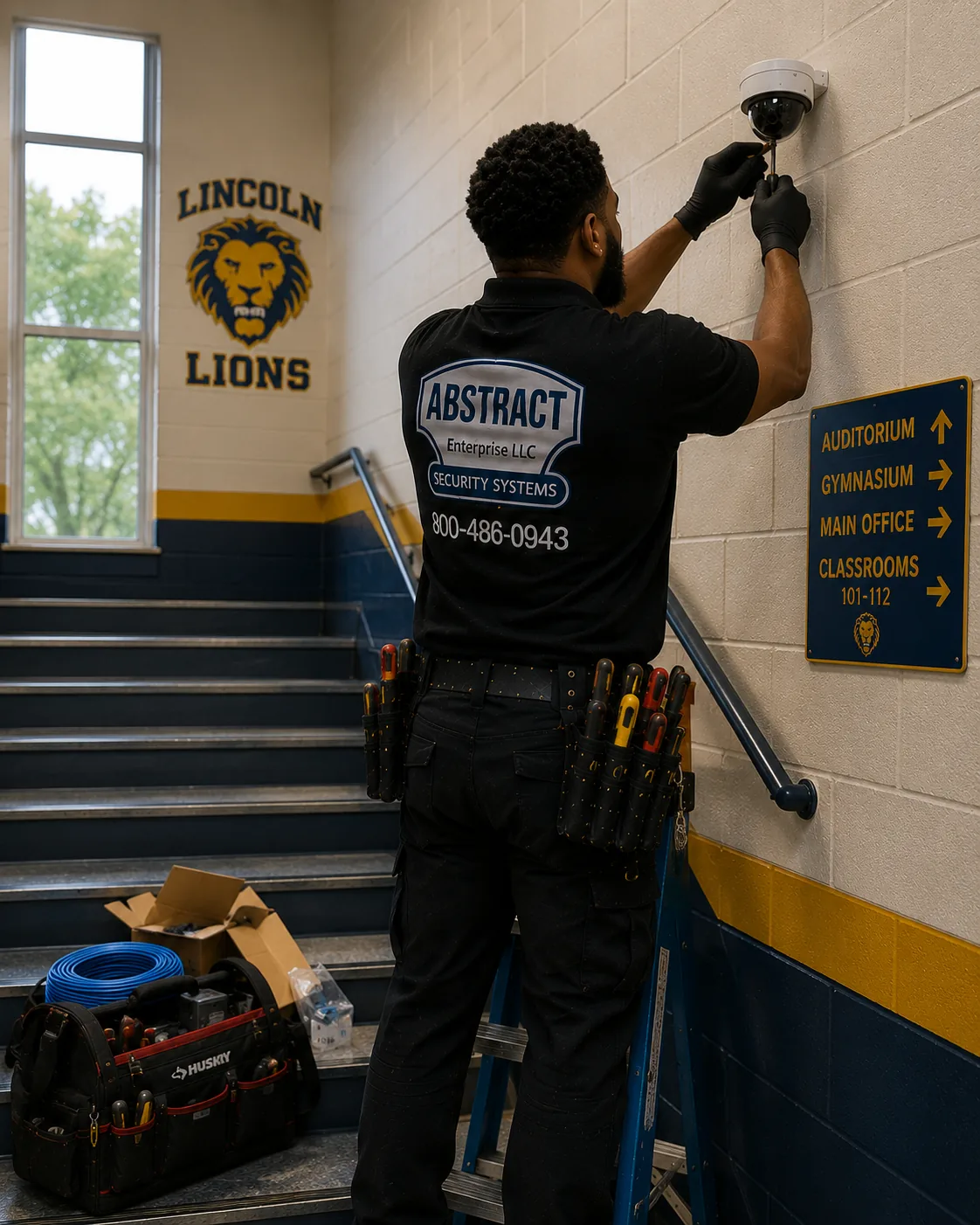
Small Schools Sold Big-School Kits
Or worse, consumer kits. Sixteen right positions with commercial discipline beat forty wrong ones and four toys — and cost less than either mistake.
Approaches Nobody Watches
Wooded drives deliver visitors unannounced. Road-entrance and mid-drive coverage buys the office minutes instead of seconds.
Summer Buildings in the Trees
Empty weeks invite pried sheds and worked windows. Health emails, battery, and person alerts keep vacancy from meaning blindness.
Trailhead Overflow on School Ground
Hiker parking and grounds-crossing every fair weekend. Lot plate capture plus consistent follow-up retrains the habit in a season.
Wildlife Owning the Alert Stream
Deer, turkeys, coyotes, the occasional bear. On-site classification tuning silences the woods and keeps the 1 a.m. human loud.
Winter Eating Cheap Housings
Reservoir-country freeze-thaw cracks catalog exteriors on schedule. Winter-grade spec ends the February attrition permanently.
Hamlet Dismissals at Full Squeeze
A hundred cars through an intersection built for thirty. Loop and lot coverage with plates turns the tightest hour into the clearest one.
Licensing Files Missing Their Video Story
Residential and daycare reviewers expect documentation. Our plans map every lens to a written reason a reviewer can approve on first read.
Need a Putnam School System Repaired Today?
Recorder down, entrance feed black, video due to a licensor, adjuster, or the Sheriff’s Office — one call puts a crew on the road now, lakes to river. The typical Putnam school fault is found and fixed the same visit.
Call the Repair Line: (845) 640-3835See the Work
Install walk-throughs, before-and-afters, and honest hardware talk from real jobs on our YouTube channel.
Watch on YouTube →Related Putnam County Services
Security Camera Repair Putnam County
Same-day diagnosis and repair for schools and institutions countywide.
NVR Installation Putnam County
Recorder builds, storage sizing, and migrations for IP systems.
DVR Upgrade Putnam
Analog-to-IP transitions that reuse clean coax and retire dying recorders.
Intercom Repair Putnam County
Video intercom and buzzer service for school entries and buildings.
Lorex Camera Installation Putnam County
Right-sized prosumer systems for daycares and small programs.
Dahua Camera Installation Putnam County
Service, upgrades, and clear-eyed installs for existing Dahua systems.
Changelog: Published July 19, 2026. Next scheduled review: October 2026 (PAA rescrape + pricing check).