
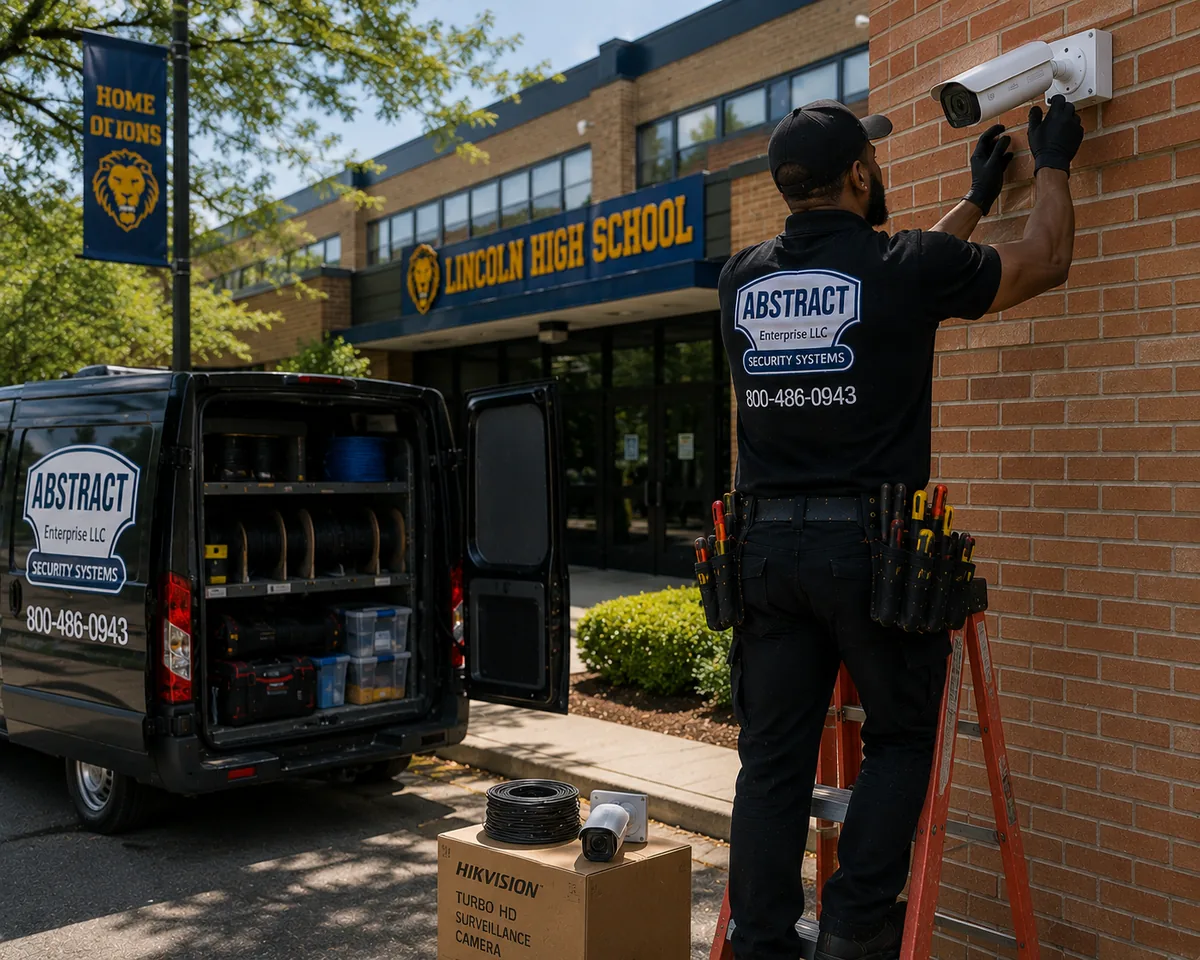
Size is the first fact about Suffolk. This county holds more land than the other four Long Island counties and boroughs combined, and its private-school map spreads across all of it. The Diocese of Rockville Centre’s eastern flank runs through here — St. Anthony’s in South Huntington, one of the largest Catholic high schools in the state, St. John the Baptist in West Islip, and parish elementaries strung along both shores from Lindenhurst to Southold. The east end carries its own tradition: the Stony Brook School, a boarding campus on the Sound since 1922; the Knox School on Nissequogue’s harbor; Ross School out in East Hampton; Harbor Country Day in St. James. Brentwood’s MDQ Academy serves one of the region’s largest Islamic school communities. St. Joseph’s University teaches in Patchogue, Suffolk County Community College runs three full campuses — Selden, Brentwood, Riverhead — and Stony Brook University anchors the whole county’s academic weight. Around and underneath all of it: hundreds of daycares and preschools in converted houses, church wings, and highway plazas, plus special-education campuses like DDI in Smithtown doing statewide-known work. The public districts — some of them geographically enormous — buy security through bonds and BOCES. Every school named above, and hundreds like them, hires a contractor directly.
Abstract Enterprises Security Systems is a NYS-licensed low-voltage contractor (Lic #12000287431) installing and repairing school camera systems across the full length of Suffolk — Huntington to Montauk, Sound shore to ocean shore. We plan for what this county actually throws at a system: properties measured in acres instead of square feet, exterior cable runs that cross athletic complexes and reach barns and field houses, deer pressure that breaks untuned motion detection in a week, salt exposure that differs between the Sound side and the Atlantic side, flood memory along the Great South Bay from 2012, and east-end campuses that sit near-empty half the year and need to report on themselves the entire time. Grant-funded projects ship on federally compliant hardware, every build respects New York’s statewide school facial-recognition ban, quotes are fixed and written, and the finished system belongs to the school outright — three-year warranty on AESS-supplied products, no recurring charges ever.
- NYS Lic #12000287431, insured — surveys booked across all ten Suffolk towns
- Crews staged for east-end work — the ninety-mile county is our normal territory
- Owned systems only: your cameras, your recorder, your footage, no rent
Why Suffolk School Boards Are Buying Cameras Now
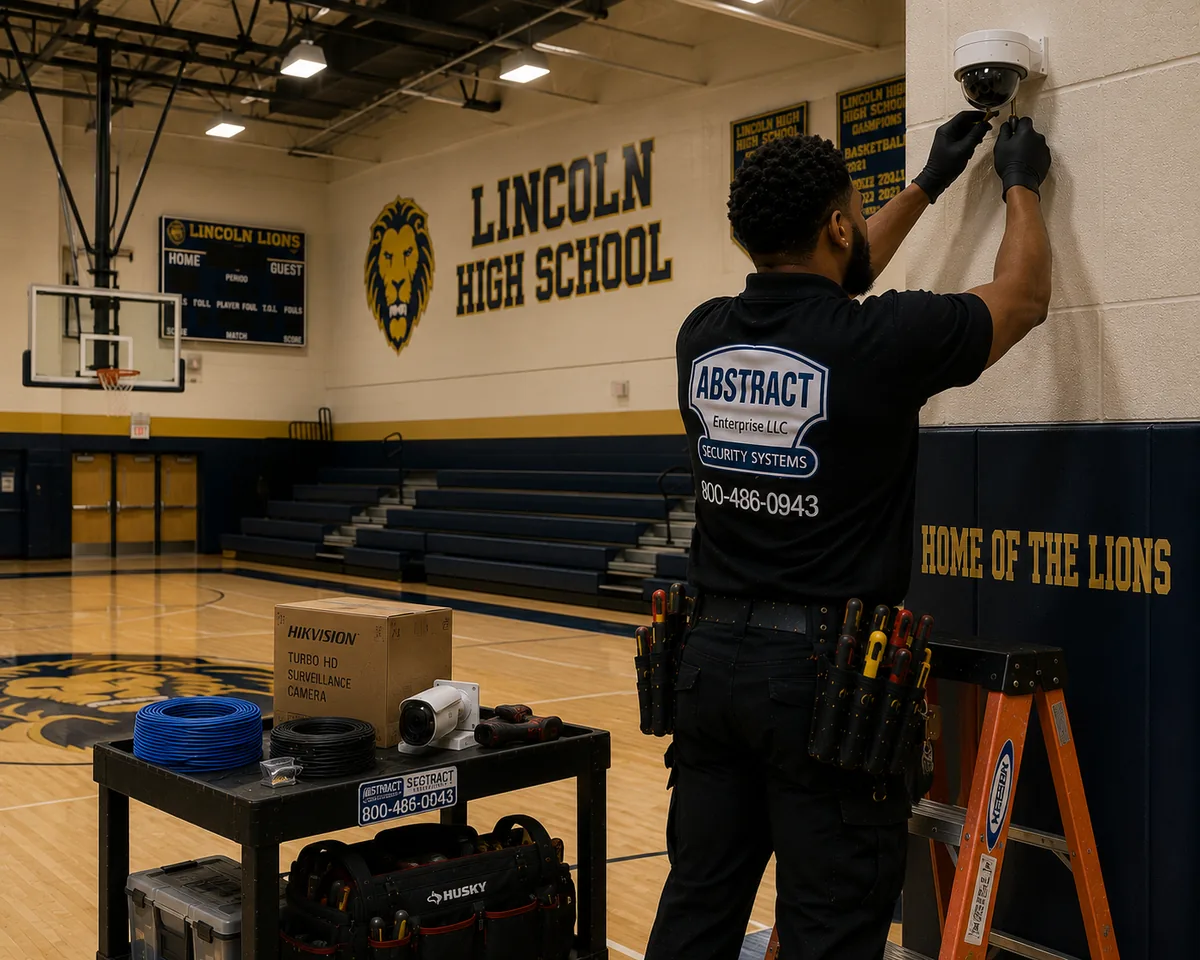
The acreage explains most of it. A Suffolk school is rarely just a building — it’s a building plus ballfields, a back lot, a bus loop, maybe a barn or an equipment shed, sometimes woods on two sides. Nobody on staff can see all of that at once, and after the last bus leaves, nobody sees any of it. The incidents that follow are the county’s standing repertoire: fields chewed up by trucks doing donuts after a rain, dugouts and press boxes tagged over a weekend, equipment sheds pried open in August, trailers and mowers rolling away at night, bonfire gatherings on back fields that end with damage nobody witnesses. A camera plan sized to the property — not just the doorways — is the only version of “supervision” that survives dismissal.
The second driver is how spread out help is. In the five western towns, the Suffolk County Police Department covers vast precinct geographies; out east, the five towns run their own departments, and a patrol car can be legitimately far away when a 2 a.m. alert fires. That changes the assignment: a Suffolk system isn’t installed to summon someone in ninety seconds — it’s installed to identify, timestamp, and preserve, so that whatever happened at 2 a.m. is a solved question by 8 a.m., with a clip ready for whichever department covers your hamlet. Schools that internalize this stop buying cameras as alarms and start buying them as witnesses.
And then there’s the paperwork reality every head of school knows: the insurance carrier’s renewal questionnaire now asks about surveillance coverage; the diocesan office asks after every incident; licensing inspectors ask at daycares; and parents touring a school in Commack or Smithtown have already seen what the public district’s bond money built. Camera systems have quietly moved from optional hardening to baseline expectation — and the schools paying tuition-scale attention to their grounds want the version they own, not the version they lease.
Suffolk School Camera System Down Right Now?
Dead recorder, black channels, a drive throwing errors, footage promised to an insurer or an SCPD detective — call now and a crew heads your way today, western towns or east end. Most Suffolk school repairs close on the first visit.
Call the Repair Line: (631) 407-2884Camera Systems Built for Suffolk Ground
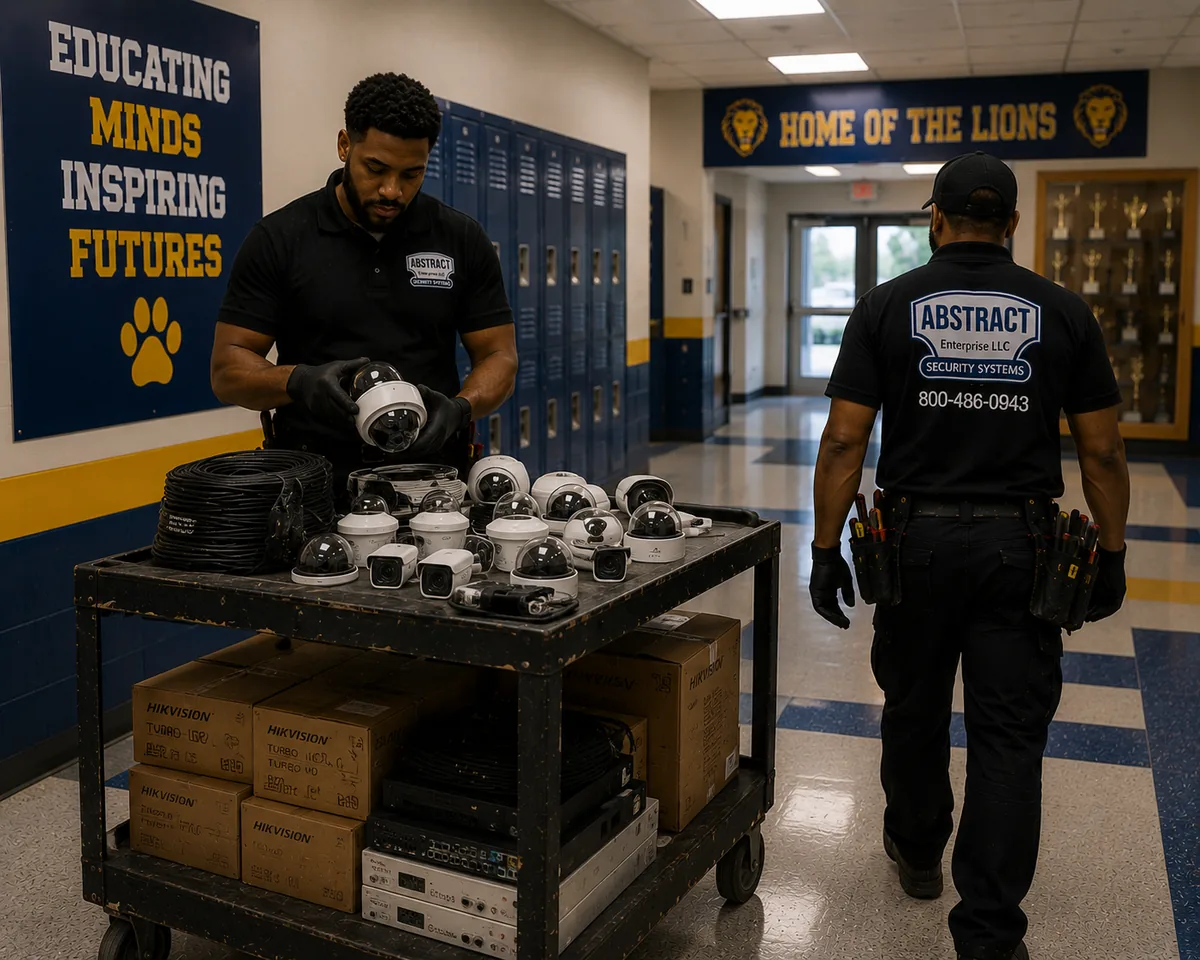
Acreage-Scale IP Systems
4K and 4MP heads on Cat6 backbones planned for real distance — fiber or point-to-point wireless where a field house or barn sits past copper’s reach, trenching priced honestly at survey, every run labeled at both ends.
Field & Perimeter Coverage
Ballfield complexes, bus loops, wooded property lines, and the back acres where trouble parks. Long-lens positions and after-hours person alerts convert ground nobody watches into ground that reports.
Boarding & Seasonal-Campus Builds
East-end schools that empty for months need systems that mind themselves: health emails, cellular check-ins, storm-tolerant power, and alert routing that reaches a caretaker who might live two towns over.
Analog Retirement, Coax Kept
Parish closets from Babylon to Greenport still run DVRs past their date. Coax that tests clean carries modern IP over converters and the closet keeps its ceiling closed — full path on our Suffolk DVR upgrade and NVR installation pages.
Verified Entrance Packages
Locked outer door, camera at face height, live view at the front desk, release only on recognition — the entry standard Suffolk districts set with bond money, built here at parish and independent-school scale.
Two-Shore Marine Spec
Sound-side campuses take steady salt haze; ocean-side and bay-side campuses take wind-driven spray and 2012 flood memory. Exterior metallurgy and recorder elevation get specified per shore, not per catalog.
The Vocabulary on Your Quote, Explained Plainly
NVR / DVR
Recorder generations. NVRs accept digital IP camera streams over network cable; DVRs digitize old analog coax. What’s in your closet decides whether the project is a swap, a hybrid, or a clean start.
PoE
Power over Ethernet: one cable feeds a camera both juice and data, letting a head reach a dugout roof or gate post without hiring an electrician to chase power across the property.
WDR
Wide dynamic range — the imaging trick that holds a readable face in a dark doorway against a sunlit parking lot behind it. Every south-facing Suffolk entrance needs it.
Person / Vehicle Detection
Classification that alerts on humans and cars while ignoring everything else. In a county where deer walk school fields nightly, this single setting decides whether staff trust the alerts or mute them.
Retention
How many days of video exist before the recorder overwrites itself. We build Suffolk schools to a thirty-day floor, expandable to sixty or ninety with drive capacity.
NDAA §889
The federal exclusion list. If NPSE, SSBA, or federal safety money funds the purchase, certain manufacturers are off the table — our default hardware clears the rule before it’s asked.
EoC
Ethernet-over-coax: adapters that push modern IP video down cable installed fifteen years ago. When the old copper meters clean, your invoice shrinks and your ceilings stay shut.
IK10 / IP66
Impact resistance and weather sealing. Gyms and any camera a person can reach get the first; anything tasting salt off the Sound or the Atlantic gets the second, with stainless hardware.
LPR
License-plate reading at driveways, lot entrances, and wherever buses and vans sleep. Every vehicle that enters becomes a searchable record with a timestamp attached.
Brands We Put on Suffolk Schools — and the Funding Rules That Sort Them
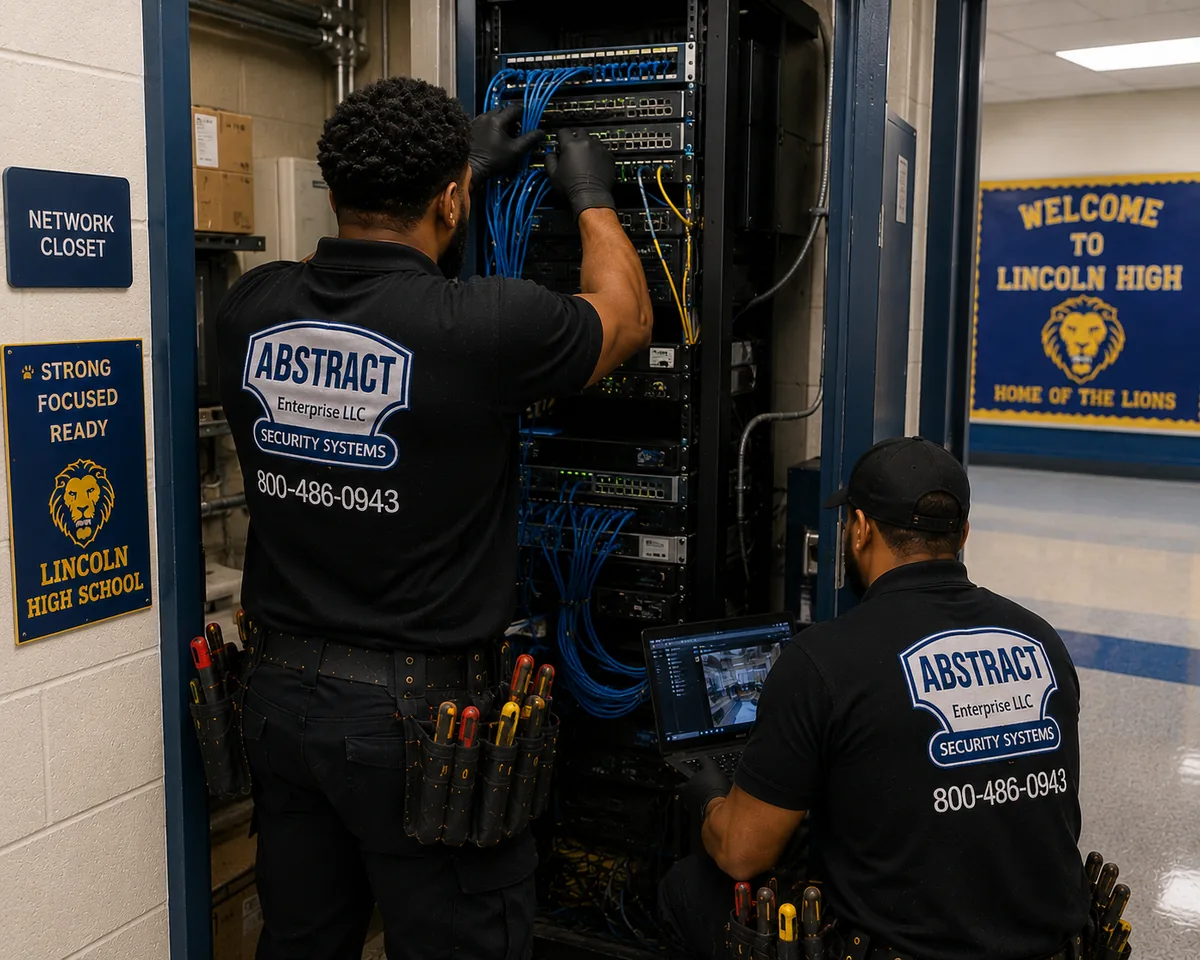
Hanwha Vision
The specification when grant money or a diocesan reviewer is in the file — clean federal standing, strong low-light performance across big dark properties, vandal-rated domes for gyms and stair towers.
Axis
Premium hardware for campuses buying a decade of quiet — the brand consultants write into boarding-school assessments, with exterior housings that shrug off shore weather.
Uniview
The compliant value line that lets a parish or academy budget cover the whole property instead of half of it — solid imaging at per-camera numbers a finance council approves.
Lorex
Honest fit for a converted-house daycare or a small program that needs eight reliable cameras and no enterprise anything. When it’s the right call we make it — details at Lorex Suffolk.
Hikvision & Dahua
Capable optics carrying the §889 exclusion — barred from any purchase touched by federal funds. Tuition-only schools may run them lawfully, and we service both makes across the county weekly; see Dahua Suffolk. The restriction is printed on every quote where it applies.
Cloud-Subscription Platforms
Per-camera monthly billing dressed as modernity. For a single Smithtown academy the five-year arithmetic almost never survives contact with an owned recorder — and we show that arithmetic before anything is signed.
Cameras, Buzzer, Fobs, Alarm: One Entry System, Not Four Gadgets
The Front Door, Verified
Outer door locked, entrance camera at eye level, live picture at the desk, buzz-in only after a face is seen. Existing intercom stations get repaired before anyone talks replacement — Suffolk intercom repair handles that side.
Credentials Instead of Key Rings
Fobs on the doors staff actually cycle through — gym lobby, kitchen, field house, maintenance bay. A lost fob dies from a keyboard, and every tap lines up against the camera timeline beside it.
Exit Doors That Announce Themselves
New York’s attention to school exit alarms grew out of the Avonte Oquendo tragedy, and on sprawling Suffolk buildings the principle scales: contact-alarm the secondary doors, pair each with a sight line, and every opening lands at the office as one event with video attached.
Alarm Events That Cue Video
A burglar-zone trip at a shuttered Riverhead building on a Sunday should arrive pre-bookmarked on the recorder. We wire panel and recorder together so a zone number turns into a minute of footage, not a guessing game.
Standard Equipment on Every Suffolk School Job
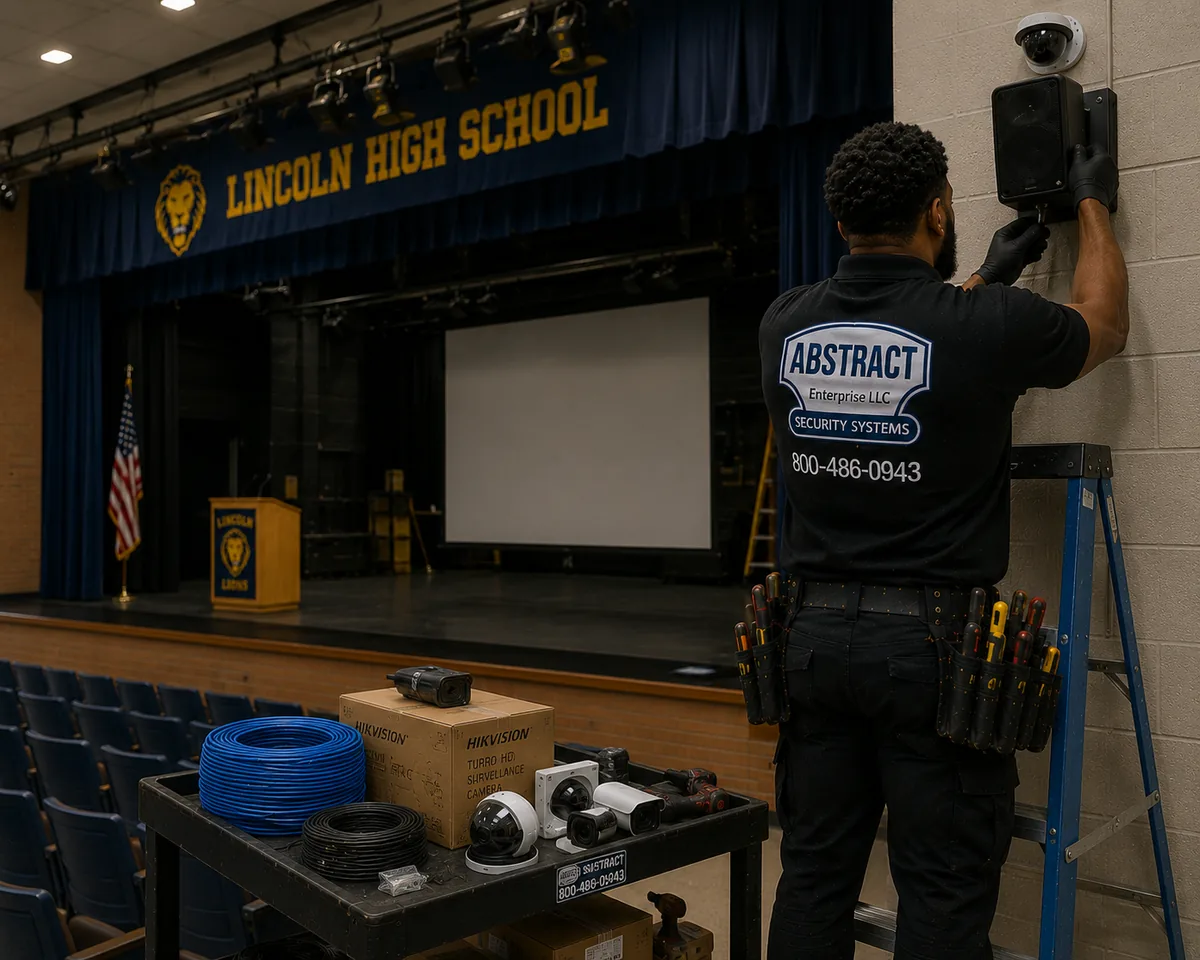
Resolution Assigned by Distance
4K where the subject is far — gate approaches, field perimeters, lot entrances; 4MP where hallway traffic passes close. The property’s geometry picks the sensor, not the sales sheet.
Deer-Silenced Detection
Classification tuned on your actual tree lines and field edges at commissioning. In Suffolk that’s not a luxury — herds cross school grounds nightly, and a system that cries deer gets muted by October.
Logins Split by Job
Administration sees everything; the front desk sees the entry stack; grounds and maintenance see lots, fields, and mechanical rooms. Each person carries their own credential, verified working over cell data before we leave.
Retention Set by Policy, Not Accident
Your board picks 30, 60, or 90 days; we size the drive array to deliver it and turn on failure alerts so a weakening disk emails somebody the week it starts, not the month it’s needed.
Export Drills Before Handoff
Find the clip, save it off the machine, note who pulled it and when — practiced with your office staff until it takes two minutes. Insurers and detectives get their footage without waiting on us.
Storm-Season Power Rides
Battery on the recorder and switches carries the system through the flickers Suffolk feeders throw off in July thunderstorms and October nor’easters — no reboot holes in the timeline.
Self-Reporting Health
A camera goes dark, a lens gets blocked, a drive degrades — the system emails an administrator that day. Silent failure discovered mid-investigation is the outcome we engineer against.
Shore-Rated Exteriors
Sound-side, bay-side, and ocean-side mounts each get sealed housings and stainless fasteners matched to their exposure. A county bracketed by salt water builds to salt-water spec.
Documentation That Outlasts Staff
Channel map, cable labels, credential sheet, laminated quick-start in the desk drawer. Administrators rotate; the binder stays and trains their replacement.
New York Camera Law for Suffolk Schools, in Plain Language
The Facial-Recognition Door Is Shut
Since the State Education Department’s September 2023 determination, no New York school — district, charter, Catholic, independent, or religious — may purchase or operate facial-recognition technology. A Huntington academy and a Montauk district building answer to the identical rule. Ordinary video — cameras, recorders, motion analytics — was never touched by the order and remains fully lawful. Our installs ship with any face-matching capability disabled in firmware, and the disabled state is written into your commissioning file so the question dies the first time it’s asked.
Where a Lens May Point
Penal Law 250.45 makes recording in bathrooms, locker rooms, changing areas, or anywhere with a reasonable expectation of privacy a felony — schools included, no exceptions. Beyond those spaces the property is fair coverage: entries, corridors, stairs, cafeteria, gym, lots, fields, driveways, sheds, mechanical rooms, perimeter. Classroom interiors we treat as a governance call for your board and counsel; our default Suffolk drawing watches each classroom door from the corridor, so comings and goings log without a camera inside the room, and any deliberate exception is signed onto the plan. Where a head could catch a neighbor’s yard or a public road, we compose the shot onto school ground and note it in the survey record.
When Footage Becomes a Student Record
Federal FERPA rules can fold identifiable video into a student’s education record once it drives a disciplinary outcome — bringing parental review rights and disclosure limits with it — and New York’s Ed Law 2-d regulates any outside vendor holding student-identifiable data. The architecture that keeps all of this simple is the one we install by default: recorder inside your building, drives on your asset list, a written review-and-release procedure delivered at handover, and cloud copies only under a 2-d-compliant contract. The first angry-parent phone call then lands on a policy instead of a panic.
Who Funds It, and What Each Dollar Requires
District projects draw on the state’s $2 billion Smart Schools bond, which covers camera systems as long as facial recognition stays out of the scope entirely. Suffolk’s tuition schools — the diocesan network, the independents, the Islamic and Jewish schools — file for NPSE reimbursement, and federal school-safety grants can stack on top, importing the §889 hardware exclusions when they do. Tell us which pot is paying and the proposal arrives already formatted for that reviewer — itemized, compliant, forwardable as-is.
Ninety Miles of Coverage, Town by Town
Huntington & Babylon Towns
St. Anthony’s in South Huntington, St. John the Baptist in West Islip, parish schools through Lindenhurst and Babylon village, daycare rows along Route 110 — the county’s western anchor and our most-traveled corridor.
Islip & the Central Corridor
Brentwood’s MDQ Academy, Central Islip’s institutional campuses, SCCC’s Grant campus, parish and Christian academies from Bay Shore to Sayville along the Great South Bay flood belt.
Smithtown & the Harbor Villages
Knox School on Nissequogue’s water, Harbor Country Day in St. James, DDI’s Smithtown campuses, and parish schools under the North Shore’s oaks — harbor properties with salt haze and tree cover both.
Brookhaven & the Middle Miles
Stony Brook University and the Stony Brook School on the Sound, St. Joseph’s University in Patchogue, SCCC Selden, and the Mastic–Shirley shoreline where 2012 still writes the recorder rules.
Riverhead & the North Fork
SCCC’s Eastern campus, parish schools amid the farm stands and vineyards from Riverhead through Mattituck to Southold — open-land campuses where the property line is the security question.
The South Fork & East End
Ross School in East Hampton, the Hamptons’ independent and parish schools, Sag Harbor to Montauk — seasonal occupancy, town police departments, ocean salt, and campuses that must watch themselves all winter.
Every Kind of School Suffolk Operates, Covered
Catholic High Schools
St. Anthony’s-scale campuses with athletic complexes, multiple buildings, and enrollment that fills stadium bleachers — phased installs, board-ready proposals, diocesan paperwork handled.
Parish Elementary Schools
The DRVC network across both shores — tight budgets, aging DVR closets, and pastors who appreciate a quote where every line is legible.
Boarding & Independent Schools
Stony Brook School, Knox, Ross, Harbor Country Day — residential campuses and east-end properties where the system must cover dorm-adjacent grounds lawfully and mind an emptier winter on its own.
Islamic & Jewish Schools
MDQ Academy in Brentwood and the county’s day-school programs — entrance hardening, NPSE and federal-grant paperwork, and schedules that respect the religious calendar.
Christian Academies
Church-affiliated schools from Huntington to the forks — shared sanctuary-and-school buildings, weekend congregation traffic, and footage governance written for dual use.
Daycares & Preschools
Converted houses, plaza storefronts, church wings from Huntington Station to Riverhead — six-to-twelve camera packages with privacy zones documented for state licensing.
Special-Education Campuses
DDI and the county’s 853/4410 programs, where elopement risk sets the drawing: every exit covered, corridor lines unbroken, retention sized for real review cycles.
Colleges & Universities
Stony Brook’s orbit, SCCC’s three campuses, St. Joseph’s Patchogue — building-by-building phases, segmented networks, and coordination with campus safety offices.
Camps & Seasonal Programs
Summer camps on school acreage, sports academies, east-end enrichment programs — properties that flip between packed and vacant and need coverage engineered for both states.
What Suffolk Actually Asks Online About School Cameras
Pulled from r/longisland, town Facebook groups, PTO threads, and school-board comment periods — the questions as people type them, answered by the contractor who works these properties.
“Our school sits on 11 acres. How do you even camera that?”
You don’t blanket it — you interrogate it. Where do vehicles enter? Where does the property invite after-hours use? Which doors, sheds, and field structures hold value? Acreage coverage is a dozen well-placed long-range positions plus alert zones, not a hundred cameras. The survey walks the land and produces a marked plan where every head has a written reason.
“Deer set off our field cameras forty times a night. Is that just Suffolk?”
It’s Suffolk with the wrong detection settings. Pixel-motion alerting can’t tell a doe from a burglar, and the herds here work school fields like a route. Person and vehicle classification, calibrated on your property at commissioning, drops the wildlife chatter to zero while a human crossing the same fence line still rings the phone. Any bidder without a deer answer hasn’t installed east of the Nassau line.
“Quote came in at $61K for 34 cameras at our academy. Fair for out here?”
That averages roughly $1,790 a position against the county’s working lane of $540–$1,140 installed per commercial head. Big properties legitimately add cost — trenched runs, pole sets, a gate reader — but legitimate cost arrives itemized. Ask for the version with 34 numbered positions and separate lines for site work; the padding usually can’t survive daylight.
“East end school, basically empty November through March. What watches it?”
The system does, if it’s built for vacancy: health checks that email when a channel dies, battery through winter outages, after-hours person alerts on doors and drives routed to a caretaker’s phone, and a cellular fallback so a downed line doesn’t blind the place. Seasonal campuses are a design specialty out here, not an afterthought.
“Someone’s doing donuts on our ballfields after every rain. Cameras or a gate?”
Both, honestly — but the camera is what ends it. A plate-capture head at the field entrance plus a long-range position on the complex turns the next set of ruts into a license number, and one visit from whichever department covers your hamlet usually retires the hobby. We’ve watched this exact movie across the county.
“Can our maintenance guy just put up cameras from the big-box store?”
On the equipment shed, sure. On a building full of children, the question isn’t installation — it’s what the footage is worth later. Consumer Wi-Fi kits with clip subscriptions and no documentation get picked apart by insurers, licensors, and attorneys, and placement law binds the school either way. The stakes decide the installer, and liability-grade stakes call for licensed work.
“Trailer and two mowers stolen from behind the school over Columbus Day weekend. Now what?”
Now the back lot gets what the front door has: plate capture at the service entrance, a motion-zoned head over the equipment yard, and overnight alerts that reach an actual phone. Equipment theft out here is a truck-and-trailer operation working unlit lots — the fix is making your lot the one that identifies the truck.
“Our DVR’s been beeping for a month and nobody knows the password. Dead end?”
Routine service call. The beep is usually a failing drive; the password is recoverable or resettable. We swap in a surveillance-rated disk, verify every channel records and plays, hand the school a fresh credential sheet, and turn on the alerts that make the next beep an email instead of a hallway rumor.
“How much storage does a 30-camera school actually need?”
For a month of 4MP recording, plan on roughly 30–40TB of purpose-built surveillance drives — a one-time $900–$1,300 in disks living inside a recorder you own. Doubling to sixty days doubles the drives and nothing else. Any proposal converting that arithmetic into a monthly fee is selling you your own storage on layaway, forever.
“Parent wants the hallway video of an incident with their kid. Do we have to show them?”
Sometimes yes — once footage feeds a disciplinary decision, FERPA can make it part of that student’s record, usually handled as a supervised viewing with other children obscured. The schools that come through this calmly are the ones holding a written procedure drafted before anyone was angry. We deliver that procedure with the system.
“Do visible cameras really stop anything, or just record it?”
They thin the casual layer measurably — the door-testers, field-drivers, and shed-priers who prefer unobserved targets move along — and they convert whatever remains from mystery into evidence. What they don’t replace is lighting, locks, and someone reading the alerts. We sell them as witnesses, not guards, because that’s the honest job description.
“Company that installed our system in 2019 is gone. Stuck starting over?”
Not even close. We inventory what’s on the walls, recover or reset the recorder, test every channel end to end, document the system properly for the first time in its life, and take over service from there — same-day when it’s urgent. Most orphaned Suffolk systems keep 80% of their hardware.
“Three bids: $16K, $33K, $59K for the same building. What am I missing?”
Three different scopes wearing one project name. The low bid is usually consumer gear on Wi-Fi; the high bid might be full commercial scope with real site work — or margin hunting. The tiebreaker is a numbered site plan pricing every position and every run. Our free survey produces exactly that, and it reads the other two bids for you.
“Church runs the school weekdays, sanctuary’s packed Sundays. Whose cameras are they?”
Whoever the written agreement says — and the agreement should exist before the first dispute does. One system, separate role-scoped logins for school and parish staff, coverage planned across the whole week, and a one-page footage-governance memo everyone signs while everyone’s still smiling. Shared buildings run fine on paper and poorly on assumptions.
Search-Bar Questions, Suffolk Answers
school camera installation cost suffolk county
$540–$1,140 per commercial camera installed; daycares $5,400–$9,600 complete; a 16–32 camera building $14,500–$36,000.
school security camera installers near me suffolk
NYS-licensed contractor #12000287431 covering all ten towns, Huntington to Montauk — surveys within one business day.
catholic school camera system long island
DRVC campuses across Suffolk served weekly — St. Anthony’s scale to one-building parishes, proposals written for pastors and councils.
deer false alarms security camera
Person/vehicle classification tuned on-site ends it — herds go unreported, humans at the fence line still alert.
school field vandalism cameras
Plate capture at the field entrance plus long-range coverage converts ruts and graffiti into license plates and arrests.
are school cameras legal in new york
Yes in common and exterior areas; never in privacy spaces; facial recognition banned in every NY school since 2023.
boarding school security system
Residential-campus builds with lawful dorm-adjacent coverage, seasonal self-monitoring, and caretaker alert routing.
school camera repair suffolk county
Same-day dispatch countywide — dead recorders, dark channels, failed drives, urgent exports for insurers or detectives.
nonpublic school security grant ny
NPSE reimbursement plus stackable federal safety grants — we format proposals to each program’s checklist.
how long does school camera footage last
Thirty days minimum on our builds, sixty to ninety with expanded drives; incident clips export permanently in minutes.
school equipment shed break in
Motion-zoned coverage over the yard, plate capture at the service drive, overnight alerts to a real phone.
diy school security cameras
Legal for low-stakes corners; unwise where children and liability are in frame — placement law and evidence standards don’t care who held the drill.
People Also Ask: Suffolk School Cameras
How many cameras does a Suffolk school property take?
Our county installs cluster in bands: 6–12 for a converted-house or storefront daycare, 16–32 for a single school building, 32–64 once fields, back lots, sheds, or long driveways join the plan, and campus-scale counts above that for boarding schools, multi-building academies, and colleges. The free walkthrough turns the band into numbered positions on your plan, each carrying a one-line justification your board can challenge.
What does Suffolk’s size change about a camera project?
Almost everything downstream of the survey. Long properties mean long cable calculations — sometimes fiber or point-to-point wireless to reach a field house — trenching decisions, pole sets, and travel-aware phasing so crews finish zones in order instead of criss-crossing ninety miles. We stage east-end jobs deliberately and price site work as its own visible line, because pretending distance is free is how bids out here go sideways.
Do you handle the deer problem or do we live with false alerts?
We handle it at commissioning. Classification-based detection is tuned against your actual field edges and tree lines until deer, foxes, and wind-thrown branches stop registering while people and vehicles still do. It’s the single setting that decides whether your staff trust the system in November — and it’s standard on every Suffolk install, not an upsell.
What’s different about Sound-side versus ocean-side installs?
Exposure profile. North Shore harbor campuses take steady salt haze and tree-canopy shading; South Shore and fork properties take wind-driven spray, storm surge history, and the 2012 flood line that still dictates where recorders live. Both get sealed housings and stainless hardware; the bay-and-ocean side additionally gets recorder elevation and surge-tolerant power as a matter of course.
Who responds to an alert on the East End, where police are spread thin?
Your people first, informed instantly — that’s the honest design. Alerts route to administrators or caretakers with a snapshot attached, and the clip is preserved for the department that covers your town, whether that’s SCPD in the western precincts or a town force out east. The system’s job on a spread-out county is identification and preservation; response time belongs to geography.
Can a boarding school lawfully camera its residential areas?
Grounds, exteriors, entries, and common buildings, yes; dormitory interiors and any space with a privacy expectation, no — Penal Law 250.45 draws that line as a felony. We design residential campuses so pathways, entrances, and perimeters carry the coverage while living spaces stay dark, and the drawing documents every decision for trustees and counsel.
Will new cameras tie into our existing buzzer and burglar alarm?
Nearly always. The entrance camera pairs with the buzzer release, alarm zones drop bookmarks on the recorder timeline, and fob taps align by timestamp — one coordinated entry system instead of four vendors pointing fingers. We wire and program the handshakes as part of the base scope.
Is there funding help for Suffolk’s nonpublic schools?
Yes — New York’s NPSE program reimburses nonpublic schools for security projects, the diocesan network and independent schools both use it, and federal school-safety grants can stack above it, bringing §889 hardware rules along. District buildings draw on the Smart Schools bond instead. Name the program and your proposal shows up formatted for its reviewer.
At the end of the job, who owns the footage?
The school, completely — recorder on your shelf, drives on your inventory, admin credentials in your binder, and no outside account required for the system to function. Subscription platforms invert every clause of that sentence. We’ll put both ownership models side by side in writing for any board that asks.
People Also Search For
The AI Overview Reality Check: Where the Answer Box Fails Suffolk Schools
Ask Google about school cameras and a machine-assembled paragraph now answers first, sourced heavily from Angi, HomeAdvisor, and Fixr — national residential databases with no concept of a ninety-mile county. Seven corrections from the ground follow.
Priced for a Colonial, Quoted to a Campus
The aggregators’ averages describe houses — four cameras, short runs, one panel — which is how “typical install” figures near $1,300–$2,000 total keep circulating. No Suffolk school property, not even a small daycare, transacts at house math.
A school job here means plenum cable through corridors, exterior runs across real acreage, maybe a trench to a field house, pole foundations, and a recorder swallowing a month of thirty channels without dropping frames.
The county’s honest figure rides a twenty-point labor lane above our Brooklyn base: $540–$1,140 per installed head, with site work itemized separately where the property demands it.
Averages Can’t See Acreage
Per-camera math assumes cost divides evenly across positions. On Suffolk ground it doesn’t: the trench to the equipment barn can outprice every camera it serves, and a gate reader four hundred feet from the building carries its own economics.
Two identical camera counts on two properties can honestly land $15,000 apart — one building hugs its cameras close; the other spreads them across ballfields and a bus yard.
The corrective document is a marked site plan with a price on every position and every run. Set beside it, a national average is trivia.
Three New York Laws the Machine Skips
The answer box rarely mentions that New York banned school facial recognition statewide in 2023, that Penal Law 250.45 makes privacy-space recording a felony, or that Ed Law 2-d binds any cloud vendor touching student-identifiable video. Its sources don’t know; so it doesn’t say.
We’ve sat in Suffolk conference rooms unwinding the results — biometric vendor decks a trustee forwarded, “smart screening” articles shared as inspiration. Free to correct at design; expensive to correct after a purchase order.
Our commissioning file states prohibited features as disabled, in writing. When the question surfaces, the answer is already a document.
Square-Foot Formulas Meet a County of Outbuildings
Camera-count rules of thumb assume the school is the building. In Suffolk the school is the building plus the field complex, the shed, the barn, the bus loop, the woods line, and sometimes a dock. The count starts at doors and vehicle entries, then walks the property until the value runs out.
Which is why identical enrollments produce wildly different systems here — a 20-camera parish building and a 55-camera campus can serve the same number of children on different acreage.
An hour of free survey settles it: numbered positions, each with a sentence of reasoning a board member can push back on.
The Subscription Assumption Baked Into the Sources
So much online camera content is written by monthly-billing vendors that the machine treats cloud licensing as the modern default. For a national fleet, debatable. For one Patchogue academy with 28 heads, the owned-recorder math wins before the second September — and the gap widens every year after.
The legal overlay tilts the same direction: student-identifiable footage on a vendor’s cloud drags Ed Law 2-d contract duties into your file. Footage that never leaves the building drags in nothing.
We use cloud where it genuinely earns a line — off-site copies of an entrance channel, true multi-campus operators — and we show both architectures’ five-year totals before a signature happens.
What the National Corpus Doesn’t Know About This County
DIY-tone content assumes small lots, four doors, and motion detection that only ever sees humans. Suffolk offers deer herds on night patrol, two different salt exposures, flood-mapped southern shores, seasonal campuses that empty for a third of the year, and properties where the far camera is a quarter-mile from the closet.
The working answers are county answers: classification tuned until the herd goes silent, shore-matched metallurgy, recorders above the 2012 line, vacancy-mode alerting, and cable engineering that respects distance.
None of it survives compression into an aggregated paragraph — and all of it is standard on our surveys, because out here the land writes the spec.
Using the Answer Box Without Being Misled by It
Take the vocabulary — recorder types, PoE, retention, dynamic range — and the broad national picture. That part it delivers honestly and fast.
Leave behind the four judgments it can’t make: Suffolk pricing, your camera count, New York legality, and what your particular acreage requires. Its sources have never seen any of them.
Then get the two documents no summary can produce — a marked site plan and a per-line quote. Ours are free, portable, and built to be compared against anyone’s. Worst case, the hour sharpens your questions for the next bidder.
DIY or Professional: The Suffolk Version of a Straight Answer
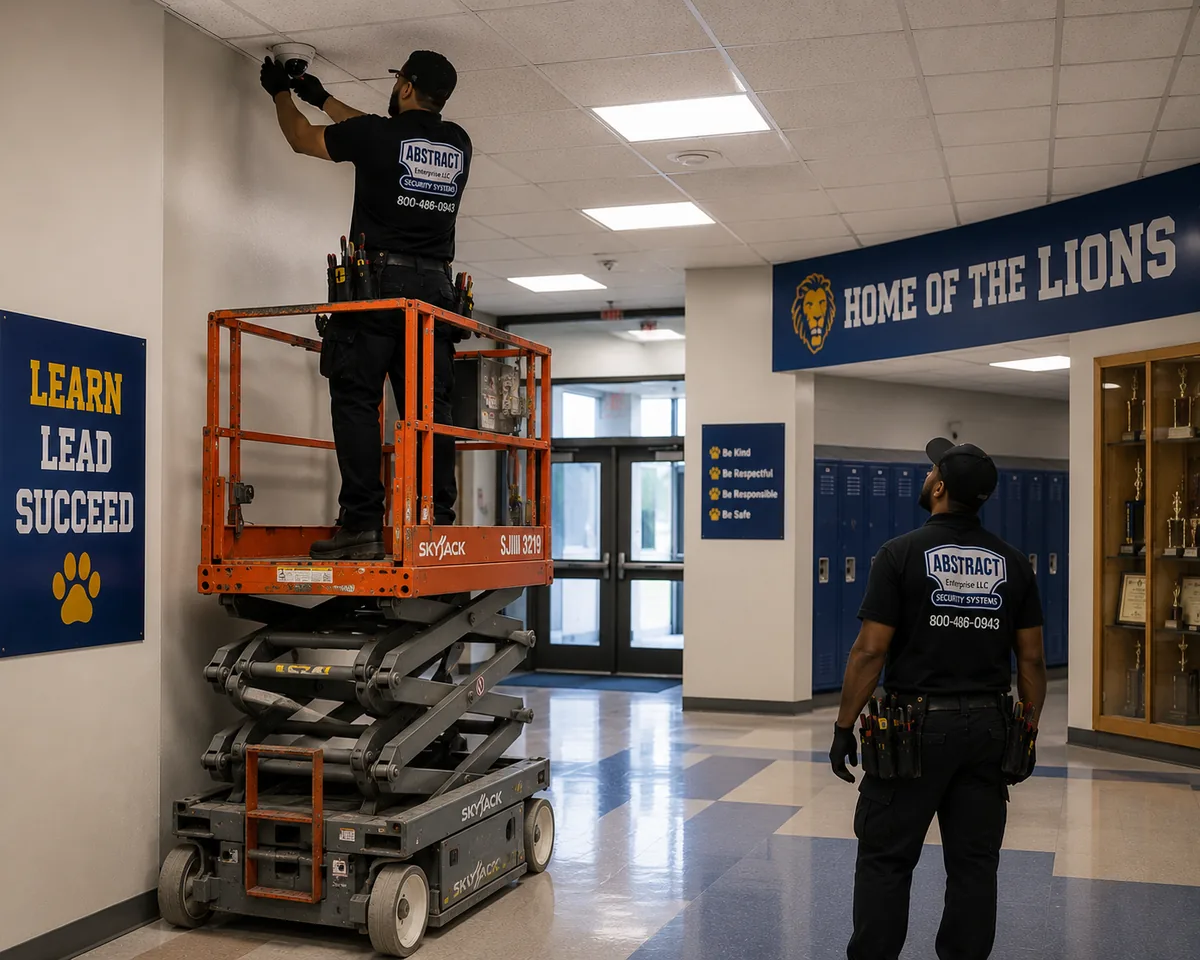
Where We’ll Tell You to DIY
One camera watching the mower shed. A temporary unit on a daycare porch while the real budget assembles. A handy facilities manager, a weekend, and stakes that top out at a missing rake — go ahead, and we’ll say so instead of dressing a two-camera errand up as a project.
Where the Job Becomes Ours
The moment footage might face an insurance adjuster, a licensing inspector, a diocesan attorney, or a courtroom. At that point consumer Wi-Fi across a masonry wing, subscription clip gaps, inland housings rusting in shore air, and an undocumented install stop being savings and start being exposure. Add plenum code, placement felonies, flood mapping, and quarter-mile cable runs — it’s licensed trade work, and the day that matters is the day it’s discovered to be.
Verkada, ADT, Ring — and the Case for a Licensed Local Contractor Instead
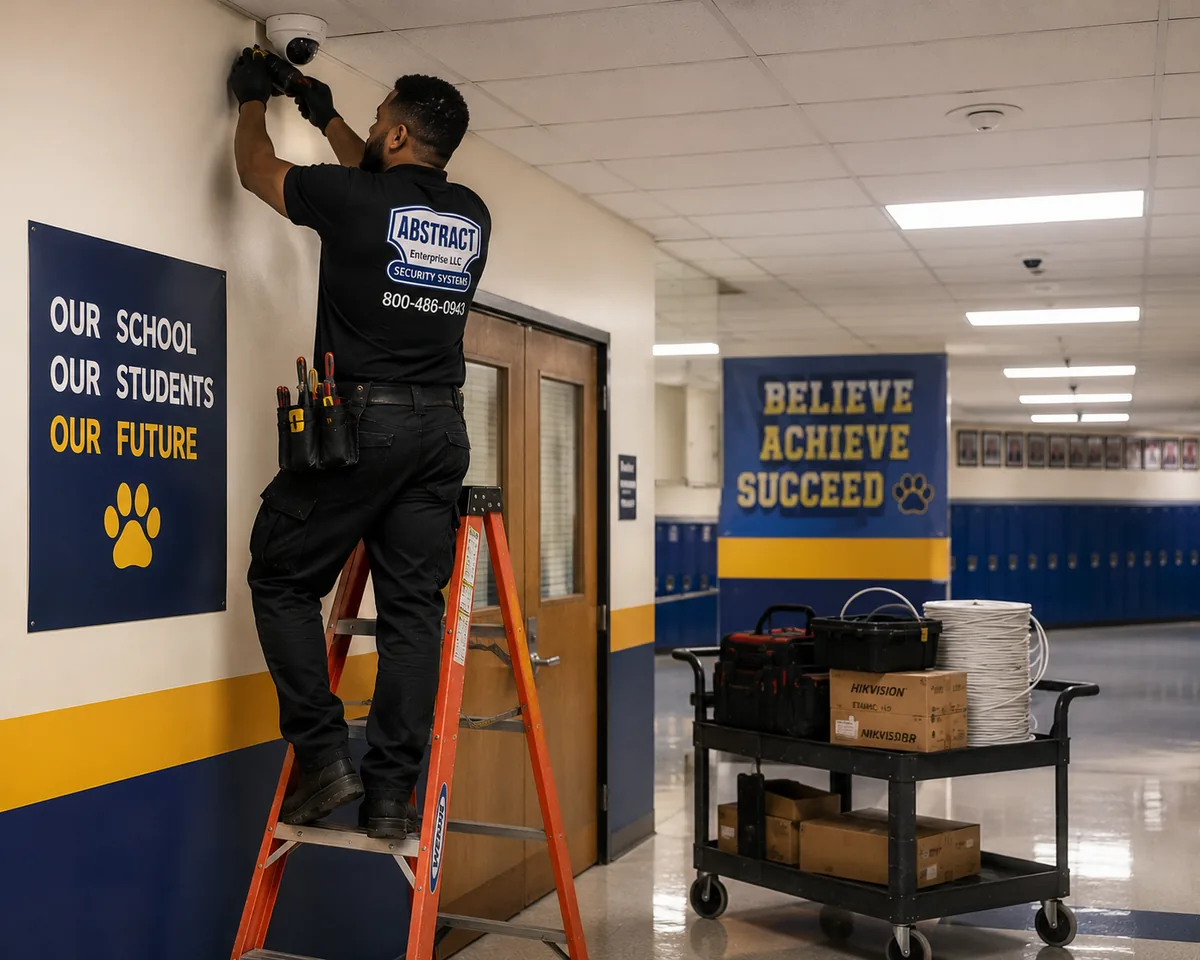
Cloud Platforms (Verkada, Rhombus)
Beautiful dashboards funded by per-camera licenses that never stop, on hardware that bricks itself if the subscription lapses. A forty-campus national operator can defend the model; a single Smithtown academy is renting permanently what one recorder purchase would end. We run the five-year totals side by side and let your council do the reading.
National Alarm Companies (ADT and Kin)
Cameras enter their pitch as an add-on to a monitoring contract — installed by whoever the subcontract landed on, locked to the vendor’s ecosystem, supported by a queue in another state while your entrance feed stays dark through a holiday weekend. A Suffolk school is better served owning its hardware outright, keeping the installer’s direct number, and buying monitoring — if it wants monitoring — month to month with a clean exit.
Consumer Kits (Ring, Nest, Big-Box Bundles)
Superb on a raised ranch, overmatched on a school: device ceilings, footage rationed into subscription clips, radios that die inside masonry wings, no deer-classification story, no shore-grade housings, no site documentation. We replace these on a steady rhythm, usually about a year and a half after a well-meaning board bought them to save money. The tool was fine; the building was wrong.
Suffolk School Security by the Numbers
What Suffolk School Clients Tell Us Afterward
Illustrative configuration — a representative security camera setup may cover the main entries and shared areas, with remote viewing or management from a phone and a clear handoff at completion. Hypothetical planning example — not a customer account, completed AESS project, verified review, or promised result.
— Facilities director, Catholic academy, western Suffolk
Illustrative planning scenario — a typical security camera project of this type begins with an on-site assessment, then a written scope and fixed quote, and finishes with professional installation completed to code. Hypothetical planning example — not a customer account, completed AESS project, verified review, or promised result.
— Head of school, independent school, East End
Illustrative example — for work like this, a typical security camera job involves reviewing the property, matching equipment to the space, running clean cabling, and walking through the finished system. Hypothetical planning example — not a customer account, completed AESS project, verified review, or promised result.
— Pastor, parish school, South Shore
Illustrative configuration — a representative security camera setup may cover the main entries and shared areas, with remote viewing or management from a phone and a clear handoff at completion. Hypothetical planning example — not a customer account, completed AESS project, verified review, or promised result.
— Program director, special-education campus, central Suffolk
Field Notes: An August Job on the East End, a Quarter-Mile Cable Run, and a Pickup That Chose the Wrong Barn
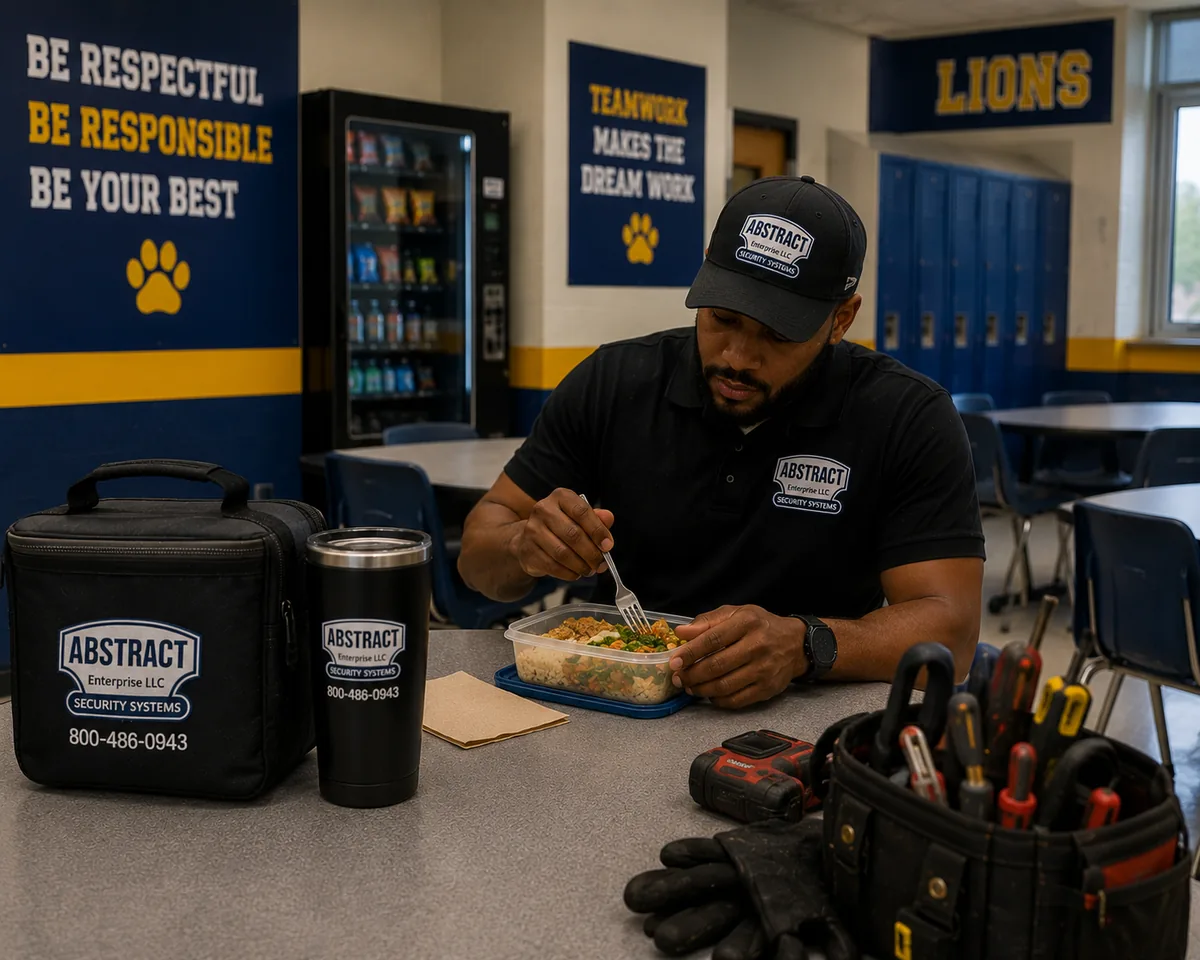
Thirty-one cameras across nine acres at an independent day school on the South Fork, scheduled for August because that’s when the campus could take us and the crew could take the drive. Distance shaped the job twice over: ninety-odd miles from our shop, which meant staging materials in one trip and sequencing the work so nothing waited on a part — and a quarter-mile of property between the main building and the equipment barn, which meant the barn run went point-to-point wireless after the trench math embarrassed itself. The rest was Suffolk in miniature: ocean air close enough to demand stainless everything, a main entrance the head of school wanted rebuilt as a proper verified vestibule before September’s first tour, and a deer herd that treated the soccer fields as a nightly commute.
We worked it in zones, west to east. Entrance vestibule first — face-height exterior lens, interior trap camera, live station at the front desk, buzz-through only on recognition. Then corridors, gym, and the classroom-door lines, every run labeled at both ends because this campus will outlive several heads of school and the binder has to explain itself in 2035. Exterior week brought the shore spec: sealed housings, stainless mounts, greased and shrunk terminations, recorder racked on the second floor with battery underneath it. The last two days belonged to the fields and the tuning — person and vehicle classification walked in at dusk while the deer made their case in real time. Forty-plus nightly wildlife alerts on the old system; zero on the new one, with a person-test at the fence line still ringing three phones.
The system earned its keep before the school year did. Eleven days after handoff — 1:07 a.m. on a Tuesday — a pickup rolled past the field gate and idled at the equipment barn, where the mowers and the utility trailer sleep. The gate head had the plate before the driver’s door opened; the barn camera had two figures trying the sliding door; the caretaker’s phone had all of it live. He never left his house — just called it in. The town police ran the plate that morning, paid a visit by afternoon, and the trailer that was almost gone is still exactly where it was parked. Nine acres, one screen, and a county truth proven again: out here the camera doesn’t summon help fast — it makes help unnecessary by knowing exactly who came.
— Anwar Timothy, NYS Lic #12000287431
Frequently Asked Questions: School Camera Installation in Suffolk County
What does a school camera system cost in Suffolk County?
Suffolk labor runs on the same twenty-point lane above our Brooklyn base as the rest of Long Island — shown as its own quote line — putting commercial cameras at $540 to $1,140 installed, with the recorder, drive array, and any site work (trenching, poles, long runs) priced separately where the property requires them. Working lanes from our county jobs: 6–12 camera daycares complete between $5,400 and $9,600; single buildings at 16–32 cameras between $14,500 and $36,000; properties at 32–64 cameras with fields, sheds, and acreage between $30,000 and $58,000; boarding and multi-building campuses above that. The walkthrough is free and ends in a marked plan plus a fixed written quote; invoices show Suffolk sales tax at 8.625% on its own line.
How do you decide camera count on a big property?
By walking it with a purpose: doors and vehicle entries first, then corridors and gathering spaces, then outward to field perimeters, sheds and barns, bus loops, and the property edges where after-hours use concentrates. Suffolk counts spread wide because Suffolk properties do — a 20-camera parish building and a 55-camera nine-acre campus are both ordinary here. You get numbered positions on your own site plan, each with a sentence of reasoning.
Is facial recognition allowed at any Suffolk school?
No. New York’s State Education Department closed that door in September 2023 for every school in the state — district, charter, Catholic, independent, and religious equally. Conventional video was never part of the prohibition: cameras, recording, and motion analytics remain fully lawful. On our systems, face-matching features ship disabled at the firmware level and the disabled state is documented in your commissioning file.
Can cameras go inside classrooms?
Frequently lawful, never our default. We put the choice where it belongs — your board and counsel — and our standard Suffolk drawing covers each classroom doorway from the corridor instead, logging entries and exits with no lens inside the teaching space. If a board deliberately elects in-room coverage, that exception is initialed on the plan before a bracket goes up.
Which areas can never be recorded?
Bathrooms, locker rooms, changing areas, and any space where privacy is reasonably expected — Penal Law 250.45 classifies recording there as a felony and grants schools no exemption. The rest of the property is lawful coverage: entries, halls, stairs, cafeteria, gym, lots, fields, driveways, sheds, mechanical rooms, and perimeter, with any street- or neighbor-facing shot composed onto school ground and logged that way at survey.
How long should our school keep footage?
We commission every Suffolk system at a thirty-day floor — school incidents surface on a delay, and thirty days is what serious institutions hold — expanding to sixty or ninety when the drive budget allows. Incident clips export off the recorder immediately and permanently, and drive-failure alerts email an administrator the week a disk starts weakening.
Can you install while school is in session?
Yes, phased around the calendar: drilling, lifts, trenching, pole setting, and the long exterior pulls land on breaks, weekends, and summer, while configuration, aiming, and detection tuning proceed quietly during occupied days. Crews clear your screening and escort rules, and anything near the bus loop schedules around arrival and dismissal windows.
Which camera brands do you install, and what does NDAA §889 change?
Our defaults are Hanwha Vision, Axis, and Uniview, with Lorex where a small program’s honest scale calls for it. Section 889 bars certain manufacturers — Hikvision and Dahua included — from purchases involving federal money, so grant-funded Suffolk projects specify compliant lines from the first draft. Systems already wearing any brand we service and upgrade without prejudice.
What funding can Suffolk schools tap for cameras?
District buildings draw on the state’s $2 billion Smart Schools bond, which funds camera work as long as facial recognition stays out of scope. Nonpublic schools — diocesan, independent, Islamic, Jewish — file NPSE reimbursement, and federal school-safety grants can stack above it, carrying the §889 hardware exclusions along. Tell us the program; the proposal arrives shaped to its checklist.
Do the cameras integrate with our buzzer, alarm, and door hardware?
That integration is most of the point: a verified-entry vestibule pairing the entrance lens with the buzzer release, fobs on staff doors with taps aligned to video, contact-alarmed secondary exits sharing sight lines, and burglar-panel events dropping bookmarks on the recorder so a zone number becomes a minute of footage. One contractor wiring all of it keeps the pieces in conversation.
Do you repair systems or take over ones another installer abandoned?
All the time, across all ten towns. Same-day dispatch handles dead recorders, dark channels, PoE faults, drive failures, and urgent exports for insurers or detectives — most calls close in one visit. Orphaned systems get a full intake: hardware inventoried, credentials recovered or reset, every channel proven recording and playing, real documentation written at last, and service carried forward under our number.
Are your technicians licensed and appropriate for school environments?
Yes — Abstract Enterprises Security Systems holds NYS low-voltage license #12000287431 and full insurance. Crews pass whatever background screening and escort procedures your institution runs, loud phases stay off the academic clock, and school and commercial references from across Long Island are available before you commit to anything.
School Camera Pricing in Suffolk County
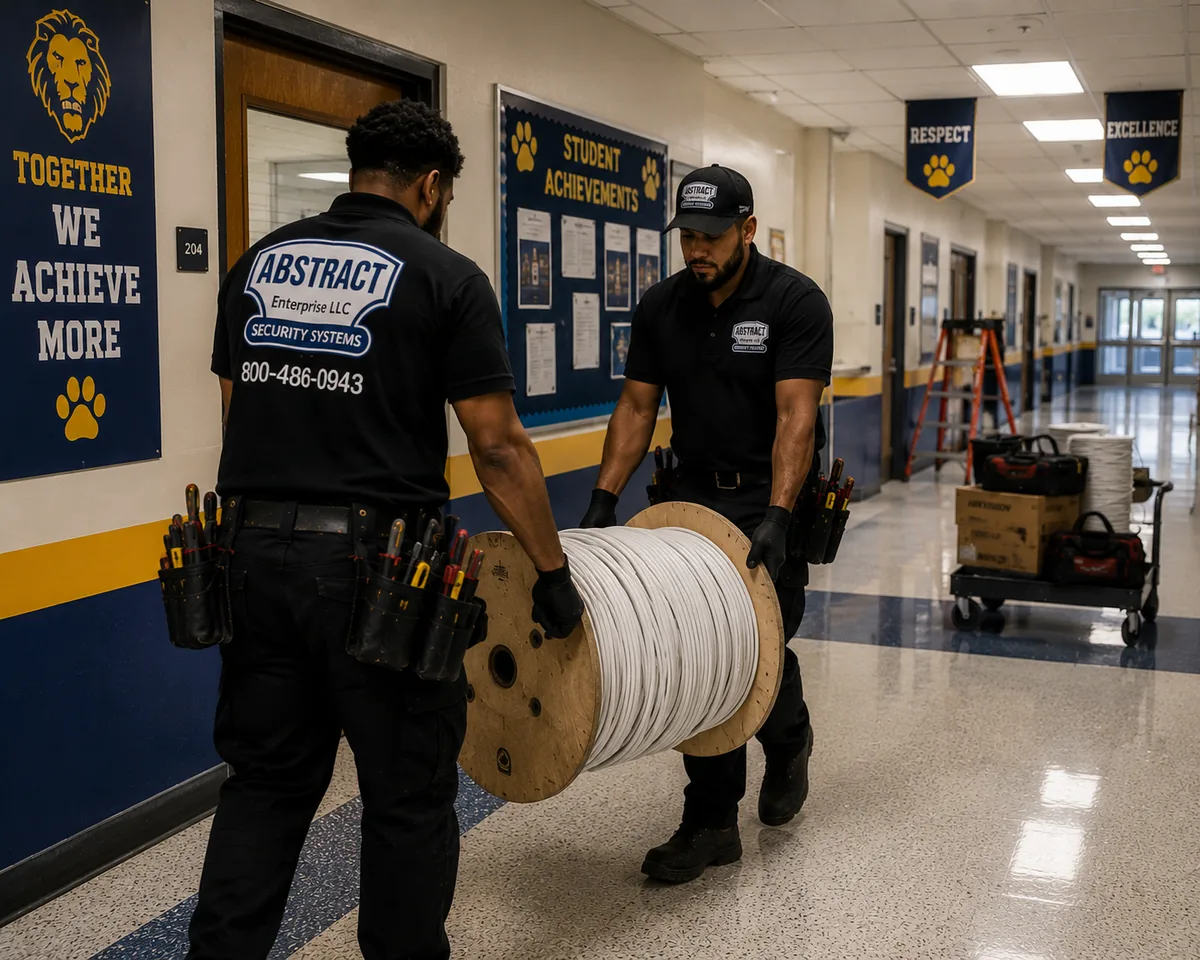
Suffolk labor prices on Long Island’s twenty-point lane above our Brooklyn baseline, carried as a visible quote line rather than folded into unit prices — and on this county’s properties, site work (trenching, poles, extended runs, wireless bridges) gets its own lines too. The lanes below are planning tools; the binding number is the fixed written quote produced after the free walkthrough. Invoices carry Suffolk sales tax (8.625%) as a separate entry.
| Project Tier | Typical Scope | Installed Range |
|---|---|---|
| Daycare / Preschool | 6–12 heads across a converted house, plaza storefront, or church wing | $5,400 – $9,600 |
| Single-Building School / Parish | 16–32 heads: verified entrance, corridors, cafeteria, priority doors, lot face | $14,500 – $36,000 |
| Acreage Property / Field Complex | 32–64 heads adding field perimeters, sheds and barns, bus loops, extended runs | $30,000 – $58,000 |
| Boarding / Multi-Building Campus | 64–128 heads: residential-campus grounds, gates, athletics, outbuildings | $48,000 – $110,000+ |
| College / Institutional | Phased multi-building rollouts on a shared network spine | Per-phase quotes; $230,000+ campus-wide |
| Line Item | What It Covers | Notes |
|---|---|---|
| Commercial IP camera, installed | Head, bracket, dedicated Cat6 home run, termination, aiming, configuration | $540 – $1,140 each |
| NVR + storage | Recorder and drives sized to channel count and your retention policy | $850 – $7,000+ by scale |
| Extended-run & site work | Trenching, pole sets, fiber or point-to-point wireless to field houses and barns | Surveyed and priced per run |
| Shore exposure package | Marine housings, stainless hardware, sealed terminations — Sound, bay, or ocean side | +$45 – $80 per exterior head |
| Deposit & terms | Half down books the crew; balance settles at completion | Work proceeds only on the signed written quote |
| Warranty | Three years on AESS-supplied products, normal wear | Post-warranty service $195/hr, 3-hr minimum ($585) |
Abstract Enterprises Security Systems provides a three-year warranty on products supplied by AESS for normal wear and tear. It does not cover existing or customer wiring, customer-supplied equipment, lightning or other acts of God, power outages or surges, physical damage or unplugging, internet, router or phone changes, or camera readjustments requested after completion. After the warranty period, service is $195 per hour with a three-hour minimum ($585).
Start Your Suffolk School Camera Quote
Suffolk Coverage: Western Towns to the Twin Forks
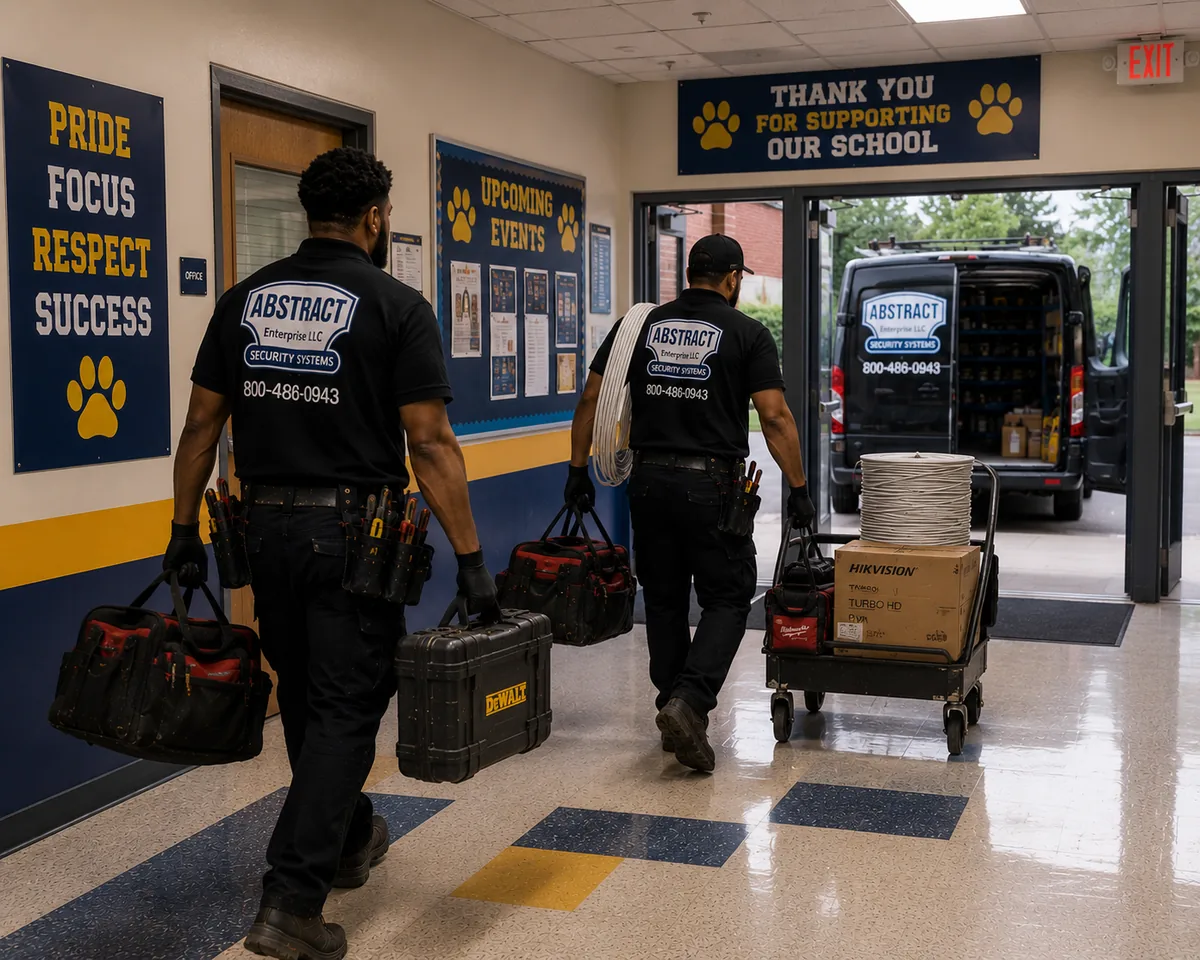
We install and repair school camera systems across every Suffolk town and hamlet: Huntington, Huntington Station, Melville, Dix Hills, Commack, Elwood, Northport, Cold Spring Harbor, Babylon, West Islip, Lindenhurst, Copiague, Amityville, Deer Park, Wyandanch, Bay Shore, Brentwood, Central Islip, Islip, Sayville, Bohemia, Ronkonkoma, Hauppauge, Smithtown, St. James, Nesconset, Kings Park, Nissequogue, Stony Brook, Setauket, Port Jefferson, Selden, Centereach, Coram, Middle Island, Medford, Patchogue, Bellport, Shirley, Mastic, Moriches, Manorville, Riverhead, Calverton, Wading River, Mattituck, Cutchogue, Southold, Greenport, Westhampton, Hampton Bays, Southampton, Water Mill, Bridgehampton, Sag Harbor, East Hampton, Amagansett, and Montauk. County camera hub: Suffolk County security camera installation. Regional hub: School Security Cameras Long Island. Sister county: Nassau County. Every community above books through this page today.
How the Choices Stack Up for Suffolk School Work
| AESS (Us) | National Integrator | Alarm Bundler | General Electrician | DIY | |
|---|---|---|---|---|---|
| County fluency: acreage, deer, two shores, seasonal campuses | Our weekly territory | Learns on your invoice | One-size catalog | Guesswork | First rodeo |
| NY school law: FR ban, 250.45, Ed 2-d | Designed in and papered | Generally handled | Seldom mentioned | Unfamiliar ground | Your problem entirely |
| Response when a channel goes dark | Same-day, all ten towns | Queue and wait | Out-of-state call tree | When he can | Forum threads |
| Who owns equipment & footage | The school, outright, forever | You do, at enterprise cost | Bound to their contract | You do, undocumented | The subscription does |
| Grant paperwork: SSBA, NPSE, federal | Formatted per program | Enterprise templates | Brochure | None | None |
| 3-year warranty on AESS-supplied products | ✓ | Varies | Limited | Rare | — |
Suffolk School Problems We Solve on Repeat
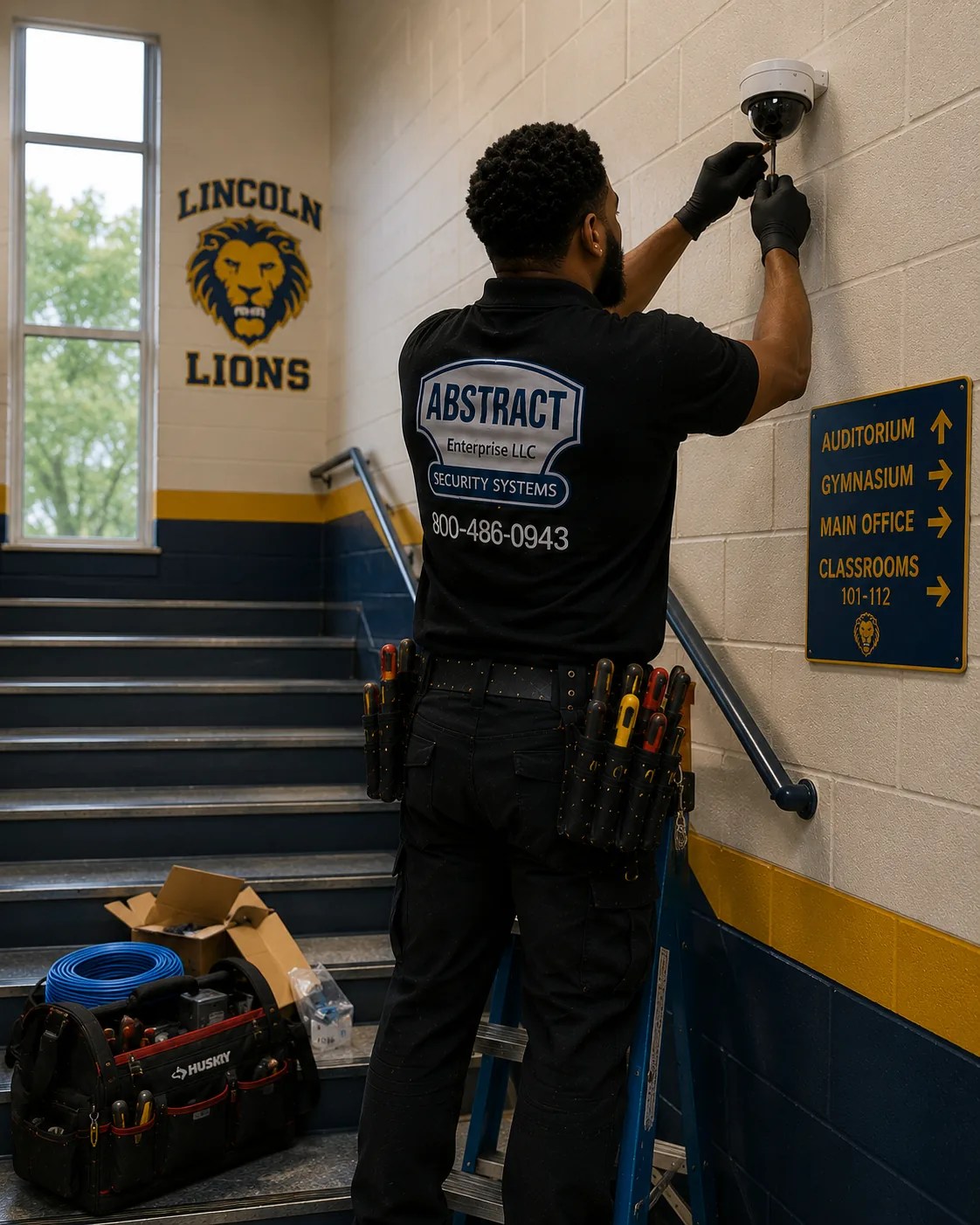
Acres Nobody Watches
Fields, back lots, woods lines, and outbuildings beyond any window’s view. Long-range positions plus after-hours person alerts turn dead ground into reporting ground.
Deer Running the Alerts
Herds cross school property nightly and untuned detection surrenders by October. Classification calibrated on your land silences the wildlife and keeps the humans loud.
Fields Torn Up After Rain
Trucks and ATVs treat soft ballfields as a track. Plate capture at the field entrance ends the season of anonymous ruts.
Sheds and Barns Pried Open
Mowers, tools, and trailers roll away from unlit equipment yards. Motion-zoned coverage and a service-drive plate reader make the yard the witness.
Salt Eating the Hardware
Sound haze north, ocean spray south — inland-spec housings corrode on a schedule. Shore-matched metallurgy resets exterior positions to a decade.
Recorders in Flood Reach
Ground-floor closets along the Great South Bay hold the county’s most expensive habit. Racking the system upstairs costs a morning; the alternative costs everything plus the evidence.
Campuses Empty for Months
East-end and seasonal properties sit dark a third of the year. Health emails, battery, cellular fallback, and caretaker-routed alerts keep vacancy from meaning blindness.
Bonfires on the Back Field
Weekend gatherings leave burn rings, bottles, and damage with no witnesses. Perimeter heads with person alerts move the party somewhere less documented.
Need a Suffolk School System Fixed Today?
Recorder down, entrance channel dark, footage due to an insurer or a detective — one call, and a crew is rolling toward your town now. Most Suffolk school faults are found and fixed on the first trip.
Call the Repair Line: (631) 407-2884See the Work
Install walk-throughs, before-and-afters, and honest hardware talk from real jobs on our YouTube channel.
Watch on YouTube →Related Suffolk County Services
Security Camera Repair Suffolk County
Same-day diagnosis and repair for schools and businesses, all ten towns.
NVR Installation Suffolk County
Recorder builds, storage sizing, and migrations for IP systems.
DVR Upgrade Suffolk County
Analog-to-IP transitions that reuse clean coax and retire dying recorders.
Intercom Repair Suffolk County
Video intercom and buzzer service for school entries and buildings.
Lorex Camera Installation Suffolk County
Right-sized prosumer systems for daycares and small programs.
Dahua Camera Installation Suffolk County
Service, upgrades, and clear-eyed installs for existing Dahua systems.
Changelog: Published July 18, 2026. Next scheduled review: October 2026 (PAA rescrape + pricing check).