Second Homes · Waterfront · Marinas · Vineyards & Farm Stands · Licensed Low-Voltage
Dahua Cameras Installation in Suffolk County
Salt Air · Empty Months · Long Driveways · Docks · Storm Season
Out here a camera system usually has to look after a place nobody is standing in. The house on the bay is shut from October to May, the boat sits in a yard in East Farmingdale or Hampton Bays, the farm stand on Main Road runs on an honour box, the job site in Noyac is locked at four-thirty. We install Dahua systems that are built for that: housings rated for salt air, recorders that keep writing through a PSEG outage, and a DMSS app that tells you when a camera has gone dark rather than leaving you to find out in spring.
Page checked October 18, 2026 by Anwar Timothy (NYS licence #12000287431) · Suffolk visits are booked through our Brooklyn office on Troy Avenue
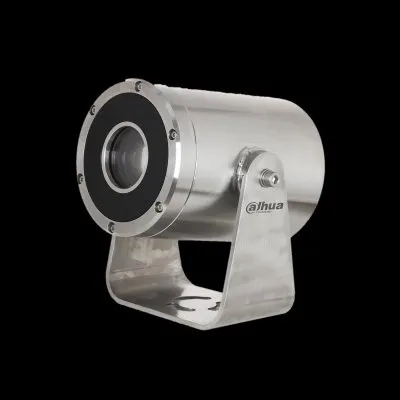
Dahua product photo (manufacturer image, not an installed camera): a stainless steel cylindrical housing with a bolted front ring around the lens window, sitting on a stainless U-shaped bracket. This is the class of hardware we look at for docks and bulkheads where spray reaches the camera.
Suffolk Dahua Quote
Tell us the hamlet, how far the house is from salt water, and whether anyone lives there in winter — a written price follows the same business day
✅
Request Sent!
An installer will come back to you about the Suffolk property the same business day.
25+
Years Experience
✓
Same-Day Estimates
100%
Licensed & Insured
4.7★
201 Google Reviews
Three facts price a Suffolk job faster than a floor plan. How close the cameras sit to salt water, how many months the property stands empty, and what connection the house keeps over the winter. Send those with a few phone photos of the driveway and the water side, or ring the Suffolk line on (631) 407-2884, and we can sketch the camera positions before anyone drives out.
Suffolk Dahua pricing runs roughly $480–$850 per installed camera, with packages from $2,200 — the figures already published for the county
Recorder stays in the house, footage belongs to you, no monthly monitoring contract
Two-hour arrival windows, seven days a week up to 8 PM, under NYS low-voltage licence #12000287431
Why Suffolk County Properties Need Dahua Security Cameras
Suffolk is long rather than dense: 86 miles from the Nassau line to Montauk Point, ten towns, and more water than land inside the county boundary. That shape changes what a camera system is for. In Huntington or Islip a camera mostly records a driveway that somebody drives up every evening. Further east, and along every bay and canal, the more common job is a property that is left alone. The Town of East Hampton's 2026 housing market study counts 44,227 homes in its study area, of which 20,952 — 47 percent — are held for seasonal, recreational or occasional use, against 41 percent that are someone's main residence. When nearly half the houses in a town are empty for part of the year, the camera is the only thing on site that can notice anything.
The local record shows what tends to happen to unattended property. In February 2020 the East Hampton Star reported two houses broken into on Sammy's Beach Road on the same night; one owner, who was not at home, watched the burglar on his indoor camera and called 911, and police circulated a still from that camera. In Southampton Town, police logged tool thefts from fifteen construction sites over one autumn and winter — generators, concrete saws, laser levels and boxes of hand tools taken from houses still being built in Tuckahoe, Noyac and Hampton Bays. Newsday reported in 2022 that someone cut the fence of a boat lot in East Farmingdale before dawn and drove off with a Mercury outboard worth about $15,000. And in September 2026 the same paper described farm stands from Baiting Hollow to Southold losing cash boxes, eggs, flowers and crops, with owners posting their own camera clips of the thefts. None of those places had a person standing watch; several had a camera.
The second half of the problem is the coast itself. Salt spray and wet wind get into ordinary camera housings, corrode screws and brackets, and work their way into cable joints until the picture fogs or the camera drops off the network. Storms take the power out for days rather than hours: when Tropical Storm Isaias crossed Long Island on August 4, 2020, LIPA's own review counted about 645,000 customer outages and eight days to full restoration. And the East End's connections are thinner than people from the city expect. East Hampton residents told the town in 2021 that Springs, Montauk and parts of Amagansett have "a lot of dead areas", and the town is still building out small cell sites. A Dahua system on a Suffolk shore property therefore has to be specified around three questions most installers skip: will the hardware survive the air, will it keep recording when the grid goes, and will the owner actually hear about it when something stops working?
That is why our Suffolk installs start with the water and the calendar, not the camera count. We choose housings by distance to the shore, put the recorder, the network switch and the modem on battery backup, add a cellular fallback where a signal exists, and turn on the DMSS alerts that report a camera going offline, a lens being covered or a hard drive failing. Most Suffolk owners who call us about cameras also end up asking about keypad and gate access for caretakers and contractors, so they can let a pool service or a builder in without handing out keys for the winter. If your interest is the question of whether Dahua can be used at all, that is answered once for the whole region on our Long Island Dahua page.
Suffolk facts that shape a Dahua plan
Ten towns, 912 square miles of land and about 1,461 of water — the county figures used by New York State, with the Sound on one side, the Atlantic on the other and the Peconic and Great South bays between.
47% of East Hampton's homes are seasonal or occasional-use (20,952 of 44,227, town market study, 2026); Sag Harbor's village plan puts seasonal homes at roughly 36% of all units.
About 645,000 customer outages after Isaias in August 2020, eight days to full restoration, and PSEG Long Island's phone lines and outage system overloaded on the first afternoon (LIPA 30-day report).
15 construction sites hit for tools in Southampton Town in a single autumn-to-January stretch reported in January 2020.
578 farms and 79 wineries in Suffolk (2022 farm census figures reported by the Shelter Island Reporter) — a lot of open, unwatched ground with expensive equipment in sheds.
Superstorm Sandy damaged or destroyed 20,798 Suffolk structures in FEMA's early tally (Newsday, January 2013), which is why so many South Shore houses now stand on raised foundations.
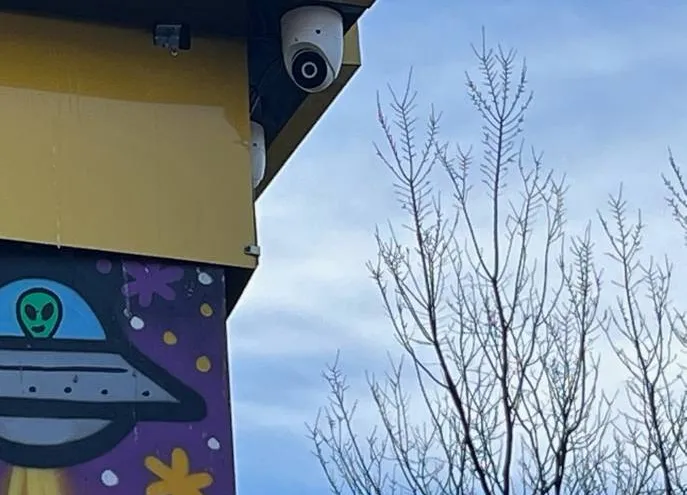
Example photo from another AESS installation (not a Suffolk job): a white turret camera sits tight under the corner of a yellow fascia, with a smaller fitting beside it and a painted purple panel below. Tucking the camera under an overhang like this keeps driving rain and spray off the lens — the first thing we look for on a shore house.
Suffolk Camera Went Dark While You Were Away?
A camera that went offline after a storm, a recorder that stopped writing when the power blinked, a lens fogged by salt — call (631) 407-2884. We book the next two-hour window, and most systems are recording again within one to two hours of arrival. If nobody can meet us at the house, tell us who holds the key or the gate code and we will coordinate with them; for app-only problems see DMSS app support in Suffolk.
What We Install
Dahua Camera Services in Suffolk County
Each of these is a separate piece of work we price on its own, so a homeowner who only needs the dock covered is not paying for a full-perimeter system.
🏖️
Closed-for-Winter Home Systems
Driveway, entry and back-door cameras plus one or two indoor views of the main room, with DMSS alerts set for intrusion lines and for any camera dropping offline, so a house shut from Columbus Day to Memorial Day still reports in.
🌊
Salt-Air Exterior Cameras
Housings chosen by distance to the water: standard Dahua outdoor models well inland, Dahua's enhanced anti-corrosion line or stainless housings within sight of the bay or ocean, with stainless fasteners and sealed cable entries.
⛵
Docks, Boat Lifts and Moorings
A fixed camera on the dock approach, a long-lens view of the lift or slip, and infrared or white-light coverage of the bulkhead, wired back to the house or bridged by point-to-point wireless where trenching is not possible.
🍇
Vineyards, Barns and Farm Stands
Stand and cash-box cameras that record a usable face at the payment point, shed and equipment-yard coverage, and tasting-room entrance cameras for North Fork and South Fork operations.
🛣️
Long Driveways and Gates
A camera at the road end of a driveway that can be hundreds of feet from the house, linked over buried conduit, outdoor-rated cable or a wireless bridge, so a car turning in is recorded before it reaches the door.
🏗️
Job Sites and New Builds
Temporary or pre-wired camera positions for houses under construction, so tools, generators and deliveries are watched from framing to closing — and the final system is already roughed in.
🔋
Outage-Ready Power and Internet
A battery backup for the recorder, PoE switch and modem; an LTE router as a fallback where the cell signal supports it; and recorder settings that restart recording on their own when the power returns.
📱
DMSS Setup and Sharing
The DMSS app on each owner's phone, a limited login for the caretaker or property manager, alert schedules that match when the house is empty, and a short written guide to exporting a clip for the police.
🔄
Takeovers and Upgrades
Systems left behind by a previous owner or another installer: password recovery where the device allows it, firmware, drive replacement, corroded cameras swapped one by one, and a new NVR where the old one cannot be saved.
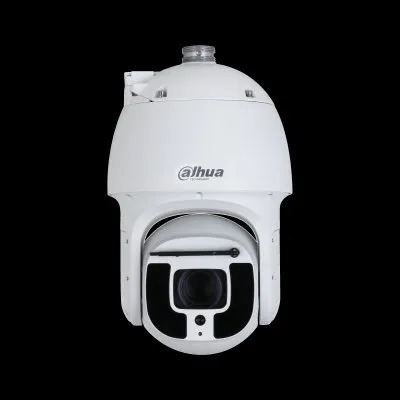
Dahua product photo (manufacturer image): a white pan-tilt-zoom camera with a top mount, a zoom lens and a rectangular illuminator panel around it. A PTZ like this suits a marina basin or a long row of vines; we always pair it with fixed cameras so something is still recording when it is pointed elsewhere.
Building Specialists
Dahua Cameras for Suffolk County's Architecture
Suffolk's housing is not one type repeated down a street. These are the property types that come up most often when people ask us about Dahua, and what each one demands from the system.
South Fork Second Homes
Shingle and modern houses in Southampton, Sagaponack, Amagansett, Springs and Montauk, often on wooded or dune lots, with pool houses, detached garages and outdoor showers. Occupied in summer, closed or visited at weekends the rest of the year, and frequently looked after by a caretaker who needs a login of his own.
Bay and Canal Houses
South Shore homes along the canals of Babylon, Lindenhurst, Amityville, Bay Shore and the Mastics, many raised after Sandy. Equipment cannot live in the flood enclosure under the house, the dock is the most valuable thing on the lot, and wind off the Great South Bay drives rain sideways.
North Fork Vineyards and Farms
Tasting rooms, barns, packing sheds and roadside stands along Route 25 from Riverhead through Aquebogue, Cutchogue and Southold. Wide-open acreage, buildings far apart, equipment worth more than the buildings, and a public that walks in and out all day in season.
Fire Island and Shelter Island Cottages
Small timber cottages reached by ferry or boat, with winter access limited and contractors allowed to drive only with National Park Service permits. Every visit is planned in advance, so the system has to be right first time and diagnosable from the mainland.
Houses Under Construction
New builds and gut renovations across the Hamptons and the North Shore, where the risk is the months between framing and move-in: generators, saws and fixtures on site with nobody there after the crew leaves.
Year-Round Suburban Homes
Colonials, ranches and capes in Huntington, Smithtown, Commack, Hauppauge, Ronkonkoma and Brookhaven hamlets — occupied every night, closer to the city's pattern of front door, driveway and back yard, with fewer coastal demands unless the lot backs onto a harbour.
How each property type is wired and mounted
Shingle and cedar siding. Cedar shingles are thin and split if a mount is screwed straight through them. We use a mounting block or a junction box sized to the camera base, fixed to sheathing or framing behind the shingles, and seal the top edge so water runs over the block rather than behind it. Cable enters through the back of the box, never through an exposed hole beside the camera. On a house with deep eaves we prefer the soffit, where the camera is under cover and harder to reach from the ground.
Raised South Shore houses. Under FEMA's rules for elevated homes in flood zones, the enclosed space under the house is limited to parking, access and storage, and anything left down there should expect to get wet. So the recorder, switch, battery and modem go up into the living space — a closet or a utility shelf on the first habitable floor — and the cable to the dock and the yard comes up through sealed conduit rather than lying on the slab. The camera that watches the parking area under the house is mounted high on a pier or beam, above the water line the owner remembers.
Docks and bulkheads. Wood docks move, swell and shrink; a camera bolted to a deck board will drift out of aim in a season. We mount to a pile or a dedicated post, use stainless through-bolts, and run cable in outdoor-rated conduit with a drip loop at every entry. Where the dock is beyond a lawn that cannot be trenched, a pair of point-to-point wireless radios carries the video back to the house with power from the nearest outlet on the dock.
Vineyards and farms. Distances between the tasting room, the barn and the stand often run past the 100-metre limit of a single network cable. We use fibre or wireless bridges between buildings, put a small PoE switch in each building, and send everything back to one recorder in the office, so the owner reviews one timeline instead of three. Stand cameras are aimed at the cash box and the payment sign at face height, not from a high angle that only shows the top of a hat.
Fire Island and island cottages. Materials go over on the ferry or by boat, so every bracket, box and length of cable is counted before we leave the mainland. Wiring is kept short and inside where possible because the salt load is at its worst on the barrier beach. Because nobody can simply pop over in January, these systems get the most careful alert set-up of all: camera offline, disk error and scene-change alarms all pushed to the owner and the caretaker.
New builds. On a house still in framing we pull camera cable to every planned position while the walls are open and leave it coiled and labelled, then put up two or three temporary cameras on a battery-backed recorder in a locked closet or job box to cover the site. At closing the temporary cameras come down and the permanent ones go on the pre-wired boxes.
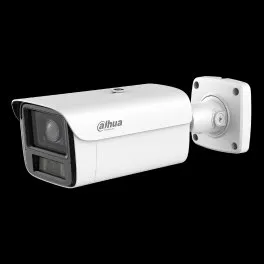
Dahua product photo (manufacturer image): a white bullet camera with a sun hood over the front, a lens window above two illuminator windows, and a round wall bracket. A bullet like this is what we usually aim down a long driveway or along a bulkhead.
Commercial Dahua Cameras
Business Dahua Cameras in Suffolk County
Suffolk's businesses sit along a handful of corridors, and each has a different reason to want cameras that work unattended at night.
Route 25 / Main Road, North Fork
Wineries, farm stands and nurseries from Riverhead to Orient. Newsday's September 2026 report on stand thefts named Cutchogue, Aquebogue, Southold and Baiting Hollow; tasting rooms add busy weekend crowds and a cash wrap.
Route 58, Riverhead
Big-box and outlet retail around the Tanger Outlets and The Shops at Riverhead, a 115,000-square-foot centre anchored by Costco. Parking-field and loading-dock cameras, plus long-range views for large lots.
Hauppauge, Central Islip and Bay Shore
Long Island's largest industrial node — about 26.1 million square feet, CoStar reported in 2024. Flex buildings, loading doors and fenced yards that empty out at night.
Montauk Harbor and the Bays
Docks, fuel piers, marinas and boatyards on Montauk, Shinnecock and the Great South Bay, where hulls, outboards and electronics sit in yards over the winter and spray reaches the cameras year-round.
Ronkonkoma and MacArthur
The Station Yards development on 53 acres beside the Ronkonkoma LIRR station and near MacArthur Airport and LIE Exit 60 — new apartments, shops and offices with garages and plazas to cover.
Sunrise Highway and Montauk Highway Strips
Strip retail and service businesses from Babylon through Patchogue and out to Hampton Bays, where the rear lane, the dumpster corral and the back door are what get hit after closing.
County licensing. Suffolk's Department of Consumer Affairs licenses home improvement contractors under Chapter 563 of the county code, and its rules for restricted licensed electricians include a "Communications Cabling Systems" category covering "all cabling systems of 90 volts or less, for computer networking, telecommunications, cable TV, fiber optics, audio and video systems". Those rules reserve line-voltage connections to master electricians, which is why we use plug-in power or a licensed electrician for any new outlet. Some towns and villages run their own licensing, so we confirm the requirement for each address.
State licence. AESS works under New York State low-voltage licence #12000287431, and every Suffolk job is covered by our liability insurance; we send certificates in the wording your association, marina or builder asks for.
Digging. Trenching a driveway or dock run means calling 811: New York 811 covers Nassau and Suffolk and asks for notice at least 48 hours and no more than 10 working days before digging.
Flood zones. On raised houses we keep electronics out of the flood enclosure, consistent with FEMA's guidance that the space below an elevated building is for parking, access and storage.
Federal procurement. The FCC no longer authorises new Dahua video equipment for public-safety, government and critical-infrastructure surveillance, which matters to municipal and some institutional buyers; for what it means for a home or a private business, read the explanation on our Long Island Dahua page rather than a second version here.
Recording sound and privacy. We install video-only by default, aim away from neighbours' windows and use privacy masking where a frame crosses a property line. Audio recording is switched on only where the owner asks and the situation allows it.
Your Questions Answered
Dahua Cameras in Suffolk County: Questions Answered
These are the questions Suffolk owners put to us about salt, storms, empty months, docks, farms and long driveways, grouped by the problem behind them. Each answer is the one we give on the phone.
Salt Air, Spray and Storms
How close to the bay or the ocean does a camera have to be before the standard Dahua housing is the wrong choice?
Dahua's own guidance for its enhanced anti-corrosion range is built around coastline distance: the aluminium-alloy version is described for sites within about two kilometres of the shore and is salt-spray tested for 1,440 hours, and the SUS316L stainless version goes further. In practice we look at three things on the walk-round: whether you can see open water from the camera position, whether spray or salt fog reaches that wall in a blow, and whether there is salt crust on the windows and outdoor lights already. A house a mile up a wooded lane in Southampton usually does fine with a standard outdoor Dahua model mounted under the eaves. A camera on a Dune Road deck, a Montauk dock or a bulkhead on the Great South Bay should be from the anti-corrosion line or in a stainless housing, with stainless screws and a sealed junction box. Mixing the two on one property is normal.
On a deck facing the water, what usually gives out first — the camera itself, the bracket or the cable connection?
Usually the connection, then the hardware, then the camera. The network plug and the power pigtail that hang out of the back of a camera are the weakest point: salt-laden water wicks along them, the contacts corrode, and the camera starts dropping off the network intermittently long before the body looks rusty. Next come mild-steel screws and painted brackets, which stain the siding and eventually loosen. The camera housing, if it is a properly sealed model, tends to outlast both. So on shore installs we put every connection inside a weatherproof junction box behind the camera, use dielectric grease on the contacts, add a drip loop so water runs off before it reaches the box, and use stainless fasteners throughout. That is also why a camera that "keeps going offline" on a waterfront house is the first thing we open up at a service call.
When a hurricane watch is posted for the South Fork, what should happen to a Dahua system before the storm and after it?
Before: confirm the battery backup is charged and the recorder is on it, check in DMSS that every camera is online and recording, export anything from the last few weeks you might want, and if you have a PTZ, send it to its home position so it is not left pointing into the wind. Make sure the caretaker or a neighbour has a login so someone besides you can look in. Cameras do not need to come down; a properly mounted camera under an eave survives far more wind than a patio umbrella. After: open the app and look at each camera rather than trusting that the system is fine because no alert arrived — if the internet went down with the power, alerts may not have reached you. Look for cameras knocked out of aim, water on lenses, and gaps in the recording timeline that show how long the power was out. We can do the post-storm check for owners who are not on the island.
Wind off the Great South Bay drives rain sideways into everything — is an IP67 rating enough?
IP67 means the camera body is dust-tight and has passed a test of temporary immersion, so the camera itself is not where the water gets in. The problems on the South Shore come from everything around it: an unsealed hole where the cable passes through the siding, a junction box mounted upside-down so it collects water, or a cable that runs downhill into the back of the camera. We mount cameras under soffits and overhangs where we can, bring cables in from below with a drip loop, seal every penetration, and use the junction boxes made for the camera model so the base gasket seals properly. Domes also earn their keep here because rain runs off a curved cover more cleanly than off the hood of a bullet, though a bullet with a sun hood is still the better tool for a long view down a driveway.
Watching a House Nobody Is In
The Springs house is empty from October to May — how will I find out if a camera quietly stops recording?
By turning on the alarms that report the system's own health, not only the ones that report intruders. Dahua's DMSS app can subscribe to network alarms and "IPC offline" events, so you get a push the moment a camera disappears from the recorder; to "Cam Masking", which fires when a lens is covered; to scene-change alarms, when a camera is knocked or turned; and to disk alarms, when a hard drive fails or fills. We set all four on every seasonal house, send them to you and to whoever looks after the property, and test each one before we leave by unplugging a camera and pulling a drive tray. The one thing an app cannot tell you is that the whole house has lost its internet connection, because then nothing can reach you at all — which is why we pair the alerts with a backup connection where one is available and teach you to notice when the app has been silent too long.
Should a closed-up East End house have cameras inside, given that the Sammy's Beach Road burglar was spotted on an indoor camera?
For a house that is empty for months, yes — one or two, in the right places. The owner in that February 2020 case saw the intruder on an indoor camera while he was away and called 911; an outdoor camera would have shown someone at a door, but the indoor view showed him inside, which is what made the call urgent. We put indoor cameras where a burglar has to pass — the main hallway or the room off the most likely entry door — not in bedrooms or bathrooms, and we set them to alert only on a schedule that matches when the house is shut. When the family arrives for the summer, the indoor cameras can be switched off in the app or given a privacy mode, and guests or renters must be told about any interior camera that stays on.
Our caretaker checks the house once a week — can he see the cameras without having the same access I do?
Yes. DMSS device sharing lets the owner share a recorder with another account and choose what that person gets: live view is always included, and playback, alarm push notifications and device control can each be given or withheld. For a caretaker we usually give live view and alarm pushes, so he sees the same intrusion and camera-offline alerts you do and can look before driving over, but no device control, so he cannot change settings or delete footage. Pool services and builders who only need to be let in are better handled with a keypad or a temporary access code than with a camera login. When a caretaker changes, you remove the share in the app; there is no shared password to change on every phone.
How do I stop the app buzzing all July when the family is home, but get every alert the day we close the house?
Use the alarm schedule rather than turning alerts on and off by hand. DMSS lets each alarm subscription run only within a set period, and the recorder itself can arm and disarm detection on a weekly schedule. For a seasonal house we normally build two profiles: a summer profile with alerts only overnight on the perimeter cameras and nothing from the indoor ones, and a closed-house profile with every camera alerting around the clock, including the health alarms. Switching between them is a couple of taps the day you leave. We also tune the detection itself — Dahua's human and vehicle classification and tripwire lines — so that a summer of deer, wind in the privet hedge and the pool cover flapping does not train you to ignore the phone.
Power Cuts and Thin Connections
After Isaias some Suffolk homes were without PSEG power for most of a week — how long will the cameras keep recording?
With a battery backup alone, hours rather than days. A typical home system — recorder, PoE switch, six to eight cameras and the modem — draws enough that an ordinary desktop UPS carries it for roughly an hour or two; a larger battery unit stretches that, but a whole week needs a generator. What the battery does reliably is ride through the flickers and short cuts that come with every storm, and give the recorder a clean shutdown in a long one so the hard drive is not damaged. We set the recorder to restart and resume recording by itself when power returns, which matters most at a house nobody can reach. If you have a standby generator, the camera circuit should be on it; if you don't, we size the battery for the outages you care about and tell you honestly how long it lasts.
If I put Optimum on a seasonal hold for the winter, will DMSS still reach the cameras?
Usually, but check what your plan leaves running. Optimum describes its temporary service suspension as keeping "limited Optimum service" for up to six months, with "continued connectivity for smart home and home security systems". It does not say how fast that connection is. Live view from a recorder needs some upload capacity; push alerts with a snapshot need very little. So before the hold starts we have you open DMSS from somewhere other than the house and play a live camera and a short clip. If it works, it will work all winter; if it is unusable, we lower the stream settings for remote viewing, rely on alerts and snapshots, and keep full-quality recording on the recorder's drive for later. Recording itself never depends on the internet — only seeing it from away does.
Is a cellular backup worth having in Springs, Montauk or Amagansett, where coverage is known to be patchy?
Sometimes, and we test before recommending it. East Hampton residents have told the town that Springs, Montauk and parts of Amagansett have dead areas, and the East Hampton Star reported in 2025 that nearly 200 small cell sites were planned across the town, many in Northwest Woods and Springs, after summers when people "were putting antennas on their cars to stay connected". A cellular router only helps if it can hold a usable signal at the house. So on the survey we check signal strength at the spot where the router would live, with the carrier that is strongest there. Where it is good, an LTE router that takes over when the cable line drops keeps alerts flowing during outages. Where it is poor, an outdoor antenna can help, and where it is hopeless we say so rather than sell a box that won't connect.
Docks, Boatyards and Marinas
What should a boatyard owner take from the East Farmingdale outboard theft about where the cameras belong?
In that 2022 case, Newsday reported, someone cut the fence around a boat lot before dawn, took a Mercury outboard worth about $15,000 off a Boston Whaler, and loaded it into a minivan. That sequence tells you the positions that matter: the fence line where people get in, the aisle where boats sit on trailers or stands, and the gate or road where the vehicle waits. A camera covering only the office door would have missed all three. For a yard we put fixed cameras along the fence with tripwire detection, a camera at vehicle height on the gate so plates and vehicle shapes are recorded, and a long-lens or PTZ view down the boat rows, with white light or infrared good enough for three in the morning. Alerts on the fence line give a manager minutes to call police rather than hours.
Can one camera at the house watch a boat lift at the end of a long dock in Hampton Bays, or does the dock need its own?
A camera on the house can show that something is happening on the dock, but at the far end of a long dock it will rarely show who. Identifying a person needs enough pixels across the face, so the useful approach is a varifocal or zoom camera on the house aimed tight on the dock entrance — everyone walking out has to pass it — plus a camera on a pile at the lift itself if the boat or the engine is what you care about. Power at the dock is usually the deciding factor: if there is an outlet for the lift, a point-to-point wireless link can carry video back to the house without trenching through the lawn. If there is no power at all, a solar-and-battery camera is possible, but it records less and needs more care than a wired one.
Will a single PTZ camera keep watch over a whole marina basin overnight?
Not on its own. A pan-tilt-zoom camera can only look one way at a time, and a thief only needs the minute when it is pointed at the other side of the basin. We use PTZs as the second layer: fixed cameras cover the gate, the fuel dock and each pier entrance all night, and the PTZ either follows a programmed tour or swings to a preset view when a fixed camera's tripwire fires. In a salt-spray location the PTZ must be from a sealed, corrosion-resistant range, because its moving parts suffer first. Owners also ask about watching from a phone: DMSS supports PTZ control and pinch-to-zoom from the app, so a dockmaster can look around the basin from home after an alert.
Farm Stands, Vineyards and Building Sites
Can a camera at an honour-system farm stand on Main Road actually identify who walked off without paying?
It can if it is placed for faces rather than for the view. Newsday's 2026 report described stand owners from Baiting Hollow to Southold posting their own clips of thefts; plenty of clips like that show a figure from above and behind, which helps no one. We put the stand camera at roughly head height, a few feet from the cash box or payment sign, facing the direction customers approach, with a second wider camera on the parking pull-off to catch the car. The stand camera records continuously during opening hours, not only on motion, so the moment someone picks up a basket and the moment they skip the box are both on the timeline. A visible "cameras in use" sign next to the box does a good share of the work.
The barn is several hundred feet from our tasting room — how do you bring its cameras back without trenching through the vines?
Usually with a point-to-point wireless bridge: two small radios, one on each building, aimed at each other with a clear line of sight. Over a few hundred feet a bridge carries several cameras' video comfortably and installs in a morning. The barn gets a small PoE switch for its cameras, powered from a barn outlet, and the video joins the main recorder in the office so there is one timeline to search. Where buildings already share a conduit or a buried line, fibre is the more permanent answer and does not care about trees growing into the radio path. Trenching is the last resort on a vineyard, and if we do dig we call 811 first.
What is a sensible camera set-up for a house being built in Noyac or Tuckahoe, and who owns it at the end of the job?
Southampton Town Police dealt with tool thefts from fifteen building sites in one winter, so builders and owners ask this a lot. The practical set-up is two to four cameras covering the driveway, the house's main openings and the spot where tools and generators are kept, recorded on a recorder in a locked closet or job box with a battery backup and, if there is no internet yet, an LTE router for alerts. At the same visit we pull permanent camera cable while the walls are open. Who owns the temporary equipment is agreed in writing at the start: commonly the owner buys it and it becomes part of the finished system, or the builder supplies it and takes it to the next job. Either way, logins are handed over at closing.
Long Driveways, Islands and Raised Houses
Can a camera at the road end of a long wooded driveway in Southampton record the plate of a car turning in?
Yes, if it is a camera set up for plates rather than an overview camera that happens to include the road. Plate capture needs a narrow field of view on the spot where cars slow down — the turn-in or the gate — at an angle that is not too steep, with a fast shutter so the characters don't blur at night. A wide camera on the house 400 feet away will show headlights and the shape of the car, not the plate. We usually put the plate camera on a post or the gate pillar near the road, and bring its video back over buried conduit or a wireless bridge. Tell us whether you want plates for evidence or just to know who arrived; the second can often be done with a cheaper vehicle-detection camera and an alert.
Fire Island vehicle access is limited in the off-season — how does an install there actually get done?
By planning it like a boat trip. The National Park Service issues driving permits on Fire Island only to year-round residents and to contractors with work in a community, and in winter access is by ferry, water taxi or private boat. We survey from your photos and a video call first, pack every part and spare before we cross, and schedule the work for a day the crossing is reliable. Cable runs stay short and inside where possible because the barrier beach is the harshest salt environment in the county. Because a return visit is expensive for everyone, these systems get the full set of health alerts and a remote-access check before we leave, so most later problems can be diagnosed from the mainland.
Where should the recorder live in a raised canal house in Lindenhurst or Babylon?
Upstairs, in the living space, never in the enclosure under the house. FEMA's rules for elevated buildings limit that lower space to parking, access and storage, and the National Weather Service recorded Sandy flooding of two to five feet across much of the area south of Montauk Highway in Lindenhurst, Amityville and Babylon. A recorder, switch or battery on that slab is lost in the next surge. We put the rack in a closet or utility area on the first habitable floor, close to the router, bring the cables for the parking-level and dock cameras up through sealed conduit, and mount the under-house camera high on a beam. The battery backup then protects the system from the outage without sitting in the water.
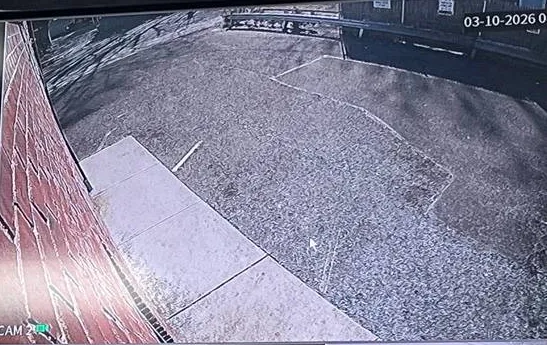
Example photo from another AESS installation (not a Suffolk job), cropped to one tile of the recorder screen: a wide camera looks along a red brick wall to a paved lot, with the camera label and date stamp in the corners. A view like this shows that a car arrived; reading its plate needs a second, narrower camera at the entrance.
Equipment
Types of Dahua Security Cameras We Install
The Dahua range is large. These are the categories that earn their place on Suffolk properties, and where each one goes.
Enhanced Anti-Corrosion Cameras
Dahua's coastal line in treated aluminium alloy, salt-spray tested for 1,440 hours and described by Dahua for sites within about two kilometres of the shore. Our default for bay-front walls, decks and pool houses near the water.
SUS316L Stainless Housings
Marine-grade stainless bodies for the worst exposure — dock piles, bulkheads, fuel piers and barrier-beach cottages. Heavier and dearer, but the housing itself resists pitting where spray lands every day.
Smart-Detection Turrets and Domes
Dahua WizSense models that classify people and vehicles, so tripwire and intrusion alerts fire for a person at the door rather than a deer on the lawn — essential for keeping alerts meaningful at an empty house.
Low-Light Colour Cameras
Full-colour models with sensitive sensors and soft white light for driveways and farm stands lit by one fixture, where the colour of a car or a jacket matters to the police report.
Active Deterrence Cameras
Cameras with a built-in white light and siren that trigger when someone crosses a set line — useful on a boatyard fence or a job site at 2 AM, set to stay quiet during the hours people are expected.
PTZ and Long-Range Cameras
Pan-tilt-zoom cameras with strong illuminators for marina basins and vineyard rows, always paired with fixed cameras, and steerable from DMSS after an alert.
Varifocal Bullets for Plates and Docks
Adjustable-lens bullets that can be zoomed tight on a driveway entrance, a gate or the start of a dock, to capture plates or faces where an overview camera would show only shapes.
NVRs with Health Alarms
Dahua network video recorders sized for the retention you want, with surveillance-grade drives and the disk, network and camera-offline alarms switched on and pushed to DMSS.
Power, Links and Backup
PoE switches, battery backups for the recorder, switch and modem, LTE routers where the signal allows, and point-to-point wireless bridges or fibre between buildings.
ADT, Ring and SimpliSafe compared with a Dahua system
Plenty of Suffolk second homes already have a doorbell camera or a monitored alarm, and the question is whether a Dahua system adds anything. The difference is where the video lives and what happens when things go wrong. Ring and SimpliSafe cameras are mostly Wi-Fi or battery devices that keep their recorded history in the maker's cloud on a monthly plan; when the house loses power or its internet connection, they generally stop being able to upload, and battery cameras in an unheated house in January lose charge faster. ADT-style systems centre on a monitoring contract and a sensor network, with cameras as an add-on. A wired Dahua system records continuously to a recorder in the house, keeps recording through an internet outage, and runs from one battery backup in a power cut; DMSS then shows you live and recorded video with no monthly fee. Many of our customers keep their monitored alarm and add Dahua for the video — the two do different jobs well.
Question for a seasonal house
Dahua wired system
Typical cloud camera kit
Where is footage kept?
On the recorder in the house (owned by you)
In the maker's cloud, on a subscription
Internet down?
Keeps recording; remote viewing paused
Recording usually interrupted
Power cut?
Whole system on one battery backup
Each camera on its own battery or outlet
Salt-air options?
Anti-corrosion and stainless models
Consumer plastics
Camera-offline alert?
Yes, from the recorder via DMSS
Varies by product
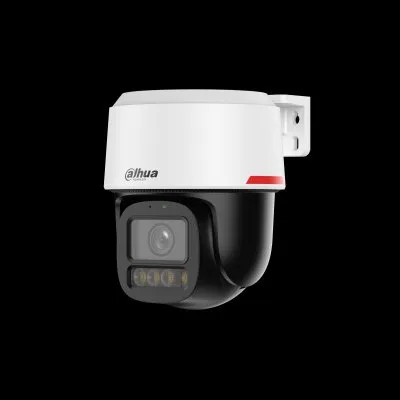
Dahua product photo (manufacturer image): a compact pan-tilt camera with a white top and wall arm, a red trim band and a black rotating head holding the lens above a row of warm white lights. Small pan-tilt units like this can cover a deck and a lawn from one position under an eave.
AI Overview Reality Check
What AI Gets Wrong About Dahua Cameras in Suffolk County
We could not capture a live Google AI Overview from our build environment, so each claim below is one that cost guides, retailers and forum threads publish for the same searches — the material AI summaries are built from. Each is followed by what we find on Suffolk properties.
“Installation runs about $200–$300 a camera”
That figure appears in r/longisland threads about home cameras, and Angi publishes a New York average of $1,509 for a camera installation, in a $797–$2,222 range. Both are honest for what they describe: a few cameras mounted on an occupied house, with power and Wi-Fi already at hand.
A Suffolk shore or seasonal property is a different scope. Coastal housings cost more than standard ones, driveway and dock cameras need long runs or wireless bridges, and the battery backup and cellular fallback that make an empty house reportable are part of the job, not extras to forget about.
Our published Suffolk range is roughly $480–$850 per installed camera including the recorder share, cabling and set-up, with the full price written down after we have seen the property. Comparing a per-camera labour quote with that figure is comparing different jobs.
“Any outdoor-rated camera is fine near the water”
The common advice is to buy anything rated IP66 or IP67 for outdoor use. Those ratings test dust and water ingress; they say nothing about corrosion. A camera can be perfectly sealed and still have its bracket rust off the wall or its cable contacts green over in a season of salt air.
Dahua recognises this by selling a separate enhanced anti-corrosion range, tested to 1,440 hours of salt spray, and SUS316L stainless versions for the harshest spots. Its own material shows them for wharves and sea-crossing bridges, not for back gardens.
On a Suffolk property we decide wall by wall: inland walls take standard models, water-facing walls and docks get the coastal hardware, and every exposed connection goes into a sealed box with stainless fasteners. That is where most coastal failures are prevented.
“Battery Wi-Fi cameras are the easy answer for a vacation home”
Battery cameras are easy to put up, which is why they are recommended so often. For a house that is visited every weekend and has strong Wi-Fi, they can be enough.
For a house shut for months, their weaknesses line up badly: batteries drain faster in cold weather and nobody is there to charge them, Wi-Fi drops when the router loses power, and many store their clips in a cloud that cannot be reached when the internet is down. The East End's patchy cell coverage makes the cellular versions a gamble too.
A wired PoE system takes longer to install, but every camera is powered from one switch on one battery backup, records to a drive in the house regardless of the internet, and reports when it stops. For an empty home, that reliability is the whole point.
“Thieves can't defeat a camera system”
Some summaries suggest that once cameras are up, the evidence is safe. A case reported in October 2026 shows the limit: in Tuscany, the Marchesi Antinori winery said thieves disabled its alarm system and surveillance cameras before loading about 30,000 bottles into two trucks. That was Italy, not the North Fork, but the lesson travels.
A recorder sitting in plain view in a tasting-room office, with its cameras' cables exposed at head height, can be switched off or carried away. And a system whose owner only checks it after the fact will not notice that it went dark.
So we put the recorder in a locked closet or cabinet away from the entrances, run camera cables inside walls or in conduit, and turn on the camera-offline and disk alarms so that disabling the system is itself an alert. Where the internet allows, alert snapshots also leave the building the moment they are taken.
“Your cameras keep working through a storm”
The cameras will often survive the storm physically. What stops them is power. LIPA's report on Tropical Storm Isaias counted about 645,000 customer outages and eight days to full restoration, and even PSEG Long Island's own phone and outage systems were overloaded that first afternoon.
A camera system without backup goes blind with the lights, and one with a small battery may manage an hour or two. Neither covers a week. And when the modem loses power, every alert from the house stops too, so the owner hears nothing either way.
We size a battery for the recorder, switch and modem together, put the system on a generator circuit where the house has one, and set it to restart by itself. We also tell owners plainly how many hours their battery buys, so that silence from the app after a storm is read correctly.
“You'll get an alert if anything goes wrong”
Out of the box, most camera apps alert on motion. That is not the same as alerting when something goes wrong with the system: a camera that loses its network connection, a lens sprayed over, a drive that fails — these are silent unless someone turns those alarms on.
DMSS can push network alarms, camera-offline events, camera masking, scene changes and disk errors, but each has to be subscribed to, and the recorder has to be set to generate them. On many systems we take over, none are enabled.
We enable and test each one at handover, set their schedules to match when the house is empty, and add a second person — a caretaker or relative — as a recipient. An empty house should complain loudly when its cameras stop.
“One PTZ camera can cover a whole property”
Pan-tilt-zoom cameras are often sold as the answer for big lots, vineyards and marinas because one camera can see everywhere. It can see everywhere, but only one place at a time.
On a tour, a PTZ might spend a few seconds on each preset; anything that happens behind it is not recorded. Its moving parts are also the first to suffer from salt and freezing rain.
We use PTZs for what they do best — following an event after a fixed camera's alarm, or letting an owner look around from DMSS — and cover every gate, dock entrance and building door with fixed cameras that never look away.
A Plan Built Around the Water and the Calendar
Send the address or hamlet, how close the house is to salt water, and the months it stands empty. We will mark which walls need coastal hardware, where the recorder and battery belong, and how alerts will reach you and your caretaker — priced on the Suffolk figures.
Most Suffolk quotes need five things: the hamlet or road, the distance to the water, the months the property is empty, what internet and power backup it has, and what you want watched most — the door, the dock, the drive, the stand or the site. A written total comes back the same business day; to talk it through, call (631) 407-2884.
✅
We Got Your Request!
Thanks — it is in. An installer will look over the property, how near it sits to salt water and the months it stands empty, then ring you back today. Urgent? Use (631) 407-2884.
How It Works
Our Installation Process
Seven steps, the same on a Huntington colonial as on a Montauk dock, but weighted toward the last three when nobody will be living in the house.
1. Read the water and the calendar
From your photos and a short call we note how far each wall is from salt water, how many months the property is empty, what internet and power backup it has, and who looks after it, before any camera position is set.
2. Walk the property
On site we mark camera positions, check exposure wall by wall, trace routes for driveway, dock and barn runs, find a dry upstairs home for the recorder, and test cell signal where a backup router would live.
3. Write the plan and the price
You get a layout showing each camera's view, the hardware for each wall, the battery and connection plan, and a written price on the Suffolk figures, with any association or insurance paperwork you need.
4. Run cable and links first
Cable goes in through walls, soffits and conduit, with sealed penetrations and drip loops; long runs get outdoor-rated cable, fibre or a point-to-point wireless bridge; 811 is called before any trench.
5. Mount for the weather
Cameras go up under eaves where possible on proper junction boxes, with stainless fasteners, dielectric grease on exposed contacts and coastal hardware on water-facing walls.
6. Set detection and health alarms
We draw tripwire and intrusion zones, mask neighbours' windows, build summer and closed-house schedules, and subscribe DMSS to camera-offline, masking, scene-change and disk alarms.
7. Hand over and pull the plug
We set up DMSS for you and your caretaker, show playback and export, then unplug a camera and confirm both phones get the alert before we leave.
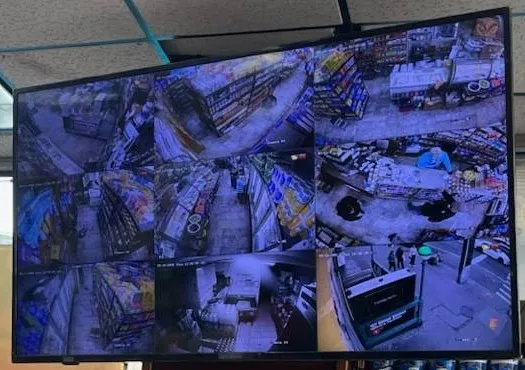
Example photo from another AESS installation (not a Suffolk job), cropped to the screen: a monitor hung from a drop ceiling shows a grid of camera views down aisles, over shelves and across a counter. At handover we name every tile after a real place so a later clip makes sense to whoever reads it.
Coverage Area
Dahua Cameras Near Suffolk County's Landmarks
From the North Shore harbours to the barrier beach, these landmarks mark the parts of the county where we install, and the kind of property around each.
The Big Duck, Flanders
The 1931 duck-shaped farm shop on Flanders Road, back on its Flanders site since 2007. Around it: the Peconic estuary's bayfront houses and the farm stands Newsday listed along Flanders Road and into Riverhead.
Fire Island Lighthouse
The 168-foot tower lit in 1858, east of Robert Moses State Park. Across the bay from Bay Shore and Islip, the cottage communities beyond it are reached by ferry, with the strictest salt exposure in the county.
Vanderbilt Museum, Centerport
A 43-acre waterfront estate above Northport Bay, built between 1910 and 1936. The Huntington and Northport harbour shore around it mixes year-round homes with docks and boathouses.
Main Road Farm Stands, North Fork
Route 25 through Aquebogue, Cutchogue and Southold, lined with self-serve stands and wineries — the stretch where owners told Newsday in 2026 about cash boxes broken and crops taken.
Station Yards, Ronkonkoma
The 53-acre development beside the Ronkonkoma LIRR station, near LIE Exit 60 and MacArthur Airport, with new apartments, shops and garages in the middle of Islip and Brookhaven.
Route 58 and The Shops at Riverhead
Riverhead's retail strip opposite the Tanger Outlets, including a 115,000-square-foot Costco-anchored centre — the gateway to both forks and a corridor of big parking fields.
We also install across Huntington, Smithtown, Commack, Hauppauge, Bay Shore, Babylon, Lindenhurst, Patchogue, the Mastics, Westhampton, Hampton Bays, Southampton, Sag Harbor, East Hampton, Springs, Amagansett, Montauk, Mattituck, Greenport, Orient and Shelter Island, and on Fire Island by arrangement.
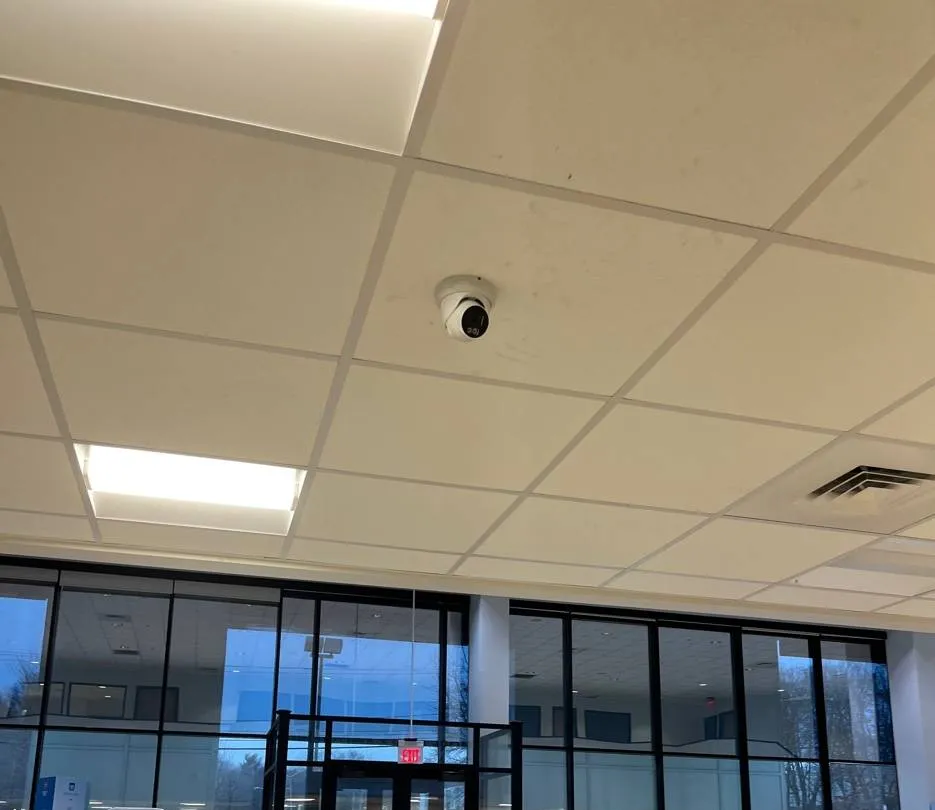
Example photo from another AESS installation (not a Suffolk job): a white turret camera set in a drop ceiling of a bright showroom, aimed toward a wall of tall windows and a glass entry with an exit sign above it. A tasting room or shop on Main Road has the same problem — glare from a glass front — which a turret placed inside and angled down handles better than a dome.
Pricing
Dahua Camera Installation Cost in Suffolk County
Suffolk prices sit above our New York City base, reflecting travel across a county 86 miles long and the coastal hardware many jobs need. These are the figures already published for Suffolk; they are not changed by this rebuild.
Item
Suffolk price
What moves it
Per installed camera
Roughly $480–$850
Model (standard, anti-corrosion, stainless, PTZ), mounting surface, cable length
Typical full home perimeter
Around $3,200–$6,500
Which faces of the house are covered, any pool house or garage, how far the road end of the drive is, and whether rooms inside are watched
Estates, wineries, marinas, commercial
$10,000 and up
Acreage, buildings to link, PTZ and plate cameras, access control
Service visit after installation
$195 an hour, 3-hour minimum ($585)
Post-storm checks, re-aiming, yearly coastal service
What pushes a Suffolk price up. Coastal hardware costs more than standard housings, and stainless costs more again. Long driveway, dock and barn runs need conduit, outdoor cable, fibre or wireless bridges. Battery backup and an LTE router add equipment. Fire Island and Shelter Island work adds crossing time. Raised houses need conduit between levels.
What keeps it down. Reusing cable from an older system where it tests well; putting coastal hardware only on the walls that need it; using smart detection rather than extra cameras to reduce false alerts; and letting us pre-wire during construction instead of fishing cable through finished walls later.
To see how camera counts add up before a visit, the camera cost calculator gives a starting figure, and Suffolk camera pricing compares brands. The written quote after the walk-round is the number we hold to.
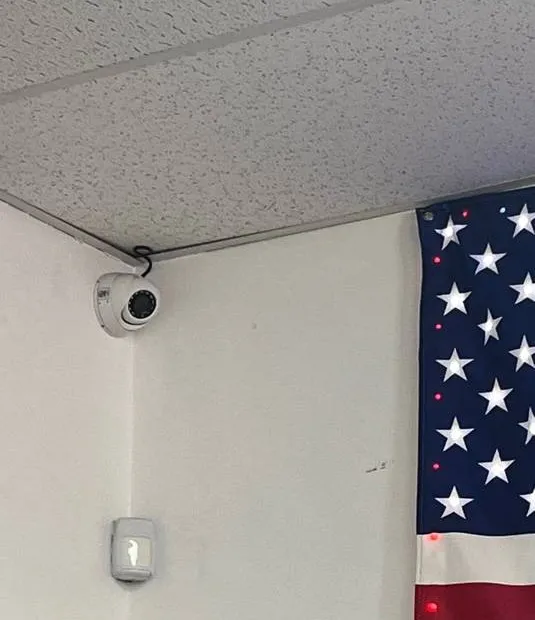
Example photo from another AESS installation (not a Suffolk job): a small white turret camera on a short bracket in the corner where a textured ceiling meets two white walls, a wall-mounted motion sensor below it and a flag hanging at the right. A corner like this sees a whole room, which is how we cover the main room of a closed-up house with one indoor camera.
Shop Our Systems
Dahua Camera Packages & Pricing
Three starting points on the Suffolk figures. Every one is adjusted after the walk-round, and coastal hardware is quoted wall by wall.
Basic Home
$2,200–$4,200
4–6 cameras. Front and back doors, driveway, one indoor view; Dahua recorder with drive; PoE cabling; DMSS on your phone with health alerts set. Suits a year-round house or a small cottage.
Full Perimeter
$4,200–$10,000
8–20 cameras. Every side of the house, pool house and garage, dock or bulkhead, road-end driveway camera, coastal hardware where needed, battery backup, caretaker login, optional PTZ.
Estate, Winery or Commercial
$10,000+
High-channel recorder. Multiple buildings linked by fibre or wireless, PTZ and plate cameras, active-deterrence cameras on fences and stands, LTE fallback, and integration with access control or an alarm.
Already bought the cameras? Labor-only installation
If you have Dahua cameras and a recorder already — bought online, left by a previous owner or delivered for a builder — we install them labor-only. We check the models before the visit so you know whether they suit the walls they are meant for, mount and cable them, set up the recorder and DMSS, and turn on the health alarms. Equipment you supply is covered by its own manufacturer's warranty rather than ours, and a camera that is not rated for the salt exposure it will see is something we will point out in writing before we put it up. Our bring-your-own-equipment page explains how labor-only jobs are priced.
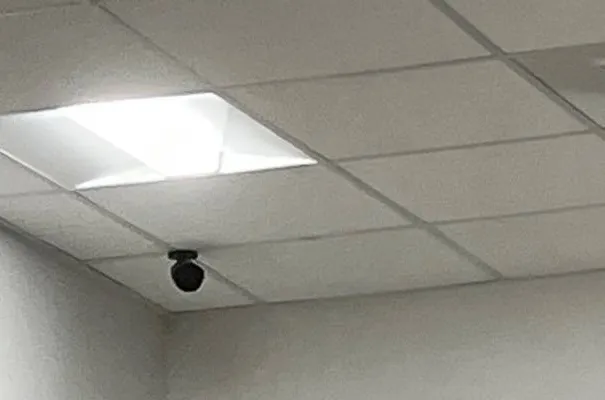
Example photo from another AESS installation (not a Suffolk job): a small black mini dome camera hangs from a white drop-ceiling grid beside a square light panel, above the top of a pale wall. Discreet indoor cameras like this suit a tasting-room counter or a marina office.
Get the Suffolk Price in Writing
A short call or the form is enough to start. We will tell you which package your property fits, which walls need coastal hardware, and what the battery and connection plan costs before anyone climbs a ladder.
Routers, switches and Wi-Fi that a camera system depends on.
Field Notes
Field Notes: Read the Salt on the Glass
The first thing I look at on a shore house is not the camera positions; it is the outside light fixtures and the windows on the water side. If the glass has a white haze and the screws on the porch light are orange, the air on that wall is going to eat ordinary hardware, and I plan the anti-corrosion cameras, the stainless screws and the sealed boxes before I plan anything else. If the glass on the back is clean and the fixtures are fine, the standard Dahua models will do there, and the owner saves the difference.
The second thing is where the router lives and what it is plugged into. On a seasonal house it is often on a shelf in a closet, on a power strip, with nothing behind it. That router is the only way any alert leaves the property, so it goes on the same battery as the recorder.
The last thing, before I leave, is to unplug one camera and wait for the phone to buzz. If it doesn't — for the owner and for the caretaker — the job isn't finished. — Anwar Timothy, NYS licence #12000287431
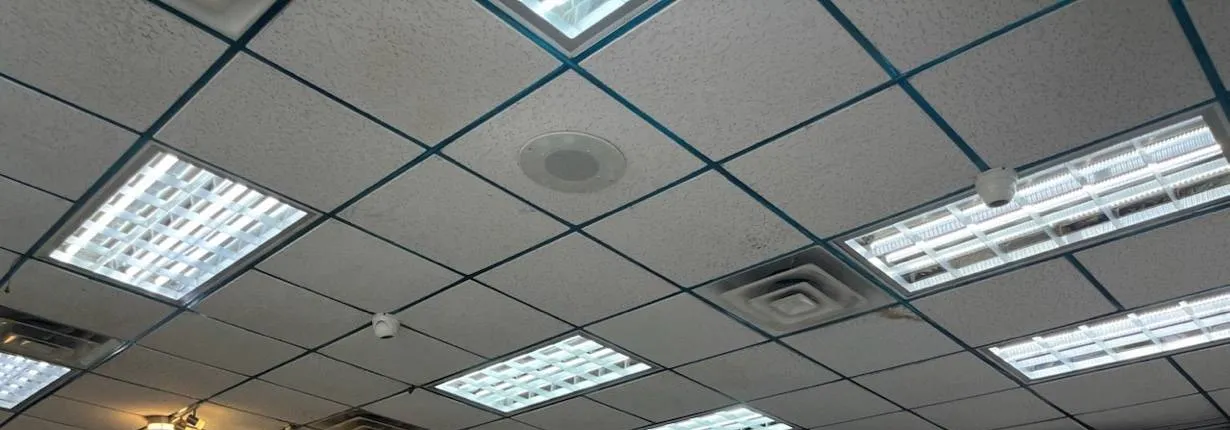
Example photo from another AESS installation (not a Suffolk job), cropped to the ceiling: a wide drop ceiling with grid light panels, a round speaker, an air vent and small white mini domes spaced across the tiles. Spacing cameras so their views overlap means one blocked lens does not leave a blind spot.
FAQ
Suffolk County Dahua Camera FAQ
How often should a Dahua system on a Suffolk waterfront house be serviced, and what does a visit cost?
+
Once a year for most shore houses, and after any storm that knocked out power for more than a day. The yearly visit cleans salt film off every lens and dome, checks seals, junction boxes and fasteners for corrosion, reads the recorder's drive health, confirms how many days are really being kept, tests the battery backup and updates firmware. Service visits after the original installation are billed at our published rate of $195 an hour with a 3-hour minimum ($585), and re-aiming cameras after completion counts as service work. Booking it in spring, before the family arrives, means problems found over the winter are fixed before the busy season.
What happens to the recording if a storm tears a camera off the side of a Hampton Bays house?
+
Everything that camera recorded up to the moment it went is already on the recorder inside the house, so the footage is not lost with the camera. The recorder notices the camera has disappeared and, if the network alarm is subscribed, DMSS pushes a camera-offline alert. The other cameras keep recording as long as the recorder has power. When you or we look later, the timeline shows exactly when the camera dropped, which helps an insurance claim. Replacing a single damaged camera is a service visit plus the camera; the cable is usually reusable if the connection box survived.
A dome camera by the water fogs up on humid August nights — what causes it and how is it fixed?
+
Usually one of three things. Moist air trapped inside a dome when it was closed on a muggy day condenses on the inside of the bubble as the night cools; a cable entry or junction box that is not sealed lets damp air in all summer; or dew forms on the outside of the dome, especially when the infrared lights warm the glass unevenly. Inside fogging is fixed by reopening the camera on a dry day, fitting a fresh desiccant pack where the model takes one, and resealing the base and the cable gland. Outside dew is reduced by mounting the camera under an eave, adding a hood, or switching that position to a turret, which has no bubble to mist over.
Our road association in Sagaponack has rules about what's visible from the street — does that affect cameras?
+
It can. Private associations, marina boards and some historic districts set their own rules on exterior fixtures, and those rules are a matter between you and the association rather than something the county or the state decides. We send photos and a mark-up showing each camera's position, colour and mount before installation so you can get sign-off, choose white or dark housings to match trim, and keep street-facing cameras small and under eaves where possible. If the association asks for a certificate of insurance, we issue one in the wording it requires.
Can the old coax cable from a 2000s camera system in a Southold farmhouse be reused with Dahua?
+
Often. Dahua makes HDCVI cameras and hybrid recorders that run high-definition video over existing coaxial cable, so an old analogue system's runs can carry a much better picture without new wiring through plaster or finished walls. The catch is condition: coax that has been outdoors for twenty years, spliced or chewed by rodents in a barn will not carry a clean signal. We test each run, keep the good ones, and replace the failures with network cable. Many farmhouses end up with a mix, and the hybrid recorder handles both kinds of camera on one timeline.
Is there a Dahua option for a farm gate or field with no power anywhere near it?
+
There is, with limits. A solar panel and battery can power a low-draw camera at a gate or a field edge, and the DMSS app can even report battery and solar status, but a solar camera records less than a wired one and the panel needs sun that a Suffolk December does not always provide. Video can come back over a wireless bridge if there is line of sight to a building, or over a cellular camera where the signal is good. For a gate that matters, running power from the nearest building is usually the better long-term answer; for a temporary site, a self-contained solar trailer is simpler.
Do you install on the South Fork in July and August, when traffic on Route 27 is at its worst?
+
Yes, but we plan around it. Summer jobs east of the Shinnecock Canal are booked into early-morning windows and grouped by hamlet, so the crew is not crossing the canal several times a day. Owners who can choose usually prefer the shoulder seasons: in May the house is being opened anyway and the system is ready for summer, and in September or October we can install and test the closed-house alert set-up just before everyone leaves. Arrival windows are two hours, seven days a week up to 8 PM.
What does an active-deterrence Dahua camera do at a boatyard fence at 2 AM, and will it disturb the neighbours?
+
When a person crosses a line drawn in the camera's view, it can switch on a bright white light and sound a short siren or a recorded warning, while recording in colour and sending an alert. That often ends the visit before anything is cut. To keep neighbours on side we draw the trigger line on your side of the fence, ignore vehicles and animals, set the siren to a short burst, and limit the deterrent to the hours the yard is closed. If houses are close, we can use light only and leave the siren off.
How many days of footage will a recorder hold at a house that's empty for six months?
+
Not six months, and it doesn't need to. A recorder keeps writing over its oldest footage once the drive is full, so what matters is how many days back you can go when you discover a problem. For an empty house we size the drives for about a month of continuous recording on the main cameras, and set the quieter ones to record on motion, which stretches retention further. Because alerts reach you when something happens, you will normally look within a day or two, well inside that window. If you want longer, larger drives are the cheapest way to get it.
If we sell the house in Shelter Island, how do the Dahua recorder and app pass to the new owners?
+
The cameras and recorder normally convey with the house like any other fixture, but the logins do not, so plan the handover. Before closing, remove the recorder from your DMSS account and any shares you created for caretakers or family, then reset the administrator password, or have us do it. The buyers then add the recorder to their own DMSS account and create their own users. Leave them the recorder's model, where it lives and where the battery backup is. If you want to keep any old footage, export it first, because the new owners can play back whatever is still on the drive once they have the password.
All Areas Served
Dahua Camera Installation Across Long Island, NYC and the Hudson Valley
This county page sits under our Long Island Dahua hub, which covers Nassau and Suffolk together. Every other county and borough where we fit Dahua systems has its own page, listed here.
If the job is bigger than cameras — a gate keypad for the pool man, a monitored alarm, thermostats you can reach from the city over the winter — every service is listed on the Abstract Enterprises Security Systems site, and the company page covers our licence and insurance.
Sources
Where the Suffolk Facts Come From
Check us: the break-ins, storm numbers, housing counts, Dahua specifications and county rules above trace back to the publications below, grouped by topic. Entries marked “excerpt” are ones we read only as a search snippet. Dollar figures for AESS work are the Suffolk prices this page already carried, plus our standard hourly service rate.
Suffolk Cameras Offline After a Storm? Call the Suffolk Line
A recorder that never came back after the power cut, a dock camera that went dark in a blow, a lens fogged with salt — phone (631) 407-2884. We book the next open two-hour window, and most systems are recording again within one to two hours of arrival.
Suffolk Dahua Systems From a Licensed, Insured Crew
Suffolk line (631) 407-2884 · Abstract Enterprises Security Systems, office at 1282 Troy Ave, Brooklyn, NY 11203 · messages by WhatsApp (718) 679-0359
Working under NYS low-voltage licence #12000287431, insured on every Suffolk job, with written estimates the same day · 4.7★ average across 201 Google reviews
Cameras and recorders carry their manufacturer's warranty. Full terms — including 50% deposit, one-year parts-only warranty on AESS-supplied products, and the late-fee schedule — are set out in the service agreement. See our warranty page.
Page reviewed and updated October 18, 2026. Changelog: Suffolk Dahua page rebuilt from new research around salt-air hardware, seasonal and second homes monitored through DMSS, docks, boatyards and marinas, vineyards and farm stands, job sites, long driveways, storm outages, East End connectivity and Suffolk licensing, on the Suffolk prices already published.