What are you looking for?
About Us Contact Us Careers Get a Free Quote (800) 486-0943
Pick a service
✅ Got Your Own System?
🎬 Home TheatreQuote 🎶 AV SoundQuote 🔑 Access ControlQuote
Now pick your area
Pick your area
Long Island
Hudson Valley
Services available
Pricing & Tools
Pick a service for pricing
🚪 Intercom Pricing 🔔 Buzzer Repair Pricing
Calculators
📹 Camera System Calculator 🚨 Alarm Calculator ⚡ Cabling Quote Builder ✅ Got Your Own System?
Select your area
Home › Dahua Camera Installation › Long Island
Nassau · Suffolk · Homes · Second Homes · Multi-Site Businesses · NYS Licensed

Dahua Camera
Installation in
Long Island

WizSense · WizMind · TiOC · Full-Color · PTZ · NVR & DMSS

Most Long Island Dahua questions start in one of three places: a homeowner who has read that the brand was "banned" and wants to know whether the cameras on the garage are still allowed, a family that wants one app for a house in Nassau and a summer place in Suffolk, or a business owner choosing between the cheaper and the smarter Dahua lines. This is the Long Island hub for all three. We plan, install, secure and hand over Dahua systems across both counties, tell you plainly what the FCC and the NDAA do and do not cover, and point you to the Nassau or Suffolk page when the answer depends on the county.

Reviewed and updated October 18, 2026 · Anwar Timothy, NYS licence #12000287431 · Long Island jobs scheduled from 1282 Troy Ave, Brooklyn

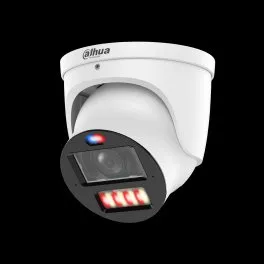
Dahua camera installation Long Island product photo: white turret camera with a small red and blue light above the lens and a row of red-lit LEDs below it
Manufacturer product photo: a white Dahua turret camera with a small red-and-blue light above the lens and a strip of lit LEDs underneath. Shown as a product example, not an installed Long Island camera.
Long Island Dahua Quote
Town, county and what you want covered — a written price follows the same business day

✅
Request Sent!
An installer will come back to you about the Long Island property the same business day.
25+
Years Experience
✓
Same-Day Estimates
100%
Licensed & Insured
4.7★
201 Google Reviews

Start with the county and the doors. Tell us whether the property is in Nassau or Suffolk, how many buildings are on it, and which doors, gates and parking spots matter. With that we can sketch a Dahua layout before anyone drives out. Call (800) 486-0943 or use the form.

  • Long Island Dahua homes from $2,200 for four to six cameras with recorder, cabling and phone setup
  • Local recording on a recorder you own — no monthly fee for the cameras to work
  • Licensed under NYS #12000287431; honest advice when Dahua is the wrong brand for a site
The Neighborhood

Why Long Island Properties Need Dahua Camera Installation

Long Island is two very different counties sharing one expressway. Nassau, closest to the city, is about 453 square miles divided among two cities, three towns, sixty-four incorporated villages and more than sixty hamlets, according to the State's county profile. Suffolk is more than five times larger at about 2,373 square miles and is divided into ten towns, running from the Huntington and Babylon line out to Orient Point and Montauk. The 2020 Census counted 1,395,774 people in Nassau and 1,525,920 in Suffolk. A camera system that suits a quarter-acre lot in Levittown is a different design from one that has to watch a long gravel drive in Southold, and a hub page has to cover both honestly.

The housing stock shows the split clearly. In the Census Bureau's 2019–2023 American Community Survey, Nassau's 477,860 housing units have a median year built of 1955, and 364,529 of them are single-family detached houses. Suffolk's 579,790 units have a median year built of 1970, with 463,095 detached houses. In practice that means Nassau camera jobs are mostly post-war capes, ranches and colonials on tight lots with neighbours close on both sides, often with plaster or older wiring inside, while Suffolk jobs lean toward split-levels, high-ranches and later colonials on wider lots, plus a large share of second homes on the forks. A Newsday analysis of nearly 12,000 home sales in 2026 found that more than 5,000 of the houses sold were built in the 1950s and 1960s, which matches what our crews see: many Long Island homes have an attic you can work in and siding you can mount on, but very few were built with any low-voltage cable in the walls.

What drives most calls is the driveway. When Nassau County Police announced a joint burglary and stolen-car task force in January 2024 with Suffolk police, both district attorneys, the NYPD, State Police and the FBI, ABC7 reported that police believed the burglars were "attracted by cars in people's driveways," and that the share of break-ins happening while people were home had gone up, even as the county's early-year total fell from 34 to 25. Packages are the other trigger. In November 2025 the Suffolk District Attorney charged 14 men with stealing more than 200 phones and tablets from porches in 31 communities, including Brentwood, Central Islip, Shirley and Deer Park, after allegedly hacking into delivery information to learn when devices would arrive. A camera cannot stop either crime by itself, but a properly placed one can show the face at the door, the plate of the car that waited at the curb, and the time to the second.

Dahua comes up so often on Long Island because it covers many cameras for the money, and a detached house with a driveway, two side yards, a back door and a detached garage needs many cameras. The brand also carries baggage. Since November 2022 the FCC has refused new equipment authorizations for Dahua, Section 889 of the 2019 defense law keeps it out of federal procurement, and Dahua's own security team published fixes in 2025 for flaws that could let an attacker run code on some cameras. None of that makes a Dahua system illegal for a homeowner in Massapequa or a shop owner in Patchogue, but it does mean the installer has to be honest about where the brand does not belong, keep firmware current, and never leave a recorder open to the internet. That is the work this page describes.

Most Long Island owners who install Dahua cameras also ask about controlled entry — a keypad on the side gate, a fob reader on a detached office, or a video intercom at the front door. If you are thinking about any of those, read our Long Island access control installation page before the walkthrough so the cable for both can go in on one visit.

Long Island facts that shape a Dahua design

  • Two housing eras: median year built 1955 in Nassau and 1970 in Suffolk (ACS 2019–2023) — older, tighter lots west, newer and wider lots east.
  • Mostly detached houses: about 76% of Nassau's and 80% of Suffolk's housing units are single-family detached, which is why perimeter coverage, not hallway coverage, is the usual job.
  • Many governments: Nassau's 64 villages and Suffolk's 10 towns mean permits, police departments and registries differ from one address to the next.
  • Federal rules in motion: FCC rules adopted in October 2025 took effect on December 26, 2025 and let the agency limit the marketing of previously approved covered equipment without revoking it.
  • Storm-tested power: during Isaias in August 2020, almost half of PSEG Long Island's 1.1 million customers lost power at the peak, according to ABC7 — a recorder without battery backup stops with the lights.
  • Known exploited flaw: CISA added Dahua's login-bypass flaw CVE-2021-33044 to its Known Exploited Vulnerabilities list on August 21, 2024 — old, never-updated recorders are the risk.

Dahua Recorder Down After a Storm or a Break-In on Long Island?

If the cameras went dark when the power came back, the DMSS app says the device is offline, or you need footage from last night and cannot get into the recorder, call (800) 486-0943. We book same-day where the schedule allows, and most Dahua faults — a tripped PoE switch, a full or failed drive, a lost password, a clock that drifted — are fixed within one to two hours of arrival. For app-only problems, our DMSS app support on Long Island page walks through the common errors first.

What We Install

Dahua Camera Installation Services on Long Island

Every Long Island Dahua job is some mix of the eight services below. The hub price list further down covers the common combinations; the Nassau and Suffolk pages adjust for each county.

🏠

Whole-house perimeter systems

Front door, driveway, both side yards, back door and the detached garage on one recorder — the standard Long Island layout, usually eight to sixteen cameras on a lot with a garage and a pool.

🚗

Driveway and curb cameras

A camera set for faces at the car doors and a second, tighter view for the street and any vehicle that waits there — the pair that answers "who tried my car at 3 a.m.?"

📦

Porch and package views

A downward-angled camera that sees the package, the hands and the face, instead of the top of a cap; dual-lens and turret options for deep porches and storm doors.

🏖

Second homes and seasonal houses

East End, North Shore and South Shore houses that sit empty for months: battery-backed recording, smart alerts tuned to people and cars, and remote health checks through DMSS.

🏪

Stores, offices and flex buildings

Registers, stock rooms, loading doors and parking fields, from a Hempstead Turnpike storefront to a Route 110 office or a Hauppauge flex unit.

🌐

Multi-site and two-county accounts

One login for properties in both counties, separate recorders at each site, and user rights so a store manager sees one location and the owner sees all.

🔒

Securing existing Dahua systems

Firmware updated past the 2025 advisory builds, default and shared passwords removed, UPnP off and port forwards closed — for systems we did not install.

🔄

Takeovers and brand changes

Adopting a recorder whose installer is gone, adding Dahua cameras to it, or keeping the cable and swapping brands when a site can no longer use Dahua.

Included on every Long Island Dahua job, whatever the size: firmware brought to a current build before the cameras go up; a separate login for every person who will use the app, with one administrator; UPnP disabled and no port forwards; smart-detection zones drawn on the ground, not the sky; privacy masks wherever a camera can see a neighbour's window; the recorder clock synced to an internet time source; a battery backup quoted for the recorder and PoE switch; and a printed sheet listing every camera, its name, its view and the export steps. None of these cost much on installation day, and every one of them is harder to add after something has gone wrong.

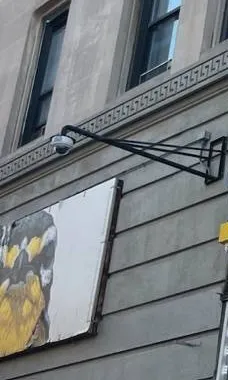
Long Island Dahua camera installation example photo: a small white dome camera at the end of a long black wall arm projecting from a grey stone facade, above a framed board
Example photo from another AESS job (not on Long Island): a small dome camera hangs from a long black arm bolted to a stone facade, with an upper-floor window above and the edge of a framed board below.
Building Specialists

Dahua Camera Installation for Long Island's Architecture

The cameras are the easy part. What decides how long a Long Island job takes, and how good it looks afterwards, is the house: where the cable can travel, what the walls and eaves are made of, and where a recorder can live without cooking in an attic or flooding in a basement.

Post-war slab ranches and capes

Levittown's 17,447 houses were built between 1947 and 1951, many as ranches on concrete slabs with an expandable attic. There is no basement to run cable through, so cable travels across the attic and drops through the soffit; the recorder usually goes in a hall closet rather than a cellar.

Split-levels and high-ranches

Common across 1960s and 1970s Suffolk. The half-level garage and lower family room give an easy cable path from the garage ceiling to the driveway and front door, but the upper-level soffits sit high, so a long ladder or a lift is planned for.

Center-hall colonials

Two full floors and a basement in most of Nassau's older villages and Suffolk's later subdivisions. Cable runs from the basement up an interior chase or the garage wall; second-floor eave cameras see over the hedges that block first-floor views.

South Shore waterfront

Canal and bay houses where storm surge is real — Sandy did about $150 million of damage in Long Beach alone. The recorder goes upstairs, never on a basement shelf, and exterior connections are kept above flood level in sealed boxes.

North Shore and estate lots

Long drives, gatehouses, guest cottages and pool houses. Distances often exceed what one Ethernet run can carry, so detached buildings get their own PoE switch fed by fiber or a point-to-point wireless link.

East End second homes

Houses that are busy in July and empty in February. East Hampton police have asked the public for help identifying a man caught on a camera inside a burglarized house, which is the point: recording has to work when nobody is there to notice it has stopped.

Garden apartments, condos and HOAs

Common driveways, mail kiosks and pool gates where a board, not one owner, decides. Cameras cover common areas only and the board gets the paperwork it needs.

Strip retail and mixed use

One-storey stores with a flat roof, a rear service lane and an apartment upstairs. Cable rides the roof in protected conduit and the recorder stays in the tenant's back room.

Methods we use on Long Island houses

  • Vinyl and aluminium siding: cameras go on a mounting block or junction box sized for the camera, screwed through to the sheathing, so the siding can still move with temperature and the hole is sealed behind the base.
  • Cedar shake and shingle: common on the North Shore and the East End. We mount to a flat block rather than straight onto the shakes and seal the cable entry so water cannot track behind them.
  • Brick and stucco: masonry anchors and a drip loop, with the cable entering below the camera rather than above it.
  • Soffit mounting: where the soffit is vented aluminium we add a backing plate so the camera does not shake in wind; where it is wood we mount directly.
  • Attic routing: cable is kept clear of recessed light housings and ductwork, and in summer heat we schedule attic work for the morning.
  • Recorder placement: a closet, finished basement shelf or utility room with ventilation and an outlet, above any flood line, and near the router so the DMSS connection is a short patch cable.

If your house also needs its existing analog cameras replaced before Dahua goes in, the Long Island DVR upgrade page explains which old coax can be reused.

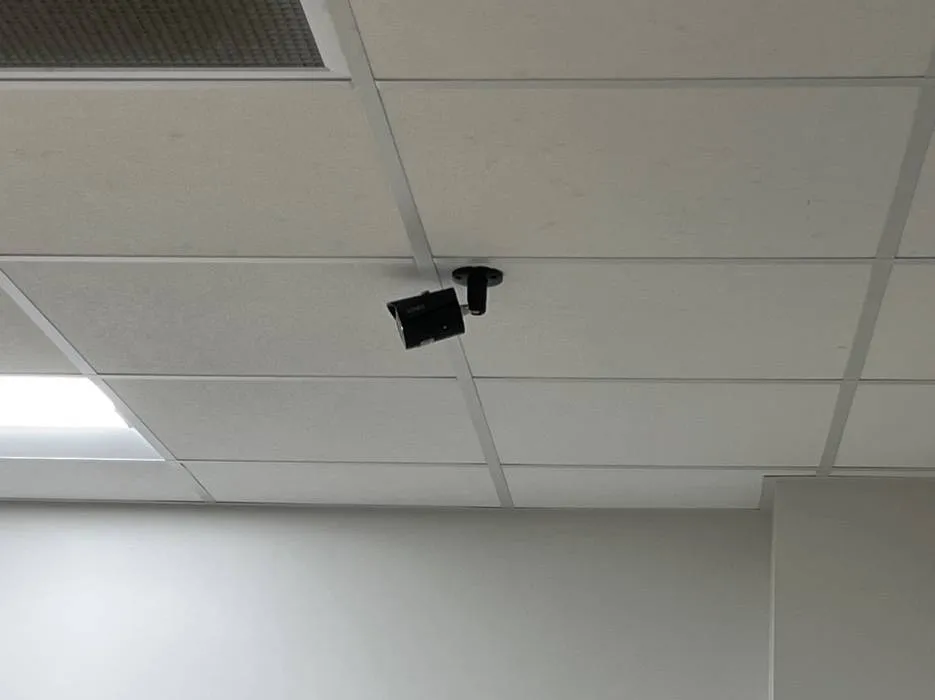
Example photo for Long Island Dahua camera installation: a small black bullet camera on a short pendant mount fixed to a white drop-ceiling grid above a plain office wall
Example photo from another AESS job (not on Long Island): a compact black bullet camera on a short pendant mount screwed into the ceiling grid, angled down across a plain white wall.
Nassau or Suffolk

Choosing the Right County Page for Your Dahua Project

This hub covers questions that are the same everywhere on the island: the federal rules, which Dahua line to buy, how to secure the system, and how to run more than one property. County-level detail lives one level down, because the two counties differ in ways that change a quote.

Dahua camera installation in Nassau County

Older and denser. The median house was built around 1955, lots are tight, and many addresses sit inside one of 64 villages with its own building department and, in some cases, its own police force. Expect privacy masking on side-yard cameras, attic routing on slab houses, and county pricing at the Nassau rate.

Dahua camera installation in Suffolk County

Larger and more spread out. The median house dates to about 1970, lots and driveways are longer, and the forks add second homes that sit empty for months. Expect longer cable runs, outbuilding links and seasonal setups, Suffolk police's Camera Registry, and county pricing at the Suffolk rate.

One difference matters after an incident rather than before it: who answers the call. A Nassau address may be covered by the county police or by a village department such as Garden City's, which runs its own voluntary camera registration. Most of western and central Suffolk is covered by the Suffolk County Police Department and its Camera Registry Program, while East End towns have their own police — East Hampton Town police, for example, have released stills from a homeowner's indoor camera when asking the public to identify a burglar. Whichever department it is, they will ask the same things: the exact time, the camera that saw it, and a clip they can play. Those are settings we fix on the first day, not after the break-in.

Pricing follows the same split. The county pages show their own lists, built from the same base as this page but adjusted by the county rates in our pricing rules, so a Suffolk quote is not simply a Nassau quote with a different name on it. If your project spans both counties, each site is priced on its own county list and the account set-up is shared.

If you own property in both counties, start here: the multi-site questions further down cover how one DMSS account can show two recorders, who should hold the administrator password, and why each house still needs its own recorder.

Commercial Dahua Camera Installation

Business Dahua Camera Installation on Long Island

Long Island businesses buy Dahua for the same reason homeowners do — more cameras for the budget — and the federal questions matter more for them, because a business is far more likely than a homeowner to hold a government contract or receive federal money. These are the corridors our commercial calls come from.

Old Country Road and Roosevelt Field

The largest mall on Long Island sits in East Garden City, and the surrounding road is lined with big-box stores, restaurants and medical offices. Tenants usually need register, stockroom and rear-door coverage that sits inside the landlord's rules for exterior equipment.

Route 110: Farmingdale, Melville, Huntington Station

A corridor of warehouse, flex, research and office buildings off the Long Island Expressway. Typical requests are loading-dock views, parking-field PTZ cameras and lobby coverage for buildings with several tenants.

Long Island Innovation Park at Hauppauge

About 1,350 businesses in roughly eleven square miles, mostly one- and two-storey industrial and office buildings with large lots. Perimeter fences, truck gates and long parking rows suit Dahua's PTZ and multi-sensor cameras.

Uniondale and the Meadowbrook office belt

Office towers and campuses near the Meadowbrook Parkway, Hofstra and the Coliseum site. Many tenants here have corporate IT policies and procurement rules that we check before proposing Dahua at all.

Ronkonkoma and MacArthur

Suffolk is seeking a developer for 48 acres of a 179-acre redevelopment area between Long Island MacArthur Airport and the Ronkonkoma station. Construction and new tenants around it mean temporary and then permanent camera systems.

Village downtowns and turnpikes

Main streets from Rockville Centre to Patchogue and the long commercial stretches of Hempstead Turnpike and Jericho Turnpike: one- and two-storey storefronts where the rear lane matters as much as the front door.

Compliance callouts for Long Island businesses

  • Federal contracts and grants: NDAA Section 889 Part B, effective August 13, 2020, bars federal agencies from contracting with entities that use covered video surveillance equipment from Dahua and its affiliates. A contractor, lab, nonprofit or school with federal money should not install Dahua anywhere in its operation without legal review; we will specify another brand.
  • FCC use-based rule: the FCC's 2022 order treats Dahua equipment as covered when it is used for public safety, government facility security or physical security surveillance of critical infrastructure. Utilities, telecom, health care and transport sites should treat Dahua as off the table.
  • Installer licensing: New York's Department of State licenses security and fire alarm installers; ask any installer for their number. Ours is #12000287431.
  • County and local licensing: Suffolk County Code Chapter 563 Article XI requires a licence from the Office of Consumer Affairs for regulated trades, except in towns and villages with their own licensing; Nassau's Office of Consumer Affairs licenses home improvement contractors. Some villages also require a permit for exterior work — we check the address before scheduling.
  • Audio: New York is a one-party consent state for recorded conversations; a camera microphone that records customers or staff who are not part of the conversation is a legal risk. We install with audio off unless you ask, and explain the trade-off in writing.
  • Signage and staff areas: post notice where the public is recorded and never place cameras in restrooms, locker rooms or changing areas.

For brand-neutral business systems see commercial security camera installation on Long Island; for retail pricing tools, the Long Island camera pricing page.

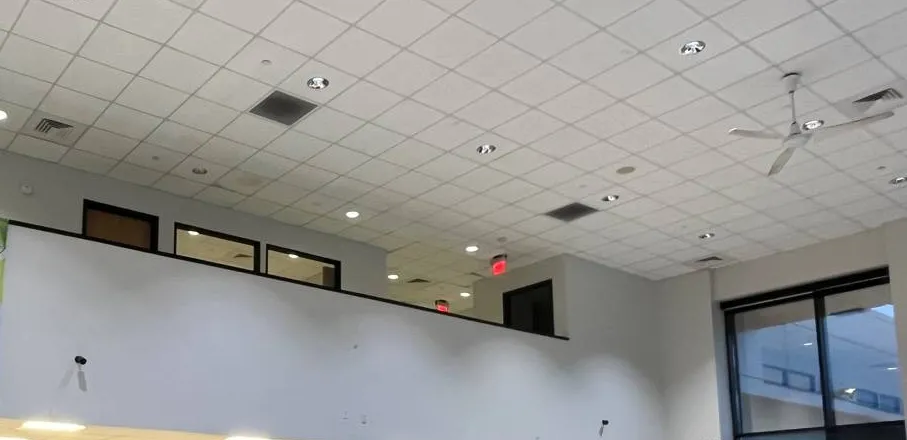
Example photo for Long Island Dahua camera installation in a large open room: two small cameras fixed high on a white wall below a mezzanine, under a grid ceiling with a ceiling fan
Example photo from another AESS job (not on Long Island): two small cameras sit high on a long white wall under a mezzanine, with a grid ceiling, recessed lights, an exit sign and a ceiling fan above.
Your Questions Answered

Dahua Camera Installation in Long Island: Questions Answered

These are the questions Long Island owners actually bring to a Dahua walkthrough, grouped by what they are really about. The federal-rules answers are the reference for our Nassau and Suffolk pages too, so they are written in full here.

The Federal Rules: FCC Covered List and NDAA Section 889

Is it still legal in New York to buy a brand-new Dahua camera system in 2026?

Yes, for a private home or a private business, with one real caveat about stock. On November 25, 2022 the FCC adopted rules that stopped new equipment authorizations for products from companies on its Covered List, Dahua and its subsidiaries among them. The FCC's own news release said the rules applied "to future authorizations" and only sought comment on what to do about existing ones. For Dahua the order was use-based: its cameras count as covered equipment when they are used for public safety, government facility security or surveillance of critical infrastructure, and the company could only win a conditional authorization by showing it was not marketing that equipment for those uses — for example, by directing it to consumers. Equipment that had already been authorized could keep being sold. Nothing in the 2022 order, the federal procurement law, or any New York State statute we could find makes it illegal for a homeowner in Merrick or a deli owner in Bay Shore to buy or install a Dahua camera.

The caveat is newer. In rules released October 29, 2025, which took effect December 26, 2025, the FCC gave two of its bureaus a procedure to limit the marketing and importing of previously authorized covered equipment without revoking the authorization. The FCC's January 2026 compliance guide describes that as a way to "prohibit future importation and marketing" of such equipment. If the FCC uses that power on particular Dahua models, distributors will stop selling them even though cameras already installed are untouched. That is why we confirm which models we can actually supply before we write a quote, and why we do not promise that the exact camera on your neighbour's garage will still be available next year.

If the FCC restricts more Dahua models, do the cameras already on my Long Island house have to come down?

No. Every FCC action so far has been aimed at authorizing, importing and marketing equipment, not at people who already own it. The 2022 order expressly left existing authorizations in place, the Congressional Research Service noted in January 2023 that the FCC "did not, however, revoke any of its prior authorizations," and the FCC's 2026 compliance guide states that a limit on previously authorized equipment would not prohibit "continued use." There is no federal or New York requirement for a homeowner or private business to remove Dahua cameras, register them, or report them.

What does change for an existing owner is the long-term supply picture. The 2025 rules also prohibit modifications, including the "permissive changes" manufacturers use to update an approved product's radio design, and they extend the ban to covered modular transmitters inside other devices. Wired PoE cameras and recorders are not radio products in the way a Wi-Fi camera is, but if you are adding to an existing system over the next few years, it is sensible to buy any spares you want while they are easy to get and to keep the cabling plan brand-neutral so a later camera from another maker can drop onto the same cable and the same recorder through ONVIF.

Which Long Island properties should not get Dahua at all because of NDAA Section 889?

Section 889 of the 2019 defense authorization act has two parts. Part A, effective August 13, 2019, stops federal agencies buying Dahua, Hikvision, Huawei, ZTE and Hytera video surveillance and telecom equipment, including white-label versions. Part B, effective August 13, 2020, goes further: federal agencies may not contract with any entity that uses that equipment as a substantial or essential component of any system. University compliance offices, such as UC Santa Barbara's, read that as covering the whole organization "regardless of its funding source" and warn that "many consumer video surveillance systems are rebranded products from one of the prohibited companies."

On Long Island that puts a firm line around federal contractors in the Route 110 and Hauppauge business parks, laboratories and research partners, hospitals and clinics with federal contracts, colleges, and nonprofits that receive federal awards. It also covers properties used for public safety or critical infrastructure under the FCC's 2022 order. For those owners we do not install Dahua, and if they already have it we can plan a replacement that reuses the cable. A family home, a private retail store or a restaurant with no federal contracts is outside both rules.

Will Dahua keep publishing firmware fixes for cameras already sold in the United States?

So far it has. Dahua's product security team published advisory DHCC-SA-202507-001 on July 23, 2025 and revised it on August 15, 2025, with fixed firmware for camera series sold here, including the IPC-1XXX, IPC-2XXX, IPC-WX and several SD pan-tilt families. The advisory says devices with cloud-upgrade capability would receive the fix automatically within 30 working days and gives a contact address for its response team. We cannot promise what a manufacturer will do in future, so our setups assume the opposite: cameras are kept off the open internet, the recorder sits behind your router with port forwarding closed, and remote viewing goes through a channel we can lock down. If updates ever stop, a system built that way is still far safer than one with a camera forwarded straight to the street.

Two Counties, Two Houses, Several Stores

Can one DMSS login show both our Nassau house and our summer place on the North Fork?

Yes. The DMSS phone app lets one account hold several recorders, each listed as its own device, so a family can open the app and switch between the house in Garden City and the cottage in Southold. Each property still needs its own recorder and drives, because recording has to continue at each house even when the internet at the other is down. We name each device clearly, give each family member their own user on each recorder rather than sharing one password, and set alerts differently: at the house you live in, alerts for people at the back door at night; at the summer house in winter, alerts for any person or car on the property at any hour.

Two practical points. The second house needs an internet connection that stays on all year — many seasonal owners cancel service in the off-season and then wonder why the app shows the cottage offline. And the recorder at the empty house should be on a battery backup sized to ride through short outages, with the recorder set to restart and resume recording by itself when power returns.

How is a Dahua system planned for a business with locations in both Nassau and Suffolk?

Each location gets its own recorder sized for its cameras and retention, so a network fault at one store never stops recording at another. On top of that, the owner gets one view of every site, either through DMSS on a phone or Dahua's desktop software on an office PC. Store managers get a user limited to their own location, usually live view and playback but not export or delete; the owner or an outside IT person holds the administrator account. We keep the camera naming the same at every site — "Register 1", "Rear door", "Parking east" — so a manager who moves from Levittown to Smithtown knows the screen immediately.

Retention is a policy decision, not a technical one. We size drives so every store keeps the same number of days, write that number into the handover sheet, and show each manager how to export a clip before it is overwritten. For chains that already have an IT provider, we document the network settings each recorder needs so their firewall rules can be written once and applied everywhere.

Why does a 1950s Nassau ranch need a different Dahua layout from a 1970s Suffolk colonial?

Because the houses send cable, and the threats, in different directions. A slab ranch in Levittown, Wantagh or Bethpage has no basement and a low roof, so cameras mount at the eaves and cable runs across the attic. Neighbours are close, which means side-yard cameras need privacy masks to avoid looking into the next kitchen, and wide-angle fixed cameras on the front corners often cover the whole frontage. In a 1950s house we also check the electrical panel and outlet near the recorder location, because older circuits are more likely to be shared with appliances that trip them.

A 1970s colonial or high-ranch in Commack, Dix Hills or Holbrook sits further back from the road on a wider lot. The driveway is longer, so a single camera cannot catch both a face at the car and a plate at the curb; that job usually takes a pair, or a varifocal bullet zoomed toward the street. Basements make cable routing easier, but the second-floor eaves are high, and the detached shed or pool house is often far enough away to need a separate cable route or a wireless bridge. The camera count rises, but so does the coverage you get from each one.

Picking the Right Dahua Line

When is WizSense enough, and when does WizMind earn its higher price?

Dahua describes WizSense as a series of AI products built around people and vehicles: smart motion detection that ignores animals, leaves and changing light, plus tripwire and intrusion rules that send a push alert when someone crosses a line you draw. For a Long Island house that is almost always enough. The alert that matters is "a person is in the driveway at 2 a.m.", not a count of how many people walked past, and WizSense cameras do that at the price that lets you cover every side of the house.

WizMind is the higher tier, which resellers summarize as advanced analytics such as face detection, people counting and heat maps. It earns its cost where those numbers mean something: a store that wants to know how many customers came in each hour, a business that wants face detection at its entrance, or a property manager that needs to find one person in many hours of video from several entrances. We often mix the two — WizMind at the main entrance where the analytics pay off, WizSense everywhere else.

Is a TiOC camera worth paying extra for over a standard WizSense turret at a Long Island house?

At one or two positions, often yes; across the whole house, usually no. Dahua's TiOC ("three-in-one") cameras add three things to a standard smart turret: warm white lights that switch on when a person enters a zone, so night video is in color; a siren and red-and-blue strobe that fire when the person reaches a narrower zone; and two-way talk from the phone. Dahua's launch material notes that switching the lights on only when a target appears "reduces light pollution." You are paying for the ability to interrupt someone, not just record them.

That is worth the money where an intruder is the only plausible visitor at night — the back of the house facing a wooded strip, a detached garage or shed, the pool gate, or any part of a seasonal house in the months it stands empty. It is poor value at the front door and the street side, where deliveries, neighbours and dog-walkers would set it off constantly and the feature ends up disabled. A typical Long Island layout uses one or two TiOC cameras at the back and the driveway, often with the siren scheduled only for overnight hours or vacant months, and standard WizSense or full-color turrets everywhere else.

Do Dahua's smart alerts need a cloud subscription, or do they run on the camera?

The detection itself runs on the hardware. Dahua describes WizSense smart motion detection and its tripwire and intrusion rules as features of the cameras and recorders, which is why a Dahua system keeps classifying people and vehicles even when the internet is down; the events are written to the recorder alongside the video. What needs the internet is the delivery of the alert to your phone, which goes through the DMSS app's push service, and remote viewing.

There is no monthly fee for any of that. Cloud recording, where a copy of video is stored off-site, is a separate and optional service; most Long Island owners we work with keep footage on the recorder and rely on export when they need a clip. If you want an off-site copy because the recorder itself could be stolen or flooded, we discuss options and costs separately, and we place the recorder where a burglar is least likely to find it.

What should a Long Island business ask its IT provider before a Dahua recorder goes on the network?

Five things. Whether the cameras and recorder can sit on their own VLAN or a physically separate switch, so they cannot talk to the point-of-sale terminals or the office PCs. Whether the firewall can block the cameras from reaching the internet at all, leaving only the recorder able to make the outbound connections it needs. Which addresses the recorder and cameras should hold, so a router replacement does not scatter them. Which time server the recorder should use, so timestamps stay right. And whether remote access will be through Dahua's P2P service or the company VPN.

We send the IT provider those answers as a short document before the install, rather than turning up with a recorder and asking for a port forward. For Long Island businesses with a store in each county, the same settings are applied at every site, which makes later troubleshooting much faster. If there is no IT provider, we set it up ourselves and leave the document with the owner.

Keeping the System Itself Secure

What did Dahua's 2025 buffer-overflow advisory mean for cameras already installed on Long Island?

In July 2025 Dahua disclosed two flaws, CVE-2025-31700 and CVE-2025-31701, in which specially crafted network packets could cause a buffer overflow, leading to a crash or remote code execution; Dahua rated them 8.1 on the CVSS scale. TechRadar reported that Bitdefender found them and reported them privately in March 2025. Affected series included several common IP camera and pan-tilt families, and Dahua said that builds dated after April 16, 2025 are not affected.

For an owner the practical steps are simple. Open the camera or recorder's web page, look at System Information, and check the build date; if it is older than April 16, 2025, it needs the update. If you cannot update immediately, Dahua and the researchers advised the same thing we do on every install: no camera directly reachable from the internet, UPnP turned off on the router and the recorder, and cameras on their own network segment. Our takeover visits include this check on every camera, and the written report lists each one's build date before and after.

Is Dahua's P2P remote viewing safe enough, or should our Long Island office use a VPN?

P2P is the convenience feature that lets the DMSS app reach a recorder by scanning a serial-number QR code, with no port forwarding. It is much safer than the old practice of forwarding camera ports to the internet, because nothing on your network is left listening for strangers. It still depends on a cloud relay operated by the manufacturer — the DMSS listing on Apple's App Store names its seller as Hangzhou Dong Bin Information Technology Co., Ltd. — so some business owners, and almost every corporate IT department, prefer a VPN instead.

For a home, P2P with strong unique passwords and current firmware is a reasonable choice and the one most owners use. For an office or a business with an IT policy, we disable P2P and set up access through a VPN on the router or firewall, so the phone joins the office network first and then sees the recorder as if it were on site. Either way, every user gets their own login, and the administrator account is never the one saved on a phone.

Power, Storms and the Police

Which parts of a Dahua system belong on a battery or a standby generator circuit?

Four parts, and owners usually remember only the first. The recorder obviously needs power to write video. The PoE switch, or the PoE ports built into the recorder, must stay powered too, because every camera gets its electricity through that switch — a recorder on a battery with a switch on a dead outlet records nothing. The modem and router decide whether the DMSS app can reach the house during the outage. And any camera or radio link fed by its own local power supply at a detached garage or pool house needs its own protection, or that corner of the property goes dark first.

Long Island outages are common enough to plan for: ABC7 reported that during Isaias in August 2020 almost half of PSEG Long Island's 1.1 million customers lost power at the peak. Where a house has a standby generator, we ask the electrician to put the recorder, switch and router on a generator-backed circuit, and we still add a small battery backup in front of them, because generators take time to start and that gap is enough to corrupt a recorder that loses power mid-write. We then set the recorder to restart on its own and send a push notification when it does.

Should we register our Dahua cameras with the Suffolk police Camera Registry or a village program?

It is worth doing, and it does not give anyone access to your system. The Suffolk County Police Department's Camera Registry Program stores the location of private cameras so detectives can ask owners near a crime to check a specific date and time; if you find something, retrieval is arranged "at the convenience of the camera owner." In Nassau, some village police departments run their own versions — Garden City's Private Camera Registration Program states plainly that it "does NOT provide us access to security camera systems that are privately owned."

What makes a registered camera useful is the clock and the export. We sync the recorder's time to an internet time source, name cameras after real places ("Driveway - toward street"), and show you how to export a clip to a USB stick, so that when an officer calls you can hand over the right minutes in a format they can play.

Boards, Plates and Recording Time

Should a Long Island HOA or condo board choose Dahua for its common areas?

It can, but the board should ask two questions first. The first is money: if the association, or any building it manages, receives federal grants, federally backed financing tied to security equipment, or works under a government contract, the Section 889 and FCC limits described above are a reason to choose another brand. Most private associations have none of those ties, and for them Dahua is a legitimate, budget-friendly choice for pool gates, mail kiosks, clubhouse doors and shared parking.

The second is governance. A board-owned system should have one administrator account held by the managing agent or a named officer, separate logins for anyone else who views footage, and a written policy on who may export video and for how long it is kept. Residents' own doorbells and driveway cameras are their business, but cameras on common property should look only at common areas, never into a unit's windows. We put all of that in the handover document so the next board inherits a system it understands.

Can Dahua cameras record to a non-Dahua recorder or software if we change brands later?

Usually yes, through ONVIF, the industry standard that lets cameras and recorders from different makers talk to each other. Most current Dahua IP cameras support ONVIF profiles that let a third-party recorder or video software pull their video stream, so a business that later moves to another brand of recorder, or an owner who prefers desktop software, does not have to throw the cameras away at the same time. Smart features are the catch: Dahua's people-and-vehicle detection and TiOC deterrence controls generally work best, and sometimes only, with a Dahua recorder or app, so on another system you may get video but lose some alert types.

This works the other way too. A Long Island owner who already has a recorder from another maker can often add Dahua cameras to it. We test the exact camera and recorder combination before quoting it, because ONVIF support varies by model and firmware, and we write down which features will and will not carry over.

When does a Long Island owner pick Dahua over Hikvision or a brand not made in China?

Hikvision sits under the same FCC Covered List and NDAA Section 889 restrictions as Dahua, so switching between those two does not change the federal picture; the choice between them comes down to models, the app and what the installer supports. The real decision is between those two and the brands outside the restrictions. Dahua makes sense when the property is private, the budget has to stretch across many cameras, and the owner is comfortable with the brand once it is secured properly. A non-Chinese or NDAA-compliant brand makes sense when the site has any federal contract or funding tie, when a corporate IT or insurance policy forbids covered equipment, or when the owner simply does not want the brand after reading the news.

For many Long Island homes the answer is mixed: Dahua cameras on the house, because they cover the most ground for the money, and a different brand at a home office used for a federal contractor's work. We price both ways on request, and the cabling we install is the same either way, so the decision can be revisited later without opening walls.

Inherited and Older Systems

We bought a Long Island house that came with a Dahua system. What should we do before connecting it to our internet?

Do not leave it plugged into your new internet connection as it is. A recorder that has not been updated in years may carry the login-bypass flaw CVE-2021-33044, which CISA added to its Known Exploited Vulnerabilities list on August 21, 2024 with the instruction to apply the vendor's mitigations or stop using the product. Unplug the recorder's network cable until it has been reset and updated.

Resetting depends on the model and its firmware, and Dahua's process differs between recorder generations, so we identify the exact model before touching it. Once in, we update the firmware, delete the previous owner's users and phone devices, create new ones for you, and then check every camera. Often the cameras themselves are fine and only the recorder needs attention; sometimes one or two have failed after years on a sunny wall and are worth replacing while we are there.

Is an aging Lorex system worth replacing with Dahua, given the two brands' history?

Lorex was owned by Dahua until December 2022, when Dahua agreed to sell it to Skywatch, a Taipei-based company, for about US$72 million. Because Lorex was a Dahua subsidiary for years, owners often ask whether the two can be mixed. Sometimes newer Dahua cameras will work on an older Lorex recorder over ONVIF, and sometimes they will not, depending on model and firmware.

Whether to replace depends on what is failing. If the Lorex cameras are analog and the picture is soft, the upgrade is worth it, and the existing coax can sometimes stay for HD-over-coax cameras. If the Lorex system is recent and working, adding a few Dahua cameras may not be worth the compatibility gamble. We test before we sell, and our Lorex camera installation page for Long Island covers staying with that brand.
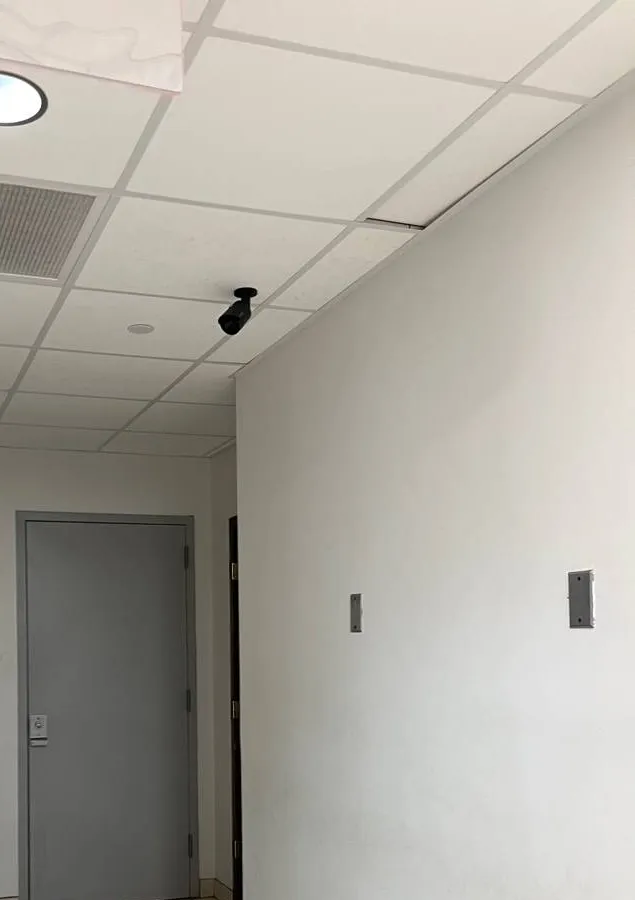
Long Island Dahua camera installation example photo: a black bullet camera mounted at the ceiling corner of a narrow tiled corridor, aimed toward a grey steel door
Example photo from another AESS job (not on Long Island): a small black bullet camera fixed where the drop ceiling meets the wall, looking down a tiled corridor to a grey steel door at the far end.
Equipment

Types of Dahua Cameras We Install

Dahua sells far more models than any one property needs. On Long Island we keep returning to these categories, chosen by what each part of the property has to show. The photos are manufacturer product shots used to show shape and size; the model we quote depends on what distributors can supply at the time.

Turret cameras

Ball-in-socket housing with no glass in front of the lens to collect spider webs or reflect IR. Our default for eaves and soffits on Long Island houses, in WizSense, full-color and TiOC versions.

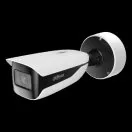
Bullet cameras

Longer housing with a sunshield; easy to aim down a long driveway or along a fence line. Varifocal versions zoom optically toward the street for plates and faces at distance.

TiOC active-deterrence cameras

Warm-light, siren and red-and-blue strobe in one turret or bullet, with two-way talk. Best for yards, lots and empty houses rather than front doors on busy blocks.

Mini pan-tilt cameras

Small domes that can turn to a preset or follow motion, useful on a deep porch, a shop floor or a pool area where one fixed view would leave a gap.

PTZ domes

Optical zoom and full pan-tilt for parking fields, marinas and estate grounds; normally paired with fixed cameras so the PTZ is never the only record of an entrance.

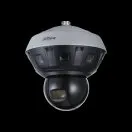
Multi-sensor panoramic

Several lenses in one housing for a 180° or wider view, sometimes with a PTZ underneath. One mounting point covers a whole truck court or lot corner.

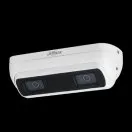
Dual-lens and people-counting

Ceiling cameras that look straight down at a doorway and count people in and out — a WizMind job for stores that want traffic numbers.

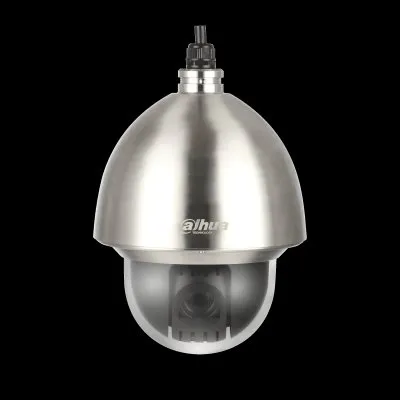
Stainless and corrosion-resistant

Stainless housings meant for corrosive and marine settings: docks, boatyards and bulkheads on the South Shore and the bays.

NVRs and PoE switches

The recorder, its drives and the PoE switch that powers each camera through one cable. Sized for camera count, resolution and the days of recording you choose.

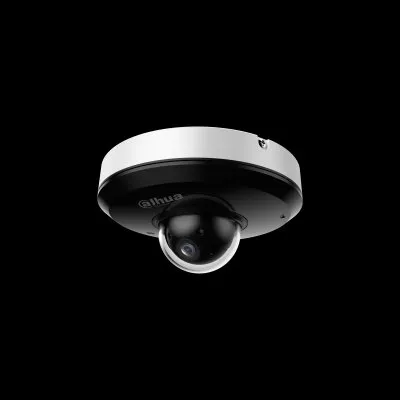
Dahua camera installation Long Island product photo: a low white mini pan-tilt dome camera with a dark lens bubble on a black background
Manufacturer product photo: a flat white Dahua mini pan-tilt dome with a dark lens bubble, the kind of compact camera that can sweep a porch or shop floor from one point.
Long Island Dahua camera installation product photo: a multi-lens panoramic camera head mounted above a small PTZ dome
Manufacturer product photo: several lenses arranged around one housing with a pan-tilt-zoom dome hanging underneath — a panoramic view plus a zoom camera in one unit.
Dahua camera installation Long Island product photo: a white rectangular dual-lens camera made for ceiling mounting
Manufacturer product photo: a slim white rectangular housing with two lenses side by side, designed to sit on a ceiling and look straight down at a doorway.
Long Island Dahua camera installation product photo: a brushed stainless steel PTZ dome camera with a pendant cap and clear lower bubble
Manufacturer product photo: a brushed stainless-steel pan-tilt-zoom dome with a pendant cap on top and a clear bubble below, a housing style made for corrosive or marine settings.
Dahua camera installation Long Island product photo: a small white bullet camera with a long sunshield on a round wall mount
Manufacturer product photo: a white bullet camera with a long sunshield, fixed to a round wall-mount base by a short arm.
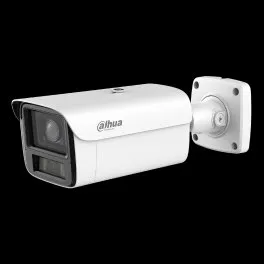
Long Island Dahua camera installation product photo: a white bullet camera whose front face has two separate windows, mounted on a square wall bracket
Manufacturer product photo: a white box-style bullet camera with two separate windows on its front face, held on a square wall bracket by a short arm.

Which Dahua line for which spot on a Long Island property

SpotUsual Dahua choiceWhy
Front door and porchFull-color turret, or a dual-lens camera on deep porchesColor identifies clothing and faces; a downward angle sees the package and the hands.
Driveway, car doorsWizSense or TiOC turret at the garage cornerPerson and vehicle detection without alerts for every passing car on the street.
Curb and plateVarifocal bullet, zoomed and set to a fast shutterA narrow view is the only way to get readable characters at distance.
Side yardsInfrared WizSense turret with privacy masksNo white light shining at the neighbours; masks block their windows.
Back yard, pool, shedTiOC with lights and push alerts, siren by scheduleDeterrence where nobody should be at night, without waking the block.
Waterfront, docksStainless or corrosion-resistant housingsSalt air shortens the life of ordinary aluminium housings and connectors.
Store entranceWizMind or dual-lens counting cameraTraffic counts and face detection where the analytics are actually used.
Parking field or truck courtMulti-sensor panoramic or PTZ above fixed door camerasOverview from one point, with fixed cameras still covering every door.

Two rules sit above the table. Every camera position that a person must pass to get inside gets a fixed camera, whatever else is on the property. And no camera, of any line, is exposed directly to the internet; remote viewing goes through the recorder, with firmware kept current.

Dahua installed by AESS compared with ADT, Ring and SimpliSafe

QuestionDahua, installed by AESSADTRing / SimpliSafe
Where is video stored?On a recorder in your house or businessDepends on the plan chosenMostly cloud, by subscription
Monthly fee needed for recording?NoMonitoring plans are sold monthlyCloud history needs a plan
Wired PoE cameras?Yes, by defaultPlan-dependentMostly battery or Wi-Fi
Federal procurement restrictions?Yes — not for federal contractors or critical infrastructureAsk the provider which hardware is usedAsk the provider
Who installs and secures it?A NYS-licensed crew that updates firmware and closes remote portsCompany techniciansUsually the owner

The honest summary: a subscription doorbell is easier for a renter or a single front door. Once a Long Island property needs six or more cameras that record continuously without a monthly bill, a wired recorder system is cheaper over its life, and Dahua is one of the less expensive ways to build one — provided the site is not one the federal rules exclude.

AI Overview Reality Check

What AI Gets Wrong About Dahua Camera Installation in Long Island

We could not view Google's live AI Overview from our build environment, so this section does not quote it. Instead it takes seven claims that search summaries, forums and cost aggregators commonly repeat about Dahua, and checks each against the primary sources listed at the bottom of this page.

"Dahua is banned in the United States"

This is the most common shortcut, and it is wrong as a description of what a Long Island homeowner can do. The FCC's 2022 order stopped new equipment authorizations and restricted marketing for government, public safety and critical-infrastructure use; it did not make ownership illegal, and it did not revoke earlier authorizations.

The 2019 defense law adds procurement rules for federal agencies and the companies that contract with them. Neither touches a private homeowner's right to keep or use a camera, and the FCC's 2026 compliance guide says a limit on previously authorized equipment would not prohibit continued use.

A more accurate one-line version: Dahua is restricted for federal buyers and certain uses, and new models face an FCC authorization ban, but private owners can still install and use it. That is longer than "banned", which is exactly why summaries shorten it.

"The ban means you have to remove existing cameras"

No federal or New York rule requires a private owner to remove Dahua cameras. The removal pressure people remember applies to federal agencies and to organizations that contract with them under Section 889, not to households.

For a Long Island business that has, or wants, a federal contract, removal or replacement may well be the right business decision, and we plan those swaps. For a family in Huntington, the cameras on the house are a matter of their own preference.

If you are uneasy about the brand after reading the news, the realistic options are to keep the system and secure it properly, or replace the cameras and recorder with another brand while keeping the cable. Both are legitimate; neither is legally required.

"Dahua cameras are fine to put straight on the internet with the app"

Forum advice tends to swing the other way — one Reddit home-security commenter wrote that they "wouldn't expose a Dahua/Hikvision" at all — and the security record supports caution. CISA lists Dahua's CVE-2021-33044 login bypass as known to be exploited, and Dahua's 2025 advisory fixed two flaws rated 8.1 that could allow remote code execution.

The fix is not to avoid the app but to avoid exposing the devices. No port forwards, UPnP off, cameras on their own network segment, firmware past the April 2025 builds, unique passwords for every user, and P2P or a VPN for remote viewing depending on how strict you need to be.

That configuration work is invisible once the job is done, which is why it is the step a rushed install skips. Ask any installer to show you, at handover, that no ports are forwarded to the recorder.

"Camera installation costs $100 to $350 per camera"

Cost aggregators publish national labor figures: Angi gives $100 to $350 per camera for installation on top of the camera price, with a New York average job of $1,509, and HomeAdvisor gives $80 to $200 per camera in labor. Those figures assume a camera, a nearby outlet and a short run.

A Long Island Dahua job includes the recorder, the drives, a PoE switch, outdoor-rated cable through an attic or basement, sealed exterior entries, and configuration time for smart detection, privacy masks and users. Our published Long Island figure is roughly $480 to $850 per camera installed, with complete packages listed in the pricing section.

The aggregator number is not wrong; it is a different job. Compare quotes line by line — recorder, drive size, cable type, number of cameras, and whether firmware and remote access are set up — rather than by the headline per-camera figure.

"Wireless cameras make wiring unnecessary on a big lot"

Battery and Wi-Fi cameras are easy to stick on a fence, which is why summaries recommend them. On Long Island's wider Suffolk lots the problem is distance and walls: a Wi-Fi camera at a detached garage or pool house is often at the edge of the router's range, and a battery camera records clips rather than continuous video.

Dahua's strength is the wired PoE camera recording around the clock to a local recorder. Where a building is too far to cable, we bridge it with a point-to-point wireless link or fiber to a small PoE switch, so the cameras out there are still wired locally.

Wireless has a place — a temporary camera, a renter, a spot where no cable can go — but it is not a substitute for wiring a property you own and plan to keep.

"Any AI camera will stop false alerts from wildlife"

Smart detection is a real improvement over pixel-change motion detection. Dahua says its WizSense smart motion detection filters out animals, leaves and changing light, and on a wooded North Shore or East End lot that difference is the reason owners keep alerts switched on.

It still depends on setup. Deer at night, headlights sweeping across a garage door, and swaying branches close to the lens can all trigger alerts if the detection zone is drawn carelessly or the camera is aimed too high. We draw zones on the ground the person would cross, not on the sky or the road.

The right expectation is fewer and better alerts after a short tuning period, not zero. We check alert history a week or two after handover and adjust.

"A licensed electrician is the right person for any camera job"

An electrician is the right person for a new circuit or a generator transfer switch. Camera systems are low-voltage work, and New York's Department of State separately licenses security and fire alarm installers; Suffolk County's Chapter 563 adds its own consumer-affairs licensing for regulated trades outside towns and villages that license separately.

The skills that decide whether a Dahua system works are network ones: addressing, PoE budgets, firmware, user rights, and remote access. Many electricians do this well; many do not do it at all.

Ask any installer for their New York licence number and how they will handle firmware and remote access. If the answer to the second question is "the app does it", keep asking.

A Dahua Plan Built Around Your Long Island Lot

Send the town, a few photos of the front, the driveway and the back of the property, and tell us where the router is. We will mark where each camera goes, which Dahua line suits each spot, and price it on the Long Island list.

Get In Touch

Request a Free Quote

A Long Island Dahua quote needs the town, the property type, how many buildings are on the lot, where the router is, and whether the site has any federal contract or funding tie. A written total comes back the same business day; to talk it through, call (800) 486-0943.

✅

We Got Your Request!

Thanks — the Long Island details are with our scheduler, and an installer will ring you before the end of the business day. Urgent? Call (800) 486-0943.

How It Works

Our Installation Process

Seven steps, the same for a four-camera ranch in Wantagh as for a two-county retail account. The second step is the one most installers skip: checking that Dahua is allowed on the site and that the models we plan are actually available.

1

Call or send the form

Tell us the town, the property type, whether it is in Nassau or Suffolk, and what has happened or what worries you. We ask for photos of the front, the driveway and wherever the router sits.

2

Check the model list and the rules

Before quoting we confirm which Dahua models are currently available to us and whether the site has a federal funding or contract tie that rules the brand out under NDAA Section 889.

3

Walk the property

On site we measure cable routes to outbuildings, check soffits, siding and masonry for mounting, find a dry, ventilated spot for the recorder and test the internet connection.

4

Written plan and price

You get a camera-by-camera plan with the view each camera covers, the Dahua line chosen for each position, recording days, and a fixed price.

5

Run cable and mount

PoE cable is pulled and protected, exterior entries sealed, and cameras mounted and weather-sealed; long runs to detached buildings are tested before the cameras go up.

6

Harden and configure

Firmware is updated to a current build, default and shared logins removed, UPnP turned off, smart detection zones drawn, privacy masks set and the clock synced.

7

Hand over

We set up the DMSS app for each user you name, show playback and export, test an alert, and leave a printed camera list and the admin password with the owner.

Coverage Area

Dahua Camera Installation Near Long Island's Landmarks

Six reference points that show how wide the job range is between the city line and the forks.

Levittown

17,447 houses built between 1947 and 1951, many on concrete slabs. The template for Nassau's post-war camera jobs: attic cable runs, eave cameras, close neighbours and careful privacy masks.

Roosevelt Field, East Garden City

Long Island's largest mall, built on the airfield where Lindbergh started his transatlantic flight. The surrounding Old Country Road retail strip is a steady source of store and restaurant camera work.

Hofstra and Uniondale

About 244 acres in the Uniondale section of Hempstead, with office towers and the Coliseum site nearby. A reminder that colleges and federally funded institutions sit inside the NDAA line and are not Dahua candidates.

Long Island Innovation Park at Hauppauge

Around 1,350 businesses in roughly eleven square miles, mostly low industrial and office buildings with big parking fields and truck gates — PTZ and panoramic territory.

Ronkonkoma and MacArthur Airport

A 179-acre redevelopment area between the airport and the Ronkonkoma station, where Suffolk is seeking a developer for 48 acres. Construction-stage cameras now, permanent tenant systems later.

Stony Brook

The university's 213 buildings on 1,454 acres, and the village where the August 2024 storm brought Suffolk's first-ever flash flood emergency and failed the Mill Pond dam — the reason we keep recorders off basement floors near the harbors.

We also serve every town between and beyond: Hempstead, North Hempstead and Oyster Bay in Nassau, Long Beach and Glen Cove, and Babylon, Huntington, Islip, Smithtown, Brookhaven, Riverhead, Southold, Southampton, East Hampton and Shelter Island in Suffolk.

Pricing

Dahua Camera Installation Cost in Long Island

Our Long Island Dahua figure is roughly $480 to $850 per camera installed, including the recorder, cabling, mounting, configuration and DMSS setup, and a full home perimeter often lands between $3,200 and $6,500. The range is wide because a Long Island property can be a 60-foot-wide Nassau lot or two acres on the North Fork. These are the things that move the number.

Price driverWhy it matters on Long Island
Number of camerasDetached houses need all four sides plus the driveway and any detached garage; eight to sixteen cameras is common.
Cable length and routeSlab ranches route through the attic; colonials through the basement; outbuildings may need a separate run, fiber or a wireless bridge.
Dahua lineWizSense turrets cost less than WizMind analytics, TiOC deterrence or PTZ and multi-sensor cameras.
Recording daysMore cameras, higher resolution and longer retention all need larger drives.
Mounting surface and heightCedar shake, stucco and high second-floor eaves add blocks, anchors and ladder or lift time.
CountyOur Nassau and Suffolk pages carry their own price lists at the blueprint's county rates (Nassau 1.15×, Suffolk 1.20× of our Brooklyn base); this hub shows the Long Island list.
Service after completion$195 an hour with a 3-hour minimum ($585) for visits after the installation is finished.

Two things are not in the price because they are not needed: there is no monthly fee for the system to record, and no charge for the DMSS app. If you want cloud backup or professional monitoring, we quote it separately so you can compare.

Get the Long Island Dahua Price in Writing

A camera-by-camera plan, the Dahua line for each spot, the days of recording, and one fixed total.

Shop Our Systems

Dahua Camera Installation Packages & Pricing

Basic Home — $2,200–$4,000

Four to six Dahua full-color or WizSense cameras covering the front door, driveway and back door, a recorder with drive, PoE cabling, smart-detection zones and DMSS on your phones. Typical for a Nassau ranch or cape.

Full Perimeter — $4,000–$9,000

Eight to sixteen cameras covering every side, the curb and any detached garage or pool house, with longer runs, weather-sealed entries, optional PTZ, and battery backup for the recorder. Typical for a Suffolk colonial or a seasonal house.

Estate / Commercial — $9,000+

High-channel recorders, PTZ and multi-sensor cameras, plate-capture views at gates, WizMind analytics where they pay off, multi-site logins and access-control integration. For estates, stores, offices and multi-location businesses.

Bought your own Dahua cameras? Labor-only installation

If you already bought Dahua cameras and a recorder, we will install them labor-only. We check the models and firmware build dates first; if a camera is on the 2025 advisory list and cannot be updated, we will tell you before we mount it. Labor-only work is quoted per camera after we see the property, and visits after completion are billed at the $195-an-hour service rate with a 3-hour minimum. Hardware you supply is covered by its manufacturer, not by our parts warranty. Not sure the kit you bought online will cover the property? Our Long Island NVR installation page explains how recorders are sized.

Complete Services

Every Dahua Camera Installation Service in Long Island

DMSS app support

Offline devices, lost logins, push alerts that stopped, adding family members.

SmartPSS setup

Dahua's desktop software for an office PC watching one or several sites.

NVR installation

Recorders, drives and PoE switches sized for your camera count and retention.

Camera repair

Dead cameras, failed drives and water-damaged connections on any brand.

Maintenance visits

Lens cleaning, firmware updates, drive health and a written report.

Home camera systems

Brand-neutral residential systems when Dahua is not the choice.

Hikvision installation

The other brand under the same FCC and NDAA rules, compared honestly.

Cat6 cabling

The cable behind every PoE camera, run and tested for long distances.

Intercoms

Video door stations at the front door or gate, on the same cabling plan.

Field Notes

Field Notes: The Ten-Minute Check Before Any Dahua Takeover

When we are called to a Long Island Dahua system someone else installed, the first ten minutes are always the same, and they are worth doing yourself if you own one. Open the recorder's menu and write down the model and the firmware build date; anything built before April 16, 2025 on an affected series needs the update from Dahua's July 2025 advisory. Then look at the user list. Shared accounts called "admin" or "user" with a password the whole family knows are the norm; each person should have their own login and only one should be able to delete footage.

Next, the router. If there are port-forwarding rules pointing at the recorder or at individual cameras, they come out, and UPnP gets switched off. Then the clock: a recorder whose time is wrong by twenty minutes produces footage that will not match a police report. Finally, pull up last night's recording on every camera. A camera that shows live but has no recording is the most common fault we find, and nobody notices until the day the footage is needed.

FAQ

Long Island Dahua Camera Installation FAQ

We rent out a house we own on Long Island. Where can Dahua cameras go without crossing into the tenant's privacy?
+

Outside, on the parts you control: the driveway, the exterior doors, the yard and any shared area such as a common side entrance. Never inside the rented living space, and never aimed into the tenant's windows; privacy masks handle windows that fall in a frame. Put the camera arrangement in the lease, keep the administrator account yourself, and decide in writing whether the tenant gets a view-only login for the front door. Audio stays off. If the house is split into two units with a shared hallway, the hallway can be covered as a common area.

Do you schedule Nassau and Suffolk work from the same crew, and does the East End take longer to book?
+

Long Island jobs are scheduled from our Brooklyn office at 1282 Troy Ave, and the same licensed crews cover both counties. Western Nassau addresses are usually the quickest to book. North Fork and South Fork jobs are grouped into planned days so the drive is not charged to you as extra hours; tell us when you call if a seasonal house needs to be done before or after the summer.

What should we have ready before the walkthrough at a Long Island property?
+

Know where the internet router lives, where you would like the recorder to sit (a closet, basement shelf or utility room with power and ventilation), who needs phone access, and any events you want covered — a car tried at night, packages taken, a gate left open. A rough sketch of outbuildings, a pool house or a detached garage helps us estimate cable length before we arrive.

Who owns the footage and the admin password when AESS installs a Dahua recorder?
+

You do. The recorder and drives are your property, the administrator password is handed to the person you name in writing, and we do not keep a standing login unless you ask us to for service. If a police department asks for video, it asks you, and you decide what to export.

Do you install Dahua video doorbells or door stations along with the cameras?
+

Yes. A Dahua door station or video doorbell can show up in the same DMSS app as the cameras, so a visitor at the front door and the driveway camera are one tap apart. It needs its own cable and, for some models, a separate power supply or PoE port, so tell us at the walkthrough if you want one and we will plan the cable route with the camera runs.

How long do installed Long Island jobs usually take on site?
+

A four to six camera house is normally a one-day job once the cable routes are settled at the walkthrough. A full perimeter of eight to sixteen cameras with a detached garage or pool house can take two days, and multi-building commercial sites are scheduled in phases. We give you the expected days in the written quote.

Can a camera be moved, or a user added, after the job is finished, and how is that billed?
+

Visits after the original installation — moving a camera you have changed your mind about, adding a user, recovering a password, replacing a failed drive — are billed at our published service rate of $195 an hour with a 3-hour minimum ($585). Camera readjustments after completion count as service work. Parts are quoted separately.

What written paperwork do we get at handover?
+

A camera list with each camera's name, location and view; the recorder model, firmware build and drive size; the number of days it is set to keep; the list of user accounts and what each can do; the network settings; and step-by-step export instructions. The administrator password goes to the person you name in writing, separately from the sheet. Boards, landlords and businesses usually file a copy with their insurance documents.

Do you sell Hikvision, Lorex or another brand if Dahua is not the right fit?
+

Yes. We install several brands, and we will tell you when a project should not be Dahua — for example a federally funded building, or an owner who would rather avoid the brand after reading about the FCC rules. The cabling, recorder location and camera positions we plan carry over to whichever brand you choose.

What warranty covers the Dahua cameras and recorder you supply?
+

Cameras and recorders also carry their manufacturer's warranty. Full terms — including 50% deposit, one-year parts-only warranty on AESS-supplied products, and the late-fee schedule — are set out in the service agreement.

All Areas Served

Dahua Camera Installation Across Long Island, NYC and the Hudson Valley

This is the Long Island hub. Go down a level for county detail, or across to the other Dahua pages for the city and the Hudson Valley.

Looking for something other than Dahua? The AESS home page lists every camera brand, intercom, access-control and cabling service we offer between Montauk and the Hudson Valley, and our company background covers the licence and insurance behind each job.

Sources

Where the Long Island and Dahua Facts Come From

Every rule, date, figure and incident on this page comes from the sources below. Where we saw only a search excerpt, the entry says so. Prices are the AESS Long Island Dahua list; Google's AI Overview, People Also Ask and Yelp could not be opened from our build environment and are not quoted.

This page explains how federal rules apply to camera purchases in general; it is not legal advice for a specific contract or grant.

Need a Dahua Repair on Long Island Today?

A recorder beeping about a disk error, a camera knocked out of line by a ladder or a storm, an app that lost every device after a router change — call (800) 486-0943. We book the next open arrival window in Nassau or Suffolk, and most systems are recording again within one to two hours of arrival.

Long Island Dahua Systems From a Licensed, Insured Crew

Abstract Enterprises Security Systems · 1282 Troy Ave, Brooklyn, NY 11203 · (800) 486-0943 · WhatsApp (718) 679-0359 via wa.me

NYS Low-Voltage Licence #12000287431 · 100% Licensed & Insured · Same-Day Estimates · Rated 4.7★ from 201 Google Reviews

Cameras and recorders carry their manufacturer's warranty. Full terms — including 50% deposit, one-year parts-only warranty on AESS-supplied products, and the late-fee schedule — are set out in the service agreement. See our warranty page.

Page reviewed and updated October 18, 2026. Changelog: Long Island Dahua hub rebuilt from new research — FCC Covered List rules through the December 2025 changes, NDAA Section 889, Dahua's 2025 security advisory, Nassau and Suffolk housing data, multi-property and multi-site planning, police camera registries, and the Long Island Dahua price list.