
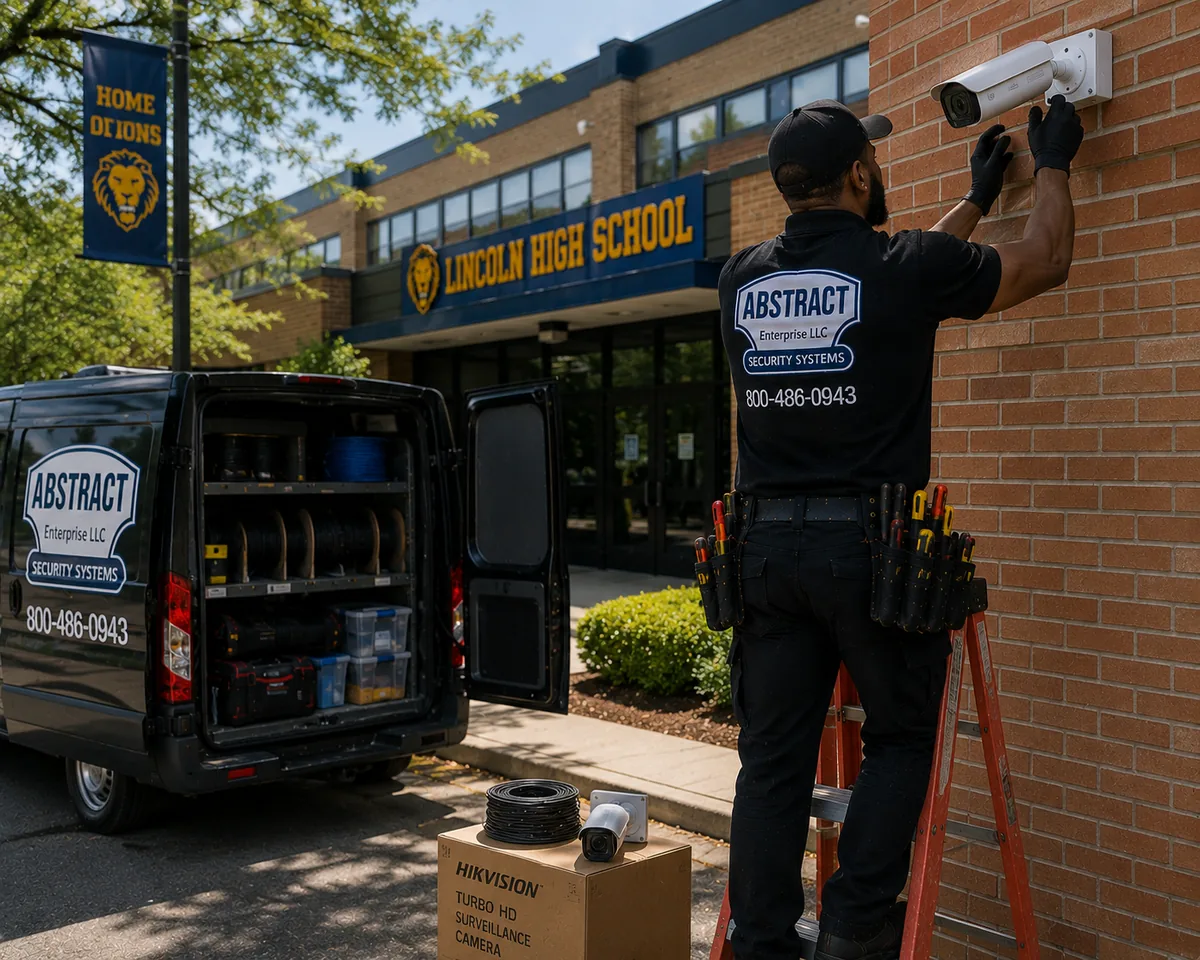
If you run a school building in New York City, your camera system is not a gadget purchase — it is part of your safety plan, your insurance file, your incident-response record, and in many cases your legal compliance posture. The city itself treats it that way: NYC has spent roughly $78 million rolling out front-door camera-and-buzzer locking systems across more than 1,300 public school buildings, School Safety Agents from the NYPD’s School Safety Division monitor entry points citywide, and the City Charter has required cameras at school entrances and exits since the Bloomberg era. Nationally, 91% of public schools already run security cameras. The question for the private schools, charters, yeshivas, Catholic academies, daycares, and college facilities we serve is no longer whether to install cameras — it is whether the system is designed correctly, wired professionally, legally compliant, and actually recording when something happens.
Abstract Enterprises Security Systems is a NYC-based, New York State licensed low-voltage security contractor. We install school security camera systems the way school buildings actually demand: PoE IP cameras on dedicated Cat6, NVRs sized for 30 to 90 days of retention, vandal-rated domes in student-height zones, vestibule cameras tied into buzzer entry, and configurations that keep you on the right side of the New York State Education Department’s statewide facial-recognition ban. One licensed company handles the design, cabling, mounting, recorder, network, and training — and answers the phone afterward.
Why NYC School Buildings Need a Professionally Installed Camera System
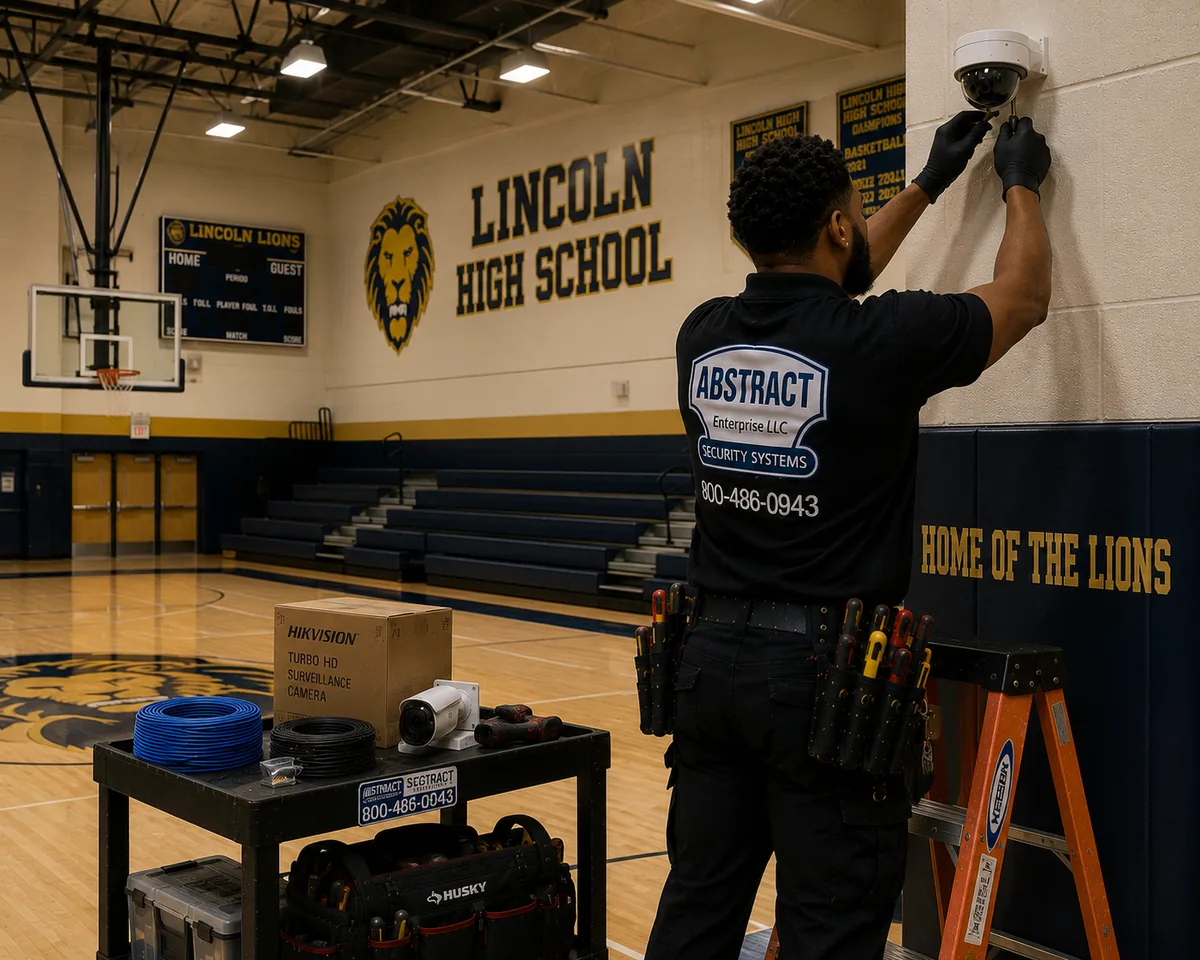
New York City school buildings are unlike school buildings anywhere else in the country, and camera systems designed for a suburban campus fail here in predictable ways. Most NYC schools are vertical, not horizontal: four to six stories of stairwells, double-loaded corridors, basement cafeterias, rooftop play decks, and a single street-facing entrance that handles hundreds of arrivals in a twenty-minute window. Coverage planning in a building like that is a stairwell-and-choke-point exercise, not a "one camera per corner of the property" exercise. An installer who has never fished Cat6 through 1920s terracotta block and plaster, or mounted a vandal dome in a stairwell that sees two thousand student trips a day, will underbid the job and then underdeliver the system.
The regulatory backdrop is also uniquely New York. The City Charter’s school security provision directs cameras at school entrance and exit doors and permits them anywhere on school grounds where there is no reasonable expectation of privacy — which is exactly the line we design to. The Department of Education’s own standard for its buildings pairs entry cameras with buzzer-controlled locked front doors monitored by School Safety Agents, and holds recorded footage for a minimum of 30 days. Since late 2023, the State Education Department has flatly banned the purchase and use of facial recognition technology in New York schools — public, charter, and nonpublic alike — while leaving conventional video surveillance fully permitted. A school camera installer in this city needs to know all of that before the first anchor goes into the wall. We do, and we build it into every design document we hand a head of school, facilities director, or board.
Then there is the practical reality of who actually hires us. DOE-operated public school buildings run their capital security work through the School Construction Authority and city contracts. Everyone else — the roughly nine hundred nonpublic schools across the five boroughs, the charter networks in leased and private space, the yeshivas of Borough Park and Williamsburg, the Catholic academies of the Diocese of Brooklyn and Archdiocese of New York, the independent schools of the Upper East Side and Brooklyn Heights, the daycares licensed under the Health Department’s Article 47, and the private colleges — hires their own security contractor directly. That is our lane. We give those schools the same caliber of entry-vestibule coverage, corridor surveillance, and retention discipline the city builds into its own buildings, at a price a school budget committee can actually approve.
- Entry & dismissal choke points: vestibule and door cameras that capture identifiable faces at the exact moments your building is most exposed — arrival, dismissal, and visitor buzz-in.
- Incident documentation: hallway, stairwell, cafeteria, and gym coverage that resolves he-said-she-said disputes, bullying reports, staff allegations, and injury claims with timestamps instead of testimony.
- Liability & insurance: documented surveillance and retention policies that insurers, attorneys, and licensing inspectors increasingly expect from schools and daycares.
- After-hours protection: perimeter and entry coverage against the break-ins, vandalism, and copper theft that hit school buildings on nights, weekends, and the long summer recess.
- Grant readiness: systems specced with NDAA-compliant hardware and no facial-recognition features, so public districts stay eligible under Smart Schools Bond Act rules and nonpublic schools can pursue New York’s security-equipment reimbursement programs without a compliance headache.
School Camera System Down? Repair Comes First.
Dead NVR before a hearing with a parent? Half the hallway cameras black after a power event? Footage you need for an incident report and the DVR will not export? We handle same-day school security camera repair across NYC — most recorder, PoE, and camera faults are diagnosed and fixed in one to two hours on site. We also take over and service systems other companies installed and abandoned.
Emergency School Camera Repair: (800) 486-0943School Security Camera Systems We Install
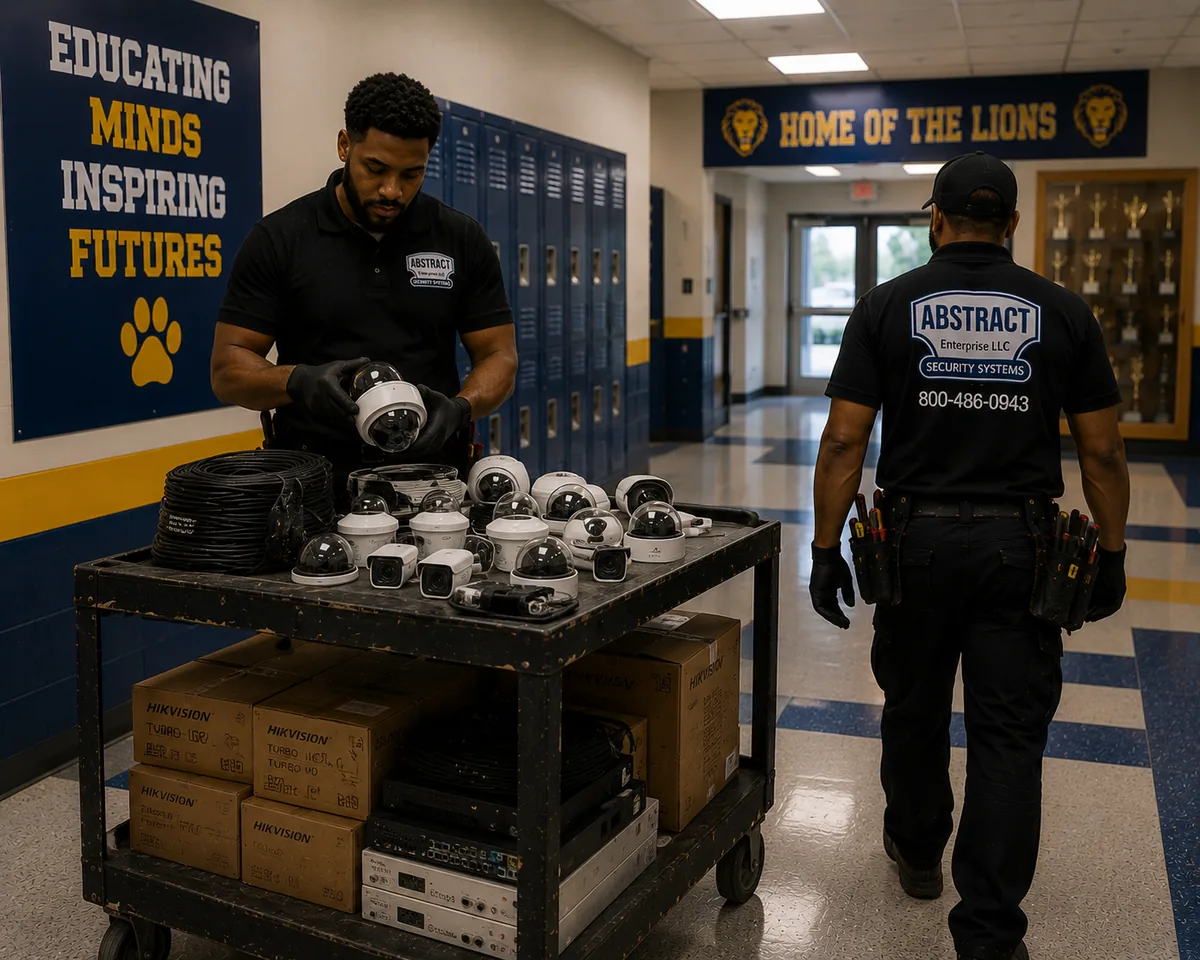
Every school camera project we build in NYC starts from the same skeleton — cameras, cabling, recorder, network, viewing — but the right version of each layer depends on your building, your enrollment, and your budget cycle. These are the systems we design and install for schools, and where each one belongs.
IP / PoE Camera Systems (Our Default for Schools)
Power-over-Ethernet IP cameras on dedicated Cat6 runs back to a PoE switch and NVR. One cable per camera carries power and video, which matters enormously in occupied school buildings where every cable path is a negotiation with plaster, conduit, and ceiling tile. 4MP to 4K resolution, clean digital zoom for identifying faces at entry doors, and easy expansion when the board approves phase two.
Analog-to-IP Upgrades & DVR Replacement
Hundreds of NYC school buildings are still running 2010-era analog DVRs with blurry 720p images that cannot identify a face past fifteen feet. We upgrade these in two ways: full IP rebuilds on new Cat6, or hybrid conversions that reuse sound existing coax with encoders and Ethernet-over-coax where re-cabling a plaster stairwell is impractical. Related work: our DVR upgrade service in NYC and NVR installation teams handle recorder-side modernization every week.
Entry Vestibule & Buzzer-Integrated Camera Systems
The configuration NYC itself standardized on for its public schools: a locked front door, a camera with a clear face-height view of the visitor, and a release controlled from the main office or security desk. We build the private-school equivalent — vestibule camera, video intercom, electric strike or maglock release — so nobody gets past the lobby unverified. This is the single highest-impact upgrade most nonpublic schools can make.
Multi-Building & Campus Systems
Schools with an annex across the street, a gym in a separate structure, or a shared building with a church or community organization need unified recording with segmented access. We link buildings over fiber, point-to-point wireless bridges, or VPN, and configure the video management system so the elementary division principal sees her building, the facilities director sees everything, and the co-located tenant sees nothing of yours.
Cloud & Hybrid Video Systems
Cloud-managed cameras have a real place in schools — off-site administrators, multi-campus networks, automatic offsite backup of entry-door footage. They also carry per-camera monthly licensing forever and put student-adjacent video in a vendor’s hands, which triggers New York’s Education Law 2-d contract requirements for districts. We install pure-cloud, pure-local NVR, and hybrid builds, and we will show you the five-year cost of each before you sign anything.
Specialty Coverage: PTZ, LPR & Low-Light
Pan-tilt-zoom cameras for yards, athletic fields, and rooftop play decks; license plate recognition at parking lots and bus loading zones; true low-light and IR cameras for after-hours perimeter work on dim side streets. Placed deliberately, a handful of specialty cameras close the gaps a fixed-dome layout leaves open.
Worth knowing: most schools that call us for cameras end up pairing the project with door access control or a video intercom at the same visit — the cabling overlaps, the disruption is shared, and the combined system is what actually controls who enters the building. We cover that pairing in detail below.
School Surveillance Terminology, Translated for Administrators
Camera quotes are full of jargon, and vendors sometimes lean on it. Here is the vocabulary that actually shows up in school camera proposals in New York, in plain language, so you can compare bids on substance.
NVR vs DVR
An NVR (network video recorder) records IP cameras over Ethernet; a DVR records older analog cameras over coax. If your quote says DVR in 2026, you are being sold yesterday’s system. NVRs are the standard for school installations.
PoE
Power over Ethernet — one Cat6 cable delivers both power and data to each camera. Fewer cables through your plaster, no electrician needed at every camera location, and clean battery backup of the whole system from one closet.
Retention
How many days of footage the recorder keeps before overwriting. NYC DOE holds a 30-day minimum in its buildings; we size school storage for 30 to 90 days depending on your counsel’s and insurer’s guidance.
NDAA-Compliant
Hardware not built by manufacturers banned from U.S. federally funded projects under Section 889 of the National Defense Authorization Act. Schools using federal safety grants must comply; we spec NDAA-compliant lines for schools by default.
Vandal Rating (IK10)
An impact-resistance rating for camera housings. IK10 domes shrug off thrown objects and grabbing hands — the correct spec for stairwells, cafeterias, gyms, and any camera mounted within student reach.
VMS
Video management system — the software layer where authorized staff view live feeds, search recordings, and export clips. Good VMS setup includes user roles, so a division head, a security desk, and IT each see exactly what they should.
Video Analytics (the Legal Kind)
Motion zones, line-crossing alerts, people counting, loitering detection. All permitted in NY schools. Facial recognition is the analytics feature that is not — banned statewide by the Education Department since 2023.
Ethernet over Coax (EoC)
Adapters that run IP video over existing coax cable. In a landmarked or asbestos-flagged school building where new cable paths are painful, EoC lets us modernize cameras without opening every ceiling.
WDR
Wide dynamic range — the sensor capability that keeps a face identifiable when someone stands in a bright glass doorway. Non-negotiable for entry and vestibule cameras, where every important image is heavily backlit.
Camera Brands We Install in NYC Schools — and How We Choose
Brand selection for a school is not about a logo; it is about NDAA status, warranty depth, spare-part availability in New York, and whether the platform’s analytics can be configured to stay inside state law. These are the lines we install and support in school buildings.
Hanwha Vision
Korean-made, NDAA-compliant, and our most common recommendation for grant-funded or federally sensitive school projects. Excellent WDR performance for entry doors and strong vandal-dome options for corridors.
Axis Communications
The Swedish benchmark for enterprise IP video. Long product lifecycles and superb build quality — the right choice for independent schools and colleges standardizing a campus for the next decade, with budget to match.
Uniview (UNV)
Strong price-to-performance IP line we deploy heavily in budget-conscious nonpublic schools and daycares. Solid 4MP and 4K domes and turrets that hold up in NYC stairwell duty.
Lorex & Consumer-Pro Lines
For small daycares and single-floor preschools, prosumer NVR kits can be legitimate when professionally cabled and mounted. We install and service Lorex camera systems in NYC where the scale fits — and we will tell you honestly when your building has outgrown that tier.
Dahua & Hikvision (Eyes Open)
Capable hardware sold widely in NYC, but both are NDAA-listed — disqualifying wherever federal funds touch the project and a growing procurement concern for schools generally. Where a school already owns these systems, we service and support existing Dahua installations, and we map upgrade paths to compliant hardware.
Cloud Platforms (Verkada-Style)
Cloud-native school platforms demo beautifully. Before committing, we walk schools through the recurring per-camera licensing, the Education Law 2-d data-contract questions, and the need to keep any face-matching features disabled under New York’s school facial-recognition ban. Sometimes cloud wins; it should win with eyes open.
Cameras + Access Control + Intercom: The School Entry Stack
A camera by itself watches. A camera wired into your door hardware controls. New York City understood this when it standardized its own school buildings on the locked-door, camera, buzzer model — the camera verifies the visitor, the buzzer releases the door, and nothing happens until a human sees a face. The private-school version of that stack is what we install most, and it is why the majority of our school camera projects ship as combination systems.
Camera + Video Intercom at the Front Door
A face-height vestibule camera paired with a video intercom station lets your office staff see and speak with every visitor before the door releases. Parents picking up early, delivery drivers, substitutes, and strangers all pass the same checkpoint. Recorded automatically, every buzz-in becomes a timestamped record of who entered and who let them in.
Camera + Access Control on Staff Doors
Key fobs or mobile credentials on staff and side entrances, with a camera on every controlled door. When a door-forced or door-held alarm fires, the paired camera clip tells you instantly whether it was a teacher with coffee or a genuine problem. Credentials are revoked in seconds when staff turn over — no re-keying a school full of locks.
Camera + Exit-Door Alarms
NYC put door alarms on the map after a student with autism left a Queens school building through an unmonitored side door in 2013 — a tragedy that reshaped city policy on exit monitoring, especially for programs serving students with disabilities. We pair audible exit-door alarms with cameras on every secondary egress, so an unauthorized departure triggers both a sound and a picture.
Camera + Alarm & After-Hours Protection
Intrusion alarms arm the building at night; cameras confirm what tripped them. Verified video turns a 3 a.m. alarm signal from a guess into evidence, cuts false-alarm runarounds, and gives NYPD something actionable when a break-in is real. One contractor wiring both means the systems actually talk to each other.
Because we are a full low-voltage shop — cameras, intercoms, buzzers, access control, alarms, and the structured cabling underneath all of it — a school gets one design, one cabling pass through the building, one point of accountability, and one number to call. Most schools pair at least two of these systems in a single project, and the shared labor is where the savings live.
Full Feature Set: What a Modern NYC School Camera System Includes
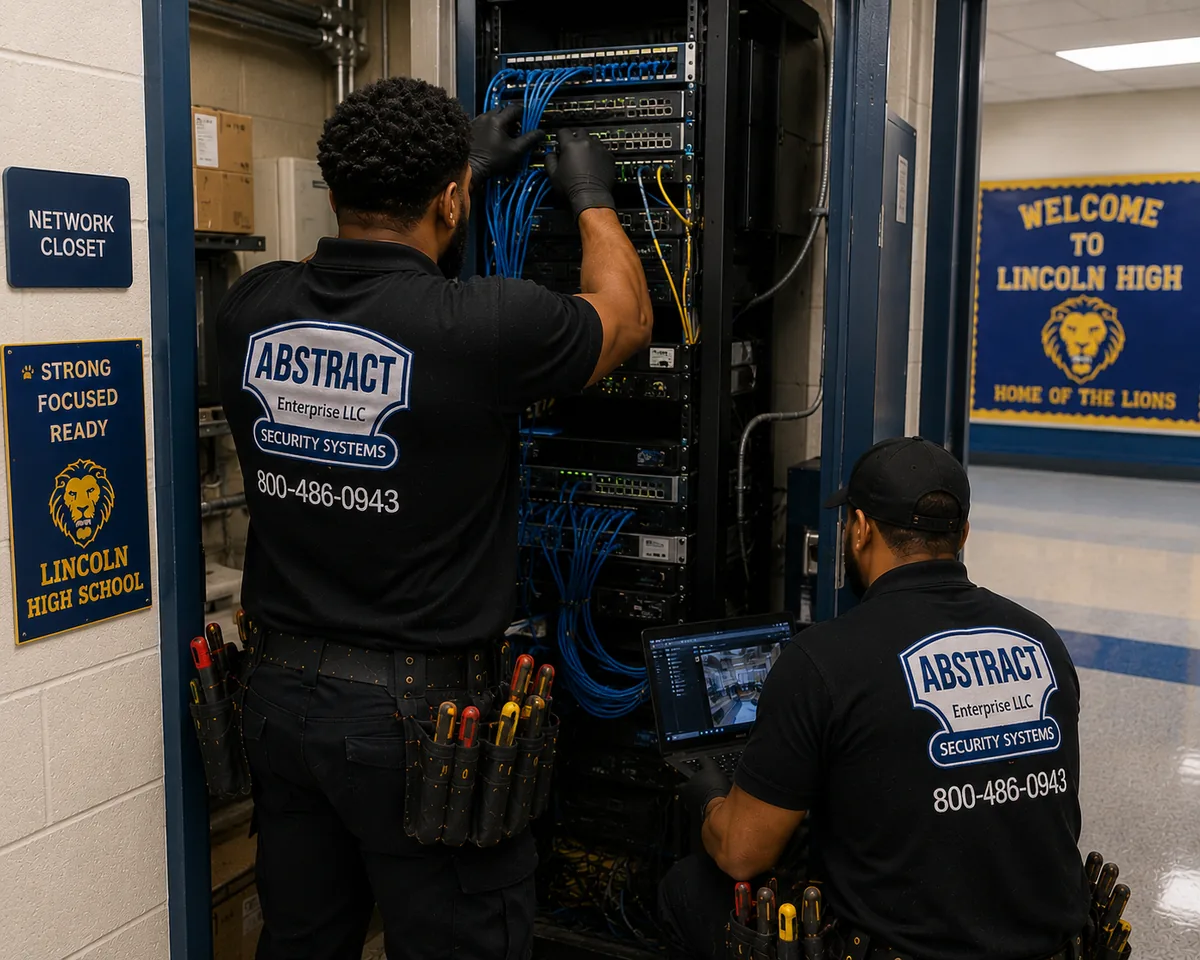
4MP–4K Resolution
Enough pixel density to identify a face at your entry door and read activity down a full corridor — the difference between footage that resolves an incident and footage that starts an argument.
True WDR Entry Imaging
Backlit doorways and glass lobbies handled correctly, so the person walking in from bright daylight is not a silhouette on your recording.
IR & Low-Light Night Coverage
Clean images of yards, entrances, and perimeters after dark — when school buildings actually get hit.
Vandal-Rated Housings
IK10 domes in stairwells, cafeterias, gyms, and anywhere within reach of a jumping teenager. Standard on our school builds, not an upcharge surprise.
30–90 Day Retention
Storage engineered to your policy, matching or exceeding the 30-day floor NYC uses in its own school buildings, with export tools for incident clips.
Role-Based Viewing Access
Head of school, security desk, division leads, and IT each get exactly the cameras and permissions they should have — and a log of who watched what.
Remote & Mobile Viewing
Secure apps for authorized administrators to check entrances, dismissal, and after-hours alerts from anywhere — locked behind strong credentials, not port-forwarded to the open internet.
Lawful Video Analytics
Line-crossing at perimeter fences, loitering alerts at side doors, motion-based search that finds an incident in minutes. Configured to stay fully inside New York’s school rules — facial recognition off, always.
UPS Battery Backup
Recorder and PoE switch on battery, so a Con Ed flicker or a tripped breaker does not create a coverage gap in the middle of a school day.
New York School Camera Compliance: The Rules Your Installer Must Know
This section exists because we keep walking into schools where the previous vendor clearly never read any of it. Camera placement and configuration in New York schools sits inside a specific legal frame — and getting it wrong creates exactly the liability the cameras were supposed to reduce.
The statewide facial-recognition ban is real, current, and broad
In September 2023, the State Education Commissioner issued an order prohibiting the purchase and use of facial recognition technology in New York schools — and the ban covers public districts, charter schools, and nonpublic elementary and secondary schools alike. The order followed a state technology office report finding the risks of the technology outweighed its claimed benefits, citing false-positive rates that fall hardest on children, people of color, and other groups. Other biometric tools, like fingerprint readers, were left to local decision-making with required privacy consideration. Practical translation for your project: conventional cameras, recording, and standard analytics are fully permitted; any vendor pitching your school face-matching, watchlist alerts, or “who is this person” features is pitching something your school cannot lawfully buy or run. Some cloud camera platforms ship with these capabilities built in — part of our configuration work is documenting that they are disabled.
Where cameras can and cannot go
New York’s dividing line is the reasonable expectation of privacy. Entrances, exits, lobbies, corridors, stairwells, cafeterias, gyms, yards, parking areas, and building perimeters are standard, lawful camera territory — the City Charter’s school security section says as much for city schools. Bathrooms, locker rooms, and changing areas are absolutely off limits; recording in those spaces implicates New York’s unlawful surveillance statute, which is a felony. Classrooms sit in a gray, policy-driven middle: legally possible in many settings, operationally sensitive with teachers and unions, and best decided by your administration with counsel — not defaulted into by an installer. Audio recording adds another legal layer entirely, and most schools correctly leave microphones disabled. We design to these lines on every job and put camera-by-camera placement in writing.
Footage is a record — treat retention and access accordingly
When video directly relates to an identifiable student — an incident, an injury, a disciplinary matter — it can become part of an education record with FERPA implications for who may view it and how parent requests are handled. New York’s Education Law 2-d layers student-data-privacy contract requirements onto districts and their technology vendors, which matters whenever school video lives on a third party’s cloud. Our recommendations are consistent: retain 30 to 90 days, restrict viewing by role, log access, export incident clips to secured storage before they age off, and have your policy written down before you need it. NYC’s own 30-day school retention floor is a sensible baseline for any nonpublic school looking for a defensible standard.
Funding and procurement rules follow the hardware
Money is available for school security cameras in New York — with strings. The state’s $2 billion Smart Schools Bond Act has funded high-tech security including video surveillance in public districts for a decade, and the state now requires districts to affirm no facial-recognition technology is in any funded plan. Federal grants such as the COPS Office school violence prevention program pull NDAA Section 889 into play, barring covered Chinese-manufactured camera brands from funded projects. Nonpublic schools — yeshivas, parochial and independent schools — have their own state security-equipment reimbursement channels for eligible safety hardware. We spec school systems so the paperwork works: NDAA-compliant lines, no banned features, itemized proposals a grant administrator can actually submit.
The NYC School Landscape We Work Around, Borough by Borough
New York City is the densest education market in America — well over two thousand school buildings when you count public, charter, parochial, independent, and early-childhood sites, plus dozens of college campuses. We install school surveillance systems across all five boroughs, and knowing the terrain matters: the building stock around Fort Greene’s education corridor is nothing like the campus fabric of Riverdale or the storefront preschools of Jackson Heights.
Manhattan
From the specialized-school anchor of lower Manhattan near Chambers Street to the independent-school corridor of the Upper East Side around Park and Madison Avenues, Manhattan school work means pre-war construction, landmarked facades, doorman-district expectations, and college facilities from Washington Square to Morningside Heights. Vestibule camera-and-buzzer retrofits in century-old lobbies are our bread and butter here.
Brooklyn
Our home borough. The Fort Greene and Clinton Hill education cluster, Brooklyn Heights independent schools, the yeshiva concentrations of Borough Park, Midwood, Crown Heights, and Williamsburg, Catholic academies from Bay Ridge to Bushwick, and college buildings from Downtown Brooklyn to Midwood. We dispatch from 1282 Troy Ave and can survey most Brooklyn schools within a day.
Queens
The most linguistically diverse school population on earth, spread across everything from Flushing’s campus-style institutions to Fresh Meadows parochial schools to the dense storefront daycares of Jackson Heights, Corona, and Elmhurst. Multi-entrance buildings and shared commercial spaces make entry-point camera design the critical skill in Queens.
The Bronx
From the Grand Concourse’s historic school buildings to the Bedford Park education corridor to the private campuses of Riverdale, Bronx school work spans the city’s oldest masonry and its largest green campuses. Exterior coverage, field and yard PTZ work, and stairwell vandal-dome duty feature heavily here.
Staten Island
St. George’s civic core, the parochial school network from Oakwood to Grymes Hill, and campus institutions in Willowbrook. Staten Island schools skew lower-rise with real parking lots and perimeters — which means LPR at lots and true perimeter camera lines matter more than anywhere else in the city.
Beyond the Five Boroughs
The same school camera program runs through our Long Island school installation and Hudson Valley school installation teams — Nassau, Suffolk, Westchester, Rockland, Orange, Putnam, Dutchess, and Ulster county schools are covered from the same playbook, with routing from our Bronx-side operation at 460 E Fordham Rd.
Every Type of School We Secure in New York City
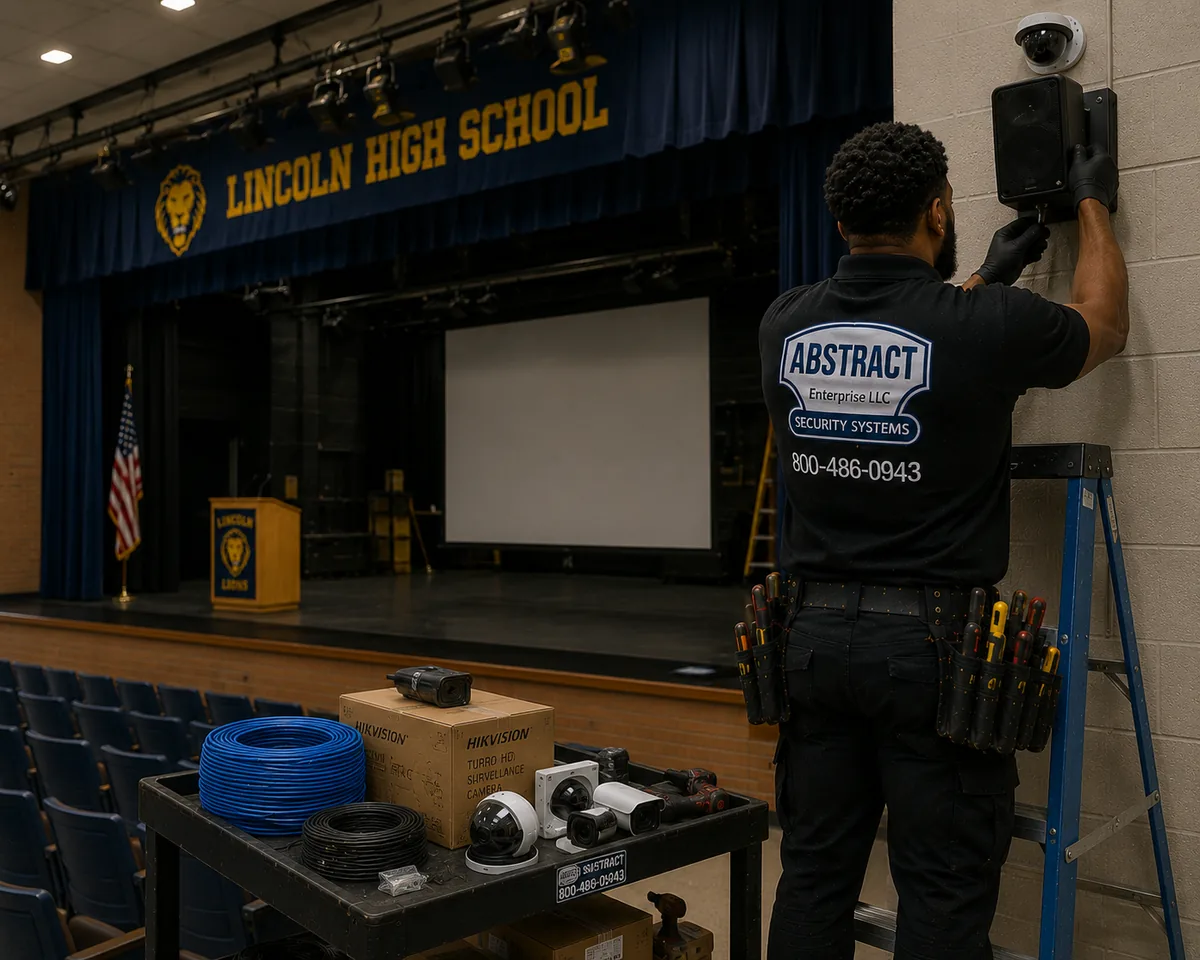
Private & Independent Schools
Board-driven procurement, discreet aesthetics, parent-facing optics. We design coverage that protects without turning a warm lobby into a checkpoint, and we present to boards and heads of school in their language: risk, liability, and cost over five years.
Charter Schools & Networks
Leased space, co-located floors, and network-level standards. We build systems that segment cleanly per campus, roll up to a network operations view, and survive the audit questions charter authorizers ask.
Catholic & Parochial Schools
Older buildings, shared church-school structures, tight budgets, and diocesan oversight. Phased installs timed to breaks, reuse of sound infrastructure where honest engineering allows, and paperwork ready for security-grant reimbursement.
Yeshivas & Jewish Day Schools
Large enrollments, long hours, multiple entrances, and elevated security awareness. Entry vestibule control, perimeter coverage, and camera systems coordinated with existing guard protocols — delivered by a local crew that understands the community’s scheduling calendar.
Daycares & Preschools
Article 47 licensed centers, storefront and brownstone locations, and parents who ask about cameras on the first tour. Right-sized systems — often 6 to 16 cameras — covering entries, play areas, and common rooms, with honest guidance on parent-viewing features and their privacy tradeoffs.
Special Education & Therapeutic Programs
Programs serving students with disabilities carry heightened elopement risk — the exact scenario that drove NYC’s exit-door alarm push. Door-alarm-plus-camera coverage on every egress, sensory-conscious hardware placement, and strict viewing controls.
Colleges & University Buildings
Per-building and per-campus deployments for private colleges and specialized institutions: lecture halls, labs, residence entries, and 24/7 facilities with security-desk video walls and enterprise VMS.
Religious & Cultural Schools
Islamic schools, Christian academies, language and cultural academies — often in mixed-use buildings where the school shares entrances with a congregation or community center. We architect shared-entry coverage with properly separated viewing rights.
After-School & Youth Programs
Community centers, tutoring academies, and athletic programs operating in school-type spaces during the hours when incidents actually cluster. Entry documentation, activity-area coverage, and simple daily operation for lean staff.
What School Administrators Are Actually Asking on Reddit
Spend an evening in r/homedefense, r/AskNYC, r/nyc, r/Professors, and the education and facilities subreddits and the same fourteen school-camera conversations repeat on a loop. Here they are, answered straight, by an installer who does this work in New York every week.
It is inside the normal band, not automatically fair. At 32 cameras that quote works out to $1,500 per camera installed, which is defensible if it includes new Cat6 to every point, enterprise cameras, a properly sized NVR with 60+ days of storage, licensing, and lift work — and padded if it is mid-tier hardware on short runs. Demand the line-item breakdown: hardware, cable and labor, recorder and storage, programming, warranty. In NYC we routinely land comparable 32-camera school systems between $22,000 and $38,000 depending on building difficulty. The number is not the red flag; the refusal to itemize is.
For commercial-grade IP cameras professionally installed — camera, mount, Cat6 run, termination, configuration — plan on $450 to $950 per camera in NYC school buildings, plus the recorder, switch, and storage as system-level items. Specialty units run higher: PTZ and license-plate cameras land $1,200 to $2,200 installed. Anyone quoting $150 per camera is reusing bad cable or skipping the parts of the job you cannot see; anyone quoting $3,000 per standard dome is billing you for their office rent.
Do the arithmetic they hope you will not: 24 cameras at $18 is $432 a month — about $26,000 over five years, on top of hardware. A quality on-premise NVR with 60 days of storage for the same camera count is a one-time $2,500 to $5,000 line. Cloud earns its keep for multi-campus networks, off-site leadership, and automatic offsite backup of critical entry cameras; a single-building school usually does better with a local NVR and, at most, hybrid cloud on two or three doors. We quote both and show the five-year totals side by side.
Four filters eliminate most of the field. One: a verifiable New York State low-voltage license — ask for the number and check it, ours is 12000287431. Two: school or comparable commercial references you actually call. Three: a written scope with camera-by-camera placement, cable paths, and a payment schedule tied to milestones, not vibes. Four: a service story — who answers in month eleven when a stairwell camera dies? Companies that survive those four questions finish installs.
There is no single statewide statute mandating fingerprinting for security contractors in nonpublic schools, but the practical standard is set by you: schools routinely require vendor background screening, escort policies for occupied-hours work, and scheduling around student presence — and a professional shop says yes to all of it without friction. We schedule the invasive phases of school work for breaks, evenings, and weekends precisely so the question rarely has to carry the weight.
Hybrid arrangements can work and we install them — but understand what you are signing up for. School cable runs mean plenum-rated cable above ceilings, firestopping every penetration, honest labeling, and pull paths that dodge fluorescent ballasts and old steam lines. If you pull it wrong, the pro you hire spends billable hours diagnosing your runs. Where a school has a genuinely capable facilities team, we will spec the pulls, hand over a labeling map, and take the job from termination onward. Where it does not, the savings evaporate.
For a single-floor school with six to ten camera positions, a quality prosumer kit professionally installed can be a legitimate answer — and cheaper than you fear. The failure mode is not the kit; it is the installation: cameras stuck on shelves aimed through glare, Wi-Fi cameras dropping during nap time, footage nobody verified until the day it mattered. Buy the kit if the scale fits, but have the mounting, cabling, and configuration done right. We do exactly this tier for daycares and small schools without upselling them into enterprise gear they do not need.
Almost never a full rip in a building like that. The engineering answer is a hybrid: new IP cameras on new Cat6 where paths are reasonable, Ethernet-over-coax converters reusing your sound coax runs where re-cabling means demolishing plaster, and one modern NVR recording everything. You get 4MP-to-4K images building-wide, keep the ceiling closed in the worst corridors, and retire the DVR that has been one power surge from taking your whole system down. Verify the coax first — some 2011 runs are fine, some are corroded junk.
There is no single statute that hands every school one number, which is why policy matters. The reference point everyone borrows: New York City holds a 30-day minimum in its own public school buildings. Our standing recommendation for private, charter, and parochial schools is 30 days as the floor and 60 to 90 where budget allows — incident reports, insurance claims, and parent complaints routinely surface weeks after the fact. The non-negotiable habit: export any incident clip to secured storage immediately, before the recorder overwrites it.
Classic symptom, three usual suspects. First, an oversubscribed PoE switch — total camera draw exceeding the switch power budget, with IR illuminators kicking on at night pushing it over the edge. Second, marginal cable runs past spec length or with bad terminations that fail as temperatures shift. Third, a failing switch port or power supply. A one-visit diagnostic with a PoE tester and the switch logs finds it. This exact call is a large share of our school repair work, and it is usually a $400 fix, not a new system.
Treat it as a records question, not a customer-service question. When footage directly relates to an identifiable student, it can constitute an education record with FERPA access rights for that student’s parents — complicated immediately when other students appear in frame, which in a hallway they always do. The workable process: preserve the clip, involve your administrator and counsel, and where access is warranted, provide it in controlled form. What kills schools legally is improvising this under pressure. Put the policy in writing now; we build the export and access-logging tools that make the policy executable.
No. The State Education Department banned the purchase and use of facial recognition technology in New York schools in September 2023 — and the order explicitly reaches public, charter, and nonpublic elementary and secondary schools. Districts were also told facial-recognition purchases will not be reimbursed under the Smart Schools Bond Act. Standard cameras, recording, and conventional analytics remain fully legal. A vendor pitching face-matching to a New York school in 2026 either does not know the law of the state they are selling in or hopes you do not. Either way, that tells you what you need to know.
Because the installer treated placement as a technical decision when in a school it is a governance decision. Classroom coverage is one of the most sensitive calls a school makes — legally possible in many configurations, operationally explosive when imposed by a contractor with a ladder. Our process eliminates the surprise: a placement map before installation, marked camera-by-camera, signed by the administration, with sensitive-area decisions made by the school and documented. If your current system has cameras nobody remembers approving, we audit, re-aim, and re-document existing installs too.
Heartbreakingly common, and almost always discoverable in ten minutes if anyone checks. Causes we find in schools: cameras added to a full recorder with no channel license, motion-only recording configured with dead zones, hard drives that failed years ago with no alerting, and cameras that were literally never assigned to the NVR. The fix is a recording-verification pass — every camera confirmed writing, retention confirmed against policy, drive health alerting turned on — plus a one-page monthly check your own staff can run. We include that verification in every takeover of an existing school system.
Answer The Public: School Camera Questions, Answered Once and Properly
How much do school security cameras cost?
In NYC: roughly $450–$950 per commercial IP camera installed, with full systems running from about $6,000 for a small daycare to $70,000+ for a large multi-floor campus. Hardware is typically only a quarter of the real project cost — cabling and labor are the rest.
How many cameras does a school need?
Rules of thumb from our NYC installs: daycares 6–12, elementary schools 16–32, middle schools 32–64, high schools 64–128, college buildings 24–48 each. Entrances, corridors, stairwells, cafeteria, gym, yard, and perimeter drive the count — not square footage alone.
Can schools put cameras in classrooms?
Often legally possible in New York, never automatic. It is a policy decision for administration, counsel, and staff — some states now mandate cameras in special-education rooms, and the national debate is live. Common areas first; classrooms only by deliberate, documented choice.
Are cameras allowed in school bathrooms?
No. Bathrooms, locker rooms, and changing areas carry a reasonable expectation of privacy, and recording there implicates New York’s unlawful surveillance felony statute. No legitimate installer will place them, period.
Who can view school camera footage?
Whoever your written policy authorizes — which should be a short list with role-based logins and an access log. Typical: head of school, designated security or operations staff, and IT for maintenance. Casual staff browsing is how schools create privacy incidents.
How long do schools keep camera footage?
NYC uses a 30-day minimum in its own buildings; we build private and charter school systems for 30–90 days, with incident clips exported and preserved separately before overwrite.
Can parents request school video?
Sometimes — when footage directly relates to their child it may be an education record with FERPA access implications, balanced against other students visible in frame. Handle by written policy with counsel, not ad hoc at the front desk.
Do daycares need cameras in New York?
No blanket state mandate forces cameras into every daycare, but licensing inspections, insurance carriers, and — most powerfully — touring parents have made them a de facto standard in NYC childcare. Entries, play areas, and common rooms are the core layout.
What camera brands are banned for schools?
Under NDAA Section 889, federally funded projects cannot use covered manufacturers — notably Hikvision and Dahua. Separately, New York banned facial-recognition technology in all schools regardless of brand. We default school specs to NDAA-compliant lines so funding never collides with hardware.
Will cameras lower a school’s insurance costs?
Frequently — documented surveillance, retention, and access control strengthen a school’s risk profile, and several carriers credit it. More valuable still: footage that shuts down fraudulent injury and incident claims before they become settlements.
Can school cameras record audio?
Technically many can; legally and operationally, most New York schools keep microphones off. Audio recording triggers separate consent law and magnifies every privacy concern video raises. We disable audio by default on school builds unless counsel directs otherwise.
Who pays for school security cameras?
Public districts: the $2 billion Smart Schools Bond Act has funded high-tech security including surveillance for a decade. Nonpublic schools: state security-equipment reimbursement programs and federal safety grants. Everyone else: operating or capital budget — which is why we quote in phases a board can approve.
People Also Ask About School Camera Installation
What is the best security camera system for schools?
A PoE IP system on dedicated Cat6 with an on-premise NVR, 4MP–4K vandal-rated domes in student areas, WDR cameras at every entrance, 30–90 days of storage, and role-based viewing. Brand matters less than NDAA compliance, honest installation, and a service relationship. That architecture fits 90% of NYC school buildings.
How much does it cost to install security cameras in a school?
NYC school projects typically land between $6,000 (small daycare, 6–8 cameras) and $70,000+ (large campus, 64+ cameras). The honest planning number is $450–$950 per standard camera installed plus recorder and storage. National sources that quote a few hundred dollars per camera all-in are describing residential work.
Are security cameras effective in schools?
They are decisively effective at documentation — resolving incidents, disputes, and claims with evidence — and meaningfully effective at deterring vandalism, theft, and unauthorized entry, especially paired with locked-door buzzer entry. They are not a substitute for supervision or entry control, which is why we design them as one layer of a stack.
Can teachers be recorded in the classroom?
In New York the legal barrier is lower than most assume for video in a classroom, but the governance barrier is real: staff relations, union considerations, and policy. Schools that do it well decide deliberately, disclose clearly, and document the purpose. Schools that do it badly let an installer decide with a drill.
Is facial recognition legal in New York schools?
No. The State Education Department banned purchase and use of facial recognition technology in New York schools in September 2023 — public, charter, and nonpublic alike — after a state report found the risks outweighed the benefits. Standard cameras and recording remain fully legal; face-matching features must stay off.
How many security cameras does a high school need?
NYC high schools we survey typically need 64–128 cameras: every entrance and exit, main corridors on each floor, all stairwells, cafeteria, gym, auditorium entries, yard, and perimeter. Multi-building campuses go higher. A camera-count floor plan — not a guess — is the first deliverable of our free survey.
Do private schools need security cameras?
No law forces it, but the standard of care has moved: accreditors ask, insurers ask, and parents on tours ask. When NYC spent $78 million putting camera-buzzer entry on its own school doors, it set the bar every nonpublic school is now measured against. Most of our school clients are private, parochial, or charter for exactly that reason.
What is NDAA compliance for school cameras?
Section 889 of the National Defense Authorization Act bars covered Chinese-manufactured video equipment — including Hikvision and Dahua — from federally funded projects. Schools touching federal safety grants must use compliant hardware, and many schools now prefer it regardless. We spec NDAA-compliant lines for school work by default.
How long is school camera footage kept?
The common standard is 30 days minimum — the floor NYC applies in its own school buildings — with 60–90 days increasingly typical where storage budgets allow. Incident clips should always be exported and preserved separately the day they are identified.
People Also Search For
Searches that travel with school camera research in New York — and where each one leads on our site:
AI Overview Reality Check: What Google’s Answers Get Wrong About School Cameras in NYC
Search anything about school security cameras today and an AI-generated overview answers before any human source loads — synthesizing Angi, HomeAdvisor, Fixr, and a stack of national security blogs into one confident paragraph. Some of it is right. The parts that are wrong are wrong in ways that cost New York schools real money and real compliance risk. Here is the audit.
1. What the AI overviews get right
Credit where due: the AI summaries correctly describe the architecture. IP cameras over PoE, an NVR for recording, higher resolution at entry points, no cameras in private areas — the consensus technical picture is accurate and matches how we actually build school systems.
They are also directionally right that professional installation dominates cost. Several sources the overviews draw from note that hardware is only 20–30% of a school project’s total, with cabling, labor, and configuration carrying the rest. That ratio is true in New York — amplified, because our buildings are older and harder.
And the overviews correctly flag that cameras alone are not a security plan. Entry control, supervision, and policy do the heavy lifting; cameras document and deter. When an AI answer says that, believe it.
2. Where the Angi and HomeAdvisor numbers collapse
Angi and HomeAdvisor pricing tables are built from residential job data — four cameras on a house in a national average market. When an AI overview quotes their per-camera figures for a school query, it is quoting the wrong building type in the wrong city.
A school camera run is not a house camera run. It is plenum-rated cable above a corridor ceiling, firestopped penetrations, a vandal-rated dome at student height, and a recorder sized for 30-plus days across dozens of channels. None of that exists in the residential dataset those platforms aggregate.
Result: administrators walk into meetings anchored to numbers roughly half of NYC commercial reality, then feel gouged by honest quotes. The fix is anchoring to commercial school data — $450 to $950 per standard camera installed here — before the first vendor visit.
3. The Fixr per-camera trap
Fixr-style cost pages present tidy per-camera ranges, and AI overviews love a tidy range. But school systems are priced at the system level: the recorder, storage, switch, licensing, lift rental, and after-hours labor do not divide neatly per camera.
The trap: a school multiplies a per-camera figure by 40 and treats the product as a budget. The real quote arrives 30–40% higher because the system-level items were never in the multiplication. The board thinks the vendor is padding; the vendor is just pricing the whole job.
Read any per-camera number as the marginal cost of camera 41 on an existing healthy system — which, incidentally, is a real service we perform — not as the unit price of a system from zero.
4. The compliance blind spot: AI answers barely know New York exists
Ask a general question and the AI overview gives a general answer — typically silent on the single most important fact for a New York school: the statewide ban on facial recognition technology in schools, in force since September 2023 and covering nonpublic and charter schools, not just districts.
The overviews also miss Education Law 2-d’s vendor-contract requirements around student data, the City Charter’s school camera provisions, and the DOE’s 30-day retention floor that functions as the local standard of care. National content simply does not carry state law.
The risk is concrete: a school buys a cloud platform an AI answer praised, discovers its analytics suite brushes the ban, and now owns a compliance problem. Local expertise is not a sales line here; it is the difference between a system you can run and one you must partially disable.
5. The camera-count answers are residential math
Overviews frequently repeat guidance like four to six cameras for a building exterior — lifted from small-commercial and residential sources. A four-story NYC school with two stair towers, a basement cafeteria, and a rooftop play deck laughs at that number.
Coverage in a vertical school is dictated by choke points: every entrance and egress, every stairwell landing pattern, corridor lines per floor, cafeteria, gym, yard, perimeter. That logic yields our working ranges — 16–32 for an elementary building, 64–128 for a high school.
Underbuying on the AI’s number produces the worst outcome in this industry: a system that exists, cost real money, and still cannot show you the incident because it happened in a stairwell nobody covered.
6. Cloud-versus-NVR advice written for houses
Consumer-oriented sources skew hard toward cloud subscriptions, because for a homeowner with three cameras, cloud is genuinely simple. AI overviews inherit that bias and recommend it to everyone, including 40-camera school buildings.
At school scale, per-camera monthly licensing compounds brutally — tens of thousands over five years — and parking student-adjacent video with a third party invokes exactly the data-privacy contract machinery New York built 2-d to govern. The overviews mention none of this.
Our position is boring and correct: local NVR as the backbone for single-building schools, cloud where multi-campus oversight or offsite backup of entry doors earns its fee, and a five-year total-cost sheet for both before anyone signs.
7. How to actually use AI answers before calling an installer
Use the overviews for vocabulary and question-generation — they will teach you what PoE, WDR, and retention mean faster than any brochure, and that literacy makes you a harder customer to fool.
Then discard their numbers and their silence on New York law, and rebuild both locally: commercial per-camera ranges, system-level budgeting, the facial-recognition ban, retention policy, and NDAA status if grant money is anywhere near the project.
Finally, make every vendor produce what the AI cannot: a camera-by-camera floor plan for your building with a line-item price. That document is where the internet ends and engineering begins. Ours is free, and it is the first thing we hand you.
Skip the averages. Get your building’s actual number.
Free on-site survey, camera-count floor plan, line-item quote. NYC school specialists, NYS licensed.
DIY vs Professional School Camera Installation: The Honest Version
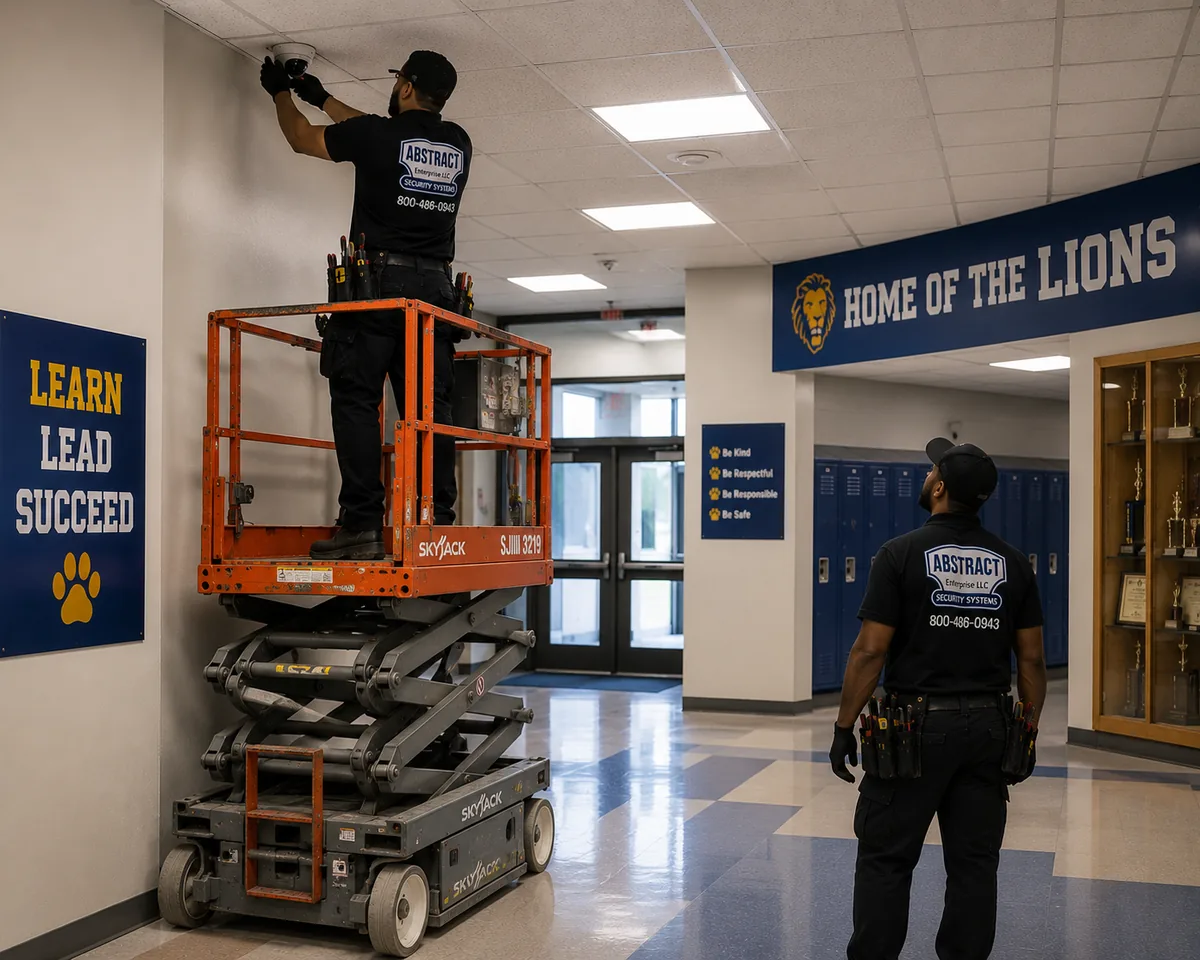
Where DIY genuinely holds up
- A small storefront daycare adding two or three plug-in cameras to supplement an existing system.
- A capable facilities team pulling cable to our written spec, with professional termination, mounting, and configuration behind it.
- Temporary coverage — a summer program or construction period — where permanence is not the goal.
- Swapping a like-for-like camera onto an existing, healthy, professionally built system.
Where DIY fails schools, specifically
- Scale: a 30-camera building is a network engineering project — PoE budgets, VLANs, storage math — not a weekend of ladder work.
- Code and safety: plenum cable, firestopping, and egress-door hardware rules exist for occupied buildings full of children. Violations surface at the worst possible inspections.
- Compliance: placement law, retention policy, the facial-recognition ban, FERPA-adjacent access questions — the parts of the job with no aisle at the hardware store.
- Verification: the most common DIY school failure we are called to fix is not a broken camera — it is a system nobody confirmed was recording until the day it mattered.
- Accountability: when a board, insurer, or attorney asks who installed and maintains the system, “a licensed contractor, here is the documentation” is the answer that ends the conversation.
Our practice reflects the honest split: we quote right-sized systems for small schools without enterprise padding, we cooperate with capable in-house teams, and we take full-scope responsibility on the buildings where anything less is malpractice.
Verkada, ADT, Ring — and Why Schools Keep Hiring the Local Licensed Shop Instead
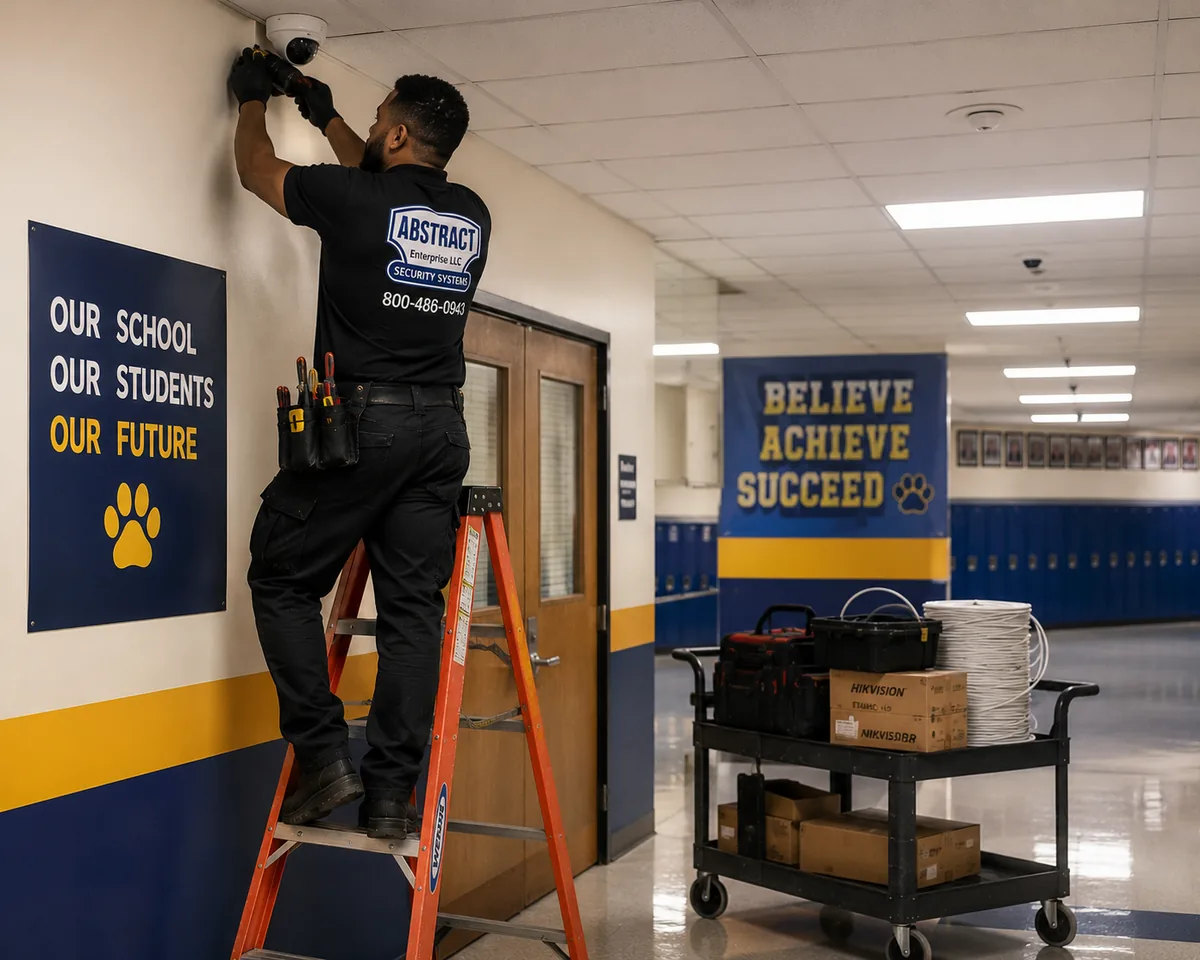
Cloud-first platforms (Verkada and similar) vs a local integrator
The cloud platforms sell schools a beautiful dashboard and a serious recurring bill: per-camera annual licensing that, across a 40-camera building over a decade, can exceed the cost of the cameras themselves. In New York they carry an extra wrinkle — platforms whose analytics suites include face-matching capabilities have drawn scrutiny precisely because schools here cannot lawfully run those features, and civil-liberties groups have flagged state grant money flowing toward such systems. A local integrator can still deploy cloud where it earns its keep; the difference is you get the five-year cost sheet and the compliance configuration in writing, from a contractor whose incentive is the install being right, not the subscription renewing.
ADT Commercial and national alarm brands vs a local integrator
The national brands are competent and enormous — and structured around monitoring contracts, standardized packages, and rotating subcontracted labor. Schools are non-standard: bell schedules, board approvals, break-window installs, buildings with quirks a national playbook has never met. The persistent complaints we hear from schools leaving national providers are long service queues, contract lock-ins, and never seeing the same technician twice. Our counter is structural, not rhetorical: the owner’s name is on the license, the crew that installed your building services your building, and there is no 36-month monitoring agreement subsidizing a cheap install.
Ring, Wyze, and consumer gear vs school-grade systems
Consumer cameras are miracles of price — for houses. In a school they fail on the fundamentals: Wi-Fi dependence in buildings full of interference and hundreds of student devices, no vandal rating at student height, cloud clips instead of governed 30–90 day retention, and consumer privacy terms that were never written with student video in mind. The one place we bless consumer-tier gear is the smallest daycares — professionally mounted, hardwired where possible, and honestly labeled as the starter tier it is. Everywhere else, school-grade PoE systems cost more up front and less over every year that follows.
School Security by the Numbers
What NYC School Clients Say
Illustrative planning scenario — a typical security camera project of this type begins with an on-site assessment, then a written scope and fixed quote, and finishes with professional installation completed to code. Hypothetical planning example — not a customer account, completed AESS project, verified review, or promised result.
Illustrative example — for work like this, a typical security camera job involves reviewing the property, matching equipment to the space, running clean cabling, and walking through the finished system. Hypothetical planning example — not a customer account, completed AESS project, verified review, or promised result.
Illustrative configuration — a representative security camera setup may cover the main entries and shared areas, with remote viewing or management from a phone and a clear handoff at completion. Hypothetical planning example — not a customer account, completed AESS project, verified review, or promised result.
Illustrative planning scenario — a typical security camera project of this type begins with an on-site assessment, then a written scope and fixed quote, and finishes with professional installation completed to code. Hypothetical planning example — not a customer account, completed AESS project, verified review, or promised result.
Field Notes: February Break, 28 Cameras, One Dead DVR
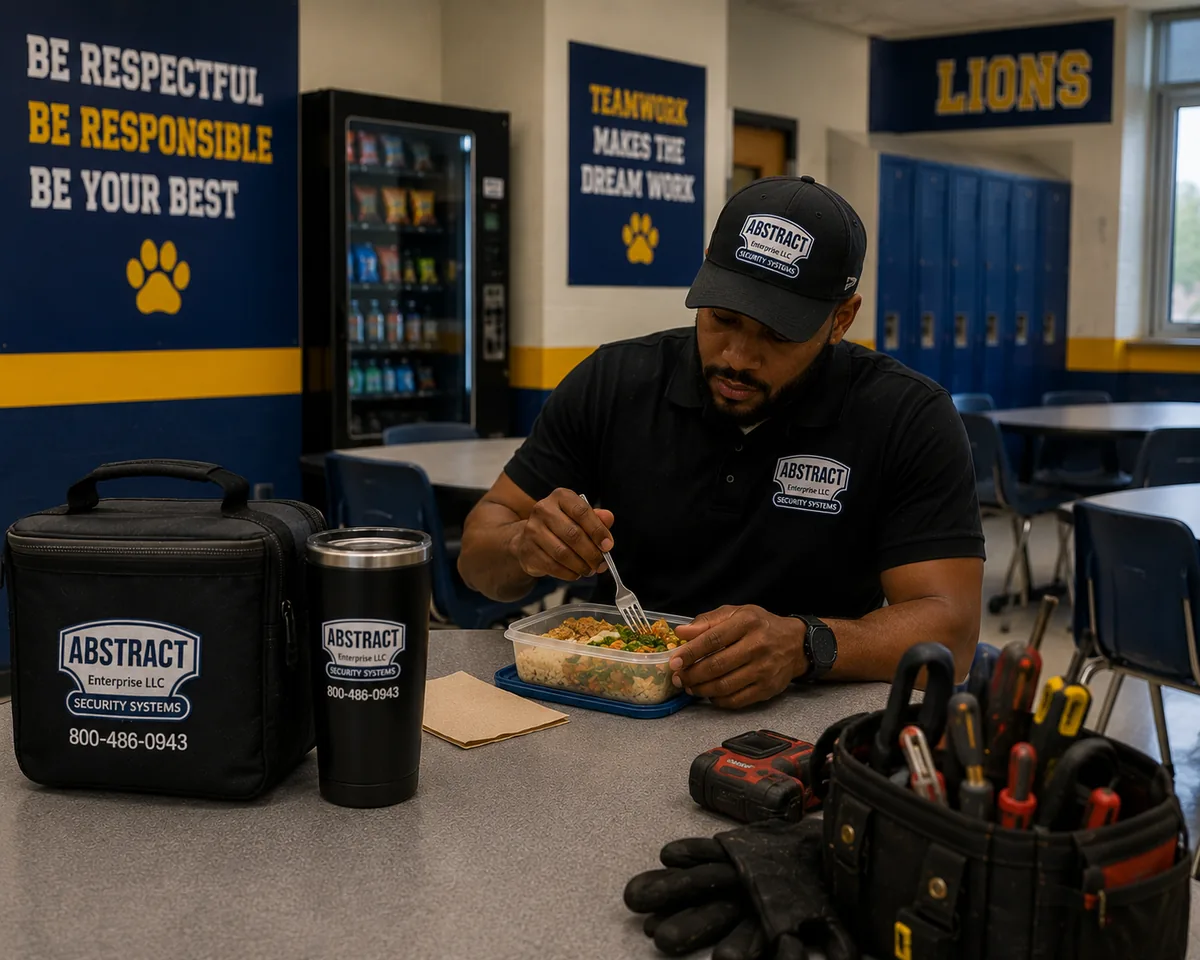
Parochial school off Flatbush, four floors plus a basement cafeteria. Their 2013 analog DVR had died in December and nobody noticed until an incident in January had no footage behind it — which is usually how we get the call. Principal wanted everything replaced over February break: five working days, building empty.
We walked it in advance and made the calls that matter before ladder day. Two stairwell coax runs were buried in plaster nobody was opening, so those got Ethernet-over-coax converters — tested clean at 4MP. Everything else got new plenum Cat6 home-run to a closet on two. Vestibule got a WDR turret at face height tied into the buzzer release, cafeteria and gym got IK10 vandal domes, yard got two IR bullets off the parapet. The principal asked about classroom cameras; we walked the hallway together and I showed her doorway coverage instead — every room entry documented, no camera inside a classroom, no staff fight she didn’t need. She took the doorways.
Thursday afternoon: 28 channels verified recording, 62 days of storage, drive-health alerts to the office email, and a one-page monthly check taped inside the closet door. Friday was training and the placement map signed. That system will still be boring in five years — which is the whole point.
School Security Camera Installation NYC: Frequently Asked Questions
How much does school security camera installation cost in NYC?
Most NYC school camera projects run between $6,000 and $70,000 depending on building size and camera count. Plan on $450 to $950 per commercial IP camera installed, plus the recorder, storage, and network as system-level items. A small daycare with 6 to 8 cameras typically lands $4,500 to $8,000; an elementary school with 16 to 32 cameras runs $12,000 to $30,000; a high school with 64 or more cameras runs $40,000 and up. We provide a free on-site survey with a camera-count floor plan and line-item quote.
How many security cameras does a school need?
Coverage is driven by choke points, not square footage. From our NYC installs: daycares need 6 to 12 cameras, elementary schools 16 to 32, middle schools 32 to 64, high schools 64 to 128, and college buildings 24 to 48 each. Every entrance and exit, each stairwell, corridor lines per floor, cafeteria, gym, yard, and perimeter set the count. The survey produces an exact number for your building.
Is facial recognition legal in New York schools?
No. The New York State Education Department banned the purchase and use of facial recognition technology in schools in September 2023, covering public, charter, and nonpublic elementary and secondary schools. Conventional security cameras, recording, and standard video analytics remain fully legal. We configure every school system so any prohibited features are disabled and documented as such.
Can cameras be installed in classrooms?
Often legally possible in New York, but it is a policy decision for your administration, counsel, and staff rather than an installer default. Most schools cover classroom doorways from the corridor instead, which documents every entry and exit without placing a camera inside the room. Where a school deliberately chooses classroom coverage, we document the decision in the signed placement map.
Where can school cameras never be installed?
Bathrooms, locker rooms, changing areas, and any space with a reasonable expectation of privacy. Recording in those areas implicates New York’s unlawful surveillance statute, which is a felony. Lawful placement covers entrances, exits, lobbies, corridors, stairwells, cafeterias, gyms, yards, parking areas, and perimeters.
How long should a school keep camera footage?
We recommend 30 days as the floor, matching the minimum NYC applies in its own school buildings, and 60 to 90 days where budget allows, since incidents often surface weeks later. Any clip tied to an incident should be exported to secured storage immediately so it survives the recorder’s overwrite cycle. We size storage to your chosen policy and turn on drive-health alerting.
Can you install while school is in session?
Yes, with a phased plan. We schedule invasive work such as ceiling access, drilling, and lift work for breaks, evenings, weekends, and summer recess, and reserve occupied hours for low-disruption tasks like head-end configuration and camera aiming. Crews follow your visitor, escort, and background-screening requirements without friction.
What camera brands do you install for schools, and what is NDAA compliance?
Our school defaults are NDAA-compliant lines such as Hanwha Vision, Axis, and Uniview, with prosumer options like Lorex for small daycares where the scale fits. NDAA Section 889 bars covered manufacturers, including Hikvision and Dahua, from federally funded projects, so schools using federal safety grants must run compliant hardware. We also service and upgrade existing systems from any brand.
Can grants pay for school security cameras?
Frequently. Public districts have used New York’s $2 billion Smart Schools Bond Act to fund high-tech security including video surveillance, with a required assurance that no facial recognition is in the plan. Nonpublic schools can pursue state security-equipment reimbursement programs and federal school-safety grants. We prepare itemized, compliance-clean proposals that grant administrators can submit as written.
Do you integrate cameras with buzzers, intercoms, and access control?
Yes, and most of our school projects combine them. The standard stack is a locked front door with a face-height camera, video intercom verification, and buzzer release from the office, plus fob access control on staff doors and door alarms with paired cameras on secondary exits. One contractor wiring all of it means one design, one cabling pass, and systems that actually work together.
Do you repair or take over existing school camera systems?
Yes. Same-day school camera repair across NYC covers dead recorders, cameras down, PoE faults, storage failures, and footage-export emergencies, with most faults fixed in one to two hours on site. We also take over orphaned systems installed by vendors who disappeared: full audit, recording verification on every channel, documentation, and ongoing service.
Are your installers licensed and vetted to work in schools?
Abstract Enterprises Security Systems is a New York State licensed and insured low-voltage security contractor, license number 12000287431. We comply with each school’s vendor screening, escort, and scheduling requirements, and we structure school installs so invasive work happens outside student hours. References from school and commercial clients are available on request.
Questions answered. Building surveyed next?
School Camera Installation Pricing in NYC
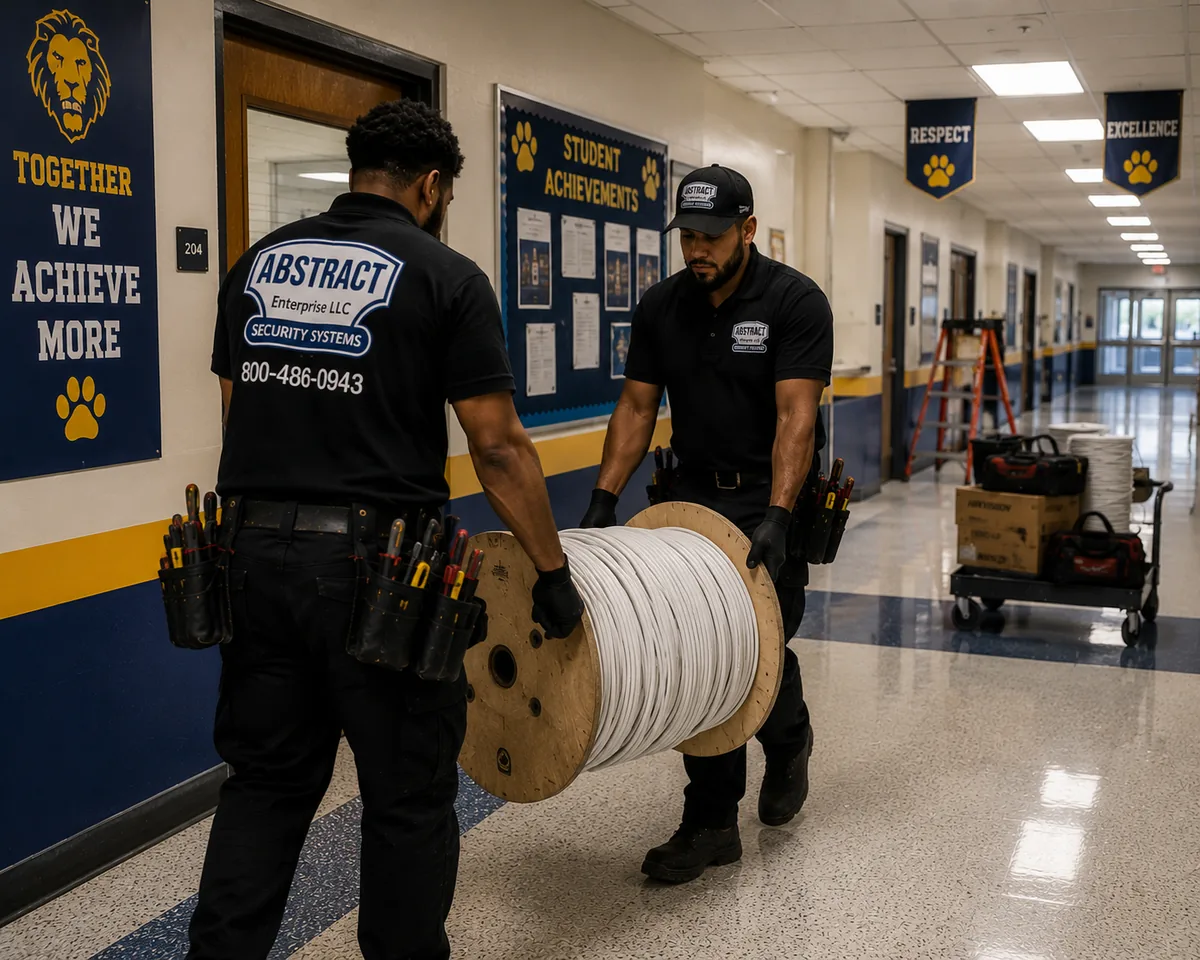
Real numbers from real NYC school work — commercial-grade IP systems, professionally cabled, verified recording. Your building’s exact quote comes from the free survey; these ranges tell you whether any bid on your desk is in the honest zone.
| School Camera Project | Typical Camera Count | Installed Price Range (NYC) |
|---|---|---|
| Daycare / preschool system | 6–12 cameras | $4,500 – $9,500 |
| Small private / parochial school | 12–16 cameras | $9,000 – $16,000 |
| Elementary school building | 16–32 cameras | $12,000 – $30,000 |
| Middle school / charter campus floor(s) | 32–64 cameras | $24,000 – $55,000 |
| High school / full campus | 64–128 cameras | $45,000 – $110,000 |
| College / multi-building deployment | 100+ cameras | $80,000 – $200,000+ |
| Line Item | Typical NYC Range |
|---|---|
| Standard 4MP–4K IP dome/turret, installed w/ Cat6 run | $450 – $950 per camera |
| PTZ or license-plate camera, installed | $1,200 – $2,200 |
| 16-channel NVR with 30–60 day storage | $1,200 – $2,400 |
| 32-channel NVR with 30–90 day storage | $2,200 – $4,500 |
| Vestibule camera + video intercom + buzzer release package | $2,800 – $6,500 |
| Analog-to-IP conversion (per reused coax run, EoC) | $180 – $320 |
| Service / repair visits (specialty rate) | $195/hr, 3-hr minimum |
What moves your number: plaster and masonry cable paths versus accessible ceilings, lift requirements for exterior and gym mounting, break-window versus occupied-hours scheduling, retention target, and whether access control or intercom work rides the same cabling pass. Boroughs and counties carry different labor markups — the survey quote reflects your exact location. Deposits run 50% with balance due at completion, and every install closes with verified-recording sign-off. Abstract Enterprises Security Systems provides a three-year warranty on products supplied by AESS for normal wear and tear. It does not cover existing or customer wiring, customer-supplied equipment, lightning or other acts of God, power outages or surges, physical damage or unplugging, internet, router or phone changes, or camera readjustments requested after completion. After the warranty period, service is $195 per hour with a three-hour minimum ($585).
60-Second School Quote Qualifier
Three answers get you a realistic budget range by phone the same day, and a scheduled survey if you want the exact number. No spam, no list-selling, no six-call sales sequence — a licensed installer reads this form, not a call center.
- NYS licensed & insured low-voltage contractor — Lic #12000287431
- School-specific compliance built into every design
- Free on-site survey with camera-count floor plan
NYC School Camera Coverage Area
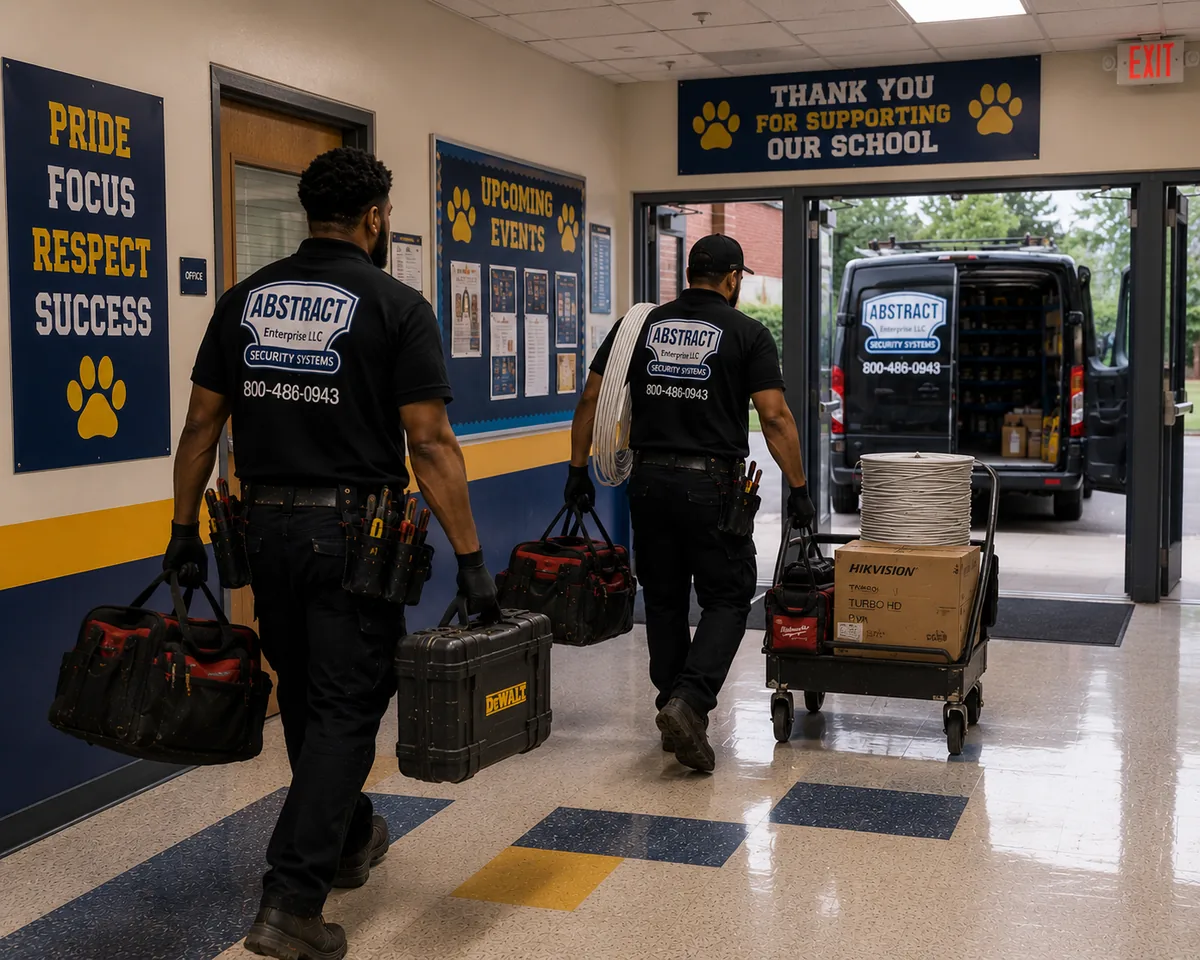
This is our citywide hub for school security camera installation. Borough teams handle local surveys and installs, and every borough page carries neighborhood-level detail for its school landscape:
Neighborhood coverage runs the full map: Borough Park, Midwood, Crown Heights, Williamsburg, Brooklyn Heights, Fort Greene, Bay Ridge, Bushwick, and Canarsie in Brooklyn; the Upper East Side, Upper West Side, Harlem, Chelsea, Tribeca, and Washington Heights in Manhattan; Flushing, Forest Hills, Jackson Heights, Astoria, Jamaica, and Fresh Meadows in Queens; Riverdale, Fordham, Bedford Park, Pelham Parkway, and the Grand Concourse corridor in the Bronx; St. George, Oakwood, Grymes Hill, and Willowbrook on Staten Island. Suburban schools route through the Long Island hub for Nassau and Suffolk and the Hudson Valley hub for Westchester through Ulster.
How We Compare for School Camera Work
| Abstract Enterprises | National Integrator | Alarm-Brand Bundler | Electrician / GC Side Job | DIY Kit | |
|---|---|---|---|---|---|
| NY school compliance fluency (FR ban, retention, placement law) | Built into every design, in writing | Varies by branch and rep | Rarely addressed | Almost never | Your problem entirely |
| Camera-by-camera floor plan before install | Standard, free with survey | On larger contracts | Package diagram at best | Rare | None |
| Pricing model | Line-item, milestone payments | Proposal + change orders | Low install, monthly contract lock-in | T&M, open-ended | Hardware only |
| Who shows up for service | The crew that built it — same day for schools | Regional queue, ticket system | Subcontracted rotation | When available | You, with a ladder |
| Recording verified & documented at handoff | Every channel, signed off | Usually | Sometimes | Rarely | Rarely |
| Break-window / occupied-building scheduling | Core practice | Possible at premium | Limited | Ad hoc | N/A |
NYC School Building Problems We Solve Every Week
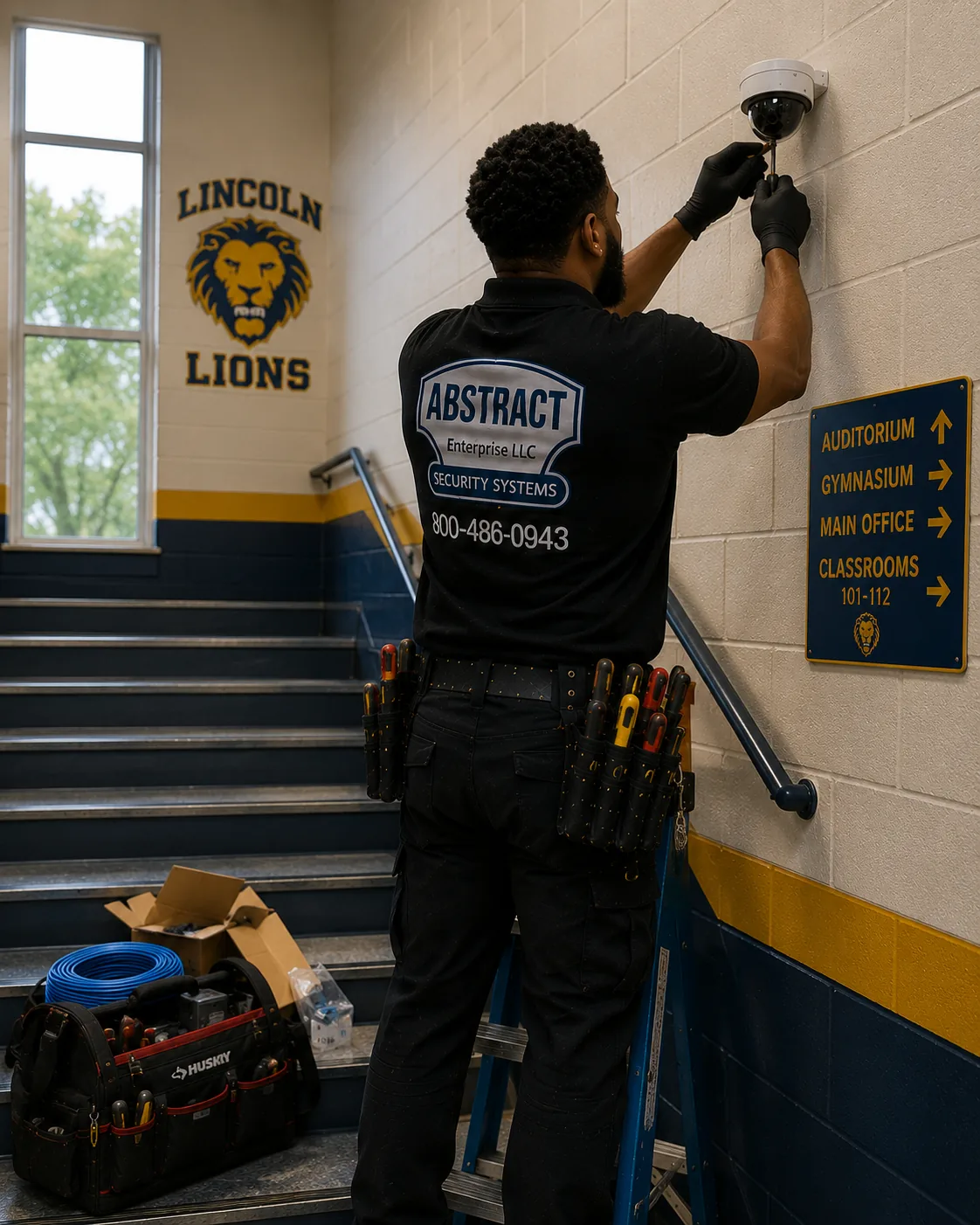
Pre-war plaster, terracotta block & zero conduit
Half this city’s school stock predates 1950. We fish plenum Cat6 through the paths that exist, run clean surface raceway where they do not, and use Ethernet-over-coax to modernize runs buried in walls nobody should open — keeping ceilings closed and dust out of classrooms.
Asbestos-flagged ceilings & no-drill zones
Older buildings carry AHERA management plans and flagged materials. We read the plan before the drill comes out, route around restricted assemblies, and coordinate with your environmental consultant when a path genuinely requires abatement-side work — instead of pretending the flag is not there.
Scaffolding & sidewalk sheds blocking exterior views
A Local Law 11 shed can blind a perfectly placed entrance camera for two years. We design around active and likely shed lines — shifting mounts, adding shed-level coverage during the work, and restoring the permanent view when the pipe comes down.
Vandalism at student height
Stairwell and cafeteria cameras get grabbed, spun, and struck. IK10 vandal domes, tamper alerts to the office, and mounting details that survive contact are standard on our school builds — and standard fixes on other companies’ installs we take over.
Shared buildings: church + school, co-located programs
Camera systems in shared buildings need shared entrances covered and everything else separated. We segment recording and viewing rights by organization — the school sees the school, the congregation sees its own spaces, the shared lobby is documented for both.
Buzz-in retrofits on century-old front doors
Matching the city’s locked-door camera-buzzer standard on a 1920s entry means electric strikes in worn frames, face-height camera positions where architecture fights you, and release wiring to an office fifty feet away. It is finicky work; it is also the most requested school upgrade in NYC, and we do it constantly — often paired with access control on staff doors in the same pass.
Basement cafeterias, boiler-room moisture & heat
Below-grade spaces eat electronics. Rated housings, sensible recorder placement out of the boiler room, and UPS power that rides through Con Ed flickers keep basement coverage alive year-round.
Summer-only install windows
Many schools can only open ceilings in July and August — and every contractor knows it. We lock summer scope in spring, sequence multi-phase jobs across breaks, and hold break-window commitments, because a school that misses its window waits a year.
Need School Camera Repair in NYC? Same-Day Response.
Recorder dead, channels black, footage you must export today — call now. Most school camera and NVR faults across the five boroughs are diagnosed and fixed in 1–2 hours on site, including systems we did not install.
(800) 486-0943 — School Repair LineSee Our Installation Work
Real NYC installs, camera placements, and system walkthroughs on our YouTube channel — see how school-grade work actually looks before you hire anyone.
Watch on YouTube: @openeye0007Related Security Services for NYC Schools
Security Camera Repair NYC
Same-day diagnosis and repair for school and commercial camera systems — recorders, PoE faults, dead channels, footage recovery.
NVR Installation NYC
Recorder head-end builds and replacements sized for 30–90 day school retention policies.
DVR Upgrade NYC
Analog-to-IP modernization for the 2010-era systems still limping along in school buildings citywide.
Intercom & Buzzer Service NYC
Video intercom and buzzer-release systems — the other half of the school entry stack — installed and repaired.
Existing Dahua System Support
Service, expansion, and compliant upgrade paths for schools running legacy Dahua hardware.
Lorex Installation NYC
Right-sized prosumer systems, professionally installed, for daycares and small schools where the scale fits.
Get Your School’s Camera System Designed by People Who Do This in NYC Every Week
Free on-site survey · camera-count floor plan · line-item quote · NDAA-compliant hardware · compliance documented in writing. Serving private, charter, parochial, religious, daycare, and college facilities across all five boroughs.
Written and reviewed by Anwar Timothy, owner, Abstract Enterprises Security Systems — NYS licensed low-voltage contractor #12000287431, serving New York City school buildings from 1282 Troy Ave, Brooklyn.
Jul 17, 2026 — Published: NYC hub for school security camera installation; compliance section covering the NYSED facial-recognition ban, retention standards, NDAA and grant rules; NYC pricing tables and borough coverage.
Next scheduled review: Oct 2026 — PAA rescrape and pricing verification.