A camera system for a Long Island school is rarely decided in the principal’s office. In a public district it passes through a board resolution, often a public hearing, sometimes a bond vote, a purchasing rule that decides whether it must be advertised for sealed bids, and a state review that New York City schools never see. Then it has to be cabled across a campus that may cover a whole block of playing fields. This hub explains how a school camera project actually moves from idea to recording in Nassau and Suffolk, what the work costs at each county’s factor, and where to find each county’s own page.
Reviewed and updated October 18, 2026 against NYSED facilities and Smart Schools guidance, Education Law 2801-a, the 2026 Nassau–Suffolk prevailing wage schedule and Long Island district filings · Written by Anwar Timothy, NYS license #12000287431 · Long Island school visits are booked from 1282 Troy Ave, Brooklyn
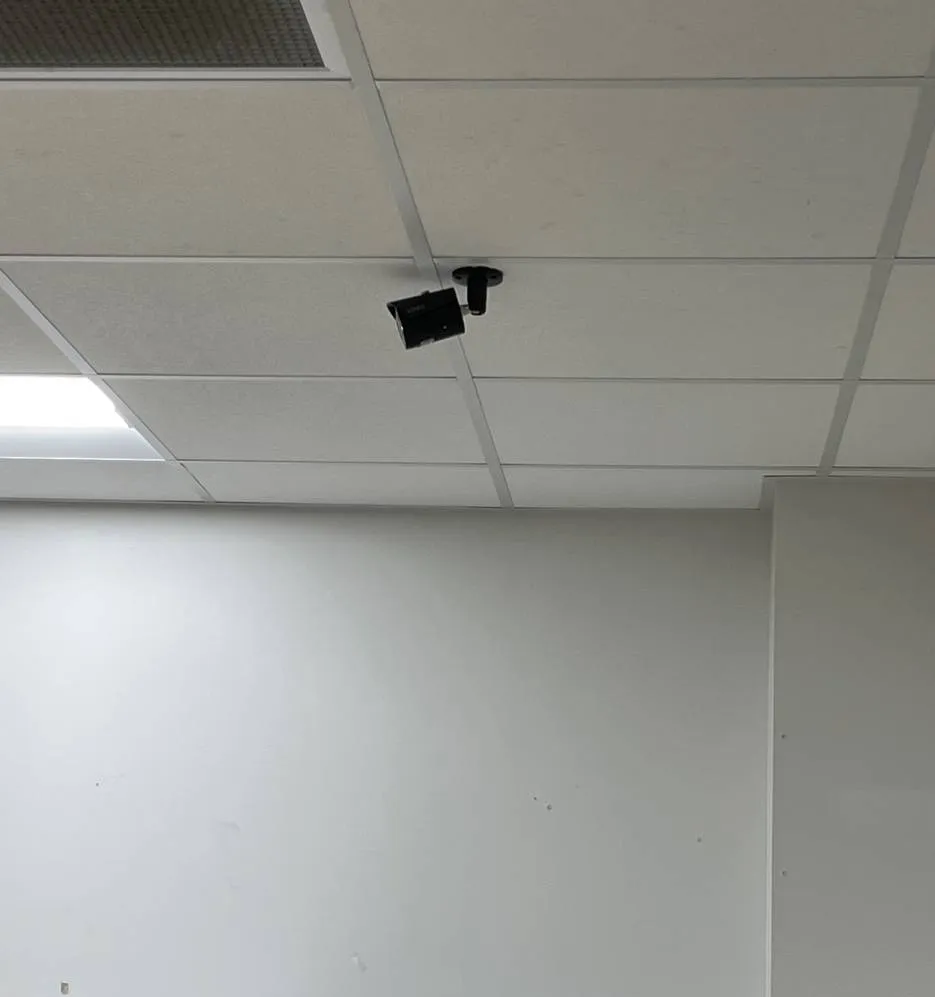
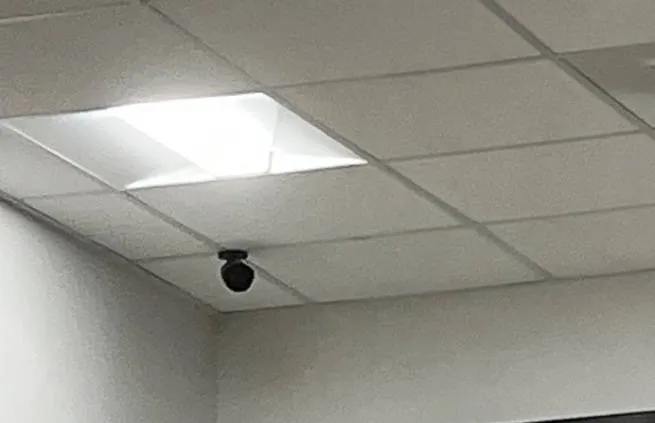
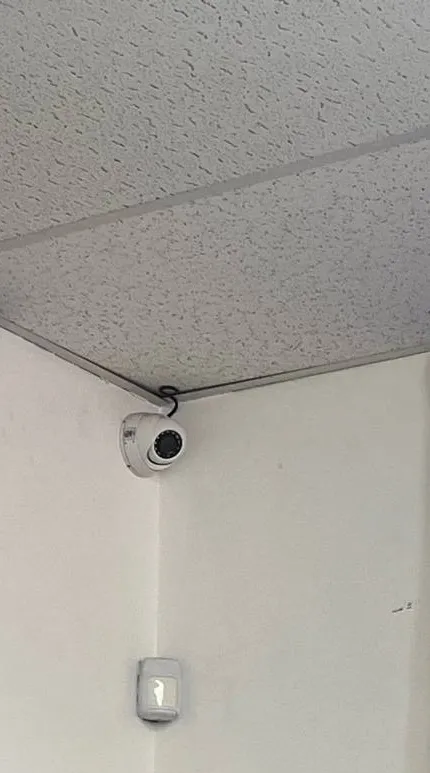
From an AESS commercial job, not a school, cropped and shown only as an example: a bullet camera hung from a lay-in ceiling and aimed along a bare wall. In a single-storey Long Island school the same mount looks down a corridor toward an exterior door.
Long Island School Camera Quote
Tell us the district or school, how many buildings, and where the money is coming from — a written scope follows the same business day
✅
Request Sent!
Someone who handles Long Island school projects will call back the same business day.
25+
Years Experience
✓
Same-Day Estimates
100%
Licensed & Insured
4.7★
201 Google Reviews
Four answers let us size a Long Island school camera job on the first call: which county the buildings sit in, whether the school is a public district, a BOCES site, a charter or a private or religious school, how many buildings and how much open ground the cameras must cover, and where the money is coming from — the operating budget, a voter-approved bond, a Smart Schools Investment Plan or a nonpublic grant. Ring (800) 486-0943 with those and we can tell you which approvals stand between you and installation, and what a written scope at the Nassau or Suffolk factor looks like.
For private, parish and charter schools, a single installed camera starts at $518 in Nassau or $540 in Suffolk; the recorder and drives appear as a separate figure on the scope
Scopes written so a business office can attach them to a bid package, a cooperative purchase or a Smart Schools plan without rewriting
Camera, cable and network work done under NYS license #12000287431; evening, weekend and school-break scheduling is normal for us
Why Long Island Schools Need School Security Camera Installation Planned as a Public Project
Long Island educates its children through an unusual number of separate governments. Wikipedia’s list of the Island’s public school districts counts 125 of them, holding 656 public schools between them; Nassau County police put the Nassau share at 56 districts when they trained every superintendent in the county in 2018. Each district has its own elected board, its own budget vote in May, its own business office and its own purchasing policy. A camera upgrade in Levittown and one in Southold are not two jobs for the same client with different addresses; they are two procurements by two public bodies, each with its own rules, calendar and voters. That is the first and largest difference between this Island and New York City, where one Department of Education runs more than a thousand buildings.
The second difference is who checks the work. Outside New York City, the State Education Department’s Office of Facilities Planning is the code-enforcement authority for public school districts and BOCES; all plans for repair or remodelling of public school buildings must be reviewed and approved by the Commissioner, and the office does that by issuing a building permit. Smart Schools guidance carves out a shortcut for cameras: security work that needs no construction and capitalizes at no more than $100,000 skips the formal capital-project review, though the district must still show the work is code compliant. Above that line, or wherever a camera job turns into ceiling, wall or fire-alarm work, the State Education Department is in the loop, and in 2018 the head of the state’s school business officials told Newsday that capital projects could take nine months to clear that review.
The third difference is money. Long Island districts pay for cameras out of four pockets: the annual operating budget, voter-approved capital bonds, capital reserves, and the state’s $2 billion Smart Schools Bond Act. Smart Schools money is a reimbursement, not a grant cheque; the district spends first and the state pays back once the plan has been posted for public comment, approved by board resolution, reviewed by the State Education Department and cleared by the Smart Schools Review Board. Islip’s schools presented exactly such a plan to their board on October 13, 2026, listing 134 cameras across five buildings with installation, and warning residents that installer quotes stay valid for only 30 to 90 days while the state reviews. Any contractor working Long Island schools has to write scopes that survive that wait.
The fourth difference is labour law. A camera installation paid for by a public district is public work, and New York’s Labor Law requires the prevailing rate of wage and supplements for it. The 2026 schedule for Nassau and Suffolk carries a “Telephone and Integrated Tele-Data System Electrician” classification that, in the Department of Labor’s words, applies to all voice, data and video work, at $42.93 an hour from July 1, 2026 and $44.43 from August 1, plus supplements. That rate, not a private-sector price list, is what sits underneath a public district’s camera bid, and it is why the same camera can cost a district more to install than it costs a parish school a mile away.
Last comes the ground itself. A typical city school is a tall brick building on a single block; a typical Long Island high school is a low, spread-out building in the middle of its own fields, parking lots, bus loop and tennis courts. When East Meadow voters approved a $71.5 million bond on March 5, 2026, by 1,132 votes to 462, the money covered new entrance vestibules, classroom door locks and fire alarms alongside new turf fields, field lighting and bleachers. Cameras on a campus like that are as much about cable distance and outdoor exposure as about lenses: runs that outgrow copper, poles at the edge of a field, a press box hundreds of feet from the nearest network closet. Planning for that spread, inside the paperwork above, is what school security camera installation on Long Island really means.
Long Island numbers that shape a school camera project
Many buyers, not one. 125 public school districts and 656 public schools across Nassau and Suffolk, by Wikipedia’s count; Nassau alone has 56 districts.
Three BOCES. Nassau BOCES in Garden City, Western Suffolk BOCES in Dix Hills and Eastern Suffolk BOCES in Patchogue each run cooperative bidding for member districts; Eastern Suffolk’s program dates to August 1981.
Bid thresholds. General Municipal Law §103 requires formal sealed bids for purchase contracts over $20,000 and public-works contracts over $35,000 in a fiscal year.
Smart Schools security money. By July 2018, 23 Long Island districts had state approval to spend $10,812,920 of Smart Schools money on security, led by Brentwood at $4,537,383.
Scale of a single district. Middle Country reported upgrading 564 cameras in a $2 million project that also covered card access and entrance booths, finished by late 2022.
Private schools are numerous too. The Diocese of Rockville Centre reports 35 Catholic elementary schools and nine Catholic high schools on the Island, outside every public district’s procurement rules.
Smart Schools security approvals on Long Island, as of July 2018
Newsday published the state school business officials’ analysis of which Island districts had state approval to spend Smart Schools money on security. The list shows how unevenly the money was used: one Suffolk district accounted for more than 40 percent of the Island total, while several districts used it for small, targeted upgrades.
District
Security funds approved
Bayport-Blue Point
$227,169
Bellmore-Merrick
$602,487
Brentwood
$4,537,383
Center Moriches
$130,000
Commack
$285,000
Deer Park
$124,080
East Islip
$54,000
East Rockaway
$66,816
Elwood
$406,833
Great Neck
$173,354
Kings Park
$140,840
Little Flower
$13,819
Lynbrook
$838,978
Malverne
$145,985
Manhasset
$93,790
Mattituck-Cutchogue
$53,228
North Bellmore
$38,168
Plainedge
$199,538
Roosevelt
$214,964
South Country
$207,500
Tuckahoe Common
$18,473
Valley Stream 13
$285,884
Valley Stream Central
$1,954,631
Total, Long Island districts
$10,812,920
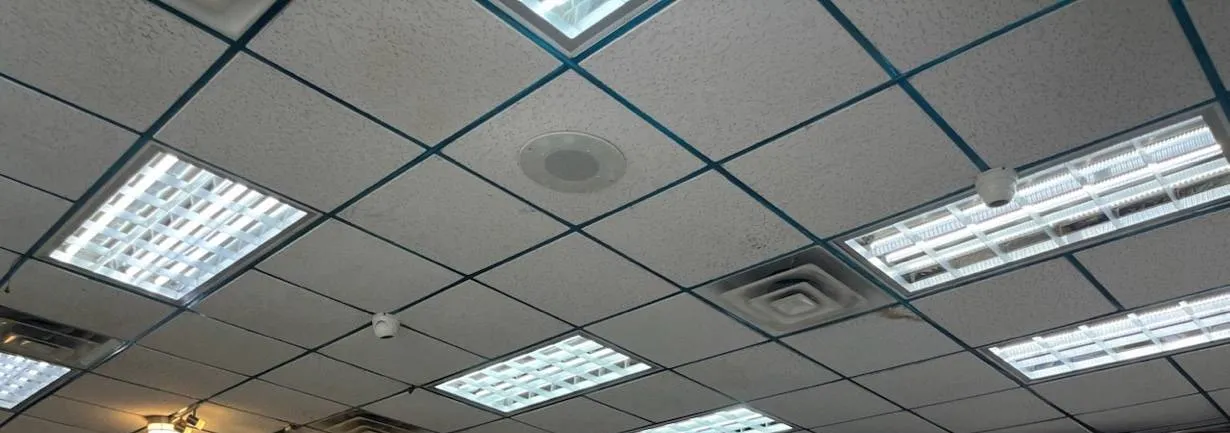
From an AESS job in a city shop, cropped to the ceiling and shown only as an example: small domes set between light panels, a speaker and a vent. A Long Island school cafeteria or gym ceiling takes cameras the same way, between the fixtures.
School Cameras Down on Long Island — Same-Day Help
The urgent school calls we take from Nassau and Suffolk tend to arrive in three moments: the first morning after a long break, when a recorder that ran unattended all summer turns out to have stopped; the day after a storm and a PSEG outage, when half the camera tiles come back black; and the hour after an incident, when the principal needs a clip and nobody remembers the recorder password. Phone (800) 486-0943 and we book the next two-hour window in your county. Most systems are recording again within one to two hours of arrival; a failed drive or recorder is replaced on the same visit or the next. Non-school sites go to our Long Island camera repair crew.
Before anyone drives out, check these
Protect the evidence first. If an incident has just happened, export the clip to a USB stick before anyone restarts anything. A restart rarely erases footage, but a panicked factory reset can.
Find the recorder’s closet and look at its lights. A dark recorder points to power; a lit recorder with dark cameras points to the PoE switch or the cable.
Check the switch in the network closet. School cameras often draw power from a district switch the IT department manages. If the IT team restarted or replaced it over the break, the camera ports may not have come back with power enabled.
Ask the district IT office before calling us. In many districts the cameras sit on a district network and the recorder is reachable only from inside it. A firewall change can make cameras vanish from the app while they keep recording perfectly well.
Two Counties
Nassau and Suffolk Are Different School Camera Jobs
The same paperwork applies in both counties, but the Island changes as you drive east, and so does the shape of a school camera project.
Nassau: dense districts, older buildings
Fifty-six districts packed into the smaller western county, many of them covering a single village or hamlet. Schools sit close to houses and busy roads, sightlines are short, and the work is usually about replacing analog cameras, filling gaps at doors and in corridors, and fitting cameras into new entrance vestibules. Nassau BOCES runs the cooperative bids. Our Nassau County school camera page covers the county in detail.
Suffolk: big campuses, long distances
The rest of the Island’s districts spread across a much larger county, from Brentwood, whose 2018 Smart Schools security approval was the largest on the Island, to East End districts that run a single school building. Campuses are larger, fields and bus loops are farther from the building, and the East End adds salt air and seasonal roads. Two BOCES, Western Suffolk and Eastern Suffolk, serve the county. Our Suffolk County school camera page goes town by town.
Both counties are priced from the same Brooklyn base: Nassau work carries a 1.15 factor and Suffolk work a 1.20 factor on our labour lines, which is why a camera that costs $518 to install in Hempstead costs $540 in Huntington. Public districts in both counties sit on the same District 4 prevailing wage schedule, so on a public bid the county factor gives way to the state rate.
What We Install
School Security Camera Installation Services on Long Island
Every service below is something a Long Island district, BOCES or private school has asked us to price. Most projects combine three or four of them.
Bid-ready scopes and drawings
A camera-by-camera schedule with mounting heights, lens choices, cable routes and closet locations, written so a business official can drop it into a sealed-bid package, a BOCES cooperative purchase or a Smart Schools Investment Plan without retyping.
Entrance and vestibule coverage
Cameras that see a visitor’s face at the outer door, the inside of the new vestibule and the reception window, matched to the video entry station so the person releasing the inner door sees the same image the recorder keeps.
Corridors, stairs and cafeterias
Ceiling and wall cameras along the long, single-storey corridors common in Island schools, aimed so every exterior door is seen from inside, as the State Education Department’s design guide recommends, with cafeterias, gyms and libraries covered as assembly spaces.
Fields, lots and the bus loop
Pole and building-mounted cameras over parking fields, the student drop-off line and the bus loop, with higher-resolution cameras where a licence plate or a face at a gate needs to be readable, and fibre where copper runs get too long.
Analog-to-IP replacement
Swapping aging coax cameras and DVRs for network cameras and a modern recorder, reusing conduit and pathways where they are sound, and documenting which old cables are abandoned so they can come out during the next ceiling project.
Recorders, storage and servers
Network recorders or video management servers sized to the camera count and the retention the district policy sets, placed in a conditioned closet on backup power, with the drives, licences and archivers listed as separate quote lines.
Network integration with district IT
Working inside the district’s own network rules: camera VLANs, switch ports, PoE budgets, firewall rules for remote viewing and the accounts IT wants to control, coordinated with the technology director rather than around them.
Private, parish and charter schools
Single-building systems for Catholic elementary schools, yeshivas, independent schools, charters and preschools, scoped to fit nonpublic safety grants and reimbursement paperwork, and paired with Long Island access control where the front door needs it.
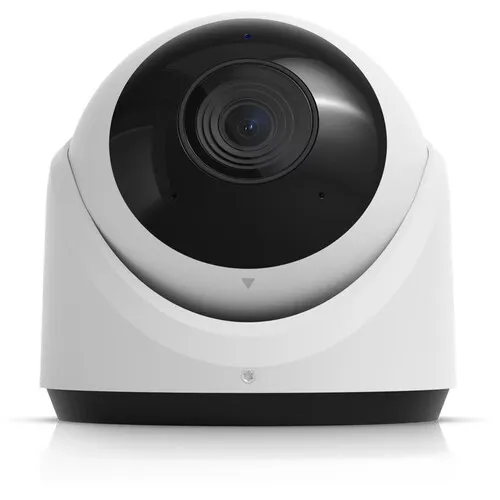
Manufacturer catalogue image of a Ubiquiti UniFi dome camera, not an installed unit. A sealed dome like this suits Long Island school corridors and stairwells, where a camera within reach of students needs a tough cover.
Building Specialists
School Security Cameras for Long Island’s School Buildings
Walk enough Nassau and Suffolk campuses and the same six building shapes keep turning up. The shape, more than the enrolment, settles where the recorder goes, which way cable has to travel and which cameras earn their place first.
Single-storey elementary schools
Long, low buildings with wings off a central office and cafeteria, flat roofs and drop ceilings. Cable runs are horizontal and long rather than vertical, so the number and placement of network closets decides whether every camera stays within copper distance.
High school campuses
A main building with a field house, auxiliary gym, athletic fields, tennis courts, a bus loop and several parking lots. Here the camera list splits in two: an indoor system that looks like a big office, and an outdoor system that looks like a parking-lot or utility job.
Middle schools with additions
Original buildings with one or more later wings, so ceiling types, closet locations and even cable pathways change at every addition line. We survey each wing as its own building before writing one scope.
District offices and BOCES centres
Administration buildings, transportation depots and BOCES program sites, where the recorder room may also be the district’s data centre and the camera system has to fit the IT department’s standards exactly.
Small East End and island schools
Districts that run one K–12 or K–6 building, sometimes on a barrier island or a fork, where a single recorder serves everything, the nearest service visit is a long drive, and salt air reaches the exterior cameras.
Parish, yeshiva and independent schools
Buildings shared with a church, a synagogue or a community hall, often on the same lot, where the camera plan has to respect who owns which door and which hours the school actually controls the building.
How the method changes from one building type to the next
Closet math first. Network cable for PoE cameras is limited to 100 metres from switch to camera, so on a long single-storey school we count closets before we count cameras. A wing without a closet may need a new switch location, or fibre to a field enclosure.
Ceilings decide labour. Lay-in tile ceilings make corridor cabling fast; hard plaster, exposed deck or gymnasium trusses slow it and may need a lift. The scope says which is which, wing by wing.
Additions change everything. Fire-rated walls between an original building and its addition need properly sealed penetrations; we mark each crossing on the drawing so the district’s architect or the inspector can see it.
Outdoor cameras are a separate trade decision. Field poles, trenching and new outdoor power usually involve an electrician and sometimes the district’s architect; we price our share and list theirs as allowances.
Shared buildings need written door ownership. In a parish hall or a synagogue school, the scope lists which entrances, corridors and recorders belong to the school and which to the congregation, so nobody’s privacy or budget is assumed.
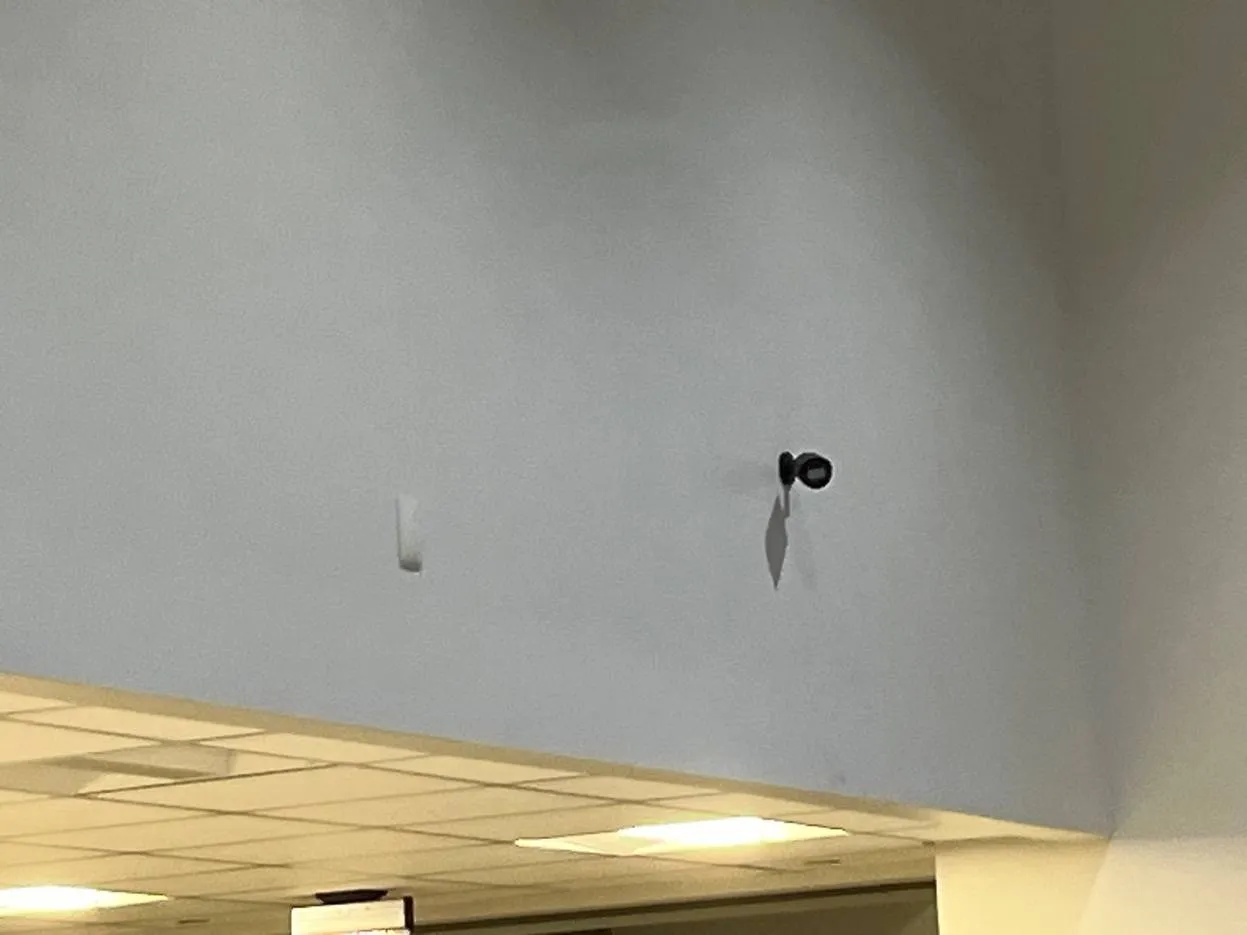
From an AESS commercial job off Long Island, shown only as an example: a camera placed high on a tall wall above the ceiling line, with its shadow thrown by the lights below. Tall gym and atrium walls in Island schools need the same high mounts.
District & BOCES Projects
Public District, BOCES and Private-School Camera Projects on Long Island
On this Island the people who buy school cameras fall into four groups, and each group follows a different set of rules before a single camera is ordered.
Public school districts
Elected boards, May budget votes, capital bonds that need voter approval, General Municipal Law bidding rules, prevailing wage on installation, and State Education Department oversight of anything that becomes construction. Most of the Island’s school cameras sit inside these 125 districts.
Nassau BOCES
Headquartered at the George Farber Administrative Center, 71 Clinton Road, Garden City. Its Cooperative Bidding and Purchasing service gives participating districts, other BOCES and municipalities an electronic bidding system for shared contracts. In 2013 it also built the fibre network and command centre that let Nassau police view school camera feeds during emergencies.
Western and Eastern Suffolk BOCES
Western Suffolk BOCES runs its central administration from 507 Deer Park Road, Dix Hills; Eastern Suffolk BOCES from 201 Sunrise Highway, Patchogue, where cooperative bidding began in August 1981. Both also run their own buildings, which need cameras like any district’s.
Private and religious schools
Catholic schools of the Diocese of Rockville Centre, yeshivas and day schools in the Five Towns and Great Neck, independent schools on both shores. They are not bound by public bidding law, but grants such as the Nonpublic School Safety Equipment program come with their own documentation rules.
Rules every Long Island school buyer should know
State Technology Law §106-b. Schools in New York may not purchase or use facial recognition technology. Every camera we install in a Long Island school has any face-matching feature left switched off and unlicensed.
Manual of Planning Standards, section S818. The State Education Department’s 2026 manual says cameras go only where there is no reasonable expectation of privacy — corridors, entrances, parking lots, cafeterias, libraries, gyms — and never facing any interior part of a toilet room, locker room or changing room.
Education Law 2801-a. Every district and BOCES adopts a district-wide safety plan after 30 days of public comment and a public hearing, and keeps building-level emergency response plans that are confidential and filed with local police and State Police.
General Municipal Law §103. Purchases over $20,000 and public works over $35,000 in a fiscal year go to formal sealed bids, advertised at least five days before opening; cooperative and state contracts are the main exceptions.
Labor Law §220. Installation under a public-work contract pays the prevailing wage and supplements for the locality — on Long Island, the District 4 Nassau–Suffolk schedule.
Education Law §2-d. A vendor that receives or stores student data for a district, including data storage services, must sign a data protection agreement, and the district posts supplemental information and a Parents’ Bill of Rights.
How Island police already work with school buildings
Camera planning on Long Island happens alongside a long-standing relationship between districts and the two county police departments. In 2018 Nassau’s police commissioner told Newsday that every one of the department’s 177 on-duty patrol cars was required to visit a school in the county once a day, and that the department had trained more than 400 principals and the superintendents of all 56 Nassau districts, as well as many private and parochial schools and yeshivas, in active-shooter response. Nassau introduced the Rave Panic Button app to its public schools in 2016, and in July 2018 Suffolk’s county executive signed a $2 million bond to license the same app for public and private schools across Suffolk.
None of those programs installs a camera, but each shapes what a camera system should do. Officers who walk a building every day know its doors; the district’s confidential building-level plan tells them where the recorder is; and a panic-button alert is far more useful when the people responding can be told which camera covers the door it came from. We ask about these arrangements at the first walk-through, so the camera drawing uses the same door names and numbers the police and the safety plan already use.
Most Long Island schools that call us also end up pairing new cameras with door hardware: card readers on staff entrances, a video entry station at the vestibule, and door-position alerts on the doors students prop open. That work lives on our access control installation page, and both trades can share one scope and one schedule.
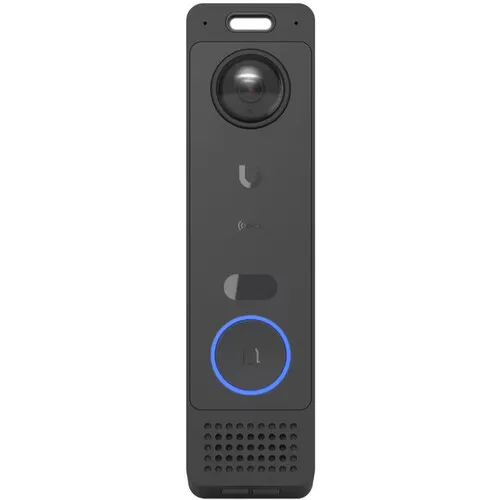
Manufacturer catalogue image of a Ubiquiti UniFi entry station, not an installed unit. At the outer door of a Long Island school vestibule a station like this shows office staff the visitor before the inner door is released.
Your Questions Answered
School Security Camera Installation on Long Island: Questions Answered
These are the questions business officials, facilities directors, technology directors and private-school heads on the Island actually ask before a camera project starts. They are grouped by the stage of the project they belong to.
Bids, cooperative contracts and votes
How much notice do bidders get when a Long Island district advertises a camera bid?
General Municipal Law §103 sets two lines. Purchase contracts — cameras, recorders, licences bought as goods — must be formally bid when the district expects to spend more than $20,000 on that item or commodity group in a fiscal year. Contracts for public work — installation, cabling, mounting — must be bid above $35,000. The State Education Department’s purchasing handbook adds that the advertisement must appear in the newspaper the board has designated, and that at least five days must pass between the first notice and the bid opening, while recommending ten days to two weeks so bidders can prepare.
In practice most Long Island camera jobs cross one or both lines once more than a single building is involved, so the district’s purchasing agent will want a scope that separates equipment from labour and states quantities clearly. Below the thresholds, the district’s own procurement policy under §104-b governs, which usually means written or verbal quotes from several vendors. We write scopes either way and are happy to quote as one of several competing contractors.
What does a BOCES cooperative award actually cover on a camera job?
Often, yes. Nassau BOCES describes its Cooperative Bidding and Purchasing service as an electronic bidding system that participating school districts, other BOCES and municipalities use to meet their purchasing needs; Eastern Suffolk BOCES has run cooperative bidding since August 1981. When a district has signed on to a cooperative bid that covers the equipment it wants, buying from that awarded contract replaces the district’s own sealed bid for those items.
The catch is coverage. A cooperative bid covers exactly what it says — a product list, a service category, a term — and installation labour, cabling and outdoor work are often outside it. Before a board relies on a cooperative contract, the business office should confirm that the camera models and the installation are both inside the award. Where only the equipment is covered, the installation may still need its own quotes or bid, and prevailing wage still applies to it.
Does a camera upgrade need a public vote, or can the board of education approve it alone?
It depends on how it is paid for. Cameras bought inside the annual operating budget are approved when voters pass the May budget, and the board then authorises the specific purchase. A capital construction project financed by borrowing needs voters to approve a specific object and purpose, under Education Law §1718, at the annual meeting or a special meeting called with 45 days’ notice. Smart Schools projects need a board resolution after the plan has been posted for comment and heard in public, but no separate referendum, because voters approved the statewide bond in 2014.
That is why so many Island camera upgrades ride inside larger bonds. When Manhasset voters approved a nearly $44 million bond in December 2022, more than $10 million of it was for safety and security; when Glen Cove passed a $30.5 million bond the same week, $2.2 million was security. Districts with capital reserves already approved by voters can sometimes fund camera work from the reserve with a further vote on its use. We can price to any of these calendars, but we cannot shorten them.
How State Education Department review applies to camera work
Outside New York City, the State Education Department’s Office of Facilities Planning is the code-enforcement authority for public school districts and BOCES, and it approves construction and remodelling plans by issuing a building permit. Low-voltage camera work that involves no construction is lighter: the Smart Schools guidance says high-tech security installations that need no construction, or that capitalise at no more than $100,000, skip the formal capital-project review, though the district must still show the work is code compliant.
The line moves as soon as the job touches walls, ceilings, fire separations, fire alarms or new electrical circuits, or becomes part of a larger capital project. Then the district’s architect or engineer files with the Office of Facilities Planning and the cameras ride on that permit. Our scope flags every item — a new pole base, a cored rated wall, a new circuit — that could push the work over that line, so the district can decide early.
From an AESS commercial job off Long Island, cropped and shown only as an example: a compact dome on the ceiling where two tall walls meet. A Long Island school lobby or vestibule ceiling gives a dome like this a view back toward the doors.
Does the Wicks Law apply when cameras ride inside a large Long Island bond project?
It can. General Municipal Law §101, the Wicks Law, requires separate specifications and separate prime contracts for plumbing, heating and ventilation, and electric wiring when a public building project’s total cost exceeds a county threshold — $1.5 million in Nassau, Suffolk and Westchester, against $3 million in the five boroughs and $500,000 elsewhere. Below the threshold, bidders must list their plumbing, HVAC and electrical subcontractors and the amounts in a sealed list that cannot be changed without the owner’s approval.
Many Island bonds are far above $1.5 million, so camera work bundled into one often sits inside the electrical prime contract or alongside it, and we work under that contractor on the same wage schedule. Districts that want the technology department to choose equipment sometimes keep cameras as a separate, smaller contract instead. The choice should be made when the architect writes the bid documents, not after the electrical contract is awarded.
Smart Schools money and the long wait
Who sits on the Smart Schools Review Board, and why does its schedule matter?
The Review Board is the last stop for every plan. In 2018 the executive director of the state’s school business officials association described it to Newsday as a board with representatives from the State Education Department, the State University of New York and the state Division of the Budget, which meets only when there is a critical mass of projects to consider — so a plan that clears department review just after a meeting can wait for the next one. Islip’s October 2026 presentation sets out the steps before that. The preliminary plan goes to the board of education and is posted on the district website for 30 days of public feedback. After those 30 days the board holds another hearing allowing public comment. The board then approves the final plan by resolution, the superintendent submits it through the State Education Department’s business portal, department staff review it, and the Smart Schools Review Board gives final approval. Only then is the district authorised to start spending and claiming reimbursement.
Patchogue-Medford described the same path in 2017: a preliminary plan approved at a board meeting that doubled as the public hearing, 30 days of community feedback, final board approval, then submission to the department. The practical lesson for a contractor is that nothing should be ordered, and certainly nothing installed, until the district has the state’s approval notice in hand. Equipment bought early may simply not be reimbursed.
Islip’s October 2026 plan is unusually specific, which makes it a useful benchmark for other Island districts preparing their own plans. Its camera lines, each including materials and installation, read as follows:
Islip building
Cameras
Cameras, materials and installation
Wing Elementary
29
$54,763.02
Commack Road Elementary
25
$45,035.18
Sherwood Elementary
23
$39,903.56
Middle School
35
$58,243.67
High School
22
$44,031.57
The same plan adds a Genetec Streamvault archiver at $46,459.06 to handle the extra cameras, 180 Wi-Fi access points at $266,340.95, and access control on five doors at Wing Elementary and one at Commack Road, for an approximate total of $571,851.39.
Why does Smart Schools money reach the district only after the installer has been paid?
Because the program is built as a reimbursement. Islip’s presentation describes it in one line: funds must first be spent by the district, and the state then reimburses the expenditure. Islip’s first plan shows the timing — 636 Chromebooks and licences bought in July 2026, receipts submitted, and $324,360 then awaited from the state.
For a camera project that means the district pays us on its normal payment terms, from its own cash, and recovers the money later. Business offices plan cash flow around that gap, which is one reason camera phases are often sized to what the district can front in one fiscal year. Our invoices are itemised to match the approved plan line by line, because the reimbursement claim needs receipts that read the same way the plan does.
How should an installer’s quote be written so it survives months of state review?
Islip warned its own residents about this: quotes for its second plan were valid for only 30 to 90 days, prices may rise before orders are placed, and the district may spend only the amount the state approves, so items might have to move to a later plan. A quote that expires in thirty days is nearly useless in that process.
We write school quotes in three layers: a scope that will not change (camera locations, cable routes, closet work), a labour price held for a stated period, and an equipment schedule that names an acceptable alternate for every model in case a product is discontinued during review. Where a manufacturer raises prices, the alternate lets the district stay inside its approved figure without resubmitting the whole plan.
Prevailing wage and the public-work price
Does school camera installation for a public district on Long Island carry prevailing wage?
Yes. Labor Law §220 requires contractors and subcontractors on a public-work contract to pay the prevailing rate of wage and supplements for the locality, and a district contract for camera installation, reconstruction or repair is public work. On Long Island the relevant schedule is District 4, covering all of Nassau and Suffolk.
The 2026 District 4 schedule lists a “Telephone and Integrated Tele-Data System Electrician” rate of $42.93 an hour from July 1, 2026, rising to $44.43 on August 1, and states that the classification applies to all voice, data and video work, excluding fire alarm and energy-management systems, which take the full electrician rate of $66.75. Supplements are paid on top. The schedule asks contractors who are unsure which rate applies to call the Department of Labor’s Nassau or Suffolk district office, and on a mixed job — cameras plus a new circuit — that call is worth making.
Why can the same camera cost a public district more to install than a private school down the road?
The equipment price is identical. The labour is not, for three reasons. First, the prevailing wage schedule sets the floor for installation hours on public work, and private schools are not public work. Second, public contracts carry paperwork that private ones do not: certified payrolls, insurance certificates naming the district, and sometimes bid and performance security. Third, public work often has to happen when students are away, which can mean evening or holiday hours.
That is why the prices on this page — the Brooklyn base times 1.15 or 1.20 — are what a private, parish or charter school will see, while a public district’s figure is built from the wage schedule in force when the work is done. We show both clearly, and we never quote a public district a private-school labour rate it would not be allowed to accept.
Safety plans, privacy and the vestibule
Can residents obtain a school’s camera locations through a Freedom of Information request?
Not if the district files them properly. Under Education Law 2801-a every district and BOCES keeps building-level emergency response plans that are confidential, exempt from Freedom of Information requests, and filed with local police and the State Police within 30 days of adoption. Those plans are reviewed at least once a year, with district-wide plans updated by September 1. If responders are expected to use the camera system — and several Island districts let police view feeds in an emergency — the building plan is the confidential place to record where the recorder is, who can reach it and which cameras cover which doors.
The public, district-wide plan is a different document: it goes out for 30 days of comment and a hearing, so it should describe the camera program in general terms, not list blind spots. We deliver camera drawings as a separate document marked for the building-level team, so the district can attach it to the confidential plan and keep it out of anything posted online.
Does switching to cloud video change what a district must post under Education Law 2-d?
If the vendor receives or stores student data, the district will treat it as a third-party contractor under Education Law §2-d, which expressly includes data management and storage services. The State Education Department’s 2026 quick reference for superintendents lists what follows: a data protection agreement, supplemental information posted on the district website, a Parents’ Bill of Rights, a designated Data Protection Officer and breach reporting.
Whether particular footage counts as student data is a judgment for the district’s Data Protection Officer and counsel, guided by federal FERPA guidance on photos and videos. What we can say is practical: a recorder that keeps footage on the district’s own premises adds no new third party, while a cloud subscription almost always does. We point that out at the start, so the agreement is in place before cameras are switched on rather than discovered at audit.
Where should cameras sit in a newly built entrance vestibule?
Three positions cover almost every vestibule we see on the Island. One camera outside the outer door, at a height and angle that records a visitor’s face rather than the top of a cap. One inside the vestibule looking back at the inner door and the transaction window, so the recording shows what was handed through and who was buzzed in. One in the corridor beyond the inner door, facing back toward it, which the State Education Department’s design guide recommends for every exterior door: interior cameras positioned to face the doors people come in by.
The video entry station at the outer door is a fourth image, and it should be on the same recorder. With so many districts adding vestibules in bond projects — East Meadow’s 2026 bond names them at every building — the cheapest moment to run camera cable is while the vestibule walls are still open. We ask the district’s architect for the vestibule drawings so the cable is in the wall before the drywall closes.
Campus spread: fields, lots and phases
Which parts of a big Island campus should get cameras first when the money covers only one phase?
We rank by what the State Education Department’s design guidance and our own surveys put first. Every exterior door seen from inside. The main entrance and vestibule. The routes from parking fields and the bus loop to those doors. Then the corridors and stairs that link them, the cafeteria, gym and library as assembly spaces, and only after that the far edges: field perimeters, tennis courts, outbuildings and the back of the property.
Phasing that way means every phase leaves the building better covered at its most-used points, rather than half the corridors finished and none of the doors. We also install the backbone — recorder capacity, switch ports and fibre to outbuildings — sized for the final phase in phase one where the budget allows, because pulling cable twice across a campus costs more than pulling it once.
How far from the building can a field camera be before copper cable stops working?
Standard network cable carrying both data and power is limited to 100 metres, about 328 feet, between the switch and the camera, and that includes every foot inside walls and ceilings before the cable even leaves the building. On a Long Island high school, a camera on the far side of a football field or at the end of a parking lot is usually beyond that.
The answer is a small outdoor enclosure closer to the camera, fed by fibre from the nearest network closet, with a hardened switch inside it, and power from a nearby light pole circuit or a new circuit installed by an electrician. One enclosure can serve several field cameras. We mark every such enclosure on the drawing with its power source, because power, not cable, is usually what decides where it can go.
Buses, parish halls and private schools
Who reviews the footage when a Suffolk school bus camera records a car passing?
No. Bus stop-arm cameras on Long Island come from county enforcement programs authorised by a 2019 state law. Suffolk County’s program outfits participating fleets with stop-arm and internal cameras, video recorders, GPS and LTE connections through its vendor, BusPatrol, at no cost to the schools; the county lists dozens of participating districts plus both Suffolk BOCES. Violations are reviewed and tickets are issued through the county, not the district.
The program has had a rocky history: in June 2024 Suffolk dismissed about 90 percent of a backlog of 9,000 contested tickets after an appellate ruling, nearly 3,000 of them from one stop on Jericho Turnpike in Smithtown. Under the county’s process, the bus’s camera box stores the clip with GPS and time data, an encrypted LTE link sends it to the vendor’s cloud, a vendor safety specialist builds an evidence package, and law enforcement decides whether a ticket is mailed — $250 for a first violation, up to $300 for later ones. None of that touches the building system. We do sometimes add cameras at a bus loop or depot so the district has its own view of loading and arrivals, but the bus-mounted equipment belongs to the county program.
Does a private or parish school on Long Island need the State Education Department’s approval for camera work?
Generally not in the way a public district does. The Office of Facilities Planning describes itself as the code-enforcement authority for public schools, BOCES and charter schools chartered after July 31, 2010. A Catholic, Jewish or independent school building falls under the ordinary building-code authority of its town or village, like other private buildings, and that building department is the one to ask whether any part of a camera job needs a permit.
Two exceptions matter. Any new electrical circuit or outlet is line-voltage work for a licensed electrician, under that municipality’s rules. And grants come with their own conditions: the Nonpublic School Safety Equipment grant reimburses eligible religious and independent schools, and a hate-crimes security grant from the state Division of Criminal Justice Services funds interior and exterior improvements for at-risk nonprofits; each has paperwork about what may be bought and how it is documented.
Do BOCES buildings follow the same camera rules as the districts they serve?
Mostly, with one important difference. A BOCES is covered by the same Education Law 2801-a duty to adopt a district-wide safety plan and building-level emergency response plans, the same State Education Department code oversight through the Office of Facilities Planning, and the same public bidding and prevailing wage rules on its own contracts. The 2026 Manual of Planning Standards and the facial recognition ban apply to BOCES classrooms exactly as they do to a high school.
The difference is authorisation. The State Education Department’s guidance on authorizing school construction says a BOCES may authorise a capital project in a facility it owns or leases by board resolution, while voter approval is needed only to acquire buildings, sites or additions. So a camera upgrade at a BOCES technical or special-education centre can move on a board vote, without the referendum calendar a component district would face. Nassau, Western Suffolk and Eastern Suffolk BOCES each run several program sites, and we scope each site as its own building.
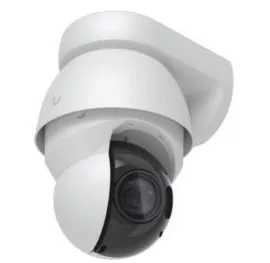
Manufacturer catalogue image of a Ubiquiti UniFi pan-tilt-zoom camera, not an installed unit. On a Long Island campus one camera like this can sweep a field or a large lot that would otherwise need several fixed cameras.
Equipment
Types of School Security Cameras We Install
School equipment on Long Island is chosen against three filters before it is chosen for image quality: whether the manufacturer is barred from federally funded purchases, whether the product can be bought through the route the district is using, and whether the district’s IT department can manage it.
Indoor domes and turrets
The workhorse of corridors, stairwells, cafeterias and libraries: small, vandal-resistant housings on drop ceilings or high on block walls, aimed along corridors and back at exterior doors.
Exterior turrets and bullets
Weather-rated cameras on building corners and soffits over doors, walkways and play areas, with infrared or low-light colour imaging for the dark hours after evening events end.
Licence-plate cameras
Narrow-view cameras at driveway entrances and lot gates, set up to read plates on vehicles entering at low speed. The design guide calls for higher-resolution cameras wherever plates or faces must be captured in detail.
Pan-tilt-zoom cameras
For fields, large lots and campus perimeters, where one operator-controlled camera can cover what would otherwise take several fixed ones. They work best with a security desk that actually drives them.
Video entry stations
The camera and intercom at a vestibule’s outer door, which lets office staff see and speak to a visitor before releasing the inner door, and which records to the same system as everything else.
Multi-sensor and wide-view cameras
Several imagers in one housing for gym ceilings, cafeterias and the junctions of corridor wings, reducing cable runs where one mount can see three directions.
Recorders and video management servers
Network video recorders for single buildings; servers and archivers running video management software for districts with many buildings. Islip’s 2026 plan adds a Genetec Streamvault archiver to handle its new cameras, a typical district-scale choice.
Switches, fibre and outdoor enclosures
PoE switches in network closets, fibre runs to outbuildings and field enclosures, and hardened switches inside weatherproof boxes where cameras sit beyond copper distance.
Which brands, and why the list is shorter for schools
Section 889 of the 2019 federal defence authorisation act bars federal money from paying for video surveillance equipment made by Hikvision, Dahua, Hytera and their affiliates. Long Island districts spend federal funds in many programs, so keeping those brands out of a school specification keeps every funding route open. For school projects we therefore start from manufacturers outside that list — Axis, Hanwha Vision, Ubiquiti UniFi and similar lines — and match the district’s existing video management software where there is one. Our Long Island Hanwha price list and Long Island Axis price list show installed figures model by model.
National consumer brands compared with a district system
Ring, SimpliSafe and ADT come up at almost every small-school meeting, usually because a board member has them at home. Consumer cloud cameras are built for one household and one app login: they lack the per-user permissions, audit logs, long retention and on-premises storage a public body needs, and their cloud storage raises the Education Law §2-d question discussed above. ADT does sell commercial systems, and a monitored alarm is a reasonable partner to a camera system, but the decisions that matter for a Long Island school — wage schedules, bid packages, state review, district network rules — are made locally whichever logo is on the panel.
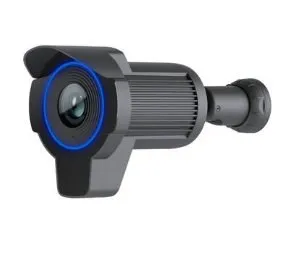
Manufacturer catalogue image of a Ubiquiti UniFi licence-plate camera, not an installed unit. At a Long Island school driveway or staff-lot gate a narrow-view camera like this is set up to read plates on cars entering slowly.
AI Overview Reality Check
What AI Gets Wrong About School Security Camera Installation on Long Island
Search summaries and chatbots answer school camera questions from national material. On Long Island several of their standard answers are incomplete in ways that cost districts time or money. Here are the claims we hear repeated most, and what actually applies here.
“A school can get a camera quote this week and install next month”
For a private preschool, perhaps. For a Long Island public district, the calendar is set by law, not by the installer. Spending above the General Municipal Law thresholds needs either a sealed bid, advertised at least five days ahead, or a cooperative or state contract that already covers the purchase. Capital projects need a voter-approved object and purpose, and a special district meeting needs 45 days’ notice.
Smart Schools projects take longer still. Islip’s 2026 plan lists a 30-day public posting, a second hearing, a board resolution, State Education Department review and Smart Schools Review Board approval before any spending begins. In 2018 the state’s school business officials association called these approval processes slow and cumbersome, with capital reviews taking around nine months.
The realistic timeline for a district camera project therefore runs from the budget or bond cycle, not from the quote date. The useful thing a contractor can do is deliver a scope early enough to fit that cycle, and hold its labour price long enough to survive it.
“Installation costs a few hundred dollars per camera”
National cost guides are written mostly for homeowners, so their per-camera figures assume a house: short cable runs, a few cameras, a single recorder and no public-work rules. A school is commercial low-voltage work, and on Long Island a public school is commercial low-voltage work at prevailing wage.
Our private-school figures start at $518 a camera installed in Nassau and $540 in Suffolk, before recorders and storage. Islip’s October 2026 plan shows what district-scale numbers look like: 29 cameras at Wing Elementary for $54,763.02 with materials and installation, 35 at the middle school for $58,243.67, roughly $1,660 to $2,000 per camera once materials and labour are counted together, with the archiver, access points and door hardware listed separately.
Neither figure is wrong. They describe different jobs. The mistake is applying a homeowner’s number to a district budget line, and then discovering at bid opening that every responsible bidder came in far above it.
“Grants will pay for your school’s cameras”
Some will, on their own terms. Smart Schools money for public districts reimburses spending after approval rather than paying up front. The Nonpublic School Safety Equipment grant reimburses eligible religious and independent schools for certain safety expenses, allocated per student. The state’s hate-crimes security grant funds nonprofits at risk because of their beliefs or mission, through competitive applications.
None of these is free money that arrives before the work. Each needs eligibility, an application or plan, approved items, receipts and, often, waiting. A Long Island school that orders cameras first and looks for a grant afterwards frequently discovers the purchase is ineligible because it came before approval.
The right order is plan, approval, purchase, claim. We write scopes and invoices to fit whichever program the school is using, but the school’s business office or grant administrator owns the application.
“Any licensed security company can install cameras at a public school”
A licence is necessary but not sufficient. On public work the contractor must also pay the prevailing wage and supplements and keep the payroll records that prove it; willful violations can lead to debarment from public work. Districts also check insurance certificates, and many ask how contractor staff working in occupied buildings are screened.
The licence question itself is narrower than people think. In New York, security and fire alarm installers are licensed by the Department of State, and camera work sits alongside that; any new power circuit belongs to a licensed electrician under local rules. A camera contractor who also runs new circuits without an electrician is a problem for the district’s inspector, not just for the contractor.
When a district compares bids, the bid that ignores prevailing wage may look cheapest and be unawardable. We price public work on the schedule from the first draft.
“Modern school cameras use facial recognition to spot threats”
Not in New York. State Technology Law §106-b prohibits schools from purchasing or using facial recognition technology, and the State Education Department repeats the prohibition in its 2026 Manual of Planning Standards. Districts may decide locally about other biometric technology, but only after weighing privacy, civil rights, effectiveness and parental input.
Many current cameras ship with analytics that are not facial recognition: line crossing, loitering, object left behind, people and vehicle classification. These can be useful on a field perimeter after hours. They should still be described plainly in the district’s video surveillance and use policy, so nobody is surprised by what the system does.
When we configure a Long Island school system, any face-matching feature stays switched off and unlicensed, and we list in the handover document which analytics are enabled and where.
“Cloud cameras are simpler for schools”
Simpler to buy, perhaps. A cloud subscription moves video storage to a vendor’s servers, which in a New York school makes the vendor a likely third-party contractor under Education Law §2-d, with a data protection agreement, website disclosures and breach obligations to manage. It also turns a one-time purchase into an annual line that must survive every future budget vote.
On-premises recorders and servers keep the footage in the district’s own closet, under the district’s own retention rules. Cloud management of on-premises systems is a middle path, but even that needs the technology director to agree how remote access works.
Either can be right. The point is that “simpler” depends on the district’s data-privacy workload and budget habits, not on the camera.
“Police can watch school cameras live”
Some can, in emergencies, where the district has arranged it. Nassau BOCES built a fibre network and command centre in 2013 so police could view feeds from participating schools during emergencies; Middle Country told Newsday in 2022 that Suffolk police can access its cameras during an emergency. These are deliberate arrangements, not defaults.
Each one is a district decision with network, privacy and policy consequences, and the details belong in the confidential building-level emergency response plan rather than on a website. A camera system does not become police-viewable just because it is new.
If a district wants that capability, we build the network path the district and the police agree on, and nothing more.
Send Us the Bid Calendar, We’ll Fit the Scope to It
Budget vote, bond referendum, Smart Schools plan or a private-school grant deadline: tell us the date that matters and the buildings involved, and we will tell you when the walk-through has to happen and what the scope will contain.
For a Long Island school camera scope we need the district or school name, the buildings involved, the funding route, the brand of any recorder or video software already in use, and the date of the vote, bid or plan deadline you are working toward. Floor plans or an old camera schedule save a visit. The written scope follows the same business day, or call (800) 486-0943 to talk it through.
✅
We Got Your Request!
Received. Someone who handles Nassau and Suffolk school projects will phone you today to ask about the buildings, the funding route and your deadline, then send the scope. A system down right now? Dial (800) 486-0943.
How It Works
Our Installation Process
Seven steps on every Long Island school job. The first three happen before anything is ordered, because on this Island the approvals decide the schedule.
1. Fix the calendar
We find the date that governs the job — budget vote, bond referendum, bid opening, Smart Schools hearing or grant deadline — and schedule the walk-through and scope backwards from it.
2. Walk every building and closet
Facilities, IT and a building administrator walk each wing with us; we note closets, switch capacity, ceiling types, fire-rated walls and the distance from each closet to every proposed camera.
3. Write the scope and drawing
A camera-by-camera schedule with locations, lenses, cable routes, closet work and named alternates, separated into equipment and labour so it fits a bid, a cooperative purchase or a Smart Schools plan.
4. Price at the right rate
Private, parish and charter schools are priced at the Nassau 1.15 or Suffolk 1.20 factor; public districts on the District 4 prevailing wage schedule, with every allowance listed.
5. Coordinate approvals
We answer the business office, architect and IT department while the district runs its bid, vote or state review, and we order nothing until the district confirms it may spend.
6. Install outside class time
Cable, cameras, switches and recorder go in on the agreed schedule, with exits, fire alarms and occupied areas protected, and each fire-rated wall crossing sealed and marked.
7. Test, document and hand over
Every camera is checked by day and after dark, retention is confirmed against policy, face-matching stays off, and the drawing and account list go to the building-level team.
Coverage Area
School Security Camera Installation Near Long Island’s Landmarks
These are places where Long Island school security decisions are made or have been made in public. Each is a real address or district we can reach in a normal day’s drive from Brooklyn.
George Farber Administrative Center, Garden City
Nassau BOCES at 71 Clinton Road, where its board meets and where its cooperative bidding service and regional technology work are run for Nassau’s districts.
Western Suffolk BOCES, Dix Hills
Central administration at 507 Deer Park Road, serving the western Suffolk towns; its programs and buildings need cameras like any district’s.
Eastern Suffolk BOCES, Patchogue
201 Sunrise Highway, home of the cooperative bidding program that began in August 1981 and serves districts from the Brookhaven line to the forks.
Islip Administration Building, Main Street
215 Main Street, Islip, where the district took written comments on its October 2026 Smart Schools plan for 134 cameras at Wing, Commack Road and Sherwood elementary schools and its middle and high schools.
East Meadow’s schools
East Meadow High School, Woodland Middle School and W.T. Clarke, all named in the $71.5 million bond voters approved in March 2026 for vestibules, locks, fire alarms and new fields.
Middle Country’s campuses
The Centereach and Selden district that reported upgrading 564 cameras with Smart Schools money, a working example of a district-scale camera system on the Island.
We also serve school buildings in Hempstead, Levittown, Massapequa, Freeport, Valley Stream, Great Neck, Manhasset, Jericho, Syosset, Huntington, Commack, Smithtown, Brentwood, Bay Shore, Sayville, Riverhead, Southampton, East Hampton, Montauk and the North Fork.
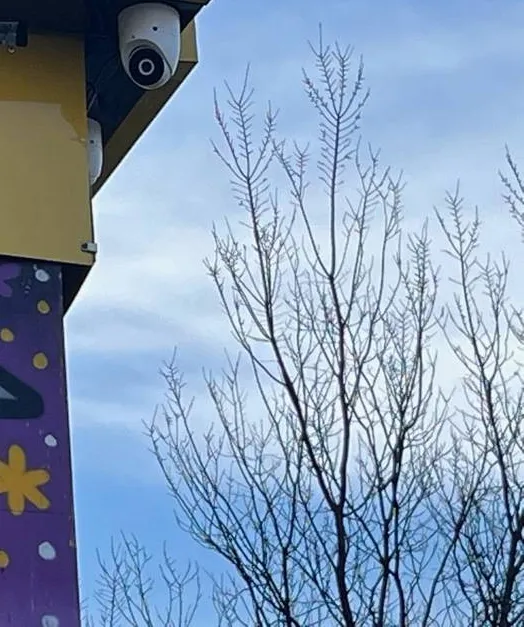
From an AESS storefront job, cropped and shown only as an example: a dome tucked under the corner of a building edge, looking out past bare branches. On a Long Island school the same corner position watches a walkway and the door below.
Pricing
School Security Camera Installation Cost on Long Island
How the numbers are built: our school price lines start from the Brooklyn figures used across this service, and the published area multipliers turn them into Island prices — 1.15 for Nassau and 1.20 for Suffolk. These are the prices a private, parish, charter or independent school pays. A public district contract is public work, so its installation labour is built from the prevailing wage schedule in force when the work happens, and its figure is quoted from the walk-through rather than read off this table.
Line
Nassau (×1.15)
Suffolk (×1.20)
Commercial IP camera, installed (camera, mount, its own cable run, termination, aiming, setup)
$518 – $1,093 each
$540 – $1,140 each
Recorder and storage (sized to camera count and retention)
$863 – $6,900+
$900 – $7,200+
Preschool or daycare, 6–12 cameras
$5,175 – $9,200
$5,400 – $9,600
Single-building school, 16–32 cameras
$13,800 – $34,500
$14,400 – $36,000
Multi-wing school, 32–64 cameras
$28,750 – $55,200
$30,000 – $57,600
Multi-building campus, 64–128 cameras
$46,000 – $109,250+
$48,000 – $114,000+
College or institutional campus
Per phase; full campus from $230,000
Per phase; full campus from $240,000
Coming back after the installation for a change or a fault is a separate service call, charged at $195/hr, 3-hr minimum ($585), in either county.
What moves a Long Island school camera price
Who is paying. A public district’s installation follows the District 4 prevailing wage schedule; a private school’s follows the table above.
Distance to the cameras. Cameras within copper distance of an existing closet are standard; fields, far lots and outbuildings add fibre, enclosures and power, quoted per location.
Ceilings and walls. Lay-in ceilings are fast; plaster, exposed deck, gym trusses and fire-rated walls add time and sometimes a lift.
Working hours. Work in an occupied school is often scheduled for evenings, weekends and breaks; the scope states which.
Existing equipment. Reusable conduit, closets and a modern video management system lower the price; replacing a DVR-based system end to end raises it.
Retention policy. Every extra week of footage is more drive capacity on the recorder or server; the district’s policy sets the number, and the storage line follows it.
Want the price of particular camera models installed? Our Long Island camera pricing page lists models individually; if its figure and this table differ for a school, the school lines above are the ones your quote follows.
Manufacturer catalogue image of a Ubiquiti UniFi turret camera, not an installed unit. Turrets like this are a common choice for Long Island school soffits and building corners over doors and walkways.
Shop Our Systems
School Security Camera Packages & Pricing for Long Island
Three starting points for private, parish, charter and independent schools, each shown at the Nassau and Suffolk figures. Public districts get the same scope structure, priced from the wage schedule.
Preschool and daycare
$5,175 – $9,200 Nassau · $5,400 – $9,600 Suffolk. Six to twelve cameras covering the entrance, the drop-off point, classrooms’ corridor doors and the play yard, one recorder in a locked closet, and remote viewing for the director.
Single-building school
$13,800 – $34,500 Nassau · $14,400 – $36,000 Suffolk. Sixteen to thirty-two cameras: the outer door and vestibule, every exterior door seen from inside, main corridors and stairs, cafeteria and gym, and the parking face of the building.
Multi-wing school
$28,750 – $55,200 Nassau · $30,000 – $57,600 Suffolk. Thirty-two to sixty-four cameras across an original building and its additions, with closet-by-closet switching, a recorder sized for growth, and the drop-off line and lots outside.
Bought the equipment through a cooperative contract? Labour-only pricing
Some Long Island districts and many private schools buy cameras themselves — through a BOCES cooperative award, a state contract or a grant vendor — and need only the installation. In that case the bill is our labour, cable and mounting materials, and nothing for the cameras. We quote it per camera after the walk-through, at the private-school factor for nonpublic schools and on the prevailing wage schedule for public districts, and we check the delivered equipment against the drawing before the first ladder goes up, so a missing licence or wrong lens is found in the closet, not on the ceiling.
Fibre to outbuildings, field enclosures, poles, trenching and new electrical circuits are priced after the walk-through and listed line by line in the written quote, with any electrician’s or architect’s share shown as an allowance.
Nassau or Suffolk — Get Your Scope in One Call
Ten minutes on the phone about your buildings, your funding route and your deadline usually settles which package fits, which approvals apply and what the figure looks like on your side of the county line.
Video entry stations at the outer door of a school vestibule.
Field Notes
Field Notes: Start With the Calendar, Then the Closets
On a Long Island school job the first thing I ask for is not a floor plan; it is the date. When is the budget vote, the bond referendum, the bid opening or the Smart Schools hearing? Everything else is scheduled backwards from that day, and a scope delivered a week late can push a project into the next fiscal year.
The second thing is the closet list. These schools spread out, so before counting cameras I walk every wing to find where the network switches live and measure how far each corridor runs from them. A wing that turns out to be beyond copper distance changes the design more than any camera choice.
Only then do I go outside and stand at each door, each lot entrance and the bus loop, at the height a camera would hang, and look at what a face or a plate would look like from there in the late afternoon. Before handover every camera is checked again after dark, and the drawing that goes to the building-level team shows exactly what we installed. — Anwar Timothy, NYS low-voltage license #12000287431
From an AESS office job in Nassau County, cropped and shown only as an example: a turret camera fixed high in a corner with a motion sensor beneath it. In a Long Island school main office the same corner gives a view of the counter and the door.
FAQ
Long Island School Security Camera Installation FAQ
Can we see a camera-by-camera drawing before the board votes on the project?
+
Yes, and we recommend it. After the walk-through we produce a drawing for each building showing every proposed camera, its field of view and its cable route, plus a schedule listing model, lens and mounting height. Boards and building-level safety teams can review it before anything is approved. Because the drawing reveals coverage and blind spots, we mark it for the building-level team and suggest it be kept with the confidential emergency response plan rather than posted with public meeting materials; a summary version without locations can go into the public packet.
Will the new cameras work with the video management software our district already runs?
+
Usually. Many Long Island districts already run a video management platform, and Islip's 2026 plan, for example, adds an archiver to its existing Genetec system. We choose cameras the platform supports and check licence counts before quoting, because each new camera normally needs a licence on the server as well as a switch port. Where a district runs an older recorder that cannot take new cameras, we say so in the scope and price the migration as its own line rather than hiding it in camera prices.
Can a district standardise on one camera brand across all its buildings?
+
It can, and many do, but the State Education Department's design guide suggests choosing components by use rather than by manufacturer alone, and stresses that every camera must integrate with the others and with the monitoring system. In practice that means standardising on the video management platform and on a short list of camera models that suit corridors, exteriors, plates and fields, rather than forcing one model everywhere. A standard list also simplifies spare parts and makes later bids easier to write, provided the specification names approved equals where purchasing rules require competition.
Who should manage the camera switches, district IT or the camera contractor?
+
District IT, in almost every case we see on Long Island. The switches that power and connect cameras sit inside the district network, and the technology department is responsible for that network's security, addressing and firmware. We design the camera VLAN, the port assignments and the power budget, install and label everything, and hand the switch configuration to IT, who keep the administrator credentials. Where a district wants us to manage camera switches on its behalf, that is written into a maintenance agreement with defined access, not left informal.
Does a voter-approved camera project count against the district's property tax cap?
+
Usually not, if it is a capital project. Education Law 2023-a lets school districts levy above the tax cap for capital local expenditures, which state rules define to include financing, construction, furnishing and equipping of capital facilities and capital equipment, including debt service, where voters have approved it as required. The expenditure must be for something with a period of probable usefulness under the Local Finance Law, and maintenance and operating costs are excluded. So cameras bought in a voter-approved bond generally fall outside the cap, while annual service, cloud subscriptions and drive replacements come out of the capped operating budget.
Can the camera names match the door numbers in our emergency plans?
+
Yes, and we recommend it. Before programming the recorder we ask for the door and room numbering the district already uses in its building-level emergency response plan and with local police, and we name every camera after the door or space it covers in that same scheme. When an alert comes in, or an officer asks which camera sees the gym's east doors, nobody has to translate between two numbering systems. The same names go on the as-built drawing and on the label at each camera's switch port.
Can a district lease a camera system instead of buying it?
+
Sometimes. New York's competitive bidding law treats true leases differently from purchases, leaving them to the district's own procurement policy, so a leased system may follow a different buying route. But a lease does not change the installation: labour under a district contract is still public work at prevailing wage. Leases and subscriptions also become a recurring operating cost that must survive every future budget vote, and if the vendor stores footage, the Education Law 2-d data agreement applies. District counsel and the business official should review any lease before the board acts.
What should a district put in its video surveillance and use policy before cameras go live?
+
The State Education Department's design guide recommends that districts adopt a video surveillance and use policy. At a minimum it should say where cameras may and may not be placed, how long footage is kept, who may view live and recorded video and for what reasons, how requests for footage are handled, how exports are logged, and that facial recognition is not used. The board adopts the policy; we configure the system to match it, including retention periods and user permissions, and we can provide the technical details the policy needs.
What do you need from the district's IT department before installation day?
+
Four things: the IP address range or VLAN for the cameras, confirmation of which switch ports and how much PoE power are available in each closet, the firewall rules for any remote viewing, and the policy for administrator accounts and passwords. We send a short checklist with the scope so IT can prepare these in advance. When those details are ready, installation days are spent mounting and aiming cameras rather than waiting on network changes.
All Areas Served
School Security Cameras Across Long Island, New York City and the Hudson Valley
You are reading the Island-wide page. For districts, towns and buildings in one county, go to Nassau or Suffolk below; schools in the city and north of it will find their own pages here too.
Where the Long Island School Camera Facts Come From
Every fact above about laws, approvals, wages, districts and grants traces to one of these pages. The prices are the exception: they are ours, worked out from the Brooklyn school price lines times 1.15 or 1.20, with the hourly rate for later visits.
Recorder Silent Since the Last Break? Call Before Classes Resume
A school recorder that stopped over the summer or a holiday week is usually found the morning someone needs a clip. Ring (800) 486-0943 and we will come out to restore it, or to check a system before students return. Most Long Island school systems we visit are recording again within an hour or two of arrival.
Long Island School Camera Systems From a Licensed, Insured Crew
Call (800) 486-0943 from any district between Elmont and Montauk. Send floor plans, a bid notice or a photo of your recorder’s label by WhatsApp. Abstract Enterprises Security Systems, 1282 Troy Ave, Brooklyn, NY 11203
Google reviewers give us 4.7★ over 201 reviews. Every Long Island crew is insured, the low-voltage work is done under NYS license #12000287431, and a written scope reaches you on the day you ask for it.
Paperwork: cameras, recorders and software we supply also carry their manufacturers’ own warranties, and any circuit added by a licensed electrician is covered by that electrician’s terms and inspection. Full terms — including 50% deposit, one-year parts-only warranty on AESS-supplied products, and the late-fee schedule — are set out in the service agreement. Public districts receive the contract form their purchasing rules require; see our warranty page for how claims are handled.
Page reviewed and updated October 18, 2026. Changelog: Long Island school camera hub rebuilt from new research on district procurement (General Municipal Law §103, BOCES cooperative bidding), Smart Schools Investment Plan steps, State Education Department facilities review, the 2026 District 4 prevailing wage schedule, Education Law 2801-a and 2-d, recent Long Island bond votes and Smart Schools plans, and nonpublic school grants; prices now follow the published Nassau and Suffolk multipliers on the Brooklyn school price lines.