
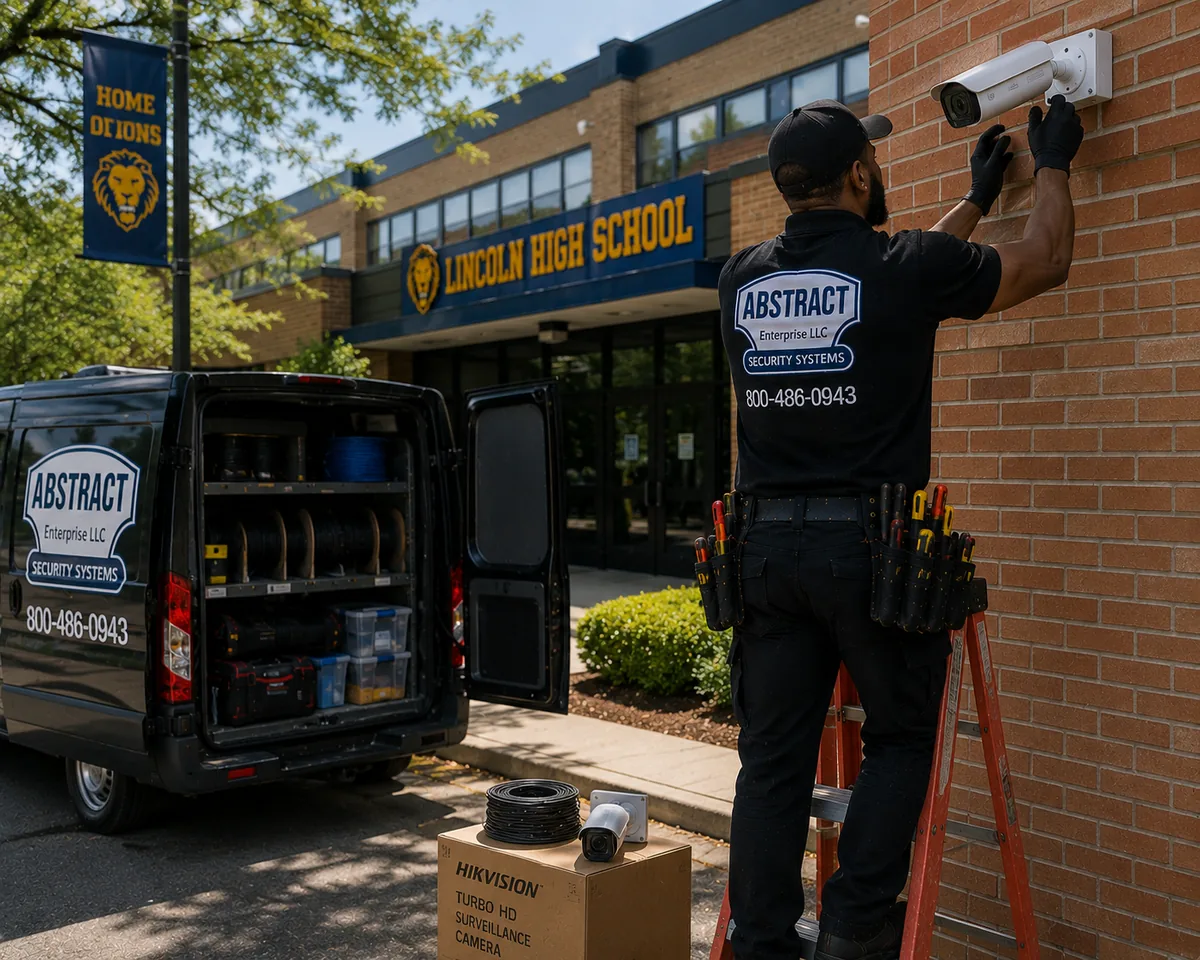
Few counties in America carry a private-education roster like this one. The Diocese of Rockville Centre — Nassau and Suffolk’s own diocese, separate from the city entirely — fields Chaminade in Mineola and Kellenberg in Uniondale, two of the most sought-after Catholic schools in the region, alongside Sacred Heart Academy, St. Mary’s in Manhasset, Holy Trinity in Hicksville, St. Dominic in Oyster Bay, and Our Lady of Mercy in Syosset, all sitting atop a parish-school network that still fills classrooms. The Gold Coast keeps its own tradition: Friends Academy teaching in Locust Valley since 1876, Portledge, Green Vale, Buckley Country Day — independent schools on estate grounds with gates, allées, and acreage that most colleges would envy. Long Island Lutheran holds Brookville. The Five Towns and Great Neck anchor one of the densest Jewish day-school communities in the country — HAFTR, HALB, Rambam, HANC’s campuses, North Shore Hebrew Academy — institutions that have invested in serious entrance security for years and accelerated after October 7th. The Henry Viscardi School in Albertson and Mill Neck Manor’s deaf-education campus do nationally known special-education work. Hofstra, Adelphi, Molloy, LIU Post and NYIT on their converted estates, Nassau Community College, the federal Merchant Marine Academy at Kings Point, tiny Webb Institute on the water in Glen Cove — the higher-ed tier alone would make most counties jealous. Under all of it: hundreds of daycares in converted houses and turnpike storefronts. The public districts buy security through their bonds and BOCES channels. Everyone else on this list hires a contractor directly — and in a county where parents comparison-shop schools like colleges, the front entrance is part of the tour.
Abstract Enterprises Security Systems is a NYS-licensed low-voltage contractor (Lic #12000287431) installing and repairing school camera systems across every corner of Nassau — Great Neck to Massapequa, Long Beach to Locust Valley. We build to the county’s actual conditions: estate campuses that need their long gated approaches read before the building ever comes into view, South Shore and barrier-island properties where bay salt and 2012 flood lines dictate hardware and recorder placement, postwar single-story school buildings whose fifteen exterior doors are the real design problem, and athletic fields where Canada geese will fire a thousand false alerts a season unless detection is tuned to ignore them. Grant-funded work ships on federally compliant hardware. Nothing we configure crosses New York’s statewide school facial-recognition prohibition. Quotes are fixed and written, scheduling takes half down, AESS-supplied products carry three years of warranty coverage, and recurring fees simply don’t exist here.
- NYS Lic #12000287431, insured — Nassau school work scheduled within one business day
- Installations phased around the school calendar and enrollment-season optics
- Owned systems only — your equipment, your footage, no platform rent
Why Camera Systems Are Table Stakes for Nassau Schools Now
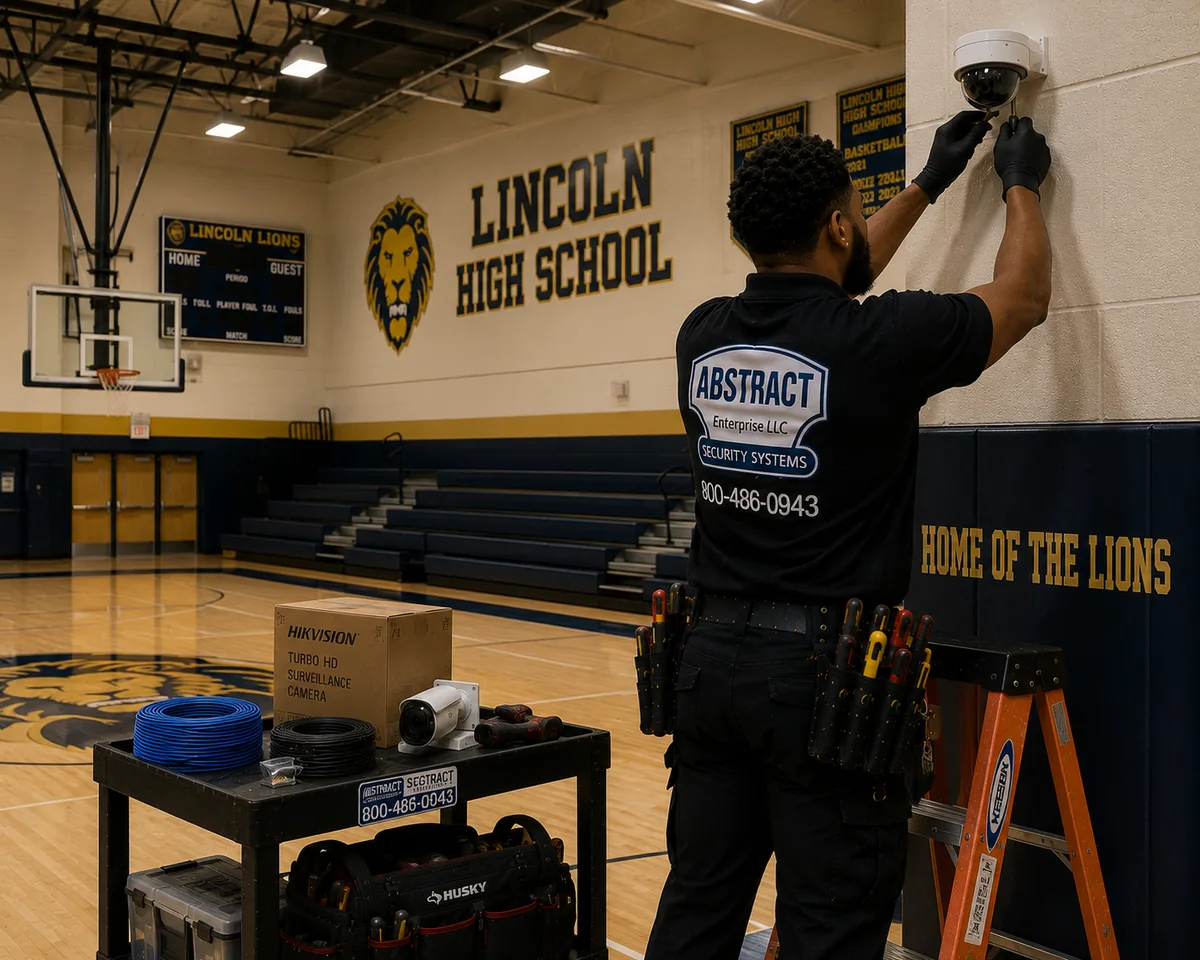
Start with the audience. Nassau parents tour schools the way other people tour houses — and the public districts they’re comparing against have spent bond money visibly: vestibules, buzzers, cameras at every entrance, sometimes armed guards. A Catholic academy or independent school competing for those same families cannot present a propped-open side door and a 2011 DVR as an answer to “how do you keep them safe?” The Jewish day schools crossed this bridge years ago; their hardened entrances, built with NPSE reimbursements and communal security funding, quietly reset the county’s baseline for everyone. In Nassau, security has become part of the enrollment pitch whether a school wants it there or not.
Then there’s the architecture. Half this county’s school stock went up in the postwar boom — single-story buildings that sprawl instead of stack, with wings, courtyards, and exterior doors everywhere. A Levittown-era parish school can have fifteen or twenty doors touching the outside where a Brooklyn school has four. Every one is an entry point, an egress question, and a camera decision. Layer on the properties themselves — athletic fields, real parking lots, field houses, playgrounds visible from the street — and the coverage problem is suburban in scale even when the enrollment is modest. Gold Coast campuses push it further: gated drives a quarter-mile long, tree cover, stone outbuildings, and arrivals that should be identified at the gate, not the lobby.
And the county’s incident ledger writes the rest. Weekend field vandalism and turf damage that costs five figures to repair. Catalytic converters cut from bus and van fleets parked behind buildings. Break-ins timed to empty August hallways and full Chromebook carts. Custody disputes at dismissal in a county where dismissal is a parking lot, not a sidewalk. A slip claim on a winter walkway. Each one ends with the same request — from the insurance adjuster, the diocesan attorney, or a Nassau County Police detective: let’s see the footage. We build systems so the office answers that request in two minutes, with video that holds up.
Nassau School Camera System Down Right Now?
Recorder dead, channels black, a drive failing, footage owed to an adjuster or an NCPD detective — call and a truck rolls today. Most Nassau school repair visits are diagnosed and closed the same trip.
Call the Repair Line: (516) 346-5778The Camera Systems We Install Across Nassau
Commercial IP / PoE Backbones
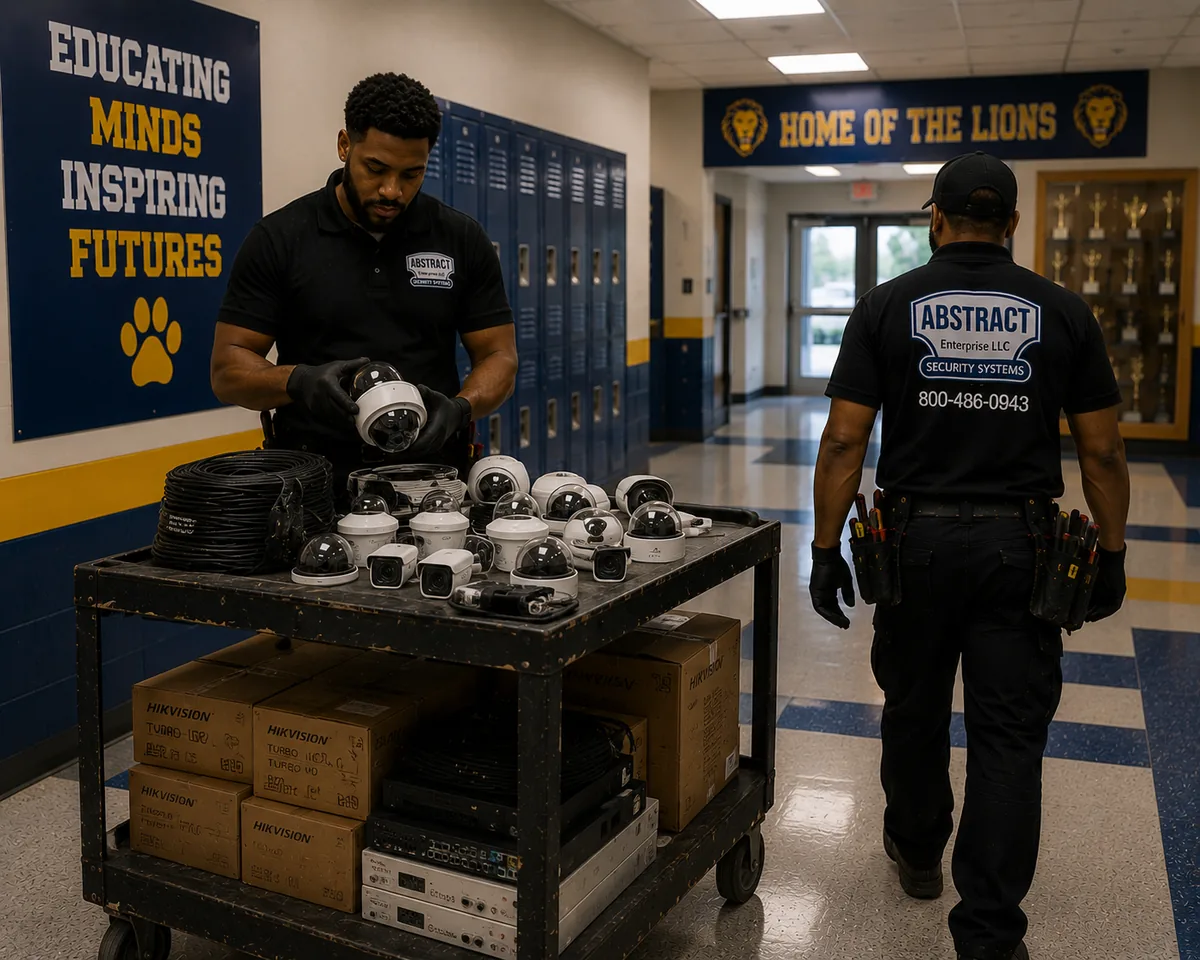
4K and 4MP heads on dedicated Cat6 home runs to a locked recorder space. Postwar single-story buildings make for long horizontal pulls through wings and courtyard crossings — we plan the pathways wing by wing before pricing a single camera.
Multi-Door Egress Coverage
The Levittown-era signature: fifteen-plus exterior doors on one school. We map every door, camera the ones that matter, alarm-pair the secondary exits, and give the office a single screen that answers “which door just opened?” instantly.
Estate & Gate Approach Systems
Gold Coast campuses get read at the property line: plate capture at the gate, long-lens coverage up the drive, outbuildings and field houses tied to the same recorder as the main hall. The building is the last thing an arriving car should reach unidentified.
Analog Retirement & Coax Reuse
Parish and academy closets across Nassau still run DVRs on borrowed time. Coax that meters clean carries modern video over converters; the rest retires without ceremony. Full decision tree on our Nassau DVR upgrade and NVR installation pages.
Verified-Entry Vestibules
Locked outer door, face-height lens, live video at the front office, release on recognition — the standard the districts set with bond money and the day schools perfected with security grants, sized here for your building.
South Shore Salt & Flood Builds
Barrier-island, canal-front, and bayside schools get corrosion-resistant exteriors and recorders mounted well above the 2012 water line. On the South Shore we design for the storm that already happened.
Reading the Proposal: Camera Vocabulary for Nassau Decision-Makers
NVR / DVR
The two recorder generations: NVRs take digital IP streams over network cable; DVRs digitize legacy analog coax. Which one hums in your closet determines whether you’re buying a swap, a hybrid, or a fresh start.
PoE
Power over Ethernet — one Cat6 run delivers both electricity and video, which is how a camera reaches a field-house eave or a gate pier without trenching for an electrician.
WDR
Wide dynamic range: the processing that keeps a face readable in a doorway backlit by an open parking lot — the default lighting condition at every Nassau school entrance facing south.
Person / Vehicle Analytics
Classification before notification. It’s what separates an alert about an actual intruder from three hundred alerts about the geese grazing your ballfields — and on Nassau fields, untuned motion detection surrenders to the geese within a month.
Retention
Days of recorded history before the loop overwrites. Our Nassau builds open at a thirty-day floor and extend to sixty or ninety as the drive budget allows.
NDAA §889
The federal rule excluding certain manufacturers from grant-funded purchases. NPSE, SSBA, or federal safety money on the invoice means the hardware list clears this first — ours does by default.
EoC
Ethernet-over-coax converters: modern IP video traveling the cable a 2008 installer left in your walls. Clean copper means closed ceilings and a smaller invoice.
IK10 / IP66
Impact and ingress ratings. Gyms and reachable mounts take the first; anything facing bay air from Long Beach to Massapequa takes the second with stainless hardware.
LPR
License-plate recognition at gates, lot entrances, and the curb where the vans sleep — every arrival becomes a searchable, time-stamped record before anyone steps out of a car.
Camera Brands We Specify in Nassau — and How Funding Picks Between Them
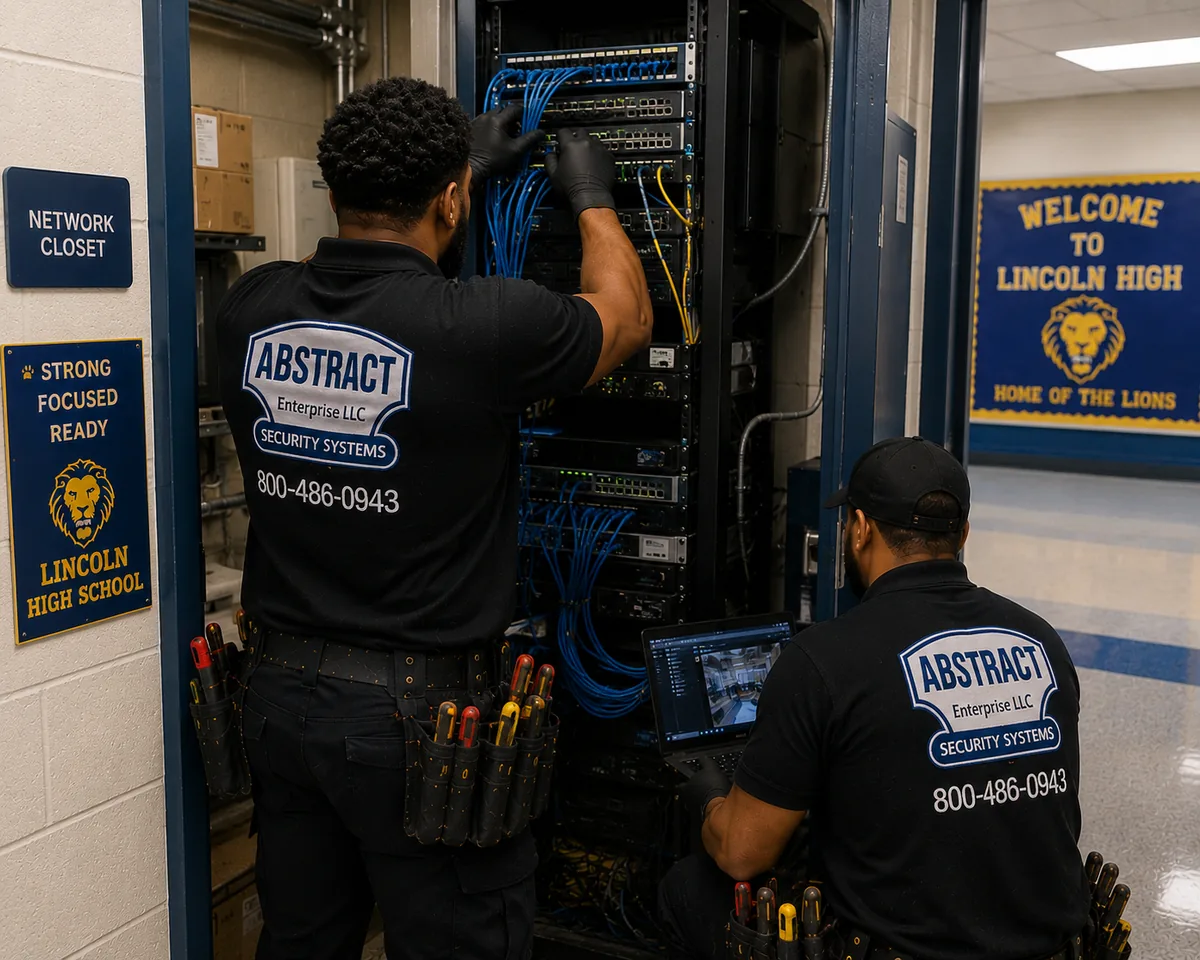
Hanwha Vision
Our specification when grant auditors or diocesan reviewers will read the file — federally clean supply chain, excellent dusk-lot performance, vandal-line domes for gyms and stair towers.
Axis
What security consultants write into Gold Coast assessments before we’re ever hired: premium at purchase, silent for a decade, exterior housings that ignore weather.
Uniview
The value tier most parish and academy budgets actually approve — compliant sourcing, strong imaging, and per-head pricing a finance committee reads without flinching.
Lorex
Correctly matched to a converted-house daycare or a small program needing eight dependable cameras and zero enterprise licensing. When it fits, we say so — details on Lorex Nassau.
Hikvision & Dahua
Strong optics carrying the §889 exclusion: barred wherever federal funds touch the purchase. Schools funded purely by tuition can operate them legally, and our techs work on both brands every week — see Dahua Nassau. The caveat prints on every quote.
Cloud-Licensed Platforms
Per-camera monthly dashboards built for national fleets. For one academy in Garden City, the five-year total nearly always loses to ownership — and we put that comparison on paper before anyone signs.
One Entrance, Four Systems: How Cameras, Buzzer, Fobs, and Alarm Interlock
The Verified Front Door
Locked exterior door, entrance lens at eye level, live picture in the office, buzz on recognition — Nassau’s de facto standard from district buildings to day schools. Existing stations get repaired before anyone quotes replacement: Nassau intercom repair.
Fobs Where Keys Multiply
Gym lobby, kitchen, field house, maintenance wing — the doors staff actually use. Lost credentials cancel from a keyboard, and every tap timestamps against the adjacent video.
Watched Secondary Exits
New York’s school exit-alarm focus traces to the Avonte Oquendo case, and on fifteen-door postwar buildings the lesson compounds: alarm the secondary doors and pair each with a lens, so every opening reaches the office as one event with a face in it.
Alarm-Panel Bookmarking
A Saturday zone trip at an empty Merrick building should land on the recorder pre-marked. We wire the handshake so a panel number becomes a minute of watchable video, not a mystery.
What Ships With Every Nassau School System
Pixels Where Distance Lives
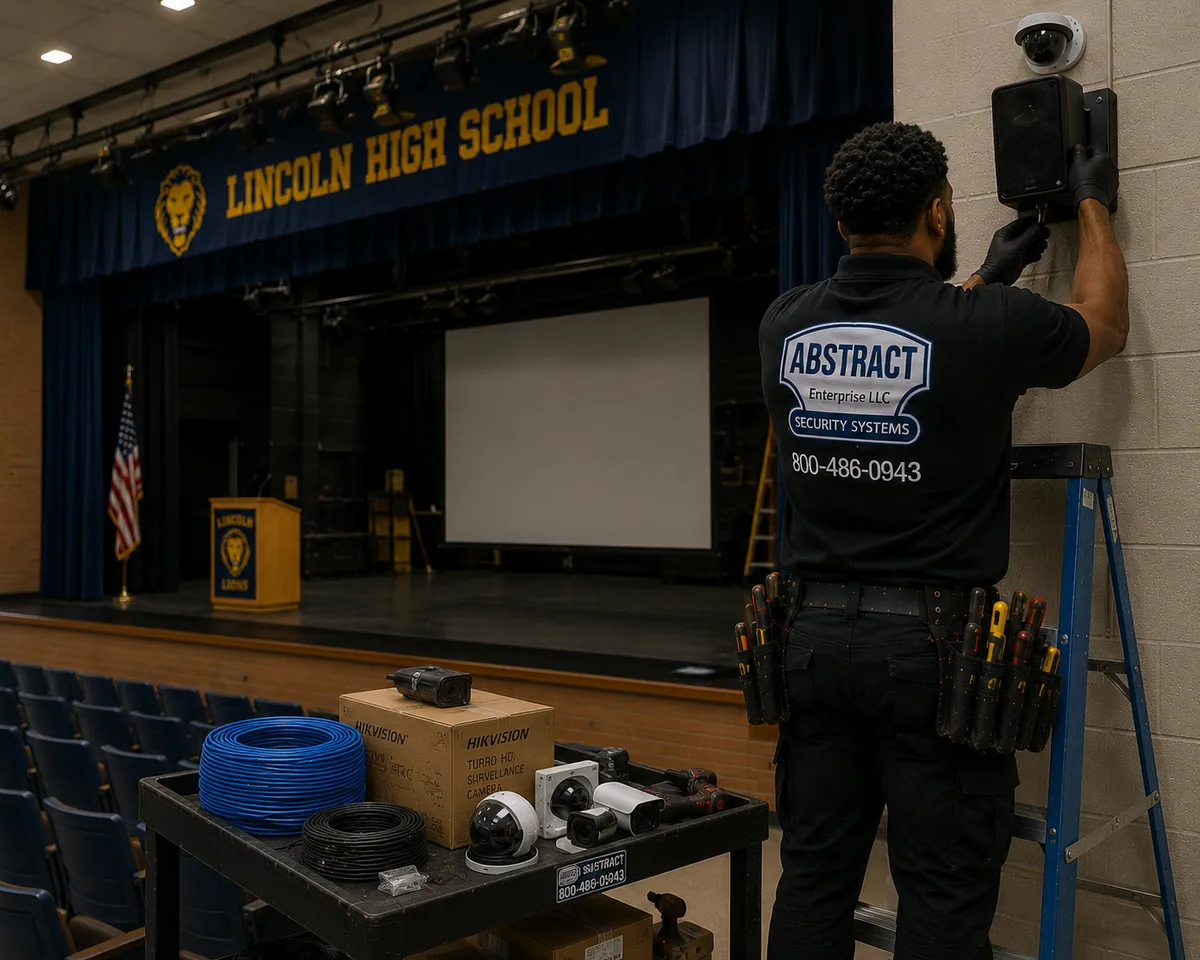
4K at gate approaches, lot entrances, and across fields where a usable face or plate sits far from glass; 4MP through corridors where subjects pass close. Resolution follows geometry, not the brochure.
Goose-Proof, Deer-Proof Alerts
Person and vehicle classification tuned against your actual fields and tree lines at commissioning — wildlife and wind-blown play equipment go silent while a human at the fence after hours rings a phone people still trust.
Accounts by Responsibility
Head of school sees all; the front office sees the entrance stack; buildings-and-grounds sees lots, fields, and mechanical spaces. Separate credentials each, proven working over cellular before handoff ends.
Retention You Chose on Purpose
The board sets 30, 60, or 90 days; the drive array gets built to deliver it, with failure alerts emailing an adult the week a disk weakens instead of the month an incident needs it.
The Two-Minute Export
Clip, save off-recorder, log who and when — rehearsed with your office staff until it’s muscle memory. Adjusters and detectives don’t wait for a technician’s calendar.
Power Through the Flicker
Battery on recorder and switch rides out the momentary drops Nassau feeders deliver in summer storms, keeping the timeline free of reboot gaps.
A System That Tattles on Itself
Dark channel, obstructed lens, degrading drive — each condition emails the administrator same-day. The failure you learn about during an investigation is the one we engineer out.
Exterior Spec by Exposure
Bay-facing and barrier-island mounts get sealed marine-grade treatment; inland mounts get corrosion-resistant hardware anyway. The county sits between two salt bodies — we build like it.
A Binder That Survives Turnover
Channel map, labeled runs, credential sheet, laminated quick-start in the office drawer. Heads of school move on; the documentation stays and explains itself to the next one.
New York School Camera Law, Translated for Nassau
Facial Recognition: Closed Statewide
The State Education Department’s September 2023 determination settled it for every school in New York — public, charter, Catholic, yeshiva, and independent alike: purchasing or operating facial recognition is prohibited. A Manhasset academy sits under the same order as the district building a mile away. Conventional cameras, recording, and motion analytics were never restricted and remain entirely lawful. On our installs, any face-matching capability ships disabled at the firmware level, with the setting logged in your commissioning file — the page that ends the conversation if a vendor or reviewer ever raises it.
Where Lenses May and May Not Point
Penal Law 250.45 makes recording in bathrooms, locker rooms, changing areas, or any space with a reasonable expectation of privacy a felony, with no school exception. The rest of the property is lawful ground — entrances, corridors, stairs, cafeteria, gym, lots, fields, gates, drives, mechanical rooms, perimeter. Classrooms go to your board and counsel rather than into a default; our standing Nassau design covers each classroom doorway from the corridor, logging entries and exits with no lens inside the teaching space, and any deliberate exception is initialed on the drawing. Heads facing a residential street or a neighboring yard get framed to school property, with the framing documented at survey.
Footage as an Education Record
Under federal FERPA rules, identifiable video used in a disciplinary decision can become part of that student’s education record, carrying parental viewing rights and disclosure limits — and New York’s Ed Law 2-d attaches binding contract terms to any cloud vendor holding student-identifiable data. The clean architecture is the one we default to: the recorder stays in your building, the drives belong to you, a review-and-release procedure is written before we leave, and any off-site copy runs strictly under a 2-d-compliant contract. When an upset parent calls, the office opens a policy instead of improvising one.
Who Pays, and What That Choice Requires
District buildings draw on the state’s $2 billion Smart Schools bond, which funds camera projects so long as facial recognition never enters the scope. Nassau’s tuition schools file NPSE reimbursement — the diocesan network and the Jewish day schools both use it heavily — and federal school-safety grants can stack above, importing the §889 hardware exclusions when they do. Communal security funding has added a further layer at Jewish institutions in recent years. Whichever program pays, our deliverable is the same: an itemized proposal formatted to that reviewer’s checklist, ready to forward untouched.
The County We Cover, Corner to Corner
The Gold Coast
Locust Valley, Old Brookville, Old Westbury, Mill Neck, Oyster Bay — Friends Academy, Portledge, Green Vale, LIU Post and NYIT on their estates, Mill Neck Manor. Gated drives, stone outbuildings, and designs that begin at the property line.
Great Neck & Manhasset
North Shore Hebrew Academy, St. Mary’s, Buckley, and daycare density along Northern Boulevard — peninsula properties, competitive enrollment, and entrances built to be toured.
The Central Corridor
Chaminade in Mineola, Kellenberg in Uniondale, Sacred Heart in Hempstead, Hofstra, Adelphi, NCC, Holy Trinity in Hicksville — the county’s institutional spine along the parkway grid.
The Five Towns & Long Beach
HAFTR, HALB, Rambam, Yeshiva of South Shore, the barrier island’s schools — hardened entrances, NPSE paperwork, bay salt on every exterior spec, and 2012 flood memory in every recorder placement.
The South Shore Line
Rockville Centre — the diocese’s seat and Molloy’s campus — through Oceanside, Freeport, Merrick, Bellmore, Wantagh, Seaford, Massapequa: parish schools, canal-front properties, and postwar buildings with doors to count.
The Levitt Belt & East
Levittown, Hicksville, Bethpage, Plainview, Syosset — HANC Plainview, Our Lady of Mercy, ACDS, Variety — single-story sprawl, field complexes, and the multi-door problem we’ve made a specialty.
Every Kind of School Nassau Runs, Secured
Catholic High Schools & Academies
Diocese of Rockville Centre institutions — Chaminade, Kellenberg, Sacred Heart, St. Mary’s, Holy Trinity, St. Dominic, Mercy — where enrollment is competitive and the entrance is part of the pitch. Proposals formatted for finance committees.
Parish Elementary Schools
The diocesan network from Great Neck to Massapequa — postwar buildings, honest budgets, and door counts that reward a contractor who itemizes everything.
Independent & Prep Schools
Friends Academy’s 1876 tradition, Portledge, Green Vale, Buckley, Waldorf Garden City — estate campuses where the security consultant’s report precedes the contractor, and the documentation must survive an audit.
Yeshivas & Jewish Day Schools
The Five Towns, West Hempstead, Plainview, and Great Neck communities — HAFTR, HALB, Rambam, HANC, North Shore Hebrew Academy — hardened entrances, luach-aware scheduling, NPSE and communal-grant paperwork ready to file.
Lutheran & Christian Schools
Long Island Lutheran and the county’s church academies — campus properties, athletics, and governance boards that appreciate a fixed written number.
Daycares & Preschools
Converted houses, turnpike storefronts, synagogue and church wings — six-to-twelve camera packages with privacy zones documented for licensing, and residential electrical handled correctly.
Special-Education Schools
Henry Viscardi, Mill Neck Manor, ACDS, Variety, and the county’s 853/4410 programs — where elopement risk drives the drawing: every exit covered, corridors unbroken, retention sized for genuine review cycles.
Colleges & Campuses
Hofstra to Webb, Adelphi to Kings Point — phased building rollouts, segmented networks, and coordination with public-safety departments that predate us.
Camps & Youth Programs
Summer camps on school grounds, sports academies, after-school programs — seasonal occupancy, field coverage, and liability that runs year-round even when the building doesn’t.
The Questions Nassau Actually Posts About School Cameras
Drawn from r/longisland, town and village parent groups, PTA boards, and day-school WhatsApp threads — asked as typed, answered by a licensed contractor who works these campuses weekly.
“Our parish school got a $58K quote for 32 cameras. Reasonable for Nassau?”
That’s roughly $1,810 per position against a county commercial lane of $540–$1,140 installed. Suburban properties add legitimate line items — long exterior runs, lot poles, maybe trenching to a field house — but legitimate items appear as lines. Request the version with 32 numbered positions and see which lines go quiet.
“Geese have completely ruined our field cameras’ motion alerts. Anyone solved this?”
Solved weekly. Naive motion detection reads a grazing flock as three hundred events a day, and within a month your staff ignores everything — including the real event. Person and vehicle classification, tuned on-site against your actual field lines, drops the geese to zero while a human crossing the fence at 11 p.m. still rings through. If a bidder can’t explain their wildlife-filtering approach, they haven’t worked Nassau fields.
“Our building has 17 exterior doors. Do we really camera all of them?”
You cover all of them intelligently, which isn’t the same as seventeen identical cameras. Main entrances get verified-entry treatment; high-traffic secondary doors get dedicated heads; low-use doors get alarm contacts paired with a corridor or exterior lens that already sees them. The design goal is one office screen that answers “which door, who, when” — and a postwar Nassau building is exactly where that engineering pays for itself.
“Cloud vendor pitched our academy $13/camera/month for 26 cameras. Worth it?”
$4,056 a year, forever, layered on hardware you already bought. An owned recorder crosses breakeven inside two school years, and encrypted off-site duplication of the entrance channel alone answers the redundancy argument for a fraction. Ask for both five-year totals on one page — ours arrive that way.
“A vendor demoed facial-recognition dismissal screening at a conference. Can we buy it?”
No New York school can — the state closed that door for every school, tuition-funded included, in 2023. The lawful version of the same promise is a camera-verified vestibule plus a signed pickup-authorization list checked by a human. It works, and it keeps prohibited firmware off your purchase orders.
“Long Beach school here — exterior cameras corrode out every two or three years. Normal?”
Normal for inland-spec hardware doing barrier-island duty, and completely avoidable. Bay and ocean air eat standard housings and fasteners on a schedule. Marine-rated bodies, stainless mounts, and sealed greased terminations reset those positions to a decade. On the South Shore, coastal spec is a line item that pays for itself twice over.
“Can our custodian install big-box cameras over winter break instead?”
He can install them. The question is what they prove in March. Consumer Wi-Fi kits with clip storage and no documentation get discounted by the three audiences that matter — insurers, licensors, courts. Equipment shed? Go ahead. Children and liability in frame? That’s licensed work, discovered as such on exactly the day it matters.
“Our DVR’s been flashing a drive error since September. What have we lost?”
Potentially everything since September — live view keeps performing long after recording quietly stops, which is how these errors survive semesters. We swap in a surveillance-rated drive same-day, prove record-and-playback channel by channel, and set alerts so the next failure emails a person instead of blinking at an empty office.
“What’s an honest storage budget for 28 cameras?”
Figure 28–38TB of purpose-built surveillance drives for a month of 4MP history — roughly $800–$1,200 in disks living inside your own recorder, bought once. Sixty days? Double the drives, still no monthly. A vendor charging rent on that arithmetic has converted your storage into their revenue line.
“A parent is demanding hallway footage of an incident involving their kid. Obligated?”
Possibly — FERPA can classify identifiable footage behind a disciplinary decision as part of that student’s education record, and the usual accommodation is a supervised viewing with other children masked or cropped. The schools that navigate this smoothly had a written viewing procedure ready in advance; every system we hand over includes one.
“Do cameras actually deter anything in the suburbs, or just document?”
Both, in honest ratio. Visible housings measurably thin the opportunistic layer — field vandalism, lot break-ins, door-testing, converter theft — and what remains gets resolved on evidence instead of recollection. Cameras finish what lighting and locks start; they replace neither.
“Installer folded during Covid, recorder password is a mystery. Start from scratch?”
No — adopt it. We inventory the hanging hardware, recover or factory-reset the credentials, verify every channel records and plays, hand your school its own password sheet, and carry the service from there, same-day when urgent. Working cameras stay up; only the abandonment gets replaced.
“Three quotes for one building: $14K, $31K, $56K. How is this the same job?”
It isn’t — it’s three different projects sharing a noun. The bottom number is usually consumer gear on Wi-Fi; the top might be full commercial scope with trenched field runs and gate work — or padding. The referee is a numbered site plan pricing every position, which our free survey produces and which we’ll gladly set beside anyone’s paperwork.
“School weekdays, religious services and Hebrew school on weekends. Whose cameras?”
Whoever the paper says — so write the paper now. One system, each operator gets accounts scoped to their role, the coverage plan spans all seven days, and a short footage-governance page gets signed while relations are warm. Half of Nassau’s programs share buildings this way — the arrangements that curdle are the ones nobody wrote down.
Typed Into Google, Answered for Nassau
school camera installation cost nassau county
$540–$1,140 per commercial head installed. Complete daycares run $5,400–$9,600; a 16–32 camera building lands $14,500–$36,000.
school security camera installers long island
Licensed NYS low-voltage contractor, Lic #12000287431, on Nassau campuses weekly from Great Neck to Massapequa — surveys within one business day.
catholic school security cameras nassau
Diocese of Rockville Centre territory covered daily — high schools to parish elementaries — with proposals formatted for pastors and finance committees.
are cameras legal in ny private schools
Yes in common areas, corridors, lots, and entries; never in privacy spaces; facial recognition banned statewide in every school since 2023.
yeshiva security grants long island
NPSE reimbursement plus federal safety grants and communal security funding — we draft proposals to each program’s checklist.
geese triggering security cameras
Person/vehicle classification tuned against your fields ends it — flocks go silent, humans at the fence still ring through.
school with many exterior doors security
Postwar Nassau specialty: verified main entrances, alarm-paired secondary doors, one office screen answering which door and who.
how long do schools keep camera footage
Thirty days minimum on our builds, stretching to sixty or ninety as drives allow; incident clips export immediately and permanently.
school camera repair nassau county
Same-day dispatch: dead recorders, dark channels, failed drives, urgent exports for adjusters or NCPD detectives.
gated school driveway camera
Plate capture at the gate plus long-lens coverage up the drive — the Gold Coast opener, priced from the walkthrough.
school van catalytic converter theft
Plate capture where the fleet parks, motion zones across the vehicles, overnight phone alerts — the fix that catches crews mid-cut.
diy school camera installation
Legal mostly; wise rarely. Placement statutes still bind, and self-installed footage wobbles precisely when scrutiny arrives.
People Also Ask: Nassau School Cameras
How many cameras does a Nassau school property need?
Working ranges across our county installs: converted-house and storefront daycares take 6–12, a standalone school building 16–32, 32–64 once fields, lots, or a fifteen-door postwar footprint enter the plan, and campus scale beyond that for estate schools and colleges. The free walkthrough converts the band into numbered positions on your site plan, each carrying its reason.
What makes postwar single-story schools harder to secure?
Door count and sprawl. A 1950s Nassau building spreads across wings and courtyards with fifteen or twenty exterior doors where an urban school has four, and every door is an entry, an egress question, and a coverage decision. The answer is tiered: verified-entry treatment at mains, dedicated heads at busy secondary doors, alarm contacts paired with existing sight lines at the rest — unified on one office screen.
Do Nassau schools really need wildlife-filtered detection?
Any school with fields does. Canada geese alone can fire hundreds of motion events a day in season, and deer work the North Shore tree lines nightly; a month of that trains staff to ignore every alert, including the real one. Person and vehicle classification tuned at commissioning against your actual property returns the notification stream to humans only.
What changes for schools near the water on the South Shore?
Two things: metallurgy and elevation. Bay and ocean air corrode standard exterior hardware on a two-to-three-year cycle, so those positions get marine-rated housings, stainless fasteners, and sealed terminations. And in mapped flood zones from Long Beach through the canal streets, recording equipment mounts well above the 2012 water line — flood discipline designed in, not retrofitted after.
Can gate cameras at an estate campus record the road beyond?
Incidentally and lawfully, yes — framing your own gate and approach captures the public edge past it. What never happens on our installs — and the drawing says so explicitly — is pointing a camera down the road for its own sake. Property-first framing keeps the file clean if a neighbor ever asks.
Who watches the building across ten weeks of summer?
The system does, if built for it: health emails on dead channels, battery through storm-season blinks, after-hours person alerts on doors, lots, and field entries reaching a phone. Summer is when Nassau schools lose Chromebook carts and copper — ten quiet weeks become ten reporting weeks.
Will new cameras work with our existing buzzer and alarm?
Almost always. Alarm zones bookmark the recorder, the buzzer release pairs with the entrance lens, and fob taps align by timestamp. One contractor wiring the whole stack keeps the parts in conversation — and keeps three vendors from pointing at each other later.
Is there dedicated security funding for Nassau’s religious schools?
Yes — the state’s NPSE program reimburses nonpublic schools including the diocesan network and Jewish day schools, with federal safety programs layering above and communal security dollars increasingly aimed at entrance projects. Name the funding source and the proposal comes shaped to its reviewer.
Who ends up owning the recordings?
With us, ownership is literal: the recorder sits in your closet, the drives were bought on your invoice, and the admin login lives in your binder. Subscription platforms reverse that arrangement in the fine print — so read the data-ownership clause ahead of the feature tour. Happy to walk a trustee through both documents.
People Also Search For
The AI Overview Reality Check: What the Answer Box Doesn’t Know About Nassau Schools
Google now opens school-camera searches with a machine-written paragraph stitched largely from Angi, HomeAdvisor, and Fixr — outlets that price four-camera houses in the national median. Good for vocabulary, hazardous for decisions. Seven Nassau corrections follow.
House Math Applied to Campuses
Aggregator averages describe residential work — a few cameras on siding, short drywall runs — which is why “typical installation” prints near $1,300–$2,000 for an entire home. No Nassau school property lives inside that figure.
A county school project means plenum-rated corridor cable, exterior runs crossing real acreage, gate and pole positions, sometimes trenching to a field house, and a recorder digesting a month of thirty channels without complaint.
The honest county number sits on a twenty-point labor band over our Brooklyn baseline: $540–$1,140 per head installed, itemized on the quote where no summary can round it.
One Number Can’t Hold a Property
Per-camera pricing pretends recorders, storage, switching, battery, and — decisively in Nassau — distance divide evenly across heads. They don’t. The run from a main building to a field house can outcost the camera it feeds.
Two honest bids for the same school split exactly at the property: one building offers short interior paths; the other offers a lot, a gate, three fields, and four hundred feet of weather.
Format is the remedy: a numbered site plan with a price on every position and every shared component. Next to a national one-liner, the document argues alone.
Statutes the Corpus Never Read
Machine summaries rarely surface that Albany banned school facial recognition statewide in 2023, that Penal Law 250.45 criminalizes privacy-space recording at the felony level, or that Ed Law 2-d binds cloud vendors the moment student video reaches them. Fed on sources that skip all three, the answer box recommends the unlawful option with confidence.
We meet the aftermath in real conference rooms — biometric screening decks forwarded by trustees, face-matching articles shared as inspiration. Correcting course at the design table is free; unwinding a signed purchase order is not.
Our commissioning file lists prohibited capabilities as disabled — one page, produced on request, question retired.
Square Footage Meets Seventeen Doors
Rules of thumb calibrated on two-story boxes collapse against Nassau’s postwar sprawl. The count starts at doors — and this county’s single-story schools have doors in the teens — then walks outward: lot entrances, field perimeters, gate approaches, the curb where the vans sleep.
Identical enrollments yield wildly different totals here: a 22-camera parish building and a 58-camera estate campus can teach the same number of children.
The free hour-long survey settles it: positions marked on your plan, each with a one-sentence justification a board member can push against.
The Subscription Tilt in the Sources
A large share of online camera writing comes from vendors who bill monthly, and the machine absorbs their worldview: anything modern must carry a subscription. Across a forty-site national fleet, arguable. For one Garden City academy licensing 26 heads, the five-year total loses to ownership before the third September.
The legal layer sharpens it: student-identifiable video on a vendor’s cloud drags Ed Law 2-d duties into your contract. Footage that never leaves your building never raises them.
We deploy cloud where it genuinely earns the line — entrance-channel duplicates, true multi-campus operators — and we present both architectures’ five-year totals on one sheet first.
What Geese, Gates, and Bay Air Do to “Simple”
DIY-flavored content assumes stud bays, four doors, and motion detection that only ever sees people. Nassau offers fields full of geese, gated quarter-mile approaches, barrier-island salt, flood-mapped basements, and buildings that sprawl instead of stack.
The craft answers are county answers: classification tuned until the flock goes silent, plate capture at the gate before the lobby, marine metallurgy by exposure, recorders above the 2012 line, egress mapped door by door.
None of that fits in a machine-averaged paragraph; every bit of it comes standard in our walkthrough, since on Nassau properties the site itself dictates half the engineering.
How to Use the Answer Box Without Being Used
Let it hand you the vocabulary — recorder generations, PoE, retention, dynamic range — and the broad national picture of what schools deploy. That much it does honestly.
Keep from it the four decisions that shape your project: what Nassau charges, how many heads, what New York law permits, and what your specific property requires. On all four, its sources have nothing.
Then collect the two documents no summary generates — a marked site plan and a line-priced quote, free, portable, comparable against anyone’s. If ours loses a fair reading, the hour bought you better questions.
DIY Versus Professional: The Nassau Edition of an Honest Answer
Where DIY Earns Its Keep
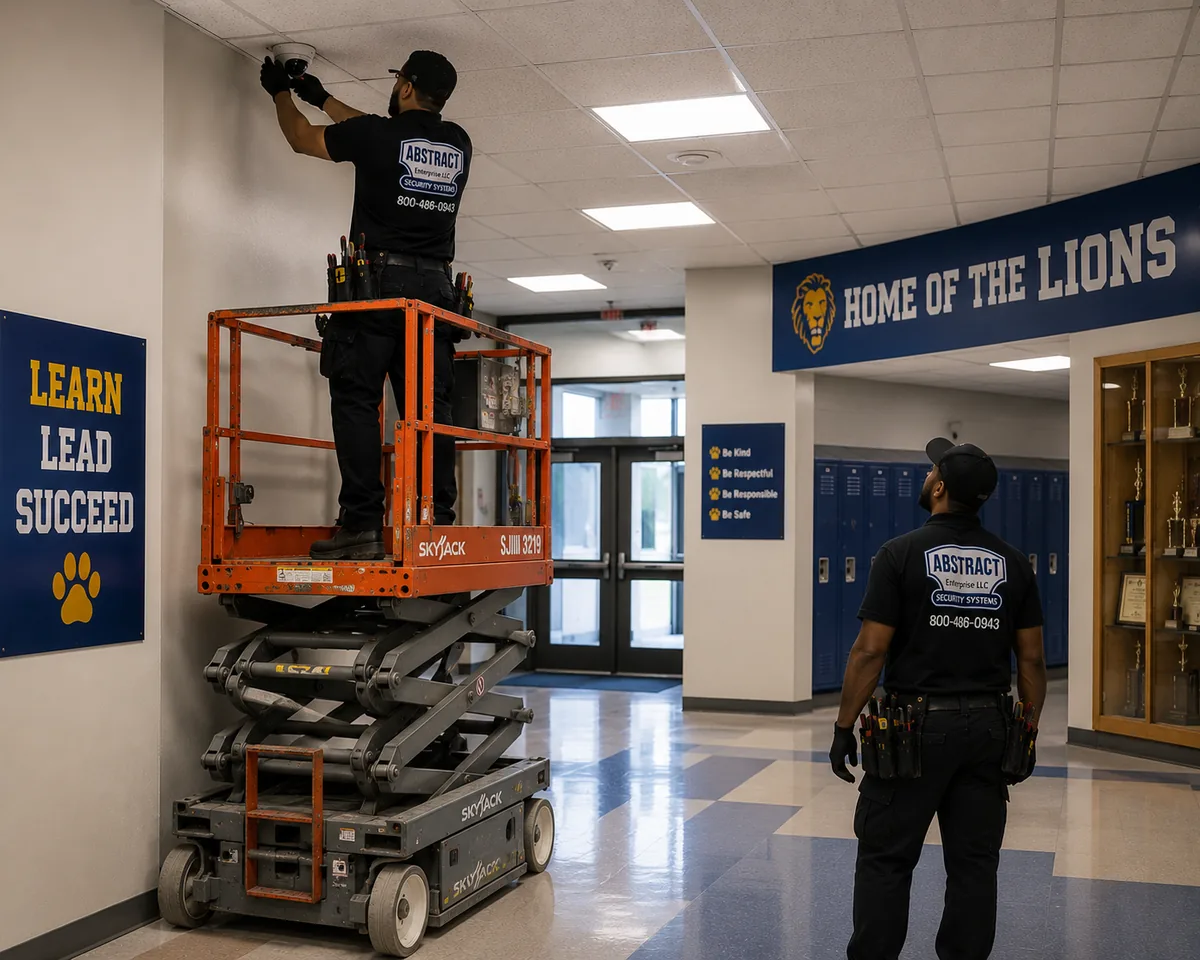
A single camera on the equipment shed. A stopgap unit at a daycare back door while the budget matures. A capable facilities manager, a $400 kit, and stakes no taller than a missing line-marker — proceed, and we’ll say so rather than inflate a two-camera errand into a platform sale.
Where the Line Actually Runs
Scrutiny draws it. Once footage may face an insurer, a licensing inspector, a diocesan attorney, or a courtroom, consumer Wi-Fi through masonry, motion-clip gaps, bare-grade housings in bay air, and an undocumented install become liabilities with lenses. Add plenum code, placement statutes, flood mapping, and a seventeen-door egress plan, and it’s licensed trade work — a fact usually discovered on the day the video matters.
Verkada, ADT, Ring — and Why Nassau Schools Keep Hiring a Licensed Contractor Instead
The Cloud Platforms (Verkada, Rhombus)
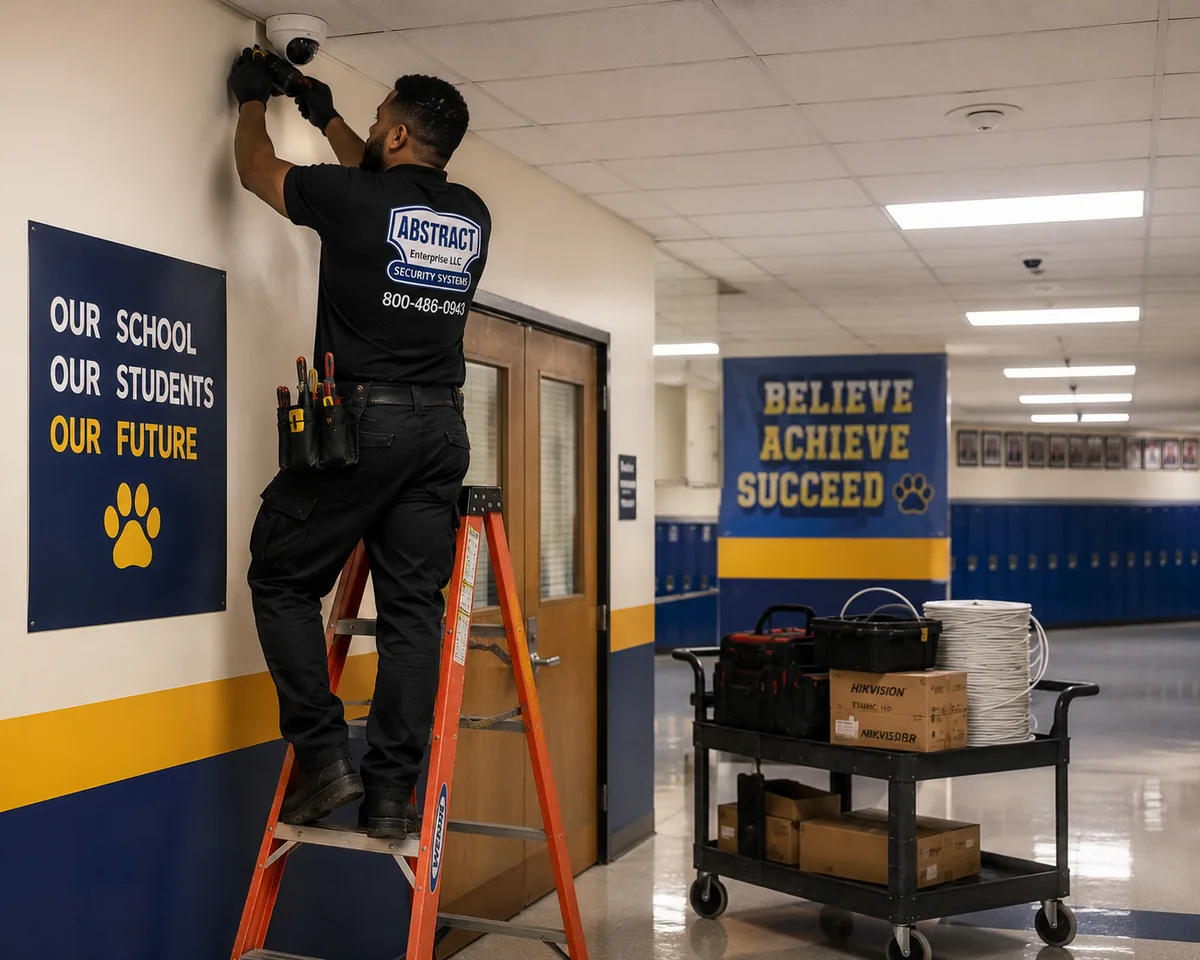
Polished dashboards financed by perpetual per-camera licensing, on hardware that goes dark if the account lapses. A national charter network can argue the math; a single Mineola academy licensing thirty heads is renting what a recorder would let it own. We run both architectures across five years on a single page and hand your board the pen.
The National Alarm Bundlers (ADT and Company)
Their opener is a monitoring agreement; the cameras arrive as a stapled-on afterthought — install crews subcontracted sight-unseen, hardware that only speaks the vendor’s language, and a support line three time zones from the entrance channel that just went dark on a Friday. The stronger Nassau position: own your equipment outright, keep a direct line to the tech who installed it, and if monitoring appeals, buy it month-to-month from a central station you can leave.
The Consumer Brands (Ring, Nest, Big-Box Kits)
Excellent at houses, out of their depth at schools: device caps, footage rationed into subscription clips, radios fading through masonry wings, no wildlife-classification story, no marine spec, no egress mapping, no documentation. Our replacement calls for these arrive on a cycle — about eighteen months after a board bought them to economize. Right tool, wrong building.
Nassau School Security by the Numbers
What Nassau School Clients Report Back
Illustrative configuration — a representative security camera setup may cover the main entries and shared areas, with remote viewing or management from a phone and a clear handoff at completion. Hypothetical planning example — not a customer account, completed AESS project, verified review, or promised result.
— Principal, parish school, central Nassau
Illustrative planning scenario — a typical security camera project of this type begins with an on-site assessment, then a written scope and fixed quote, and finishes with professional installation completed to code. Hypothetical planning example — not a customer account, completed AESS project, verified review, or promised result.
— Business officer, independent school, North Shore
Illustrative example — for work like this, a typical security camera job involves reviewing the property, matching equipment to the space, running clean cabling, and walking through the finished system. Hypothetical planning example — not a customer account, completed AESS project, verified review, or promised result.
— Executive director, Jewish day school, South Shore
Illustrative configuration — a representative security camera setup may cover the main entries and shared areas, with remote viewing or management from a phone and a clear handoff at completion. Hypothetical planning example — not a customer account, completed AESS project, verified review, or promised result.
— Facilities director, academy, barrier island
Field Notes: Nineteen Doors, a February Break, and the Sunday-Night Door-Tester Who Picked the Wrong School
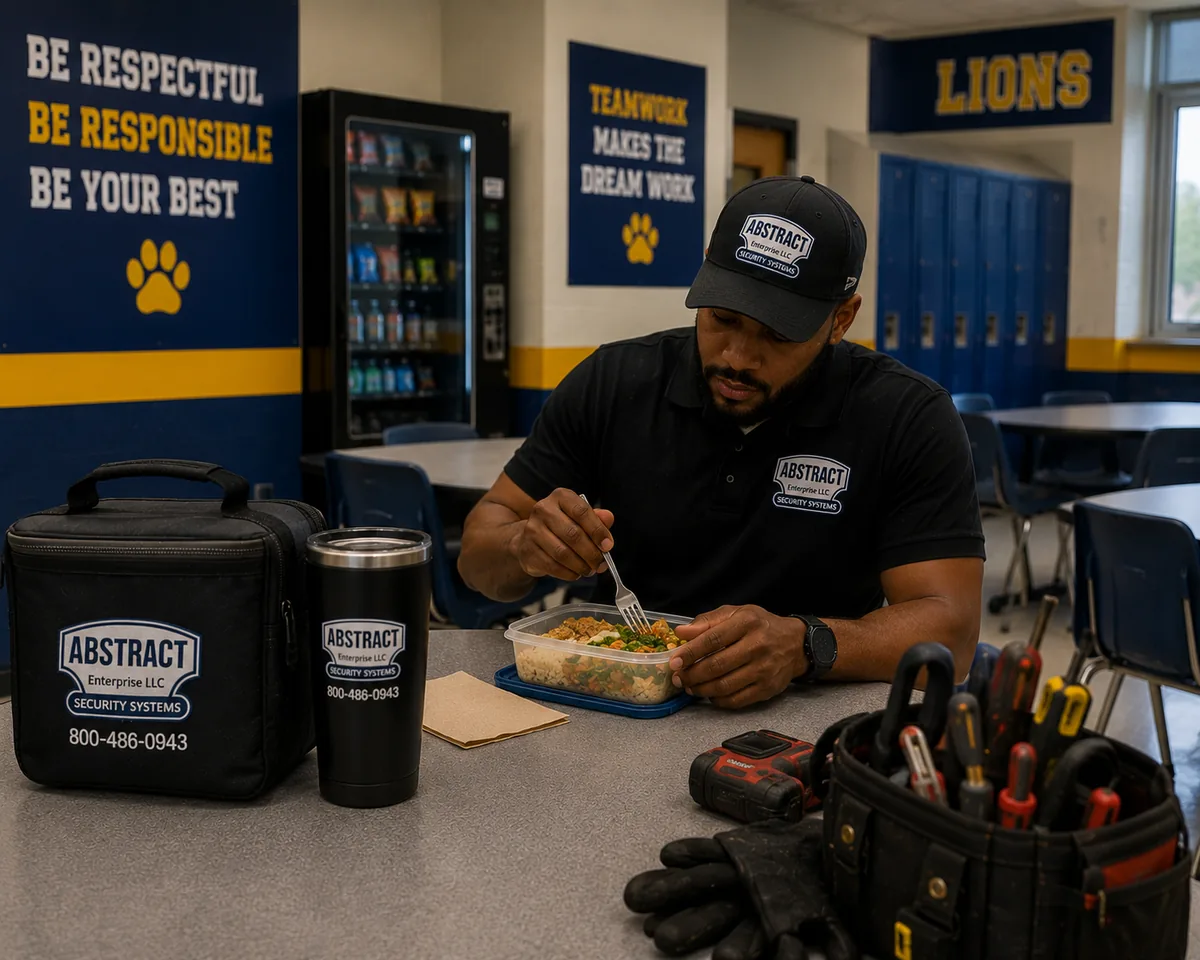
Thirty-eight cameras over February break at a day school on the South Shore, a few minutes off Rockaway Turnpike. The building told the whole county’s story in one property: a 1958 single-story sprawl with nineteen exterior doors, a back field the geese owned every morning, bay air close enough to have corroded the last installer’s housings to lace, and a front entrance the board wanted rebuilt to the standard their NPSE reimbursement would fund. The old system watched four doors and lied about a fifth — one channel had been frozen on the same frame since Thanksgiving.
We worked the problem in tiers. The main entrance became a proper verified-entry vestibule: exterior lens at face height, second head inside the trap, live station at the office, release on recognition. Eight high-traffic doors got dedicated cameras; the remaining ten got alarm contacts paired with exterior heads already holding the sight line, so every opening lands on one office screen with a face attached. Exterior hardware went marine-grade throughout — sealed housings, stainless mounts, terminations greased and shrunk — and the recorder rack went up on a second-floor wall, a decision the 2012 photographs in the office hallway argued for better than we ever could. Last, the field: person and vehicle classification tuned at dawn, on-site, while the geese demonstrated the problem in real time. Forty false alerts a day went to zero without losing the fence line.
The system paid rent eleven days after handoff. Sunday, 9:40 p.m., a figure worked the door line on the field side — six handles in four minutes, the exact behavior the old four-camera setup would have narrated as nothing. The office screen showed the path door by door; the after-hours person alert had already reached the administrator’s phone; and the exported clip was with the Fourth Precinct before the man cleared the property line. Nineteen doors, one screen, zero mysteries — which is the whole assignment on a building like this.
— Anwar Timothy, NYS Lic #12000287431
Frequently Asked Questions: School Camera Installation in Nassau County
What does a school camera system cost in Nassau County?
Nassau labor rides a twenty-point band above our Brooklyn baseline — always its own quote line — and commercial heads land between $540 and $1,140 installed, while the recorder, drive array, and exterior runs each carry separate pricing. From our Nassau job history: a 6–12 camera daycare typically lands in the $5,400–$9,600 lane, a single building at 16–32 heads runs $14,500–$36,000, and once fields, lots, or a multi-door postwar footprint push the count to 32–64, budgets span $30,000–$58,000 — estate campuses and multi-building work sit higher still. The free walkthrough yields a marked site plan and a fixed per-line quote; invoices show Nassau sales tax at 8.625% as its own entry.
How do you set the camera count for our property?
By walking it — doors first, and on postwar Nassau buildings that means all fifteen or twenty of them — then stairs, corridors, cafeteria, gym, and outward across lot entrances, field perimeters, gate approaches, and wherever vehicles sleep. County totals swing wide because the properties do: a 22-camera parish building and a 58-camera estate campus are both normal. You receive numbered positions on your plan, each with a one-line reason.
Is facial recognition allowed in any Nassau school?
No. The State Education Department’s September 2023 order bars facial recognition — buying it or running it — at every New York school, whether public, charter, Catholic, yeshiva, or independent. Conventional video was never part of the restriction: cameras, recorders, and motion analytics stay entirely lawful. We ship face-matching functions switched off and note the disabled state in your commissioning paperwork.
Can cameras go inside classrooms?
The law frequently allows it, but we treat it as a board-and-counsel decision, never a default. Our baseline county design watches each classroom doorway from the corridor — so entries and exits log without a lens ever entering the teaching space; if the board deliberately wants an in-room camera, that exception is initialed on the drawing first.
Which spaces can never be recorded?
Anywhere privacy is reasonably expected: bathrooms, locker rooms, and changing areas above all. Penal Law 250.45 treats recording in such spaces as a felony, and schools get no exemption from it. Everything else on the property is lawful ground: entrances, corridors, stairs, cafeteria, gym, lots, fields, gates, drives, mechanical rooms, and the perimeter. Any head that could see a street or a neighbor gets composed onto school property only, and we record that composition during the survey.
How much recorded history should we keep?
Thirty days is our floor on every Nassau build — school complaints surface late, and the city’s own buildings hold the same standard — extending to sixty or ninety when the drive budget allows. Incident clips export off the recorder immediately, beyond the overwrite cycle’s reach, and the array is sized to whatever written policy your board adopts, with disk-failure alerts on.
Can you install during the school year?
Yes, phased: coring, lift work, trenching, gate and pole setting, and long exterior pulls land on breaks, weekends, and summer; while configuration, aiming, and detection tuning slot into occupied days without disruption. Our people pass your screening and escort requirements, and parking-lot phases get sequenced around drop-off and dismissal — a genuine traffic operation in this county.
Which brands do you install, and why does NDAA §889 matter?
Defaults are Hanwha Vision, Axis, and Uniview, with Lorex where a small program’s size genuinely warrants it. Under §889, manufacturers including Hikvision and Dahua are shut out of purchases involving federal dollars, which means every grant-funded Nassau job gets specified on compliant product lines from the start. Existing systems of every brand we service and upgrade regardless.
What funding can Nassau schools use for camera work?
District buildings tap the state’s $2 billion Smart Schools bond, which will bankroll camera work provided facial recognition stays entirely out of scope. Tuition institutions — diocesan and Jewish day schools both — lean on NPSE reimbursement instead, and can layer federal safety dollars on top, at which point the §889 hardware exclusions ride along. Communal security funding adds a further layer at Jewish institutions. Tell us which program is paying and the proposal arrives formatted to that reviewer’s checklist.
Will you integrate cameras with our buzzer, alarm, and door hardware?
That integration is the assignment: verified-entry vestibule with a face-height lens and video-confirmed release, fobs on staff and field-house doors, alarm-paired secondary exits with cameras holding the sight lines, and alarm-panel events dropping bookmarks on the recorder, turning a bare zone number into sixty seconds of reviewable footage. When one contractor wires the whole stack, the components never stop talking to each other.
Do you repair or take over systems another company installed?
Weekly. Same-day dispatch covers dead recorders, dark channels, PoE faults, drive failures, and urgent exports for adjusters or NCPD detectives — most Nassau calls close in one visit. Orphaned installs get taken over completely — full hardware inventory, credentials recovered or factory-reset, every channel tested recording and playing back, proper documentation written for the first time, and ongoing service under our number.
Are your technicians licensed and suited to school settings?
Yes — NYS low-voltage license #12000287431, fully insured. We pass whatever background and escort protocols your institution requires, keep drilling and lift work off the academic clock, and will supply Long Island school and commercial references before you commit to anything.
School Camera Pricing in Nassau County
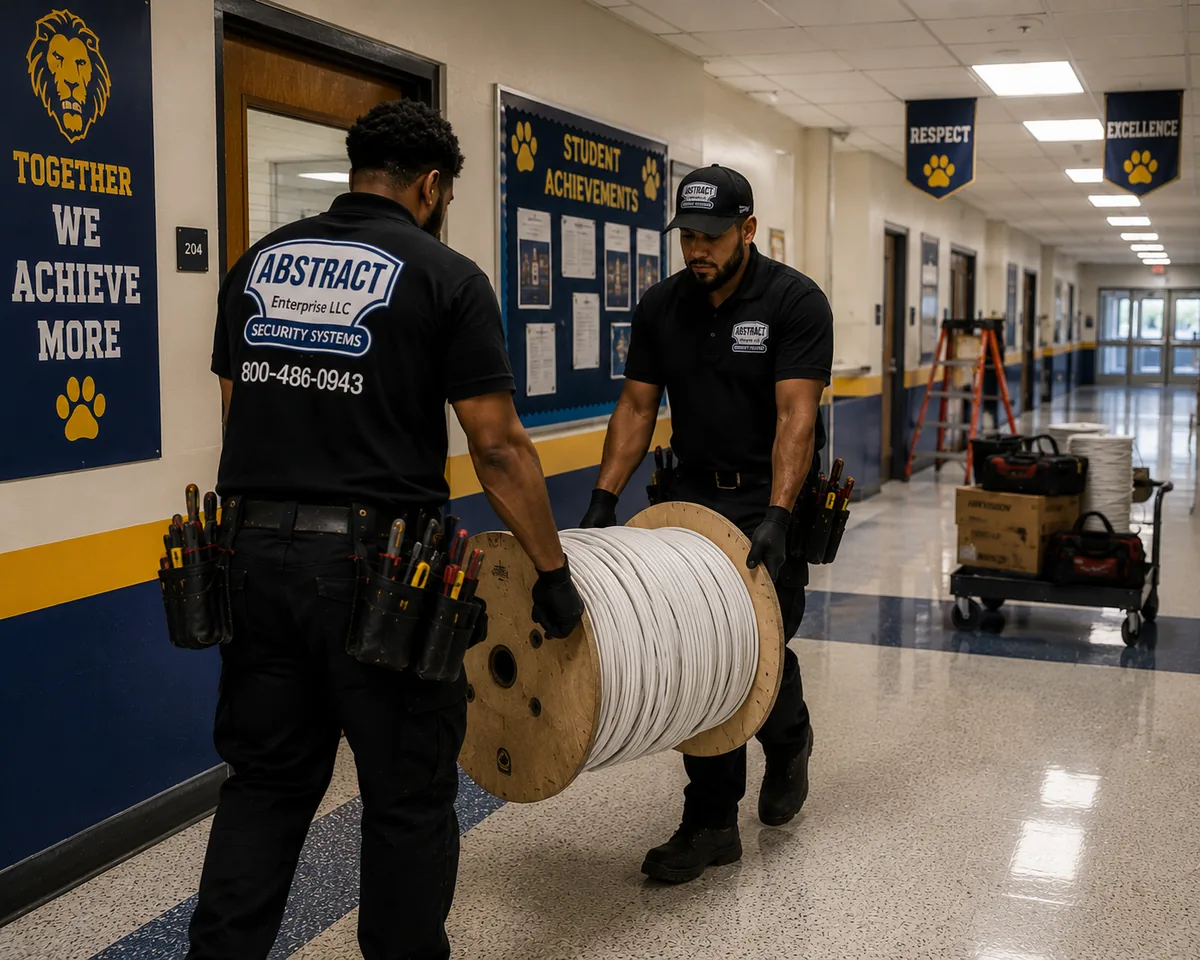
Nassau labor prices on a twenty-point band over our Brooklyn baseline — suburban distances and county logistics, shown as a visible line instead of smuggled into unit costs. Treat the lanes below as planning aids; the binding figure is the fixed quote — one price per numbered position — issued after the free walkthrough. Invoices break out Nassau sales tax (8.625%) separately.
| Project Tier | Typical Scope | Installed Range |
|---|---|---|
| Daycare / Preschool | 6–12 heads across a converted house, storefront, or synagogue/church wing | $5,400 – $9,600 |
| Single-Building School / Parish | 16–32 heads: verified entrance, corridors, cafeteria, priority doors, lot face | $14,500 – $36,000 |
| Property With Fields / Lots / Multi-Door Footprint | 32–64 heads adding field perimeters, lot entrances, full egress mapping, long runs | $30,000 – $58,000 |
| Estate Campus / Multi-Building | 64–128 heads: gate approaches, outbuildings, athletics, perimeter | $48,000 – $110,000+ |
| College / Institutional | Building-by-building phases on a shared network spine | Quoted per phase; full campus from $230,000+ |
| Line Item | What It Covers | Notes |
|---|---|---|
| Commercial IP camera, installed | Camera body, bracket, its own Cat6 home run, terminated, aimed, and configured | $540 – $1,140 each |
| NVR + storage | Recorder and drive array matched to camera count and your retention choice | $850 – $7,000+ by scale |
| Multi-door egress package | Alarm-contact pairing, sight-line mapping, and unified door screen for postwar footprints | Priced per door tier at survey |
| Coastal exposure uplift | Marine housings, stainless fasteners, sealed terminations for bay-facing and barrier-island mounts | +$45 – $80 per exterior head |
| Deposit & terms | A 50% deposit locks the schedule; final payment on completion | The signed written quote governs the entire job |
| Warranty | Three full years covering normal wear on AESS-supplied products | Beyond warranty: $195/hr service, 3-hr minimum ($585) |
Abstract Enterprises Security Systems provides a three-year warranty on products supplied by AESS for normal wear and tear. It does not cover existing or customer wiring, customer-supplied equipment, lightning or other acts of God, power outages or surges, physical damage or unplugging, internet, router or phone changes, or camera readjustments requested after completion. After the warranty period, service is $195 per hour with a three-hour minimum ($585).
Start Your Nassau School Camera Quote
Nassau Coverage: Gold Coast to Barrier Island
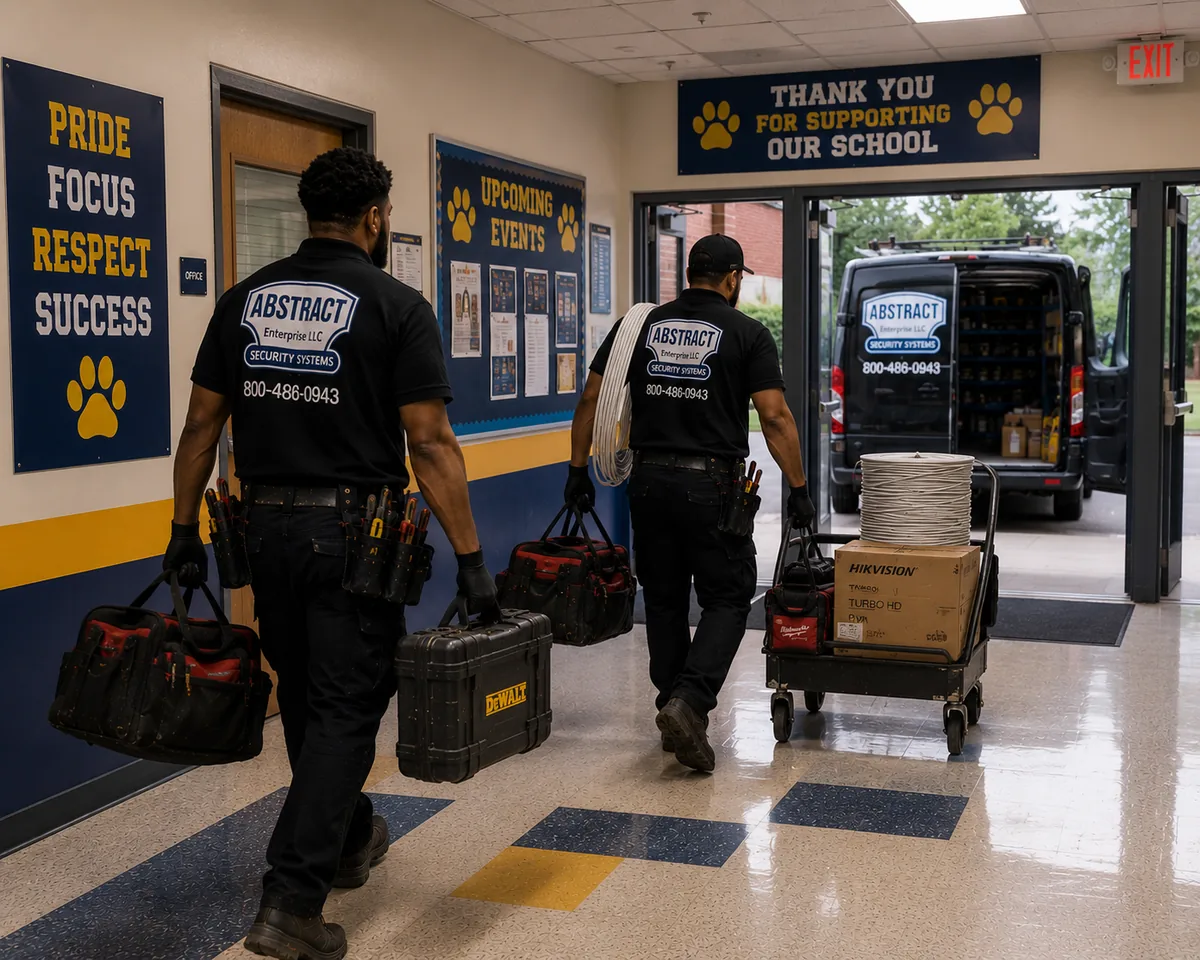
We install and repair school camera systems across all of Nassau: Great Neck, Manhasset, Port Washington, Roslyn, Glen Cove, Locust Valley, Oyster Bay, Old Brookville, Old Westbury, Mill Neck, Sea Cliff, Syosset, Jericho, Plainview, Bethpage, Hicksville, Westbury, Carle Place, Mineola, Garden City, New Hyde Park, Floral Park, Franklin Square, West Hempstead, Hempstead, Uniondale, East Meadow, Levittown, Wantagh, Seaford, Massapequa, Bellmore, Merrick, Freeport, Baldwin, Rockville Centre, Lynbrook, Valley Stream, Elmont, Oceanside, Island Park, Long Beach, and the Five Towns — Lawrence, Cedarhurst, Woodmere, Hewlett, and Inwood. County camera hub: Nassau County security camera installation. Regional hub: School Security Cameras Long Island. Suffolk County is next in the silo; every community above books through this page today.
How the Options Compare for Nassau School Work
| AESS (Us) | National Integrator | Alarm Bundler | General Electrician | DIY | |
|---|---|---|---|---|---|
| County fluency: multi-door footprints, estates, geese, bay salt | Home-field routine | Discovery on your dime | Whatever’s in stock | Winging it | Trial by error |
| NY school rules: FR ban, 250.45, Ed 2-d | Baked into every design and filed | Usually addressed | An afterthought | Beyond their scope | All on you |
| Response when a channel dies | Truck rolls the same day | Open a ticket, wait | An 800 number far away | If he’s free | YouTube tutorials |
| Equipment & footage ownership | Everything titled to the school, nothing recurring | Purchased at enterprise pricing | Locked to their contract | Purchased, undocumented | Rented from an app |
| Funding paperwork: SSBA, NPSE, federal | Program-formatted proposals | Enterprise proposals | Sales sheet | None | None |
| 3-year warranty on AESS-supplied products | ✓ | Case by case | Narrow | Uncommon | — |
Nassau School Problems We Solve Every Month
Doors in the Teens
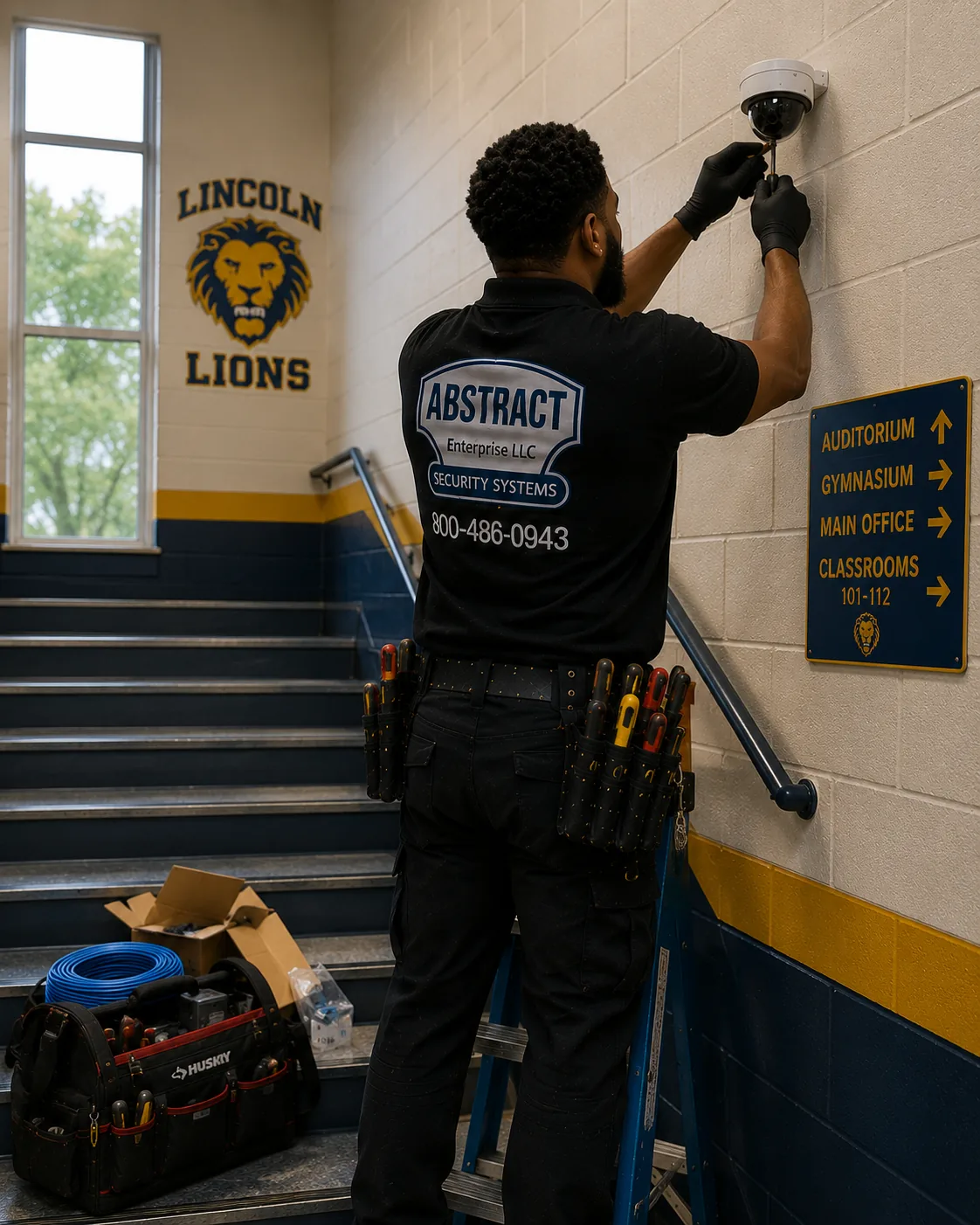
Postwar single-story sprawl means fifteen-plus exterior doors per building. Tiered coverage — verified mains, dedicated heads at busy doors, alarm-paired contacts at the rest — puts every opening on one office screen.
Fields the Geese Own
Untuned motion detection surrenders to grazing flocks within a month. Person/vehicle classification tuned at commissioning silences the wildlife while humans at the fence still ring through.
Gate-First Campuses
Estate schools need arrivals identified at the property line: plate capture at the gate, long lenses up the drive, outbuildings unified on the main recorder.
Bay Air on a Timer
South Shore and barrier-island exteriors corrode on schedule in bare builder grade. Marine housings, stainless mounts, and sealed terminations reset the cycle to a decade.
Recorders Below the 2012 Line
Ground-floor closets in flood-mapped streets hold the county’s costliest design error. Moving the rack up costs half a day today; leaving it down costs the whole system plus the footage the next time water arrives.
Vans Losing Converters
Overnight saw crews work quiet suburban curbs. Plate capture where the fleet parks, motion zones across the vehicles, and a 1 a.m. alert that reaches a phone.
Weekend Field Damage
Turf tears, dugout graffiti, fence cuts — discovered Monday, unprovable by Tuesday. Perimeter heads with after-hours person alerts end the mystery era.
The Long Empty Summer
July and August are when laptop carts vanish and copper leaves through the roof hatch. Health reporting, battery-backed recording, and after-hours person alerts turn a vacant building into a talkative one.
Need a Nassau School System Repaired Today?
A recorder that won’t boot, an entrance camera showing nothing, footage promised to an adjuster or a detective by end of week — call once and a truck is moving. Most Nassau school faults get diagnosed and resolved on the first trip.
Call the Repair Line: (516) 346-5778See the Work
Install walk-throughs, before-and-afters, and honest hardware talk from real jobs on our YouTube channel.
Watch on YouTube →Related Nassau County Services
Security Camera Repair Nassau County
Same-day diagnosis and repair for schools and businesses countywide.
NVR Installation Nassau County
Recorder builds, storage sizing, and migrations for IP camera systems.
DVR Upgrade Nassau County
Analog-to-IP migrations that reuse sound wiring and retire dying recorders.
Intercom Repair Nassau County
Video intercom and buzzer service for school entry stacks and buildings.
Lorex Camera Installation Nassau County
Right-sized prosumer systems for daycares and small programs.
Dahua Camera Installation Nassau County
Service, upgrades, and eyes-open installs for existing Dahua systems.
Changelog: Published July 18, 2026. Next scheduled review: October 2026 (PAA rescrape + pricing check).