What are you looking for?
About Us Contact Us Careers Get a Free Quote (800) 486-0943
Pick a service
✅ Got Your Own System?
🎬 Home TheatreQuote 🎶 AV SoundQuote 🔑 Access ControlQuote
Now pick your area
Pick your area
Long Island
Hudson Valley
Services available
Pricing & Tools
Pick a service for pricing
🚪 Intercom Pricing 🔔 Buzzer Repair Pricing
Calculators
📹 Camera System Calculator 🚨 Alarm Calculator ⚡ Cabling Quote Builder ✅ Got Your Own System?
Select your area
A keypad that will not arm in an Ocean Parkway apartment, a window contact that stopped reporting, or an office alarm near the Brighton Beach end that rings for no reason? Ocean Parkway line, same day: (347) 934-8335
Home › Alarm Installation Brooklyn › Ocean Parkway
Thirty-Foot Front Yards · Six-Story Apartment Houses · Houses on the Service Roads · Offices at the Brighton Beach End

Alarm System
Installation on
Ocean Parkway

Designed Around the Setback · Window-First Apartment Plans · Nothing Fixed to the Landmark · Brooklyn Base Pricing

Ocean Parkway is not an ordinary street with houses on it. It is a 210-foot-wide corridor, designated a city scenic landmark in 1975, with a main roadway in the middle, a planted mall and path on each side, a one-way service road beyond each mall, and then a sidewalk. Behind the sidewalk, every lot that fronts the parkway has to keep a 30-foot front yard, open and unbuilt. So a front door here sits a long way from anyone who might notice it: across the yard, across the sidewalk, across the service road and across the mall. This page is about designing an alarm for that distance, for the six-story apartment houses that line most of the parkway, and for the houses that stand behind the same thirty feet of lawn.

Reviewed and updated October 22, 2026, against the Landmarks Preservation Commission’s 1975 designation report for Ocean Parkway (LP-0871); Chapter 3 of Article XI of the New York City Zoning Resolution, the Special Ocean Parkway District; Wikipedia’s article on Ocean Parkway; NYC Parks’ capital project record for the mall bike path; police blotter reports in Brooklyn Paper and Hoodline naming Ocean Parkway addresses; building records for 1171, 1601 and 2727 Ocean Parkway; New York City Administrative Code § 24-238; and the Department of State’s alarm installer licensing page · Anwar Timothy, NYS license #12000287431 · crews dispatched from our Troy Avenue office in Brooklyn

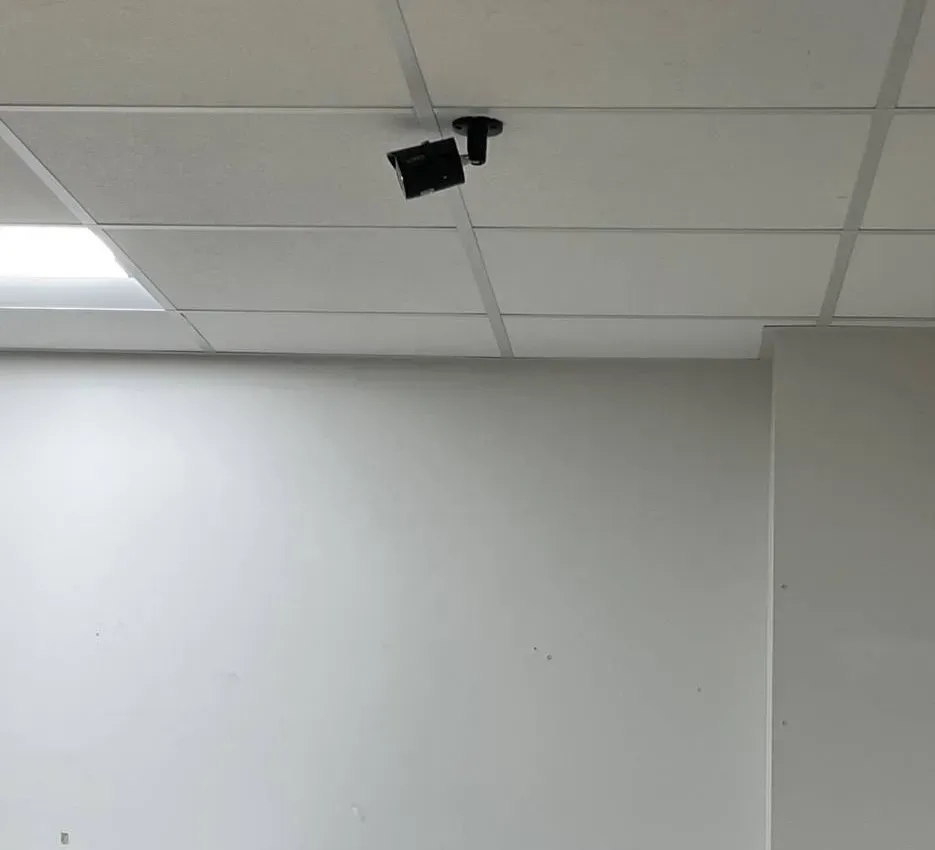
Ocean Parkway, Brooklyn alarm installation reference: a small black bullet camera on a short ceiling mount in a white drop ceiling, above a plain pale wall and a room corner
AESS job-library photo, not taken on Ocean Parkway: a small camera on a short mount high in a plain room. In a parkway apartment house the equivalent spot is just inside the lobby doors, the one place every visitor passes after crossing the front yard.
Ocean Parkway Alarm Request
Apartment, house or office on the parkway: two lines and a cross street are enough

✅
Request Sent!
A technician will call you about the Ocean Parkway address before the end of the working day.
25+
Years Experience
✓
Same-Day Estimates
100%
Licensed & Insured
4.7★
201 Google Reviews

Three answers let us price an Ocean Parkway job by text. Which side of the parkway you are on and the nearest cross avenue; whether the property is an apartment (and on which floor) or a house; and which of your windows face the front yard, which face a rear courtyard or yard, and which face a side street. Send those, with a photo of the front of the building taken from the sidewalk, to (347) 934-8335. Most people get a same-day reply with a rough sensor count and the line of our Brooklyn price list the job is likely to fall on.

  • Reading your photos and texting back is free; billing starts only when a technician arrives
  • Every system goes in under New York State alarm installer license #12000287431, and a certificate of insurance can go to your co-op board or managing agent before the visit
  • Central station monitoring is optional and month to month; many apartment owners start with phone alerts and add monitoring later
The Neighborhood

Why Ocean Parkway Properties Need Alarm Installation

Start with what the parkway is. The Landmarks Preservation Commission’s designation report of January 28, 1975, describes it as “the first road of its kind built in the United States,” worked out by Frederick Law Olmsted and Calvert Vaux from an idea in their 1866 report on Prospect Park and named in their 1868 report, where they coined the word “parkway.” Construction began in 1874, reached Kings Highway in 1875, and the extension to Coney Island opened on November 11, 1876. The report gives the cross-section that still governs daily life on the parkway: 210 feet in all, made of a central roadway 70 feet wide, two malls 20 feet wide, two side roads 25 feet wide, and two sidewalks 15 feet wide. Wikipedia puts the full length at 5.5 miles, from the circle at the southwest corner of Prospect Park to the Brighton Beach end near the ocean.

Then look at what sits behind the sidewalk. The same report records that the Brooklyn Park Commissioners originally controlled an extra 30 feet on each side of the parkway, where no buildings were allowed and the space was to be “used for courtyards only.” That idea survives in today’s zoning. Section 113-12 of the New York City Zoning Resolution requires a 30-foot front yard on any zoning lot that fronts Ocean Parkway, and says that no obstructions, “including porches either open or enclosed, canopies or stairs,” are permitted within it. Balconies that may project into front yards elsewhere may not do so along the parkway, driveways must run straight in, and Section 113-21 requires accessory parking for new developments fronting the parkway to be completely enclosed. The result is a long, open, planted space in front of almost every building, which is lovely to look at and which puts every front door a good distance from the public.

Then the buildings. Wikipedia’s article describes the parkway as zoned mostly for mid- and high-rise apartment buildings, with co-ops and condos of six to seven stories in the Gravesend stretch, taller rental and co-op buildings near Kensington, and single- and two-family houses and some mansions in between, many of them expanded or combined; it adds that many apartment buildings became co-ops in the late twentieth century. Building records give the pattern a face. 1601 Ocean Parkway, between Avenue P and the blocks south of it, is a six-story rental of 59 apartments built in 1929. 1171 Ocean Parkway, between Avenue K and Avenue L, is a six-story co-op of 64 apartments built in 1939, with an elevator, an intercom and a live-in super, and no doorman listed. 2727 Ocean Parkway, near the southern end, is a six-story co-op of 174 apartments built in 1956, with a private courtyard and a live-in super. Six stories, an elevator, a super who lives in the building and no one at a front desk is the most common arrangement we see along the parkway.

Then what goes wrong. The Ocean Parkway items that police blotters have published over the years are short, but they line up. In September 2018, according to the 60th Precinct blotter in Brooklyn Paper, someone broke the lock on a bedroom window and got into an Ocean Parkway apartment near Brighton Beach Avenue at about 2 p.m. In November 2018 the 61st Precinct reported two people coming through an unlocked window into an Ocean Parkway apartment near Avenue P at about 9:20 at night, taking cash and headphones belonging to three people. In April 2021 the 60th Precinct reported a vacant Ocean Parkway apartment between Avenue Z and Murdock Court entered through an open kitchen window, with a diamond ring and a bracelet among losses of more than $18,000. In August 2011 a Midwood blotter described an Ocean Parkway apartment between Quentin Road and Kings Highway burgled during the working day, with no sign of how the thief got in. Windows of apartments, in daylight or early evening, are the thread.

What we will not claim is just as important. We found no published burglary rate for “Ocean Parkway” as a place, because the parkway is a road that crosses many neighborhoods and several police precincts, and the city does not report crime by road. The blotter items above are individual reports from different years and different stretches, not a trend. So this page does not tell you the parkway is dangerous. It explains how the 30-foot yard, the six-story apartment house and the service road change where an alarm should look, and it uses those police reports only as examples of openings that were actually used.

Six facts about the parkway that shape an alarm

  • 210 feet from building line to building line, before the yards. Roadway 70 feet, malls 20 feet each, side roads 25 feet each, sidewalks 15 feet each (LPC designation report, 1975).
  • A 30-foot front yard on every lot that fronts the parkway. No porches, canopies or stairs inside it; no balconies projecting over it; driveways perpendicular to the street (Zoning Resolution § 113-12).
  • Enclosed parking for new buildings. Accessory off-street parking for new developments fronting the parkway must be completely enclosed (Zoning Resolution § 113-21).
  • One-way service roads on both sides. A one-lane, one-way service road runs on each side of the main roadway, which carries traffic lights; commercial vehicles are barred from the parkway (Eastern roads survey; Wikipedia).
  • The landmark ends at the curb. The scenic landmark runs from Church Avenue to Seabreeze Avenue and is bounded by the outer curb lines of the two side roads, so the sidewalks, yards and buildings are outside it (LPC designation report).
  • The oldest bike path in the country, rebuilt recently. Wikipedia calls the western mall path the first bike path in the United States, dedicated in 1895; NYC Parks rebuilt the path between Avenue R and Avenue X, with construction starting in March 2023 and the project recorded as complete in November 2024.

Which stretch this page means. Ocean Parkway passes through Windsor Terrace, Kensington, Midwood, Homecrest, Gravesend and Sheepshead Bay before it reaches Brighton Beach and Coney Island. Those neighborhoods have their own pages, and their side streets have their own character. This page is for properties that face the parkway itself, on either service road, and for the first buildings in on the side streets, whose rear windows look onto the same courtyards. If you are several blocks in, our Kensington, Midwood, Gravesend or Homecrest pages may fit you better; the prices are identical.

Most parkway apartment owners who ask about an alarm also ask about seeing who is at the apartment door or in the lobby. A doorbell-style camera on the apartment door or an intercom upgrade for the building is handled on the same visit; our Ocean Parkway security camera installation and Ocean Parkway intercom installation pages cover those sides.

Need Repair on Ocean Parkway?

A Dead Dialer, a Window Zone That Will Not Close or a Keypad Beeping in an Empty Apartment: Same-Day Alarm Repair on Ocean Parkway

Many parkway apartments already have an alarm, fitted by a previous owner decades ago and wired to a dialer that used the phone line. When the landline was replaced by cable or fiber, the dialer went quiet, and the system now sounds only inside the apartment. Other calls are about one window that always shows open because the contact on an old sash has drifted, or about a keypad chirping a low-battery warning in an apartment that is empty while its owners are away. Most of these are fixed on the first visit, often in one to two hours, and an old panel with sound wiring can usually keep that wiring with a new cellular communicator.

Call (347) 934-8335 and read us the brand on the keypad and whatever it shows. If the siren will not stop, we will walk you through silencing it by phone first, which matters in a building where the neighbors share your walls. Service visits outside warranty are $195 an hour with a three-hour minimum ($585), for our equipment or anyone else’s.

What We Install

Alarm Installation Services on Ocean Parkway

Apartment alarms for the six-story houses

A small panel with battery backup and a cellular communicator, a contact on the apartment door, sensors on every window a person could reach from the yard, a courtyard or a neighboring roof, and one motion detector where the rooms meet. Everything mounted inside the apartment.

Whole-house alarms behind the setback

For houses that face the parkway across thirty feet of lawn: every door including the side and garage entrances, the windows hidden behind front plantings, the rear yard openings, and the upper windows reachable from a garage roof or an extension.

Front-yard detection that ignores the mall

Where an owner wants warning before someone reaches the door, a beam or narrow outdoor sensor aimed along the front walk or across the planting bed, never out toward the sidewalk, the service road or the mall paths.

Offices and practices on the ground floor

Separate alarms for professional offices in apartment buildings and in small commercial spaces near the parkway corners: the office door, the record room, the medication cabinet and a panic button at reception.

Two-family houses just off the parkway

Partitions so the owner and the tenant arm their own floors, with the shared hall and the cellar handled by agreement and codes that are simple to retire when a tenant leaves.

Takeovers, upgrades and repairs

Replacing a dead landline dialer, swapping a failing panel while keeping sound wiring, adding smoke and carbon monoxide reporting, and correcting window zones that a previous installer set up badly.

Building Specialists

Alarm Installation for Ocean Parkway’s Architecture

The parkway was built in the 1870s, but most of what lines it went up over the following century under one rule that never changed: thirty feet of open ground in front. Five kinds of property cover nearly everything we are asked to protect.

The prewar six-story apartment house

Brick buildings of the late 1920s and 1930s, like 1601 Ocean Parkway (1929) and 1171 Ocean Parkway (1939): six floors, an elevator, a lobby behind the front yard, apartments on every side and a rear court. The ground and second floors carry the risk; the upper floors mostly need the door.

The postwar co-op

Larger postwar buildings, such as 2727 Ocean Parkway (1956, 174 apartments, private courtyard). More apartments per floor, longer corridors, a courtyard the residents use, and sometimes replacement windows installed building-wide by the co-op.

The house behind the lawn

Detached and semi-detached houses on parkway frontage, many enlarged over the years. Windows on several sides, a side drive running straight in from the service road, a garage, and a front door that is only visible to someone standing in the yard.

The newer condominium

Six- and seven-story condos, which Wikipedia notes in the Gravesend stretch, with the enclosed parking the zoning requires, a lobby with a camera, and larger windows. Unit owners usually want only their own door and windows on an alarm.

The side-street two-family

Brick and frame two-families on the blocks that cross the parkway, whose rear yards share the light and air of the big buildings’ courtyards. Not subject to the parkway front-yard rule, but part of the same view from behind.

The apartment house: start at the second floor and look down

In a six-story parkway building, the question for each apartment is simple: which of its windows can a person reach without a ladder? On the front, the ground-floor windows open onto the planted yard, and the second-floor windows sit above it. Zoning keeps canopies and stairs out of the front yard, so there is rarely a structure out there to climb, but the building’s entrance surround, a ground-floor bay or a low wall can bring a second-floor sill within reach. At the back, the court is where risk collects: ground-floor windows a few feet above the paving, a garbage enclosure or a shed roof under a second-floor window, a fire escape where one exists, and the roof of a one-story extension. Our technician stands in the court, looks up at your windows, and lists each one as reachable or not before he ever enters the apartment.

Inside, the plan is usually short. The apartment door gets a contact. Every reachable window gets a contact on the moving sash, and in rooms with several windows on the court side a glass-break detector covers all the glass at once. One motion detector goes in the foyer or hall where the bedrooms, the living room and the kitchen meet, so that anyone who gets in through any window has to cross it. The panel sits in a closet, the keypad by the door, and a small indoor siren goes where you will hear it from the bedrooms. Nothing goes on the facade, the window exteriors or the hallway, which keeps the co-op board or the landlord comfortable.

The house behind the lawn: the front is the quiet side

On most Brooklyn streets the front of a house is the watched side: neighbors across the road can see the door, and people walk past it within a few feet. On the parkway that reverses. A house on the service road has its front door thirty feet back, a sidewalk and a service road in front of the yard, and a mall and the main roadway beyond, so the nearest house facing yours is across the full width of the parkway. Front plantings, which the special district was written to encourage, screen the lower windows. The sides of the house, along the perpendicular drive and next to the neighbor, are often more overlooked than the front. So we do not assume the front is safe. Front windows behind shrubs get glass-break or contacts like any rear window, and the front door is treated as a door nobody may see you at.

Larger houses add their own list: a garage door and the door from the garage into the house, a side door off the drive, rear doors to a deck or yard, windows above a garage roof or an extension, and sometimes a separate entrance to a lower floor. Those are ordinary alarm problems, and the survey simply makes sure none of them is skipped because the house looks so open from the parkway.

Ocean Parkway, Brooklyn alarm lobby reference: small white mini dome cameras spaced across a grey drop ceiling between fluorescent light panels and an air diffuser
AESS job-library photo, not taken on Ocean Parkway: mini domes spread across a drop ceiling between light panels. Building-wide cameras like these belong to the building; an apartment alarm stays behind your own door.

The postwar co-op and the condo: what the board owns

In larger co-ops and condos, the windows, the facade and often the apartment entry door belong to the corporation or the condominium, not to you. That shapes the method more than the risk does. Contacts are fixed with adhesive or small screws on the interior face of the sash and frame, wireless so no wire is run through walls the board controls, and every part comes out cleanly if you sell. Where a co-op has installed new windows across the building, we fit contacts made for those frames rather than older surface types, and we keep the paperwork the board asks for: certificate of insurance, a description of what is mounted where, and confirmation that nothing touches building systems.

Ocean Parkway, Brooklyn alarm back-room reference: a small black bullet camera where a white drop ceiling meets the wall, beside a ceiling return grille and a round light
AESS job-library photo, not taken on Ocean Parkway: a small camera tucked where the ceiling meets the wall in a plain back room. Basement storage and bike rooms in parkway buildings belong to the building, so any device there is the board’s decision.

Parkway apartment owners who replace an alarm often add keyless entry at the apartment door at the same time; our Ocean Parkway access control page explains smart locks and fob entry for buildings.

Thirty Feet Back

Reading the Distance Between the Parkway and Your Door

Everything that makes the parkway pleasant also changes who can see what. By day the malls are busy: the LPC report says the benches, playing tables and bicycle path are “heavily used by nearby residents,” and for many people in Brooklyn the parkway is the only large green space close by. The service roads carry residents’ cars, delivery vans going to individual buildings and buses on parts of the parkway. At night the picture changes. The mall paths empty, the service road quiets, and the front yards, which are deep and planted, become the least watched ground in front of the buildings.

yard 30walk 15service 25mall 20main roadway 70mall 20service 25walk 15yard 30scenic landmark: outer curb to outer curb (LPC 1975)270 feet between facades, in feet (schematic, not to scale)

Diagram drawn by AESS from the dimensions in the 1975 LPC designation report and Zoning Resolution § 113-12. The landmark arrow is drawn to the outer curbs of the service roads; sidewalks and yards lie outside it. Real facades may sit further back than thirty feet.

Add the 30-foot yards on both sides to the 210-foot corridor and the facades facing each other are about 270 feet apart. A neighbor across the parkway cannot see your front door in any useful way. The person most likely to notice someone at your door is a neighbor in your own building or the house next door, and the device most likely to notice is the one you install.

That leads to four design rules we use on the parkway. First, protect the front as a hidden side, not a watched one. Second, put the earliest detection where it cannot see the public: on the door, on the windows, along your own walk, never toward the mall. Third, get the alert to a person quickly, because no passer-by will raise it for you; a siren alone, ringing behind a deep yard and a closed window, may be heard by nobody outside. Fourth, give the monitoring station or whoever is on your call list directions that work on a one-way service road, including which side of the parkway you are on and which cross avenue to turn in from.

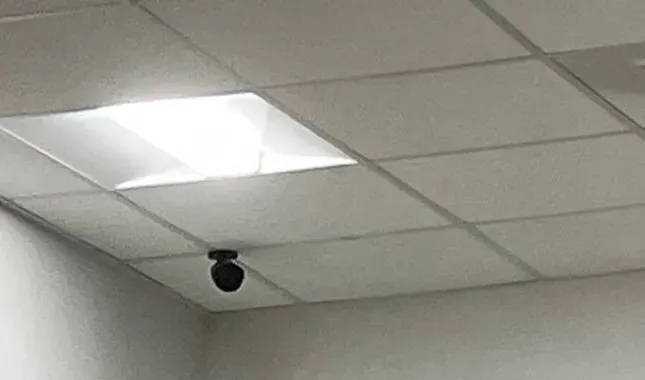
Ocean Parkway, Brooklyn alarm hallway reference: a small dark dome camera where a white drop ceiling meets the wall, beside a bright recessed light panel
AESS job-library photo, not taken on Ocean Parkway: a small dome in a ceiling corner next to a light panel. The same corner logic places a motion detector in a parkway apartment: high in the corner of the foyer, looking across every path from the windows to the bedrooms.

The houses on the parkway have rules of their own. Part of the special district is a Subdistrict whose stated purpose, in Section 113-501 of the Zoning Resolution, is to encourage large single- or two-family detached and semi-detached homes, with multiple dwellings in appropriate locations. Its floor area ratio tops out at 1.50, or 2.00 on qualifying sites, and open parking is generally kept out of the front yard. In practice that produces big houses with deep yards, garages and long side drives, many of them rebuilt or enlarged. For an alarm, size is less important than shape: more doors at the side and back, more windows above garage and extension roofs, and a front that faces a planted yard rather than a sidewalk. We survey those houses side by side and back first, then the front, so the parts nobody overlooks are counted before the part everybody admires.

The precinct map adds one more reason to write down good directions. The parkway is a single road, but the police reports on its addresses come from different commands: the blotter items above came from the 60th Precinct at the Brighton Beach end, the 61st Precinct near Avenue P, and a 66th Precinct report in August 2025 about someone who entered an apartment building near Ocean Parkway and Avenue M at about 4:40 a.m. and pried open a resident’s mailbox. Which precinct answers your alarm depends on your address, not on the parkway. Monitoring stations dispatch through the city by address, and the clearer that address and its approach are on file, the less time is lost.

Commercial Alarms

Business Alarm Installation on Ocean Parkway

Ocean Parkway itself is almost entirely residential and institutional, and commercial vehicles are barred from it. Business alarms on the parkway are therefore of three kinds: professional offices on the ground floors of apartment buildings and in a few small office buildings, the large community buildings the parkway is known for, and the shops on the commercial avenues that cross it.

Ground-floor offices and practices

Professional offices in ground-floor suites of parkway buildings and in small office buildings. A News 12 report listed a commercial office at 3049 Ocean Parkway, near the Brighton Beach end, among four burglaries blamed on one man, with a laptop, electronics and about $3,000 in cash taken across the series.

Synagogues, schools and nursing homes

Wikipedia cites a 2009 estimate of more than 40 synagogues on and around the parkway, alongside yeshivas, schools and nursing homes; it names Mir Yeshiva at Avenue R and Abraham Lincoln High School at Shore Parkway. These buildings need intrusion alarms separate from their fire alarm systems.

Church Avenue and the Kensington end

At the northern end the parkway meets Church Avenue and the Prospect Expressway. Shops on the avenue near the parkway corner have the usual storefront needs: gate, glass, rear door and cellar.

Kings Highway and Avenue U

Two shopping streets that cross the parkway in its middle stretch. Stores within a block of the parkway corner share the corner’s foot traffic by day and its quiet by night.

Neptune Avenue and Brighton Beach Avenue

Near the southern end, close to the Ocean Parkway station on the Q, and to South Brooklyn Health near Avenue Z, which Wikipedia says has had a hospital on its site since 1909. Offices, pharmacies and small stores cluster here.

An office alarm differs from a store alarm in what it guards. A store’s risk is the gate, the glass and the register. An office’s risk is the record room or file cabinets, the computers, the medication or sample cabinet in a medical practice, and the after-hours cleaning or maintenance access that the building controls. We give an office its own panel and its own cellular communicator, independent of the building, with a contact on the suite door, motion inside, a contact or vibration sensor on the room or cabinet that matters most, a panic button at reception, and opening and closing reports so the practice owner knows who armed and disarmed and when.

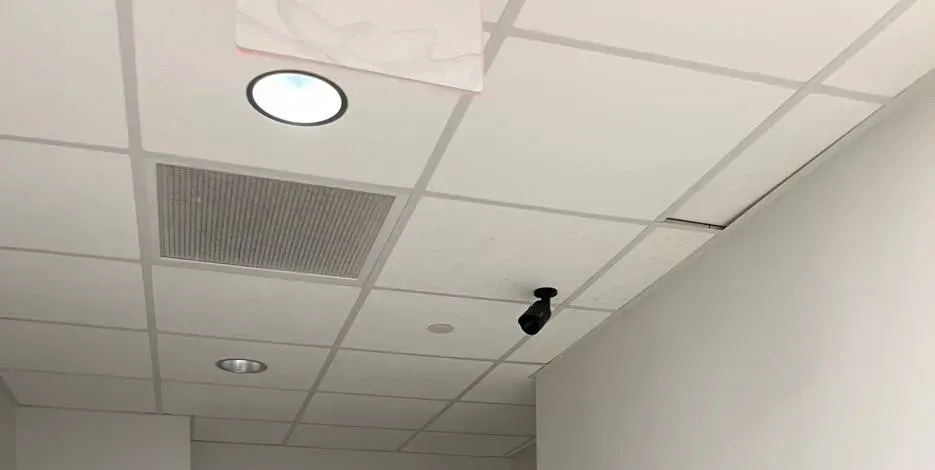
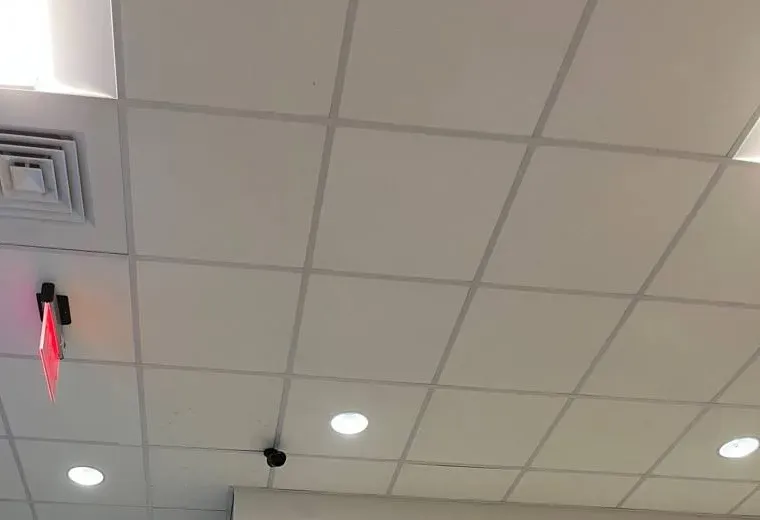
Ocean Parkway, Brooklyn office alarm reference: a small black camera on a drop ceiling near a lit red exit sign and a ceiling air vent
AESS job-library photo, not taken on Ocean Parkway: a small ceiling camera near an exit sign and an air vent in an office corridor. In a ground-floor practice, a motion detector covering the same corridor protects every room off it after hours.

Compliance notes for parkway businesses and buildings

  • Siren limits. New York City Administrative Code § 24-238 requires an audible burglar alarm on a building to be able to stop, and to stop automatically, within fifteen minutes of activation. In a mixed building with apartments over an office, we set the cutoff well inside that limit.
  • Licensing. Alarm installation businesses in New York are licensed by the Department of State under Article 6-D of the General Business Law. Ours is #12000287431; ask any installer for theirs.
  • Fire alarms are separate. A burglar alarm is not a fire alarm system. Community buildings, schools and larger offices need code fire alarm work, which we handle through Ocean Parkway fire alarm installation.
  • Detectors in rental housing. HPD requires smoke detectors in each unit of a multiple dwelling and sets carbon monoxide rules for owners and tenants; adding monitored smoke and CO devices to an apartment alarm does not replace the owner’s duties under those rules.
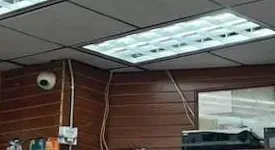
Ocean Parkway, Brooklyn shop alarm reference: a white mini dome camera high on a dark wood-panelled wall below a fluorescent ceiling fixture in a small shop
AESS job-library photo, not taken on Ocean Parkway: a mini dome high on a wood-panelled wall in a small shop. Stores at the parkway corners usually pair the alarm with two or three cameras like this one.
Your Questions Answered

Alarm Installation on Ocean Parkway: Questions Answered

These are the questions that come from the parkway’s particular layout: the deep front yard, the six-story apartment house, the one-way service road and the offices at the southern end. Each is answered in full here, and none of them repeats the FAQ further down.

The thirty-foot front yard

Our building stands behind the 30-foot front yard that the parkway zoning requires. Should the alarm react when someone crosses that yard, or only when a door or window opens?

For most apartments, only when a door or window opens; for houses, often both. In an apartment house the front yard belongs to the building and is crossed all day by residents, visitors and delivery drivers, so an apartment alarm has no business watching it. For a house, the yard is yours, and thirty feet of lawn is enough distance for an early warning to be useful. We do that with a narrow beam or a curtain-pattern outdoor sensor set low along the front walk or across the planting bed under the front windows, so it sees a person on your own ground and nothing beyond it. That sensor should send a chime or a phone notification, not sound the siren, because a mail carrier or a neighbor’s child will cross it in daylight. The siren belongs to the door and window sensors, which only trip when someone actually tries to get in.

Hedges and shrubs planted along the front of our building hide the ground-floor windows from the service road. What does that change?

It means those windows should be treated as if they were at the back. The special district’s stated purpose is to strengthen the scenic landmark “by requiring landscaping along Ocean Parkway,” and many buildings have planted their yards generously, which is good for the parkway and gives cover to anyone standing at a ground-floor window. Behind a hedge, a person working on a sash lock is invisible from the sidewalk and the service road. So every ground-floor window behind planting gets a contact on its moving sash, and rooms with several such windows get a glass-break detector as well, so that a broken pane is reported even if nobody climbs in. If the shrubs are the building’s, we also mention to the super or the board that keeping them below sill height helps everyone on the ground floor.

People use the mall benches and the bike path in front of us late on summer nights. If we put a detector outside, how is it kept from reacting to them?

By never aiming it at them. The malls, the service road and the sidewalk are public, they are busy, and a detector that can see any of them will send alerts all night. Outdoor detection on the parkway is aimed along the face of your house or down your own walk, angled back toward the building, with its range set short enough that it ends before the sidewalk. Beam sensors, which only trip when something crosses a straight line between two points, suit the parkway better than wide motion sensors for exactly this reason. If a camera is part of the plan, its detection zone is drawn to cover your yard and door and to exclude the public space, which also keeps the recording focused on what matters to you.

Apartments in the six-story buildings

A 2018 police report described an Ocean Parkway apartment near Brighton Beach Avenue entered at about 2 p.m. through a bedroom window whose lock had been broken. If a window lock can be forced, what does a sensor add?

Time and a witness. A lock decides how hard the window is to open; a sensor decides whether anyone finds out that it was opened. In that report the lock was broken and the intruder was inside in the middle of the afternoon, when the apartment was presumably empty, and nothing told anyone. A contact on the sash reports the moment the window moves more than a small gap, whether the lock held or not, and sends an alert to your phone and, if you have monitoring, to the central station. A glass-break detector in the same room reports a broken pane. Neither stops a determined person from opening the window, but both turn a quiet afternoon break-in into a noisy one that is reported within seconds, and that is usually what makes people leave.

We live on the second floor. Can someone reach our windows from the front yard or the rear court, and do they need sensors?

Often some of them can, and those need sensors; the rest may not. Second-floor windows on the parkway front usually sit too high to reach from the yard, because zoning keeps stairs, canopies and porches out of it, but an entrance surround, a ground-floor bay or a low garden wall can change that for the windows directly above. At the back, look for anything that makes a step: a shed or garbage-enclosure roof, the roof of a one-story extension or a neighboring garage, an air-conditioner cage, a fire escape. Our technician checks each of your windows from outside and marks it reachable or not. Reachable windows get contacts, and the motion detector in your foyer covers the rest of the apartment, so you are not paying for sensors on windows nobody can get to.

Our apartment faces the parkway on one side and the rear court on the other. Which side should the motion detector watch?

Neither side directly; it should watch the place where the two sides meet. In most prewar parkway layouts that is the foyer or the inside hall, which anyone coming from a front room, a rear bedroom or the kitchen must pass through to get anywhere else. A detector there, mounted high in a corner, catches movement from either side with one device and does not stare at a window where curtains move in the breeze or sunlight sweeps across the floor. If the apartment is laid out as two separate wings with no shared hall, we use two detectors, one per wing, and still keep them aimed away from the windows themselves.

Our co-op’s rules do not allow anything fixed to the outside of the windows or the facade. Can every sensor go on the inside?

Yes, and that is how we fit them anyway. Window contacts go on the interior face of the moving sash and the frame. Glass-break detectors sit on an interior wall or ceiling. The panel and siren sit in a closet, the keypad beside the apartment door. The cellular communicator lives inside the panel, so no antenna goes on the building. Nothing passes through the window frame, the exterior wall or the public hallway. We describe the installation in writing for the managing agent or the board before the visit, send our certificate of insurance, and remove everything cleanly if you ever sell.

We closed on an apartment that will sit empty for months while the kitchen and bathrooms are redone. Should the alarm go in before the contractors start or after they finish?

Usually a simple version before, and the finished version after. An empty apartment under renovation is exactly the kind of place the blotters describe: in April 2021 a vacant Ocean Parkway apartment near Avenue Z was entered through an open kitchen window. During the work, we fit the panel, a door contact, contacts on the reachable windows and one motion detector, give the contractor a code that works only during agreed working hours, and send you an alert whenever the apartment is disarmed or left open overnight. When the walls are closed and the windows are final, we reposition anything the work disturbed, add the sensors for the new kitchen and bathrooms, and hand over the system for living in. You pay for the equipment once.

Houses on the parkway frontage

Our house has been enlarged over the years and now has more than thirty windows on four sides. How do you decide which of them go on the alarm?

By asking of each one whether a person can reach it and whether anyone would see them doing it. Ground-floor windows on any side are reachable and get a contact or glass-break coverage. Upper windows get a sensor only if something outside makes them reachable: a garage roof, an extension, a porch roof on an older house, a deck. Windows facing the parkway are not assumed safe just because the parkway is busy, for the reasons explained above. Windows facing a neighbor’s wall across a narrow side yard are judged on what is below them. The written price lists every window and the reason it is or is not on the alarm, so you can change any line before work starts. Glass-break detectors often replace several contacts in a room with many panes, which keeps the count and the cost reasonable.

A house cleaner took more than $4,000 in cash from an Ocean Parkway home in 2021 while the owner was there. Can an alarm do anything about theft by someone who has been let in?

Less than it can about a break-in, and we would rather say so plainly. In that 60th Precinct report the owner heard the dog bark and saw the cleaner running down the hall; no alarm would have been armed while someone was home and working. What an alarm can add is narrower: a separate zone on one closet, cabinet or room that stays armed even when the rest of the house is not, with a phone alert the moment it opens; individual codes for everyone who works in the house, so the event log shows who disarmed and when; and an indoor camera covering a hallway or the door of that room if you want a record. Cash and valuables are best kept in a safe that is bolted down. The alarm cannot replace careful hiring or locking things away.

Getting help to the right door

Our address is on one of the one-way service roads. What should the monitoring company have on file so police come in from the correct end?

The side of the parkway, the direction the service road runs, the cross avenue to turn in from, and how to find the door from the curb. Each service road is a single lane in one direction, so a patrol car that turns onto the wrong one, or onto the right one past your building, has to go around the block. On file with the monitoring station we put the building number, “east service road” or “west service road,” the nearest cross avenues on either side, whether the entrance is on the parkway or around the corner on the side street, and for apartment houses the floor and how the lobby door opens. Those notes are read to the dispatcher with the alarm. It takes five minutes to write them, and we do it on install day.

Offices and practices

Our medical practice is on the ground floor of an apartment building on the parkway. Can our alarm be completely separate from the building’s systems?

Yes, and it should be. The practice gets its own panel, its own cellular communicator and its own codes, with no connection to the building’s intercom, cameras, fire alarm or network. That way the building’s staff cannot disarm the practice and the practice’s alarm never depends on the building’s phone or internet service. The only shared matters are practical: agreeing with the landlord where the panel and siren may be mounted, how the cleaning or maintenance staff get in after hours, and where the suite’s exterior door is in relation to the building entrance. If the practice already has a sign-in system for staff, the alarm’s user codes can mirror it, so each person’s arrivals and departures appear in one log.

A burglar blamed for a series of break-ins near Brighton Beach also got into a commercial office at 3049 Ocean Parkway. What should an office alarm cover that a store alarm does not?

The rooms and furniture that hold what an office actually loses. That series, reported by News 12, took a laptop, other electronics and cash. A store alarm concentrates on the gate, the front glass and the register; an office alarm needs a contact on the suite door, motion in the corridor and in any room with computers, a contact or shock sensor on the cabinet or room that holds records, cash or medication, and a panic button at the front desk. Opening and closing reports matter more in an office than in most stores, because offices are often left by the last person out at an irregular hour, and the owner wants to know it was armed.
Equipment

Types of Alarm Systems We Install on Ocean Parkway

Panels with cellular communicators

Small wall or closet panels with battery backup that report over the cellular network, so the alarm works without a landline or the building’s internet. The right choice for co-op apartments where nothing may go on the outside wall.

Window and door contacts

Slim wireless contacts for double-hung sashes, casements and replacement windows, fixed on the inside face; heavier contacts for steel apartment doors and garage doors on houses.

Glass-break detectors

Acoustic detectors that listen for the sound of breaking glass across a whole room, ideal for front rooms with several windows behind planting and for rear rooms facing a court.

Motion detectors

Passive infrared detectors for foyers and halls, with pet-tolerant models where a dog or cat lives in the apartment, mounted high in a corner and aimed away from windows.

Outdoor beams and curtain sensors

For houses only: narrow detectors along your front walk or under your front windows that see your own ground and stop short of the sidewalk, service road and mall.

Smoke, CO, water and panic devices

Monitored smoke and carbon monoxide detectors, a leak sensor under the washer or the kitchen sink, and wireless panic buttons for an older relative or the reception desk of a practice.

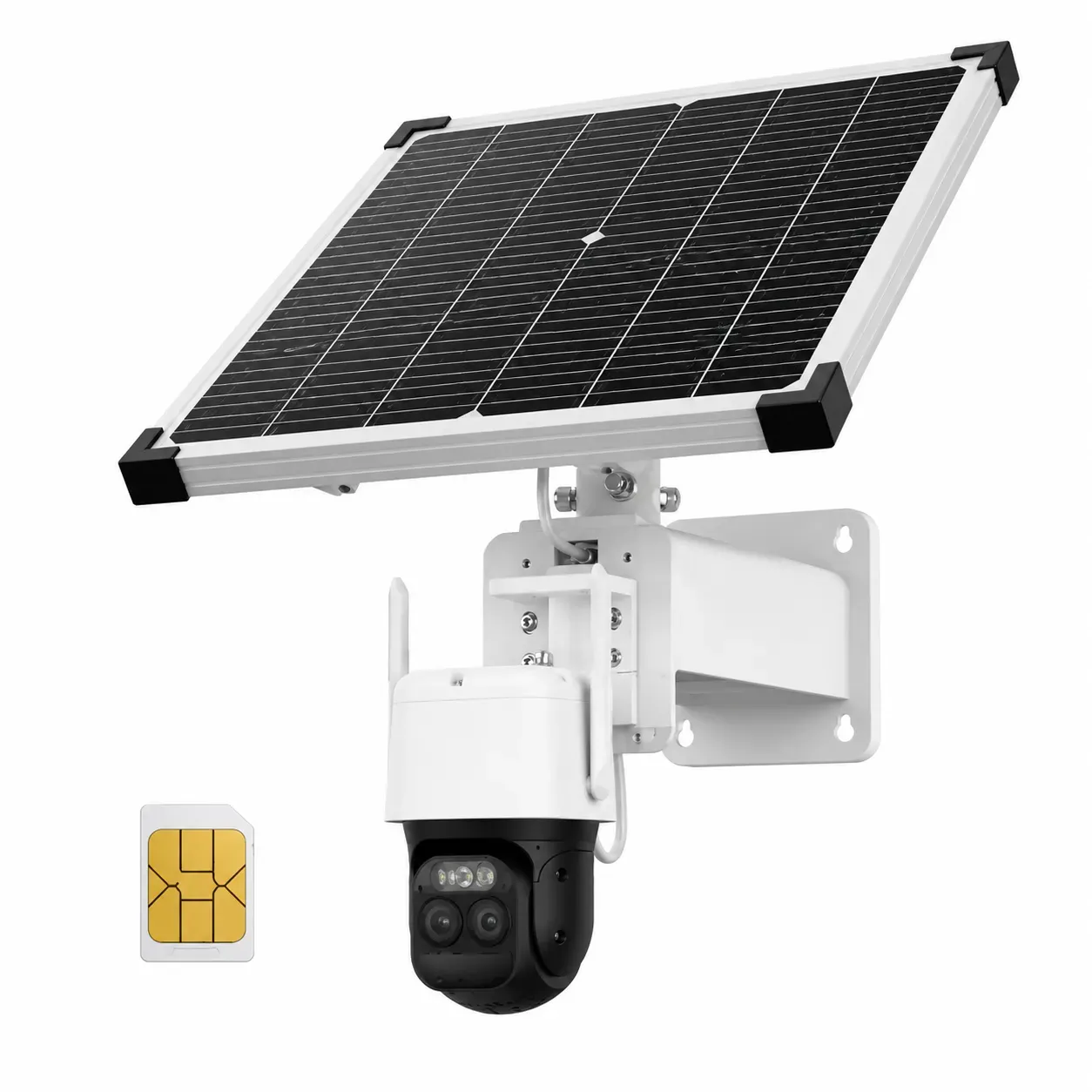
Ocean Parkway, Brooklyn alarm communications reference: product photo of a white cellular camera under a mounting bracket and solar panel, with a separate SIM card beside it
Manufacturer product photo: a cellular camera shown with its SIM card. Alarm panels use the same kind of SIM-based cellular link, which is why a parkway apartment alarm needs no phone line and no antenna on the building.
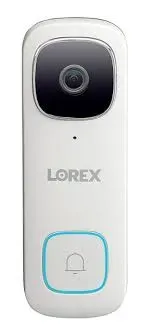
Ocean Parkway, Brooklyn alarm entry reference: product photo of a slim white video doorbell with a round lens at the top and a lit ring around the button
Manufacturer product photo: a slim video doorbell. On a house set back from the parkway, it shows who is at a front door that nobody on the sidewalk can see.
Ocean Parkway, Brooklyn alarm side-drive reference: product photo of a white bullet camera with two small lights beside the lens on a wall mount
Manufacturer product photo: a bullet camera with two built-in lights. Aimed down the side drive of a house on the parkway, it covers the side door and garage without looking at the street.
Ocean Parkway, Brooklyn alarm apartment reference: product photo of a small white indoor cube camera on a short stand against a black background
Manufacturer product photo: an indoor cube camera on a stand. In an apartment it can sit on a shelf facing the foyer and send a short clip when the alarm trips, with nothing mounted on the walls.
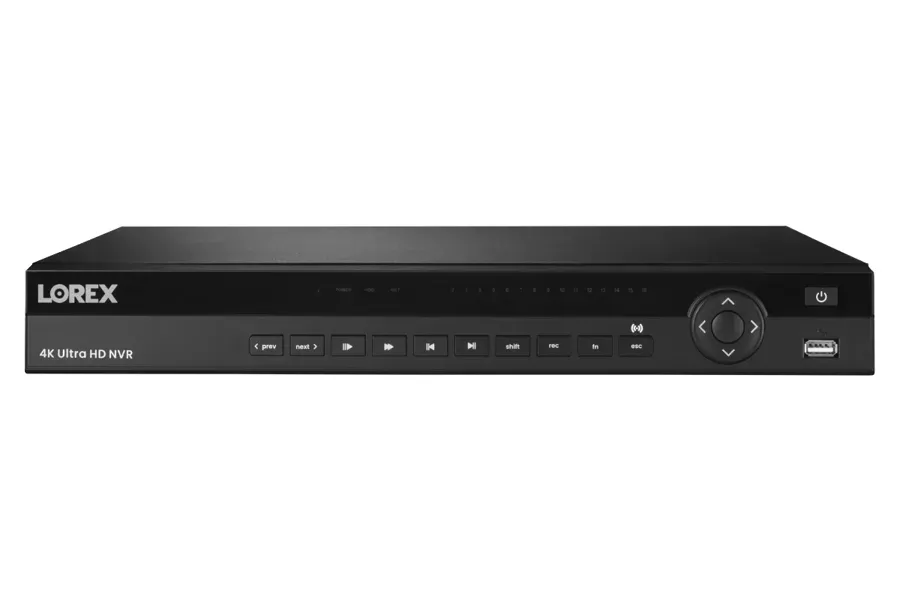
Ocean Parkway, Brooklyn alarm office reference: product photo of a black network video recorder front panel with status lights and small playback buttons
Manufacturer product photo: a network video recorder. For a ground-floor practice or a store at a parkway corner, a recorder like this keeps the camera footage that goes with each alarm event.
AI Overview Reality Check

What AI Gets Wrong About Alarm Installation on Ocean Parkway

We could not open Google’s AI Overview, its question boxes or Answer the Public from where this page was built, so nothing below is quoted from them. These are claims that circulate in generic online advice about alarms, set beside what we find on the parkway.

“Busy streets with lots of people around are safer, so the front of the house needs less protection.”

The parkway is busy, but its traffic is in the middle, on the mall paths and the main roadway, not at your door. A front door thirty feet back behind planting is out of sight of almost everyone using the parkway. The neighbors who could see it from across the street are about 270 feet away, behind their own yards.

So on the parkway we reverse the usual assumption and treat the front as a hidden side. Front windows behind shrubs get the same coverage as rear windows, and the front door gets a contact like every other door.

The busy part of the parkway does matter in one way: it is the reason outdoor detection has to be aimed carefully. A sensor that sees the mall will alert all night.

“Apartments above the ground floor don’t need alarms.”

Many upper-floor apartments need little beyond a door contact and a motion detector, and we say so. But the blanket claim ignores how parkway buildings are built: rear courts with shed roofs and extensions, entrance surrounds and bays at the front, fire escapes where they exist.

The Ocean Parkway police reports we found involved apartment windows, not ground-floor storefronts. Whether your window is reachable is a question for someone standing in your court, not a rule of thumb.

The honest answer for a fourth-floor apartment is often a smaller system, not no system at all.

“Landmark rules mean you can’t install security equipment.”

Generic advice often assumes any landmark means a permit for anything visible. The Ocean Parkway scenic landmark is defined in its 1975 designation as the property between the outer curb lines of the two side roads, from Church Avenue to Seabreeze Avenue. Sidewalks, front yards and buildings fall outside that boundary.

That does not mean anything goes on your facade. Co-op and condo rules, your lease and the zoning rules on front yards still apply, and a building can be landmarked separately or sit in a historic district of its own.

An apartment alarm, which is mounted entirely inside, raises none of these questions. For a house, we keep outdoor devices small, under eaves and on your own walls.

“A professional installation always comes with a long monitoring contract.”

National dealers often finance equipment through multi-year monitoring agreements, and people on homeowner forums describe exactly that. It is a business model, not a requirement of the technology.

We sell the equipment outright at the Brooklyn list price. Monitoring through our partners starts at $19.99 a month, month to month, and is optional.

Many parkway apartment owners run the system from their phones and add a central station only when they travel or when an older parent lives alone.

“A DIY kit from Ring or SimpliSafe does the same job.”

For a simple apartment, a kit can work. The kit cannot decide which of your windows are reachable from the court, how to fit a sensor to a steel apartment door, or how to keep an outdoor sensor from seeing the mall, and it will not write dispatch notes for a one-way service road.

ADT, Ring and SimpliSafe each sell national products designed for an average house. None of them knows that a parkway house has its front door thirty feet back or that your co-op forbids anything on the outside of the window.

If you already own a kit, we install it for a labor-only price and tell you what it lacks for your apartment or house.

“Every window needs a sensor.”

Online checklists often count windows and multiply. In a six-story building that can mean paying for sensors on windows twenty feet above anything a person could stand on.

We cover every window a person can reach and let a well-placed motion detector cover the rest of the apartment. In a house, glass-break detectors often replace several contacts in rooms with many panes.

The written price lists every window and why it is or is not included, so you can add any window you want covered anyway.

“Crime statistics tell you whether you need an alarm.”

Online tools love neighborhood crime scores. Ocean Parkway is a road through several neighborhoods and several precincts, and no published figure describes it as one place.

The police reports we cite are single incidents from different years, used only to show which openings were used. They are not a trend, and we do not present them as one.

The better question is how exposed your own doors and windows are. That is something a survey can answer and a statistic cannot.

Send One Photo From the Sidewalk and One From the Back

A picture of the front yard and building, and one of the rear court or yard, tell us which windows can be reached. We reply with a sensor count and a likely price line, usually the same day.

Get In Touch

Request a Free Quote

An apartment in a six-story co-op near Avenue K, a house on the service road near Avenue S, or a practice near the Brighton Beach end: a few lines start it, and the written Brooklyn-list price follows the visit. Prefer to talk? (347) 934-8335.

✅

Request Received

Thank you. Dispatch has your message, and a technician will call you today during working hours. If a siren is sounding now and will not stop, call (347) 934-8335 rather than waiting.

How It Works

Our Installation Process

Seven steps for an apartment, a house or an office. What is particular to the parkway is step two, where the technician judges every window from outside, and step six, where the dispatch notes for your service road are written.

1. Photos and three answers

You send a photo from the sidewalk and one of the back, with the side of the parkway, the cross avenue and your floor.

2. Judge every window from outside

The technician walks the front yard, the side and the rear court or yard and marks each of your windows reachable or not, then tries each door and window inside.

3. Written price from the survey

A Brooklyn-list price listing every opening on the alarm and why, with optional items such as cameras shown separately, yours before anything is booked.

4. Paperwork for the board or landlord

A description of what goes where and a certificate of insurance go to the managing agent, co-op board or landlord before install day.

5. Install inside, test every zone

Panel in a closet, contacts on the interior of each reachable window, detectors in the foyer and front rooms; every sensor tripped and confirmed with you watching.

6. Codes, app and dispatch notes

Codes for each person, the app on every phone, and notes on file giving the service road, its direction, the cross avenue and how to reach your door.

7. Zone list and follow-up call

A written list of every sensor and what it protects, and a call a week later to adjust anything that has been a nuisance.

Coverage Area

Alarm Installation Near Ocean Parkway’s Landmarks

We work the full length of the parkway, from the circle at Prospect Park to the ocean. These six places mark its stretches.

Prospect Park’s southwest circle

The parkway begins at the circle at the southwest corner of Prospect Park, in Kensington, where Wikipedia also notes the Kensington Stables near its northern end. The scenic landmark itself starts at Church Avenue, where the Prospect Expressway joins.

The mall bike path

Wikipedia calls the western mall path the first bike path in the United States, dedicated on June 15, 1895. NYC Parks rebuilt the stretch between Avenue R and Avenue X from March 2023, recorded complete in November 2024.

The three-mile marker

Of the parkway’s original eleven milestones, Wikipedia says only one remains: the three-mile marker between Quentin Road and Avenue P, in the stretch lined by six-story apartment houses.

Mir Yeshiva at Avenue R

One of the parkway’s best-known institutions, named in Wikipedia’s article, in the stretch where synagogues, schools and nursing homes line both service roads.

Abraham Lincoln High School

At the parkway’s junction with Shore Parkway near the southern end, close to the Belt Parkway interchange and to the large postwar co-ops around 2727 Ocean Parkway.

Ocean Parkway station and South Brooklyn Health

The Q’s Ocean Parkway station crosses the parkway on a masonry viaduct with three groin vaults near Brighton Beach, and South Brooklyn Health, formerly Coney Island Hospital, sits near Avenue Z.

We also serve the neighborhoods the parkway runs through and beside: Windsor Terrace, Kensington, Midwood, Homecrest, Gravesend, Sheepshead Bay, Brighton Beach and Coney Island.

Pricing

Alarm Installation Cost on Ocean Parkway

An Ocean Parkway address pays the Brooklyn list, the company’s base price. Nothing is added for the setback, the building or the board paperwork. What changes from job to job is the number of reachable openings and the time it takes to fit sensors to the windows you have. Every figure below is AESS’s published Brooklyn alarm price before sales tax. Jobs under $500 are paid in full; above that, half is paid as a deposit once the visit has fixed the price in writing, and the balance when the system is working.

ItemBrooklyn priceTypical Ocean Parkway use
Basic residential system: panel, 4–6 door/window sensors, 1 motion detector, keypad, cellular communicator, monitoring setupfrom $600A one- or two-bedroom apartment on a low floor of a six-story building
Wireless system, typical range$600 – $1,200Co-op apartments where nothing may be wired through walls the corporation owns
Complete home protection: more sensors, glass-break, smoke and CO, sirens, app, camera-readyfrom $2,500A detached house behind the setback, with front plantings, side drive and garage
Custom hardwired system, full-property coverage$2,000 – $6,000Large houses being renovated with walls open
Panel replacement on existing wiring: panel, cellular communicator, keypad, programming$800 – $1,500Apartments and houses with an old landline alarm whose wiring is sound
Per-unit setup for landlords: door sensor, motion detector, monitoring$400 – $800 per unitOwners of two-families off the parkway protecting each apartment
Commercial alarm, standard small business$1,500 – $3,000Ground-floor practices and offices, and stores at the parkway corners
Adding cameras to a business alarm$1,000 – $2,500Reception, corridor and record-room views for a practice
Installing a customer-supplied kit$200 – $400A Ring or SimpliSafe kit already bought for an apartment
Central station monitoring through our partnersfrom $19.99/monthOptional; month to month, no long-term contract
Service visit outside warranty$195/hr, 3-hr minimum ($585)Old panels by other companies, drifting window zones, adding zones later

What moves an Ocean Parkway quote up or down

  • Reachable windows, not all windows. A fourth-floor apartment with no reachable windows may need only the door and a motion detector; a ground-floor apartment behind planting needs every window.
  • Glass-break versus contacts. One glass-break detector in a front room with three windows often costs less than three contacts.
  • The board’s rules. Wireless installation fits most co-op rules and avoids opening walls, which keeps labor down.
  • Old wiring. A previous owner’s hardwired system can often be kept with a new panel and cellular communicator, the cheapest upgrade on the list.
  • Outdoor detection. Beams along a house’s front walk add equipment and time, and are optional.

Get a Written Brooklyn-List Price for Your Ocean Parkway Apartment, House or Office

The price comes from your windows and doors, not from the address. You have it in writing before the technician leaves, and a phone call first is always welcome.

Shop Our Systems

Alarm Installation Packages & Pricing

Parkway Apartment — from $600

A cellular panel with battery backup in a closet; a contact on the apartment door; contacts on up to five reachable windows; one motion detector in the foyer; a keypad by the door; the app for everyone in the household; dispatch notes for your service road; monitoring only if wanted. Right for most low-floor apartments in the six-story buildings.

House Behind the Lawn — from $2,500

Whole-house protection: every door including side, garage and rear doors; contacts or glass-break on every ground-floor window, front plantings included; upper windows reachable from roofs; hall and stair motion; smoke and carbon monoxide reporting; an indoor siren; optional beams along the front walk.

Ground-Floor Practice — from $1,500

A commercial panel on its own cellular line, independent of the building; suite door contact; corridor and room motion; a contact or shock sensor on the record room or medication cabinet; a panic button at reception; opening and closing reports; siren cutoff well inside the city limit. Cameras add $1,000 to $2,500.

Already bought a kit? Labor-only installation

If you already own a Ring, SimpliSafe or similar kit, we install it for $200 to $400, depending on the number of pieces. In a parkway apartment the time goes into the decisions the box leaves to you: which windows are reachable from the court, where the motion sensor sees every path without staring at a window, and how to fix sensors to co-op replacement windows or a steel door. We will tell you honestly if the kit lacks something your apartment needs. Our 30-day warranty and optional paid extended plans cover parts AESS supplies; a kit you bought keeps its manufacturer’s warranty, and our installation work is covered by the service agreement.

Complete Services

Every Alarm Installation Service on Ocean Parkway

Cameras

Apartment-door, lobby and side-drive cameras through Ocean Parkway security camera installation.

Door access

Smart locks for apartment doors and fob entry for building lobbies via access control on Ocean Parkway.

Intercoms and buzzers

Video entry for six-story buildings through intercom installation on Ocean Parkway; when an old buzzer stops, Ocean Parkway door buzzer repair.

Fire alarms

Code fire alarm systems for community buildings and offices, separate from the burglar alarm, through Ocean Parkway fire alarm installation.

Cabling and TVs

Network cable for practices and home offices via structured cabling on Ocean Parkway, and wall mounting through Ocean Parkway TV installation.

Calculator

Rough out a system yourself first with the alarm calculator, then send us the result.

The combination we fit most often on the parkway is an apartment alarm with a doorbell-style camera at the apartment door; for houses, the alarm with a camera down the side drive; for practices, the alarm with cameras at reception and the corridor.

Field Notes

Field Notes: Stand in the Court Before You Stand in the Apartment

This describes how our technicians survey a parkway building, not a story about a particular job. The survey starts outside. At the front, the technician stands on the sidewalk and then in the yard, looking at which ground-floor windows are hidden by planting and whether anything around the entrance brings a second-floor sill within reach. Then he goes to the back, by the building’s side passage or through the basement with the super’s permission, and stands in the rear court looking up: shed roofs, extensions, garbage enclosures, fire escapes, the neighbor’s garage. Each of the customer’s windows is marked on a sketch as reachable or not, with the reason.

Only then does he go up to the apartment, try every window and the door by hand, and choose the motion detector’s corner by walking the routes from each reachable window to the bedrooms. The written price follows that sketch line by line. On houses the same order applies: the yard, the drive, the back, then inside. The survey takes longer than looking at a floor plan, and it is the reason the system has the right number of sensors.

FAQ

Ocean Parkway Alarm Installation FAQ

What does an alarm for a one-bedroom apartment in a six-story Ocean Parkway building cost on your Brooklyn list?
+

Most land on our basic residential system, from $600: a panel with a cellular communicator, four to six door and window sensors, one motion detector, a keypad and monitoring setup. A wireless system with more sensors runs $600 to $1,200. If a previous owner left a sound hardwired system, replacing just the panel costs $800 to $1,500. Sales tax is added, and the written price follows one visit.

Ocean Parkway is a scenic landmark. Is the front wall of our building part of that landmark?
+

No. The 1975 designation defines the landmark as the property between the outer curb lines of the two side roads, from Church Avenue to Seabreeze Avenue. Sidewalks, front yards and buildings lie outside it. Your building could still be landmarked on its own or governed by co-op, condo or lease rules, and an apartment alarm mounted entirely inside raises none of those issues.

Buses run along parts of the parkway right outside our front windows. Will a glass-break detector mistake them for breaking glass?
+

Not if it is chosen and set properly. Current acoustic detectors listen for the particular pattern of breaking glass, a low thud followed by high-frequency shatter, rather than for loudness. We mount them facing the windows, test them with a simulator that reproduces breaking glass, and adjust sensitivity for the room. Rumbling engines and brakes do not match that pattern.

Our co-op replaced every window in the building with new frames. Do contacts fit them?
+

Yes. Modern replacement frames take slim surface contacts on the interior face of the sash and frame, and many accept small recessed contacts if the board allows drilling. We bring both types and choose after seeing the frames, so nothing is fixed to the outside or through the window’s seal.

Do you cover both ends of the parkway, from the Kensington end near Church Avenue to the Brighton Beach end, at the same price?
+

Yes. Every address along the parkway, on either service road, and on the side streets around it pays the same Brooklyn list price, with no travel charge for any stretch. Our crews come from our Troy Avenue office in Brooklyn.

We own a two-family house on a side street just off the parkway. Does the parkway’s front-yard zoning apply to us?
+

The 30-foot front-yard rule in Zoning Resolution section 113-12 applies to zoning lots that front Ocean Parkway, so a house facing a side street is normally governed by its own district’s rules instead. For the alarm it makes little difference: we protect the doors and reachable windows you have, and partitions let the owner and the tenant arm their own floors.

Our in-unit washer and dryer sit in a closet off the kitchen. Can the alarm warn us about a leak before it reaches the apartment below?
+

Yes. A wireless leak sensor on the floor beside the washer, and another under the kitchen sink, report to the same panel and send a phone alert the moment water touches them. In a building where your floor is your neighbor’s ceiling, those few minutes matter. The sensors are battery powered and need no wiring.

Can the panel and siren go inside a closet so nothing shows in our living room?
+

The panel, yes, and that is our usual choice in parkway apartments. The siren can go in the same closet if the door is louvered or the closet is near the bedrooms; otherwise we put a small sounder high in the hall. Only the keypad by the door and the slim sensors on windows are visible, and the keypad can be replaced by the phone app if you prefer.

Is a hardwired alarm possible in a co-op apartment with plaster walls, or is wireless the only practical choice?
+

Hardwiring is possible but rarely worth it in an occupied apartment, because fishing wire through old plaster means opening and patching walls that the co-op may also regulate. Wireless sensors use the same panel, report as reliably, and their batteries usually last years. During a gut renovation, when walls are open, hardwiring is the better choice.

My mother lives alone in an apartment on the parkway. Can her alarm include a button she can press if she falls or feels unwell?
+

Yes. A wireless panic pendant or wristband, and a fixed button by the bed, can report to the same panel. With central station monitoring, a press sends an operator call to her and then to the people on her list, and notes on file tell responders which floor she lives on and how to get through the lobby.

All Areas Served

Alarm Installation Across Brooklyn, New York City, Long Island and the Hudson Valley

Sources

Where the Ocean Parkway Facts Come From

Every source below was opened in October 2026, and the page uses only what it attributes to each. Prices are AESS’s published Brooklyn alarm list, and descriptions of how our technicians survey and install describe our practice, not any particular job.

Some sources disagree. The LPC report calls the parkway about six miles long, Wikipedia 5.5 miles, and a road survey 4.87 miles for the state-maintained section; Wikipedia gives both 1894 and 1895 for the bike path. NYC Parks lists the bike path project at $4,075,000, while a Streetsblog article described a $2.6 million project. The News 12 item is undated beyond its 2020 update. Several research tools could not be opened from where this page was built: Google’s question boxes, related searches and AI Overview, Answer the Public, Bing and DuckDuckGo suggestions, Yelp reviews, and Reddit threads. We found no published crime statistics for Ocean Parkway as a place and no citywide burglar-alarm permit rule for New York City, so the page claims neither.

A Window Zone That Will Not Close, or a Siren Nobody Can Silence: Call the Ocean Parkway Line

Call (347) 934-8335, tell us the keypad brand and what it shows, and the right part is usually already in the van.

Ocean Parkway Alarm Systems From a Licensed, Insured Brooklyn Company

Calls and texts about Ocean Parkway jobs go straight to our technicians at (347) 934-8335. If photos of the yard, the court or an old keypad are easier to send another way, use WhatsApp. Quotes, invoices and the service agreement come from Abstract Enterprises Security Systems, 1282 Troy Ave, Brooklyn, NY 11203.

You can check us before you call: the company holds a 4.7★ average across 201 Google reviews, and every installation is done under New York State alarm installer license #12000287431. If a co-op board, managing agent or landlord wants to be named on our certificate of insurance, we send it before the visit.

Full terms — including 50% deposit, the 30-day warranty and optional paid extended warranty, and the late-fee schedule — are set out in the service agreement. See our warranty page.

Revision log, October 22, 2026: this page was rebuilt from scratch around what shapes an alarm on Ocean Parkway: the 30-foot front yard required on every parkway lot, which puts front doors out of sight of the public; the 210-foot landmark corridor, busy by day and quiet at night; six-story apartment houses where reachable windows decide the plan; and offices at the parkway’s southern end. Prices are the published Brooklyn base figures.