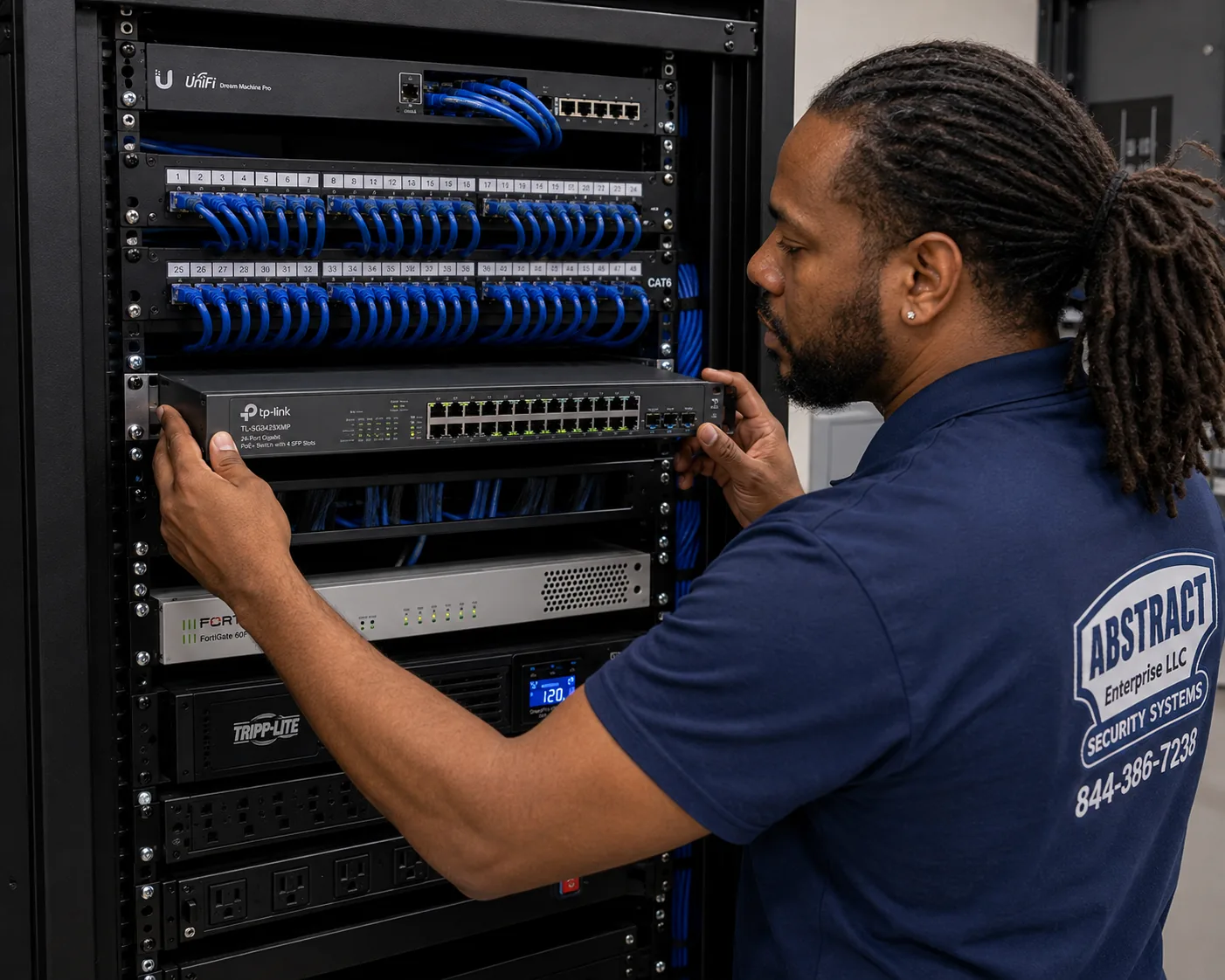
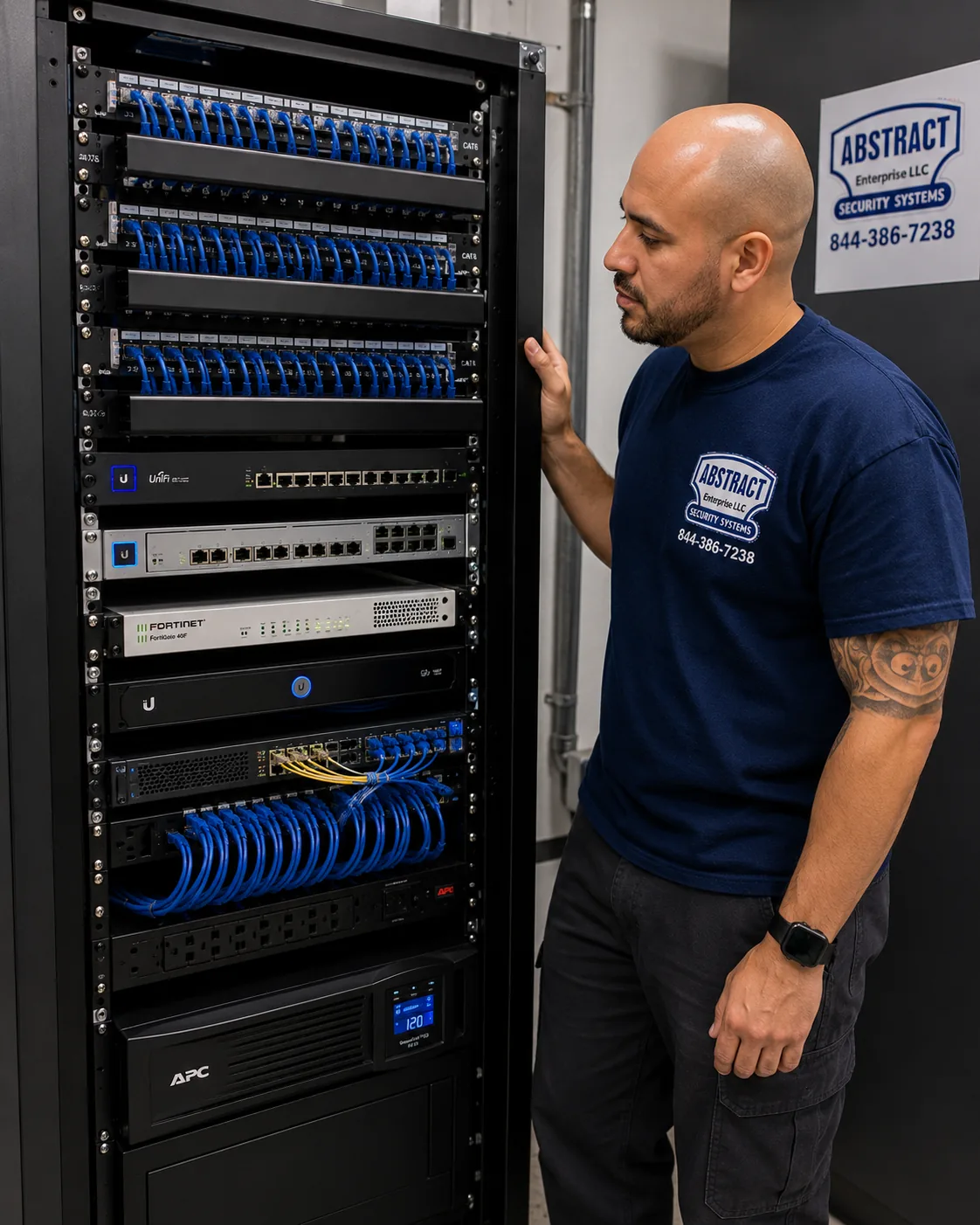
See every Night Owl camera price in NYC and build your own system →
Wired DVR & PoE NVR Kits · Cable Routed Through Old Masonry · Recorder and App Set Up Before We Leave
Night Owl sells its camera systems as do-it-yourself kits, and its own representative has said on Best Buy's question pages that installation is not included with the product and is not offered through Night Owl. In New York City, that leaves a lot of people holding a box of cameras and a recorder in a building that was never designed for them: more than 80 percent of the city's housing is over 50 years old, according to the Citizens Housing and Planning Council, and most of the cable a wired camera needs has to pass through brick, plaster, block or a co-op's common hallway. We install Night Owl DVR and PoE NVR systems across Brooklyn, Queens, Manhattan, the Bronx and Staten Island, whether you bought the kit yourself or want us to supply one. We read the building first, check the kit second, and price the work from our published borough price lists.
Reviewed and updated November 5, 2026 by Anwar Timothy, NYS license #12000287431 · Sources: Night Owl's support articles on wired BNC installation and initial DVR setup, Night Owl's homepage, Best Buy product Q&A answered by Night Owl representatives, SafeWise's Night Owl review, the NYC Landmarks Preservation Commission's 2018 rules amendments and Permit Guidebook Chapter 11, the Citizens Housing and Planning Council housing stock visualization, the Rent Guidelines Board 2026 Housing Supply Report, the NYC Council Data Team's internet access data, NYC 311's camera registration article, amNY's May 16, 2024 report on Connect New York, the NYC Council's June 30, 2026 press release and Legistar records, NY1's July 2, 2026 report on roll-down gates, the NYC SBS business improvement district directory, the NYS Attorney General's 2024 package theft alert, CBS New York reports from Astoria and Park Slope, Security.org's package theft report, and Wikipedia's histories of New York City and the Landmarks Preservation Commission · Dispatched from 1282 Troy Ave, Brooklyn

Owner-operated since 2002 · Thousands of jobs completed · Booked within 2 hours
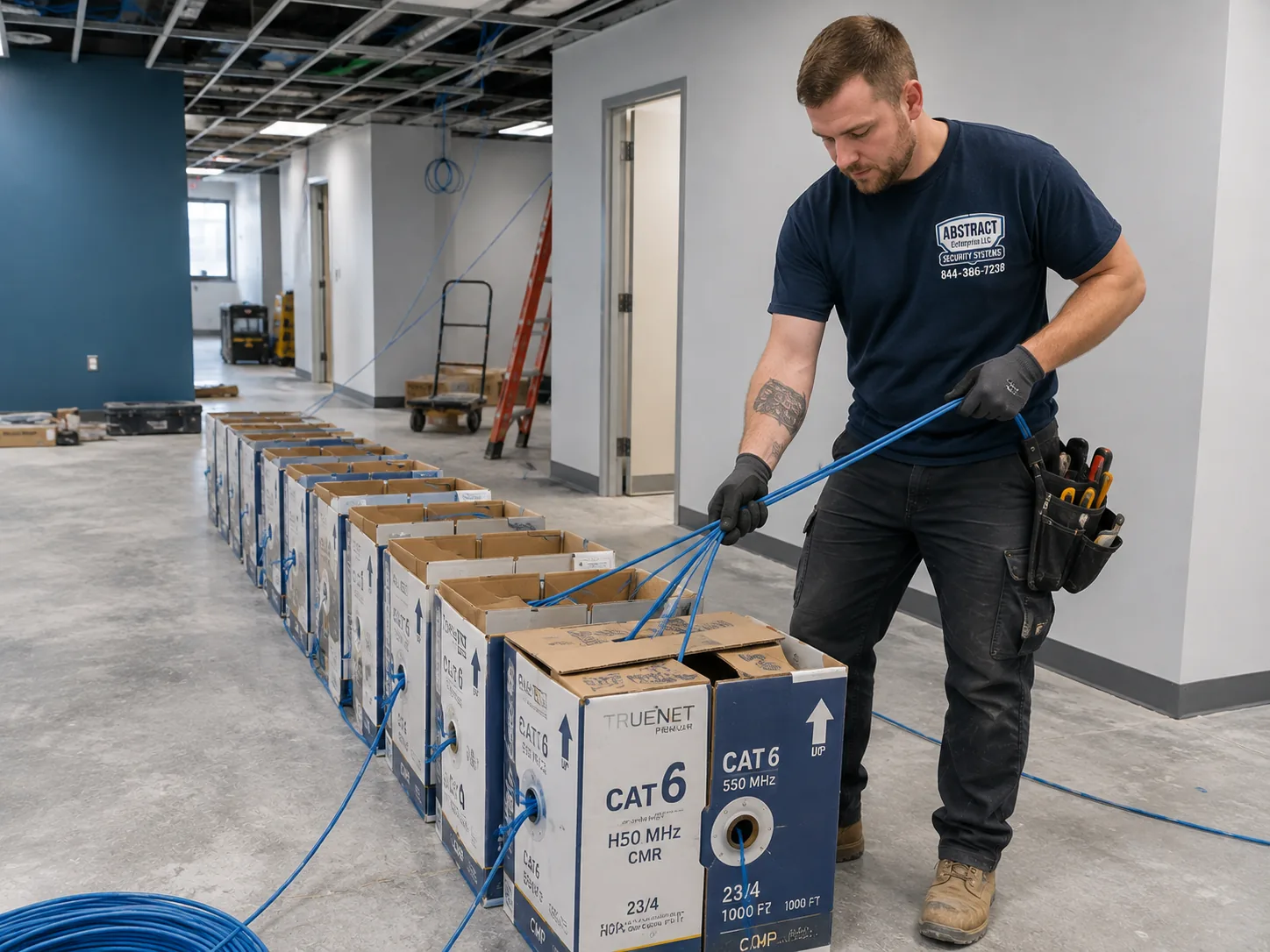
Night Owl camera installation in NYC is mostly a cabling job: we mount the cameras, carry the BNC coax or Ethernet cable from each one back to the recorder through the building, set up the DVR or NVR, and connect the Night Owl app on your phone. The price depends on how many cameras you have, which kind of kit it is, what the walls are made of and how far each cable has to travel. We publish the figures on a separate price list for each borough, linked further down this page, and we book visits within 2 hours of your request. Send us the model number on the box and a few photos of the outside of the building, and we can tell you which lines apply before anyone drills. Call (800) 486-0943 or use the form.
A Night Owl system is built for people who will put it up themselves, and New York City buildings are some of the hardest places in the country to do that. When a shopper asked on Best Buy's product page how much installation would cost for a Night Owl 16-channel DVR kit, the company's representative answered that installation is not included with the product and is not offered through Night Owl, and pointed the buyer to Best Buy's Geek Squad, saying they would need to contact Geek Squad for its pricing. Night Owl's own homepage leans into the self-install idea: it calls the company the "#1 Wired Security Brand*" in the United States and stresses that its systems do not need a mandatory monthly subscription or a long-term contract, with optional cloud backup sold separately. That is an attractive offer for a homeowner. It also means that the moment the box is opened in a Bed-Stuy brownstone, a Jackson Heights garden apartment or a storefront on Fordham Road, the owner is the installer, unless they hire one. Local installers know this pattern well; one Long Island and New York City company advertises specifically for people who recently bought a camera system from Costco, BJ's, PC Richards or another retailer and need it put in.
The difficulty starts with the age of the buildings. The Citizens Housing and Planning Council's housing stock visualization says more than 80 percent of New York City's housing was built more than 50 years ago, and that over half of all units, about 2 million, were built before 1947. The Rent Guidelines Board's 2026 Housing Supply Report puts it the same way: 54 percent of units sit in buildings constructed before 1947. One real estate analysis of the city's residential properties gives a median year built of 1931. Buildings from that era were put together with masonry, often very thick masonry; one pre-war apartment guide describes walls of 12 to 18 inches. A Night Owl wired camera is only as good as the cable that reaches it, and in a building like that, every cable has to get from the outside of the wall to the inside, from the street side to the yard side, and from the floor with the camera to the floor with the recorder. The kit's instructions assume a suburban house with an attic and a garage. Most New York buildings have neither.
That masonry is also why a wired brand makes sense here in the first place. A local installer that specializes in brownstones says their masonry walls are dense enough to significantly degrade Wi-Fi signals, especially between floors or between the rear yard and the front of the building. Our own notes from wireless camera jobs in Brooklyn record back yards and basement units routinely getting a Wi-Fi signal of around -85 dBm, which is too weak for any wireless camera to stream reliably. A Night Owl DVR or NVR kit sidesteps that problem because the video travels down a cable, not through the air. But it swaps a signal problem for a routing problem. The same brownstone installer, and another that covers townhouses across the city, describe the coverage most rowhouses need as the stoop and front door, the garden-level entrance, the rear yard, and any garage or side passage, and they plan cable through basements, closets and existing chases so no wire is left running down the facade. That is exactly the work most Night Owl owners do not want to do on a ladder over a busy sidewalk.
Then there is the question of whose wall it is. Rental units make up 68.1 percent of New York City's housing stock, according to the Rent Guidelines Board's 2026 report, which draws on the 2023 Housing and Vacancy Survey. The Council's housing data and the construction press count about 3.7 million units in total. In practice, most people who want cameras in this city are renters, co-op shareholders or condo owners who control the inside of one apartment and nothing else. An installer blog on camera law in the city notes that tenants generally cannot put cameras in common hallways, lobbies or other shared spaces without the landlord's permission. A legal explainer on apartment camera rules adds that in a co-op or condo, a camera on a hallway wall sits on a common area and typically needs building approval, and that drilling or running cable through the building tends to fall under the alteration provisions of a lease or proprietary lease, which vary from building to building. A Night Owl kit that comes with long runs of cable and a bag of screws assumes the buyer owns every surface. We sort out who owns which surface before we quote.
The reasons people buy cameras in the first place are not hard to find. A New York State Attorney General consumer alert in 2024 told New Yorkers to use a doorbell camera or video surveillance system to help deter package thieves or help police identify them. CBS New York reported a lobby package thief in Astoria, at 36th Avenue and 31st Street, who police said used a screwdriver to disable a lock on the door, and separately reported thieves in Park Slope cutting open packages and taking things out of them while still inside the lobby. One Brooklyn resident, profiled by a delivery company's blog, logged more than 50 porch pirate and trespassing cases in two years. In the wider region, prosecutors charged 14 people in a ring that allegedly used shipment tracking data to target high-value packages, with the stolen goods allegedly sold in New York City and abroad. Security.org's annual package theft report found apartment residents more than three times as likely to have had a package stolen in the previous three months, 10 percent against 3 percent, and noted that apartment dwellers often are not allowed to install doorbell or security cameras outside their units. A wired Night Owl camera aimed at a vestibule, a stoop or a mail area is a common answer; getting it installed legally and neatly is the part that needs a professional.
Owners of rowhouses and smaller buildings face one more layer: the Landmarks Preservation Commission. Wikipedia's summary of the commission counts 1,460 individual landmarks, 121 interior landmarks and 12 scenic landmarks, on top of the city's historic districts, and a building must be at least thirty years old before it can be designated. The LPC's 2018 rules amendments wrote down how staff handle objects people attach to facades, and security cameras are named among them. The commission's Permit Guidebook has a whole section called "Installing Security Cameras," in its chapter on health, safety and utility equipment, with the criteria staff use to approve them, and its examples show dome cameras finished to match the facade. A box of white bullet cameras with long brackets is not what that guidebook pictures for the front of a designated brownstone. In a historic district, where and how a Night Owl camera goes on the building is a design question as much as a technical one.
We also want to be honest about what our research could not find. We were not able to read Google's People Also Ask boxes, related searches, Bing or DuckDuckGo results for Night Owl installation in New York City from our build environment, and we found no Reddit threads in r/NYC, r/AskNYC, r/homesecurity or r/longisland about installing Night Owl kits here. We found no Patch, BKReader or Bronx Times coverage of Night Owl installs, and no city dataset that counts HPD violations, 311 complaints or Department of Buildings permits tied to camera installations. Where this page talks about what Night Owl kits do, it relies on Night Owl's own support pages and the answers its representatives have posted on retailer sites. Where it talks about the law, it relies on city and state sources where we could find them, and says plainly when a claim comes only from another installer's blog.
What owners often add next. In apartment buildings, the camera system is rarely the only entry problem. Once a Night Owl camera is watching the vestibule, owners and boards frequently ask about the intercom, the buzzer or a fob reader on the same door, because the city's legal requirements for entrances focus on those devices rather than cameras. If you want that looked at during the same visit, mention it when you book so the technician brings the right tools.

If your Night Owl DVR or NVR has stopped recording, a camera shows a black tile, or the app has gone dark on your phone after a break-in or a package theft, call us first and we will tell you what to do with the recorder before anyone touches it. Do not unplug and replug it repeatedly, do not reset it to factory settings, and do not let anyone take the hard drive out, because footage you may need for the police or your insurer can be overwritten or lost. Night Owl's support pages note that the DVR records without internet, so a phone that shows nothing does not always mean the recorder saw nothing. Call (800) 486-0943, tell us the borough, the model on the recorder and what changed, and we will book the next available technician. We book within 2 hours of a request; we do not promise a same-day repair, but we will tell you honestly when we can be there.
The single most important fact about a Night Owl install in New York City is not on the front of the box. It is whether the kit is a DVR system that runs on BNC coaxial cable or an NVR system that runs on Ethernet with Power over Ethernet. Night Owl sells both, and the two are not interchangeable. When a buyer asked on Best Buy whether the cables from an older system would work with Night Owl's newer PoE recorder, the company's representative answered that they would only if they were Ethernet, Cat5e or Cat6, because a PoE NVR uses Ethernet to carry both power and video, and older BNC or coax cables will not work with it. For older DVR kits, a Night Owl representative said the opposite: you can keep the existing BNC cabling and simply swap the cameras and the DVR. That one distinction changes the cable we pull, the holes we drill, the power we need at each camera and the length of each run. We ask for the model number before we quote for exactly this reason.
| Question | Night Owl BNC DVR kit | Night Owl PoE NVR kit |
|---|---|---|
| What carries the video | BNC coaxial cable | Ethernet cable, Cat5e or Cat6 |
| How cameras get power | Separate 12 V power; Night Owl's support page lists the camera at 12 V, 2000 mA | Over the same Ethernet cable from the NVR or a PoE switch |
| Cable in the box | Night Owl says each camera comes with a 60 ft BNC cable, with extra cabling available up to 160 ft per camera | Pre-made Ethernet leads; real runs often need cable cut to length |
| Reuse old cameras' cable | Existing BNC coax can be reused, per Night Owl | Only if the old cable is Ethernet; coax will not work, per Night Owl |
| Where the recorder sits | Near the router; SafeWise found the DVR it tested had no built-in Wi-Fi | Near the router or a network jack, wired by Ethernet |
| What it means in an NYC building | Good when an old coax system is already in the walls of a store or walk-up | Best for new runs; one cable per camera through masonry |
Plenty of New York storefronts, walk-ups and two-family houses already have camera cable in the walls from a system that came before. If that cable is coax and it is in good shape, a Night Owl BNC DVR kit can be the least disruptive upgrade there is, because Night Owl's own guidance is that the existing BNC cabling can stay while the cameras and recorder are replaced. In a building where the old runs were fished through plaster years ago, keeping them saves drilling through a wall nobody wants opened again. The catch is that old coax is not always what it looks like. Connectors corrode at the camera end where weather gets in, cables get nicked where they pass through a window frame, and runs that were spliced in the ceiling are a common source of flickering pictures. We test each run before we promise it can be reused, and if one fails we replace that run rather than the whole system.
If there is no usable cable in the building, or you have bought a PoE NVR kit, every camera needs its own run of Ethernet back to the recorder or to a PoE switch. In a brownstone that usually means one run up from the cellar to the stoop, one out to the rear yard, and one or two to the garden-level door. In a pre-war walk-up it may mean runs from a basement recorder up through a dumbwaiter shaft, a pipe chase or a closet stack to the vestibule and the roof door, if the owner allows it. The advantage of PoE is that the same cable carries power, so there is no need for a separate power supply hanging beside a camera on a brick wall. The trade-off is that every run has to be good Ethernet, properly terminated and tested, because a single poor connector can stop a PoE camera from powering up at all.
Night Owl's BNC kits ship with a 60 ft cable per camera, and the company says extra cable can take a run to 160 ft. SafeWise's review of a Night Owl system noted that long cable runs are best avoided because they add installation time. In a New York building, the route is rarely a straight line. A cable from a camera over a stoop to a cellar recorder may go up the facade, in through a window frame or a drilled hole, along a basement ceiling, around a boiler and across to the router, and the distance doubles quickly. We measure the route, not the distance as the crow flies, before we decide which camera can use the kit's cable and which needs a longer one.
Night Owl sells several product series, and not all of them work together. One deal listing for a Night Owl 16-channel kit noted that its cameras and DVR were specific to the DP2 series and not backward compatible with other Night Owl wired products. Owners who add a newer camera to an older recorder, or try to put old cameras on a new recorder, often find the picture never appears. Before we add or swap anything, we check the series and the model numbers on both the cameras and the recorder, and we tell you plainly if a camera you already own cannot join the new system.

Most of the time lost on a camera install in this city is lost before the first hole is drilled: a kit that turns out to be a different series than the cameras already on the wall, a recorder that has to sit on a floor with no internet, a board that wants paperwork nobody sent, or a camera position on a landmarked facade that the owner never cleared. A few photos and a few answers prevent nearly all of it. Please do not start drilling or mounting cameras before we come; if you have already started, that is fine, just tell us how far you got.
| What to check | Why it matters in NYC | What to send us |
|---|---|---|
| The model number on the Night Owl box or recorder | Tells us whether it is a BNC DVR or Ethernet PoE NVR kit, how many channels it has and which series the cameras belong to | A photo of the label on the box or the bottom of the recorder |
| How many cameras, and where you want each one | Each camera is a separate cable route through masonry, plaster or a ceiling | A rough sketch or photos from inside and outside each spot |
| Where the router and modem sit | The recorder needs a wired connection to the router for remote viewing; it can record without one | Which floor and room the router is in |
| Who owns the walls | Renters and shareholders often need written permission for common areas and drilling | The landlord's, managing agent's or super's contact |
| Historic district or landmark status | LPC rules keep many cameras off primary facades | The address, so we can check the designation |
| What is already on the building | Old cameras, coax, conduit or a dead DVR may be reusable or may need removing | Photos of any existing cameras and the old recorder |
| Access and parking | Stoops, narrow streets and doorman building rules all affect timing | Elevator or service entrance rules, and whether there is a driveway |
The most useful thing you can tell us is not where you want cameras but what you want them to show. "I want to see who takes packages from the vestibule" leads to a different position than "I want to see the street." A camera that has to identify a face needs to be closer and lower than one that only has to show that someone came through a gate. In a narrow brownstone vestibule, that may mean a small camera inside the outer doors rather than one high on the facade. In a store, it may mean one camera on the register and another on the door at head height. Write a line for each camera and we will plan the positions around those lines.
The recorder holds every minute of footage, so it should not sit where a burglar can unplug it and carry it out. It also needs to be near the router, as SafeWise noted for the Night Owl DVR it tested, and it needs steady power. In rowhouses that often points to a basement utility area or a closet near the router; in stores, a locked back office or a cabinet. Tell us where your router is and where you would like the recorder, and we will tell you whether a cable can realistically reach both.
A security vendor's guide to building compliance in the city makes a point that applies to every Night Owl camera: a camera pointed at an unlit corridor provides no usable footage. City rules require lighting in many common areas, but a vestibule bulb that has burned out or a rear yard with no fixture will undo a well-placed camera. Before the visit, take a photo of each camera position at night. If a spot is dark, we will tell you whether the camera's night vision will be enough or whether a light needs fixing first.

These are the Night Owl jobs New York homeowners, renters, boards, landlords and shop owners book us for. Each is priced from the published list for the borough the property sits in. Where a job needs something beyond the list, such as a longer cable than the kit includes or a PoE switch for extra cameras, the quote names it before any work starts.
Labor-only installation of a Night Owl DVR or NVR kit from any retailer: cameras mounted, cables run, recorder set up and the app connected, with every channel tested before we leave.
Cameras fixed into brick, brownstone, limestone and block with anchors suited to old masonry, placed in the face of the brick rather than the mortar joint wherever the base allows.
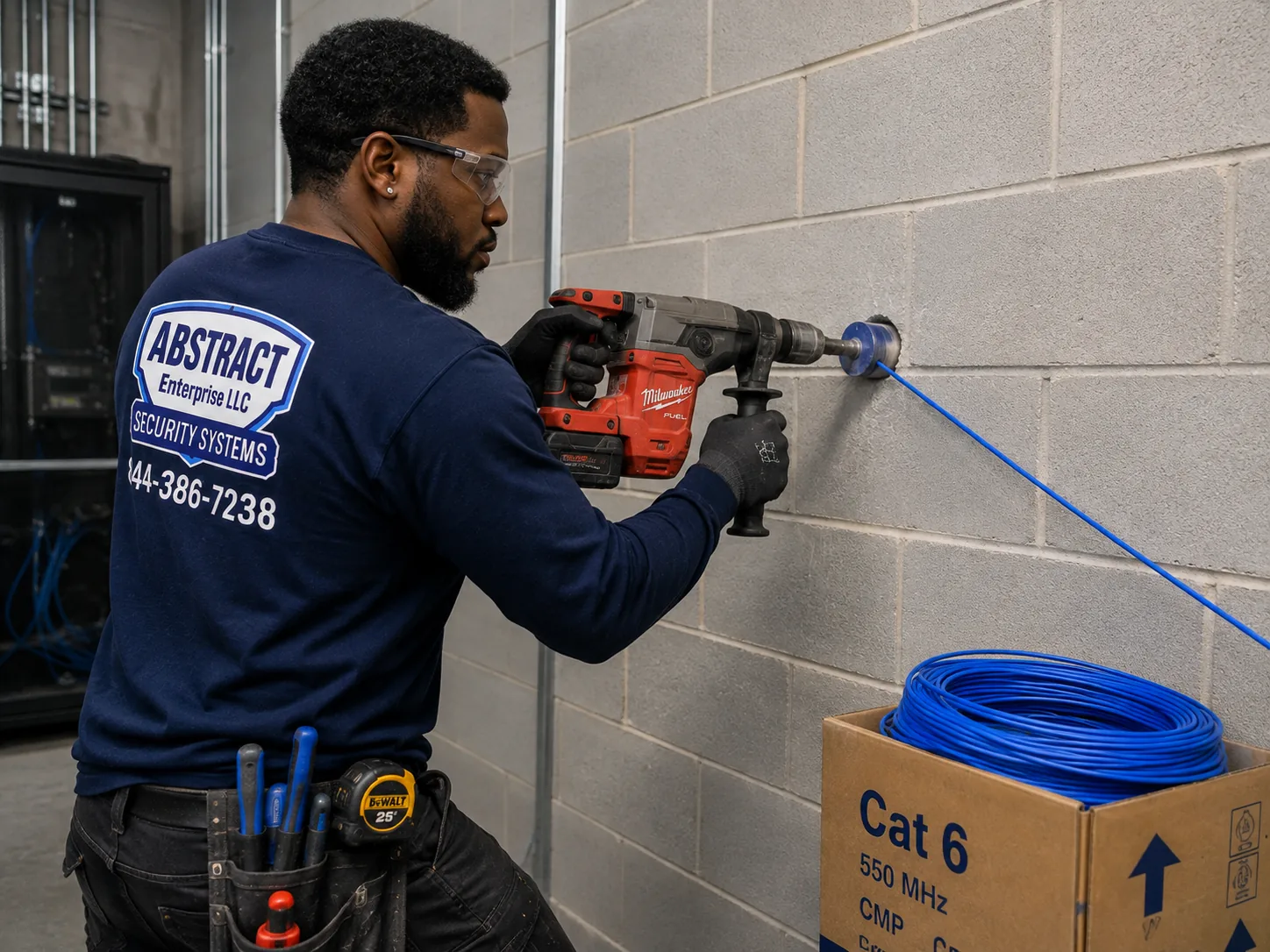
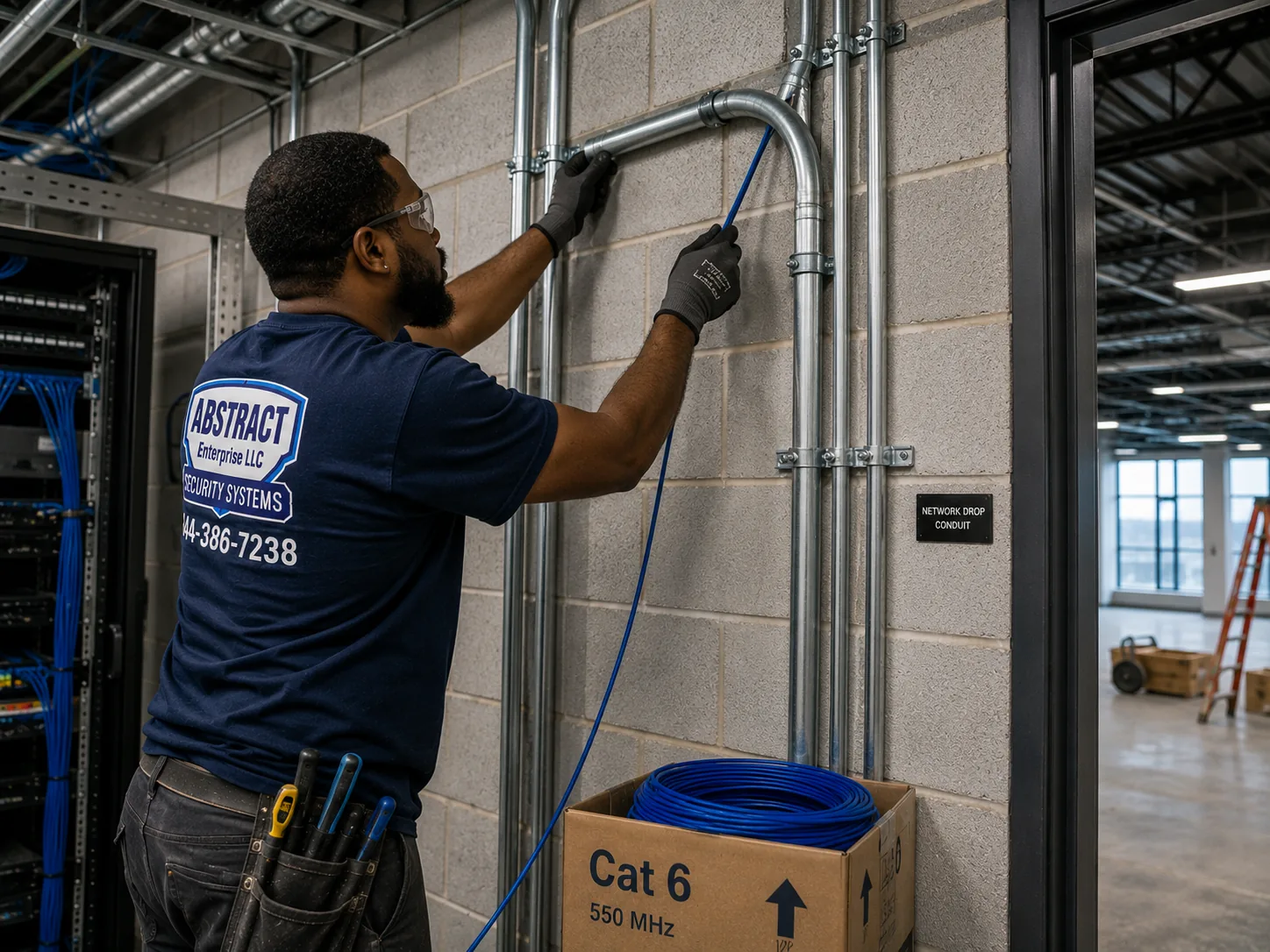
New Cat5e or Cat6 runs from each camera to the NVR or a PoE switch, routed through cellars, closets, chases and ceilings so no cable hangs on the street side of a rowhouse.
Existing BNC cabling tested run by run, then reused with a new Night Owl DVR and cameras, following Night Owl's own guidance that older BNC cabling can stay in place.
Moving from an old coax recorder to a Night Owl PoE system, with new Ethernet where the coax cannot carry PoE, and the old recorder kept until the new one is proven.
The recorder connected to the router, the Night Owl app linked on each phone that needs it, and remote viewing tested from outside the building's own network.
Half-finished jobs picked up where they stopped: cameras re-aimed, loose cables secured, the recorder moved somewhere safer and the missing runs completed.
Register, door, stock room and sidewalk-facing cameras for shops on the city's commercial corridors, scheduled around trading hours and wired back to a locked recorder.
Vestibule, lobby, mailroom, stairwell and rear-yard cameras for owners and boards, positioned to cover shared spaces without aiming into any apartment.

New York City has an unusually wide range of buildings packed close together. A historian describing the city's housing points out that the rowhouse first appeared in significant numbers in Manhattan in the 1820s and 1830s, that rowhouse neighborhoods spread between the Civil War and the First World War, and that most of the city's tenements went up quickly between 1860 and 1910 in Manhattan, Brooklyn and later the Bronx. After them came elevator apartment houses, garden apartments, mid-century co-ops, public housing and glass towers. Each type changes three things about a Night Owl job: what the camera is fixed into, how the cable gets back to the recorder, and who has to agree before anyone drills.
Stoop, garden-level door, rear yard and any side passage. Masonry fronts, often in a historic district, with cable routed through the cellar and interior chases rather than down the facade.
Four- to six-story walk-ups with thick masonry walls. Vestibule, mail area, roof door and rear yard, with the recorder in a basement or the owner's unit and runs through shafts or closets.
Lobbies, package rooms, service entrances and garages. Board approval, insurance papers and work hours come first; cameras cover common areas without facing any apartment door.
Common in Queens, the Bronx and southern Brooklyn. Separate entrances, a shared yard and a basement that often makes the cleanest home for the recorder.
More common in Staten Island and eastern Queens. Driveways, side gates and garages, with framing and siding that take cable more easily than brick but longer distances to cover.
A shop on the ground floor and apartments above. The store's cameras and the building's cameras may need separate recorders, separate owners and separate permission.
| Building | What holds the camera | How the cable usually travels | Who signs off |
|---|---|---|---|
| Brownstone or rowhouse | Masonry anchors in brick or brownstone, or a vestibule ceiling | Through the facade at one point, then the cellar and interior chases | The owner, and LPC if the house is landmarked or in a historic district |
| Pre-war walk-up | Masonry anchors; plaster ceilings in hallways | Shafts, closets, surface raceway in common halls where allowed | The building owner |
| Co-op or condo | Depends on the wall; tested before choosing anchors | Inside the unit if the board allows; common areas only with approval | The shareholder or owner, plus the board or managing agent |
| Two- or three-family house | Brick, siding over framing, or masonry block | Basement ceilings and up the inside of exterior walls | The owner; tenants need the owner's agreement |
| Detached house | Framing behind siding, soffits and eaves | Attic, basement or crawl space where they exist | The owner |
| Store with apartments above | Block, brick or storefront framing | Above the store ceiling to a back office | The tenant business and the building owner |
On a brownstone or brick rowhouse, the camera people most want is the one over the stoop, and it is the hardest one to wire neatly. The facade is masonry, often several bricks thick, sometimes faced with brownstone that chips easily. Our method is to make the smallest possible penetration in the least visible spot, usually tucked under a cornice, beside a door frame or inside the vestibule, then get the cable inside the building immediately and do the long part of the run in the cellar or a closet. Night Owl's BNC cameras need separate power as well as video, so on a DVR kit the cable to the stoop carries both; on a PoE kit, a single Ethernet run does the job. If the house is in a historic district, the camera position is chosen with the LPC's guidance in mind, which we cover below.
In a pre-war walk-up, the useful cameras are usually in the vestibule, at the mailboxes, at the roof door and in the rear yard. The recorder should be in a locked space the owner controls, such as a basement room or the owner's own apartment, never on a shelf in a public hallway. The walls are thick masonry, so we look for existing vertical paths, an old dumbwaiter shaft, a pipe chase or a stack of closets, before drilling anything new. Where a cable has to cross a common hallway on the surface, we use a neat raceway that can be painted to match. A tenant cannot authorize any of this; the owner or managing agent has to, which is one more reason we ask who we are working for when you book.
In a co-op or condo, a shareholder or owner can usually put a camera inside their own unit, but a camera on a hallway wall sits on common property and, as one legal explainer on apartment camera rules puts it, typically needs building approval. Running cable through the building tends to fall under the alteration provisions of a proprietary lease, and a security vendor's compliance guide notes that alteration agreements may require licensed, insured contractors. When a board is installing a building-wide system, the same guide notes that camera system replacements may themselves need board approval. We send insurance certificates and work details in advance and follow the building's hours. Inside, mid-century buildings can mix masonry outer walls with block or metal-stud partitions, so we test the wall before choosing between masonry anchors and fixings for hollow walls.
Detached, semi-detached and two-family houses are easier to wire in one way and harder in another. Siding over wood framing takes a cable more easily than brick, and basements and attics give us places to run it. But the distances are longer: a driveway camera, a side gate, a garage and a back door can be spread around a house so that the kit's 60 ft leads fall short. On Night Owl BNC kits, Night Owl says extra cable can extend a run to 160 ft, and on PoE kits we cut Ethernet to the real length. We plan the recorder's position so the longest run is as short as it can be.
Some of the city's best-known housing was built as planned communities: the garden apartments of Jackson Heights from 1917, Forest Hills Gardens with its precast concrete panels, Parkchester's 171 brick buildings in the Bronx and Co-op City's towers and townhouse clusters. In places like these, a resident's camera is almost always a question for the co-op, condo or management office first, because the exteriors and common grounds are shared. We will install inside a unit with the right approvals, and we will work with management on common-area cameras, but we do not put a camera on a shared courtyard wall without written permission.


Small shops across the city use Night Owl systems because they record locally and do not require a monthly plan. The places those shops sit vary enormously, from Bronx shopping streets to Staten Island's Forest Avenue. The corridors below are among the business improvement districts listed in the NYC Department of Small Business Services directory. We name them to show the kind of commercial streets we work on; we have no information about the cameras in any particular business there and do not claim any of them as clients.
A BID-managed shopping street of chain stores, discount shops and small independents, where cameras usually watch doors, registers and stock rooms behind security gates.
Harlem's main commercial corridor, with storefronts below older buildings where cable runs often travel above a shop ceiling to a back office.
Downtown Brooklyn's Fulton Mall Improvement Association area and Brownsville's Pitkin Avenue, both listed BIDs with long rows of street-level retail.
Astoria's Steinway Street and the Downtown Jamaica Partnership district, busy retail areas where a shop's camera often has to see a crowded doorway.
Brooklyn's 86th Street BID, a long retail strip where narrow storefronts mean the recorder and the register are often only steps apart.
The Forest Avenue BID, with retail in lower buildings and parking lots that put cameras on longer cable runs than Manhattan storefronts.
A home camera is mostly watched after something happens. A store camera is often watched live from the counter and then pulled for a specific minute when there is an incident. That changes how we set up a Night Owl recorder for a business. The register camera is placed close enough to show hands and the counter, not just a person's back. The door camera is at a height that captures faces as people come in, rather than the tops of heads. The recorder sits in a locked office or cabinet, not under the counter where a thief can grab it. The motion settings are tuned so the sidewalk outside does not fill the drive with passing feet. And at handover we show the owner how to find and export a clip, because that is what police and insurers will ask for.

We do not publish stories about a particular customer's building unless we can document them, so this is not a tale about one address. It is the routine our technicians follow when they arrive to install a Night Owl kit the customer has already bought.
The box stays closed for the first few minutes. We read the label for the model and the series, then open it and count the cameras, the cables and the power supplies against the packing list, because kits sometimes arrive short or with a mismatched camera. We look at the back of the recorder to see whether the camera ports are round BNC connectors or square Ethernet jacks, which settles what kind of cable the job needs. Then we walk the property with the owner: front, back, every door and every gate, and the room where the router lives. At each proposed camera position we look at what is behind the wall, where the cable would come in, and how far it is to the recorder by the route a cable would actually travel. We plug in one camera on its own and check it on the recorder before anything is mounted, so a dead camera is found on the floor and not on a ladder. Only after the owner has agreed every camera position and seen the cable routes do we start drilling. On old masonry buildings, that half hour is what keeps a job neat.
Who installs it, and what it costs
A local installer, or a retailer's own service. Night Owl's representative has said on Best Buy that installation is not offered through Night Owl and pointed buyers to Best Buy's Geek Squad, saying they would need to contact Geek Squad for pricing. Local security companies, including us, install Night Owl kits bought from any store. What matters is that whoever comes understands both the kit and the building: a crew that has drilled brownstone and pulled cable through a walk-up's cellar will handle a New York job very differently from one that mostly works in suburban houses with attics.
Installing your own kit is billed as labor only, so you are not paying for equipment twice. Four cameras is the most common Night Owl starting kit, and a four-camera quote turns on four things: whether it is a BNC DVR or PoE NVR kit, how far each camera is from the recorder by the real cable route, what the walls are made of, and whether any position needs board, landlord or Landmarks approval. The figures for each borough are on our published price pages. Send the model number and photos of the four spots, and we will tell you which lines apply before you book.
Yes, according to Night Owl's own setup guide, which says the DVR does not need internet for basic operation; the internet connection is what lets you view the cameras remotely on a phone or computer. That matters in a city where the NYC Council Data Team found nearly a quarter of households without a broadband subscription. As long as the recorder and cameras have power, they record to the recorder's hard drive. When the internet returns, the app reconnects and you can review what was recorded while it was down. What stops recording is a power cut, which is why we look at where the recorder plugs in.
Cables, power and recorders
If the new kit is a Night Owl BNC DVR system, very possibly. A Night Owl representative has said that with older DVR kits you can use the existing BNC cabling and simply swap out the cameras and the DVR. If the new kit is a PoE NVR system, no: Night Owl says PoE recorders need Ethernet, Cat5e or Cat6, and that older BNC or coax cables will not work with them. In both cases we test each old run before relying on it, because corroded connectors and damaged sections are common on cable that has been on a building for years.
On a Night Owl BNC kit, longer cable. Night Owl says each camera comes with a 60 ft BNC cable and that extra cabling can take a run up to 160 ft per camera. On a PoE kit, we run Ethernet cut to the real length. Sometimes the better answer is to move the recorder: if the router can sit nearer the middle of the house, or a small PoE switch can be placed partway along, the longest run shrinks. We measure the route a cable would actually take, which in a rowhouse is usually much longer than the distance between the two points.
It can, if a cable can connect it to the router. SafeWise found that the Night Owl DVR it reviewed had no built-in Wi-Fi and had to be connected to the router by Ethernet. So the recorder can sit in a closet two floors up as long as we can run one network cable between it and the router, and run every camera cable to the closet instead. The question is which is easier in your building: bringing the camera cables to the router's location, or bringing one network cable to a safer room. In masonry buildings, we usually choose whichever route already has a chase or a closet stack.
Rowhouses, rentals and boards
They can. The LPC's 2018 rules amendments cover objects attached to facades, security cameras among them, and the rules would bar many such objects from a primary facade unless there is no feasible alternative or another agency requires the location; installations must avoid damaging significant architectural features and be as small as possible. The commission's Permit Guidebook has a section on installing security cameras, and its examples show dome cameras finished to match the facade. In practice that often means a small camera inside the vestibule or on a side or rear wall instead of a large bullet camera above the front door. We check the designation and plan with those rules in mind; the permit itself is the owner's application.
Not without the landlord's permission. An installer's guide to camera law in the city notes that tenants generally cannot install cameras in common hallways, lobbies or other shared spaces without the landlord's agreement, and a legal Q&A answer about a Brooklyn apartment building adds that a camera put in a common area without consent can be removed by the landlord. Inside your own apartment the rules are different, though you still must not record anywhere other people have an expectation of privacy. Ask the landlord in writing, describe exactly where the camera and cable would go, and we will install only what they approve.
Yes, and it is worth doing properly. Drilling or running cable through a building usually falls under the alteration provisions of a proprietary lease, which differ from building to building, and boards often require licensed, insured contractors for the work. We provide our insurance certificate and the details of what we will drill and where the cable will travel, so the managing agent can approve it. If the board says no to any common-area run, we can usually keep the whole system inside the unit with the cameras facing out of windows or into the apartment's own entry.
Footage, police and privacy
The usual way is to export the clip from the recorder to a USB drive or download it through the app, then hand it to the detective. We show owners how to do that at handover, and we make sure the recorder's clock is correct, because a clip stamped with the wrong time causes confusion. Separately, NYC 311 says businesses can voluntarily register camera locations with the NYPD at NewYorkCityConnect.org so police know footage may exist. amNY has also reported on Connect New York, a pilot letting businesses share live views with their precinct, where businesses choose how and when footage is accessible.
We usually suggest leaving it off unless you have taken advice. A legal guide to New York recording law notes that cameras capturing sound must meet the one-party consent rule in the state's eavesdropping law, and a camera recording conversations at a counter between staff and customers is not the same as recording pictures of a doorway. Video alone does what most store owners need. If you want audio for a specific reason, talk to your lawyer first, and we will set the cameras up to match what they advise.
Fixing what's already there
Yes, and you are not alone. One buyer's review on eBay said a box claimed a 4-hour install that actually took more like 10 hours, and that was without the masonry and building rules that come with a New York job. We start by testing what you have already done, every camera and every cable, so nothing good is redone. Then we finish the runs that are missing, re-aim cameras that are pointing at the sky or the ground, fix loose cables to the wall and move the recorder if it is somewhere exposed. Tell us how far you got when you book.
Only if the two are compatible, and with Night Owl that is not guaranteed. One retailer listing for a Night Owl 16-channel kit noted that its cameras and DVR were specific to the DP2 series and not backward compatible with other Night Owl wired products. A BNC camera will never plug into a PoE NVR, and some BNC cameras only work with recorders from their own series. We check the model numbers on the old camera and the new recorder before you buy anything else, and we test the old camera on the new recorder before mounting it.

These are the pieces of a Night Owl system we fit in New York homes, buildings and shops, and the parts we add when the kit alone is not enough for the building. Equipment you supply is installed as labor only; anything we supply is quoted at the price on your borough's list.
Night Owl's coax-based recorders, which Night Owl says can reuse existing BNC cabling. A good fit for stores and walk-ups with a working coax system already in the walls.
Ethernet-based recorders that power cameras over the same cable. Our usual recommendation for new runs through brownstones, rowhouses and two-family houses.
Night Owl's longer, pointed cameras for yards, driveways, gates and alleys, where a visible camera is part of the deterrent and the building is not landmarked.
Compact cameras for vestibules, lobbies, store ceilings and historic facades, where a smaller, less obtrusive shape is easier to approve and harder to knock out of aim.
A small PoE switch where there are more cameras than recorder ports or a run is too long, and Ethernet or BNC cable cut to the real route length.
A battery unit so a brief power cut does not stop recording or corrupt the drive, placed with the recorder in a locked closet or office.
The app linked on each phone that needs it, notifications tuned so a busy sidewalk does not trigger constant alerts, and a test from outside the building's network.
Anchors, junction boxes and sealant chosen for brick, brownstone and block, so the camera base sits flat and water does not follow the cable inside.
People sometimes ask whether they should skip the Night Owl kit and call a national company instead. ADT is best known for monitored alarm systems sold with a monitoring plan. Ring and SimpliSafe are best known for doorbells, cameras and self-install security kits that rely heavily on Wi-Fi and the cloud. A Night Owl system is a different idea: wired cameras recording to a recorder in your own building, with Night Owl saying there is no mandatory monthly subscription. In masonry buildings where Wi-Fi struggles between floors, that wired approach often works better, but only if the cable is installed well. That is the part a local installer does: reading the brick, the co-op rules and the Landmarks status, then running the cable. If you would rather have monitoring, that is a different service with its own quote.
| Question | Night Owl wired kit, locally installed | Typical Wi-Fi camera kit |
|---|---|---|
| How video travels | BNC or Ethernet cable to a recorder in the building | Wi-Fi to the router and often to the cloud |
| Thick masonry walls | Not affected once the cable is in | Signal can be badly degraded between floors and to the yard |
| Recording during an internet outage | Continues to the recorder, per Night Owl | Depends on the product's local storage |
| Monthly plan | No mandatory subscription, per Night Owl; optional cloud backup | Often needed for recorded clips |
| Hardest part in NYC | Running cable through old buildings | Getting a strong enough signal |

We could not capture Google's AI Overview or its People Also Ask boxes for Night Owl installation in New York City from our build environment, so we will not pretend to quote them. What follows are claims we see repeated in quick online answers about DIY camera kits and about installing them in this city, set against Night Owl's own documentation, city sources and what we see on jobs. Marketplaces such as Angi, HomeAdvisor and Fixr publish national camera cost guides that feed many of those answers. They are useful for a rough idea, but they cannot know that your rear yard is behind three courses of brick.
This is the most common misunderstanding we hear from people who have just bought a kit. Night Owl's representative has answered on Best Buy's product pages that installation is not included with the product and is not offered through Night Owl.
The same answer pointed buyers to Best Buy's Geek Squad, with the note that Geek Squad sets its own pricing. Night Owl sells its systems as do-it-yourself kits, and its support pages are written for owners doing the work themselves.
So in New York City, the realistic choices are to install it yourself, use a retailer's service, or hire a local installer. Whichever you choose, the person doing the job will need to deal with masonry, building rules and long cable routes that the box does not mention.
Quick answers often say you can reuse the wiring from a previous camera system. That is only half true. Night Owl has said its older DVR kits can use existing BNC coaxial cabling, with the cameras and recorder swapped out.
But Night Owl has also said that its PoE NVR systems use Ethernet to carry power and video, that older cables only work with them if they are Cat5e or Cat6, and that BNC or coax will not work with a PoE NVR. Many New York stores and walk-ups have coax from an older system, and a PoE kit bought to replace it will not run on it.
Before you buy, check what is in the walls and what the new kit needs. If you have already bought a PoE kit for a building full of coax, the job includes new Ethernet runs, and the quote should say so.
For a suburban house with wood framing, wireless cameras can be easier. In a New York brownstone, often they are not. A brownstone installer reports that masonry walls are dense enough to significantly degrade Wi-Fi, especially between floors and between the rear yard and the front of the building.
Our own notes from Brooklyn wireless jobs record back yards and basement units routinely getting a signal around -85 dBm, too weak for any wireless camera to stream reliably. A camera that drops off the network at 2 a.m. is not protecting anything.
That is the main reason a wired Night Owl kit suits so many city buildings. The cable is harder to install, but once it is in, the thickness of the walls stops mattering.
Many answers blur recording and remote viewing. Night Owl's own initial setup guide says the DVR does not need internet for basic operation; the internet connection is what lets you view remotely on a computer or phone.
That distinction matters here. The NYC Council Data Team found that 24.5 percent of households had no broadband subscription, and 12.8 percent relied on a cellular data plan only. A household without home internet can still record footage on a Night Owl recorder; it just cannot watch live from a phone at work.
Where remote viewing is wanted, we connect the recorder to the router by cable and test the app from outside the building's network, so you know it works before we leave rather than when something happens.
Owners of a landmarked building, or a house in a historic district, cannot always do that. The Landmarks Preservation Commission's 2018 rules amendments cover objects attached to facades, security cameras included, and would bar many such objects from a primary facade unless there is no feasible alternative or another agency requires it.
The commission's Permit Guidebook includes a section on installing security cameras, with criteria staff use to approve them, and examples showing dome cameras finished to match the facade. Its records show applications to legalize cameras and intercoms put up without permits, such as one for an 1887 to 1889 rowhouse at 52 West 76th Street in the Upper West Side/Central Park West Historic District.
If your building is designated, the camera position, size and finish are part of the plan from the start. A small camera in the vestibule or on a rear wall is often easier to approve than a large bullet camera above the front door.
Some answers assume landlords must install cameras. A security vendor's guide to building compliance says there is no general New York City law that mandates cameras in apartment buildings; what the law does require is intercoms and lighting. Multiple Dwelling Law section 50-a requires intercoms in many apartment buildings built or converted after 1968 with eight or more units.
Other claims circulate too. One installer blog says a "Local Law 50" requires buildings with common-area cameras to notify residents, and another says recent Real Property Law changes require landlords to allow tenant cameras. We could not find an official source for either and do not treat them as law.
What is clearly law is the Penal Law: a camera installed covertly where a person has a reasonable expectation of privacy can support a Class E felony charge under section 250.45. We never aim a camera into anyone's apartment, bathroom or bedroom, and we position hallway cameras to cover the hallway, not one tenant's door.
The box may say so. A buyer's review on eBay said a kit claiming a 4-hour install took more like 10 hours. SafeWise's review of a Night Owl system noted that long cable runs add installation time.
In New York City, add masonry, building permission and real routes. A four-camera job in a brick rowhouse with the recorder in the cellar can mean drilling the facade, pulling cable along a basement ceiling and fishing it up through a closet before a single camera is aimed.
That is why we plan the routes before we book and tell you honestly how long your job is likely to take. A quick estimate that ignores the building is the one most likely to leave you with a half-finished system on a Sunday night.
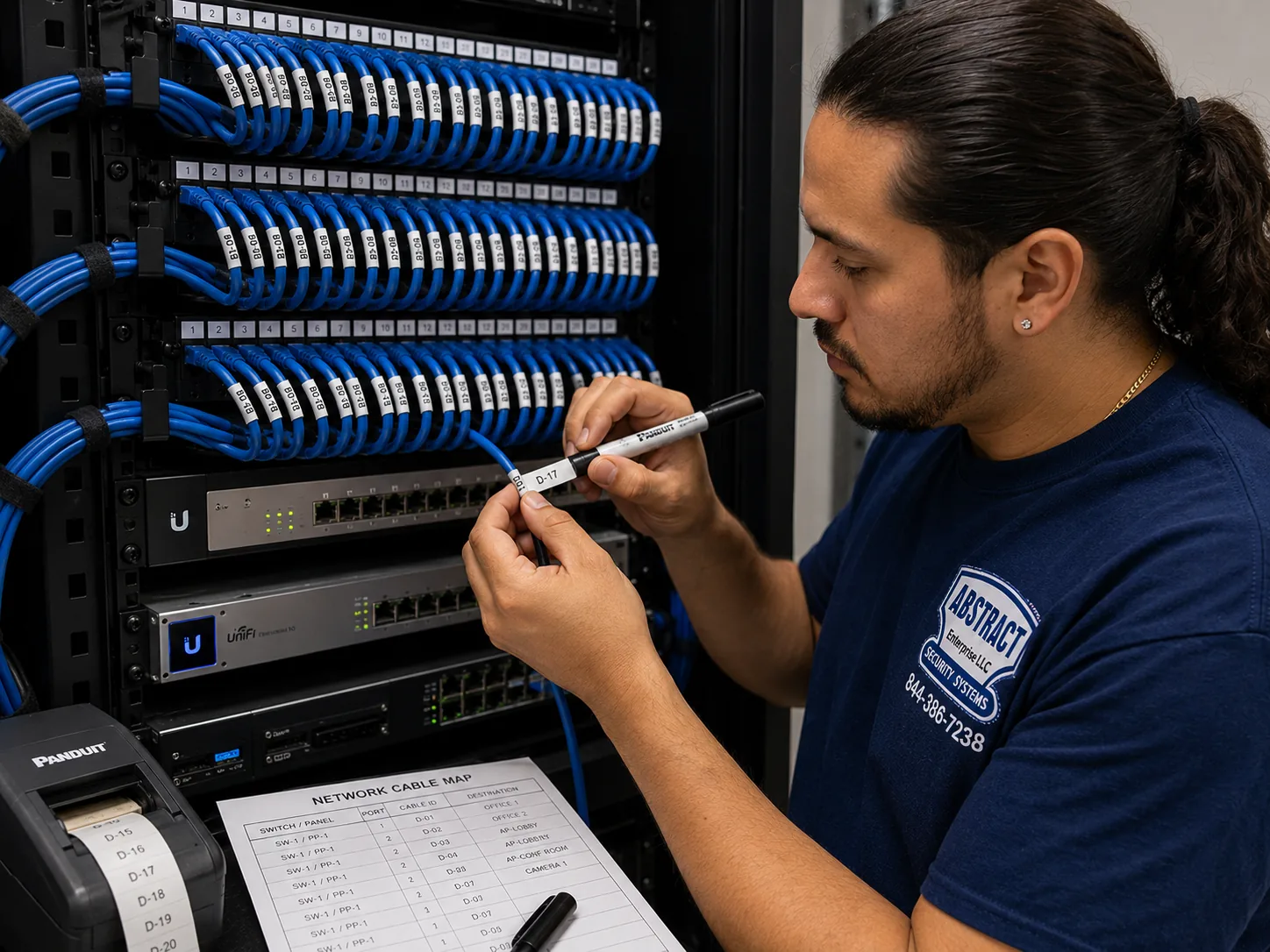
Send a photo of the label on the box, a few photos of where you want cameras, and the borough you are in. A technician will tell you whether the kit suits your building, whether any old cable can be reused, and which lines of your borough's price list apply. Call (800) 486-0943, message us on WhatsApp, or use the quick form.
Every Night Owl job we do in New York follows the same eight steps, whether it is two cameras on a Staten Island driveway or sixteen across a Bronx apartment building. The order matters most in old masonry buildings, where a cable route chosen too quickly is the usual reason a job runs long.
You send the model number, the number of cameras and the building type. We confirm whether it is a BNC DVR or Ethernet PoE NVR kit and match the job to your borough's price list.
Who owns each wall, whether a board needs an alteration request or insurance certificate, whether the building is landmarked, and what hours drilling is allowed.
Every entrance, stoop, yard, hallway and storefront walked with you, each camera held at its spot on the live view, and what it must see agreed.
A route from each camera to the recorder through cellars, closets, chases and ceilings, measured against the kit's cable, with any old coax or Ethernet tested first.
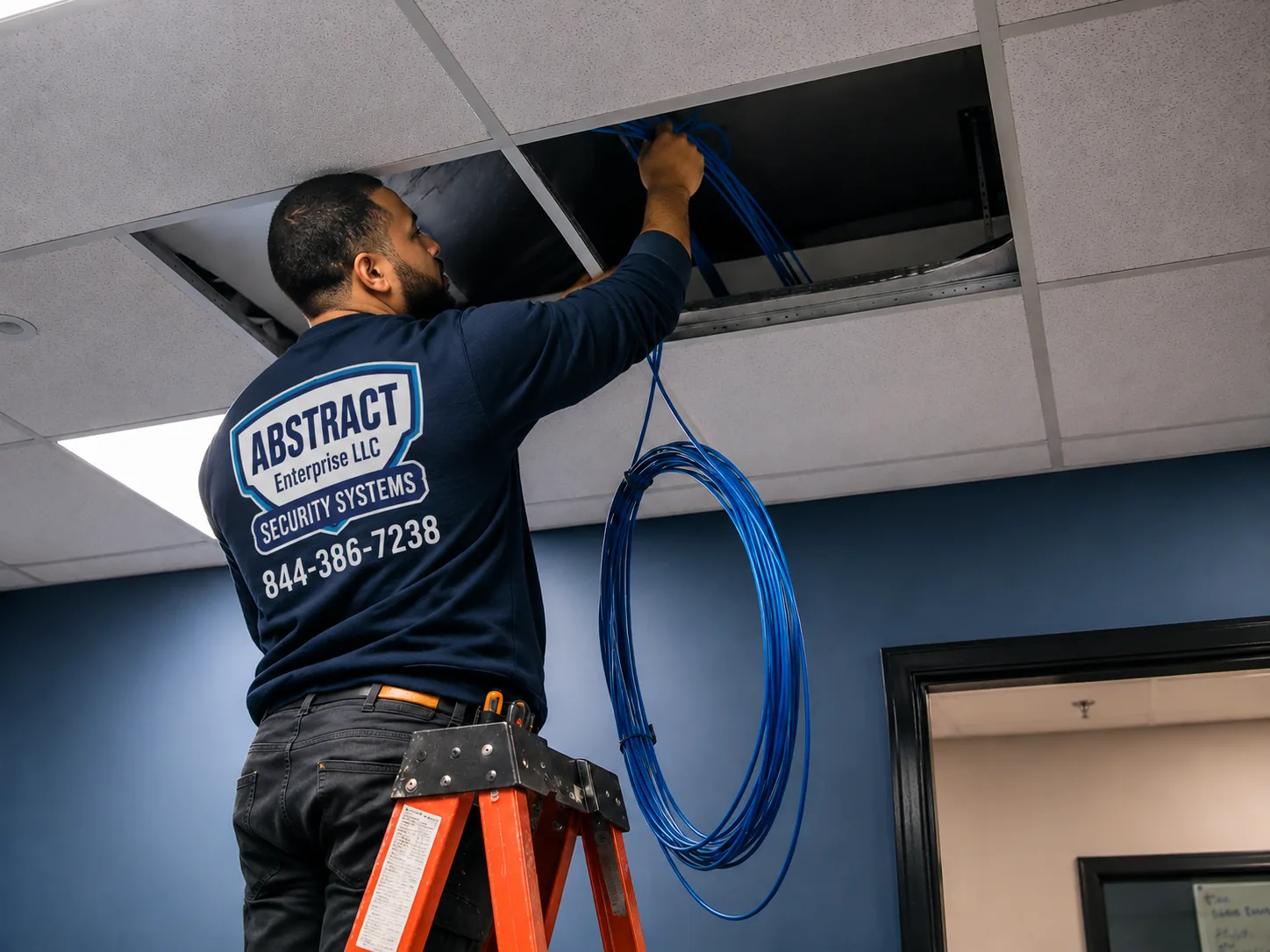
Masonry and framing drilled with the right bits, BNC or Ethernet pulled along the agreed routes, and every outside penetration sealed against water.
Cameras fixed into solid brick, block or framing with anchors for the material, then aimed while watching the recorder's live view.
The recorder placed somewhere protected and wired to the router, clock, recording and motion zones set, and the Night Owl app linked on each phone.
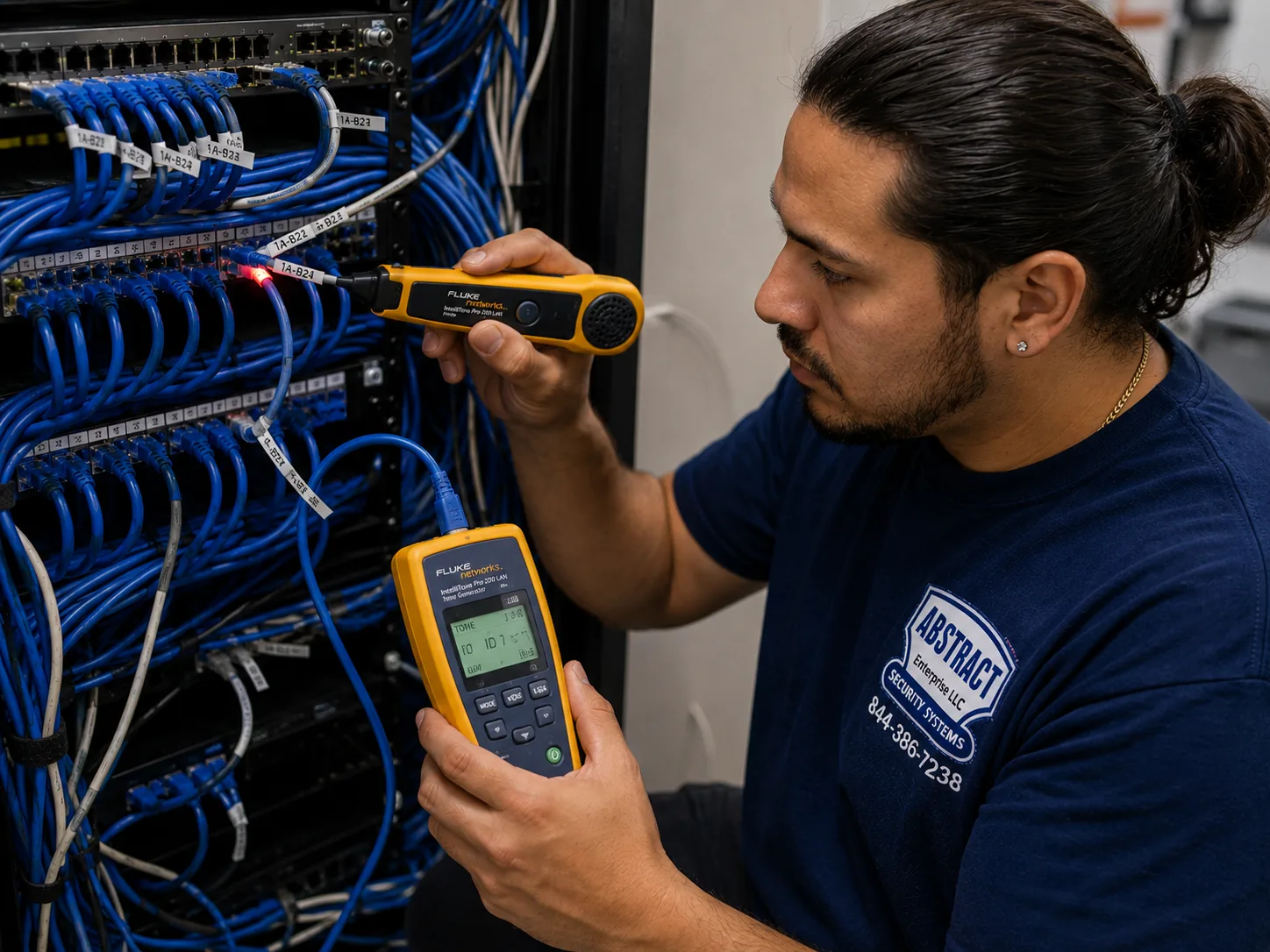
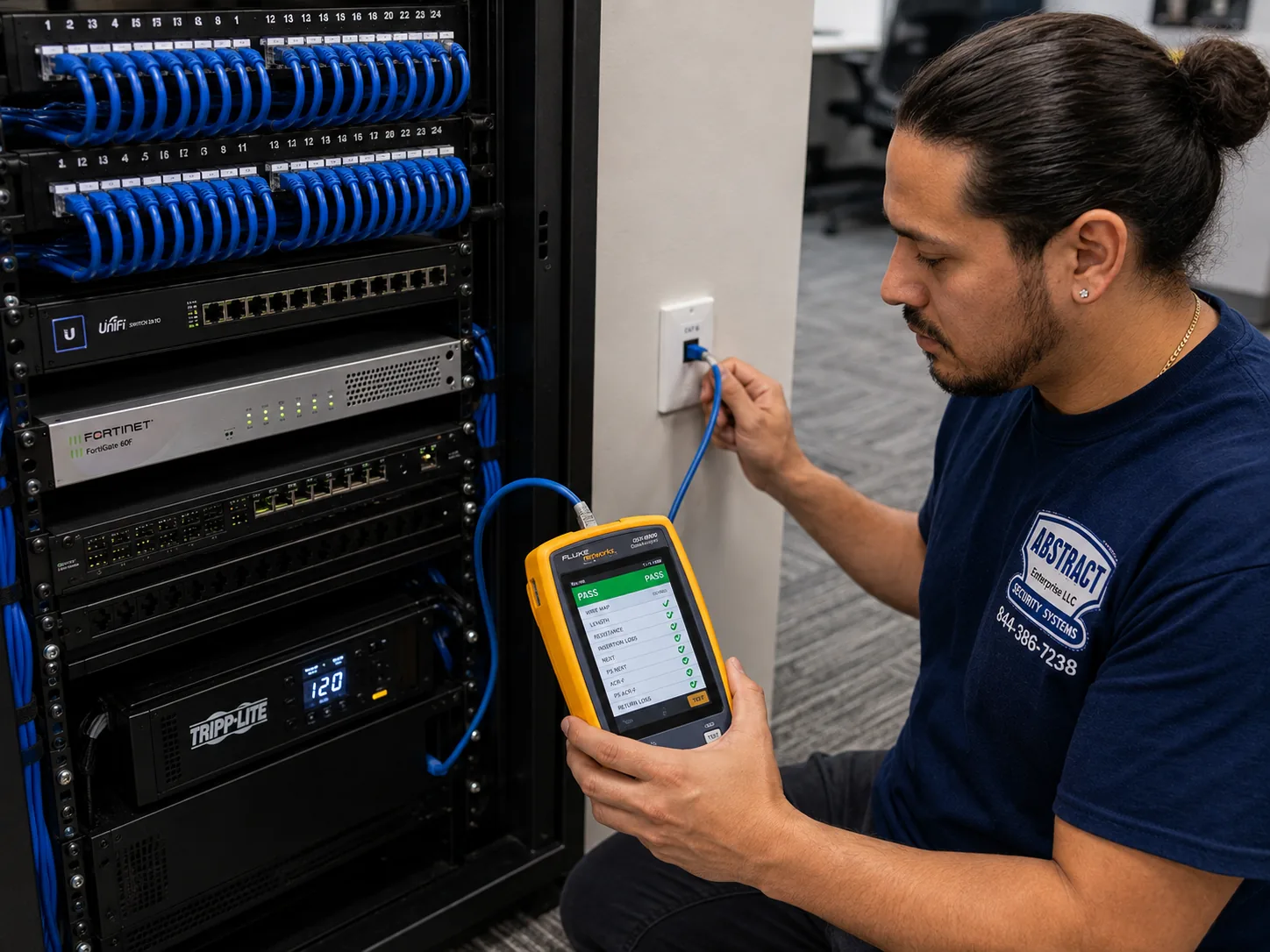
Every channel checked for picture, recording and playback, a clip exported to prove footage can be handed over, cables labelled and a written layout left with you.

The five boroughs became one city on January 1, 1898, after a referendum that passed by a razor-thin 64,744 votes to 64,467, and the subway that opened in 1904 bound them together. They still build very differently. These six places show the range of buildings a Night Owl install in this city has to deal with.
Designated on November 23, 1965 as the first New York City historic district, according to the Historic Districts Council, and lined with 19th-century brownstones where LPC rules shape camera placement.
Built from 1880 to 1884 to Henry J. Hardenbergh's design, a co-op since 1961 and a city landmark since 1969, with floors of steel beams and brick or terracotta arches, per Wikipedia.
Built by Metropolitan Life between 1939 and 1942 as 171 brick buildings of 8 or 13 stories, later converted to condominiums, according to Wikipedia.
A planned community by Olmsted Jr. and Grosvenor Atterbury, with streets laid out by 1910 and Atterbury's standardized precast concrete panels, per The Cultural Landscape Foundation.
A Mitchell-Lama cooperative with 15,372 units in 35 high-rises and 7 townhouse clusters, where common-area cameras are a management decision.
A historic district designated in 2004 with about 92 freestanding houses, from 1830s Greek Revival to early 20th-century Arts and Crafts, per Six to Celebrate.
We install Night Owl systems in every borough, with a separate published price list for each: Night Owl installation prices in Brooklyn, Queens, Manhattan, the Bronx and Staten Island. Beyond the city, we also serve Long Island and the Hudson Valley. For our other services, start from the Abstract Enterprises Security Systems home page.
We do not quote one number for "New York City," because a Night Owl install in a Staten Island house and one in a Manhattan co-op are different jobs with different access costs. Each borough has its own published list, and a property is priced from the list for the borough it sits in. The citywide overview is on our NYC Night Owl camera installation price page, and each borough page has the full line-by-line list. Lists for Manhattan and Staten Island run higher than Brooklyn and the Bronx, reflecting access, parking and travel, and Queens sits slightly above Brooklyn. Nothing is added on the day that is not on the list or agreed with you first.
| Factor | Why it matters | How we handle it |
|---|---|---|
| Number of cameras | Each camera is a mount, a cable run and a channel to set up | Priced per camera from the borough list |
| Kit type | BNC DVR kits may reuse coax; PoE NVR kits need Ethernet runs | Confirmed from the model number before booking |
| Your kit or ours | A kit you already own is installed as labor only | Equipment we supply is listed separately |
| Wall material | Brick, brownstone and block take longer than siding or drywall | Assessed from your photos and confirmed on site |
| Cable route length | Long routes through cellars and closets take time and extra cable | Measured as the cable travels, not in a straight line |
| Building rules | Board paperwork, set hours or Landmarks constraints shape the plan | Settled before the visit so the day runs to plan |
| Existing system | Old cameras or a dead DVR may need testing or removing | Old runs tested first; only failed runs replaced |
Take a four-camera Night Owl PoE kit you already own, going into a brick rowhouse with the router in the cellar: the stoop, the garden-level door, the rear yard and the vestibule. On the list, that is labor-only installation for four cameras, with the lines for masonry mounting and for any run that needs more cable than the kit includes. Move the same kit into a Queens two-family with siding and a basement, and the masonry lines mostly drop away while the longer driveway run may add cable. Put it into a Manhattan co-op where only the unit's own entry and windows are allowed, and there may be fewer runs but the Manhattan list applies. In every case, the lines you pay for are the lines you were quoted.
Night Owl's own warranty covers the equipment it makes, under Night Owl's terms. Our warranty covers what we supply and install, as set out below; equipment you supply is covered by its manufacturer, not by us.
Full terms — including 50% deposit, one-year parts-only warranty on AESS-supplied products, and the late-fee schedule — are set out in the service agreement.Three common New York Night Owl jobs, each built only from lines on the borough price lists. The figures for your borough are on its price page; open the NYC overview to start.
Two to four Night Owl cameras inside one apartment or one storefront, the recorder in a locked closet or back office, the app linked on two phones. Suits renters with landlord approval and small shops with a drop ceiling.
Four cameras covering the stoop, garden-level door, rear yard and vestibule or side passage, with Ethernet or coax routed through the cellar, masonry mounting where needed and battery backup for the recorder.
Eight or more cameras across a lobby, mailroom, stairwells, roof door and yard, or a store's door, registers, aisles and stock room, with a PoE switch where needed, labelled runs and footage export training.
Most of our Night Owl work is labor-only installation of a kit the customer has already bought from a store. We check the box against the packing list, test every camera on the recorder before it goes up, and tell you before the visit whether the kit suits your building. If a camera from the kit cannot reach its spot with the included cable, or a camera you already own will not work with the new recorder, we say so and show you the list price of what would solve it. You pay labor for your own equipment and list price only for anything we supply.
The citywide starting point for Night Owl work. Night Owl camera installation prices, NYC
Brownstones, rowhouses and storefront corridors. Brooklyn Night Owl prices
Two-family houses, garden apartments and retail streets. Queens Night Owl prices
Co-ops, condos, walk-ups and street-level shops. Manhattan Night Owl prices
Apartment buildings, houses and shopping streets. Bronx Night Owl prices
Detached houses, driveways and garages. Staten Island Night Owl prices
Nassau and Suffolk, each with its own list. Nassau County · Suffolk County
Westchester and the counties north. Westchester County Night Owl prices
Send the model number and photos and we will match the job to your list. Request a free quote
Not to Night Owl for basic recording. Night Owl says its systems do not require a mandatory monthly subscription or long-term contract, and footage records to the recorder's own hard drive. Night Owl does sell optional cloud backup for owners who want copies stored off site. We do not add any monthly charge of our own for a system we install.
Usually yes. We drill the brick face rather than the mortar joint wherever the camera base allows, use anchors suited to old masonry, make one small cable penetration in the least visible spot, and seal it against water. If the house is landmarked or in a historic district, we also plan the position around the Landmarks Preservation Commission's rules, which often favor a small camera in the vestibule or on a side or rear wall.
Somewhere out of sight, locked if possible, and near the router, since the recorder connects to it by cable for remote viewing. In rowhouses that is often a basement utility area or a closet; in stores, a locked back office or cabinet. We avoid shelves in shared hallways and spots under a shop counter, and we suggest battery backup so a short power cut does not stop recording.
Yes. At handover we link the Night Owl app on each phone that needs it and test it from outside the building's network, so it works away from home. Where the system allows separate users, we suggest giving staff or family members their own access rather than sharing the main password, and we show the owner how to change or remove access later.
Often it is, but it depends on how the provider runs its network. Some 5G home internet services share addresses among many customers, which blocks the kind of inbound connection that older remote-viewing setups rely on. The recorder still records either way. We check how your service and your Night Owl model connect, and tell you plainly what will and will not work before you rely on remote viewing.
Aim them to cover the hallway, the stairs and the entrances as a whole, not one apartment door. A security firm writing on tenant objections warns that a camera aimed only at a single tenant's door can look like harassment in a dispute, and a Justia answer on a co-op question noted surveillance is legal as long as the camera is not aimed into an apartment when the door is open. Writing down your security reasons and telling tenants in advance also helps.
Inside your own unit, a camera that covers only your own space is generally a personal decision, as long as it does not record anywhere other people expect privacy. Hallways, elevators and grounds belong to NYCHA, and residents have asked the city for cameras there, such as a participatory budgeting proposal at Gowanus Houses for cameras in elevators and near apartment doors. We do not install anything in NYCHA common areas without the authority's written permission.
For many businesses it is. NYC 311 says camera locations can be registered at NewYorkCityConnect.org, and that businesses can share live feeds with the NYPD during emergencies. Registration is voluntary, and a bill to make a private camera registry mandatory has been introduced repeatedly without, as far as we found, passing. Registering simply tells detectives that footage may exist at your address.
Equipment you bought yourself is covered by its manufacturer under Night Owl's own warranty terms, not by ours, because our warranty applies to products we supply. If a camera you supplied fails, we can help you confirm the fault so you can claim it from Night Owl or the store, and reinstall the replacement at our listed labor rate. Reviews of Night Owl on sites such as SmartCustomer include complaints about cameras failing, so keep your receipt.
No. Each borough has its own published Night Owl price list, and your property is priced from the list for the borough it is in. Manhattan and Staten Island lists run higher than Brooklyn and the Bronx because of access, parking and travel, and Queens sits slightly above Brooklyn. Long Island and Hudson Valley counties have their own lists too.
The cameras and recorder can, but the cable in the walls usually stays, since pulling it back out of masonry would do more damage than leaving it. When you move, we can take the cameras down, patch the mounting holes neatly, pack the recorder and reinstall it at your new address, priced from that borough's list. If you rent, check whether your lease says anything about removing installed equipment.
A written note of every camera, which recorder channel it uses, which cable runs to it and where that cable travels through the building, plus labels on each cable at the recorder end. In an old city building, where cables pass through cellars, closets and chases out of sight, that note saves the next technician hours of tracing, whether it is us or someone else.
Tell us the borough, the building type, the Night Owl model number and how many cameras you want. Photos of each camera spot make the quote exact. Prefer to talk? Call (800) 486-0943.
From a brownstone stoop in a Brooklyn historic district to a walk-up vestibule in the Bronx, a two-family driveway in Queens, a co-op entry in Manhattan or a house on Staten Island, every Night Owl job starts the same way: the model number on the box, photos of where the cameras should go, and an honest match to your borough's price list. Call (800) 486-0943, message us on WhatsApp, or send the quote form, and we will tell you what your building needs before anyone drills.
Night Owl Camera Installation by neighborhood: NYC hub, NYC night owl camera installation
Night Owl Camera Installation by neighborhood: Long Island hub, Long Island night owl camera installation
Night Owl Camera Installation by neighborhood: Hudson Valley hub, Hudson Valley night owl camera installation