What are you looking for?
About Us Contact Us Careers Get a Free Quote (800) 486-0943
Pick a service
โœ… Got Your Own System?
๐ŸŽฌ Home TheatreQuote ๐ŸŽถ AV SoundQuote ๐Ÿ”‘ Access ControlQuote
Now pick your area
Pick your area
Long Island
Hudson Valley
Services available
Pricing & Tools
Pick a service for pricing
๐Ÿšช Intercom Pricing ๐Ÿ”” Buzzer Repair Pricing
Calculators
๐Ÿ“น Camera System Calculator ๐Ÿšจ Alarm Calculator โšก Cabling Quote Builder โœ… Got Your Own System?
Select your area
AVYCON recorder dark after a Central Hudson outage, or a barn, driveway or Route 9 storefront with no cameras at all? Book a licensed AVYCON install anywhere in the six Hudson Valley counties: (800) 486-0943
Home › AVYCON Camera Installation › Hudson Valley
Stone Houses in Kingston and Hurley · Row Houses in Newburgh's East End · Farms, Barns and Long Drives · Route 9, Route 59 and I-84 Businesses · NYS Licensed

AVYCON Camera
Installation in
the Hudson Valley

Local Recording That Survives an Outage · NDAA-Listed Recorders and Cameras · App Set Up Before We Leave

AVYCON camera installation in the Hudson Valley means an AVYCON network video recorder in your house, barn, office or store, wired cameras feeding it over Ethernet, and the AVYCON ONE app on your phone, all fitted by a crew licensed by New York State. We cover Westchester, Rockland, Orange, Putnam, Dutchess and Ulster from our Bronx office on Fordham Road, and every job is planned around what this region actually throws at a camera system: fieldstone and brick walls in the old river towns, long cable runs to outbuildings, storms that knock out power to tens of thousands of customers at a time, and rural internet that is still being built out. We look at your property first, then plan the recorder, the cameras and the cable around it.

Reviewed and updated November 5, 2026 by Anwar Timothy, NYS license #12000287431 · Sources: AVYCON's support FAQ, NDAA statement and Diversity IP quick start guide, the AVYCON ONE App Store listing, ADI Global Distribution's AVYCON catalog, Kirschenbaum & Kirschenbaum on New York CCTV licensing, the NYS Department of State installer licensing pages, Outten & Golden and RecordingLaw on Civil Rights Law §52-c and Labor Law §203-c, City of Kingston HLPC guidelines and 2025 minutes, the City of Newburgh East End design guidelines, City of Hudson and City of Beacon historic district codes, Mid-Hudson News, the Times Union, Hudson Valley One, the Daily Freeman, News 12 Hudson Valley, Patch, WPDH, WRRV, Stacker's county housing-age data, the Hudson River Valley Heritage Area, Wikipedia, NYS DEC black bear guidance, Teatown, Dia, Storm King Art Center and Yelp listings for the Poughkeepsie area · Dispatched from 460 E Fordham Rd

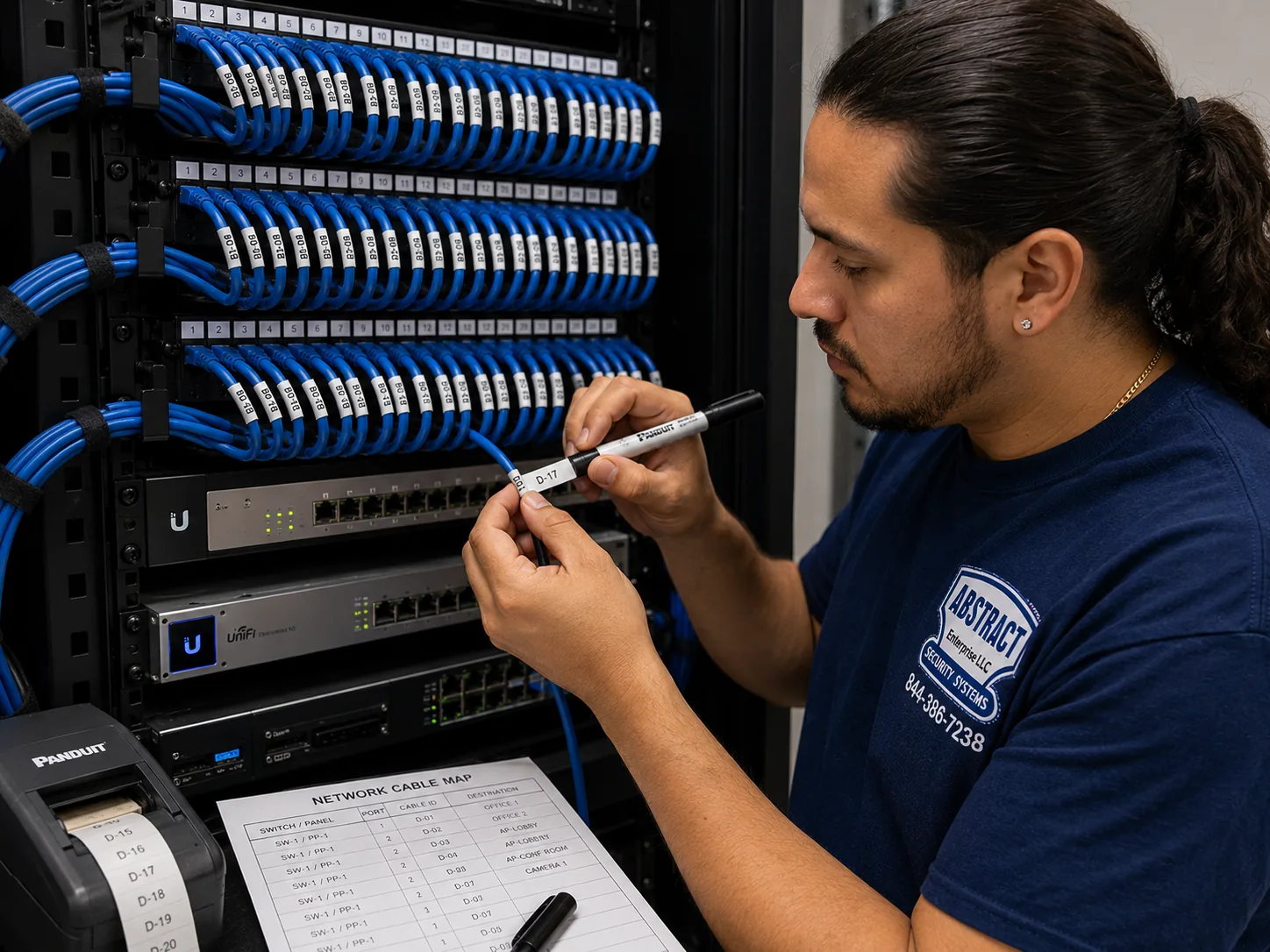
Hudson Valley hub, Hudson Valley AVYCON camera installation job-library photo: a technician printing cable labels at a patch panel beside a printed port map
Photo from the AESS job library, not taken in the Hudson Valley: a technician printing cable labels at a patch panel, with a printed port map beside him. On an AVYCON job at a Dutchess farm or a Newburgh row house, every camera cable is labeled at both ends and matched to a written map like this, so whoever opens the recorder closet years later knows which wire runs to the barn door and which one runs to the porch.
Hudson Valley AVYCON Cameras
Tell us the county, the property type and how many areas you want covered

✅
Request Sent!
We'll call about your Hudson Valley AVYCON system the same business day.
25+
Years Experience
✓
Same-Day Estimates
100%
Licensed & Insured
4.7โ˜…
201 Google Reviews

Owner-operated since 2002 · Thousands of jobs completed · Booked within 2 hours

Quick answer: an AVYCON system here is priced by county from our verified list, which you can read on the Hudson Valley AVYCON price page, and it includes the recorder, the cameras you choose, the cable runs, mounting, setup of recording and detection, and the app on your phone. We book the first conversation within two hours of your request. Three things decide most of the quote: how many areas you want covered, how far the farthest camera sits from the recorder, and what the walls are made of. Send photos of the doors, drives and outbuildings, tell us the town, and we will tell you which county page applies and what your property needs. Call (800) 486-0943 or use the form.

  • Recording stays local on the AVYCON NVR, so footage keeps saving when rural internet drops; the app only needs internet to show it to you remotely
  • Every outdoor cable connection gets the waterproof fitting AVYCON's own quick start guide says must be installed and tightened, which is what keeps a Catskill winter out of the camera
  • Installed under NYS license #12000287431, because New York requires a Department of State license for CCTV used to detect or monitor intrusion, theft or movement
The Neighborhood

Why Hudson Valley Properties Need AVYCON Camera Installation

The Hudson Valley was settled in small, scattered pieces, and its properties still are. Wikipedia records that the Dutch explorer Adriaen Block led voyages up the river between 1611 and 1614, and the Hudson River Valley Heritage Area describes Dutch homesteaders spreading out from Kingston into Ulster and Dutchess and from New York City into Westchester and Rockland. Esopus, the settlement that became Kingston, dates to 1653 according to a historical marker transcribed by HMDB, and the great land grants of the Livingston, Philipse and Van Cortlandt families gave whole stretches of the valley to a few owners. By 1750, the Heritage Area says, most of the region had been settled as a network of small local communities, and that network survives. For a camera system, the result is simple to state and hard to wire: houses that sit far apart, outbuildings that sit far from houses, and town centers built of stone and brick long before anyone thought about running a cable through a wall.

The housing is old, and in some counties very old. Stacker's analysis of Census Bureau data, published in September 2025, gives Westchester a median year built of 1958 and counts 28.0 percent of its homes, about 109,608, as built in 1939 or earlier. Putnam's median is 1968 with 17.9 percent built before 1940; Dutchess is 1971 with 18.0 percent; Rockland is 1970 with 11.5 percent. Those figures understate the problem in the river towns. A study published through Fordham's research library describes Hurley as having the oldest surviving group of colonial stone houses in the valley. Kingston's Stockade District is, in the words of a National Park Service publication, the largest remaining example of early Dutch settlement in New York State. Newburgh's East End Historic District contains 2,239 resources, which Wikipedia describes as the most of any federally recognized district in the state. A camera cable has to get through every one of those walls somehow, and how it gets through decides the price, the look and how long the system lasts.

Then there is the weather and the grid. In July 2026 the Daily Freeman reported nearly 50,000 Central Hudson customers without power after storms crossed the region. In September 2026 Central Hudson's own newsroom described crews restoring power to more than 19,000 homes and businesses after a slow-moving nor'easter. The Times Union reported that thunderstorms in June 2024 affected a combined 60,000 Orange and Rockland and Central Hudson customers, and when Tropical Storm Isaias came through in August 2020, Daily Voice reported NYSEG at 34,150 of 38,693 Putnam customers out at one point. A camera that only works while the power and the internet both stay on is a camera that goes blind exactly when a house sits empty and dark. That is the strongest reason we install AVYCON as a recorder-based system: the footage is written to a hard drive in the building, and with a battery backup on the recorder and the switch, the system keeps watching through the kind of short outage the valley gets every summer.

Internet is the other gap. Ulster County announced in September 2025 that a state ConnectALL award would bring fiber to nearly 1,300 unserved households, businesses and community facilities in remote parts of the county, and Hudson Valley One reported in 2023 that 1,070 Ulster properties still had no broadband at all, with cell service struggling in places like Shandaken. Mid-Hudson News reported in 2025 that ConnectALL grants target every documented unserved and underserved location in sections of Putnam, Dutchess, Orange, Ulster and Westchester, with fixed wireless planned for some of them. Cloud-only cameras, as one consumer guide puts it plainly, cannot save new footage without an internet connection, even if the power is fine. An AVYCON NVR does not need the internet to record. It needs it only to send video to your phone, and when the line comes back, the recordings from the gap are still on the drive.

The valley is also arguing, loudly, about cameras. In October 2026 Mid-Hudson News reported that Ulster County Executive Jen Metzger issued an executive order barring county departments from buying, contracting for or deploying Flock cameras and similar AI-assisted surveillance tools. The Times Union reported that Dutchess County is removing its Flock cameras after a packed public meeting in Pleasant Valley, and earlier that Flock had marked out locations for 11 cameras and license plate readers in Pine Plains before residents pushed back. Hudson Valley One covered Kingston police defending the city's cameras in September 2026 while residents raised privacy concerns. None of that is about a homeowner's own system, and none of it makes private cameras illegal. It does tell us what people here care about: cameras that watch your own property, record to a box you own, and do not quietly feed a network you never agreed to. That is how we set up an AVYCON system, and it is why we ask, at the first visit, exactly what you want recorded and what you do not.

The crime stories in local news are mostly small and close to home. News 12 reported in July 2026 that neighbors in Port Chester shared Ring footage of car break-ins around 4 a.m. on and near Tower Hill Drive. Patch and WRRV reported Scarsdale homeowners finding a hidden camera in the bushes outside their house, with police saying theft rings use cameras to watch for chances to burglarize homes. New York State Police issued a public alert in January 2025 about residential burglaries in Dutchess, Westchester and Putnam, and their tips included installing or activating cameras. In May 2026 News 12 covered an overnight string of smash-and-grab burglaries at businesses in Warwick, Florida and Goshen, where one owner said they had never once had to look at the camera and did not even know the password. That last detail is the one we think about most. A system nobody can log into is not a system. We leave every AVYCON install with the owner able to open the app, find last night's footage and export a clip, and we write it down.

We also want to say plainly what our research did not find. We searched Reddit's Hudson Valley communities and found no threads about AVYCON or about choosing an AVYCON installer here. We found no Patch or hyperlocal article about the brand in the region. We could not capture Google's People Also Ask boxes, related searches, Bing, DuckDuckGo or AnswerThePublic results from our build environment, so the questions on this page come from AVYCON's own FAQ, legal and consumer guides, Yelp and our own past pages, and each is labeled by where it came from in our notes. AVYCON itself is headquartered at 16682 Millikan Avenue in Irvine, California, with an office in Korea, and we found no AVYCON office or certified dealer listed in the six counties. What you get from us is a licensed installer who buys the equipment through the distribution channel AVYCON uses and stands behind the work.

Hudson Valley facts that shape an AVYCON install

  • Old walls: 28.0 percent of Westchester homes and 18.0 percent of Dutchess homes were built in 1939 or earlier, per Stacker's Census analysis, and the river towns hold far older stone and brick.
  • Frequent outages: nearly 50,000 Central Hudson customers lost power after storms in July 2026, and more than 19,000 after a nor'easter that September.
  • Internet still arriving: Ulster's ConnectALL fiber build targets nearly 1,300 unserved locations; in 2023, 1,070 Ulster properties had no broadband.
  • Historic review: Kingston's HLPC reviews exterior work visible from the street before a building permit is issued, and Newburgh's East End requires a Certificate of Appropriateness from its Architectural Review Commission.
  • Surveillance skepticism: Ulster barred county use of Flock and similar AI tools in October 2026, and Dutchess is removing its Flock cameras.
  • Wildlife on camera: NYS DEC places the southern black bear range down to southern Orange and Rockland at the New Jersey line, and Teatown reports Westchester bear sightings rising from 2 in 2019 to 16 in 2021.

What owners often add once the cameras are in. On farms, estates and second homes, the next request after an AVYCON camera system is usually a gate or door that can be opened and logged remotely, or an alarm that calls someone when the cameras see a person after dark. Both are separate jobs with their own quotes. If you think you might want them, say so at the first visit, so the cable we pull now has room for them later and nobody drills through a stone wall twice.

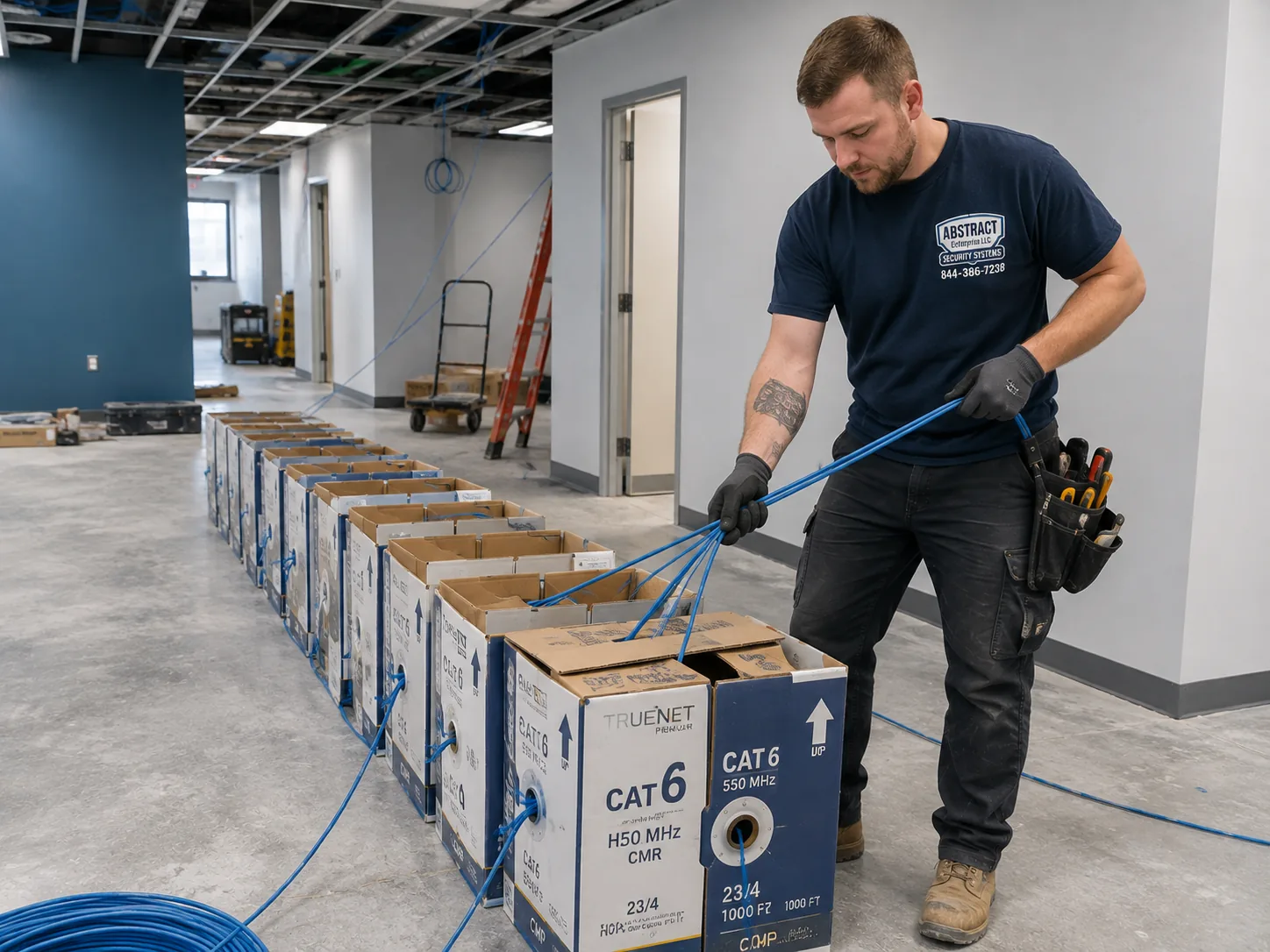
Hudson Valley hub, Hudson Valley AVYCON camera installation job-library photo: boxes of network cable staged on the floor of a working commercial premises for a multi-drop pull
Photo from the AESS job library, not taken in the Hudson Valley: boxes of network cable staged on the floor of a working commercial premises, ready for a pull to several drops at once. A Route 9 strip store in Wappingers Falls or a warehouse off I-84 gets its camera cable staged the same way, so the pull happens in one pass while the business keeps running around us.

Recorder Dead After a Storm, Cameras Offline or a Break-In Last Night? Fast Help Across the Hudson Valley

A recorder that will not boot after a lightning storm, a row of black tiles on the AVYCON screen after the power came back, or a break-in you need footage from today are the calls we move on first. If the recorder is still running, do not unplug it and do not reset it to factory settings; the footage you need may be on its drive. If it is dead, leave it in place and note when it last worked. Then call (800) 486-0943 and tell us the town, the recorder's model if you can read it, and what changed. Our Hudson Valley NVR page already describes replacing recorders killed by lightning, and that is one of the most common reasons a valley system goes dark. We will tell you honestly whether the drive can be read, whether the cameras survived, and when we can get to you.

Six Counties, Six Jobs

From the Yonkers Line to the Catskills: How an AVYCON System Changes County by County

The same AVYCON recorder and the same cameras end up doing very different work as you drive north from the city line. In southern Westchester and Rockland, lots are tight, neighbors are close and the hard part is aiming cameras so they watch your property and not the house next door. Further north, in Orange, Putnam, Dutchess and Ulster, the hard part is distance: the barn, the gate, the pool house or the long gravel drive may sit hundreds of feet from the house, and the grid and internet are less reliable. The table below sets out what we see in each county and the utility that serves it, using only what our sources say. Each county has its own price page, because travel and labor differ across the region.

CountyWhat the record says about its buildingsMain utilities named in our sourcesWhat usually drives the AVYCON planPrice page
WestchesterMedian year built 1958; 28.0% of homes from 1939 or earlier (Stacker)Most of the county on Con Edison; NYSEG in Bedford, Lewisboro, North Salem, Poundridge and SomersClose neighbors, driveway and porch coverage, car break-ins and package theftWestchester prices
RocklandMedian 1970; 11.5% from 1939 or earlierOrange and Rockland UtilitiesSuburban homes and the Route 59, 304 and 202 business strips; bears near the New Jersey lineRockland prices
OrangeNewburgh's East End, with 2,239 resources in one districtOrange and Rockland Utilities and Central HudsonWarehouses on the I-84 and Route 32 corridors, farms, historic row housesOrange prices
PutnamMedian 1968; 17.9% from 1939 or earlierNYSEG and Central HudsonLake houses, wooded lots, long outages like Isaias in 2020Putnam prices
DutchessMedian 1971; 18.0% from 1939 or earlier; county created in 1683Central HudsonHorse farms, estates, Route 9 retail, Beacon's Main StreetDutchess prices
UlsterKingston's Stockade and Hurley's colonial stone housesCentral HudsonStone walls, second homes, rural internet gapsUlster prices

Westchester: cameras among close neighbors

Westchester is the oldest housing stock in the region by Stacker's count, and much of it sits on suburban lots where the house next door is a few yards away. Most of the AVYCON work we expect here is the familiar suburban plan: a camera on the front door, one on the driveway, one or two on the back of the house, and a recorder in a closet or basement. The stories in local news fit that plan exactly. News 12 described Port Chester neighbors trading footage of 4 a.m. car break-ins on Tower Hill Drive, and Westchester police and residents in Scarsdale dealt with burglars leaving camouflaged cameras in bushes to watch homes. What makes a Westchester job careful is aim. A wide lens on a side yard can easily see straight into a neighbor's window, so we set the field of view and, where the recorder allows it, a privacy mask, and we show you the result on the screen before we leave. Our own Hudson Valley NVR page lists an 8- or 16-channel system for a Westchester colonial as a typical job, and that is about the right size for most houses here.

Rockland: tight lots, busy strips and bears

Rockland is newer than Westchester on average, with a median year built of 1970, so more of its homes have drywall and attics we can work through. Its business life runs along Route 59, Route 304 and Route 202 and around the Palisades Center in West Nyack, which Wikipedia describes as an 875,000-square-foot mall as proposed. For homes, the Rockland detail we plan around is wildlife. NYS DEC says the southern black bear range extends to southern Orange and Rockland at the New Jersey border, and that forested land along I-87 is a primary corridor for bears arriving from New Jersey. A camera that alerts on any motion will wake you up for every bear at the trash cans. AVYCON's app sorts alerts into Event, AI and Abnormal and supports people and vehicle detection, so we set alerts to people and cars and let the recorder simply record the animals.

Orange: warehouses, farms and Newburgh's row houses

Orange County gives us the widest spread of jobs. Its east side holds Newburgh, whose East End design guidelines tell owners to integrate security features with the architecture, avoid hiding architectural features and avoid damaging historic building fabric when attaching them. Its corridors carry freight: Wikipedia calls I-84 a major commercial artery and a mainstay of the Hudson Valley economy, and NY 32 runs as New Windsor's main commercial strip into Newburgh's Lake Street. And its west side is farmland. Our own NVR page describes a 32-channel build for an Orange County warehouse as a typical large job. The May 2026 burglaries in Warwick, Florida and Goshen that News 12 covered are a reminder that businesses out here can sit unwatched overnight for long stretches.

Putnam: lake houses and long outages

Putnam is small, wooded and hilly, with lake communities around places like Lake Mahopac, which a listing site describes as 587 acres. Its homes are a mix of older cottages and later houses, with a median year built of 1968. The Putnam detail we plan around is outages. During Isaias in 2020, NYSEG had almost nine in ten of its Putnam customers out at one point, according to Daily Voice. For a lake house or a second home that sits empty during the week, that is exactly when you want the cameras running. We size a battery backup for the recorder, the PoE switch and the router, and if the house has a generator, we put the camera equipment on a circuit the generator carries.

Dutchess: horse farms, estates and Route 9

Dutchess was created in 1683 as one of New York's first twelve counties, and it still holds a long stretch of what writers call the Great Estates Region along the river. Inland are farms; our own NVR page lists a 32-channel system for a Dutchess horse farm among its typical jobs, the kind of build where cameras cover a barn aisle, paddock gates, the drive and the house. Along Route 9 in Wappingers Falls, near the Poughkeepsie Galleria, the county is a commercial corridor, and in Beacon, Main Street runs almost a mile. Dutchess is also where residents pushed the county to remove its Flock cameras. Owners here tend to ask us one question before any other: who can see the footage? With an AVYCON NVR the answer is you, and anyone you give an app login to.

Ulster: stone, second homes and thin internet

Ulster holds Kingston, with five historic districts including the Stockade, and Hurley, with the valley's oldest group of colonial stone houses. A Kingston real estate guide describes the city's stock as stone Stockade colonials, Victorian row houses, mid-century cottages and renovated multis, and warns buyers to expect questions about masonry and wiring. Out in the towns, Ulster has the region's clearest broadband gaps, and Hudson Valley One quotes a local official saying that in most of the county the available provider is Spectrum. For a second home in the Catskill foothills, the plan is local recording on the NVR, careful upload settings so the app works on a modest connection, and a recorder that keeps everything on its drive when the connection drops.

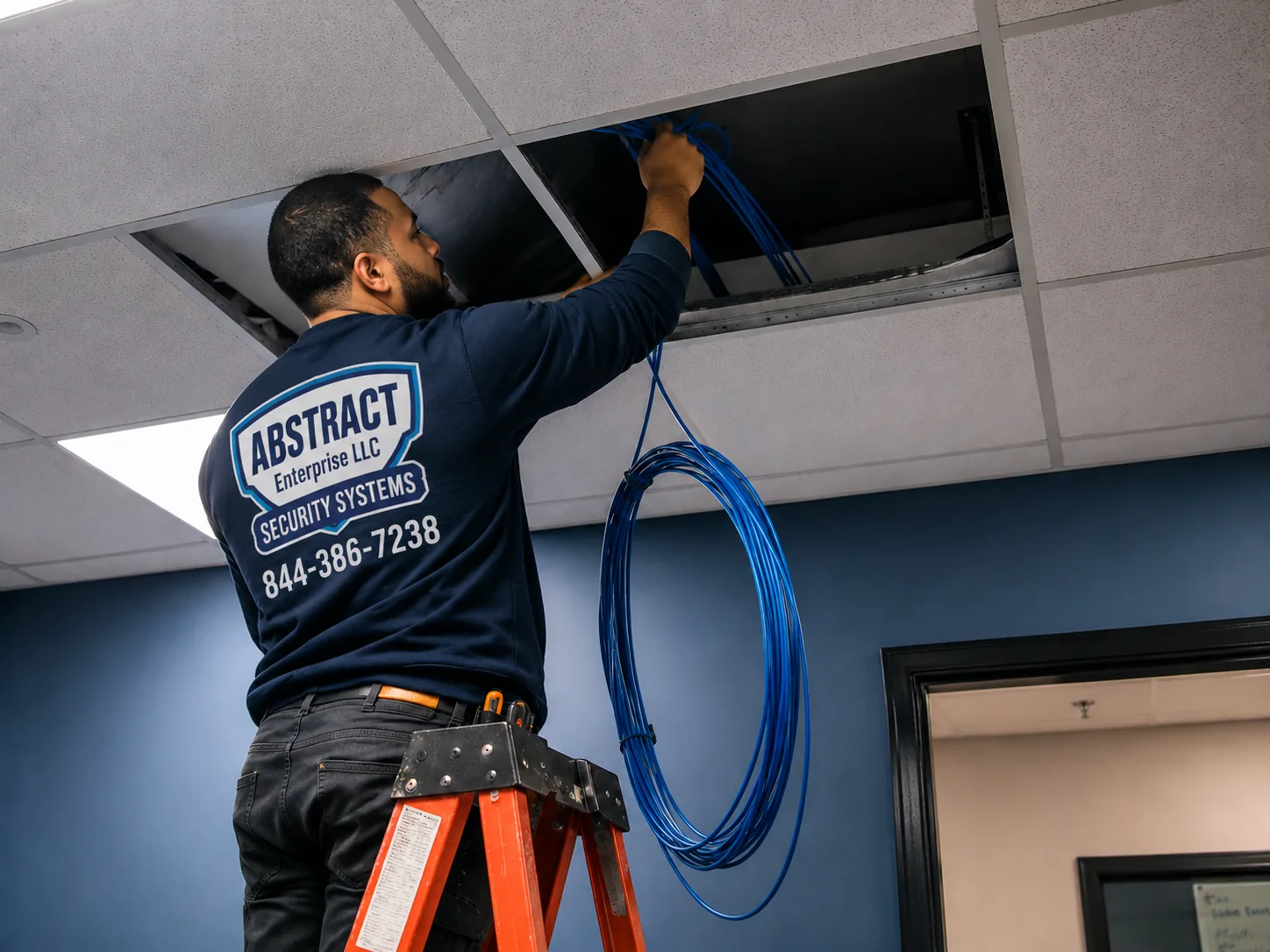
Hudson Valley hub, Hudson Valley AVYCON camera installation job-library photo: a technician feeding cable up through an opened ceiling in an occupied commercial space
Photo from the AESS job library, not taken in the Hudson Valley: a technician feeding cable through an opened ceiling in a commercial space that is still in use. In a Beacon storefront on Main Street or an office in Kingston's Uptown, camera cable for the AVYCON recorder travels above the ceiling like this, so the only things the customers see are the cameras themselves.
Before You Book

Barn to Back Porch: What to Check on a Hudson Valley Property Before We Visit

Most of the time lost on a camera job is lost before the first cable is pulled: a recorder location that has no power or no network, an outbuilding further away than anyone guessed, a historic district approval nobody asked about, or an internet plan that cannot carry video to a phone. A walk around your property with a phone camera and a few notes prevents nearly all of it. Please do not drill into stone, open walls or move existing cameras yourself; just look, pace out the distances and send us what you find.

What to checkWhy it matters hereWhat to send us
Where the recorder could liveThe NVR needs power, ventilation and a network connection; basements in river towns can be dampA photo of the closet, basement shelf or office corner, and whether there is an outlet
Distance to every outbuildingA barn, garage or gate far from the house may need a switch, extender or a separate link instead of one long cablePaced distances from the house to each building, and whether power reaches it
What the walls are made ofFieldstone, brick, block and frame each take different drilling and sealingPhotos of the outside walls where cameras might go
Your internet provider and planRecording is local, but the app needs upload speed to stream to your phoneThe provider's name and the plan, or a speed test run near the router
Historic district statusKingston, Newburgh, Beacon and other towns review visible exterior workThe address, so we can check the district map, and any letters from the commission
Existing cameras and recorderAVYCON NVRs can add other brands' cameras that support ONVIFPhotos of the camera labels and the old recorder
Backup powerOutages here can last hours or days; a generator changes the planWhether you have a generator and what it powers
Who must agreeLandlords, co-op boards, HOAs and business partners may need to sign offNames and emails of anyone who approves the work

Walk the route a visitor would take

Start at the road. Walk the way a car, a delivery driver or a stranger would come onto your property: the end of the drive, the turn toward the house, the porch, the side door, the path to the barn. At each point, ask what you would want to see in a recording afterward. Usually it is a face at the door, a plate or a vehicle shape at the drive, and a person at the outbuilding. Take a photo from each spot facing where the camera would look. That walk tells us more about the right number of cameras than any package does, and it is the same walk our technician will take with you on the day.

Think about what must not be recorded

Before we visit, decide what you do not want on camera. For a home, that is usually the neighbor's windows, their yard and the public sidewalk beyond what you need. For a business, New York's rules are firmer. Labor Law §203-c prohibits cameras in restrooms and locker rooms whatever the employer's policy says, and Civil Rights Law §52-c requires employers to post notice of electronic monitoring where employees can see it. If you rent the property out, think about guests too, and keep exterior cameras on exterior areas. Telling us these limits at the start lets us aim and mask the cameras properly rather than adjusting them after the fact.

Check the internet where the recorder will sit

Run a speed test on a phone or laptop standing next to where the router is, and send us the upload number, not just the download. Upload speed is what carries video from your house to your phone. In parts of Ulster, Putnam and Dutchess that are still waiting on fiber, upload can be modest, and that shapes how we set the app's streams. The recorder records the full-quality picture to its own drive either way; the app can be set to show a lighter stream when you are away, and the full recording is always there to play back on the recorder or download later.

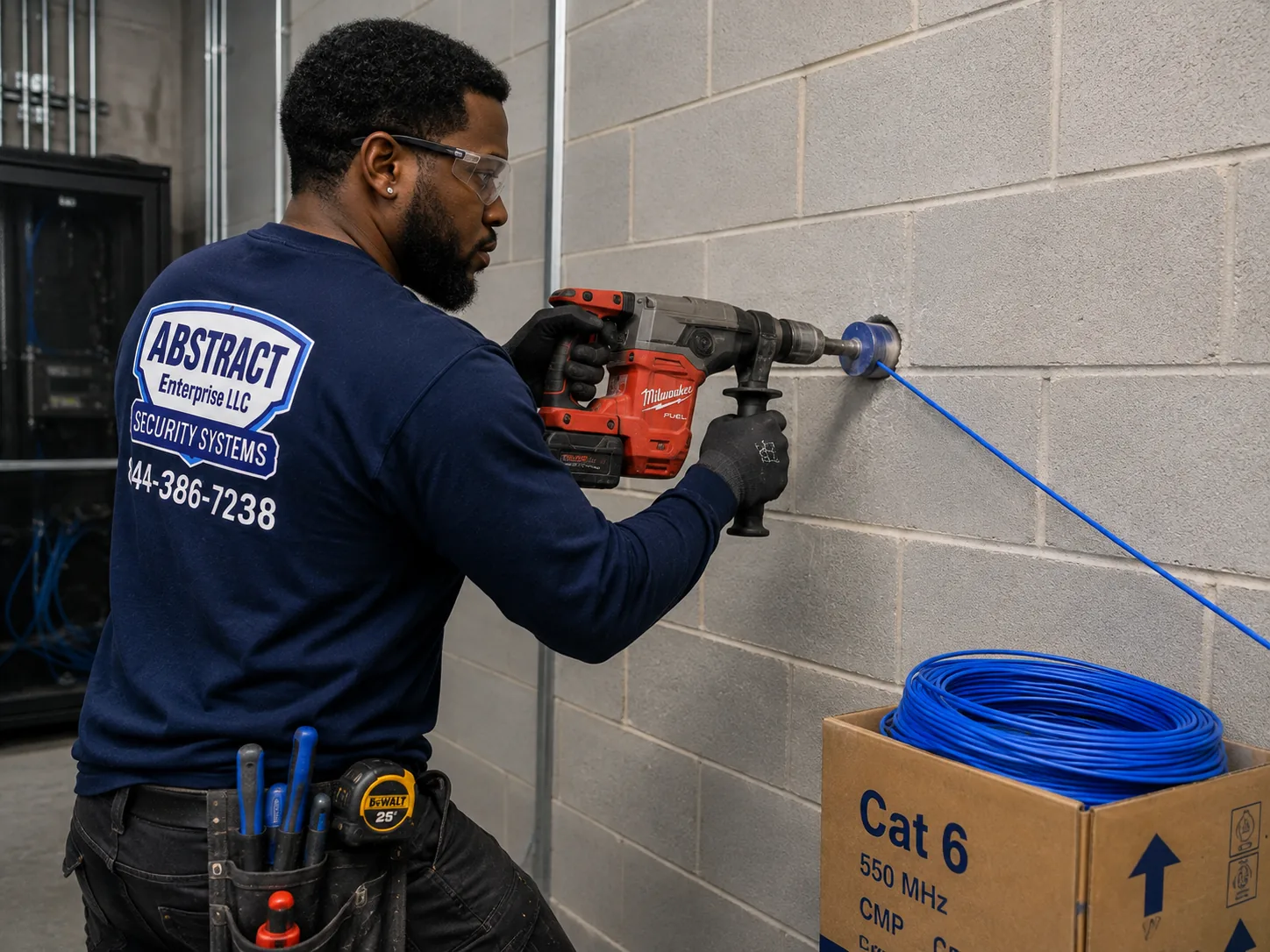
Hudson Valley hub, Hudson Valley AVYCON camera installation job-library photo: a technician core drilling through a concrete block wall to carry cable into a network room
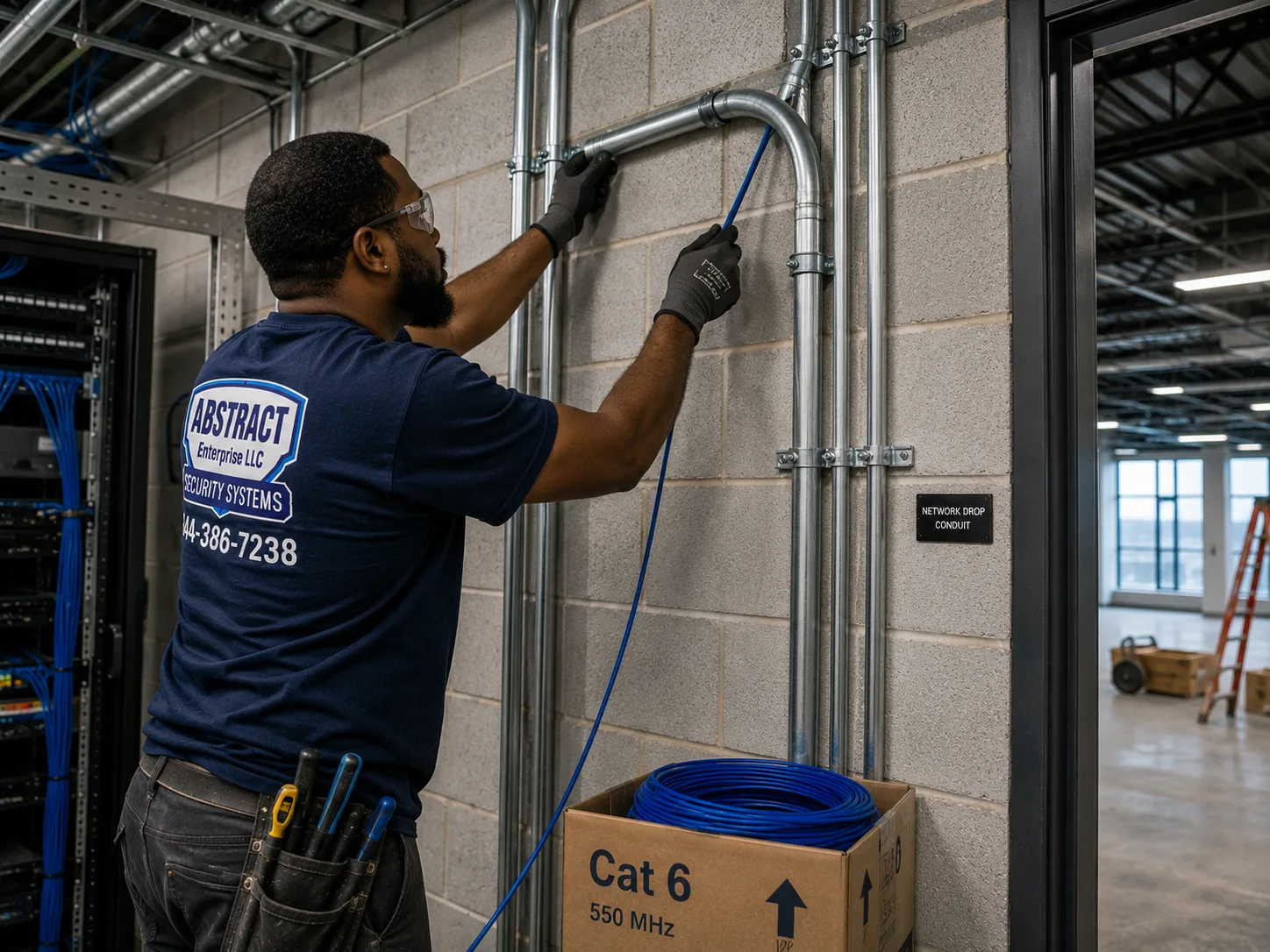
Photo from the AESS job library, not taken in the Hudson Valley: a technician core drilling through a concrete block wall to carry cable through to a network room. A block-walled warehouse on the I-84 corridor or a cellar wall under a Newburgh row house takes the same steady, measured drilling, and the hole is sealed afterward so cold air and water stay outside.
What We Install

AVYCON Camera Installation Services in the Hudson Valley

These are the AVYCON jobs Hudson Valley homeowners, farm owners, landlords, shop owners and property managers book us for. Each is priced from the verified list on the matching county price page. Where a property needs something extra, such as a separate link to a far barn or a battery backup sized for a long outage, the written quote names it before any work starts.

📹

New AVYCON NVR Systems

A recorder sized to the property, wired IP cameras on each door, drive and outbuilding, recording schedules, detection zones and the app, for houses from Westchester colonials to Catskill cabins.

🚜

Barns, Gates and Far Outbuildings

Cameras on paddock gates, barn aisles, equipment sheds and pool houses, connected over buried or overhead cable, a remote PoE switch, or a separate link where a single run would be too long.

🔄

Keep Your Old Cameras

A new AVYCON NVR that adds the other-brand cameras you already own, when they support the ONVIF standard, so a working camera on a stone wall stays where it is.

⚡

Recorder Replacement After Storms

Replacing a recorder lost to lightning or a surge, recovering what can be read from the old drive, and adding surge protection and battery backup so the next storm costs less.

🔋

Battery Backup and Generator Ties

A UPS on the recorder, switch and router, sized for the outages your utility actually gets, and the camera equipment placed on a generator circuit where one exists.

🏛

Historic District Installs

Cameras on Kingston, Newburgh and Beacon buildings mounted to suit the facade, with cable kept inside or run in painted line hides, and the cut sheets your commission asks for.

🏪

Business and Warehouse Systems

Larger AVYCON builds for stores on Route 9 and Route 59, warehouses on I-84, offices and restaurants, with employee notice posted and cameras kept out of restrooms and locker rooms.

🔎

Long-Zoom PTZ Coverage

Pan-tilt-zoom cameras for estates, waterfronts and large lots, chosen from AVYCON's NDAA-listed long-zoom models where a fixed lens cannot cover the distance.

📱

AVYCON ONE App Setup

The app installed on every phone that needs it, the recorder added and saved, alerts trimmed to people and vehicles, and a walk-through of playback and export.

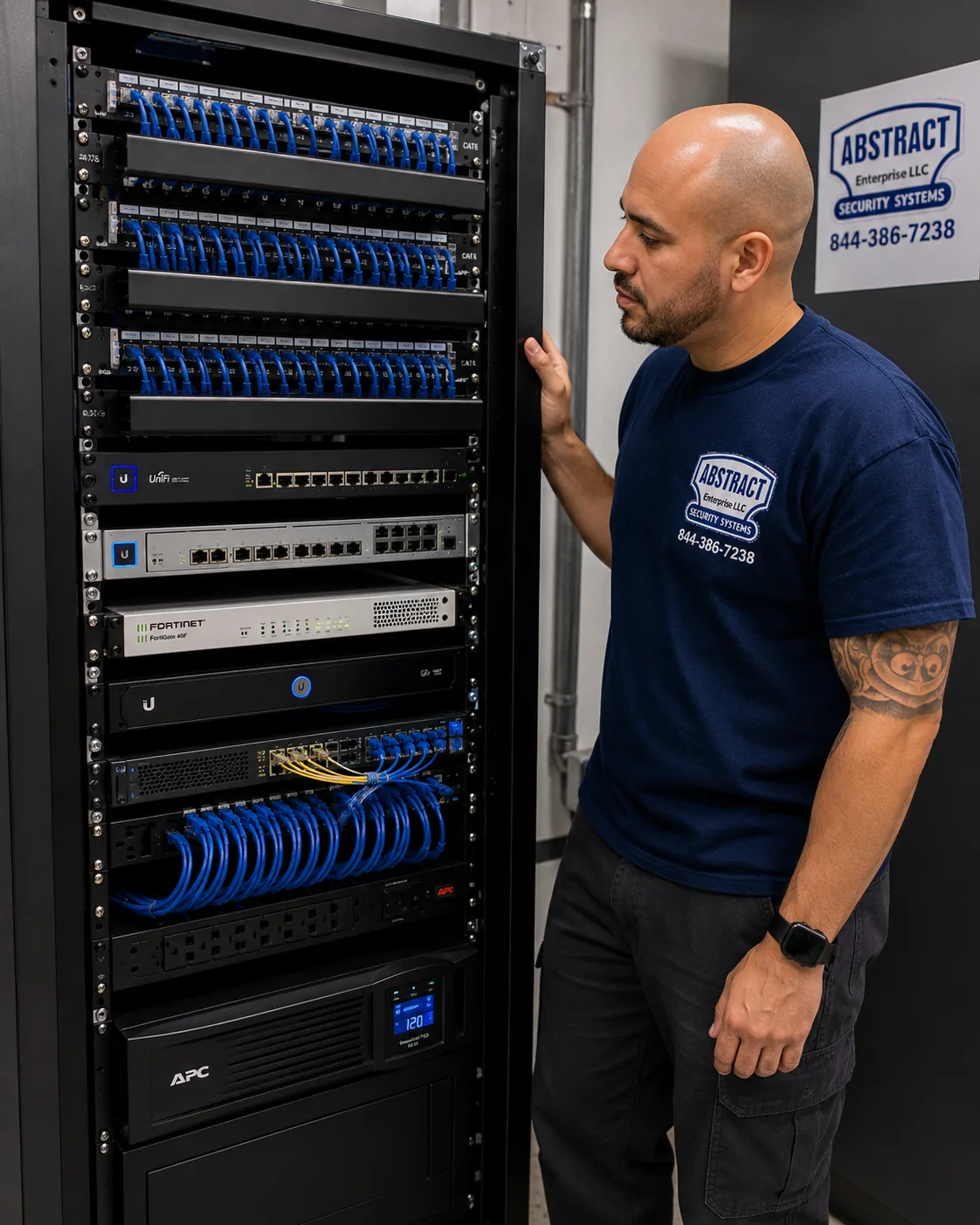
Hudson Valley hub, Hudson Valley AVYCON camera installation job-library photo: a finished network rack with patch panels, switching, a firewall and a battery backup, all cables dressed and identified
Photo from the AESS job library, not taken in the Hudson Valley: a finished network rack with patch panels, switching, a firewall and a battery backup, every cable dressed and identified. On a larger AVYCON build for an Orange County warehouse or a Dutchess estate, the recorder and its PoE switch sit in a rack like this with the battery backup at the bottom, ready for the next Central Hudson outage.
Building Specialists

AVYCON Camera Installation for the Hudson Valley's Architecture

The six counties hold more kinds of building than any single borough. Each type changes three things about an AVYCON job: how the cable gets from the recorder to the camera, what the camera bracket is fixed into, and who has to approve the work before we start. These are the types our sources describe in the region and how we handle each.

Colonial Stone Houses

Kingston's Stockade, where Dutch stone houses stand on all four corners of Crown and John Streets, and Hurley's colonial stone houses. Thick masonry, small attics, and a commission watching the facade.

River-City Row Houses

Newburgh's East End townhouses with ornate cornices and brackets, and gabled Federal-style houses on Parmenter Street. Shared walls, brick fronts, and guidelines that ask security features to fit the architecture.

Suburban Colonials and Ranches

The Westchester, Rockland and Putnam houses from the postwar decades onward. Frame walls, accessible attics and basements, and the simplest cable routes in the region.

Farms, Barns and Estates

Dutchess and Orange horse farms and the river estates. Multiple buildings, long distances, gates, and equipment that needs watching overnight.

Lake Houses and Second Homes

Putnam lake houses and Ulster weekend places that sit empty for days. Remote viewing, outage resilience and alerts that do not cry wolf for every deer.

Mill and Factory Buildings

River-town industrial buildings like the 1929 Nabisco box-printing factory that is now Dia Beacon, and the warehouses on the I-84 corridor. Brick, steel and concrete, high ceilings and long runs.

How the building changes the AVYCON job

BuildingHow the cable usually travelsWhat holds the cameraWho signs off
Colonial stone houseThrough existing openings, the attic or cellar; new holes kept few and sealedAnchors set in solid stone, never the mortar alone where avoidableThe owner, and the local commission for visible exterior work
River-city row houseDown from the attic, through the cellar, or in painted line hides on the rearMasonry anchors in brick; wood blocking under cornicesThe owner and, in the East End, the Architectural Review Commission
Suburban houseThrough the attic to soffit-mounted cameras; down to a basement recorderScrews into framing or soffit blockingThe owner, or the HOA where one has rules
Farm or estateBuried conduit, overhead runs, a remote switch, or a separate link to each buildingBarn framing, poles or postsThe owner
Lake or second homeAttic and crawlspace runs; recorder in a heated, dry roomFraming or masonry, depending on the houseThe owner, and a property manager if there is one
Mill or warehouseJ-hooks, cable tray or conduit across high ceilingsBeams, columns and block wallsThe owner, the landlord and any tenant whose space we cross

Stone walls in Kingston and Hurley

A colonial stone wall can be well over a foot thick, built of fieldstone set in old mortar, with no cavity inside for a cable. Drilling straight through takes a long masonry bit, a slow hand and a plan for where the bit will come out on the inside, because you cannot see through two feet of rock. We avoid new holes wherever the house already offers a path: a cellar window, a gap under the eaves, an old service entry. When a hole is needed, we drill it once, sleeve it, and seal it on the outside against water. Camera brackets go into solid stone with anchors chosen for the stone we find, not into a mortar joint that may be soft from two centuries of weather. In the Stockade, where the HLPC reviews exterior work visible from the street before a building permit is issued, we also bring the camera's cut sheet and a photo of the planned position, and we expect the commission's view on how visible the camera and any surface cable may be. A 2025 HLPC approval asked an owner to paint externally mounted lines or line hides to match the facade's existing color, and we plan for that kind of condition from the start.

Brick row houses in Newburgh's East End

Newburgh's row houses share their side walls, so the only exterior walls we work on are usually the front and the back. The East End design guidelines ask owners to integrate security features with the architecture, avoid obscuring architectural features and avoid damaging historic building fabric when attaching them. In practice that means cameras placed where they read as part of the building, not stuck on a cornice bracket or across a window lintel, cable brought down inside the house rather than across the brick facade, and anchors drilled into brick faces rather than ornamental stone. The back of a row house is usually easier. Rear walls face yards and alleys, cameras there watch the yard and the rear door, and cable can run along the rear wall in a painted hide to a cellar where the recorder sits. The New York Fed's Teller Window noted that Newburgh's older housing stock means many units need major rehabilitation, so we also look at the brick and the wiring we find before we fix anything to them.

Suburban houses from Westchester to Putnam

The postwar and later houses that make up much of Westchester, Rockland and Putnam are the easiest AVYCON jobs in the region. Most have an attic above the bedrooms and a basement or utility room below, which gives us a clean path: cable across the attic to soffit-mounted cameras at the corners and over the doors, and one run down an interior chase to the recorder. Frame walls take screws and anchors without drama. What takes thought is coverage. A ranch with a long front and an attached garage may need a camera on each end and one on the drive; a colonial with a deck at the back may need one camera low enough to see faces on the stairs. We plan coverage from the walk, not from a package.

Farms, barns and estates

On a horse farm or an estate, the recorder lives in the house and the cameras live everywhere else. Ethernet has a channel limit of 100 meters, or 328 feet, so a barn that sits further than that from the recorder cannot simply be fed with one cable. The choices are a PoE switch in the barn fed by its own power, a fiber or wireless link between buildings, or a second small recorder in the barn that the app sees alongside the main one. Each has trade-offs. A wireless link needs line of sight, and in summer the leaves can block it. Buried conduit lasts but takes trenching. We look at the distance, the power and the trees, and put the options and their trade-offs in the quote. Barn cameras also need to handle dust, flies, cold and animals; we place them where horses and equipment cannot knock them and aim them along aisles and at doors rather than at stalls in a way that triggers alerts all night.

Lake houses and second homes

The New York Fed's Teller Window reported advocates citing downstate residents buying second homes upstate and the rise of short-term rentals. For a house that sits empty midweek, an AVYCON system has to do three things: keep recording through outages, show you the house from the city, and not bury you in alerts. We set the recorder in a dry, heated room, never a damp cellar corner or an unheated garage, size the battery backup for the outages your utility actually has, and set alerts to people and vehicles at the doors and the drive. If the house is rented to guests, we keep cameras on the exterior and tell you to disclose them, because guests and rental platforms expect to know.

Mill buildings and warehouses

Dia Beacon's own description of its building is a good picture of the river-town industrial type: a former Nabisco box-printing factory from 1929, nearly 300,000 square feet, built of brick, steel, concrete and glass. We do not claim any work there; it is simply the kind of building many smaller mills and warehouses along the river resemble. High ceilings mean cameras on beams or columns and cable on J-hooks or in conduit, often over working floors. Block walls take core drilling. Long buildings may need a switch partway along so no run passes 328 feet. And a warehouse at night is dark, so we choose cameras by how they see in low light and place them where loading-dock lights help rather than blind them.

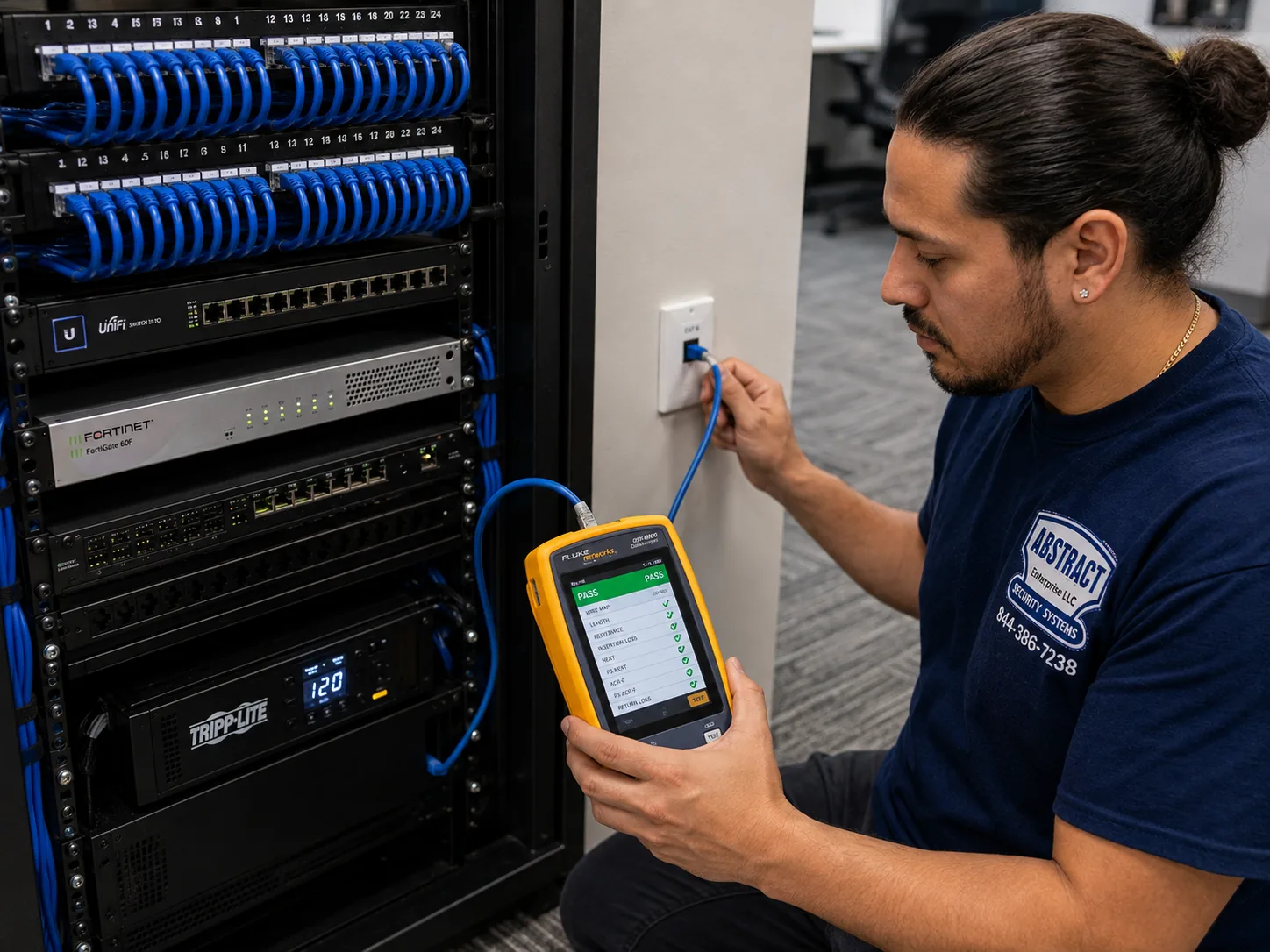
Hudson Valley hub, Hudson Valley AVYCON camera installation job-library photo: a technician holding a cable analyzer that shows a PASS result on a certified data drop
Photo from the AESS job library, not taken in the Hudson Valley: a technician holding a cable analyzer showing a PASS result on a data drop. On a long run out to a Dutchess barn or across a Newburgh cellar, a camera cable is tested end to end like this before the camera goes on, because a marginal run that works in July can drop out in a January cold snap.
Hudson Valley hub, Hudson Valley AVYCON camera installation job-library photo: J-hook pathway carrying dressed cable bundles across a commercial ceiling
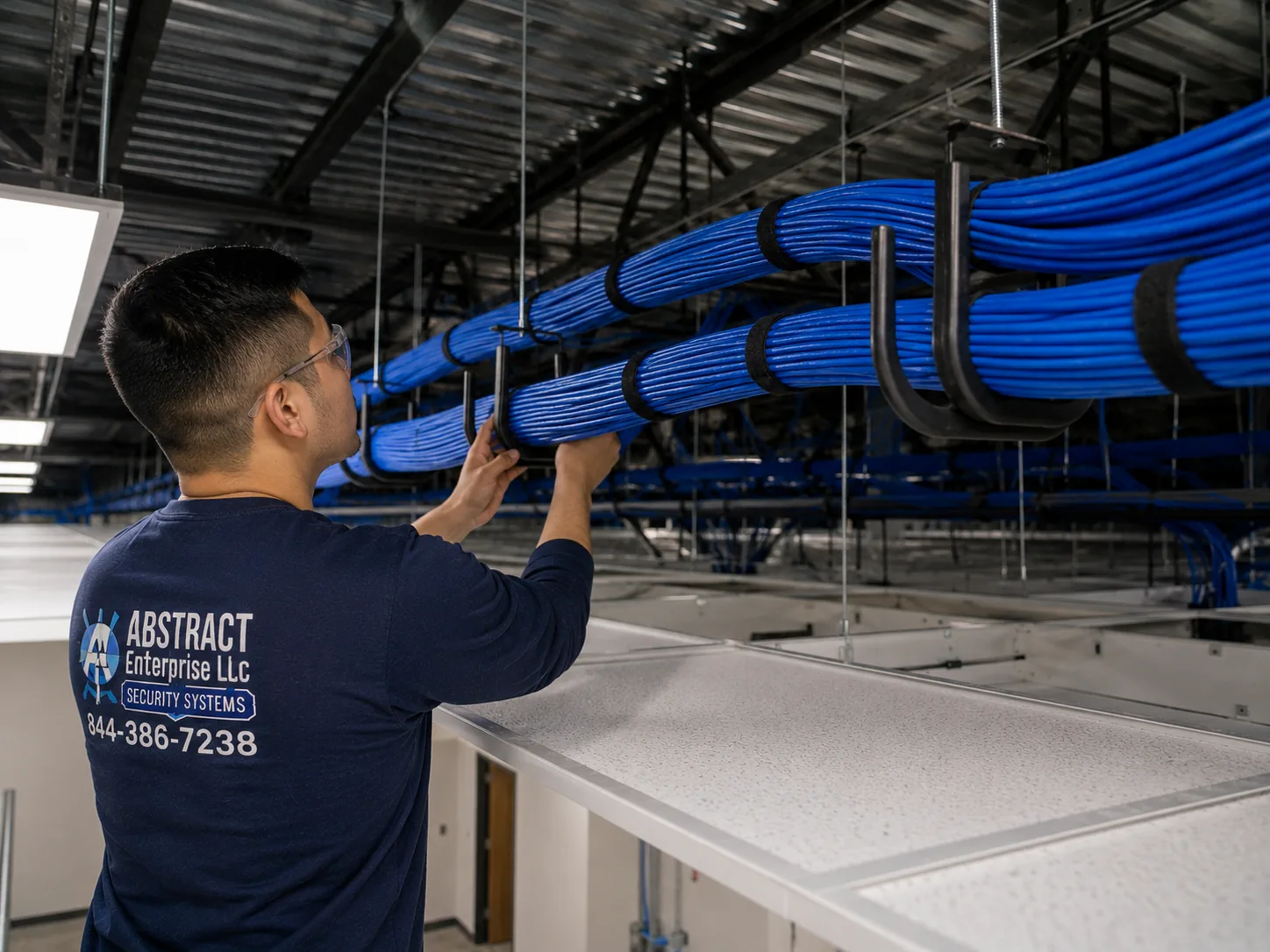
Photo from the AESS job library, not taken in the Hudson Valley: J-hooks carrying dressed bundles of cable across a commercial ceiling. In a high-ceilinged mill building in Beacon or a warehouse off I-84, camera cables to the far end of the floor ride on a pathway like this, supported every few feet and kept clear of lights and sprinkler lines.
Commercial AVYCON Camera Installation

Business AVYCON Camera Installation in the Hudson Valley

The valley's businesses sit on a handful of corridors and in the old downtowns, and their cameras do different jobs: watching registers and doors in shops, loading docks in warehouses, dining rooms and back doors in restaurants, and tasting rooms and parking lots at breweries and wineries. The corridors below are the ones named in our sources. We describe what each source says about them; we do not claim any business there as a client.

I-84 Corridor

Wikipedia calls I-84 a major commercial artery and a mainstay of the Hudson Valley economy. Warehouses and distribution buildings along it are where our NVR page places its 32-channel builds.

Route 9 in Wappingers Falls

A commercial, retail and residential corridor near the Poughkeepsie Galleria, per a PropertyShark listing. Strip stores, pads and parking lots that need door, register and lot coverage.

NY 32, New Windsor to Newburgh

New Windsor's main commercial strip, running into Newburgh's Lake Street, per Wikipedia. Mixed retail, service and auto businesses.

Route 59, 304 and 202 in Rockland

The county's commercial strips and the Palisades Center area in West Nyack, as our Rockland camera page describes them.

Beacon's Main Street

A historic Main Street almost a mile long, per a local guide, with Hudson Valley Brewery's tasting room open Thursday through Monday, per the brewery.

Kingston's Uptown and Midtown

Where the Kingston Police Department's camera map is concentrated, per Hudson Valley One, and where private business cameras are mostly bullet-style, the reporter noted.

What a business camera here has to do

A camera in a Hudson Valley business has a harder life than one on a porch. It watches a door that opens hundreds of times a day, a register where the angle has to show hands and not just heads, a parking lot that is lit unevenly, and a back door where deliveries arrive before dawn. The overnight burglaries News 12 covered in Warwick, Florida and Goshen in May 2026 are the reason owners call us, and the owner who did not know the password is the reason we insist on a proper handoff. We plan business systems camera by camera with the owner: what each one must show, how many days of recording the drive has to hold, who gets app access, and what happens to footage when the police ask for it. The Travel Hudson Valley guide counts more than 100 wineries, breweries and distilleries in the region. A tasting room adds its own list: a crowded bar on weekends, a quiet building midweek, and a parking lot full of visitors who do not know the property.

Rules and limits for business cameras

  • A licensed installer. Kirschenbaum & Kirschenbaum explain that New York's rule, 19 NYCRR 195.2(b), covers a CCTV system used full-time or part-time to detect or monitor intrusion, break-in, theft, movement, sound or fire. The Department of State's application notes that even electricians are not exempt from filing to do that work. We install under NYS license #12000287431.
  • Employee notice. Civil Rights Law §52-c, as Outten & Golden describe it, requires employers to post notice of electronic monitoring in a conspicuous place visible to employees. We remind you to post it before cameras go live.
  • No cameras in restrooms or locker rooms. Labor Law §203-c prohibits them regardless of any monitoring policy. We will not install there, and we aim corridor cameras so they do not look in.
  • Historic downtowns. In Kingston, exterior work visible from the public right-of-way goes to the HLPC before a building permit; in Newburgh's East End, exterior changes need a Certificate of Appropriateness from the ARC; in Beacon, altering a historic feature in a designated district needs a Planning Board certificate. We prepare the camera details your application needs.
  • Power work. Our work is low-voltage. Where a business needs a new outlet for a remote switch or a camera on a pole, that line-voltage circuit is for an electrician licensed in your county, and the quote says so.
  • Analytics with care. AVYCON's app offers facial recognition and license plate reading. Given how strongly Ulster and Dutchess residents reacted to Flock cameras in 2026, we talk through whether you need those features at all, and we set the system to watch your own doors and lot rather than the public road.

Apartment buildings and mixed-use blocks

Our Hudson Valley apartment camera page explains why multi-family jobs cost what they do: the work lives in cabling from a lobby recorder up through risers to every floor and out to a garage or surface lot, in fire-stopped penetrations through rated walls, and in labor through older Yonkers and Newburgh walls. An AVYCON build in a building like that puts the NVR in a locked room, runs cable floor by floor, seals each penetration, and gives the landlord or manager app access with separate logins for each person. Hallway cameras watch corridor traffic and are aimed so they never see into an apartment when a door opens.

Hudson Valley hub, Hudson Valley AVYCON camera installation job-library photo: a technician mounting a managed PoE switch below patch panels in a commercial network rack
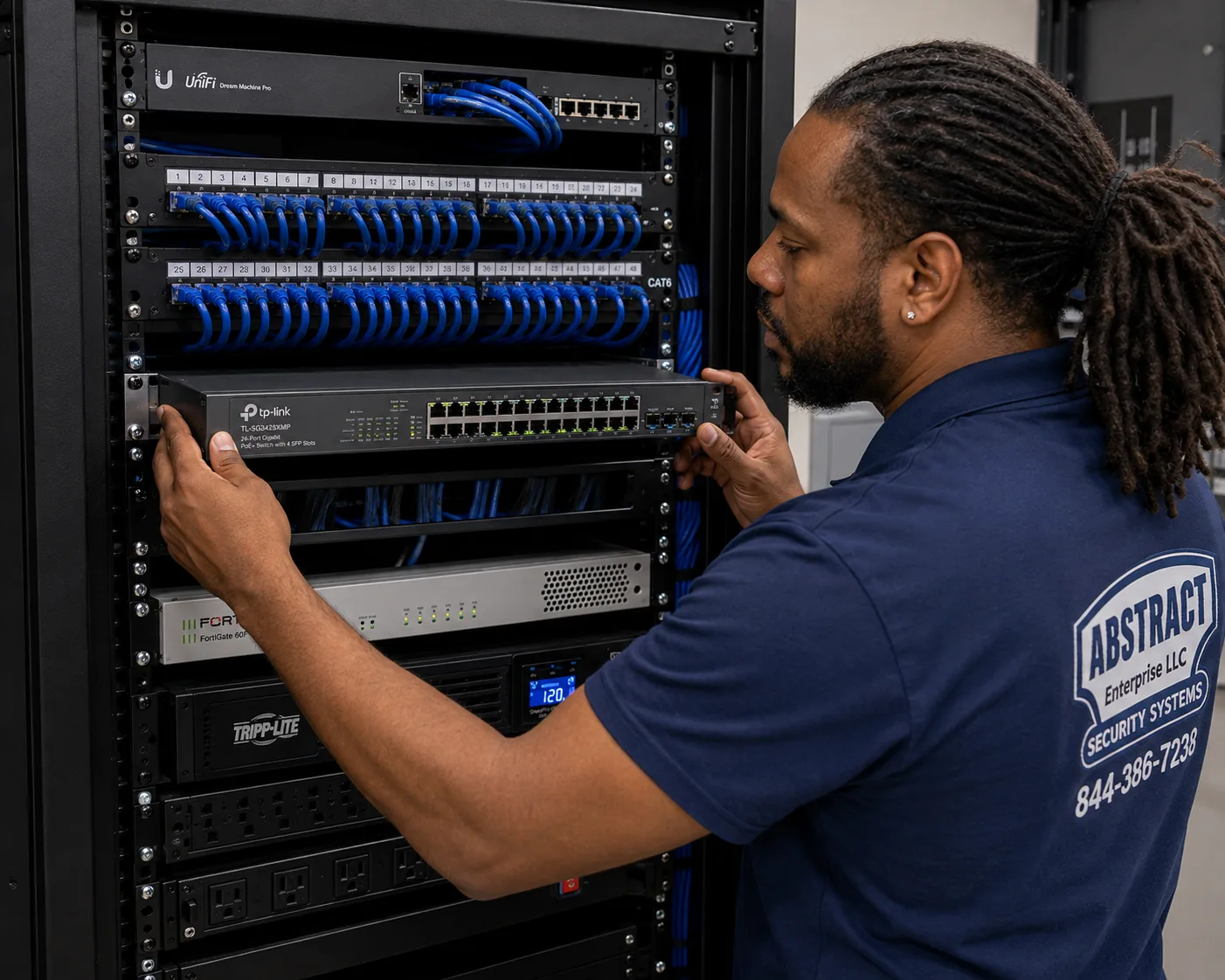
Photo from the AESS job library, not taken in the Hudson Valley: a technician mounting a managed PoE switch beneath patch panels in a commercial rack. When a Route 59 store or a Wappingers Falls office has more cameras than its AVYCON recorder has PoE ports, a switch like this powers the extra cameras over the same cables that carry their video.
Field Notes

Field Notes: The First Walk Around a Hudson Valley Property

We do not publish stories about a particular customer's property unless we can document them, so this is not a tale about one address. It is the routine our technicians follow on the first walk around a house, farm or shop anywhere in the six counties.

We start at the road, not at the door. We walk in the way a stranger would, and at each turn we stop and ask what a recording would need to show there. We pace the distance from the house to the barn, the garage, the gate, and write it down, because a barn that looks close from the kitchen window is often past the length one cable can carry. We knock on the walls where cameras might go and look at the stone, the brick or the siding. We find where the power comes in, where the internet comes in, and where a recorder could sit dry and cool. We look up at the trees, because a wireless link that works in March may not work in July. We ask what must not be recorded. And before we leave, we stand at the property line and look back, to see the cameras the way a neighbor would. Only after that walk do we write the plan and the quote.

Your Questions Answered

AVYCON Camera Installation in the Hudson Valley: Questions Answered

Cost and planning

Why does the labor on a Hudson Valley camera job come to more than the cameras themselves?

Because the camera is the easy part. AVYCON's own FAQ says a camera plugged into the PoE port on the back of the recorder appears on screen after about a minute. Everything else is the work: getting a cable from the recorder to the camera through a stone wall, an attic, a cellar or a trench to the barn; sealing each hole against water; fitting and tightening the waterproof cable fitting AVYCON's quick start guide insists on; fixing the bracket into something solid; testing the cable; aiming the camera; setting detection zones; sizing the battery backup; and setting up the app. On a suburban house with an open attic, that work is modest. On a colonial stone house in Hurley or a farm with three outbuildings, it is most of the job. Our county price pages break the labor and equipment into separate lines so you can see where the money goes.

Do you really cover the far ends of the region, like a farm road in northern Dutchess or a cabin in the Ulster hills?

Yes, all six counties: Westchester, Rockland, Orange, Putnam, Dutchess and Ulster. Our crews are dispatched from our Bronx office at 460 East Fordham Road and travel the I-87, Taconic and I-84 corridors. Distance does affect the plan. A property two hours from the office is scheduled so the crew arrives early and finishes in a day where possible, and we ask for more photos up front so we arrive with the right cable lengths, switches and brackets rather than making a second trip. Each county has its own price page because travel and labor differ, and the quote follows your county.

How do you decide how many AVYCON cameras a property needs?

From the walk, not from a package. We follow the route a visitor would take and put a camera wherever a recording would need to show something specific: a face at the front door, a vehicle at the end of the drive, a person at the barn door or the back gate. Then we look for gaps, such as a side yard that leads to a cellar door. A Westchester colonial often lands at four to eight cameras; a farm can need far more. Our own Hudson Valley NVR page describes 8- and 16-channel systems for houses and 32-channel builds for horse farms and warehouses, and we size the recorder with a few spare channels so you can add cameras later without replacing it.

Licensing and the law

Does the person putting in our AVYCON system need a state license?

In most cases, yes. New York's licensing rule, 19 NYCRR 195.2(b), as Kirschenbaum & Kirschenbaum explain it, covers a closed-circuit television system used full-time or part-time to detect or monitor intrusion, break-in, theft, movement, sound or fire. A home or business camera system recorded and watched for exactly those reasons falls inside it. The Department of State licenses installers under Article 6-D, and its application notes that even electricians who want to do this work must file. A trade association warns that unlicensed installers can face fines it puts at up to ten thousand dollars. We install under NYS license #12000287431 and will show it on request.

We own a shop in Poughkeepsie. What do we have to tell staff before the cameras go on?

Two things matter most. Under Civil Rights Law §52-c, employers must post notice of electronic monitoring in a conspicuous place visible to employees, and the law that took effect in 2022 also requires written notice to employees when they are hired. Under Labor Law §203-c, cameras in restrooms and locker rooms are prohibited no matter what the employer's policy says. We plan camera positions with both rules in mind, point corridor cameras away from restroom doors, and remind you to post the notice before the system goes live. For your exact obligations, check with your own lawyer; this is a summary, not legal advice.

Our house is inside the Kingston Stockade. Can we put cameras on the outside at all?

Very likely yes, but plan for review. The City of Kingston's guidelines say exterior work visible from the public right-of-way is subject to review by the Historic Landmarks Preservation Commission before a building permit is issued, and the Stockade's protections, per the district's rules, cover buildings, walls, fences and steps across its eight blocks bounded by Clinton Avenue, Main Street, Green Street and North Front Street. We found no rule that says whether a small camera alone triggers review, so we check with the HLPC first. We bring the camera's cut sheet, propose positions under eaves or on rear walls where they are least visible, keep cable inside the house, and, where any line must run outside, plan to paint it to match the facade as the HLPC asked in a 2025 approval.

Outages and internet

If the internet goes out at our place in the country, does the AVYCON recorder keep saving footage?

Yes. An AVYCON NVR records to its own hard drive inside the building, so footage keeps saving whether or not the internet is up. What you lose during an internet outage is the ability to watch live or receive alerts on your phone. When the connection returns, the recordings from the gap are on the drive and you can play them back in the app. That is the difference from cloud-only cameras, which, as one consumer guide puts it, cannot save new footage without an internet connection even when the power is fine. For properties in the parts of Ulster, Putnam, Dutchess and Orange still waiting on fiber, that difference is the whole reason to choose a recorder-based system.

What happens to the system during a Central Hudson or NYSEG outage, and is a battery backup worth it?

Without backup, the recorder and cameras stop when the power does, and they restart when it returns. With a battery backup on the recorder, the PoE switch and the router, the system keeps recording through short outages, and the recorder shuts down cleanly rather than losing power mid-write if the battery runs low. Outages here are not rare: the Daily Freeman reported nearly 50,000 Central Hudson customers out after storms in July 2026. A battery sized for a few hours covers most summer storms. For outages that last days, the answer is a generator circuit that carries the camera equipment. We size the battery for your utility and your house, and test it by switching the power off before we leave.

Compatibility and existing equipment

We already have a few cameras from another brand. Can a new AVYCON recorder use them?

Often, yes. AVYCON's support FAQ says that if a third-party camera supports the ONVIF standard, you can add it to an AVYCON NVR using the ONVIF protocol. We check each camera's model and settings before relying on it, because ONVIF support varies by model and firmware, and some features, such as a camera's own smart detection, may not carry over. Keeping a working camera that is already well placed on a stone wall saves drilling a new hole, and that matters in a historic house. Older analog cameras on coax are a different case; AVYCON's app also works with its hybrid DVRs, which can be an option where coax is already in the walls.

Our AVYCON recorder has two network ports. How are cameras added to a dual-port model?

AVYCON's support FAQ lists this as a separate question, because dual-port recorders let the cameras sit on their own network, separate from the house or office network the recorder uses to reach the internet. In practice we connect the cameras, or the PoE switch that feeds them, to the camera-side port, set the addressing so the recorder finds them, and connect the other port to your router. Keeping cameras on their own network is good practice on a business system, because it keeps camera traffic off the office network and keeps the cameras themselves away from the internet. We set it up and label which port is which so nobody swaps them later.

Are AVYCON products NDAA-compliant, and when does that matter for a school, a town contractor or a business?

AVYCON publishes an NDAA statement saying its listed products avoid critical components and systems-on-a-chip from the vendors the law targets, which it names as Huawei, ZTE, Hytera, Hikvision and Dahua, and that those products were made and substantially transformed in the United States, South Korea and/or Vietnam. It also publishes a list of NDAA-compliant models, and not every AVYCON product is on it, so we check the specific models against that list. It matters most for buyers who must meet federal procurement rules, such as some schools, contractors working for government and businesses with federal contracts, and for owners who simply prefer to avoid those brands. If NDAA matters to you, tell us and we will choose only listed models.

Weather and wildlife

Will AVYCON cameras hold up through a Catskills winter?

The cameras are rated for it, and the install decides whether they last. AVYCON's Diversity IP quick start guide gives an operating range of minus 30 to 60 degrees Celsius, which covers the coldest nights the valley normally sees. The same guide stresses that the cable waterproof fitting must be installed and tightened, and that is where winter failures usually start: water gets into an unsealed connection, freezes, and corrodes it. We fit and tighten every fitting, drip-loop the cable below the camera so water runs off, seal every wall penetration, and mount cameras under eaves where they can to keep snow and ice off the lens. We also keep the recorder indoors in a heated space, since the recorder is not rated for an unheated barn.

Bears and deer set off our motion alerts all night. Can an AVYCON system tell them apart from people?

Mostly, yes. The AVYCON ONE app sorts alerts into Event, AI and Abnormal categories and supports people and vehicle detection, so we set your phone alerts to people and vehicles at the doors and the drive and let the recorder simply record everything else. NYS DEC says bird feeders are the most common bear attractant and that the southern range reaches southern Orange and Rockland, and Teatown reports bear sightings in Westchester rising in recent years, so this is not an imaginary problem. We draw detection zones along paths people use rather than across the lawn or the woods, and we check them again if you tell us the alerts are still too noisy.
Equipment

Types of AVYCON Camera Installation We Install

These are the AVYCON components and supporting equipment we fit on Hudson Valley properties. Models are chosen on site from what the property needs; where NDAA compliance matters, we pick only models on AVYCON's NDAA list. Equipment is bought through the distribution channel AVYCON uses, including ADI Global Distribution, which carries AVYCON IP cameras, NVRs and systems for residential and commercial installs. Equipment prices are on the county price pages.

🖥

AVYCON NVRs

Network video recorders with built-in PoE ports, including the AVR-NSV16P16 16-channel 4K UHD model our Hudson Valley NVR page lists, and NDAA-listed 32-channel recorders for farms and warehouses.

📷

Bullet and Turret IP Cameras

Fixed cameras for doors, drives, yards and docks, chosen by lens width and low-light performance, mounted under eaves or on brackets into solid wall.

🔎

Long-Zoom PTZ Cameras

Pan-tilt-zoom cameras for estates, waterfronts and large lots, including AVYCON's NDAA-listed long-zoom models such as 5MP 40x and 8MP 25x types.

📼

Hybrid DVRs

For older systems with coax already in the walls, AVYCON's hybrid DVRs, which the AVYCON ONE app also supports, can be a step toward IP without pulling every cable.

💾

Standalone Cameras with microSD

Single cameras for a shed or a spot no recorder reaches; the App Store listing notes standalone AVYCON cameras need a microSD card for storage and playback.

🔌

PoE Switches and Links

Managed PoE switches for systems that outgrow the recorder's ports or need power at a far building, and fiber or wireless links between buildings past the 328-foot cable limit.

🔋

Battery Backup and Surge Protection

UPS units for the recorder, switch and router, and surge protection for the gear lightning tends to kill first.

📱

AVYCON ONE App

The mobile app for Diversity Series NVRs, hybrid DVRs and IP cameras, with event, AI and abnormal alerts, people and vehicle detection, and playback.

National brands vs a local licensed AVYCON installer

People often ask whether they should simply buy a national system instead. ADT is best known for monitored alarm plans, and Ring and SimpliSafe for self-installed doorbells, cameras and security kits that rely on a cloud service. Those systems suit many homes, and plenty of Hudson Valley neighbors use them, as the Port Chester and Yonkers news footage shows. The trade-off out here is that cloud cameras depend on the internet to save footage, and the internet is the first thing to go in a rural outage. An AVYCON NVR records locally, takes wired cameras that do not need batteries or Wi-Fi at the far end of the property, and keeps the footage in a box you own. The other difference is the install itself. A Hudson Valley camera system turns on getting cable through stone and brick, out to barns and past historic commissions, and that takes a licensed crew on site with the right bits, anchors and paperwork.

QuestionCloud self-install kitsAVYCON NVR, professionally installed
Where footage is savedOn the provider's cloud, usually with a planOn the recorder's drive in your building
When the internet dropsNew footage may not saveRecording continues; remote viewing pauses
Power at the cameraBatteries, solar or a nearby outletPower over the Ethernet cable from the recorder or switch
Far outbuildingsLimited by Wi-Fi reachCable, a remote switch or a link between buildings
Other brands' camerasUsually the same brand onlyONVIF cameras can be added
InstallationYou, or a contractor networkOur licensed crew under NYS license #12000287431
Hudson Valley hub, Hudson Valley AVYCON camera installation job-library photo: a technician tracing an unidentified cable run at a patch panel with a tone generator and probe
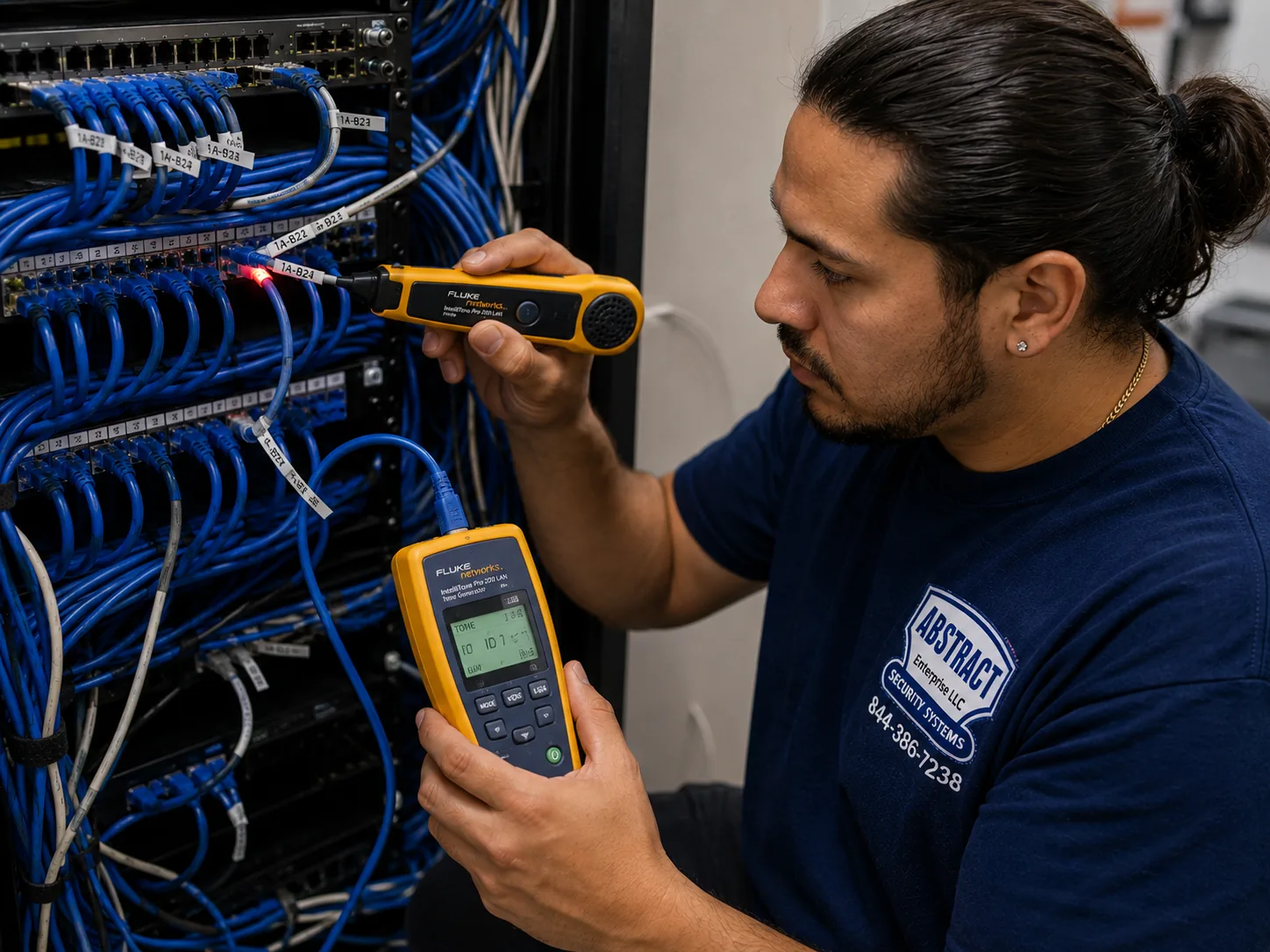
Photo from the AESS job library, not taken in the Hudson Valley: a technician tracing an unidentified cable at a patch panel with a tone generator and probe. When we take over an old camera system in a Westchester house or a Kingston shop and nobody knows which wire goes where, this is how we find each camera's cable before the new AVYCON recorder goes in.
AI Overview Reality Check

What AI Gets Wrong About AVYCON Camera Installation in the Hudson Valley

We could not capture Google's AI Overview for AVYCON camera installation in the Hudson Valley from our build environment, so we are not going to pretend to quote it. What follows are claims we see repeated in quick online answers, cost guides from marketplaces such as Angi, HomeAdvisor and Fixr, and product listings, set against the manufacturer's own documents, state law and what the valley's buildings actually need. National cost guides give a rough idea; they are not a quote for a stone house in Hurley or a barn in Millbrook.

"AVYCON recorders only work with AVYCON cameras."

Many quick answers assume a recorder locks you into one brand. AVYCON's own support FAQ says otherwise: if a third-party camera supports ONVIF, it can be added to an AVYCON NVR using the ONVIF protocol.

That matters on older Hudson Valley properties, where a camera may already be well placed on a wall nobody wants to drill again. Keeping it saves a hole in stone or brick and, in a historic district, possibly a second trip to the commission.

The honest caveat is that ONVIF support varies by model and firmware, and some features do not carry across brands. We test each existing camera on the new recorder before counting on it in the plan.

"Anyone handy can put up security cameras in New York."

Anyone can buy cameras, but installing them for pay is regulated. New York's rule, 19 NYCRR 195.2(b), covers CCTV used to detect or monitor intrusion, theft or movement, and the Department of State licenses installers under Article 6-D. Its application notes that electricians must file too.

The Department's own summary does say that passive, non-detecting security devices do not require licensure, which is where some of the confusion comes from. A recorded system watched for break-ins is not passive in that sense.

Ask any installer, us included, for the license number. Ours is NYS #12000287431. Line-voltage electrical work, such as a new outlet on a pole, is separate again and belongs to an electrician licensed in your county.

"Cloud cameras are the simplest choice for a country house."

Simple to buy, yes. But cloud-only cameras, as one consumer guide notes, cannot save new footage without internet. In the valley, internet is the weak link: Ulster's fiber build targets nearly 1,300 unserved locations, and outages take routers down with everything else.

A recorder-based AVYCON system writes video to a drive in the house. When the line drops, it keeps recording; when it returns, the footage from the gap is there to review.

Add a battery backup and the system rides through the shorter outages Central Hudson, NYSEG and O&R customers see every summer. For days-long outages, a generator circuit is the real answer, and we plan for it if you have one.

"Plug the camera in and you're done in a minute."

The minute is real. AVYCON's FAQ says a camera connected to the recorder's PoE port appears on screen after about a minute. What AI answers leave out is everything before that minute.

Getting a cable from a cellar recorder through a two-foot stone wall, or 300 feet out to a barn, is the job. So is the waterproof fitting AVYCON's quick start guide says must be installed and tightened, and the drip loop and sealant that keep a January thaw out of the connection.

The app is the other half. The AVYCON ONE listing carries a 2.9-out-of-5 rating, and one reviewer wrote that even their installer had trouble getting the app to save the device. We set the app up on your phones and confirm it before we leave.

"Facial recognition and plate reading are just features to switch on."

AVYCON's app does list facial recognition and license plate reading. Switching them on is a choice with local weight. Ulster's county executive barred county use of Flock and similar AI surveillance in October 2026, and Dutchess is removing its Flock cameras after a packed public meeting.

Those actions govern government use, not your property. But neighbors, staff and customers notice where cameras point. For a business, Civil Rights Law §52-c notice and the Labor Law §203-c restroom ban apply whatever features you use.

Our default is people and vehicle detection on your own doors, drives and lots, with the public road kept out of frame. If you want face or plate features, we talk through why and where before we enable them.

"Historic districts don't allow cameras."

We found no Hudson Valley rule that bans cameras outright. What the rules require is review. Kingston's HLPC reviews exterior work visible from the street before a building permit; Newburgh's East End needs a Certificate of Appropriateness; Beacon's Planning Board certifies changes to historic features.

Newburgh's guidelines are the clearest: integrate security features with the architecture, do not hide architectural features, and do not damage historic fabric when attaching them. That is a design brief, not a ban.

The City of Hudson's code adds that its commission does not consider interiors unless they are specifically landmarked, which makes indoor cameras easier there. We plan positions, cable routes and finishes to suit the reviewer before anyone drills.

"Camera installation costs the same across the region."

Cost guides tend to give one national or citywide range, and AI answers repeat it. Our own verified list does not work that way: each Hudson Valley county has its own price page, because travel and labor differ from Westchester to Ulster.

Within a job, the property moves the total more than the county does. Four cameras on a ranch with an open attic is a different day from four cameras on a Stockade stone house, or two cameras on a barn 400 feet from the recorder.

That is why we quote from photos and a walk, list labor and equipment separately on the county page, and never quote a figure that is not on that list.

Ready to Plan Your Coverage? Talk to a Technician About Your Hudson Valley Property

Send photos of the doors, drive and outbuildings, the town and county, and your internet provider, and a technician will tell you which county price page applies, roughly how many cameras the property needs, and whether any existing cameras can stay. Call (800) 486-0943, message us on WhatsApp, or use the quick form.

How It Works

Our Installation Process

Every Hudson Valley AVYCON job follows the same eight steps, whether it is four cameras on a Westchester colonial or thirty-two across a Dutchess farm. The order matters most on old and spread-out properties, where a rushed plan is the usual cause of a camera that cannot reach the recorder or a hole in the wrong stone.

1. Send the address, photos and goals

The county and town, the property type, photos of the doors, drive and outbuildings, and any existing cameras or recorder you hope to keep.

2. Check power, internet and approvals

Your utility and internet provider, the upload speed, whether the building is in a historic district, and who else has to sign off.

3. Walk the property and set the plan

We walk the visitor's route, mark each camera and its view, pace the distances, and agree what must never be recorded.

4. Choose the recorder and cameras

The NVR sized by channels and storage, cameras by lens and housing, NDAA-listed models where needed, and ONVIF checks on cameras you keep.

5. Run and terminate the cable

Through attics, cellars, stone, block or conduit; every hole sealed, every outdoor fitting tightened, every run labeled at both ends.

6. Mount and connect the cameras

Brackets fixed into sound framing or masonry, cameras connected to PoE, each one appearing on the recorder within about a minute.

7. Commission recording and backup

Schedules, people and vehicle zones, retention, and the battery backup, then a test with the power and internet switched off.

8. Hand over the app and paperwork

AVYCON ONE on your phones, playback and export shown, passwords written down for you, and a labeled camera map left with the recorder.

Hudson Valley hub, Hudson Valley AVYCON camera installation job-library photo: a technician running cable into EMT conduit beside a telecom room in an industrial building
Photo from the AESS job library, not taken in the Hudson Valley: a technician running cable into EMT conduit beside a telecom room in an industrial building. In an I-84 corridor warehouse or an old river-town mill, camera cable that crosses a working floor or an exposed wall rides in conduit like this, protected from forklifts, ladders and weather.
Coverage Area

AVYCON Camera Installation Near the Hudson Valley's Landmarks

The Hudson Valley is too large to give directions by a single street, so people tend to place themselves by a landmark. These are some we use when we plan a visit. We describe what each source says; we do not claim any of them as customers.

Walkway Over the Hudson

Opened in 1888 as a rail bridge between Poughkeepsie and Highland, 212 feet tall and 1.28 miles long, per the Heritage Area. Our marker for the Dutchess-Ulster crossing.

Kingston Stockade District

Site of the stockade Peter Stuyvesant built in 1658, and the largest remaining example of early Dutch settlement in the state, per the National Park Service.

Dia Beacon

A former 1929 Nabisco box-printing factory of nearly 300,000 square feet, per Dia, near Beacon's mile-long Main Street.

Storm King Art Center

A 500-acre outdoor museum at 1 Museum Road in New Windsor, Orange County, per Storm King.

Washington's Headquarters, Newburgh

The stone house where George Washington lived in 1782 and 1783, described by Hudson Valley One as the nation's first publicly operated historic site, at the edge of the East End.

Palisades Center

The West Nyack mall in Rockland County, described by Wikipedia as 875,000 square feet as proposed, beside the Route 59 corridor.

Our coverage runs across all six counties, from the Yonkers line north through Westchester, west across the Tappan Zee into Rockland, up through Orange, Putnam and Dutchess, and into Ulster and the Catskill foothills. Kykuit, the Rockefeller estate in Sleepy Hollow completed in 1913, is a familiar Westchester marker even though Historic Hudson Valley lists its tours on hiatus for 2026; Lake Mahopac, which a listing site gives as 587 acres, anchors Putnam's lake country; and the Newburgh Armory, built in 1880 on Broadway, anchors Newburgh. Each county has its own AVYCON price page: Westchester County, Rockland County, Orange County, Putnam County, Dutchess County and Ulster County. Back on the city side of the line, see Bronx AVYCON pricing.

Pricing

AVYCON Camera Installation Cost in the Hudson Valley

Every Hudson Valley AVYCON job is priced from our verified list for the county the property sits in, and the full list, with a calculator for building your own system, lives on the Hudson Valley AVYCON camera installation prices page and on each county page. We do not print numbers on this hub that are not on those lists. What we can do here is explain what moves the total, so the quote makes sense when you see it.

What drives the costWhy it matters in the Hudson ValleyHow we handle it
Number of camerasEach camera is a cable run, a mount and a setupSet from the walk, with spare recorder channels for later
Recorder size and storageMore cameras and more days of recording need more channels and a bigger driveSized to the property and how long you want footage kept
Cable distanceBarns, gates and pool houses can sit past the 328-foot limitRemote switch, link between buildings or second recorder, quoted separately
Wall materialFieldstone, brick and block take longer to drill and seal than frameNamed on the quote from your photos
AccessOpen attics are quick; finished ceilings, cellars and stone are slowRoute chosen at the walk to avoid opening finished walls
Camera typeFixed bullets and turrets cost less than long-zoom PTZPTZ only where a fixed lens cannot cover the distance
Backup powerOutage-prone areas need a bigger battery or a generator tieSized for your utility's outages
Historic reviewKingston, Newburgh and Beacon may require approvals and finishesWe prepare cut sheets and plan for painted line hides
Existing equipmentONVIF cameras can stay; dead recorders must goEach existing camera tested before it counts in the plan

Why the county matters

Travel time from our Bronx office and local labor conditions differ across the region, so Westchester and Ulster are not priced the same. Your county is the one on your tax bill, which is not always the one your mailing address suggests, since some postal towns cross county lines. If you are not sure, tell us the street address and we will confirm which county page applies before we quote.

How to read a quote for a valley property

Take a farmhouse with a detached barn. The quote lists the recorder and drive, each camera, each cable run, the link or switch that reaches the barn, the battery backup, and the labor for each part, all from the county list. Move the same plan to a stone house in a historic district and the masonry drilling and any painted line hides appear as their own lines, with nothing else changing. Nothing is added on the day unless you ask for it, and if we find something on site that the photos did not show, we stop, show you, and agree the change before continuing.

Warranty and terms

Full terms โ€” including 50% deposit, one-year parts-only warranty on AESS-supplied products, and the late-fee schedule โ€” are set out in the service agreement.

The warranty covers what we supply and install. It does not stretch to wiring or equipment you already had, and camera readjustments after the job is complete are handled as a new visit. Ask us for the full terms before you book; they are the same across all six counties.

Shop Our Systems

AVYCON Camera Installation Packages & Pricing

Three common Hudson Valley AVYCON builds. Each is priced on the county price page for your property, built only from lines on that list, with no package premium and nothing hidden. Use them as starting points; the walk decides the final plan.

Starter: Suburban House

An AVYCON NVR with spare channels, four wired cameras on the front door, the drive, the back door and the yard, cable through the attic to soffit mounts, a battery backup on the recorder and router, and AVYCON ONE on two phones. Suits Westchester, Rockland and Putnam houses with open attics. See your county page for the price.

Standard: Old House or Second Home

A 16-channel AVYCON NVR, six to eight cameras including a garage or shed, masonry drilling and sealing for stone or brick walls, a larger battery backup sized for longer outages, people and vehicle alerts, and remote viewing tuned for a modest upload speed. Suits Kingston, Hurley and Newburgh homes and weekend houses in Ulster and Putnam.

Premium: Farm, Estate or Warehouse

A 32-channel NDAA-listed AVYCON NVR, cameras across the house, barns, gates and lots, a remote PoE switch or link to each outbuilding, a long-zoom PTZ where the distances need it, a rack with battery backup, and app access for each person who needs it. Suits Dutchess and Orange farms, estates and I-84 corridor warehouses.

Bring your own equipment

If you already own AVYCON cameras, a recorder, or other-brand cameras that support ONVIF, we install them at labor-only rates from the same county list, as long as the equipment is in sound condition and suits the job. We test each item before it goes on your wall, and if a camera will not work with the recorder or is not fit for outdoor use in a valley winter, we say so and show you the list price of a replacement. Labor-only work on your own equipment is covered for our workmanship; the equipment itself stays under its own maker's warranty.

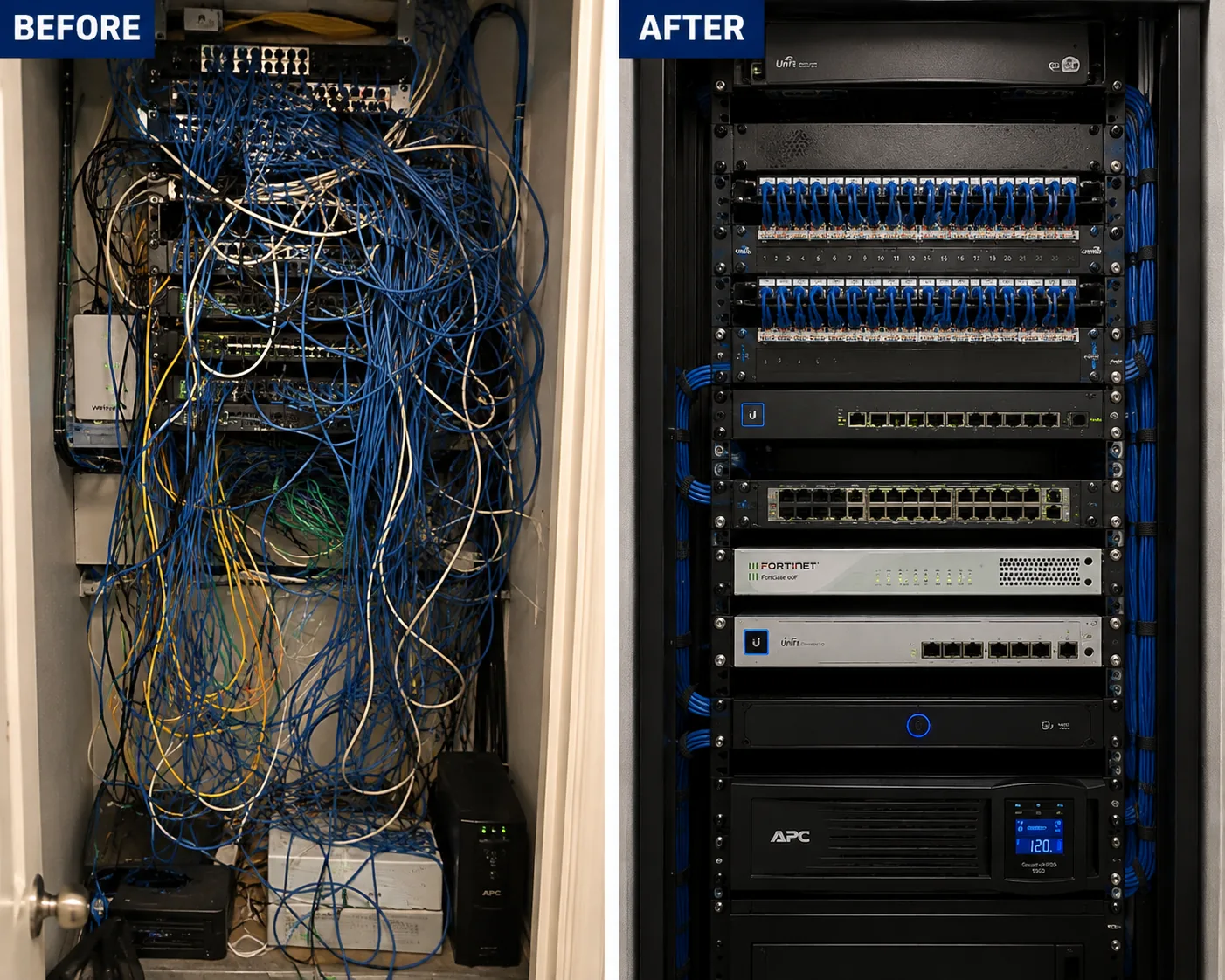
Hudson Valley hub, Hudson Valley AVYCON camera installation job-library photo: before and after views of a network rack, from an unlabeled tangle of cables to a dressed and identified rack
Photo from the AESS job library, not taken in the Hudson Valley: before and after views of a network rack, rebuilt from an unlabeled tangle into a dressed and identified one. When a Rockland office or an Orange County warehouse upgrades to an AVYCON recorder, the old camera closet often looks like the left side, and the upgrade is the moment to leave it looking like the right.
Complete Services

Every AVYCON Camera Installation Service in the Hudson Valley

Hudson Valley Price List

The full regional list and calculator for AVYCON systems. Hudson Valley AVYCON prices

Westchester and Rockland

The lower valley, from the Yonkers line to the Palisades Center. Westchester AVYCON pricing · Rockland AVYCON pricing

Orange and Putnam

Newburgh, the I-84 corridor and Putnam's lake country. Orange County AVYCON pricing · Putnam AVYCON pricing

Dutchess and Ulster

Farms, estates, Beacon, Poughkeepsie, Kingston and the Catskill foothills. Dutchess AVYCON pricing · Ulster AVYCON pricing

New York City

The same AVYCON installs across the five boroughs. NYC AVYCON camera prices

Long Island

Nassau and Suffolk AVYCON systems. Long Island AVYCON camera prices

Abstract Enterprises Home

Every service we offer, from cameras to access control. Abstract Enterprises Security Systems

Get a Quote

Send photos and the town and we will match the job to your county list. Request a free quote

FAQ

Hudson Valley AVYCON Camera Installation FAQ

Is there an AVYCON office or factory dealer somewhere in the Hudson Valley?
+

Not that we could find. AVYCON lists its headquarters at 16682 Millikan Avenue in Irvine, California, with a second office in Korea, and sells its cameras and recorders through distributors such as ADI Global Distribution. We found no AVYCON office or certified dealer listed in the six counties. We buy through that distribution channel and install under our own NYS license, and we handle the setup and support ourselves.

How is a private AVYCON system different from the Flock cameras Ulster and Dutchess pulled back from?
+

Flock is a network of license plate reader cameras used by police and governments; Ulster's county executive barred county departments from using it in October 2026, and Dutchess is removing its cameras. A private AVYCON system is a recorder in your own building with cameras on your own property, and nobody sees the footage unless you give them a login or choose to share a clip. We aim cameras at your doors, drive and lot, not at the public road.

How long does a new AVYCON camera take to show up once it is plugged into the recorder?
+

About a minute, according to AVYCON's own FAQ, when the camera is connected directly to a PoE port on the back of the NVR. That quick start is why most of an install day is spent on cable, mounting and sealing rather than on the cameras themselves. Cameras on a separate PoE switch or a dual-port recorder need their network settings checked, which we do during commissioning.

Can AVYCON camera video feed into other software, like a home automation system?
+

Usually, yes. AVYCON cameras typically stream over the RTSP protocol on port 554, which many video and home automation programs can read. Whether a particular program works well depends on the program and the camera model. If you want the video somewhere other than the AVYCON recorder and app, tell us what system you use and we will check before you rely on it.

Do single AVYCON cameras without a recorder need anything extra for storage?
+

Yes. The AVYCON ONE app listing says standalone cameras require a microSD card for storage and playback. A standalone camera can make sense for a single shed or a spot no cable will reach, but a recorder-based system is more robust for a whole property, because the footage sits on a drive indoors rather than on a card in a camera someone could pull off the wall.

The AVYCON ONE app has mixed reviews. Will you make sure it works on our phones before you leave?
+

Yes, that is part of every install. The App Store listing shows a rating of 2.9 out of 5, and one reviewer said the app hung often and that their installer struggled to save the device in it. We install the app on each phone that needs it, add and save the recorder, test live view and playback on the phone's own data as well as on Wi-Fi, and show you how to export a clip.

Which AVYCON recorder do you usually put in a Hudson Valley house?
+

For many houses it is a 16-channel recorder such as the AVR-NSV16P16, a 4K UHD NVR with built-in PoE that our Hudson Valley NVR page lists among the models we install. Smaller homes can use fewer channels and farms or warehouses may need 32. We size the recorder so there are spare channels left over, which lets you add a camera on the garage or barn later without replacing the box.

Can a long-zoom camera cover the far end of a big lot or a waterfront?
+

Often, yes. AVYCON's NDAA-compliant product list includes long-zoom pan-tilt-zoom cameras, such as 5MP 40x and 8MP 25x models. A PTZ camera can sweep a field, a dock or a long drive and zoom in on a distant gate. It only records where it is pointed at any moment, so we usually pair it with fixed cameras on the doors and drive and set the PTZ on a patrol or to watch one key spot.

Neighbors found a hidden camera in the bushes casing their house. Can our system help spot that kind of thing?
+

It can help. Police in the Lower Hudson Valley told WRRV that burglars had placed camouflaged cameras in bushes outside homes in Scarsdale. A camera covering the yard and the approach to the house records anyone who walks into a garden bed to plant something. We aim cameras along the edges where someone would have to stand, and set people detection so a stranger lingering in a flower bed sends an alert.

What do Hudson Valley Yelp reviewers complain about most with camera installers, and how do you avoid it?
+

One Wappingers Falls reviewer complained that an installer did not connect a sensor and simply tucked it into the wall, while the praise we saw for Poughkeepsie-area installers was for clean installation and neatly concealed wiring. We test every camera on the recorder, label every cable at both ends, leave a camera map, and walk you through each view before we leave, so nothing is left unconnected or hidden.

Does the six-county area include Yonkers and the river towns right above the Bronx?
+

Yes. Wikipedia describes the Hudson Valley as running from the Capital District south to Yonkers at the city line, and our six-county coverage takes in all of Westchester, including Yonkers, along with Rockland, Orange, Putnam, Dutchess and Ulster. Properties in Westchester use the Westchester price page; Bronx addresses use the Bronx page.

If the police ask for footage after a break-in, how do we get it to them?
+

You decide what to share. During handoff we show you how to find the time on the recorder or in the app, export the clip and save it to a phone or a USB drive. The recording stays on your recorder until the drive writes over it, so if something happens, export the clip quickly and note how many days your system keeps. Giving the police a copy is your choice; the system does not send anything on its own.

Is a Hudson Valley recorder safe from lightning, or should we expect to replace it?
+

No recorder is immune, and our Hudson Valley NVR page lists replacing lightning-killed recorders among the jobs we do. You can lower the risk. We put surge protection and a battery backup on the recorder, switch and router, ground outdoor cable runs where the building allows, and keep long runs to outbuildings protected. If a storm does take the recorder, the cameras often survive and only the box needs replacing.

Get In Touch

Request a Free Quote

Tell us the town and county, the property type, how many doors, drives and outbuildings you want covered, and your internet provider. Photos make the quote exact. Prefer to talk? Call (800) 486-0943.

✅
Request Sent!
We'll call about your Hudson Valley AVYCON system the same business day.

More AVYCON Camera Installation near Hudson Valley hub

ยท AVYCON Camera Installation NYC | NYC Hub, All 5 Boroughs

Book Your Hudson Valley AVYCON Camera Installation

From a stone house in the Kingston Stockade to a row house in Newburgh's East End, a horse farm in Dutchess, a lake house in Putnam or a store on Route 9, the job starts the same way: a walk around the property, an honest plan, and a recorder that keeps watching when the power or the internet does not. Call (800) 486-0943, message us on WhatsApp, or send the quote form, and we will tell you exactly what your property needs before anyone drills.

AVYCON Camera Installation by neighborhood: Hudson Valley hub, Hudson Valley avycon camera installation

AVYCON Camera Installation by neighborhood: Long Island hub, Long Island avycon camera installation