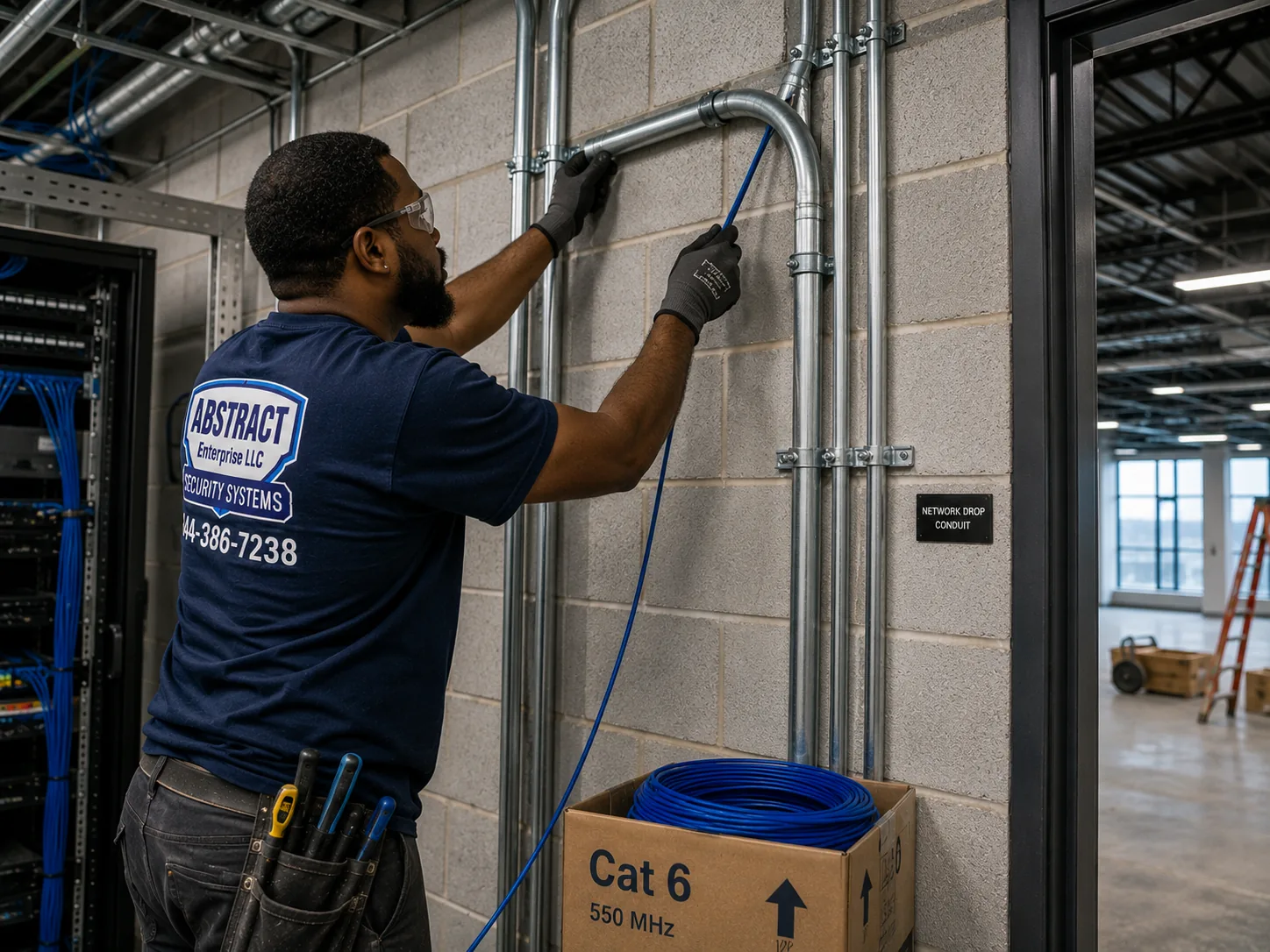
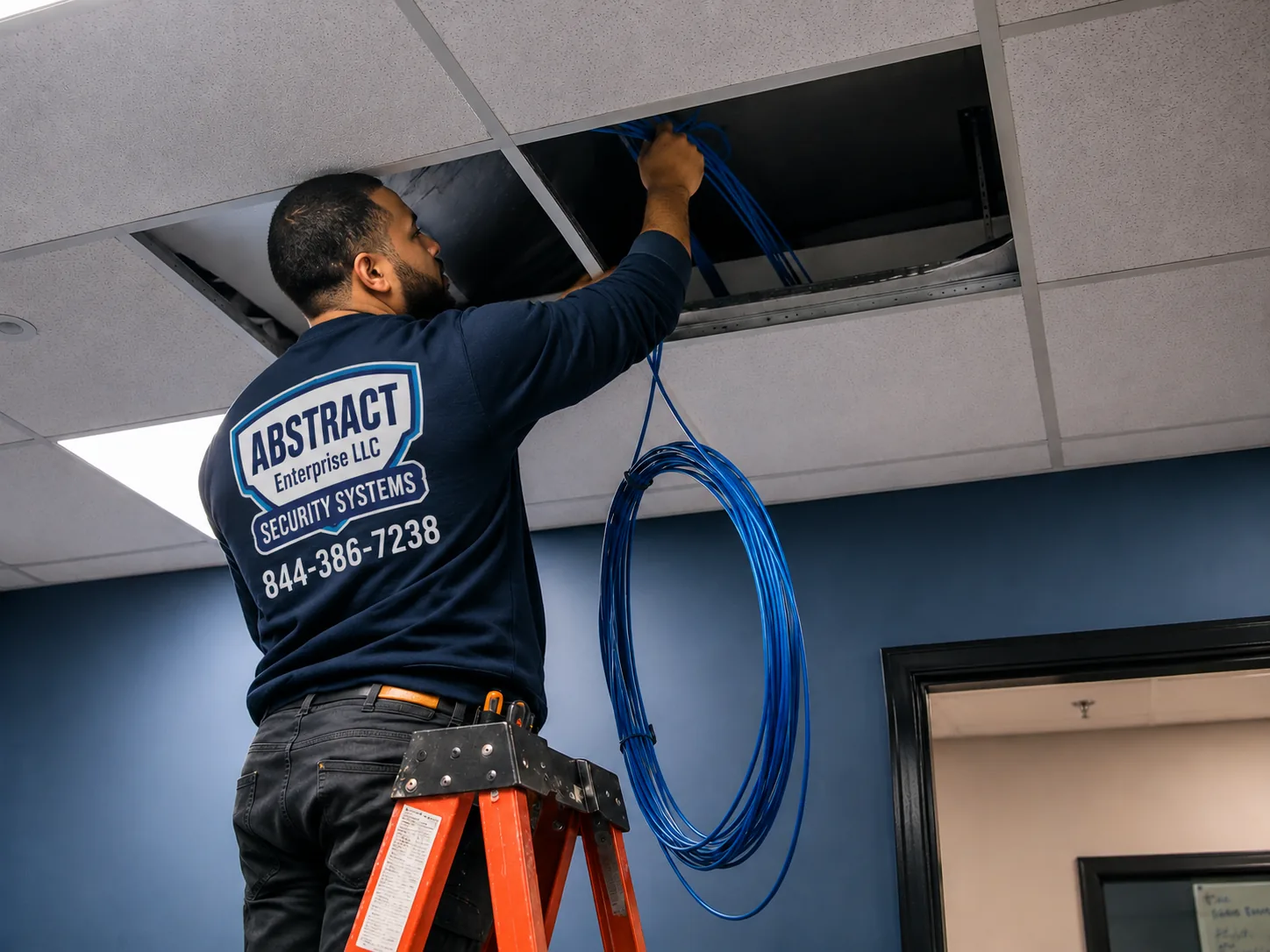
See every Arlo camera price in Long Island and build your own system →
Wi-Fi Measured Before a Camera Goes Up · Nassau and Suffolk Rates, Published · Audio and Neighbors Handled Carefully
Arlo camera installation on Long Island is mostly a Wi-Fi job wearing a camera's clothes. Nassau and Suffolk together hold more than a million homes, and Census figures show most of them are detached houses: about 364,500 of Nassau's 477,860 housing units and about 463,100 of Suffolk's 579,790. Many sit on lots with a driveway, a backyard and a garage set apart from the house, which is exactly where a wireless camera has to fight for signal. A 1950s Cape on a slab in Levittown, a 1970s colonial in Suffolk, a condo north of Hempstead Turnpike at the Nassau Hub and an office floor in a Uniondale tower are four different Arlo jobs. We find out which one you have before we book, measure the signal where each camera will hang, and price the work from our published Long Island list.
Owner-operated since 2002 · Thousands of jobs completed · Booked within 2 hours
Reviewed and updated November 6, 2026 by Anwar Timothy, NYS license #12000287431 · Sources: U.S. Census Bureau American Community Survey 2023 five-year tables and QuickFacts for Nassau and Suffolk, Newsday, ny.gov county profiles, Wikipedia entries for East Garden City, Uniondale, Roosevelt Field, Mitchel Air Force Base, the Cradle of Aviation Museum and Hofstra, Homes.com and NeighborhoodScout Uniondale housing profiles, the LI Herald and Long Island Press on the Nassau Hub, ABC7 New York (Nassau burglary task force and Isaias outages), CBS New York (Suffolk porch-theft ring), Patch Garden City crime reports, Daily Voice, News 12 Long Island, NBC New York, the Garden City Police Department camera registration page, the Suffolk County Police SHIELD camera registry, the NYS Department of Financial Services flood release of August 2024, NYS Department of State licensing pages, Nassau County Office of Consumer Affairs, Arlo's knowledge base and camera pages, Forbes, NerdWallet, SafeWise, SafeHome and TechRadar Arlo reviews, and VTS and LoopNet listings for The Omni and RXR Plaza · Dispatched from 1282 Troy Ave, Brooklyn

Quick answer: an Arlo install on Long Island is priced per camera and per extra from our published Nassau and Suffolk rates, and the real work is getting a steady 2.4 GHz signal to every camera before it is mounted. Most of the island's houses are detached, with driveways, back patios and garages set away from the router, so we measure signal at each spot, place or extend the SmartHub or base station where the model needs one, mount at a height you can still reach for battery swaps, and set up recording so you are not paying for cloud storage you did not plan for. Requests are booked within 2 hours. Call (800) 486-0943 or see the current figures on our Long Island Arlo installation price list.
Long Island is a place of separate houses on their own lots, and a wireless camera system has to cover every one of those separate pieces: the front step, the driveway, the side gate, the back slider and the garage. The U.S. Census Bureau's 2023 American Community Survey counts 477,860 housing units in Nassau County, and 364,529 of them are one-unit detached houses. In Suffolk the figures are 579,790 units and 463,095 detached houses. Put another way, roughly three out of every four homes on the island stand alone. That is very different from a city apartment, where one doorbell camera on one door covers most of what a resident cares about. A Long Island house has a perimeter, and the people who live in it usually want to see all of it from a phone.
The age of that housing matters for an Arlo job almost as much as its shape. The same Census tables put the median year a Nassau home was built at 1955 and the median Suffolk home at 1970. Levitt and Sons built 17,447 houses in Levittown between 1947 and 1951, Cape Cods first and then ranches, many of them on concrete slabs with no basement. A Newsday analysis of nearly 12,000 home sales in 2026 found that more than 5,000 of the houses sold were built in the 1950s and 1960s. Those decades produced homes with the router usually in a corner of the house where the cable company first brought the line in, plaster or early drywall walls, aluminum or later vinyl siding, and garages that were often added or rebuilt later. Wi-Fi was never part of the plan. When an Arlo camera is screwed to the corner of a detached garage forty feet from that router, the wall, the siding, the car and the distance all take a bite out of the signal.
Then there is what people are actually worried about. In January 2024, ABC7 New York reported on a multi-jurisdictional task force of Nassau and Suffolk police and district attorneys, the NYPD, State Police and the FBI, formed to fight a run of residential burglaries and car thefts. Police told ABC7 they believed the burglars were attracted by cars in people's driveways, and that break-ins while people were at home had gone up. In November 2025, CBS New York reported that the Suffolk District Attorney had charged 14 men in a package-theft ring that worked across 31 communities, including Brentwood, Central Islip, Shirley and Deer Park, between October 2023 and February 2025, allegedly learning when phone carriers were delivering devices and taking more than 200 phones and tablets. Closer to the Nassau Hub, Patch's Garden City crime reports in 2026 have included packages taken from a front porch, an attempted snowblower theft that a homeowner caught because home video surveillance alerted them, and a rear sliding door broken during a string of burglaries on Brook Street. The pattern in the reporting is the driveway, the porch and the back door, which are the three places a Long Island Arlo layout almost always starts.
The phrase "Long Island hub" also has a local meaning worth naming, because many of our calls come from there. The Nassau Hub is the stretch of East Garden City and Uniondale around Nassau Veterans Memorial Coliseum, in the Town of Hempstead. Wikipedia describes East Garden City, also known as the Nassau Hub, as a hamlet within Uniondale on the Hempstead Plains, and Homes.com describes the area as split by Hempstead Turnpike, with the busy commercial section to the north and mostly residential streets to the south. North of the turnpike are condos, townhouses and apartment complexes such as Avalon at Garden City and the Meadowbrook Pointe community for residents 48 and older. South of it are Cape Cods and minimal traditional houses, often with detached garages and private driveways. NeighborhoodScout puts single-family detached homes at about 70 percent of Uniondale's housing, most of it built from the 1940s through the 1960s, with about 62 percent of households owning and 38 percent renting. That mix of owners, renters, HOA residents and office tenants is a small version of the whole island's Arlo work.
There is a reason Arlo comes up so often on Long Island in particular. A battery or solar Arlo camera can go on a house with no new wiring at all, which suits owners who do not want holes in a finished basement, renters who cannot drill much, and HOA residents who need the smallest possible change to a shared exterior. The trade-off is that a wireless camera depends entirely on its connection and its battery. When Tropical Storm Isaias came through in August 2020, ABC7 reported that almost half of PSEG Long Island's 1.1 million customers were in the dark at the peak. A camera with a full battery is no use if the router, modem and SmartHub it talks to have no power. Planning for that, with the right storage and a battery backup on the network gear where it makes sense, is part of doing the job properly here.
We also want to be clear about what our research did not find. We looked for Reddit threads, Yelp complaints and local news stories specifically about Arlo installations going wrong in Nassau or Suffolk and found none we could cite. We could not capture Google's People Also Ask boxes, Bing or DuckDuckGo results for this page. So where this page talks about why a garage camera keeps dropping offline or why a doorbell will not power up, it draws on Arlo's own support material, published reviews, and what we see in houses of these types generally, not on a survey of Long Island Arlo owners. Your own property is the only one that counts, which is why the first thing we do on site is measure it.
What Long Island Arlo owners often add next. Once the cameras are up and the Wi-Fi is solid, the next request we expect is a doorbell camera at the front door, or a second camera at the back slider so a person walking around the side of the house is seen twice. Both can be done on the same visit if you mention them when booking, which saves a second ladder trip and a second round of pairing in the app.

If something has just happened, call the police first; Nassau and Suffolk detectives often ask residents with cameras to check their footage, and Garden City police have long encouraged residents with surveillance systems to tell them when a system may have recorded a crime. Before anything else, download the clips you need from the Arlo app to your phone, because cloud clips expire on a schedule and local storage can be overwritten. Then call (800) 486-0943. The other urgent call we get is the system that has quietly stopped working: a driveway camera showing "offline," a doorbell that no longer rings, or a SmartHub with a blinking light after a power cut. Tell us which models you have and what the app is showing, and we will book the first slot we can.
Driving east from the Queens line to the North Fork, the houses get newer and the lots get wider, and both changes show up in an Arlo job. A Nassau house is more likely to be a postwar Cape or ranch on a compact lot, with the garage close to the house and the neighbors close on both sides. A Suffolk house is more likely to be a larger two-story home from the 1970s or later, with a longer driveway and a garage that may be across the yard. The table sets out what the public record says and what we expect on site. The last column is our working assumption, not a fact about any particular house; we check every property in person.
| Area | What the record says | Typical house | What we expect for Arlo |
|---|---|---|---|
| Levittown and the postwar tract towns of Nassau | 17,447 Levitt houses built 1947–1951, many on slabs with no basement | Expanded Cape or ranch, attic access, garage added or rebuilt over the years | Router near the front of the house; short distances but many interior walls; cables, if any, go through the attic, never the slab |
| Uniondale south of Hempstead Turnpike | About 70 percent single-family detached; most built from the 1940s to the 1960s | Cape Cods and minimal traditionals with detached garages and private driveways | The detached garage is the hard camera; often needs an extender or access point closer to it |
| East Garden City north of the turnpike | Condos, townhouses and apartments, including Avalon at Garden City and Meadowbrook Pointe | Attached units with shared walls and shared exteriors | HOA or board approval for exterior mounts; crowded Wi-Fi from neighbors; doorbell and interior cameras most common |
| Split-levels near Hofstra and the Coliseum | Described locally as mostly 1950s and 1960s split-levels and hi-ranches | Living areas on several half-floors | Router on one level, cameras watching another; floors and stairwells weaken signal |
| North Shore estate areas, Great Neck to Huntington | Over 500 Gold Coast mansions were built from the 1890s; many estates later subdivided | Large houses, outbuildings, long drives, stone and brick | Distance and masonry beat Wi-Fi; plan for multiple access points or a wired system for the outbuildings |
| Suffolk two-story homes | Median Suffolk home built in 1970 | Colonials and newer two-story houses on wider lots | Long driveways, rear decks and pools; more cameras per house and more distance from the router |
The Levitt houses and their neighbors across Nassau were small when they were built, and most have since been extended with dormers, rear additions and rebuilt garages, sometimes, as one Levittown remodeler notes, without permits. For an Arlo system that history is mostly good news, because the distances are short. The difficulty is the number of walls a signal has to pass through, and what those walls are made of now. An addition built on the back of a 750-square-foot Cape may put two exterior walls between the router in the front room and a camera watching the back yard. Radiant heat in the slab, which many original Levitt homes had, is another reason we never drill into the floor for anything. When a camera needs a wired connection or a wired doorbell needs a new run, the route is through the attic or along the outside of the house, never through the slab.
A split-level puts the family room half a floor below the kitchen and the bedrooms half a floor above it, and the router often ends up in whatever room the cable installer reached first. Arlo cameras on the outside of a split-level are spread across those levels too: a doorbell at the mid-level entry, a camera over the garage on the lower level, one on the back deck off the kitchen. Each half-floor of framing, ductwork and flooring between the router and a camera costs signal. We often move the SmartHub or base station, or add a mesh point on the level that faces the weakest camera, rather than trying to push signal through two floors.
In a 1970s or 1980s colonial on a wider lot, the camera that matters most is often the one that watches the end of the driveway or the side of a detached garage, and it can be sixty or eighty feet from the router. A battery Arlo will connect at that distance in open air with a clear line, but a garage door, a parked car and a few trees can make the difference between a camera that wakes instantly on motion and one that misses the first seconds of every clip. Arlo's own reviewers at TechRadar noted years ago that, depending on the shape of a house, the cameras may not lie in range of the base station. That is why we measure first. If a camera spot is weak, the choices are a different spot, an access point or extender closer to it, or a short Ethernet run to an access point in the garage itself.
The Gold Coast that ran from Great Neck east to Huntington once held more than 500 mansions, and while many were subdivided after the Second World War, large houses, stone walls, carriage houses and long gated drives remain across that part of the island. Arlo can work on properties like these, but the honest answer is that a purely wireless system across several buildings and hundreds of feet of drive is the wrong tool for the whole job. We usually put Arlo where it is strongest, close to the main house and its doors, and recommend wired networking to any outbuilding that needs coverage, so the cameras there have a strong access point right next to them. On the South Shore, where Sandy caused about 150 million dollars of damage in Long Beach alone according to Wikipedia's account of the storm, we also keep hubs and network gear off basement floors.

Most of the time lost on an Arlo job is lost on things nobody knew in advance: cameras that need a SmartHub the owner does not have, a router locked by the internet provider, a doorbell transformer too weak for the new doorbell, or an HOA that has not approved anything on the exterior. Ten minutes with a phone camera before the visit prevents nearly all of it. Please do not take the existing doorbell apart or reset the router yourself; just look and send us what you find.
| What to check | Why it matters on Long Island | What to send us |
|---|---|---|
| Which Arlo models you own, or want | Arlo's knowledge base says the Pro 3, Ultra and Ultra 2 need a SmartHub or base station; newer models connect to Wi-Fi directly | Photos of the boxes or the model labels |
| Where the router and modem sit | In postwar houses the router is often at the front of the house, far from the back yard and garage | A photo of the router and a rough sketch of the house |
| Whether your router has a 2.4 GHz band you can see | Safehome notes almost every Arlo camera needs a 2.4 GHz connection for setup; some provider routers hide or merge bands | The router's make and model and the internet provider's name |
| The doorbell chime and transformer | Wired doorbells need an existing doorbell power supply of the right voltage; older houses may have a weak one | A photo of the chime box inside, and of the doorbell button outside |
| Sun on any solar camera spot | Arlo says solar panels need regular direct sunlight and warns against deep shade, covered porches and eaves | Photos of each spot at midday |
| HOA, condo or landlord rules | Gated communities and condos often control exterior changes; renters need the owner's agreement to drill | The rule or approval letter, or the managing agent's email |
| Where the property line and neighbors' windows are | Close lots in Nassau mean a driveway camera can easily see into the house next door | A photo taken from where you want the camera |
Stand at each place you want a camera, open a Wi-Fi speed test or simply your phone's Wi-Fi settings, and note how many bars you have on your home network. Do it at the end of the driveway, beside the garage, at the back slider and by the side gate. It is not a precise measurement, and we bring proper tools, but it tells us immediately whether the job is a simple mount or a network job first. If the bars drop to one or none at the garage, tell us when you book so we bring an access point or extender.
Battery Arlo cameras need recharging, and the right height for a camera is a balance between being out of reach of a passer-by and being within reach of you. SafeWise suggests around six to seven feet above the ground for an Arlo camera, which most people can reach from a short step ladder. A camera mounted at the peak of a two-story colonial sees a lot of yard, but somebody has to climb up to it every few months. If nobody in the house is comfortable on a tall ladder, tell us, and we will plan positions, solar panels or spare batteries around that.

These are the Arlo jobs Long Island homeowners, renters, HOA residents and businesses book us for. Each is priced from our published Nassau and Suffolk lists. Where a job needs something extra, such as an access point for a detached garage or an electrician for a floodlight circuit, the quote names it before you agree to anything.
Wire-free cameras from a new kit mounted on siding, brick, block or trim, paired in the Arlo app, and tested at the spot where each one hangs, not on the kitchen counter.
Arlo battery doorbells for doors with no wiring, and wired doorbells connected to an existing chime and transformer after we check its voltage, with the chime working afterwards.
Cameras placed to see a car and a face in the same frame, with activity zones that ignore the street, and network extension so a detached garage camera stays online.
Hubs placed and connected where the model needs them, 2.4 GHz problems with provider routers sorted out, and mesh or access points added when the house is bigger than one router.
Arlo solar panels positioned for direct sun and angled for the season, away from the eaves and covered porches that shade so many Cape Cod and ranch facades.
Local USB storage on compatible hubs, or the Arlo Secure plan you choose, set up and tested so you know where every clip goes and how long it stays.
New cameras added to an existing Arlo account, cameras moved to better spots, old mounts removed and holes sealed, and systems handed over when a house is sold.
Interior cameras at reception and stockrooms, doorbells at back doors, and separate user access for owners and managers, on a network the business controls.
Battery floodlight cameras mounted by us; wired floodlights coordinated with a licensed electrician for the circuit, as Arlo itself advises, then set up and aimed by us.

Long Island's housing covers postwar tract houses, mid-century split-levels, large suburban colonials, North Shore estates, South Shore waterfront homes, garden apartments, gated communities and office towers. Each one changes three things about an Arlo job: what the mount is fixed into, how far the signal has to travel, and who has to agree before anything goes on the outside wall.
The Levittown model repeated across Nassau: small footprints grown by additions, slabs with no basement in many original houses, attics for any wiring, and siding over the original walls. Short distances, many walls.
Common around Hofstra and the Coliseum. Several half-floors between the router and the cameras, garages on the lower level, decks on the upper. Hub and mesh placement does most of the work.
Larger two-story houses on wider lots, long driveways, rear decks and pools. More cameras, more distance, and more ladder height under the eaves.
Stone and brick walls, carriage houses and long drives. Arlo near the main house, wired network to the outbuildings, and village historic review checked where it applies.
Developments like those north of Hempstead Turnpike in East Garden City, including a 48-and-older gated community. Shared exteriors, HOA approval and crowded Wi-Fi.
First-floor and basement apartments in multifamily houses, common in Uniondale listings. Renters need the owner's agreement, so no-drill mounts and interior cameras come first.
| Property | What the mount goes into | Main signal problem | Who signs off |
|---|---|---|---|
| Cape or ranch | Siding into sheathing or trim; masonry anchors on block or brick sections | Interior walls and additions between router and cameras | The owner |
| Split-level | Siding, trim, and brick facing on the lower level | Floors and stairwells between levels | The owner |
| Colonial on a wide lot | Siding and soffit; fascia for downward-looking cameras | Distance to the garage and the end of the driveway | The owner |
| Estate or waterfront home | Stone, brick, stucco and timber; corrosion-resistant hardware near salt air | Distance and masonry; multiple buildings | The owner, plus village historic review where it applies |
| Condo or townhouse | Door frames and trim inside the owner's boundary, where approved | Dozens of neighboring Wi-Fi networks on the same channels | The owner and the HOA or board |
| Rented apartment | Adhesive or clamp mounts, existing screws, or inside the unit | Router placement the tenant may not control | The landlord, for anything on the building |
On vinyl and aluminum siding. A great many Long Island houses wear vinyl siding over older wood or asbestos-cement shingles, and an Arlo mount screwed straight into the vinyl alone will rattle in the wind and eventually crack it. We fix mounts through the siding into the sheathing or framing behind it, use a mounting block where the siding profile is uneven so the mount sits flat, and seal every penetration so water does not track behind the siding. One Uniondale restoration contractor warns that postwar Capes and ranches in that area frequently contain asbestos materials. If we see old cement-board shingles or other materials that could contain asbestos where a mount would need to go, we stop, show you, and choose a spot on trim or a newer surface instead of drilling into them.
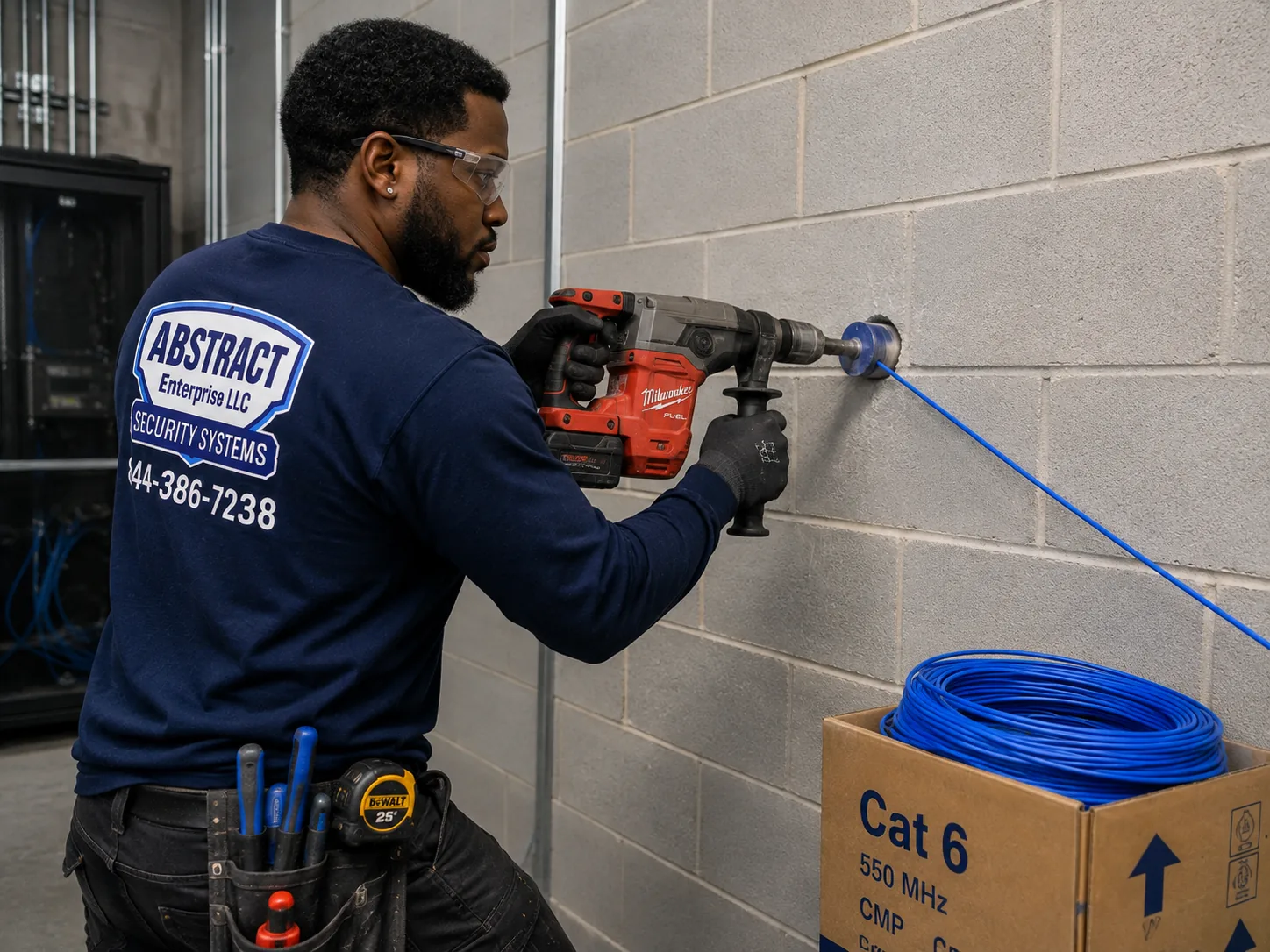
On block and brick. The same contractor describes many local Capes and ranches as sitting on concrete-block foundations, and brick facing is common on the lower level of split-levels. A camera aimed low across a driveway is sometimes best placed on that masonry. We drill with a hammer drill, set plastic or sleeve anchors sized for a light camera mount, and place them in the block or brick face rather than the mortar joint wherever the mount pattern allows. Arlo cameras are light, so the challenge with masonry is not weight; it is keeping a clean, sealed hole that will still be tight after several freeze-thaw winters.
On HOA and condo exteriors. In a townhouse or condo community, the outside walls, the trim and often the front door belong to the association, not the owner. Many associations allow a doorbell camera or a small camera under an eave with written approval, and some limit color, size or position. We ask you to get that approval before the visit, and we install exactly what was approved. Interior cameras looking through a window are a tempting workaround, but as one Arlo buyer complained publicly, an Arlo camera cannot detect motion through glass, so they rarely do what people expect. We will tell you plainly if the approved position cannot see what you hoped.


Arlo is a consumer brand at heart, and we say so to every business owner who asks. It suits small offices, professional suites, small shops and back doors where a few cameras and a phone app are enough. It is not a replacement for a wired recorder system in a warehouse or a large store. The corridors below are the ones named in our research for this page. We describe what those sources say; we have no information about the cameras inside any particular business and do not claim any of them as clients.
The Omni at 333 Earle Ovington Boulevard is a ten-floor office building with key card access, per a VTS listing, and LoopNet describes RXR Plaza as Long Island's largest office building, two 15-story towers with raised access floors.
Roosevelt Field, at 630 Old Country Road in East Garden City, is described by Wikipedia as the largest mall on Long Island, opened on the old airfield in the 1950s. News 12 and Daily Voice have reported shoplifting arrests and vehicle thefts there.
The road that divides commercial East Garden City from residential Uniondale, home to Nassau Veterans Memorial Coliseum at 1255 Hempstead Turnpike and the subject of the 2025 Town of Hempstead rezoning.
Through Farmingdale, Melville and Huntington Station, described by a commercial broker as a mix of warehouse, flex, research and office space.
Reported at roughly 1,350 businesses across about eleven square miles, mostly industrial and office buildings where Arlo fits front offices better than shop floors.
Small stores and offices along village main streets and turnpikes, often in one-story buildings with a back door onto a parking lot, where a doorbell camera at the rear entrance is the first request.
A dentist's waiting room on the Hempstead Plains, a two-person insurance office in Melville or a boutique on a village main street can be well served by three or four Arlo cameras: one at the front door, one at the back door, one over the register or reception desk, one in the stockroom. The owner sees everything on a phone and can share access with a manager. A warehouse along Route 110, a larger store or an office floor that needs continuous recording for months is a different matter. Battery cameras are designed to record when motion triggers them, and Arlo's own knowledge base notes that local storage saves only automatically triggered recordings. If a business needs every minute of every day kept, or needs plate capture at a lot entrance, we will say that Arlo is the wrong system and quote a wired one instead. That honesty saves money later.


We do not publish stories about a particular customer's house unless we can document them, so this is not a tale about one address. It is the routine our technicians follow on the kind of Long Island property we expect most often: a detached house from the 1950s or 1960s, the router in a front room, a driveway down one side and a garage at the back.
We leave the cameras in their boxes and start with the router. We look at its make, whether the internet provider has merged the 2.4 and 5 GHz bands under one name, and how many neighboring networks are crowding the same channels. Then we walk the property with a signal meter, stopping at every spot you have asked for a camera: the front step, the driveway corner, the side gate, the back slider, the far side of the garage. At each spot we note the signal and look at what stands between it and the router: the garage door, the kitchen, the addition built in the 1980s. We look up at the eaves to see where a camera can sit at a height you can still reach, and we look at the sky over each solar panel position. Only when every spot shows a signal we are happy with, or we have agreed with you how to fix the weak ones, does the first camera go on the wall. In our experience that walk is the difference between a system that works for years and one that sends "camera offline" alerts every week.
Hubs, base stations and signal
Arlo's knowledge base says the Arlo Pro 3, Ultra and Ultra 2 require an Arlo SmartHub or base station; many newer models can connect to your Wi-Fi directly. The hub plugs into your router and talks to the cameras on its own link, which can help on a property where the router's Wi-Fi is weak at the edges, and some hubs also take a USB drive for local recording. Arlo also says to keep a camera within three to six feet of the SmartHub while pairing it, so we pair everything first and then carry each camera to its spot and check the connection there. If you have a mix of older and newer cameras, we set up both on the same account and tell you which ones depend on the hub, so nobody unplugs it thinking it is spare equipment.
Far more often it is the connection, not the camera. A detached garage in Uniondale or a Suffolk colonial's garage across the yard can be forty to eighty feet from the router, with the house's own walls, a garage door, cars and trees in between. TechRadar's Arlo review noted that, depending on the shape of a house, cameras may not lie in range of the base station. We measure signal at the camera's position, check the battery and firmware, and look at the router's 2.4 GHz settings. The fix is usually one of three: move the hub or router to the side of the house facing the garage, add a mesh point or access point closer to it, or run one Ethernet cable to an access point inside the garage. We will tell you which one your property needs and why.
Because almost every Arlo camera needs a 2.4 GHz connection to set up, as SafeHome's setup guide notes, and many provider routers now merge the 2.4 and 5 GHz bands under a single network name. A phone on the 5 GHz band can then fail to hand the camera the right network during pairing. We check whether your router lets us separate the bands or create a 2.4 GHz-only network for the cameras, and if the provider has locked those settings, we put your own router or mesh system behind theirs. The 2.4 GHz band also travels farther through walls than 5 GHz, which is one reason it suits cameras spread around a Long Island yard.
Recording and storage
It can. Arlo's knowledge base says a subscription is not required to use local storage, and that only automatically triggered recordings are saved locally to a connected USB device. In practice that means a compatible SmartHub or base station with a USB drive plugged in, and recordings that start when a camera detects motion, not continuous video. Several reviewers also point out that recent Arlo cameras ship with no free cloud storage, so if you buy new cameras and skip both a subscription and a hub with a USB drive, you may get live view and notifications but no saved clips. We confirm what your models support before the visit and set up whichever storage you choose.
How long clips stay depends on the Arlo Secure plan you choose for cloud storage, or on the size of the USB drive for local storage, which fills up and overwrites older clips over time. Either way, a clip you need to keep should be downloaded from the app to your phone or computer as soon as you know it matters. That is the practical point behind the police camera registries on Long Island: the Suffolk County Police say they may ask registered participants to check video for a specific date and time, and Garden City police say detectives may ask to inspect video for a finite period. At handover we show you exactly how to find and download a clip, so that request never catches you out.
Mounting, power and placement
It will show you a picture, but it is unlikely to work the way you want. Battery Arlo cameras detect motion with a heat-sensing sensor, and as one buyer complained in a widely read forum thread, the camera cannot detect motion behind a glass window. At night, the camera's infrared light also reflects off the glass and washes out the image. For renters and HOA residents who cannot mount outside, we look first at an approved exterior spot under an eave or on the door frame, then at a doorbell camera, and only then at an interior position aimed at the inside of a door, where it will do its job properly.
Probably not on its own. Arlo's own guidance for solar models is to confirm regular direct sunlight and avoid deep shade, covered porches and eaves that block the panel. Many Long Island side yards are narrow passages between two houses that see direct sun for only an hour or two, and winter sun on the island is low. The panel does not have to sit beside the camera, though. Its cable lets us place it higher, on a fascia board or a sunnier wall, while the camera stays where it sees best. If there is no sunny spot within reach, we plan for spare batteries instead and tell you honestly how often you can expect to charge them.
Sometimes. A wired video doorbell needs a doorbell transformer of the right voltage, and buyer reviews of Arlo's wired doorbell warn that without standard 16-volt doorbell wiring in place, you will have to add it. In older houses the transformer may be original, undersized, or hidden in a basement ceiling near the electrical panel, and the chime may be mechanical or long since disconnected. We find the transformer, measure it, and check the chime before we connect anything. If the existing supply is not right, we tell you before work starts; where a transformer change involves line-voltage wiring, that part is for a licensed electrician. A battery doorbell is the other option and needs no wiring at all.
We can do the camera side, but not the circuit. Forbes reports that Arlo does not offer installation for the Wired Floodlight Camera and says it requires a licensed electrician. That is right: replacing an existing outdoor light fixture or adding a new outdoor circuit is electrical work. Our work is low-voltage and mounting. So for a wired floodlight we coordinate with a licensed electrician who connects the power, and we handle the mounting position, aiming, Wi-Fi and app setup. Battery floodlight models avoid the electrician entirely, and we install those ourselves. The quote lists exactly who does what.
Rules, neighbors and approvals
For a standard residential camera install, sources we found generally say no permit is required in Nassau or Suffolk, and we did not find a town or village rule that requires one for battery cameras. Long Island is a patchwork, though: ny.gov lists 64 incorporated villages in Nassau alone, each able to set its own rules, and historic districts in places such as the Town of Oyster Bay, Huntington and Sea Cliff review exterior changes. We found nothing saying whether a small camera counts, so if your house is in a historic district, we suggest asking the village or town before the visit, and we choose mounts that are easy to remove if they object. A wired floodlight or new outlet is a different case, because electrical work is inspected.
On close Nassau lots this comes up often. We start with the mounting angle: a camera aimed down the driveway from the front corner of the house usually sees less of the neighbor than one on the garage looking back toward the street. Then we use Arlo's activity zones so motion on the neighbor's side does not trigger recordings, and privacy masking where your model offers it, to black out their window in the picture. We also leave audio recording off on cameras that face a neighbor's property, because sources disagree about how New York's recording law applies to conversations a camera overhears. A camera that only watches your own driveway is the easiest one to defend if a neighbor ever asks.
In a gated or age-restricted community like the one in East Garden City, the exterior walls, doors and trim are usually controlled by the association, so we ask for written approval before the visit. It helps if the approval says which devices, in which positions, and in what color, because many HOAs limit what can face a common walkway. Send us the approval and any rules on work hours or vehicle access at the gate, and we will install exactly what was approved and nothing more. If the HOA allows only a doorbell camera, we will set that up well and add interior cameras for anything else you want watched.
Inside your apartment, a camera on a shelf or a no-drill mount is generally your own business, and it is the first thing we suggest. Anything on the outside of the building, even a battery doorbell held on with adhesive, is on the landlord's property, so we ask you to get the owner's agreement, ideally in writing, before we mount it. Many landlords are happy to allow a doorbell or a small camera at your own entrance, especially if it uses existing screw holes or a mount that comes off cleanly. We avoid aiming anything at the upstairs tenant's door or windows. When you move out, the cameras come with you, and we can come back to take them down.
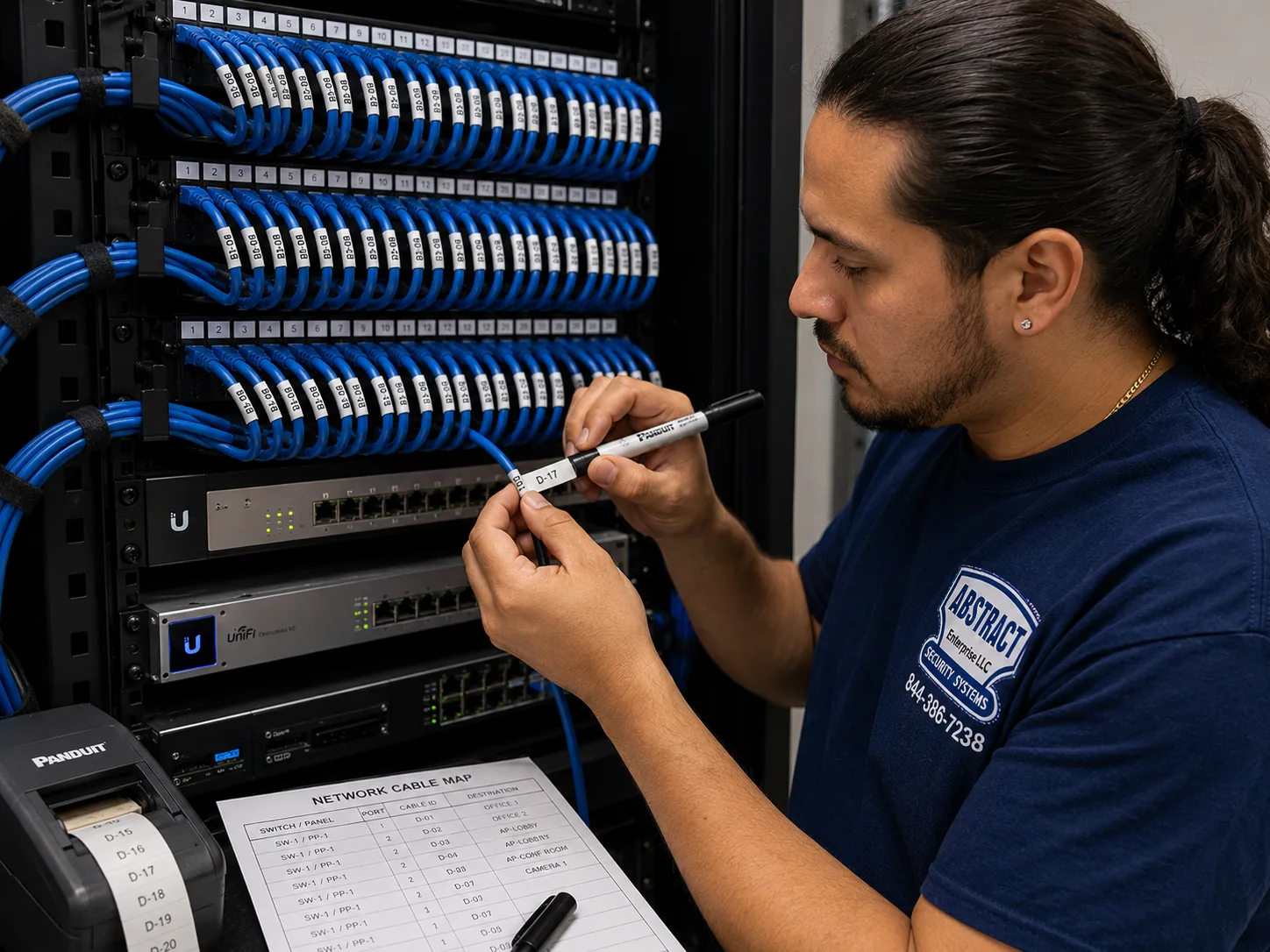
These are the Arlo products and supporting network equipment we fit on Long Island properties. We install Arlo equipment you have already bought, or equipment you ask us to supply. Current installed prices for each line are on our Long Island Arlo price page.
Battery cameras such as the Pro 5S, Ultra 3 and Essential 2K XL, mounted at eave or fascia height on driveways, side gates and back yards, with rechargeable batteries you can swap from a step ladder.
Required for the Pro 3, Ultra and Ultra 2, and useful for local USB storage on supported models. Placed near the router and labeled so it stays plugged in.
The Essential Wire-Free Video Doorbell for doors with no wiring, and wired doorbells connected to an existing chime after the transformer is measured.
Battery floodlight cameras over garage doors and back yards, and wired floodlights with a licensed electrician handling the circuit.
Panels placed where the sun actually reaches, and spare batteries for cameras in shaded spots, so a charge cycle never leaves a camera dark.
Cameras inside entry doors, garages and basements, and in small offices, placed to see the door rather than the window.
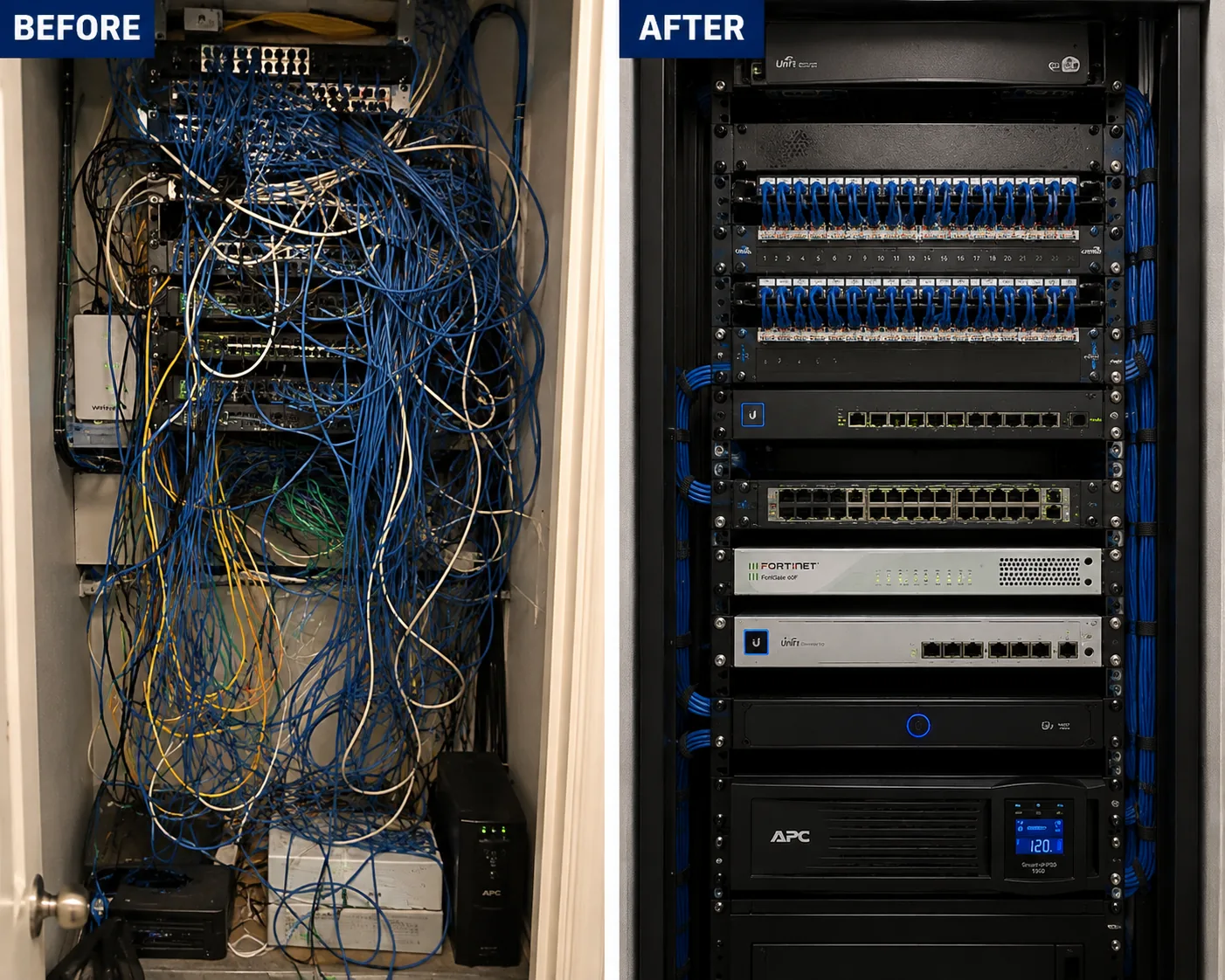
Wi-Fi extension for split-levels, long lots and detached garages, including wired access points fed by one Ethernet cable from the house.
A small battery backup on the modem, router and hub, so the cameras keep talking to the app through short outages.
People comparing options on Long Island often weigh Arlo against ADT, Ring and SimpliSafe. ADT is best known for monitored alarm systems with contracts. Ring and SimpliSafe sell self-install doorbells, cameras and alarm kits, much as Arlo does, and Arlo itself partners with OnTech and HelloTech for installation in all 50 states, according to Forbes. The question is less which brand and more who sets it up on your particular property. A national service books a visit to install what is in the box. A local installer who has worked on Long Island houses knows to measure the far side of the garage, check the doorbell transformer in a 1950s basement, ask about the HOA and plan for the next storm outage. If you already own Arlo, we work with it. If you have not bought anything yet and your property is large or needs continuous recording, we will tell you honestly when a wired system would serve you better.
| Question | Arlo, self-installed | Arlo, installed by AESS | Wired camera system |
|---|---|---|---|
| Holes in the house | Mounting screws only | Mounting screws, sealed; cable only if Wi-Fi needs extending | Cable to every camera |
| Signal at the garage | Found out after mounting | Measured before mounting, fixed if weak | Not an issue; each camera is cabled |
| Recording | Motion-triggered clips, cloud or local | Same, with storage set up and tested | Usually continuous to a recorder |
| Batteries | Recharged by the owner | Placed for reach, solar where sun allows | No batteries; powered over the cable |
| Best for | Small homes, confident owners | Most Long Island houses, renters, HOAs, small offices | Large lots, estates, warehouses, stores |

We could not capture Google's AI Overview, People Also Ask boxes or Bing and DuckDuckGo results for this page from our build environment, so we will not pretend to quote them. What follows are claims we see repeated in quick online answers about Arlo and about camera installation on Long Island, set against Arlo's own documentation, published reporting and our field practice. Marketplaces such as Angi, HomeAdvisor and Fixr publish national cost and how-to guides that feed many of those answers; they are useful for a rough idea, but they are not a plan for a house in Massapequa or Smithtown.
Screwing a magnetic mount to a fascia board does take five minutes. Getting a camera to stay connected, wake quickly on motion, record where you expect and last a season on one charge does not, and that is the part quick answers leave out.
On Long Island the time goes into the network: provider routers that merge Wi-Fi bands, hubs that some models require, and detached garages at the edge of range. Arlo's own knowledge base asks for cameras to be within three to six feet of the SmartHub during setup, which already tells you pairing and mounting are separate steps.
Our routine is to measure signal at each spot, fix the network where it is weak, pair, then mount. The mount is the short part. The rest is what keeps the system from sending "offline" alerts for the next three years.
This was closer to true years ago. Reviewers now note that recent Arlo cameras ship without free cloud storage, and the Arlo app is built around the Arlo Secure subscription plans.
The free path is local storage. Arlo says a subscription is not required for it, but it works only with a compatible SmartHub or base station and a USB drive, and only motion-triggered recordings are saved, not continuous video.
So the honest answer for a Long Island buyer is: decide on storage before you buy. If you want no monthly plan, choose models and a hub that support local storage. We confirm compatibility before the visit and test a clip from every camera before we leave.
Some answers borrow New York City rules, such as Department of Buildings permits or Landmarks Preservation Commission review, and apply them to the whole state. Nassau and Suffolk are outside the city, and those agencies do not cover them.
The sources we found say standard residential camera installs in Nassau and Suffolk generally need no local permit. What does apply is licensing for the installer, under New York's General Business Law Article 6-D, and county home improvement licensing in Nassau and Suffolk.
The exceptions are electrical work, such as a new circuit for a wired floodlight, and village or town historic districts that review exterior changes. Long Island's dozens of villages can each set their own rules, so we check your address rather than give one answer for the whole island.
This one appears even on installer websites, including some of ours in older versions. New York's eavesdropping statute is generally described as one-party consent: a person who is part of a conversation can record it.
The real question for a camera is different. A doorbell or driveway camera records conversations between other people, such as two delivery drivers or neighbors talking on the sidewalk, where the camera owner is not part of the conversation at all. Sources we read disagree on how the law treats that, and some say it is unsettled.
Our practice is simple: two-way talk on a doorbell is fine, because you are part of that conversation. Continuous audio recording on cameras that face sidewalks, neighbors or a business's customers stays off unless the owner has taken legal advice. That avoids the question rather than gambling on it.
Wi-Fi cameras have real advantages, but in 2022 CrimeOnline reported on a serial burglar in Queens and Long Island seen carrying a device investigators believed jammed Wi-Fi to knock cameras offline. The camera that captured him did not need Wi-Fi to record. News 12 Long Island has also relayed police advice, from a New Jersey case, to hardwire security systems rather than rely on Wi-Fi.
That does not make Arlo useless. It means a Wi-Fi camera system has a known weakness, and the buyer should know about it. Local storage on a hub still holds clips recorded before a signal is lost, and a strong, well-placed signal is harder to disrupt than a weak one at the edge of range.
For homes where that risk matters, we often suggest Arlo at the doors and driveway for convenience, with a wired camera or two at the most important point. We will lay out the trade-off for your property rather than pretend it does not exist.
Forbes and NerdWallet both report that Arlo offers professional installation through partners such as OnTech and HelloTech, and Forbes says that covers all 50 states. That is a real option, and for a simple job it may be all you need.
The same Forbes review notes the limits: Arlo's partner installation does not include the Wired Floodlight Camera, which needs a licensed electrician. National booking services also tend to quote the device in the box, not the network around it.
Where a local installer earns its keep is the property-specific work: the access point for the detached garage, the doorbell transformer in a 1950s basement, the HOA approval, the battery backup after the last outage, and coming back if something changes. Choose whichever fits the job; we simply want you to know what each one covers.
Height protects a camera from tampering, but a camera at the peak of a two-story Suffolk colonial sees the tops of heads, struggles to recognize faces, and needs a tall ladder every time its battery runs low.
SafeWise's Arlo guidance suggests around six to seven feet above the ground. That height sees faces under a hat brim, keeps the camera out of easy reach, and lets most owners swap batteries from a step stool.
On a ranch or Cape, the eave is often about that height anyway. On taller houses we use the first-floor soffit, a porch ceiling or a garage fascia rather than the roofline, and we put solar panels higher than the camera where the sun allows, so the camera can sit where it sees best.
Send the Arlo model names, a photo of where the router sits and photos of each spot you want covered, and a technician will tell you whether the job is a simple mount or needs a network fix first, whether your models need a SmartHub, and how storage will work without surprises. Call (800) 486-0943, message us on WhatsApp, or use the quick form.
Every Long Island Arlo job follows the same eight steps, whether it is a single doorbell on a Levittown Cape or a dozen cameras around a North Shore property. The order matters most on detached houses, where the usual cause of an unreliable system is a camera mounted before anyone checked the signal at its spot.
The town, the house or building type, the Arlo cameras, doorbell or SmartHub you own or want, and photos of the router, the front door, the driveway and any detached garage. We match the job to the Nassau or Suffolk price list before you book.
On arrival we measure 2.4 GHz signal strength at every planned camera spot, including the far side of the garage and the back patio, before anything is mounted.
Each position is marked and agreed with you: height around six to seven feet for most outdoor cameras, sun for solar panels, angles away from neighbors' windows, and reach for battery swaps.
The SmartHub or base station placed near the router and connected where the model calls for it, bands separated if needed, and mesh or an access point added where signal is weak.
Mounts fixed into sheathing, trim, block or brick with sealed holes, and a wired doorbell connected only after the transformer and chime are checked.
Every camera added in the Arlo app, activity zones drawn to cut out the street and the neighbors, and Armed, Disarmed and schedule modes set the way your household lives.
Local USB storage on a compatible hub, or the Arlo Secure plan you chose, attached and tested with a recorded clip from each camera.
Everyone who uses the app shown how to view, find and download clips, change modes and swap batteries, with a written list of camera locations and account details left for your records.
Long Island is too big to describe by its edges, so most people give directions by its big anchors. These are the ones we use when we plan visits across Nassau and Suffolk.
Described by Wikipedia as Long Island's largest mall, at 630 Old Country Road in East Garden City, built on the airfield Charles Lindbergh left from for Paris in 1927.
At 1255 Hempstead Turnpike in Uniondale, opened in 1972 and home to the Islanders for decades; the center of the Nassau Hub and its rezoning debates.
On land that was Mitchel Field, established in 1918 as Hazelhurst Aviation Field #2 and decommissioned in 1961, now shared with Nassau Community College and athletic fields.
About 244 acres in the Uniondale section of Hempstead, per Wikipedia, surrounded by the split-levels and hi-ranches typical of central Nassau.
Reported at roughly 1,350 businesses over about eleven square miles, the island's largest concentration of industrial and office buildings.
Listed by Wikipedia at 213 buildings on 1,454 acres; nearby Stony Brook Mill Pond's dam failed in the August 2024 flash flood emergency.
We also cover the boroughs next door. For addresses across the city line, see our Queens Arlo installation prices and Brooklyn Arlo installation prices, or the citywide NYC Arlo price list. On the island itself, every address falls under either the Nassau County Arlo price list or the Suffolk County Arlo price list.
Long Island Arlo work is priced from our published lists, one for Nassau and one for Suffolk, because the counties carry different travel and labor costs. The full figures, per camera and per extra, live on our Long Island Arlo installation prices page, where you can build your own system line by line. We keep the numbers there, in one place, so this page and the price page never disagree. What we can explain here is what moves the total, so you can read that list with your own property in mind.
| What changes the price | Why it matters on Long Island | How we handle it |
|---|---|---|
| Number of cameras and doorbells | Detached houses need more cameras than apartments to cover a perimeter | Priced per device on the area list |
| Nassau or Suffolk address | Suffolk jobs cover more miles; Nassau and Suffolk have separate lists | The address decides which list applies |
| Mounting height and surface | Second-story eaves, brick, block and stucco take longer than first-floor trim | Listed as separate lines, named in the quote |
| Network work | Detached garages and long lots often need an access point or mesh | Quoted after the signal survey, before mounting |
| Wired doorbell or floodlight | Older transformers, and floodlight circuits that need an electrician | Our part quoted by us; electrician's part named separately |
| Equipment supplied by us or by you | Many owners already have an Arlo kit from a store | Labor-only when you supply the equipment |
| Storage choice | Arlo Secure is a plan you pay Arlo for; local storage needs a compatible hub | We set up either; Arlo bills its own plans |
Take a 1950s ranch in Nassau with a detached garage, where the owner wants a doorbell, a driveway camera, a back-slider camera and a camera on the garage. On the price list that is four devices at the Nassau rate, plus a line for the network work if the survey shows the garage camera needs an access point. Move the same layout to a Suffolk colonial with a second-story eave over the driveway, and the Suffolk list applies, with a height line for that camera. If the owner already bought the cameras at a store, the equipment lines drop out and the job is labor only. Nothing else is added on the day unless you ask for it and agree it first.
Arlo Secure subscription plans, if you choose one, are billed by Arlo directly, not by us. We set them up in your account but never resell or mark them up.
Full terms โ including 50% deposit, one-year parts-only warranty on AESS-supplied products, and the late-fee schedule โ are set out in the service agreement.Three common Long Island Arlo layouts. Each is built only from lines on our area price list, so there is no package premium and no hidden extra; current figures are on the Long Island Arlo price page.
An Arlo video doorbell, battery or wired after a transformer check, and one wire-free camera covering the driveway and the front walk, paired, zoned and tested. Suits Capes, ranches, townhouses where the HOA allows it, and rentals with the owner's approval.
A doorbell plus four wire-free cameras at the driveway, side gate, back slider and garage, with a SmartHub or base station where the models need one, local or cloud storage set up, and the Wi-Fi adjusted so every camera holds a steady signal. The usual job on a Nassau or Suffolk detached house.
A doorbell and six or more cameras including floodlight cameras, solar panels placed for real sun, a wired access point or mesh to the garage or pool house, and battery backup on the modem, router and hub. For Suffolk colonials on wide lots and North Shore properties.
Many Long Island owners already have an Arlo kit from a warehouse club or electronics store, sometimes still in the box. We install it at labor-only rates from the same list. Before the visit we check that your models work together, that you have a SmartHub if any camera needs one, and that the batteries and mounts are all there. If a camera turns out to be faulty or the kit is missing a part, we tell you before we start rather than charge you for a visit that cannot finish.
The full island-wide list, per camera and per extra. Long Island Arlo installation prices
Hempstead, North Hempstead and Oyster Bay, Glen Cove, Long Beach and the villages. Nassau County Arlo prices
All ten towns, from Babylon and Huntington to the East End. Suffolk County Arlo prices
For family or rental properties in the five boroughs. NYC Arlo installation prices
Addresses on the city side of the Nassau line. Queens Arlo installation prices
Send the models and photos and we will match them to the list. Request a free quote
Yes. Many Long Island owners buy a kit first and call us when the setup gets complicated. We install equipment you supply at labor-only rates from our area price list, after checking before the visit that your models work together, that you have a SmartHub if any camera requires one, and that the kit is complete.
Usually, yes. We add it to your existing Arlo account, check that it is compatible with your hub or base station if you use one, and place it where the signal is strong. If the new camera is a newer model and your older ones depend on a base station, we explain which devices rely on which, so the system stays easy to manage.
We install several brands, including wired camera systems, and we will tell you if a different system would serve your property better. If you already own Arlo or have decided on it, this page and our Arlo price lists cover that work. If you have not bought anything yet, we can lay out the options for your house before you spend money.
We cover both counties. Nassau addresses are priced on our Nassau list and Suffolk addresses on our Suffolk list, because the travel is different. Tell us your town when you book so we can quote the right rate and plan the visit around the drive.
For most Nassau houses, with short distances and a doorbell, driveway and back door to watch, Arlo is a good fit and avoids running cable through finished rooms. Wired systems make more sense on large lots, properties with outbuildings, and homes that want continuous recording rather than motion clips. We tell you which way your property leans after the signal survey.
The complaints we see in reviews and forums tend to fall into three groups: subscription costs for cloud storage, batteries that need charging more often than expected, and cameras dropping offline at the edge of Wi-Fi range. Most of those come down to planning. Choosing storage before buying, placing cameras and solar panels well, and fixing weak signal before mounting solves a large share of them.
Battery cameras keep their charge, but they need the router and, where used, the SmartHub to reach the app. If the power or internet is down, you lose live view and notifications. A small battery backup on the modem, router and hub keeps things running through short outages, and local storage on a compatible hub can keep recording motion clips while the internet is down.
It depends on the number of cameras and doorbells, your county, the mounting heights and surfaces, any network work for a detached garage, and whether you supply the equipment. Our Long Island Arlo price page lists every line for Nassau and Suffolk, and we send a written quote with only those lines before you agree to anything.
Arlo works with national partners such as OnTech and HelloTech, and for a simple job that may be enough. A local installer is worth it when the property needs more than the box: Wi-Fi extended to a garage, a doorbell transformer checked, HOA approval followed, or a wired floodlight coordinated with an electrician. Pick whichever matches your job.
Nassau County requires residents served by the county police to register an alarm system tied to a central monitoring station, and charges a registration fee. Whether a camera-only Arlo system with a monitoring plan counts as an alarm under that rule is something we could not confirm, so we suggest checking with the police permit office before you sign up for monitoring.
Usually around six to seven feet, which sees faces clearly and keeps batteries reachable from a step ladder. On two-story houses we use the first-floor soffit, a porch ceiling or the garage fascia rather than the roofline. Where a camera must go higher to see a long driveway, we tell you how you will reach it to recharge, or plan a solar panel for it.
Yes, for reception areas, suite entrances, stockrooms and back doors. We work with building management on access, freight elevators and any insurance certificate they require, connect the cameras to the business's own network, and give owners and managers separate app access. If the space needs continuous recording, we will recommend a wired system instead.
Requests are booked within 2 hours of reaching us. The install date itself depends on your town and the work involved, and we will give you the first slot that fits. Sending your Arlo model names and photos with the request lets us confirm the job on that first call.
Tell us the town, the house or building type, the Arlo models you have or want, and what you need covered. Photos of the router and the camera spots make the quote exact. Prefer to talk? Call (800) 486-0943.
ยท Arlo Camera Installation NYC Hub | All Five Boroughs ยท Arlo Camera Installation Long Island hub | Nassau & Suffolk ยท Arlo Camera Installation - Hudson Valley Hub, 6 Counties
From a Levitt-era ranch with a garage out back to a split-level near Hofstra, a condo north of Hempstead Turnpike or a colonial on a wide Suffolk lot, the job starts the same way: the Arlo models you have or want, a photo of the router and each camera spot, and an honest match to our Nassau or Suffolk price list. Call (800) 486-0943, message us on WhatsApp, or send the quote form, and we will tell you what your property needs before anything goes on the wall. You can also go back to the AESS home page for every other service we offer.