See every Arlo camera price in the Hudson Valley and build your own system →
Wi-Fi Measured Before a Camera Goes Up · Winter Power Planned Camera by Camera · Priced by County, No Surprises
The Hudson Valley is six counties of very different property, and an Arlo camera behaves differently on each. Across the region a majority of homes were built before 1970, many before 1939, and Ulster County alone holds more Dutch-influenced stone houses than anywhere outside the Netherlands. Add long driveways, detached garages, barns, riverfront estates, village rowhouses and pockets where broadband still does not reach, and the questions that decide whether an Arlo works are rarely about the camera itself. They are about where the Wi-Fi ends, whether the battery can charge in January, whether a historic commission will care about the mount, and where the hub should live. We work those out before we book, then install and test from the far end of your property.
Reviewed and updated November 6, 2026 by Anwar Timothy, NYS license #12000287431 · Sources: Arlo's support knowledge base (cold-weather battery FAQ, camera setup and local storage articles), Arlo's camera and doorbell product pages, the Arlo Community forum, SafeWise, Forbes Home, Hudson Valley Pattern for Progress, the Times Union, HudsonValleyOne, The Highlands Current, Mid-Hudson News, Hudson Valley Post, News 12 Hudson Valley and Westchester, Central Hudson news releases, New York State Parks, the City of Kingston Historic Landmarks Preservation Commission page and Resolution 156 of 2024, the City of Newburgh East End Historic District Design Guidelines, the City of Beacon Code Chapter 134, Wikipedia entries for the East End Historic District, the Hudson River Historic District and the Jean Hasbrouck House, Chronogram, the NYS Department of State installer license page, 19 NYCRR 195.2 via Cornell LII, and Justia Ask a Lawyer · Dispatched from 460 E Fordham Rd

Owner-operated since 2002 · Thousands of jobs completed · Booked within 2 hours
Arlo camera installation in the Hudson Valley is priced by county, because travel and lot sizes differ from Westchester to Ulster; the current county rates are on our Hudson Valley Arlo price page. Every install includes a Wi-Fi check at each camera spot, hub placement where your models need one, mounting, Arlo app and storage setup, a winter power plan, and a walk-test from the far end of the property. We book within 2 hours of your request. See the full list on the Hudson Valley Arlo camera installation prices page, call (800) 486-0943, or use the form.
Arlo sells its cameras as something you can stick up yourself in an afternoon, and on a small house next to a strong router that is often true. The Hudson Valley is mostly not that house. Our own regional camera work describes the typical property here as a large lot with a long driveway, a detached garage, outbuildings and often a barn. Hudson Valley Pattern for Progress reports that a majority of housing units across the region were built before 1970, with a significant share built before 1939. The Times Union notes that Hurley, Stone Ridge, Hyde Park and Kingston have many stone homes and that most of the valley's historic houses date from the 1800s. A wire-free camera solves the wiring problem on a stone wall or a barn, which is exactly why so many owners here buy Arlo. It does not solve the distance problem, the cold problem or the sunlight problem, and those are the three things that send most Arlo owners looking for help.
Distance comes first. An Arlo camera is a radio device. To set up almost any Arlo camera, according to SafeHome's setup guide, you need a 2.4 GHz Wi-Fi connection, and some models, including the Arlo Pro 3, Ultra and Ultra 2, also need an Arlo SmartHub or Base Station, which Arlo's own knowledge base says to keep within three to six feet of the camera during setup. In a Westchester split-level with the router in the den, that is easy. In an 1800s farmhouse in Dutchess where the internet comes in at a basement corner and the camera you care about most is on the barn two hundred feet away, the signal may never get there. A camera that works on the porch during setup and then drops off every night once it is on the barn is the most common wire-free failure, and it is a planning failure, not a product fault.
Cold comes second, and in this region it is not a footnote. Arlo's support FAQ gives a minimum operating temperature of minus four degrees Fahrenheit for its Pro, Ultra, Go and Essential wire-free cameras, but a minimum of 32 degrees for the Arlo Solar Panel, and it states plainly that Arlo batteries do not charge at temperatures below freezing, even when the camera is plugged into AC power or connected to a solar panel. On the Arlo Community forum, one owner described a roof-mounted Arlo Pro that lasted only a week on a charge with temperatures in the teens. A troubleshooting site that covers Arlo says to expect 40 to 60 percent less battery life than advertised in real winter conditions. Anyone who has spent January in Ulster or northern Dutchess knows how many days stay below freezing. A camera plan that ignores that will look fine in October and go dark by February.
Sunlight comes third. Arlo's own product pages tell solar buyers to confirm regular direct sunlight and avoid deep shade, covered porches and eaves that block the panel. Hudson Valley houses are full of exactly those things: deep porches on Victorians, wide eaves on farmhouses, mature trees on old lots and north-facing walls on houses built into hillsides. A solar panel bolted under an eave because that is where the camera fits will charge poorly in summer and, by Arlo's own figures, not at all on a freezing day. Placing panels where they actually see the sun, sometimes on a different wall from the camera, is part of the install.
Then there is the internet itself. HudsonValleyOne reported in 2023 that 1,070 properties in Ulster County still had no broadband service, and that in Shandaken even cell-phone service struggles. The Times Union reported that Ulster received federal money to extend Verizon's fiber network to about 1,300 households and businesses in remote parts of the county, and Mid-Hudson News reported in 2025 that New York's ConnectALL grants target unserved sections of Putnam, Dutchess, Orange, Ulster and Westchester, among others. A cloud-connected camera needs a connection to the cloud. Where that connection is weak or missing, the setup has to lean on local storage and realistic expectations about live alerts, and we tell owners that before they buy more cameras.
Security worries here are real but local, and they shape what people want from an Arlo. Hudson Valley Post reported that New York State Police opened investigations into residential burglaries in Dutchess, Westchester and Putnam counties and advised residents to install or activate security systems and cameras. Scarsdale police said in 2024 that an organized burglary group was hiding camouflaged cameras in residents' bushes for days before break-ins. News 12 reported that neighbors' cameras in Port Chester caught someone trying car doors around 4 a.m. on and near Tower Hill Drive, and Hudson Valley Post reported the same suspect recorded stealing packages on Fitchett Avenue and De Laval Place in Poughkeepsie. In April 2026, Mid-Hudson News covered a string of package thefts at a housing complex in the Village of Haverstraw. Most of those stories were solved or documented because ordinary residents had a camera pointed the right way. That is the job an Arlo does best when it is placed properly.
The region is also, right now, unusually alert to who watches the footage. Hudson Valley Post and The Highlands Current reported that the Dutchess County District Attorney and Sheriff announced on September 25, 2026 that the county would stop using its Flock license-plate cameras, and that on October 13 the county legislature voted unanimously to have any county-owned camera still installed on November 1 covered with opaque, non-damaging material. The Times Union reported residents at a Pleasant Valley forum citing privacy, data security and possible misuse. In Kingston, HudsonValleyOne covered residents questioning the city's camera network in September 2026. Many owners we talk to want a camera on their own house precisely because they want the footage on their own account, under their own control. Arlo's local storage option, which Arlo says needs no subscription, fits that wish, and we set it up whenever an owner asks.
We also want to be clear about what our research did not turn up. We searched for Hudson Valley Reddit threads about Arlo installs, local news about Arlo cameras specifically and Yelp reviews mentioning Arlo here, and found nothing specific. So this page does not quote local Arlo owners, because we could not find any to quote. What it does draw on is Arlo's own published specifications, public records about the region's buildings, weather and broadband, local news about security, and the way we plan every wire-free job.
What owners often add once the cameras are up. Once the yard and driveway are covered, the next request is usually the front door: an Arlo video doorbell, wired where a doorbell transformer already exists or wire-free where it does not. Many owners on larger lots also ask about getting stronger Wi-Fi out to a barn or garage for other uses. Say so when booking, so we check the doorbell wiring and plan any network extension in the same visit instead of coming back.

The calls we move on first are the ones where a camera you rely on has stopped working: an Arlo that went offline after the internet provider swapped the router, a battery that keeps draining since the first hard frost, a hub that has not come back since the last outage, or packages going missing and a camera that recorded nothing. Before you call, check whether the router and hub have power and lights, note which cameras show offline in the Arlo app, and look at the battery levels. Then call (800) 486-0943 and tell us your town, which models you have and what changed recently. A new router, a power cut or a cold week explains most sudden Arlo failures here, and knowing which one it is lets us bring the right fix.
Hudson River Valley Greenway groups Westchester and Rockland as the Lower Hudson Valley, and Putnam, Orange, Dutchess and Ulster as the Middle Hudson Valley. For an Arlo install that split is a decent first guide: the lower counties tend toward suburban lots, strong broadband and short camera runs, while the middle counties bring larger lots, older and more rural houses, colder nights and patchier internet. But every county has its own mix. The table lists what the public record and local news tell us about each, and the last column is our working plan, not a fact about any property; we confirm everything on site.
| County | What the sources say | What it means for Arlo |
|---|---|---|
| Westchester | News 12 reported porch-theft reports down in June 2026 but still a concern; Port Chester neighbors' cameras caught car-door checks near Tower Hill Drive; Scarsdale police found burglars' cameras hidden in bushes | Front doors, driveways and parked cars; mostly suburban distances; doorbell and driveway cameras first |
| Rockland | Our regional notes describe suburban neighborhoods, village downtowns, growing commercial centers and rural properties; Mid-Hudson News covered package thefts at a Haverstraw complex in April 2026 | Package and entry coverage for homes and multi-unit complexes; shop setups along the main commercial roads |
| Orange | Newburgh's East End Historic District covers 445 acres; Mid-Hudson regional data puts about 35 percent of the Mid-Hudson population in Orange County; I-84 and Route 9W cross it | Rowhouse and historic-facade rules in Newburgh; mixed suburban and rural lots elsewhere |
| Putnam | The Highlands Current reported the county owns 48 plate readers not tied to Flock; State Police burglary alerts included Putnam; ConnectALL targets unserved sections | Wooded lots, long drives, weaker signal at the property edge; local storage as backup |
| Dutchess | Created in 1683; Flock cameras dropped in September 2026; Beacon is 49.6 percent detached single-family homes; Central Hudson named Dutchess among the hardest hit in the July 2026 outages | Riverfront estates and historic villages, farms, river-town rowhouses; outage planning for router and hub |
| Ulster | Stone houses in Hurley, Stone Ridge and Kingston; Kingston's five historic districts; 1,070 properties without broadband in 2023; burglaries and car break-ins reported around Union Center Road in Esopus | Thick walls favor wire-free; coldest winters push power planning; some sites need local-first setups |
In the Lower Hudson Valley, most Arlo calls we expect look like suburban calls anywhere near the city: a front door that gets deliveries, a driveway with cars parked overnight, a side gate and a backyard. The local news gives a clear picture of why. News 12 reported in June 2026 that porch-pirate reports in Westchester were down but still a year-round concern. Port Chester residents showed News 12 their own camera footage of someone trying car doors around four in the morning. News 12 also reported Rye police counting 99 vehicle thefts since 2020, every one involving a car left unlocked with the key fob inside, which is a reminder that a camera records a theft but a locked car prevents it. For these properties the camera plan is usually short: a doorbell or a camera covering the front step, one wide view of the driveway, and one on the back door. The installation challenge is less about distance and more about angle. A camera aimed at the street from too high records the tops of heads; one aimed too low gets blinded by headlights. SafeWise's guidance of roughly six to seven feet above the ground is a good starting point for a driveway camera, and we adjust from there.
Orange County holds the largest share of the Mid-Hudson population, according to Mid-Hudson regional data, and its housing runs from new subdivisions to the rowhouses of Newburgh. The East End Historic District there covers 445 acres and more than two thousand buildings in Italianate, Second Empire and Gothic Revival styles, according to Wikipedia, and Newburgh's own design guidelines say security features must not damage historic building fabric and that security or motion-detection equipment should be placed on side or rear facades. For an Arlo owner on a Newburgh rowhouse, that settles a lot before we start: the front of the house is the wrong place for a camera if a side or rear location can see the same entry, and any mount must come off without leaving a scar in historic brick or wood. A wire-free Arlo is a good fit here precisely because it needs no cable through the facade. Outside Newburgh, on the larger lots off I-84 and Route 9W, the Orange County job starts to look like the Dutchess and Ulster jobs below.
Putnam is wooded, hilly and spread out, and that is hard on any wireless camera. Trees soak up Wi-Fi, hills block it, and houses set back from the road leave the camera that watches the road a long way from the router. Mid-Hudson News reported that ConnectALL grants are aimed at unserved sections of Putnam, which means some properties are working with slower internet than the camera would like. Our approach on these lots is to measure signal at the very spot where the driveway camera will hang, not halfway there, and to plan a wired access point or a hub location closer to the cameras when the measurement says the router cannot reach. Where the internet connection itself is the weak point, we set up local storage on a SmartHub or Base Station with a USB drive, which Arlo says saves automatically triggered recordings without a subscription, so a slow upload does not mean lost footage.
Dutchess is where the region's history is densest. Wikipedia describes the Hudson River National Historic Landmark District, designated in 1990, as the largest such district on the mainland of the contiguous United States, made up of four towns, four hamlets, two villages and more than forty riverfront estates, with only about two percent of its acreage not considered historic. The Rhinebeck Village Historic District was listed in 1979 and enlarged in 2021. Beacon, at the south end of the county, is about half detached single-family homes, with more than a third built before 1940. Across all of it, Central Hudson reported in July 2026 that the Independence Day storms left more than 41,000 customers without power at one point, with Dutchess and Ulster the most heavily affected. An Arlo camera on battery keeps running through an outage, but if the router and hub go down with the power, the camera has nothing to talk to, and a forum post on Tractor By Net describes Arlo cameras burning battery while searching for a lost Wi-Fi connection. In Dutchess we talk about battery backup for the router and hub as part of every plan.
Ulster is the county where wire-free cameras make the most sense and also where they are tested hardest. The stone houses of Hurley, Stone Ridge, New Paltz and Kingston have walls thick enough that running cable through them is a project in itself, which is why wire-free Arlo cameras appeal. But Ulster's winters are long, its broadband is uneven, and its outages are frequent. HudsonValleyOne reported 1,070 Ulster properties still without broadband in 2023, and described Shandaken as a place where even cell service struggles. On those properties we are honest that a camera system built around a cloud account will be limited, and we plan around local storage, realistic alerting and plug-in power wherever an outlet exists. On the stone houses, we plan solar panels with direct sun in mind, keep batteries where they can be reached for winter charging indoors, and choose mount points in mortar joints or wooden trim rather than the stone face wherever the view allows.

Most of the time wasted on a wire-free camera job happens before the first mount: a router nobody can find the password for, a camera bought for a spot the signal never reaches, a hub model that the cameras do not need, or a solar panel ordered for a wall that sees two hours of sun. Ten minutes with your phone saves almost all of it. Please do not climb ladders or open walls; just look, photograph and send us what you find.
| What to check | Why it matters here | What to send us |
|---|---|---|
| Where the router and modem are | In older houses the internet often enters at a basement or a back corner, far from where the cameras will go | A photo of the router and its label, and which room it is in |
| Your Wi-Fi name and password | Almost every Arlo needs a 2.4 GHz network; some new routers hide it or merge it with 5 GHz | Confirmation you have the admin login, or who does |
| The Arlo models you own or want | Some models need a SmartHub or Base Station; others connect straight to Wi-Fi | A photo of the box or the model label |
| Signal at the far spots | Barns, detached garages and driveway ends are where wire-free cameras fail | Your phone's Wi-Fi bars standing where the camera would go |
| Sun on the wall | Arlo says solar panels need regular direct sun and fail under eaves, porches and deep shade | Which way the wall faces and whether trees shade it |
| Outdoor outlets | Plug-in power avoids recharging, though batteries still will not charge below freezing | Photos of any exterior outlets near camera spots |
| Historic district status | Kingston, Newburgh and Beacon review some exterior changes visible from the street | Your street and whether you have had a commission approval before |
| Doorbell wiring | A wired Arlo doorbell needs a working doorbell transformer and wiring | A photo of the existing doorbell button and chime |
Before you decide where the cameras go, walk to each spot you have in mind with your phone and look at the Wi-Fi indicator. Standing at the back door, it may show full bars. Standing at the barn, or at the end of a driveway in Putnam or Ulster, it may show one bar or none. Your phone has a better antenna than most small cameras, so if your phone struggles, the camera will too. Note those spots for us. They are where we will either move the camera, move the hub, or bring the network closer.
Most Hudson Valley Arlo kits are bought in the fall and installed on a mild day, so everything works at first. Picture the same camera in the week of the year when the temperature does not get above freezing. Can you reach it on a ladder to take the battery inside? Is there an outdoor outlet nearby? Does the wall get any sun at all in winter, when the sun is low and the trees are bare? Tell us which cameras you can reach easily and which you cannot. The ones you cannot reach are the ones we plan to power differently.
Before we set up the Arlo account, decide whose phones should get alerts and who should be able to view recordings: a spouse, adult children, a caretaker, a tenant in a cottage on the property. Also decide whether you want recordings kept locally, in the cloud on a paid plan, or both. Given how much attention plate readers and police cameras got in Dutchess and Kingston this year, many owners have firm views on this, and it is much easier to set up correctly on day one than to change later.

These are the Arlo jobs Hudson Valley homeowners, farm owners, landlords and small businesses book us for. Each is priced from the county rates on our Hudson Valley Arlo price page. Where a job needs something extra, such as a wired access point to reach a barn or a second technician on a high roofline, the quote names it before you agree.
Arlo cameras mounted on stone, clapboard, vinyl and barn board, at heights and angles chosen for faces at doors and wide views of yards and drives, with the camera's own mount fixed into the strongest material available.
For models that need one, the hub wired to the router, placed where it can reach the cameras, and fitted with a USB drive when you want local recordings without a subscription.
Arlo solar panels placed where they see direct sun, sometimes a few feet from the camera on a better-facing wall, with an honest word about the freezing-point charging limit.
Wired doorbells on an existing transformer after we test it, or wire-free doorbells where the house has no usable doorbell wiring, linked to your chime where the model supports it.
Signal measured at each camera spot, the 2.4 GHz band confirmed, and a wired access point or relocated hub where the router cannot reach a barn, garage or gate.
Your account set up or tidied, cameras named, activity zones drawn to skip the road and the trees, modes for home and away, and access shared with the people you choose.
Cameras that went offline after a router change, after an outage, or since the cold arrived, diagnosed and reconnected, with the cause explained so it does not happen again.
Camera positions on side and rear facades where Newburgh's guidelines expect them, removable mounts, and no new holes in historic stone or brick where a trim board or mortar joint will do.
Cameras at entrances, registers and back doors in small businesses, with notices posted and the owner's staff shown how to pull a clip when something happens.
Whatever you book, the visit follows the same order. We find the router and confirm the network the cameras will join. We measure signal at each camera position. We look at power: battery, solar or plug-in, and what each choice means in January. We mount and pair the cameras, set up the hub and storage where your models use them, draw activity zones and set modes, and then walk the property to trigger every camera while you watch the alerts arrive on your phone. We finish by testing from your phone on cellular data, away from your Wi-Fi, because a camera you can only see from inside the house is not doing its job. If you bought the cameras yourself, that whole routine still applies; we simply install what you have.
The Hudson Valley's buildings span more than three centuries. Each type changes three things about an Arlo install: what the mount can be fixed into, how far the radio signal has to travel, and who has a say before anything goes on the outside of the building. These are the types the public record and local sources describe, and how we handle each.
Hurley's ten Main Street houses from 1715 to 1790, Historic Huguenot Street in New Paltz with houses from about 1705, and the Stockade District in Kingston. Thick stone that blocks signal and resists drilling.
The Times Union says most of the valley's historic homes date from the 1800s. Wood frame, clapboard, deep porches and wide eaves that shade solar panels and hide doors from wide-angle views.
Newburgh's East End rowhouses and Kingston's Fair Street rows built from around 1850. Shared walls, narrow fronts, historic-district rules on facades, and backyards reached only through the house.
The detached houses that make up about half of Beacon's homes and much of Westchester and Rockland. Shorter distances, vinyl or painted siding, and a front door and driveway as the priorities.
The forty-plus estates of the Hudson River National Historic Landmark District, with long approaches, gatehouses and outbuildings far from the main house and its router.
The long driveways, detached garages and barns our regional work describes as typical. The camera that matters most is often the one farthest from the internet connection.
| Property | What the mount goes into | Signal challenge | Who has a say |
|---|---|---|---|
| Stone house | Mortar joints or wooden trim, rarely the stone face | Stone walls block signal between inside router and outside camera | The owner; the commission if in a Kingston historic district and visible from the street |
| Farmhouse or Victorian | Wood framing, trim boards and fascia | Porches and additions put walls between router and cameras | The owner |
| Rowhouse | Rear and side walls, removable mounts | Neighbors' networks crowd the 2.4 GHz band in dense blocks | The owner; Newburgh's Architectural Review Commission for East End facades |
| Suburban house | Siding, soffit or fascia, with the right fixings for each | Usually mild; glare from white soffits and vinyl at night | The owner; an HOA if there is one |
| Estate | Gateposts, outbuildings and trim on the main house | Distances of hundreds of feet; hubs or access points nearer the cameras | The owner and the estate manager |
| Farm and outbuildings | Barn posts, garage fascia, poles | The biggest gap of all, from house router to barn | The owner |
On stone walls. A stone house is the one place where a wire-free camera is almost always the right answer, because pulling cable through two or three feet of fieldstone is slow, noisy and permanent. The trade-off is that stone also blocks the radio signal. A router inside a stone house can struggle to reach a camera just on the other side of the wall it sits behind, let alone one at the barn. So on stone houses we usually look for a way to get the hub, or a wired access point, near a window or a wooden addition, where the signal can get out. When it comes to the mount, we would rather fix into a mortar joint, a wooden lintel or a trim board than drill the stone face, because a hole in a joint is easy to repoint later and a hole in old stone is there forever. In a Kingston historic district, where the city's Historic Landmarks Preservation Commission reviews exterior work visible from the public right-of-way, we also look first at walls that cannot be seen from the street.
On farmhouses and porches. The 1800s houses that fill the valley were built for shade. Deep front porches, wide eaves and wrap-around verandas keep the sun off the walls, which is lovely in July and bad for a solar panel. Arlo's own advice is to avoid covered porches and eaves for solar panels. When the camera has to sit under a porch roof to see the door, we put the panel on the edge of the roof or a nearby post where it can see the sky, and run the panel's cable neatly along the trim. Porches also create a second problem: a camera mounted on the house wall behind a porch looks out through posts and railings, and a metal railing can bounce the camera's infrared light back at night. Our regional repair work has flagged infrared glare from glass storm doors, vinyl siding, white soffits and metal railings, and we test the night view before we call a position finished.
On rowhouses. Newburgh's East End guidelines say security and motion-detection equipment should be placed on side or rear facades, and that installing security features must not damage historic fabric. That pushes most rowhouse cameras to the back of the building, covering the yard and the rear door, with the front entry watched by a doorbell or a camera placed just inside the front door's line of sight where the rules allow. Dense blocks also crowd the 2.4 GHz band, because every house on the row is broadcasting on it. We check which channels are busy and set the router accordingly before we blame the camera for dropping out.
On estates and farms. Large properties change the arithmetic. A camera at a gate or at the far end of a field may be several hundred feet from the house. Arlo's hub-based models need the hub within a few feet of the camera only during setup, according to Arlo, but in daily use the camera still has to reach the hub or the router over the air, and long open distances, trees and buildings in between all cut that reach. On these properties we often put a hub or access point in an outbuilding that already has power, fed by a wired connection from the house, and arrange the cameras around it. Where no wired link is practical, we say so and suggest which spots can be covered reliably and which cannot.


Arlo is not a heavy commercial system, and we do not pretend it is. Where it works well is the small business that wants a few cameras on its door, register and back entrance without a recorder in a closet: a shop on a village main street, a small office, a farm stand, a short-term rental owner checking an empty property. The places below are the ones local sources and our own regional notes name. We have no information about the cameras inside any particular business and do not claim any as customers.
HudsonValleyOne reported in September 2026 that Kingston's police camera map is concentrated in Midtown and Uptown, and that private business cameras there tend to be bullet-style cameras. The Stockade District's eight blocks mix homes and shops.
Our regional work names Poughkeepsie and Beacon's Route 9 corridor; in June 2026 local radio reported thefts caught on store cameras in Poughkeepsie, including at Alimentari Rossi & Sons at Eastdale Village.
Our regional notes describe a revitalized Main Street with waterfront residential and commercial property. Beacon's code sends historic-district approvals to the Planning Board.
Our Rockland notes name Route 59, Route 304, Route 202 and the Palisades Center area as the county's commercial centers, alongside village downtowns.
A district of more than two thousand buildings, many of them mixed-use, where facade rules steer security equipment to side and rear walls.
Chronogram describes Route 9W as the connector linking the river towns of Rockland, Orange, Ulster and Greene counties, with small commercial strips in each.
A wire-free Arlo suits a business that wants coverage without wiring: a rented storefront where the landlord will not allow cable runs, a seasonal farm stand, a gallery in a historic building, or a small office watching one door. It suits less well a business that needs continuous recording of every moment. A forum commenter on Slickdeals noted that battery cameras of this kind record motion events rather than recording around the clock, and another Slickdeals user complained that an Arlo pointed at his car recorded nothing when the car was broken into. That second story is the one we keep in mind. A motion-triggered camera has to be placed and tuned so that the motion you care about actually triggers it, at a distance it can detect, through no glass, with enough battery left to wake up. For a business that needs more than a handful of motion-triggered cameras, we will say so and suggest a wired system instead.

We do not publish stories about a named customer's property unless we can document them, so this is not a tale about one address. It is the routine our technicians follow on the kind of property the Hudson Valley is full of: an older house, a long driveway, a garage or barn set apart, and a box of Arlo cameras on the kitchen table.
We leave the cameras in the box. We find the router first, wherever it is, and look at what bands it is broadcasting. Then we walk the property with a signal meter on a phone, stopping at every place a camera might go and writing down what the meter reads, starting at the back door and ending at the farthest spot, usually the barn or the end of the drive. We look up at each wall and ask where the sun will be at noon in December, and whether an eave or a tree will block it. We check for outdoor outlets. We look at what the camera will see through: a storm door, a porch railing, a window. Only after that walk do we sit down with the owner and sketch the plan, and it is often different from the one they had in mind. The camera they wanted under the porch goes to the corner post. The one on the barn waits for an access point. That walk is what keeps a wire-free system working past its first winter.
Cold, batteries and charging
It will run, but not for as long as the box suggests, and it may not recharge outdoors. Arlo lists minus four degrees Fahrenheit as the minimum operating temperature for its Pro, Ultra, Go and Essential wire-free cameras, so the camera itself keeps working on most winter nights here. The catch is the battery. Cold drains lithium batteries faster, and a troubleshooting site that covers Arlo says to expect 40 to 60 percent less battery life than advertised in winter. One Arlo Pro owner on Arlo's own forum reported a roof-mounted camera lasting a week in temperatures in the teens. For a camera you can reach easily, that means bringing the battery inside to charge more often from December to March. For one high on a gable or out on the barn, we plan a different power source before the cold arrives.
It keeps running, but Arlo is clear that the battery inside will not charge below freezing, even when the camera is plugged into AC power. Arlo's cold-weather FAQ says that in so many words. What that means in practice depends on the model and how it draws power, but the safe assumption on a long cold stretch is that a plugged-in camera may be running down its battery during the coldest hours and topping it back up when the temperature rises above 32 degrees. On most Hudson Valley days that rise happens by afternoon, and a plugged-in camera does far better than one on battery alone. On the rare run of days that never get above freezing, a camera can still run low. We tell owners which of their cameras are most at risk in that kind of week, so nobody discovers it after something happens.
Not on freezing days. Arlo gives the Solar Panel a minimum operating temperature of 32 degrees Fahrenheit and says its batteries do not charge below freezing even when connected to the panel. So a solar panel helps in spring, summer and fall, and on milder winter days, but it cannot keep a battery full through a cold snap. Winter sun is also low and short, and Arlo's own product guidance warns against deep shade, covered porches and eaves. Our regional notes include a Kingston owner whose previous installer used small included panels and whose cameras kept dying every January. The fix in that kind of case is not a bigger panel alone; it is siting the panel for real winter sun, picking cameras that can be reached for an indoor charge, and using plug-in power wherever an outlet allows.
Hubs, Wi-Fi and distance
It depends on the model. Arlo's knowledge base says an Arlo SmartHub or Base Station is required for the Arlo Pro 3, Ultra and Ultra 2 cameras. Many other Arlo cameras, including the Essential line, connect directly to your Wi-Fi without a hub. Arlo also says that a hub is what lets you record to local storage on a USB device without a subscription, so some owners choose a hub even when their cameras do not strictly need one. On large Hudson Valley properties the hub has another use: it can be placed closer to the cameras than the router, fed by a cable, to shorten the wireless distance. We check your exact models before the visit and tell you whether you need a hub, whether one would help, and where it should go.
Often it will not, at least not reliably, and it is better to know that before the camera goes up. Stone walls, earth around a basement and the open distance to a barn all weaken a Wi-Fi signal, and most Arlo cameras need the 2.4 GHz band, which travels farther than 5 GHz but still has limits. We measure the signal at the barn wall itself. If it is weak, the usual answers are to move the router or hub to a window on the barn side of the house, to run a cable to a wired access point or hub in the barn if the barn has power, or to accept a camera position on the house that can see the barn door. We test each option on site and pick the one that gives a steady connection, not just one good reading.
Usually three or four cameras, placed by job rather than by wall. One covers the front door closely enough to see faces, which is where an Arlo video doorbell often earns its place. One covers the driveway where cars park, at about six to seven feet high, which SafeWise recommends as a starting height, angled so headlights do not wash it out. One covers the back or side door people actually use. The question on a long driveway is whether you need a camera at the road end. That camera is far from the router, often in trees, and usually the hardest to keep connected and charged. We look at whether a camera on the house can see far enough down the drive to catch arrivals instead. If not, we plan network reach and power for the road camera on its own before mounting it.
Subscriptions and storage
Yes, with limits you should understand before buying. Arlo's knowledge base says a subscription to Arlo Secure is not required to use local storage, and that only automatically triggered recordings are saved locally to the connected USB device. CCTVInfo notes that cameras sold in recent years ship with no free cloud storage. In other words, without a plan you can still watch live and get recordings onto a USB drive in a SmartHub or Base Station, but cloud recording and some smart features depend on a paid plan. Arlo also answers subscription questions for its doorbells on its own product pages. We set up whichever arrangement you choose, and if you want to stay subscription-free, we make sure your models and hub support local storage before we start.
This is a model-by-model question, and the answer depends on whether your doorbell pairs to a SmartHub or Base Station or connects straight to Wi-Fi. Arlo's local storage article describes saving triggered recordings to a USB device connected to the hub, so a doorbell that does not connect through the hub has no path to that drive. Before we promise local recording for a doorbell, we check the specific doorbell model against Arlo's compatibility information and test it on site: we trigger the doorbell, then look for the clip on the USB storage. If it is not supported, we tell you plainly and you can decide between a plan and a different arrangement.
Installing it yourself, or not
Mounting one is easy. Arlo answers that question on its own camera page, and the physical work is a few screws and an app. What is harder is the planning that decides whether the camera still works in February: where your Wi-Fi actually reaches, which cameras need a hub, which walls get winter sun, what the camera will see through, and how far away it can detect motion. New York also lets owners install on their own property without a license, so doing it yourself is entirely legal. Many owners do it well. The ones who call us have usually done the easy part and run into the planning part, and we are happy to pick up from whatever stage you have reached.
Arlo says on its camera pages that you can book professional installation through HelloTech, and Forbes reported that Arlo has offered installation through partners including OnTech and HelloTech across all 50 states. A HelloTech partner page says the final cost depends on your system and your location. Those national services are a reasonable choice for a simple job. On a Hudson Valley property with a barn, a stone house, a historic facade or an internet connection that struggles, what matters is whether the person who arrives will measure signal, plan winter power and check local rules. That is the part we specialize in, and we install Arlo equipment you already own as readily as equipment we supply.
Both brands sell wire-free cameras that mount in minutes, so on the simplest jobs there is little to choose. The differences show up in planning. Some Arlo models need a SmartHub or Base Station, which adds a step and a box but also brings local USB storage. Wired video doorbells from either brand need working doorbell wiring, and one Arlo doorbell buyer review warns that without a standard 16-volt AC doorbell supply already in place, you will have to wire one. We would not pick a brand on installation ease alone. We would pick it on whether you want local storage, how far your cameras are from the router, and whether your cold-weather power plan works, then install it properly either way.
Rules, licenses and privacy
Yes, if it is a business doing the work for you. New York's regulation at 19 NYCRR 195.2, published by Cornell's Legal Information Institute, requires a security and fire alarm installer's license for a closed-circuit or video surveillance system used to detect or monitor intrusion, break-in, theft or movement. The Department of State issues that license, and its training requirement is four 15-hour modules and one 21-hour module. Unlicensed installers can be fined up to ten thousand dollars, according to a New York alarm association course page. The same rule exempts an owner installing on their own property. AESS works under NYS license #12000287431, and you are welcome to ask any installer for their number before they start.
Usually yes, with placement that respects the district rules. Kingston's city page says exterior work on historic properties visible from the public right-of-way is reviewed by the Historic Landmarks Preservation Commission before a building permit issues, and its Resolution 156 of 2024 lists exterior elements such as light fixtures that cannot be changed without approval. We found no Kingston rule that names cameras specifically, so we treat a visible front-facade camera as something to check with the commission first. Newburgh's East End guidelines are more direct: security and motion-detection equipment should go on side or rear facades and must not damage historic fabric. In practice we put cameras where the street cannot see them, use removable mounts and avoid drilling historic stone or brick.
Sources disagree on the details, which is itself a reason for caution. New York is generally described as a one-party consent state for recording conversations, under Penal Law 250.00, which means you can record a conversation you are part of. A camera recording people talking on your driveway when you are not there is a different matter. A Justia attorney answering a New York homeowner advised disabling audio on outdoor and garage cameras unless a consenting participant, such as you, will be part of any recorded conversation. We are not lawyers and this is not legal advice. Our default is to turn audio recording off on outdoor cameras and show you where the setting is, so you can turn it on after taking your own advice.
For businesses
That question was asked on Yelp for Poughkeepsie, and for an Arlo install the steps are short. First, a call or a walk-through to agree what each camera needs to see: the door, the register, the back entrance, the parking spot. Second, a check of the building's network and Wi-Fi, because a busy shop network is often crowded. Third, a word with the landlord if the building is rented and with the city if the storefront is in a historic district. Fourth, the install itself, ideally before opening or after closing. Fifth, signage at the entrances, audio left off, and staff shown how to find and save a clip. If the business needs continuous recording or many cameras, we will recommend a wired system instead of Arlo at the first step.
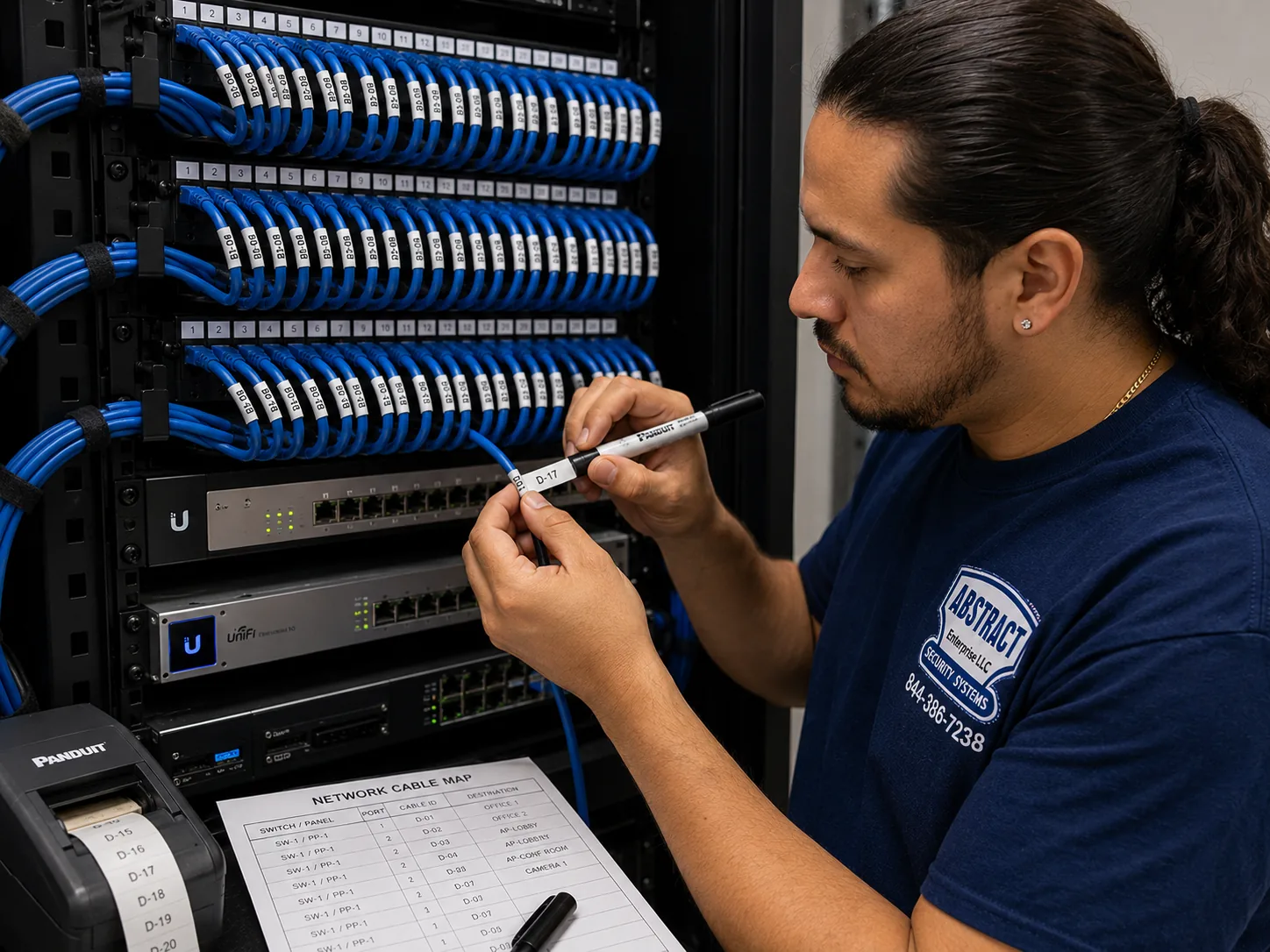
These are the Arlo products and supporting equipment we fit on Hudson Valley properties. We install cameras you have already bought as readily as cameras we supply. Model availability changes, so we confirm current models and their hub, storage and power needs before every job. Installed rates by county are on our Arlo camera installation prices for the Hudson Valley page.
Wire-free cameras including the Arlo Pro 5S, and the Arlo Pro 5 with radar-assisted motion that our regional repair work suggests when false alerts from branches and wildlife persist. Older Pro 3 cameras need a hub.
Higher-end wire-free cameras including the Ultra 3; Arlo says the Ultra and Ultra 2 require a SmartHub or Base Station, which also opens up local storage.
Cameras such as the Essential 2K XL that connect straight to 2.4 GHz Wi-Fi without a hub, suited to suburban houses with good coverage.
Wired doorbells on an existing 16-volt doorbell supply, and wire-free doorbells such as the Essential Wire-Free and the 2K models for houses with no usable wiring.
The hub that hub-based cameras pair with, wired to the router or a remote access point, with a USB drive for automatically triggered local recordings.
Panels sited for direct sun away from eaves and porch roofs, with Arlo's own freezing-point charging limit explained before you rely on them in winter.
Where the router cannot reach a barn, garage or far wall, a wired access point near the cameras, fed by a tested cable run.
A small battery backup so the router and hub stay up through short outages, which matters after storms like the July and September 2026 outages Central Hudson reported.
| Question | Hub-based (SmartHub or Base Station) | Direct Wi-Fi |
|---|---|---|
| Needs a hub? | Yes for Pro 3, Ultra and Ultra 2, per Arlo | No |
| Local recording without a plan | Yes, triggered clips to a USB drive on the hub, per Arlo | Depends on the model; confirm before buying |
| Helps on a big lot? | The hub can sit nearer the cameras on a cable from the router | Relies on the router or an access point reaching each camera |
| Extra box to power | Yes; put it on battery backup in outage-prone areas | No, but the router still needs backup |
| Best fit | Farms, estates, owners who want local storage | Suburban houses with strong Wi-Fi at every camera spot |
Owners sometimes ask whether a national security company would be simpler. ADT is best known for monitored alarm systems, and Ring and SimpliSafe for self-install doorbells, cameras and security kits, and all three come up in nearly every online answer about home cameras. None of them is going to walk your Ulster stone house with a signal meter or check Newburgh's facade guidelines before mounting a camera. If you already own Ring or another brand alongside your Arlo, tell us; we will tell you honestly what we can set up and what we cannot. What we offer is the local, licensed part: the site walk, the winter plan and the testing from the end of your driveway.

We could not capture Google's AI Overview or People Also Ask boxes for this search from our build environment, so we are not going to pretend to quote them word for word. The claims below are ones repeated across quick online answers, retail listings and national cost guides such as those from Angi, HomeAdvisor and Fixr, set against Arlo's own published specifications and what Hudson Valley properties actually demand.
For one camera on a small house beside a strong router, that is close to true, and Arlo is right to market its cameras as easy to mount. The screws are not the hard part.
The hard part is the decisions that do not show up until weeks later: whether the signal at the barn holds up at night, whether the wall the camera is on ever gets winter sun, whether a storm door or a porch rail will bounce infrared light back into the lens, and whether the camera can detect motion through the window it sits behind. One shopper complaint on Slickdeals says plainly that an Arlo could not detect motion through glass.
On Hudson Valley lots, with their long distances, deep porches and stone walls, those decisions are most of the job. That is what an installer is for, not the drilling.
Advertised battery life assumes mild weather and moderate activity. The Hudson Valley has neither in January, when cold saps batteries and long nights mean more infrared use.
A troubleshooting site that covers Arlo puts winter battery life at 40 to 60 percent below the advertised figure, and an Arlo Pro owner on Arlo's own forum reported a roof-mounted camera lasting a week in the teens. A busy camera at a driveway full of headlights, deer and blowing branches drains faster still.
We plan for the worst week of winter, not the average one. That means reachable batteries, plug-in power where an outlet exists, and zones drawn tight enough that the camera is not waking for every swaying tree.
Arlo's own figures say otherwise. The Arlo Solar Panel has a minimum operating temperature of 32 degrees Fahrenheit, and Arlo states that its batteries do not charge below freezing even when connected to a panel.
Sun is the other limit. Arlo tells buyers to avoid deep shade, covered porches and eaves, and the valley's older houses are built around all three. Winter sun is low, and a wall that was bright in September can sit in a hill's shadow by December.
Solar helps through most of the year and is worth having on the right wall. It is not a promise of a camera that never needs attention in a Hudson Valley winter, and we will not sell it as one.
Two corrections. First, almost every Arlo camera needs a 2.4 GHz network, according to SafeHome's setup guide, and some newer routers combine bands in ways that make older cameras struggle. Our Dutchess repair notes describe older Wi-Fi cameras, older Arlo included, losing connection to newer Wi-Fi 6 routers that push devices toward 5 GHz.
Second, some Arlo models do not connect to the router at all. Arlo says the Pro 3, Ultra and Ultra 2 require a SmartHub or Base Station, and during setup the camera should be within three to six feet of it.
So the first thing we do on any Arlo job is look at the router and the models together. A new router from the internet provider is the most common reason a Hudson Valley Arlo system that worked for years suddenly stops.
That was true of some older Arlo cameras, which is why the claim persists. CCTVInfo notes that cameras sold in recent years ship with no free cloud storage.
What does exist without a subscription, according to Arlo's knowledge base, is local storage: automatically triggered recordings saved to a USB device connected to a SmartHub or Base Station. Live view and motion clips to that drive do not need Arlo Secure.
For owners who want footage under their own control, an interest that has clearly grown in Dutchess and Kingston this year, a hub with a USB drive is a good answer. For owners who want cloud clips on their phone wherever they are, a plan is part of the cost, and we tell you that before you buy.
Half true. The state's rule at 19 NYCRR 195.2 exempts an owner who installs a system on their own property, or has an employee do it there. That is why do-it-yourself installation is perfectly legal.
But a business that installs cameras for other people needs a security and fire alarm installer's license from the Department of State when the system is used to detect or monitor intrusion, theft or movement, which is what home cameras do. The training alone is 81 hours across five modules, and a New York alarm association course page warns of fines up to ten thousand dollars for unlicensed work.
If you hire someone to mount your Arlo, ask for their license number. Ours is NYS license #12000287431.
National cost guides from Angi, HomeAdvisor and Fixr give single national ranges, and AI answers repeat them. Even Arlo's installation partner says, on a HelloTech partner page, that the final cost depends on your system and your location.
In the Hudson Valley, location means real differences: drive time from Westchester to northern Ulster, lot sizes, how many cameras need network reach work, and whether a historic district adds a round of planning. Our rates are set by county for that reason.
The county lines are published on our Hudson Valley Arlo price page, so you can see your own county's figures before calling us, and we never quote a number that is not on that list.
Send the Arlo model numbers, a photo of your router and the spots you want covered, and a technician will tell you whether you need a hub, which cameras will struggle with signal or winter power, and which county rate applies. Call (800) 486-0943, message us on WhatsApp, or use the quick form.
Every Hudson Valley Arlo job follows the same eight steps, whether it is a single doorbell in Beacon or a dozen cameras across a farm in Ulster. The order matters because the camera is the last thing that should be decided, not the first.
Your town and county, the property type, the Arlo models you own or want, and photos of the router and the camera spots. We match the job to your county's lines on the Hudson Valley Arlo price page before you book.
We find the router, confirm a 2.4 GHz network is available, and measure signal at every planned spot, including the barn, the garage and the end of the drive.
Height, angle, winter sun for any solar panel, eaves and porch roofs, glass the camera would look through, and surfaces that bounce infrared light at night.
For hub-based models, the SmartHub or Base Station wired to the router or a remote access point, cameras paired close to it, and a USB drive fitted for local storage if you want it.
Into wood, mortar joints, trim or siding with fixings suited to each, about six to seven feet up where the view allows, and on side or rear walls in historic districts.
Your Arlo account, camera names, activity zones that skip the road and the trees, home and away modes, storage choice and access for the people you name.
Battery, solar or plug-in decided camera by camera, the freezing-point charging limit explained, and battery backup for the router and hub where outages are common.
We trigger every camera by walking the property, check alerts and clips on your phone over cellular data, and leave notes on hub location, accounts and charging.

The Hudson Valley is large enough that people give directions by landmark and river town rather than by street. These are some we use when planning visits across the six counties we cover.
An eight-block area of Uptown Kingston dating to 1658, described as the largest identified area of early Dutch settlement in New York State, with Dutch stone houses on all four corners of Crown and John Streets.
A National Historic Landmark within Newburgh's East End Historic District, the district of more than two thousand buildings designated in 1977 and enlarged in 1985.
Ten Dutch stone houses built between 1715 and 1790 by Dutch settlers or their descendants, according to New York State Parks.
Home to the Jean Hasbrouck House, called one of the best examples of colonial Dutch stone architecture in the country, with houses dating to about 1705.
A neoclassical Beaux-Arts mansion by McKim, Mead & White in the Hudson River estates corridor, one of the great river estates now kept by the state.
Listed on the National Register in 1979 with a boundary increase approved on January 15, 2021, inside the larger Hudson River landmark district.
Across the region we serve Westchester, Rockland, Orange, Putnam, Dutchess and Ulster counties. Each county has its own Arlo price list: Westchester County Arlo prices, Rockland County Arlo prices, Orange County Arlo prices, Putnam County Arlo prices, Dutchess County Arlo prices and Ulster County Arlo prices. Northern Dutchess and Ulster visits are often grouped with other jobs in the same area, so tell us early if your timing is fixed.
Hudson Valley Arlo installs are priced by county, and the current figures are published on our Hudson Valley Arlo installation price list and on each county's own price page. We do not print a single region-wide number on this page, because a doorbell in Port Chester and four cameras across a farm in Stone Ridge are not the same job, and an honest quote depends on which county and which lines apply. What we can explain here is what moves the total, so you know which lines to look at.
| What changes the price | Why it matters in the Hudson Valley | How to keep it down |
|---|---|---|
| Your county | Travel time from the lower counties to northern Dutchess and Ulster differs a great deal | Check your county's price page; flexible timing helps us group visits |
| Number of cameras | Each camera is mounted, paired, zoned and walk-tested | Place cameras by job, not by wall; a well-placed camera can replace two |
| Hub and storage | Hub-based models need the hub placed, wired and paired; local storage adds a drive to set up | Send model numbers so we know before the visit |
| Network reach | Barns, garages and far driveways may need a wired access point or relocated hub | Walk the property with your phone and send us the signal readings |
| Doorbell wiring | A wired doorbell needs a working supply; a missing or failed transformer changes the job | Send a photo of the current doorbell and chime |
| Height and access | Gables, barn peaks and steep sites need longer ladders and more time | Choose reachable spots where the view allows; they are also easier to charge |
| Historic districts | Kingston, Newburgh and Beacon may require placement planning and sometimes approval | Tell us if your house is in a district; side and rear walls avoid most questions |
| Your own equipment | Cameras you bought are installed labor-only from the same list | Have the boxes, batteries and app login ready on the day |
Start with the line for the cameras themselves, then add the lines that match your property: a hub if your models need one, a doorbell if you want one, network reach if the signal test says a spot is weak, and anything else the walk-through turns up. A suburban Westchester house with three Essential cameras on strong Wi-Fi uses only the first lines. A Dutchess farmhouse with Pro cameras on the barn uses the hub line and, very often, the network reach line. Nothing appears on the day that was not on the quote you agreed to; if the technician finds something new, such as a doorbell transformer that has failed, they show you and you decide before any extra work.
Equipment you supply yourself is installed and tested, but its manufacturer's warranty is between you and the maker. Batteries that run low in a freezing week, and camera positions changed after handover, are part of owning a wire-free system rather than installation faults, which is why we explain winter power and placement before we leave.

Three common Hudson Valley Arlo jobs, described by scope. Each is priced only from the lines on your county's Arlo price page, with no package premium and nothing hidden; the figures for your county are on the Hudson Valley Arlo price page.
An Arlo video doorbell or front-door camera plus one driveway camera on a suburban house with good Wi-Fi, app setup, zones that skip the street, and a walk-test from the curb. Suits much of Westchester, Rockland and village homes in Beacon and Newburgh.
Three or four Arlo cameras covering front, back, driveway and side yard, a SmartHub or Base Station with local USB storage if you want it, solar panels where the walls see winter sun, and a winter power plan. The typical older single-family house in Putnam, Orange or Dutchess.
Cameras on the house, a barn or garage and the approach, a wired access point or remote hub to carry the signal out, battery backup for the router and hub, and a full far-end walk-test. Built for farms, estates and stone houses in Dutchess and Ulster.
Many Hudson Valley owners buy Arlo kits at a store or online and then find the planning harder than the box suggested. We install equipment you already own at labor-only rates from your county's list. Before we mount anything, we check that the models, the hub and your router work together, that the batteries charge and hold, and that the account is yours and you can sign in. If something you bought will not work well where you want it, such as a hub-free camera you hoped to put on a barn with no signal, we tell you before mounting and suggest what would.

The full regional price list for Arlo cameras, hubs, doorbells and network reach. Arlo installation prices, Hudson Valley
Suburban front doors, driveways and parked cars. Westchester Arlo installation prices
Homes, multi-unit complexes and shops along the commercial roads. Rockland Arlo installation prices
Newburgh rowhouses and larger lots off I-84 and Route 9W. Orange County Arlo installation prices
Wooded lots, long drives and signal at the property edge. Putnam Arlo installation prices
Estates, river villages, farms and outage-ready hubs. Dutchess Arlo installation prices
Stone houses, cold winters and local-first setups. Ulster Arlo installation prices
Send model numbers, a router photo and your camera spots. Request a free quote
Every AESS service and area from one place. Abstract Enterprises Security Systems home
It can see through glass, but it often cannot detect motion through it, which is what triggers recording. One Arlo owner's complaint on Slickdeals says exactly that, and glass also reflects the camera's infrared light back at night. For a camera that must stay indoors, such as in a rented unit or a historic house where the outside is off limits, we test the window position at night before relying on it, and usually suggest an outdoor spot under an eave instead.
SafeWise suggests about six to seven feet above the ground as a starting point, which is high enough to be out of easy reach and low enough to see faces. We adjust from there for the job each camera does: closer to that height for doors, sometimes higher for a wide driveway view. Very high gable mounts look tidy but record the tops of heads and are hard to reach for winter battery charging.
It can be, with honest expectations. Without a solid internet connection, live alerts and cloud viewing will be slow or unavailable, but a SmartHub or Base Station with a USB drive can still save triggered recordings locally, which Arlo says needs no subscription. HudsonValleyOne reported 1,070 Ulster properties without broadband in 2023, and fiber projects are reaching some of them, so we also plan systems that will work better once service arrives.
We would rather compare your property than spec sheets we have not verified for this page. For Arlo, the published facts that matter here are the 2.4 GHz Wi-Fi requirement, the hub requirement on some models, local USB storage on the hub without a subscription, and batteries that will not charge below freezing. Whichever brand you choose, the same questions decide whether it works: signal at each spot, winter power and placement. Tell us what you are weighing and we will check the specific models.
Outdoor outlets help any camera, because constant power ends the routine of taking batteries inside. With Arlo, plugging in reduces the winter battery problem but does not remove it, since Arlo says its batteries will not charge below freezing even on AC power. If every camera spot you want has an outlet, a camera designed to run on constant power is worth considering, and we can talk through the trade-offs with your specific models in mind.
Each Hudson Valley county has its own published Arlo price page, because travel time and typical property sizes differ from Westchester to Ulster. The total depends on the number of cameras, whether your models need a hub, whether any spot needs network reach work, and doorbell wiring. Send your town, the models and photos of the router and camera spots, and we will tell you which lines of your county's list apply before you book.
This is one of the most common Arlo calls we expect in the region. Most Arlo cameras need a 2.4 GHz network, and our repair notes describe older Wi-Fi cameras, older Arlo included, losing connection to newer Wi-Fi 6 routers that push devices toward 5 GHz. A new router also has a new network name and password, which hub-free cameras must be reconnected to. We check the router settings, set up a 2.4 GHz network the cameras can hold, and reconnect each one.
Yes. We cover all six counties: Westchester, Rockland, Orange, Putnam, Dutchess and Ulster. For the farthest parts of northern Dutchess and Ulster, we often group visits with other jobs in the same area, so the more notice you can give, the easier it is to fit your date. We book every request within 2 hours and will tell you honestly what timing is realistic for your town.
Cameras should cover your own property and the approaches to it, not watch a neighbor's private space. New York's Civil Rights Law 52-a, as RecordingLaw summarizes it, lets an owner or tenant sue someone who installs a camera on adjoining property to film backyard recreation without consent and with intent to harass. When we set up zones, we keep neighbors' yards and windows out of the frame, and we can mask areas in the app where a view cannot be avoided entirely.
Yes. New York Penal Law 250.45 makes it illegal to record people in bedrooms, bathrooms, changing rooms and similar places without consent. That matters most for owners who rent out a cottage, a guest suite or a short-term rental on their property. We place indoor cameras in entries, hallways and living areas you control, never in sleeping or bathing spaces, and we recommend telling guests and tenants where cameras are.
A wired Arlo doorbell can usually use your existing doorbell wiring if the transformer supplies the standard voltage and works. One buyer review warns that without a standard 16-volt AC supply already in place you will have to wire one. Many older Hudson Valley houses have chimes that have not worked in years, so we test the transformer and wiring first. If they are missing or unsafe, a wire-free Arlo doorbell avoids the problem.
For business premises, the guidance we follow, summarized by Security101 for New York, is that cameras should be overt and that surveillance notices should be visible to employees, visitors, contractors and vendors. On every business install we place notices at the entrances, keep cameras out of restrooms and changing areas, and leave audio recording off unless the owner has taken advice and wants it on.
Battery cameras keep running, but the router and any hub stop unless they have backup power, so the cameras have nothing to connect to. A forum post on Tractor By Net describes Arlo cameras using up battery while searching for a lost Wi-Fi connection. After the July 2026 storms left more than 41,000 Central Hudson customers without power at one point, we recommend a small battery backup for the router and hub on outage-prone properties.
Tell us your town and county, the property type, the Arlo models you have or want, and how far the farthest camera spot is from the router. A photo of the router and each camera spot makes the quote exact. Prefer to talk? Call (800) 486-0943.
From a Newburgh rowhouse with rules about its front facade, to a Westchester driveway, to a stone house in Hurley with a barn a long way from the router, an Arlo job starts the same way: find the router, measure the signal where each camera will hang, and plan for the coldest week of the year. Call (800) 486-0943, message us on WhatsApp, or send the quote form, and we will tell you which cameras will work where you want them before anything goes on the wall.
Arlo Camera Installation by neighborhood: Hudson Valley hub, Hudson Valley arlo camera installation
Arlo Camera Installation by neighborhood: Long Island hub, Long Island arlo camera installation