What are you looking for?
About Us Contact Us Careers Get a Free Quote (800) 486-0943
Pick a service
โœ… Got Your Own System?
๐ŸŽฌ Home TheatreQuote ๐ŸŽถ AV SoundQuote ๐Ÿ”‘ Access ControlQuote
Now pick your area
Pick your area
Long Island
Hudson Valley
Services available
Pricing & Tools
Pick a service for pricing
๐Ÿšช Intercom Pricing ๐Ÿ”” Buzzer Repair Pricing
Calculators
๐Ÿ“น Camera System Calculator ๐Ÿšจ Alarm Calculator โšก Cabling Quote Builder โœ… Got Your Own System?
Select your area
Amcrest cameras dropped off the app after the last storm, or a box of new Amcrest gear waiting for a stone farmhouse, a barn or a warehouse yard in the Hudson Valley? Book a licensed install: (800) 486-0943
Home › Amcrest Camera Installation › Hudson Valley
Stone Houses · Riverfront Estates · Farms and Barns · Office Parks and Warehouses · Rural Internet Lines · Licensed Low-Voltage

Amcrest Camera
Installation in
the Hudson Valley

See every Amcrest camera price in the Hudson Valley and build your own system →

Records Locally, Even When the Internet Drops · Wired Where It Counts · Every Model Label Checked

The Hudson Valley is not one kind of place, and an Amcrest system has to suit the one you own. A house in a Westchester suburb with fast cable internet, a colonial stone house in Kingston's Stockade, a 160-acre farm in Dutchess with a barn across the field, a weekend house in Ulster on a line that drops every time the wind picks up, and a distribution building off Route 17K in Orange County all need cameras, but they need them set up very differently. Amcrest gear records to its own recorder without a monthly fee, which suits the valley well, but only if it is configured to keep working when the internet does not. We plan the cable routes around stone walls, outbuildings and historic-district rules, check every model's label before it goes up, and set the recorder up to run offline first.

Reviewed and updated November 5, 2026 by Anwar Timothy, NYS license #12000287431 · Sources: Amcrest support articles and the Amcrest user forum, IPCamTalk, the FCC Covered List, The Intercept (July 20, 2021), the NYS Department of State security and fire alarm installer licence page, the City of Kingston Historic Landmarks Preservation Commission pages and January 9, 2025 minutes, the City of Newburgh East End Historic District design guidelines, Wikipedia entries for the Hudson Valley, the Hudson River Historic District, the Kingston Stockade District, the East End Historic District, Stewart International Airport and Vassar College, the Hudson River Valley Heritage Area, Earth Networks' 2020 New York lightning report, Central Hudson outage reports from July and September 2026, Mid-Hudson News, the Times Union, Hudson Valley One, New York State Police, Patch, News 12, Westfair, REBusiness, HGAR, Hoodline, Spectrum News, the Dutchess County IDA, USDA 2022 Census of Agriculture county profiles, Justia and RecordingLaw · Dispatched from 460 E Fordham Rd

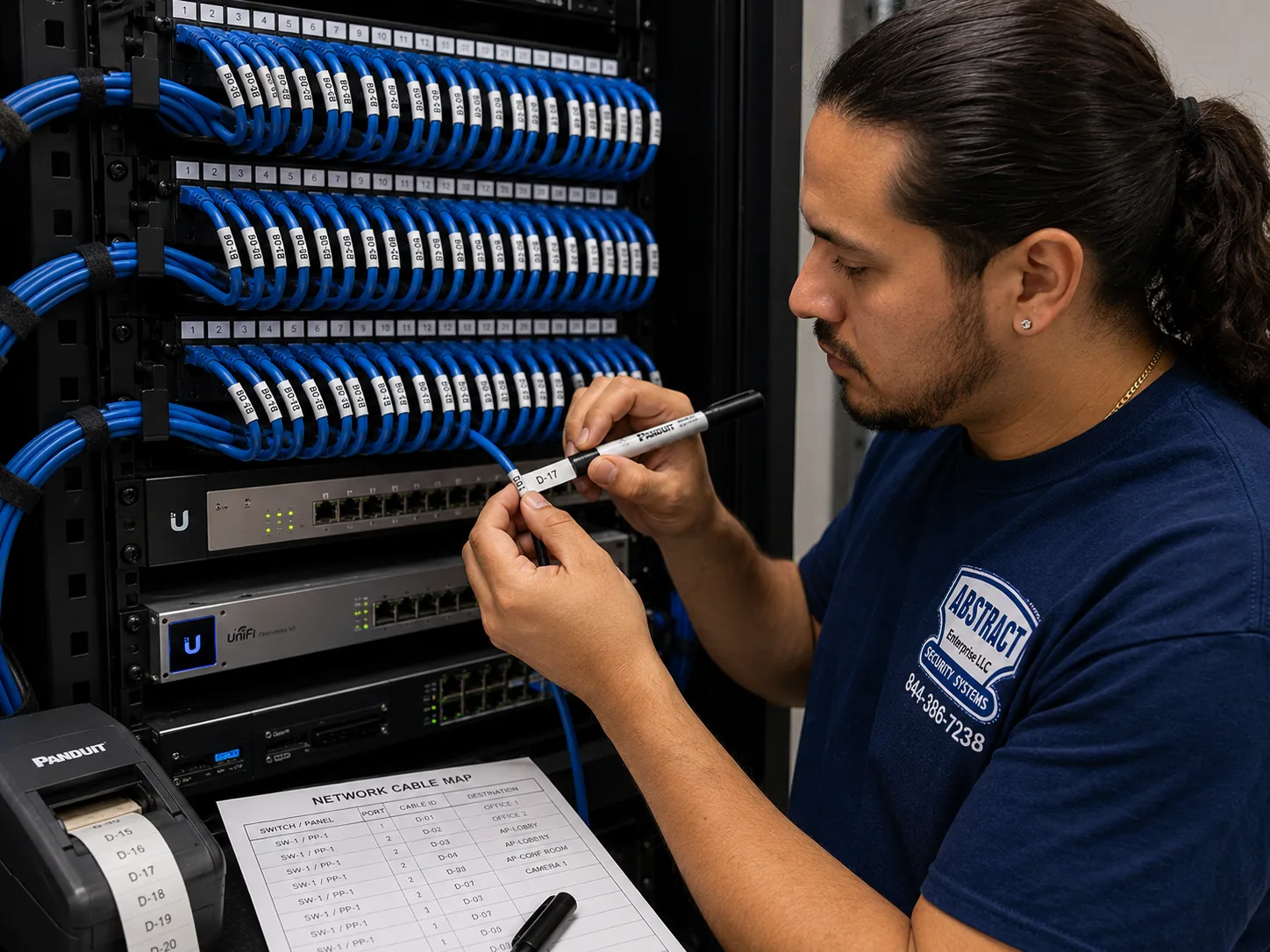
Amcrest camera installation job-library photo for Hudson Valley hub, Hudson Valley: technician printing cable labels at a patch panel beside a printed port map
Photo from the AESS job library, not taken in the Hudson Valley: a technician printing cable labels at a patch panel, with a printed port map taped beside it. On an Amcrest job at a Hudson Valley farm or estate, where one recorder may serve cameras on the house, the barn and a gate post down the drive, every cable is labelled at both ends so the next person can tell which camera is which without climbing a ladder.
Hudson Valley Amcrest Cameras
Tell us the town, the property type and what you want the cameras to see

✅
Request Sent!
We aim to call and book your Hudson Valley Amcrest job within 2 hours of your request.
25+
Years Experience
✓
Same-Day Estimates
100%
Licensed & Insured
4.7โ˜…
201 Google Reviews

Owner-operated since 2002 · Thousands of jobs completed · Booked within 2 hours

Amcrest camera installation in the Hudson Valley comes down to three questions we settle before booking: how far each camera sits from the house, what the walls are made of, and how reliable your internet line is. Amcrest recorders keep recording with no internet at all, but the app, alerts and remote viewing need a working line, and a system set up through the easy cloud-style connection can lose even local access when the line drops. We wire cameras with PoE cable wherever we can, set the recorder to talk to each camera directly, and price the job from our county Amcrest price list, which differs between Westchester and Ulster. We book within 2 hours of your request. Call (800) 486-0943 or use the form.

  • Installed, priced and warrantied from our published Hudson Valley Amcrest price page, with a county rate for each of our six counties
  • Every Amcrest model and FCC ID label checked before mounting, so you know where your equipment stands under the 2026 FCC rules
  • Security camera work done under NYS license #12000287431, the licence New York requires for anyone paid to install cameras
The Neighborhood

Why Hudson Valley Properties Need Amcrest Camera Installation

The Hudson Valley was settled as a chain of small places strung along a river, and its properties still behave like it. The Hudson River Valley Heritage Area records that the Dutch were the first colonists after Henry Hudson's 1609 voyage, and a historical marker summary on HMdb notes a permanent settlement at Fort Orange, today's Albany, in 1624 and at Esopus, today's Kingston, in 1653. The same source describes the huge land grants that followed, the Van Rensselaer patroonship and then the Livingston, Philipse and Van Cortlandt manors, which gave the valley its estates. The Heritage Area adds that by 1750 most of the region had been settled in a network of small local communities that still survives. For a camera installer, that history shows up as scattered buildings, long driveways, old stone walls and houses set back from the road, the opposite of a city block where every camera is a short cable run from the recorder in the basement.

The building stock is old and varied. A Times Union piece on the region's historic architecture puts it between 1700 and 1940, with most historic homes dating from the 1800s. Kingston's Stockade District, according to Wikipedia, is still outlined by its old stockade, covers eight blocks and about 32 acres, and has Colonial Dutch stone houses on all four corners of Crown and John Streets. Farther north, the Hudson River Historic District, a National Historic Landmark District covering 34.6 square miles, takes in Staatsburg, Rhinecliff, Tivoli, Annandale and Barrytown, and Hudson River Heritage describes it as the largest such district on the mainland of the contiguous United States. Wikipedia reports that only 2 percent of its acreage is not considered historic. Ulster County listings describe nineteenth-century stone houses on large lots in Marbletown and Stone Ridge. Each of those properties puts a camera on a different kind of wall, at a different distance from the recorder, sometimes under a review board's eye.

Then there is the land itself. The USDA's 2022 Census of Agriculture counted 620 farms in Dutchess County averaging 161 acres, and 486 farms in Ulster County averaging 150 acres. A farm that size might have a house, a barn, an equipment shed and a gate at the road, each one hundreds of feet from the next. Amcrest's own installation guides describe running PoE cable to each camera, and PoE over copper has a distance limit, so on a farm or estate the real design work is getting a reliable connection to the far buildings: a switch in the barn fed by a buried run, a camera on the gate post powered from the nearest building, or a different link where copper will not reach. That planning, more than the cameras themselves, is what separates a system that works for years from one that drops a camera every week.

The internet line is the other weak point. In September 2025 Mid-Hudson News reported that Ulster County won a state ConnectALL grant to bring broadband to about 1,300 unserved homes, businesses and facilities, and the Times Union reported that construction needed federal approval before it could begin in 2026. Hudson Valley One described Shandaken, where 2,866 residents live across 120 mountainous square miles and even cell service struggles. Mid-Hudson News reported Sullivan County's rollout reaching more than 22,000 homes and businesses in phases through 2026. Amcrest recorders do not need the internet to record, as an Amcrest forum moderator confirmed when a rural owner asked, but a rural DSL user on the same forum found that cameras added through the P2P cloud connection stopped showing even on the local network when the line was down. The fix was re-adding them by IP address. That single setup choice decides whether a valley system keeps showing you your own property in an outage.

Weather finishes the picture. Earth Networks' 2020 lightning report for New York ranked Orange County first in the state with 275,059 lightning pulses over 41 thunder days, with Ulster at 182,760, Westchester at 168,634 and Dutchess at 166,641. On July 4, 2026, Central Hudson reported 41,323 customers without power across the region, and two days later about 17,200 were still out, mostly in Dutchess and Ulster. In late September 2026 Mid-Hudson News reported Central Hudson restoring power to more than 24,000 customers after a nor'easter. Outdoor cable runs pick up surges from nearby strikes, and a recorder with no battery backup stops recording the moment the power goes, which is exactly when a property is easiest to approach unseen. So surge protection on runs that leave the building and a battery backup on the recorder and PoE switch are part of how we plan a valley job, not optional extras.

And people do use their footage. In January 2025 New York State Police issued a public safety alert about targeted residential burglaries in Dutchess, Westchester and Putnam counties, and their advice included installing or activating security systems and cameras and adding motion-sensor lighting. Police in Scarsdale confirmed camouflaged cameras hidden in bushes by burglars watching homes; Hudson Valley Post reported one found by a resident doing yard work on Bradford Road. Patch reported State Police in Poughkeepsie asking residents of roads in Union Vale, Millbrook and the town of Washington to check home cameras for car break-ins between midnight and 5 a.m. News 12 reported Port Chester neighbors sharing camera footage of a 4 a.m. car rummaging spree near Tower Hill Drive, and the Ulster County Sheriff's Office warned of burglaries and car break-ins on Union Center Road in Esopus. The common thread is night-time activity at the edge of a property, at the cars, the driveway and the road, which is where Amcrest cameras need to be aimed and lit.

We want to be clear about what our research did not find. We found no Reddit threads, Patch stories or local news about Amcrest installations in the Hudson Valley specifically, and we found no Yelp reviews that discuss Amcrest jobs here. We could not view Google's People Also Ask boxes or AI Overview from our build environment. Where this page answers a question, the question comes from the Amcrest user forum, IPCamTalk, buyer reviews, legal Q&A sites and installer FAQ pages, and we say so. Where it describes walls, outbuildings and internet lines, it draws on the public sources named in the freshness stamp and on how we handle properties of these types, not on a survey of Hudson Valley homes.

Hudson Valley facts that shape an Amcrest install

  • Old and historic buildings: historic architecture from 1700 to 1940, mostly 1800s; the Hudson River Historic District covers 34.6 square miles with only 2 percent of its acreage non-historic.
  • Big lots and far buildings: Dutchess farms average 161 acres and Ulster farms 150 acres, per the USDA 2022 Census of Agriculture.
  • Thin internet in places: about 1,300 unserved locations in Ulster under the ConnectALL award, and 2,866 Shandaken residents across 120 square miles where even cell service struggles.
  • Lightning: Orange County ranked first in New York for lightning pulses in 2020, with Ulster, Westchester and Dutchess each above 160,000.
  • Outages: 41,323 Central Hudson customers out on July 4, 2026, and more than 24,000 restored after the September 2026 nor'easter.
  • Night-time property crime: State Police alerts in 2025 covered Dutchess, Westchester and Putnam, with cameras and motion lighting among the recommended steps.

What owners often add once the cameras are in. Once a valley property has cameras on the house and the barn, the next request is usually the gate: a camera that reads who is at the end of the drive, sometimes paired with an intercom or keypad on the same post. If you think you will want that later, tell us during the first visit, so the cable to the gate is pulled once with spare pairs rather than dug twice.

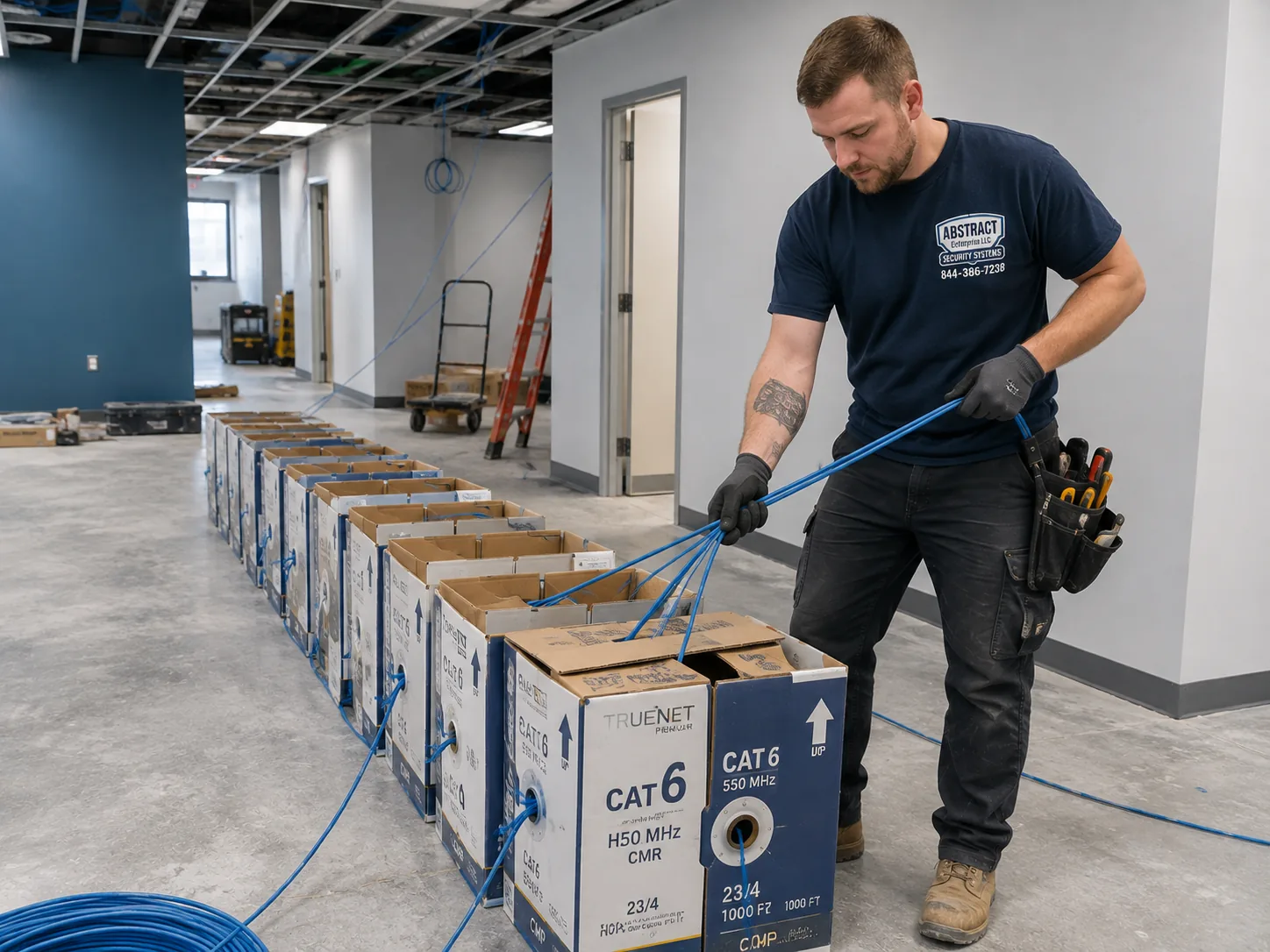
Amcrest camera installation job-library photo for Hudson Valley hub, Hudson Valley: boxes of network cable staged on the floor for a multi-drop pull in a working commercial premises
Photo from the AESS job library, not taken in the Hudson Valley: boxes of network cable staged on the floor of a working premises before a multi-drop pull. On a Hudson Valley farm or office park, where camera runs to a barn, a loading dock or a gate post are long, we count and stage the cable before the first pull so no run is spliced short halfway to the far building.

Amcrest Cameras Offline Since the Storm? Fast Help Across the Hudson Valley

After a thunderstorm or a long power cut, the most common call is a recorder that came back on but shows blank tiles where some cameras used to be, or an app that will not connect even from inside the house. Do not factory-reset the recorder; that can wipe the settings we need to diagnose it. Note which cameras are missing, whether they are the ones on outdoor runs or outbuildings, and whether the recorder's lights are on. Then call (800) 486-0943 and tell us what you see. If the missing cameras are all on runs that leave the building, a surge is the likely cause; if every camera is missing only in the app, the internet connection or the way the cameras were added is the more likely culprit. Either way we can usually tell you a lot over the phone before anyone drives out.

Six Counties, Six Jobs

From Westchester Suburbs to Ulster Hollows: How an Amcrest System Changes County by County

We price and plan Amcrest work in six Hudson Valley counties. The Hudson River Valley Heritage Area groups Westchester and Rockland as the Lower Hudson Valley and Putnam, Orange, Dutchess and Ulster as the Middle Hudson Valley. Those labels hint at the difference: the lower counties are closer to the city, more suburban and better connected; the middle counties have more farms, more forest, longer drives and thinner internet. The table pulls together public figures for each county and the setup point we give most weight to there. The last column is our working emphasis, not a rule; every property gets its own walk-round.

CountyLightning pulses, 2020 (thunder days)What the public record showsWhere we put the effort on an Amcrest job
Westchester168,634 (45)Office parks on the I-287 corridor; Hurricane Ida flooding in Mamaroneck reported at up to 14 feet in some neighborhoods; a county home improvement licence requirementRecorder placed above flood level, clean interior routes in finished houses, camera aim that respects close neighbors
Rockland64,575 (28)Suburban neighborhoods, village downtowns and the Palisades Center at West Nyack; county licensing through Consumer ProtectionDriveway and front-door coverage on smaller lots, storefront systems along the commercial roads
Orange275,059 (41), first in the stateLarge distribution buildings in the Town of Montgomery near Stewart International Airport; the Newburgh East End Historic DistrictSurge protection on every run that leaves a building, yard and dock coverage, historic-district mounting in Newburgh
Putnam75,093 (35)Part of the State Police burglary alert area in 2025; communities inside the New York City watershed regulationsLong driveways and wooded edges, careful trenching plans near watershed land
Dutchess166,641 (48)620 farms averaging 161 acres; the Hudson River Historic District; heavy outage counts in July 2026Barn and outbuilding links, battery backup on the recorder, discreet mounts on historic estates
Ulster182,760 (49)486 farms averaging 150 acres; about 1,300 unserved broadband locations; Kingston's five local historic districtsOffline-first configuration for weak or new lines, stone-wall fixings, HLPC review in Kingston

Westchester: finished houses, close neighbors and office parks

Westchester is the most suburban of our six counties and often the best connected, so the Amcrest job there is usually less about keeping the system alive offline and more about doing a neat, well-aimed install in a finished house. Walls are typically closed, basements are often finished, and the homeowner wants no visible cable. We look for the routes that already exist, through an attic, down a closet, along a basement ceiling, and use them. Lots are closer together than in the middle counties, so we spend real time on aim: a driveway camera that also stares into a neighbor's side windows is the kind of thing that leads to an awkward conversation, and in New York, as we explain below, the microphone setting matters as much as the lens. Flooding is the other Westchester lesson. ABC7's report on Hurricane Ida in 2021 described Mamaroneck neighborhoods with as much as 14 feet of water and many basements filling to the first floor. A recorder on the basement floor of a house near the Sound is a recorder that drowns in the next storm, so we place it higher.

Rockland: smaller lots, village centers and retail roads

Rockland had the lowest lightning count of our six counties in the 2020 report, at 64,575 pulses over 28 thunder days, and its housing mixes suburban neighborhoods, village downtowns and rural properties. For homes, the job usually centers on the front door, the driveway and the back yard, with four to six cameras covering a lot that is smaller than in Dutchess or Ulster. For businesses on the main roads, an Amcrest system gives a store owner local recording with no subscription, which matters to a small shop watching its overheads. Rockland County licenses home improvement contractors through its Office of Consumer Protection, and we confirm the licensing a job needs before we book it.

Orange: the lightning county and the warehouse belt

Orange County topped the state for lightning pulses in 2020, and that single fact shapes every outdoor run we pull there. A copper cable buried across a yard or strung to a pole camera can carry a surge from a nearby strike straight back into the PoE switch and the recorder. We fit surge protection where runs leave and enter buildings, bond it properly, and keep outdoor runs as short as the coverage allows. Orange is also where the valley's warehouse growth is concentrated: HGAR reported in May 2020 that an Amazon distribution center of 1,015,740 square feet at Route 17K and Route 747 and a 1.2 million square foot Medline facility were both under construction in the Town of Montgomery, and a November 2024 list compiled for Orange Environment, an advocacy group, counted about 15 million square feet of warehouse projects across the county. We have no connection to any of those buildings. They show the kind of commercial yard, dock and gatehouse coverage that the county's businesses increasingly ask about.

Putnam: long drives, woodland edges and watershed land

Putnam was one of the three counties named in the State Police burglary alert of January 2025, and many of its homes sit back from the road on wooded lots, which means the first sign of a visitor is often at the end of a long driveway the house cannot see. A camera there is only as good as its connection, and a wireless camera at the far end of a drive is usually the first thing to fail. We prefer a buried PoE run or a powered post where the distance allows. Parts of Putnam lie within the New York City watershed, where the Department of Environmental Protection's regulations, updated in December 2019, cover stormwater and land disturbance among other things. A short camera trench is a small job, but we check where a property sits before we plan one near a stream or reservoir.

Dutchess: farms, estates and the outage map

Dutchess has more farms than any of our other counties in the 2022 Census, 620 of them averaging 161 acres, plus the riverfront estates of the Hudson River Historic District and the Vanderbilt Mansion National Historic Site, which the National Park Service describes as 211 acres of what was once about 600, with a carriage house and its own hydroelectric plant. That is the scale of property we plan for in Dutchess: a house, a barn and outbuildings spread over many acres, often with a gate at a county road. Dutchess was also among the hardest-hit counties in the July 2026 storms, per Central Hudson. A recorder and PoE switch on a battery backup keep recording through a short outage and shut down cleanly in a long one, rather than corrupting a drive when the power snaps off.

Ulster: stone houses, mountain hollows and new internet lines

Ulster brings together everything that makes the valley hard: early Dutch stone houses in Kingston's Stockade and in towns like Marbletown and Stone Ridge, farms averaging 150 acres, a mountainous west where Shandaken's 2,866 residents spread across 120 square miles, and about 1,300 locations waiting on new broadband under the ConnectALL award. An Amcrest system in Ulster is the case where the offline-first setup described in the next section matters most. It is also where we most often drill stone, and where, in Kingston's five local historic districts, the city's Historic Landmarks Preservation Commission may have something to say about exterior work visible from the street. We plan for all three before the first visit, so the job is not stalled on the day.

Each county has its own Amcrest price page, with that county's rate already applied: Westchester, Rockland, Orange, Putnam, Dutchess and Ulster.

Offline First

Built to Keep Recording When the Line Goes Down: Setting Up Amcrest for Hudson Valley Internet

The single most useful thing we do on a Hudson Valley Amcrest job happens on a laptop, not a ladder. Amcrest systems can be connected in two ways. The quick way, used by many self-installers because the app makes it easy, is P2P: you scan a code and the app reaches the cameras through Amcrest's servers. The careful way is to give every camera a fixed address on your own network and tell the recorder and the viewing software to reach each camera directly by that address. Both work on a good day. Only one works on a bad day.

The difference showed up clearly on the Amcrest forum, in a thread started by a rural DSL user. When their internet went down, they lost even local access to cameras sitting on the same network as their computer, and they asked why the software seemed to require an internet connection to reach local cameras. The answer was that the cameras had been added to Amcrest Surveillance Pro through P2P. Re-adding them using the "IP/Domain" method fixed it. Amcrest's own support article on local access says the same thing in a different way: cameras can be viewed locally without internet, but remote viewing and email alerts will not work until the line returns. In another forum thread, an Amcrest moderator confirmed that an NVR system will work without internet at all, with internet needed only for WiFi cameras and remote viewing.

What happens when the internet dropsCameras added by P2P onlyCameras added by fixed IP address (how we set it up)
PoE cameras keep recording to the NVRUsually yes, if they are wired to the NVRYes
Live view on a computer in the houseCan be lost, as the forum user foundYes, over the local network
Live view on the NVR's own monitorYesYes
Phone app away from homeNoNo, until the line returns
Email or push alertsNoNo, until the line returns
After the line returnsDepends on the cloud reconnectingRemote access returns; cameras never moved address

Fixed addresses, so cameras stay where the recorder left them

Home routers hand out network addresses automatically, and they can hand out a different one after a reboot or a power cut. A Blue Iris user who wrote a buyer review described exactly that: the camera kept changing the IP addresses for their two cameras, which broke their recording software each time. On a property where the power flickers every storm season, a camera that wakes up at a new address is a camera that disappears from the recorder. We give each camera a fixed address, record it on the handover map, and, where the router allows, reserve those addresses so nothing else takes them.

Keeping the cameras' traffic where it belongs

Another buyer review of an Amcrest camera complained that the camera was communicating with an IP address that was not on the owner's network. We cannot tell you what that particular camera was doing, and we will not guess. What we can do is decide on your behalf how much the cameras talk to the outside world. On a PoE system, the cameras can sit behind the recorder or on their own part of the network, with the recorder or the router controlling what reaches the internet. On a property with a good firewall we can put the cameras on their own network segment. We explain the trade-off at handover: the tighter the cameras are kept, the more you rely on the recorder for remote viewing.

When the internet is new, or still coming

Many valley owners are waiting for fiber to reach their road, or have just had it connected. The Times Union described Ulster's ConnectALL work as Verizon Fios fiber in places where residents had unreliable internet for years. A system set up by fixed address does not care which provider carries your remote viewing. When the new line arrives, the router changes, remote access is reconnected, and the cameras and recorder carry on exactly as before. A P2P system, by contrast, often has to be re-paired camera by camera. If your provider change is scheduled, tell us when booking; we leave notes for the day the new router goes in.

Which Amcrest app family your cameras belong to

Amcrest has more than one app ecosystem, and they do not all mix. A Walmart listing for one SmartHome-series camera notes that it has view-only access in the Amcrest View Pro app and only works fully with the Amcrest SmartHome app. On IPCamTalk, users have complained that the newer Smart Home app depends on the internet and lost features, while noting that newer Smart series cameras can still be set up for local use through View Pro. For a rural property, that matters a great deal. Before we mount anything you have bought, we check which family each camera belongs to and whether it can be added to your recorder by address. If a camera cannot do what the rest of the system does, we tell you before it goes on the wall, not after.

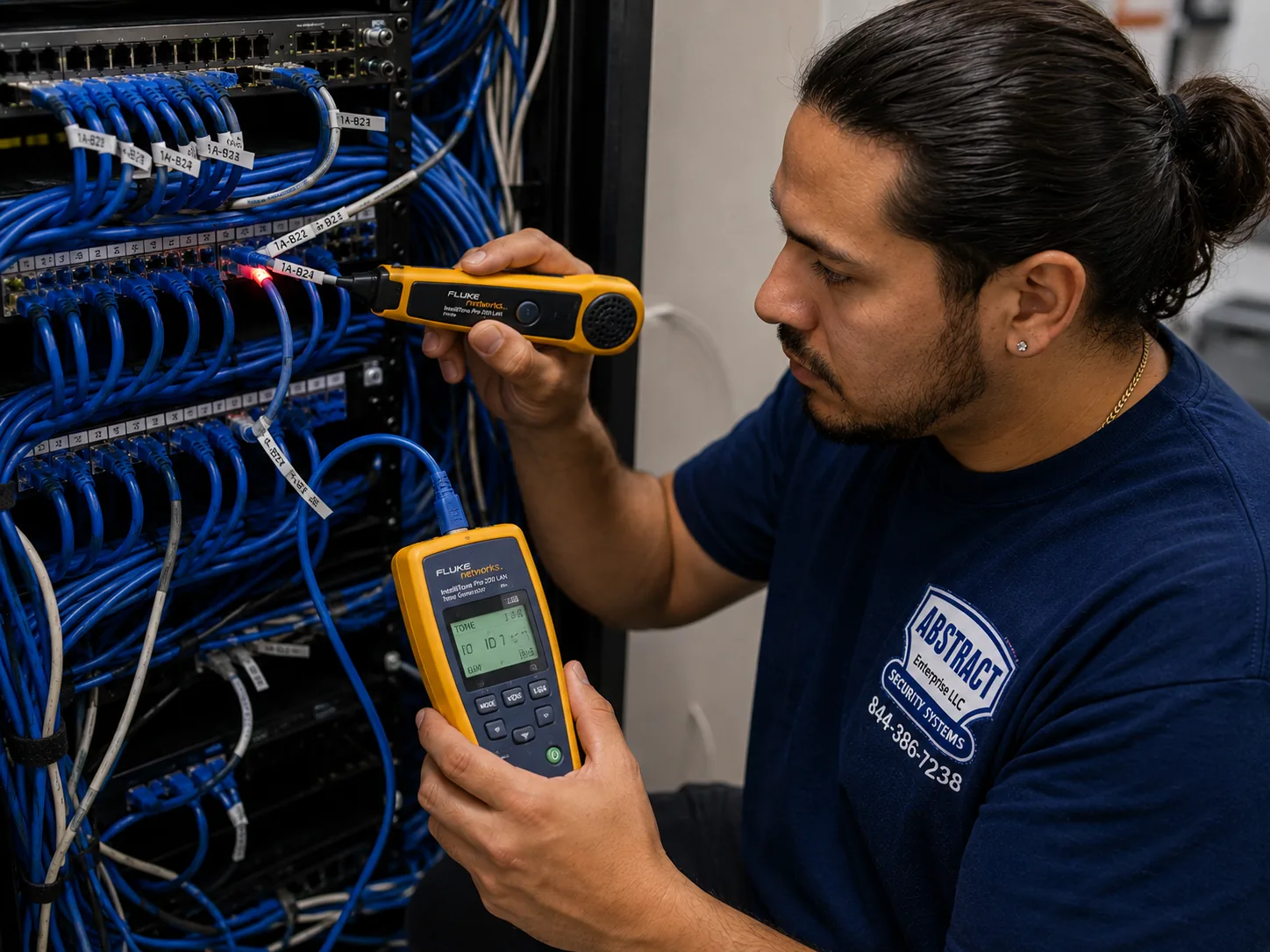
Amcrest camera installation job-library photo for Hudson Valley hub, Hudson Valley: technician tracing an unidentified cable run at a patch panel with a tone generator and probe
Photo from the AESS job library, not taken in the Hudson Valley: a technician tracing an unidentified cable run at a patch panel with a tone generator and probe. When we take over an Amcrest system at a Hudson Valley house where cameras were added by someone else and nothing is labelled, this is how we match each cable to its camera before giving each one a fixed address.
What We Install

Amcrest Camera Installation Services in the Hudson Valley

These are the Amcrest jobs valley homeowners, farm owners, estate managers and business owners book us for. Each is priced from the county Amcrest price list, and anything a site needs beyond the standard install, such as a trench, a pole or an electrician's circuit, is named on the written quote before work starts.

📹

Whole-Property PoE Systems

Amcrest PoE cameras wired back to an Amcrest NVR, one cable per camera carrying power and video, with recording local to the recorder's drive and no monthly fee required.

🏠

Barn, Garage and Outbuilding Cameras

Cameras on detached buildings fed by a switch in that building, linked back to the house by a planned route, with surge protection where the link leaves and enters each building.

🛣

Driveway and Gate Coverage

Cameras aimed at the end of a long drive, the gate or the road frontage, where most of the night-time incidents in recent State Police and sheriff alerts began.

📶

Offline-First Configuration

Fixed addresses, recorder access by IP rather than P2P, local recording, and a test with the internet unplugged, so the system keeps working on rural and new lines.

🧱

Stone and Historic Mounting

Masonry fixings in colonial and nineteenth-century stone, cable routes that avoid visible conduit on street-facing walls, and paperwork for historic-district review where it applies.

🔋

Battery Backup and Surge Protection

A battery backup sized for the recorder and PoE switch, and surge protection on outdoor runs, for a region where outages and lightning are part of every summer.

📦

Installing Gear You Already Bought

Amcrest cameras and recorders you bought yourself, checked for model, app family and FCC label, then mounted, wired and configured the same way as our own supplied systems.

🔧

Taking Over an Existing System

Systems left by a previous owner or another installer: cables traced and labelled, cameras re-added by address, passwords changed, and a map left for you.

🏭

Business, Yard and Warehouse Systems

Docks, yards, gatehouses, offices and storefronts, wired through ceilings and conduit, with recording sized to the number of cameras and how long footage must be kept.

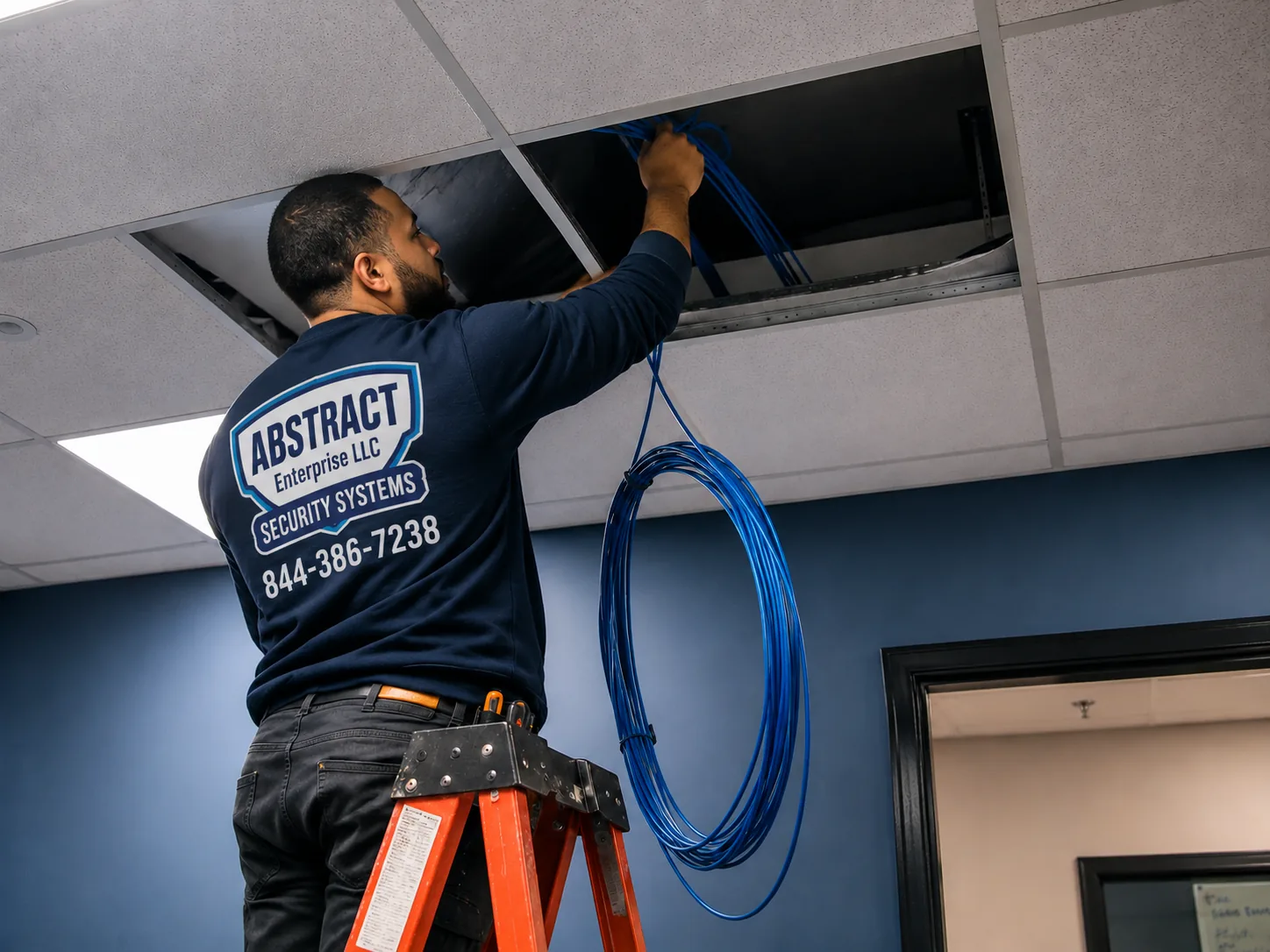
Amcrest camera installation job-library photo for Hudson Valley hub, Hudson Valley: technician feeding cable through an open ceiling in an occupied commercial space
Photo from the AESS job library, not taken in the Hudson Valley: a technician feeding cable through an open ceiling in a commercial space that stays occupied during the work. In a village shop or an office suite in one of the valley's older main-street buildings, camera cable goes above the ceiling like this rather than along the walls, and the work is planned around the hours the business is open.
Building Specialists

Amcrest Camera Installation for the Hudson Valley's Architecture

An Amcrest camera is small and light, but it still has to be fixed into something solid, its cable still has to get inside, and on many valley buildings its position is a matter of taste and sometimes of review. Amcrest's own installation guides for its PoE dome, bullet and turret cameras say the mounting surface should hold at least three times the weight of the camera and its bracket. These are the building types the public record describes in the valley, and how we meet that standard on each.

Colonial and Dutch Stone Houses

Like the houses on the four corners of Crown and John Streets in Kingston's Stockade. Thick stone walls, deep window reveals, and street faces that historic commissions care about. Masonry fixings, and cable brought in through existing openings where possible.

Nineteenth-Century Stone Farmhouses

Like those described on large lots in Marbletown and Stone Ridge. Stone or stone-and-frame, with additions from later eras, barns and sheds nearby, and long runs to every outbuilding.

Riverfront Estates and Carriage Houses

The estates of the Hudson River Historic District and the Great Estates stretch from northern Westchester to Albany. Main houses, carriage houses, gatehouses and service buildings, often on dozens or hundreds of acres.

Village and City Brick Buildings

Two- and three-story brick townhouses, such as the mostly Italianate brick buildings Wikipedia describes in Newburgh's East End, and main-street buildings with shops below. Brick walls, shared party walls and street-facing facades.

Suburban Houses

Frame houses in Westchester and Rockland neighborhoods, usually with finished interiors, attics and basements that give clean cable routes, and soffits that suit a dome or turret.

Barns and Agricultural Buildings

Timber-frame and pole barns, equipment sheds and stables. Dust, damp, livestock, rodents and no heating, plus a long way from the house and sometimes their own electric service.

How the building changes the job

BuildingWhat holds the cameraHow the cable gets inWhat else we check
Colonial stone houseSleeve or wedge anchors in sound stone, or a mounting block fixed into itExisting openings, a gap in a later addition, or a single drilled sleeve sealed behind the cameraHistoric-district review if the wall is visible from the street
Stone farmhouseStone anchors, or the wood trim and fascia of later additionsThrough the frame addition, the attic or the basementRuns to barns and sheds, surge protection at each building
Estate and carriage houseFascia boards, eaves and junction boxes fixed into framing or masonryAttics, cellars and service passages; buried runs between buildingsDiscreet placement, color-matched mounts, gate and drive coverage
Brick townhouse or main-street buildingMasonry anchors in brick, not in the mortar jointsFrom the cellar or an upper floor through the rear wallParty walls, the shop below, design guidelines in historic districts
Suburban houseSoffit, fascia or a junction box screwed into framingThrough the soffit into the attic, then down to the recorderAim toward neighbors, recorder above any flood level
Barn or shedTimber posts, beams or a backing board across themThrough the wall in a sealed sleeve, run in conduit insideRodents, dust, moisture, separate electric service

Drilling into old stone without wrecking it

Stone walls in colonial and nineteenth-century valley houses are rarely uniform. Some stones are hard and sound, some are soft and flaky, and the mortar between them may be original lime mortar that crumbles if it is drilled carelessly. We choose the fixing point on a sound stone, drill a test hole first and look at what comes out, and size the anchor to the stone, not to the hardware bag that came with the camera. Where the stone is poor, we fix a small mounting block to the soundest points and mount the camera to that. Amcrest's turret guide suggests a one-inch paddle bit for through-wall runs, which suits wood framing; through stone we use masonry bits and a sleeve, sealed against water and insects, and we place that hole behind the camera base wherever the camera position allows, so it never shows.

Getting a cable through a two-foot wall

Many stone houses have walls far thicker than a standard drill bit, and drilling straight through them is slow, noisy and permanent. Before we drill, we look for a better way in: a later frame addition, a window frame, a basement where the wall meets the sill, or an attic where the stone gives way to timber at the roof line. A run that enters through a wooden addition and travels inside to the stone section often looks cleaner on the outside than one forced through the stone, and it leaves the old wall untouched. When the stone has to be crossed, we make one opening, sleeve it, and run every cable for that side of the house through it.

Estates: cameras that should not be the first thing a visitor notices

On the riverfront estates and large country houses of Dutchess and northern Westchester, owners usually want two things that pull against each other: complete coverage of the drive, gates, outbuildings and terraces, and cameras that do not spoil the look of the house. Amcrest's small domes and turrets help. We place them under eaves, on the sides of chimneys or on outbuildings that already have service equipment, choose mounts and housings in colors that match the trim, and run cable through attics and cellars rather than in surface conduit. For drives and gates far from the house, we look at the existing service buildings, garages and gatehouses as places to power a camera, rather than adding a new pole in the middle of a lawn.

Barns: dust, damp, mice and their own electric service

A barn is hard on electronics. Dust gets into everything, damp air condenses on cold mornings, and mice and rats will chew cable, as many owners have found. We keep the switch and any power supply in a closed box in the driest part of the building, run cable inside conduit where animals could reach it, and use cameras with housings suited to outdoor use even inside an open barn. Many barns and detached garages have their own electric service, which is one reason a copper cable straight from the house to the barn is not always the best link. We ask about the barn's power before we plan the run, and where a buried copper run is the right answer we protect it at both ends.

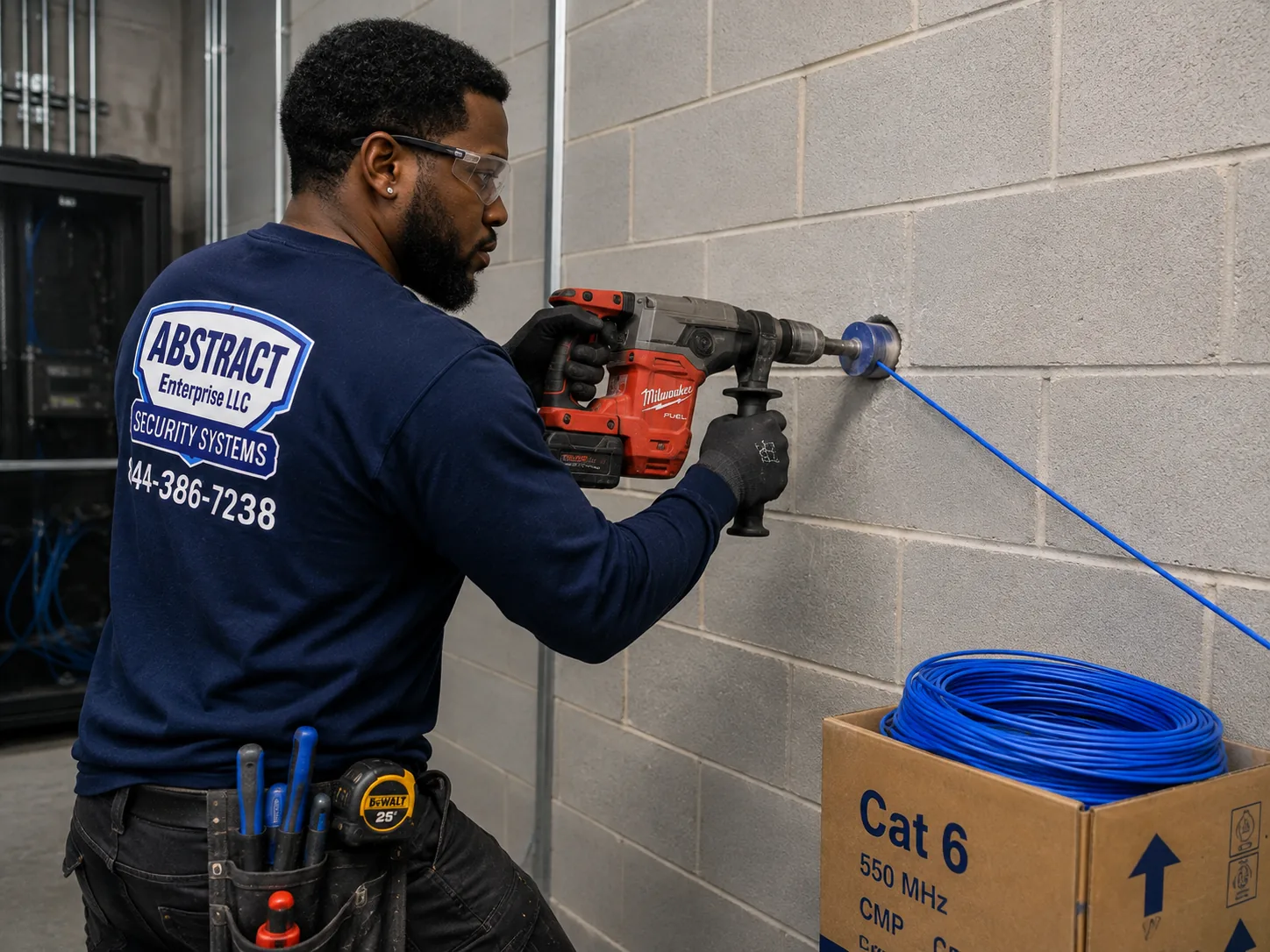
Amcrest camera installation job-library photo for Hudson Valley hub, Hudson Valley: technician core drilling a block wall to carry cable through to a network room
Photo from the AESS job library, not taken in the Hudson Valley: a technician core drilling a block wall to carry cable through to a network room. A colonial stone wall in Kingston or a fieldstone foundation under a Dutchess farmhouse calls for the same planning: one well-placed, sleeved opening that carries every camera cable for that side of the building, instead of a scatter of holes.
Commercial Amcrest Camera Installation

Business Amcrest Camera Installation in the Hudson Valley

Hudson Valley business properties range from village shops to some of the largest buildings in the state. The corridors below are the ones named in business and real estate press. We describe what those sources report; we have no information about the camera systems at any named building and do not claim any of them as customers. For buildings that serve government, receive federal grants or fall under critical-infrastructure rules, the FCC and NDAA points in the compliance list below come first, and they may point to a different product line than standard Amcrest.

Westchester Avenue and the I-287 Corridor

Westfair reported that 1111 and 1129 Westchester Avenue in White Plains, on the Platinum Mile, total about 335,000 square feet. Howard Properties reported Westchester office vacancy at 19.9 percent in 2026, down from a peak of 27 percent, with 1970s buildings on Route 287 bought for mixed use.

Tarrytown and Valhalla Campuses

REBusiness reported Regeneron's Tarrytown expansion at about 900,000 square feet and a five-story, 162,000 square foot Critical Care Tower at Westchester Medical Center in Valhalla, targeted for completion in 2026.

Route 17K and the Stewart Area

HGAR reported the 1,015,740 square foot Amazon distribution center at Route 17K and Route 747 and the 1.2 million square foot Medline facility in the Town of Montgomery. Stewart International Airport covers 1,552 acres, per Wikipedia.

Route 59 and West Nyack

Hoodline reported the Palisades Center at about 2,359,541 square feet, taken by a Black Diamond affiliate at a February 2026 foreclosure auction. Routes 59, 304 and 202 carry much of Rockland's retail.

South Road, Poughkeepsie

The Dutchess County IDA's project summary describes IBM's planned quantum facility of about 300,000 square feet at 2455 South Road, plus a renovation of Building 416, with construction starting in September 2026.

Enterprise Drive and iPark 87

Spectrum News reported the former IBM Kingston site on Enterprise Drive at 200 acres with over a million square feet of buildings, with the Ulster BOCES Career and Technical Center and Archtop Fiber on the East Campus.

Where Amcrest fits on a commercial job, and where it does not

For a farm stand, a village store, a small office, a contractor's yard or a landlord's mixed-use building, an Amcrest PoE system gives full local recording, a recorder the owner controls and no subscription, which is often exactly what the business wants. For a building on a corporate or medical campus, at a public school or library, or anywhere the owner takes federal money or has a government contract, the questions change. The Intercept reported in July 2021 that an Amcrest representative confirmed its products were not NDAA compliant, and one compliance source lists Amcrest as a Dahua OEM. Amcrest's website says the company is shifting to NDAA-compliant product lines it calls AMLINK and HELIX. For those buyers we check the specific products against the owner's purchasing rules before we quote, and if standard Amcrest is the wrong fit we say so plainly.

Docks, yards and gatehouses

A warehouse or contractor's yard asks different things of a camera than a house does. Cameras look across wide paved areas at night, under mixed lighting from dock lights, truck headlights and pole lamps, and the footage people actually need is usually a plate, a trailer number or a face at the gatehouse window. That means more cameras with narrower views rather than a few wide ones, careful aim at the gate lane, and recording kept long enough for a claim or an insurance query to arrive. Outdoor runs to poles and gatehouses are the ones most exposed to surges in a county like Orange, and they get protection at both ends.

Rules and practical limits for business cameras

  • State licence. The NYS Department of State licenses security and fire alarm installers under General Business Law Article 6-D, and a New York licensing course notes that unlicensed installers of security systems, which include cameras and CCTV, can be fined. AESS works under NYS license #12000287431.
  • County licences. Westchester County's Department of Consumer Protection says county law requires home improvement contractors to hold a county licence, and Rockland licenses home improvement contractors through its Office of Consumer Protection. We confirm which applies before booking.
  • FCC Covered List. The FCC's entry for Dahua is limited to equipment used for public safety, security of government facilities, physical security surveillance of critical infrastructure and other national security purposes. A business in one of those categories needs its camera choice checked, not assumed.
  • Audio. New York follows a one-party consent rule for recording conversations under Penal Law 250.00. A legal Q&A on Justia warned that leaving camera microphones on can record delivery drivers, neighbors or visitors. On business systems we leave microphones off unless the owner has a clear, lawful reason.
  • Private spaces. Penal Law 250.45 makes it a crime to record someone in a bathroom, changing room or similar space without consent. Staff restrooms and changing areas are never covered.
  • Power for poles and remote cameras. Our work is low-voltage. A new receptacle or circuit for a pole camera, a gatehouse or a barn is a licensed electrician's job, and the quote says so.
  • Digging. Central Hudson's Dig Safely guidance says New York law requires a free call to 811 at least two, but no more than ten, days before digging, so utilities can mark their lines. Every trench we plan starts with that call.
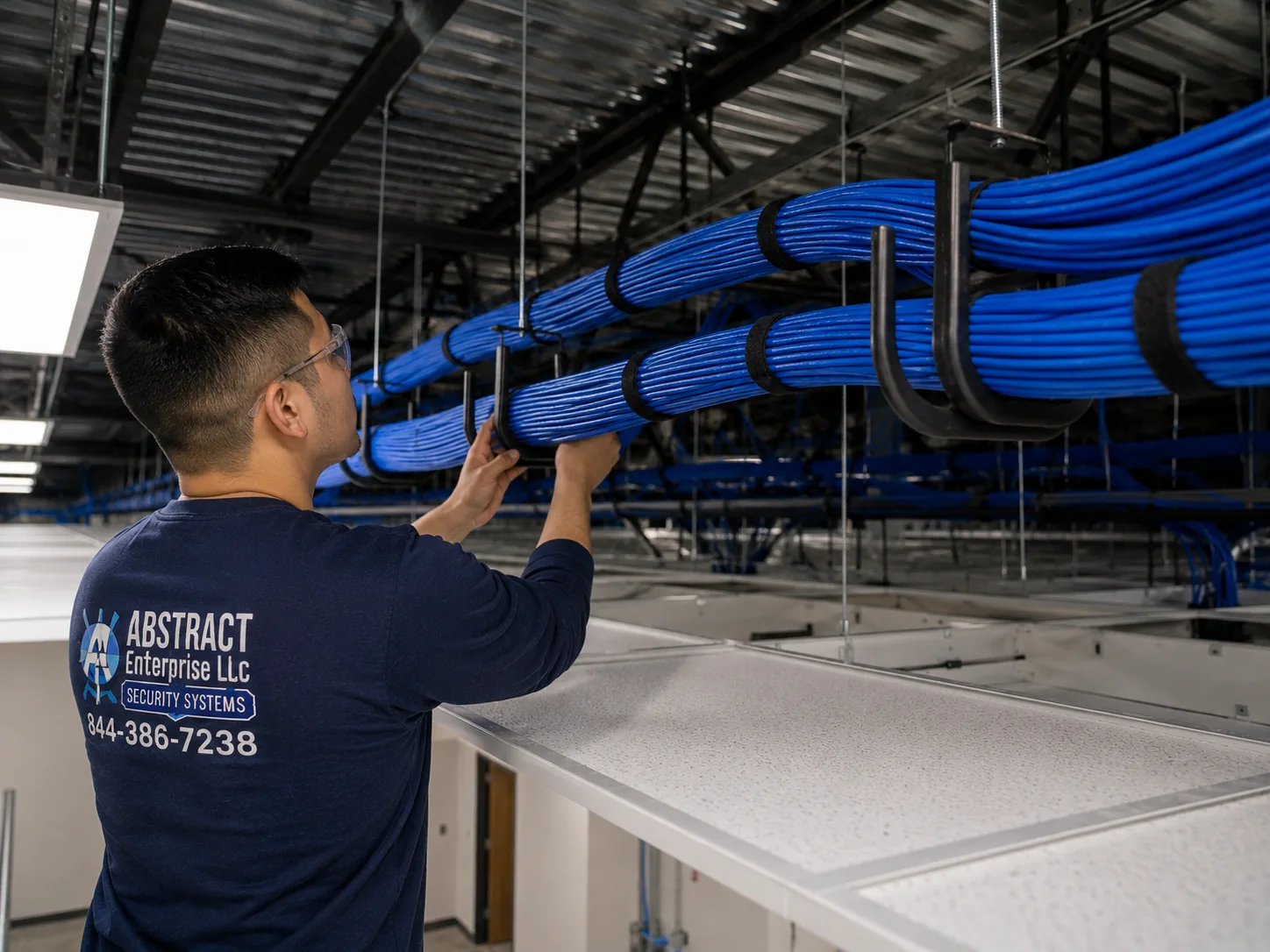
Amcrest camera installation job-library photo for Hudson Valley hub, Hudson Valley: J-hook pathway carrying dressed cable bundles across a commercial ceiling
Photo from the AESS job library, not taken in the Hudson Valley: a J-hook pathway carrying dressed bundles of cable across a commercial ceiling. In a Hudson Valley office suite or a warehouse office, camera cables travel in a supported pathway like this, kept apart from other trades' cables, so the next tenant fit-out does not cut the run to the loading dock camera.
Amcrest camera installation job-library photo for Hudson Valley hub, Hudson Valley: technician running cable into EMT conduit beside a telecom room in an industrial building
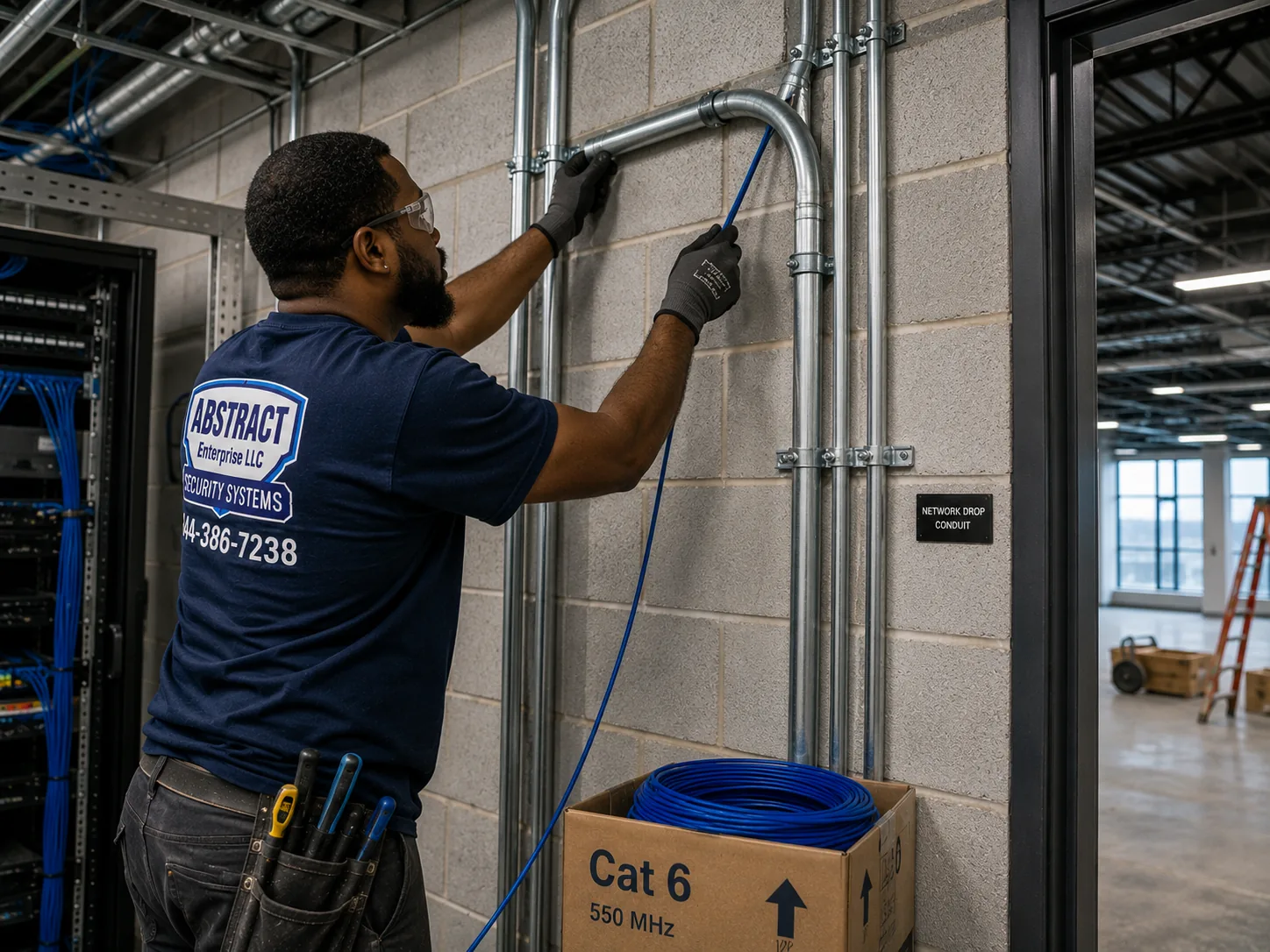
Photo from the AESS job library, not taken in the Hudson Valley: a technician running cable into EMT conduit beside a telecom room in an industrial building. In the large distribution and light-industrial buildings around Route 17K and Enterprise Drive, camera cable that runs low on walls near forklifts and racking goes into metal conduit like this so a passing pallet does not take a camera offline.
Field Notes

Field Notes: Pulling the Internet Cable Before We Leave a Valley Property

We do not publish stories about a named customer's property unless we can document them, so this is not a story about one farm. It is the last half hour of an Amcrest job on the kind of property the middle counties are full of: a house, a barn across the yard, a camera on the gate, and an internet line that the owner says goes down in most big storms.

With everything mounted and recording, we stand at the recorder with the owner and unplug the cable from the internet provider's box. Then we wait. We check that every camera tile on the recorder's own screen is still live, including the barn and the gate. We open the viewing software on a computer in the house and confirm it still sees every camera, because they were added by address, not through the cloud. We walk to the barn and back so motion recording triggers, then play the clip on the recorder. We switch off the main breaker to the recorder's outlet for a minute to check the battery backup carries it. Only then do we plug the internet back in, confirm the phone app reconnects, and show the owner what will and will not work the next time the line drops. If any step fails, we fix it before we pack up. On a valley property, that test is the one that matters.

Your Questions Answered

Amcrest Camera Installation in the Hudson Valley: Questions Answered

Rural internet and recording

We have no internet line at our property yet. Will an Amcrest NVR still record if it never connects?

Yes. An Amcrest moderator answered exactly this on the Amcrest forum: an NVR system will work without internet, and internet is only needed for WiFi cameras or remote viewing. Wired PoE cameras record to the recorder's drive, and you watch them on a monitor plugged into the recorder or on a computer on the same local network. What you give up is the phone app away from home and email or push alerts. We set the system up so that the day a line does arrive, adding remote viewing is a short visit, not a rebuild.

Our DSL went down and the Amcrest software on our own computer stopped showing the cameras. Why would a local camera need the internet?

It usually does not, but the way it was added can make it behave that way. A rural DSL user on the Amcrest forum had the same problem, and the cause was that the cameras had been added to Amcrest Surveillance Pro using the P2P cloud connection. Re-adding each camera by its IP address restored local viewing during outages. We set every camera up that way from the start, with a fixed address recorded on your handover map, and we test the system with the internet unplugged before we leave.

We already have a few Amcrest WiFi cameras. Can they go on the new PoE recorder with the wired ones?

It depends on the recorder. An Amcrest moderator said on the forum that for one PoE NVR model, WiFi cameras could not be added, per its quick start guide. Other combinations work. We check your recorder model and each WiFi camera before planning, and on a valley property we usually suggest wiring the cameras that matter most, because WiFi cameras need a working wireless network and a strong signal, and both are less dependable at a barn or a gate than a cable.

Can an older Amcrest WiFi camera like the IP2M-841 ProHD be used without WiFi at all?

The question has been asked on the Amcrest forum, and the honest answer is that it depends on the exact model's connections. If the camera has a network jack, we can connect it by cable and give it a fixed address, which removes the wireless link from the picture. If it does not, it has to stay on WiFi. We check the model label and the camera itself before we plan, and where an older WiFi camera is the weak point in a system, we tell you whether a wired replacement makes more sense than another wireless repeater.

Products, apps and the FCC

Which of the newer Amcrest cameras still have a web interface we can manage locally?

This comes up on IPCamTalk, where users complained that the newer Amcrest Smart Home app depends on the internet and has lost features, and noted that newer Smart series cameras can still be set up for local use through the View Pro app. A retailer listing for one SmartHome-series camera says it only has view-only access in View Pro. Because the line between the families shifts by model, we check each camera before buying or mounting it. For valley properties we favor cameras that can be managed on the local network and added to the recorder by address.

Can Amcrest cameras still be bought and installed in 2026 after the FCC rules on Dahua equipment?

Amcrest itself is not named on the FCC Covered List, but compliance sources note that Amcrest has historically sold cameras built on Dahua hardware, and Dahua is on the list. In July 2026 the FCC barred continued import and marketing of older Dahua and Hikvision equipment for specified security uses. One compliance source says the rules restrict import and marketing, not continued use of equipment already installed. What that means for a particular camera depends on what is inside it, so we read the FCC ID on each label before installing, and we tell you if a product's supply or support is in doubt.

Our library board is looking at cameras paid for partly with a grant. Is Amcrest an option?

Possibly not for that job. The Intercept reported that an Amcrest representative confirmed its products are not NDAA compliant, and grant-funded and government buyers often have to follow NDAA purchasing rules. Amcrest's own site says it is moving to NDAA-compliant lines called AMLINK and HELIX. Before quoting a library, school, town hall or any grant-funded building, we ask for the funding terms, check the specific products against them, and recommend a compliant system if standard Amcrest would not qualify. We would rather lose the Amcrest sale than install something the board has to rip out.

Walls, buildings and historic districts

Our Kingston house is in the Stockade. Does a camera on the front need approval from the city first?

It may. The City of Kingston says exterior work on historic properties visible from the street is reviewed by its Historic Landmarks Preservation Commission before a building permit is issued, and its ordinance bars material changes to a property's appearance in a landmark district without approval. We found no rule that names cameras specifically. What we did find is a January 2025 HLPC decision in which staff asked that externally mounted lines or line covers be painted to match the facade. We plan street-facing cameras with that in mind, suggest side and rear positions first, and help you prepare what the commission needs if review applies.

We own a brick townhouse in Newburgh's East End. Are there guidelines on how cameras can be attached?

Yes, and they are sensible ones. The City of Newburgh's design guidelines for the East End Historic District, which Wikipedia describes as covering 445 acres and more than 2,200 buildings, say security features should be integrated with the architecture, should not hide architectural features, and should not damage historic building fabric when attached. In practice we fix into brick rather than into decorative trim or cornices, keep cameras off ornament, run cable inside where we can, and choose small housings in colors that blend with the masonry.

How do you make sure an Amcrest camera on our old fieldstone wall will not pull loose in a storm?

Amcrest's own guides say the mounting surface should support at least three times the weight of the camera and bracket, and we treat that as a floor, not a target, on old stone. We pick a sound stone rather than a mortar joint, drill a test hole to see how it behaves, use anchors sized to the stone, and where the stone is weak we fix a mounting block across several sound points. We also seal the cable entry behind the camera, because water getting behind a mount and freezing is what loosens fixings in old walls over a few winters.

Storms, power and surges

Will the cameras keep recording during the kind of outages Central Hudson had in July 2026?

Only if the recorder and the PoE switch have power. PoE cameras take their power from the switch or recorder, so if those go dark, every camera goes dark with them. A battery backup on the recorder and switch keeps the system recording through a short outage and lets it shut down cleanly in a long one, rather than losing power mid-write. Battery runtime depends on how many cameras the switch is powering, so we size it to the system and tell you roughly how long it will last.

Orange County gets a lot of lightning. How do you protect a PoE camera run that goes out to a barn or a pole?

Earth Networks ranked Orange first in the state for lightning pulses in 2020, and an outdoor copper run is the path a nearby strike's surge takes back into the switch and recorder. We fit surge protectors where outdoor runs enter buildings, bond them to a proper ground, keep runs no longer than the coverage needs, and avoid running a single copper cable between two buildings with separate electric services where another link would be safer. No protection makes equipment immune to a direct strike, but proper protection greatly reduces the everyday damage from strikes nearby.

Privacy and placement

Our Amcrest cameras have microphones. Is it legal to leave audio on at a house in New York?

Video of your own property is generally fine, but audio is different. New York follows a one-party consent rule for recording conversations, and a lawyer answering on Justia warned that a camera recording voices when no participant has consented can count as eavesdropping, and that leaving microphones on while away risks recording delivery drivers, neighbors or visitors. We leave microphones off by default on outdoor cameras and explain the choice, so you can decide with the law in mind rather than by accident.

After the Scarsdale reports about hidden cameras in bushes, how should our cameras be aimed to catch someone watching the house?

Police in the lower Hudson Valley described organized burglars hiding cameras in bushes to watch homes for days before breaking in. A camera system cannot find a hidden camera, but it can make that kind of watching visible. We aim at the edges where someone would approach or linger: the road frontage, the end of the drive, the hedges and planting beds near the house, and the side yards. Combined with motion lighting, which State Police also recommended, footage of someone repeatedly walking into the planting by your drive is exactly what police want to see.

Distance and far buildings

Our gate is well beyond normal PoE cable distance from the house. How does a camera there get power and a connection?

There are three usual answers, and we pick one after seeing the drive. If another building, a garage, a gatehouse or a barn, sits closer to the gate, we power the camera from a switch there. If the gate already has power for an opener or lights, a licensed electrician can provide an outlet in a weatherproof box for a local switch, and the link back to the house is planned separately. If neither exists, we plan a buried route with the right cable and surge protection, starting with the 811 call. We do not stretch a single PoE run beyond what it can reliably carry.

A turret camera on our barn was aimed at the wrong angle. Can you just move it from the app?

Not with a turret. Amcrest's installation guide for its turret cameras says they cannot automatically pan, tilt or pivot from the app or the web interface, so the aim has to be set by hand on the mount. That is why we set the aim on site with you watching the live view on a phone or tablet, and why we fix the adjustment firmly once it is right. Under our warranty terms, readjusting cameras after the job is complete is treated as a new service visit, so we take our time getting the views right on the day.
Equipment

Types of Amcrest Camera Installation We Install

These are the parts of an Amcrest system we install on Hudson Valley properties. Equipment prices and installed prices are on the county Amcrest price pages, and if you have already bought Amcrest gear we install it after checking the model, app family and FCC label.

🎥

PoE Turret and Dome Cameras

Small housings that suit soffits, eaves and porch ceilings on houses and estates. Amcrest's guides cover both flush mounting with surface cable and in-wall mounting with the cable hidden.

🔭

PoE Bullet Cameras

Longer housings with a narrower view, for driveways, gate lanes, yards and the far side of a barn, where the camera has to see detail at a distance.

💾

Amcrest NVRs

The recorder at the heart of the system, such as the NV4108E series asked about on deal forums, with its own drive for continuous or motion recording and no monthly fee.

🔌

PoE Switches and Injectors

Switches that power cameras in a barn or outbuilding, and injectors where a single camera needs power and the router or switch does not supply it.

🖥

Blue Iris, NAS and Local Storage

Amcrest cameras can record to a microSD card, an FTP server, a NAS, a local computer or an Amcrest NVR, and they work with Blue Iris. We set up whichever the owner prefers.

⚡

Surge Protection

Protectors for runs that leave the building, fitted at the entry point and bonded to ground, for a region where Orange, Ulster, Westchester and Dutchess each saw more than 160,000 lightning pulses in 2020.

🔋

Battery Backup

A battery backup for the recorder and PoE switch, sized to the number of cameras, so recording carries through short outages and shuts down cleanly in long ones.

📱

Apps and Remote Viewing

Amcrest View Pro or the SmartHome app, depending on the cameras, set up for local viewing first and remote viewing where the internet line allows.

Amcrest PoE versus battery and WiFi cameras on a valley property

QuestionWired Amcrest PoE with an NVRBattery or WiFi cameras
Recording when the internet is downContinues to the NVRDepends on the model; many rely on WiFi or cloud
Recording during a power cutContinues if the NVR and switch are on battery backupBattery models continue; plug-in models stop
Barn or gate far from the houseNeeds a planned cable route or a switch in a nearer buildingNeeds a strong WiFi signal at that spot
Recording all the time, not just motionYes, to the NVR's driveBattery models usually record motion events only
Ongoing feesNone required for local recordingOften a cloud plan for full features
Look on a historic houseSmall housings, cable hidden insideNo cable, but batteries to change and panels to place

National security brands versus a local licensed installer

People often ask whether they would be better off with a national security brand. ADT is best known for monitored alarm systems, and Ring and SimpliSafe for doorbells, cameras and self-installed kits; News 12's Port Chester report shows how often neighbors already share Ring footage. Those are reasonable choices for some homes. An Amcrest system installed by a local licensed technician is a different kind of thing: local recording on a recorder you own, wired cameras that do not depend on WiFi at the barn, and a configuration built for the outages and internet gaps of the middle counties. What none of the national brands do is come and work out how to get a cable through a two-foot stone wall in Ulster, which is often the actual job.

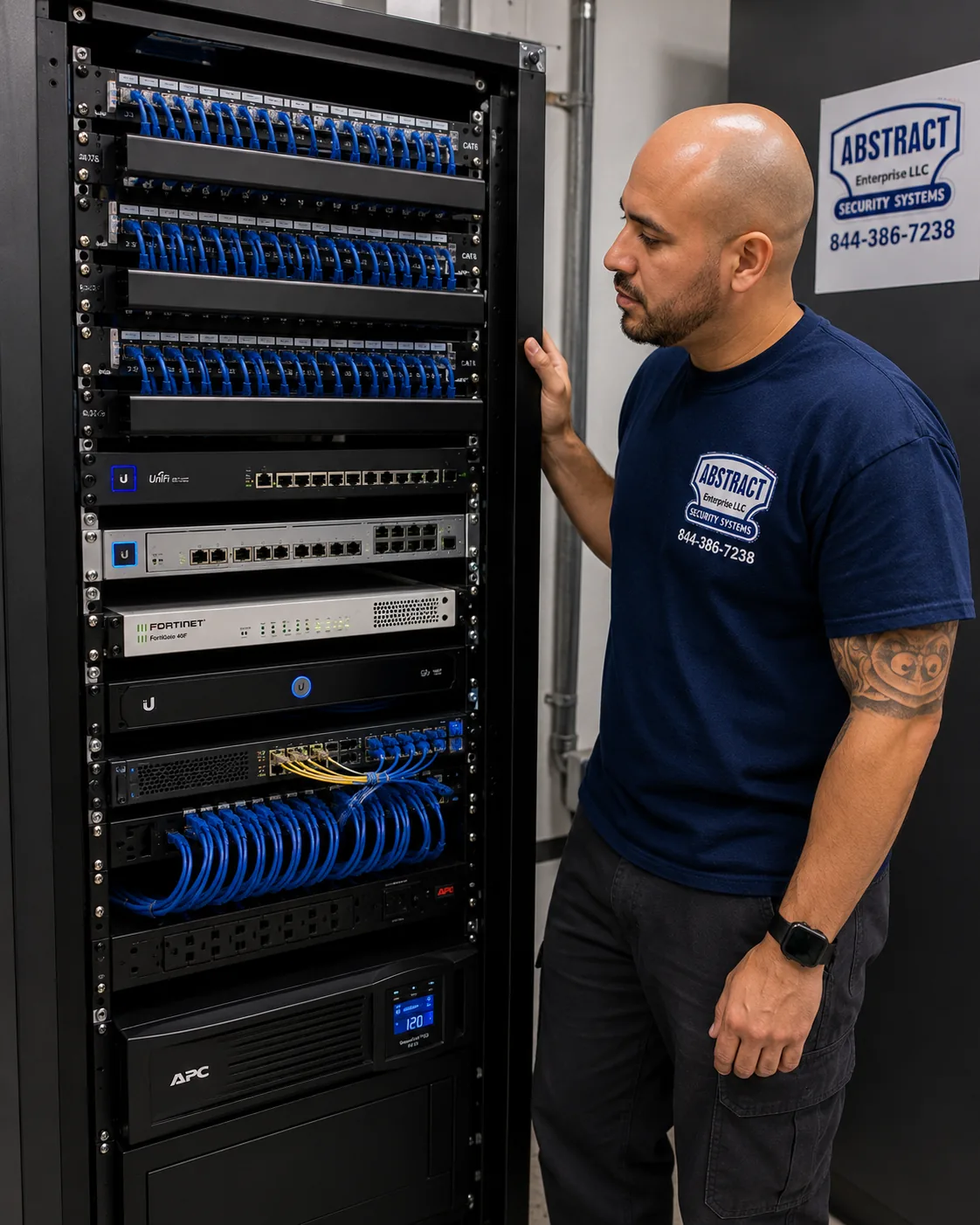
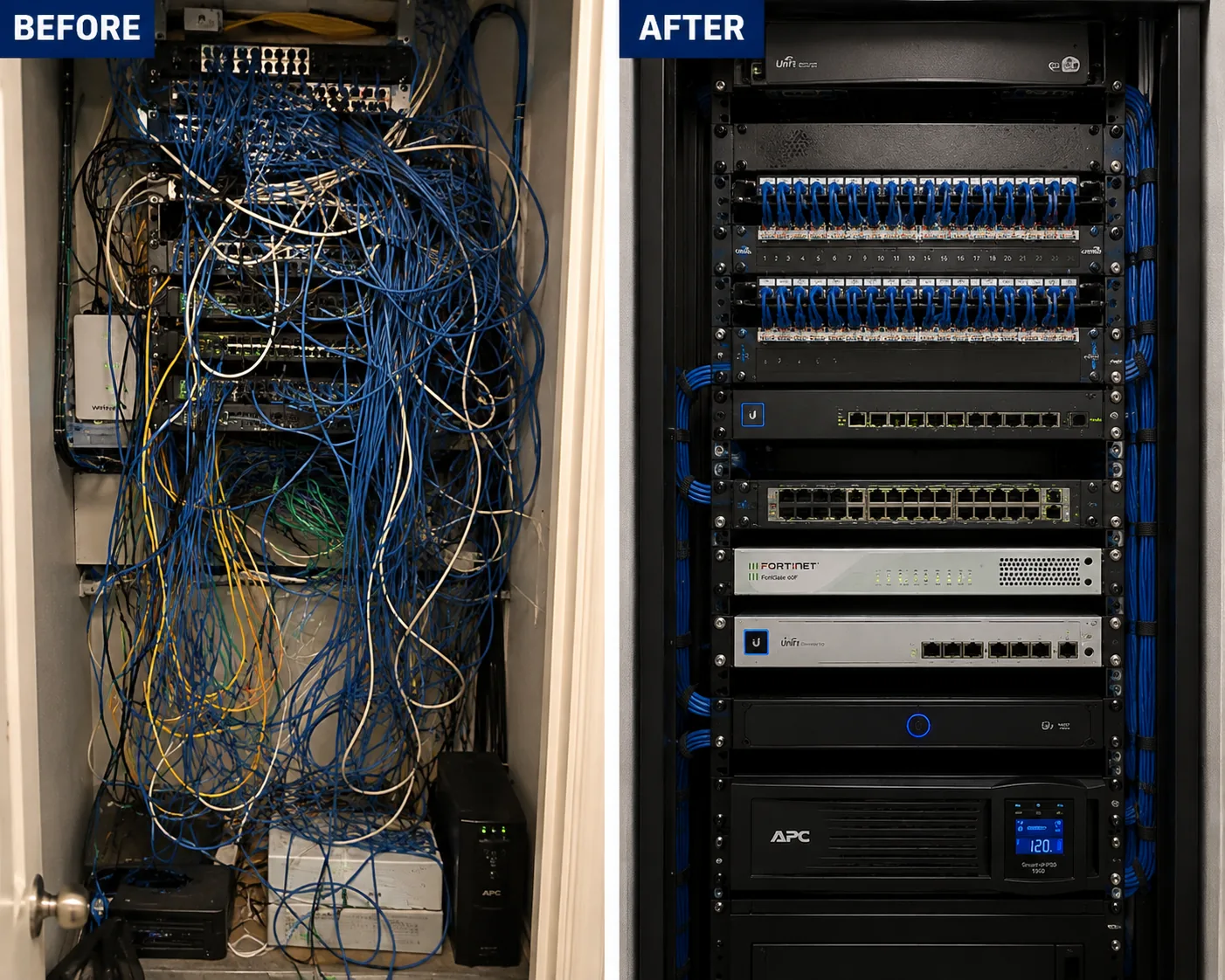
Amcrest camera installation job-library photo for Hudson Valley hub, Hudson Valley: finished network rack with patch panels, switching, firewall and battery backup dressed and identified
Photo from the AESS job library, not taken in the Hudson Valley: a finished network rack with patch panels, switching, a firewall and a battery backup, all dressed and labelled. On a larger Hudson Valley estate or office, the Amcrest recorder and PoE switch sit in a setup like this, with the battery backup at the bottom carrying the cameras through the kind of outages Central Hudson reported in July 2026.
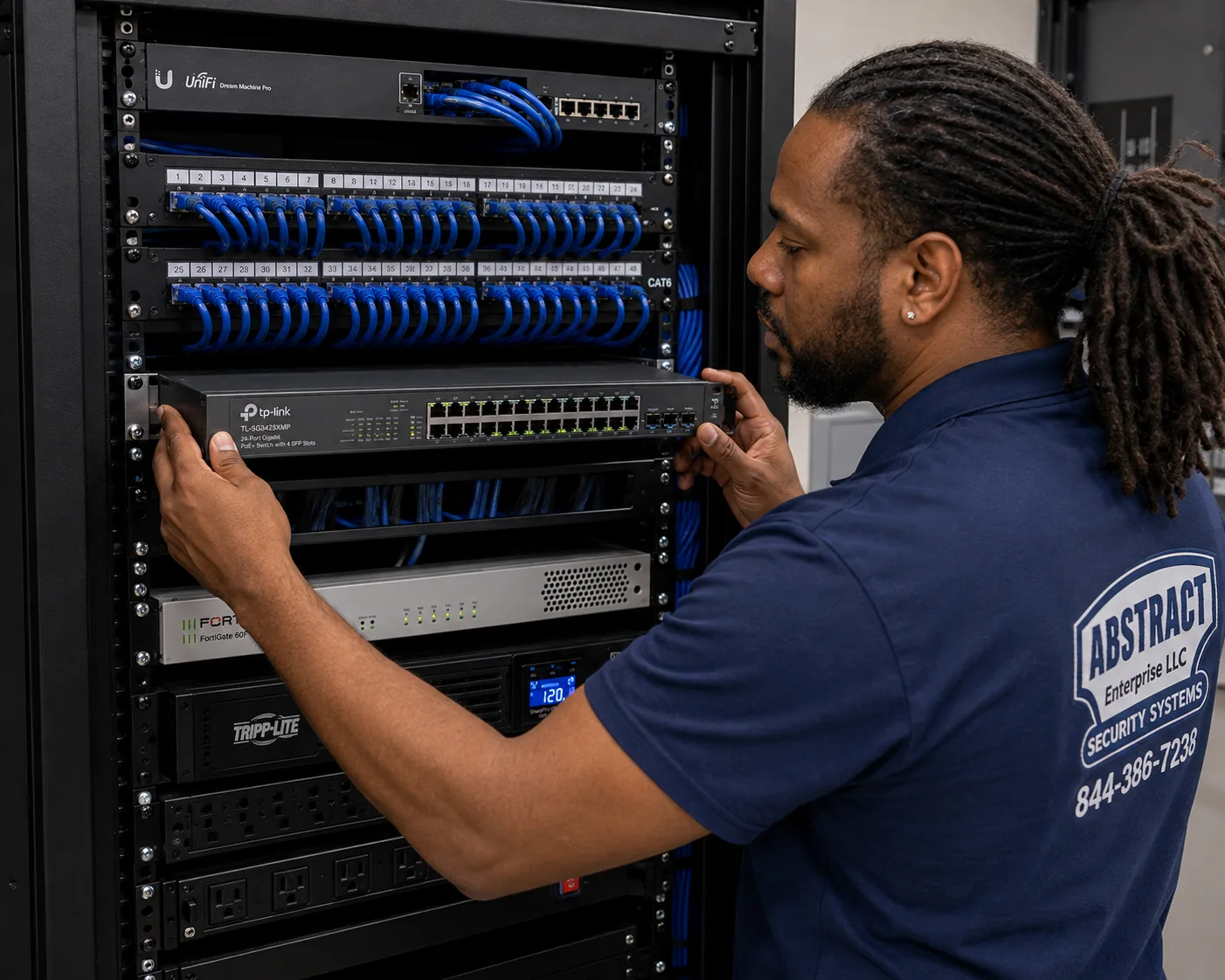
Amcrest camera installation job-library photo for Hudson Valley hub, Hudson Valley: technician mounting a managed PoE switch below patch panels in a commercial network rack
Photo from the AESS job library, not taken in the Hudson Valley: a technician mounting a managed PoE switch below patch panels in a commercial rack. A switch like this powers every Amcrest PoE camera on its cables, which is why, on a valley property that loses power in storms, it goes on battery backup together with the recorder.
AI Overview Reality Check

What AI Gets Wrong About Amcrest Camera Installation in the Hudson Valley

We could not capture Google's AI Overview or People Also Ask boxes for this topic from our build environment, so we are not going to pretend to quote them. What follows are claims we see repeated in quick online answers and cost guides about Amcrest cameras and camera installation generally, set against the sources named on this page and how valley properties actually behave. Marketplaces such as Angi, HomeAdvisor and Fixr publish national cost guides that feed many of these answers. They are a reasonable starting point, but they are not a plan for a stone house in Ulster or a barn in Dutchess.

"Amcrest cameras are banned now."

This is the headline version of a much narrower story. Amcrest is not named on the FCC Covered List. Compliance writers point out that Amcrest has historically sold cameras built on Dahua hardware, and that Dahua is covered, with its entry limited to equipment used for public safety, government facility security, critical infrastructure surveillance and other national security purposes.

In July 2026 the FCC barred the continued import and marketing of older, already-approved Dahua and Hikvision equipment for those specified uses. One compliance source says the rules restrict import and marketing, and that continued use of equipment already installed is not affected.

For a homeowner in Putnam or a shop owner in Rockland, the practical questions are whether a given model is still available, whether it will keep being supported, and whether any purchasing rule applies to the building. We answer those by reading the FCC ID label on each unit, not by repeating a headline.

"Amcrest works without internet, so a rural property is no problem."

Half right. An Amcrest moderator confirmed that an NVR system works without internet, and Amcrest's support pages say cameras can be viewed locally offline. That is the good news, and it is why Amcrest suits the valley.

The catch is setup. The rural DSL user on the Amcrest forum lost local viewing during outages because the cameras had been added through P2P. Many quick-start installs do exactly that, because it is the easiest path in the app.

So the accurate version is: Amcrest can work without internet, if it is configured to. On properties in Shandaken or the hollows of Ulster, where the line may be the weakest part of the whole system, that configuration is the job.

"PoE is plug and play: plug the camera into your router."

Many home routers do not supply PoE at all. A listing for one Amcrest PoE camera notes that it needs a separate PoE injector or switch, and a buyer review on Adorama described being told by Amcrest staff to buy a splitter when what they actually needed was an injector, because their router did not supply power.

On a valley property the bigger issue is distance and location. A PoE camera on a barn is not plugged into the router in the house; it is plugged into a switch, either in the house at the end of a long run or in the barn itself, and that switch needs its own power and protection.

We plan where each camera's power comes from before we plan anything else, so the camera that matters most, usually the one at the gate or the barn, is not the one left without power.

"Wireless is the easy answer for an outbuilding."

Wireless cameras skip the cable, which is attractive across a yard. But a WiFi camera at a barn depends on a strong wireless signal reaching that far, through stone walls and trees, and an Amcrest moderator noted that at least one PoE NVR model cannot accept WiFi cameras at all.

A forum user describing a different brand put the outage problem bluntly: when the internet or power goes out for an extended time, WiFi cameras lose their connection and burn battery searching for it. In a county where tens of thousands of customers lost power in a single storm in 2026, that is a real concern.

Wireless has a place, for a camera that would be impractical to cable. For the cameras that guard the drive, the barn and the doors, a planned wired connection is usually the more dependable answer.

"An Amcrest install is a cheap two-to-four camera job."

HomeAdvisor's national cost guide gives a separate, low line for a basic Amcrest setup of two to four cameras, and AI answers tend to repeat it. That figure assumes a small house, short cable runs and easy walls.

Valley properties often break every one of those assumptions. Farms in Dutchess and Ulster average more than 150 acres, stone walls take time to drill properly, outbuildings need their own switches and surge protection, and a camera at a distant gate may need a trench, which starts with an 811 call and two working days' notice.

The cameras may be inexpensive; the property decides the labor. That is why our price pages list installed prices by county and why we quote the specific site, including any trench or electrician's work, in writing before starting.

"No one regulates where you put a camera on your own house."

There is no general state permit for a homeowner's camera, and a low-voltage resource notes that no state licence is required for homeowner self-installation. But in historic districts, exterior appearance is regulated.

Kingston's Historic Landmarks Preservation Commission reviews exterior work visible from the street before a building permit is issued, and in a January 2025 decision staff asked that exterior lines be painted to match the facade. Newburgh's East End guidelines say security features should not obscure architectural features or damage historic fabric. The City of Hudson has its own Historic Preservation Commission.

In the Hudson River Historic District, where nearly all the acreage is historic, discretion is simply good practice. We plan positions that respect those rules from the start, rather than finding out from a letter after the cameras are up.

"Turn on the microphone, it makes the footage more useful."

Many setup guides suggest enabling audio for more complete footage. In New York that can create legal risk. The state follows a one-party consent rule, and a lawyer on Justia warned that recording voices when no participant consents can count as eavesdropping, a felony.

Outdoor cameras at a busy property will hear delivery drivers, contractors, farm workers and neighbors talking. A camera by the barn door or the drive that records those conversations while the owner is away is exactly the case that warning describes.

We leave microphones off on outdoor cameras unless the owner has a clear, lawful reason, and we never place cameras where Penal Law 250.45 forbids, such as bathrooms or changing areas. Video alone is what police usually ask for.

Not Sure Where the Barn Camera Gets Its Power? Talk to a Technician

Send a rough sketch of the property, photos of the house, the outbuildings and the gate, and the name of your internet provider, and a technician will tell you how they would connect each camera, whether your existing Amcrest gear fits, and which county price list applies. Call (800) 486-0943, message us on WhatsApp, or use the quick form.

How It Works

Our Installation Process

Every Hudson Valley Amcrest job follows the same eight steps, whether it is four cameras on a suburban house in Rockland or a full system across a farm in Dutchess. Distance is the reason the order matters: we would rather spend an extra half hour planning on the phone than drive an hour each way to fetch a part.

1. Send the property details

Photos of the entries, the drive, the outbuildings and the gate, your internet provider and how the line reaches the house, and the model labels of any Amcrest gear you already own.

2. Check models, labels and app line

We check each Amcrest model, its FCC ID label and whether it is an NVR-family or SmartHome-family product, so mixed lines do not end up on one system by accident.

3. Walk the property and plan coverage

On site we walk every approach with you, mark each camera position, and agree what each camera must see and what it must not, such as a neighbor's windows.

4. Plan cable routes and any digging

Each PoE run, wall entry and outdoor route is planned, any historic-district review is flagged, and utility markouts are requested through 811 before a trench is dug.

5. Mount into solid fixings

Cameras and brackets go into framing, masonry or a junction box that holds at least three times their weight, with turret and bullet aim set by hand.

6. Pull, terminate and test

Cable is pulled, terminated, labelled and tested end to end, with drip loops and surge protection wherever a run leaves a building.

7. Configure offline first

Each camera gets a fixed address and is added to the NVR by IP, not P2P; recording is set locally, and the system is tested with the internet unplugged.

8. Hand over and walk through

We review every view with you, set up the app for local and remote viewing, and leave a labelled map of cameras, ports and addresses.

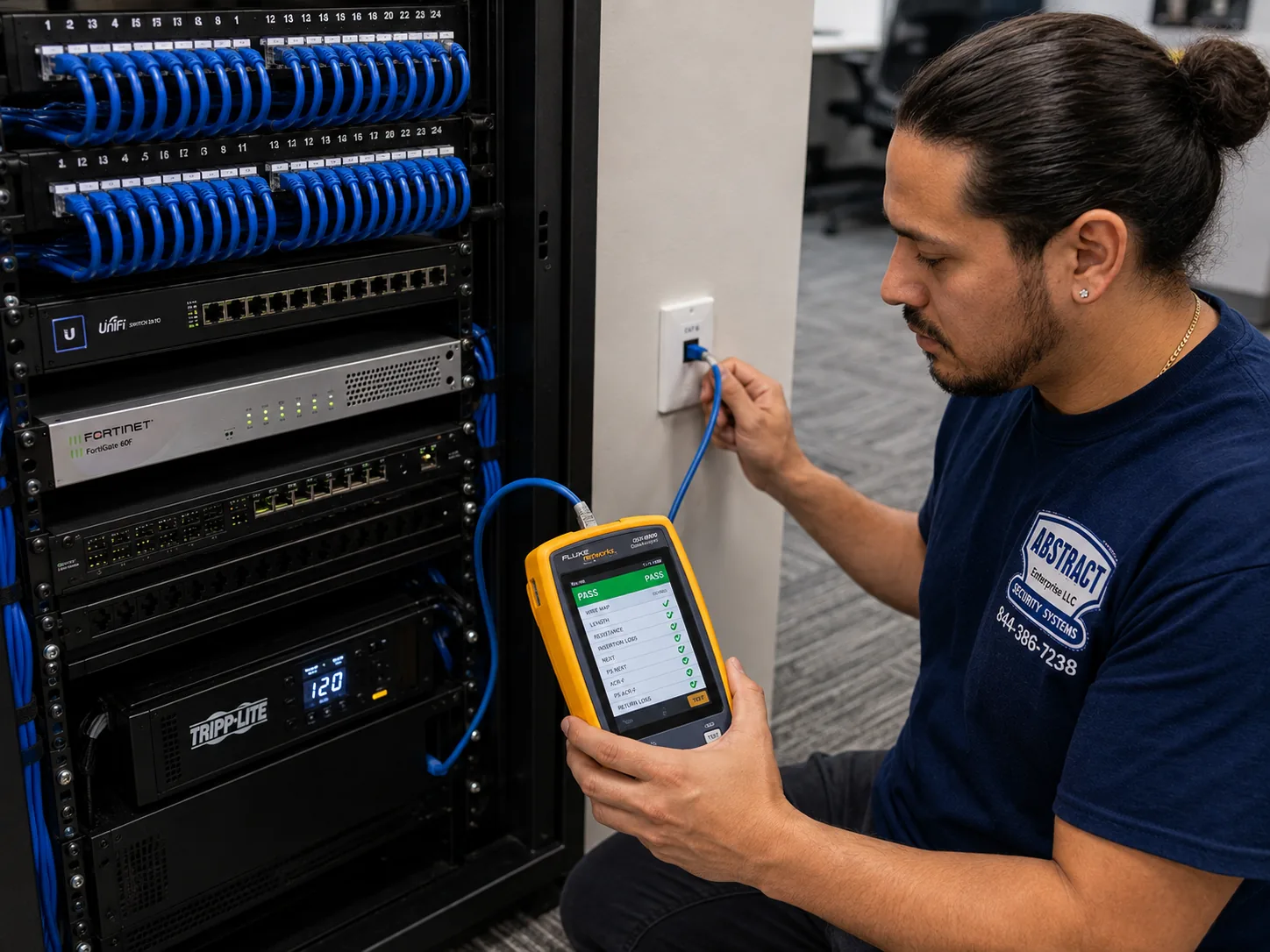
Amcrest camera installation job-library photo for Hudson Valley hub, Hudson Valley: technician certifying a data drop with a cable analyzer showing a PASS result
Photo from the AESS job library, not taken in the Hudson Valley: a technician testing a data drop with a cable analyzer showing a PASS result. A long run out to a Hudson Valley barn or gate post gets tested like this before the camera goes on, because a marginal cable that passes on a mild day is the one that fails on the first freezing night.
Coverage Area

Amcrest Camera Installation Near the Hudson Valley's Landmarks

The valley is large, so we plan visits around its anchors: the river towns, the districts, the airports and the campuses. These are places we use to describe where a job is, not buildings we claim to have worked in.

Kingston Stockade District

Eight blocks and about 32 acres of Uptown Kingston, listed on the National Register in 1975, with Dutch stone houses at Crown and John Streets and the Senate House of 1676.

Hudson River Historic District

A National Historic Landmark District designated in 1990, covering 34.6 square miles across Staatsburg, Rhinecliff, Tivoli, Annandale and Barrytown, with more than forty riverfront estates.

Newburgh East End Historic District

About 445 acres and more than 2,200 buildings, mostly brick townhouses, including Washington's Headquarters State Historic Site.

Stewart International Airport

1,552 acres in the towns of Newburgh and New Windsor, home to the 105th Airlift Wing since 1983, with the Route 17K warehouse belt nearby.

Vassar College

About 1,000 acres and more than 100 buildings in Poughkeepsie, founded in 1861, with its Main Building of 1865 designed by James Renwick Jr.

Vanderbilt Mansion, Hyde Park

A National Historic Site of 211 acres, with the mansion built from 1896 to 1899, a carriage house and its own hydroelectric plant on the Crum Elbow stream.

We also cover the Palisades Center area and Route 59 in Rockland, the Platinum Mile in White Plains, South Road in Poughkeepsie and Enterprise Drive in Kingston, each priced at its own county rate on the Rockland, Westchester, Dutchess and Ulster Amcrest price pages. For the whole region in one place, see the Hudson Valley Amcrest camera installation prices.

Pricing

Amcrest Camera Installation Cost in the Hudson Valley

Our Amcrest prices for the Hudson Valley are published in full, with a calculator, on the Hudson Valley Amcrest price page, and each county has its own page with its own rate. We do not print a different set of numbers here, because the price page is the one we keep current and the one your quote is built from. What this section explains is what moves an Amcrest job's price on a valley property, so the quote makes sense when you see it.

What drives the priceWhy it matters in the Hudson ValleyHow we handle it on the quote
Your countyOur rates differ between Westchester, Rockland, Orange, Putnam, Dutchess and Ulster, reflecting travel and accessPriced from your county's Amcrest price page
Number of camerasA suburban house may need four; a farm with a barn and a gate may need many moreEach camera listed on the quote
Cable distanceLong runs to barns, garages and gates take more cable and more timeEach run measured on the walk-round
WallsColonial and nineteenth-century stone takes longer to drill and fix than frame or sidingWall type named for each position
Outbuilding switches and linksEach detached building may need its own switch, power and protectionListed per building
Trenching and diggingBuried runs need an 811 markout and ground that can be dugQuoted separately, only where needed
Electrical workA new outlet for a pole or gate camera is a licensed electrician's jobNamed as separate work, never hidden
Surge protection and battery backupLightning and outages are part of every valley summerRecommended and listed, your choice
Your own equipmentAmcrest gear you already bought is installed at labor-only pricesChecked first, then quoted as labor
Historic-district paperworkKingston, Newburgh and other commissions may review visible exterior workDiscussed before booking

Why national cost guides miss the valley

Angi, HomeAdvisor and Fixr publish national ranges for camera installation, and HomeAdvisor even shows a separate, low line for a basic Amcrest setup. Those figures are averages across the whole country, weighted toward ordinary houses with short runs and easy walls. A Hudson Valley quote often includes things those averages leave out: a run of several hundred feet to a barn, a sleeve through stone, a switch in an outbuilding, surge protection, a battery backup, and sometimes a trench. None of that is padding; it is the property. If your property is a simple suburban house with an attic over every camera position, your quote will look much closer to the simple case.

What the quote shows before you agree

Every Amcrest quote lists each camera, each cable run, each outbuilding link and any trench, electrician or permit-related work as a separate line, at your county's rate. If we find something on the day that changes the job, such as a stone wall where the photos suggested siding, we show you, explain which line changes, and do not start that part until you have agreed. Our licence number, NYS license #12000287431, is on every quote.

Full terms โ€” including 50% deposit, one-year parts-only warranty on AESS-supplied products, and the late-fee schedule โ€” are set out in the service agreement.

Want the Numbers for Your County? Get a Written Amcrest Quote

Open your county's Amcrest price page to build a system yourself, or send us the property details and we will build the quote for you, line by line. Call (800) 486-0943 or message us on WhatsApp.

Shop Our Systems

Amcrest Camera Installation Packages & Pricing

Three common Hudson Valley Amcrest systems. The installed price for each, at your county's rate, is on the county price pages and in the calculator on the Hudson Valley Amcrest price page. We describe what each includes here so you can pick the starting point closest to your property.

Starter: Suburban House

Four Amcrest PoE cameras covering the front door, the driveway, the back door and the yard, wired through the attic or basement to an Amcrest NVR, configured by fixed address with local recording. Suits Westchester and Rockland houses on smaller lots with short, clean cable routes.

Standard: House and One Outbuilding

Cameras on the house plus a garage or barn, with a PoE switch in the outbuilding, a planned link back to the house, surge protection at both ends, and a battery backup on the recorder and switches. The usual system for a Dutchess or Orange property with a detached building.

Premium: Farm or Estate

Coverage of the house, several outbuildings, the drive and the gate, with a switch in each building, protected links, battery backup, offline-first configuration and a full labelled map, plus discreet color-matched mounts on historic walls. For large lots in Dutchess, Ulster and northern Westchester.

Bring your own Amcrest equipment

If you have already bought Amcrest cameras or a recorder, we install them at labor-only prices from the same county price list. Before anything goes on a wall, we check the model, whether it belongs to the NVR family or the SmartHome family, whether it can be added to your recorder by address, and what its FCC ID label says. If a camera will not do what the rest of the system does, for example a WiFi camera your PoE recorder cannot accept, we tell you before mounting it and show you the alternative. Our warranty covers products we supply; equipment you supply is installed with care but is covered by its maker's terms, not ours.

Complete Services

Every Amcrest Camera Installation Service in the Hudson Valley

Hudson Valley Amcrest Prices

The full regional price list and calculator for building your own system. Amcrest camera installation prices, Hudson Valley

Westchester County

Suburban houses, finished interiors and the I-287 office corridor, at the Westchester rate. Westchester Amcrest prices

Rockland County

Homes, village centers and the retail roads around Route 59, at the Rockland rate. Rockland Amcrest prices

Orange County

Warehouses near Stewart, Newburgh's East End and the state's highest lightning count, at the Orange rate. Orange County Amcrest prices

Putnam County

Long driveways, wooded lots and watershed land, at the Putnam rate. Putnam Amcrest prices

Dutchess County

Farms, riverfront estates and the Poughkeepsie corridor, at the Dutchess rate. Dutchess Amcrest prices

Ulster County

Stone houses, mountain towns and new internet lines, at the Ulster rate. Ulster Amcrest prices

New York City

Amcrest pricing for the five boroughs, for owners with a city home as well. NYC Amcrest prices

Get a Quote

Send the property details and we will build the quote line by line. Request a free quote

FAQ

Hudson Valley Amcrest Camera Installation FAQ

Do Amcrest cameras need a monthly subscription once they are installed?
+

No subscription is required for the way we install them. Amcrest cameras can record to an Amcrest NVR, a microSD card, a NAS, an FTP server or a local computer, so footage stays on equipment you own. Amcrest offers an optional paid cloud tier for owners who want off-site copies, but a wired PoE system with a recorder works fully without it.

Who actually makes Amcrest cameras, and are they made in China?
+

Amcrest says its products are conceptualized and designed by Amcrest in Houston, Texas, and its website says it built its brand with Dahua. Compliance sources list Amcrest as a Dahua OEM, meaning many of its cameras have been built on Dahua hardware. That is why we check the FCC ID label on each unit, and why buyers bound by NDAA rules need a product check before choosing Amcrest.

Amcrest cameras are inexpensive. Is it worth paying for professional installation?
+

On a simple house with easy attic access, many owners install Amcrest themselves. On a Hudson Valley property with stone walls, outbuildings, a distant gate or a weak internet line, the cameras are the easy part. The work that makes a system last is the cable routing, the surge protection, the battery backup and the offline-first setup, and that is what a licensed installer is paid for.

How many Amcrest cameras does a typical Hudson Valley property need?
+

There is no single number, because valley properties vary so much. A suburban house in Rockland may be well covered by four cameras on its doors and drive. A farm or estate with a barn, sheds and a gate needs cameras on each building and each approach. We count on the walk-round, starting from the places people actually approach the property, and we would rather cover the right spots well than add cameras that watch empty lawn.

What should I look for when hiring an Amcrest camera installer in the Hudson Valley?
+

Start with the licence: New York requires anyone paid to install security cameras to hold a security and fire alarm installer licence from the Department of State, and AESS holds NYS license 12000287431. Then ask how they will set the system up for outages, whether cameras will be added by fixed address or P2P, how they will protect outdoor runs from surges, and whether the quote lists every run and outbuilding separately.

Do you install Amcrest systems in the rural parts of the Hudson Valley, not just the towns?
+

Yes. We price work in Westchester, Rockland, Orange, Putnam, Dutchess and Ulster, including farms, mountain properties and second homes far from the village centers. Rural jobs take more planning before the visit, which is why we ask for photos, a rough sketch of the property and your internet details first, so the technician arrives with the right cable, switches and fixings.

Can an intercom or gate keypad go in at the same time as the Amcrest cameras?
+

Often, and it saves digging twice. If the gate needs both a camera and an intercom or keypad, we plan one cable route with enough capacity for both and pull it once. The intercom itself is a separate item on the quote. Tell us when you book, so we bring the right cable and plan the post or pillar for both devices.

How is the price of a four-camera Amcrest install worked out for a Hudson Valley house?
+

From your county's Amcrest price list: the cameras and recorder, the installation of each camera, and any extras the house needs, such as a long run, stone fixings or a battery backup. The county price pages include a calculator so you can build the four-camera system yourself. For a simple house with an attic, the four cameras and recorder are most of the cost; for a stone house, the walls add time.

Can our Amcrest cameras record to Blue Iris instead of an Amcrest NVR?
+

Yes. Retailer listings for Amcrest cameras note that they work with Blue Iris, and many owners prefer it. Blue Iris runs on a computer you leave on, so we set each camera to a fixed address, because a Blue Iris user reported losing cameras when the router changed their addresses. We also put the computer on a battery backup, just as we would an NVR.

My router does not supply PoE. Do I need a splitter or an injector for an Amcrest PoE camera?
+

An injector, or a PoE switch. An injector adds power to the network cable so it can run a PoE camera; a splitter does the opposite, separating power from data at a device that cannot take PoE. A buyer review on Adorama described being told to buy a splitter when an injector was what the setup needed. On a multi-camera job we normally use a PoE switch or the NVR's own PoE ports.

Does a homeowner need a licence to put up their own Amcrest cameras in New York?
+

No. A low-voltage permitting resource notes that no state licence is required for homeowner self-installation. The licence requirement applies to people paid to install security systems for others. Historic-district rules on visible exterior work still apply to a homeowner, and so do the state's rules on audio recording and private spaces.

We bought a house with an Amcrest system the old owners left behind. Can you take it over?
+

Yes. We trace and label every cable, reset the recorder and cameras to your own passwords so the previous owner no longer has access, re-add each camera by fixed address, check each model and its FCC label, and tell you which parts are worth keeping. If any camera is failing or points somewhere unhelpful, we say so and show you the option, rather than replacing things by default.

What steps are involved in getting Amcrest video surveillance installed for a business in Poughkeepsie?
+

The same eight steps we use everywhere: send photos and your floor plan, let us check the models and any purchasing rules your business follows, walk the site, plan cable routes through ceilings and conduit, mount, pull and test, configure the recorder offline first, and hand over with a labelled map. For a business we also agree how long footage must be kept and who may view it, and we schedule noisy work around opening hours.

Get In Touch

Request a Free Quote

Tell us the town and county, the property type, how many buildings need cameras and how far apart they are, and your internet provider. Photos of the house, the outbuildings and the gate make the quote exact. Prefer to talk? Call (800) 486-0943.

✅
Request Sent!
We aim to call and book your Hudson Valley Amcrest job within 2 hours of your request.
Amcrest camera installation job-library photo for Hudson Valley hub, Hudson Valley: before and after views of a network rack, an unlabelled tangle rebuilt into a dressed and identified rack
Photo from the AESS job library, not taken in the Hudson Valley: before and after views of a network rack, from an unlabelled tangle to a dressed, identified rack. When we take over an Amcrest system left in a Hudson Valley house or office by a previous owner, the recorder corner often looks like the before side, and the job ends looking like the after side, with every camera cable named.

More Amcrest Camera Installation near Hudson Valley hub

ยท Amcrest Camera Installation NYC | PoE, NVR & Setup

Book Your Hudson Valley Amcrest Camera Installation

From a stone house in Kingston's Stockade to a farm in Dutchess, a weekend place in the Ulster hills or a yard near Stewart, the job starts the same way: photos of the property, a look at your internet line, and an honest plan for getting a reliable connection to every camera. Call (800) 486-0943, message us on WhatsApp, or send the quote form, and we will tell you how your system will keep recording the next time the power or the internet goes down. Prices for your county are on the Hudson Valley Amcrest price page.

Amcrest Camera Installation by neighborhood: Hudson Valley hub, Hudson Valley amcrest camera installation

Amcrest Camera Installation by neighborhood: Long Island hub, Long Island amcrest camera installation