What are you looking for?
About Us Contact Us Careers Get a Free Quote (800) 486-0943
Pick a service
✅ Got Your Own System?
🎬 Home TheatreQuote 🎶 AV SoundQuote 🔑 Access ControlQuote
Now pick your area
Pick your area
Long Island
Hudson Valley
Services available
Pricing & Tools
Pick a service for pricing
🚪 Intercom Pricing 🔔 Buzzer Repair Pricing
Calculators
📹 Camera System Calculator 🚨 Alarm Calculator ⚡ Cabling Quote Builder ✅ Got Your Own System?
Select your area
Street-door lock forced, a box gone from under the stoop, or a car window smashed overnight on a numbered street in South Slope? Keep the recorder running and save the clip before it records over. Call the Brooklyn line: (347) 934-8335
Home › Security Camera Installation Brooklyn › South Slope
Stoops & Under-Stoop Doors · Neo-Grec Rows · Wood Houses on 11th & 12th Streets · 2012 Historic District Extension · Fourth Avenue Lobbies · Fifth & Seventh Avenue Shops · Licensed Low-Voltage

Security Camera
Installation in
South Slope

Faces at the Street Door · Boxes Under the Stoop · Lock Sides on Camera · Cars on the Block

Security camera installation in South Slope starts at the street door, because that is where the local record keeps ending up. When a UPS box vanished from under a stoop on 16th Street between Sixth and Seventh Avenues, officers from the 78th Precinct told the neighbor a report "wasn't really going to do much" without a good look at the man and suggested a security camera. When one man forced front-door locks across Park Slope in the winter of 2019 and 2020, police had only "grainy surveillance video" to show the public. So a South Slope plan gets the face at the door and the lock side of that door on camera first, then the box under the stoop, the car on the block and the back of the house, and keeps the front of any house inside the 2012 historic district extension within the Landmarks rules. Four-camera packages on our Brooklyn rate start at $850 installed with two weeks of recording, and every building is quoted in writing first.

Reviewed and updated November 13, 2026 by Abstract Enterprises Security Systems, NYS license #12000287431 · Sources: NYPD 78th Precinct CompStat for the week of November 2–8, 2026; Bklyner on the 2014 package theft on 16th Street; Patch on the 2019–2020 Park Slope daylight burglary pattern, the 2020 lobby package thefts after broken door locks and the 2016 Fifth Avenue break-ins; CBS New York on the 2019 Park Slope lobby package thieves; DNAinfo on the 2015 bike theft through a brownstone's door glass; CityLand on the 2012 Park Slope Historic District Extension; the Landmarks Preservation Commission permit guidebook, chapter 11; Brownstoner on the Ansonia Clock Company building and on the 2003 Fourth Avenue rezoning; Urban Omnibus and the Wooden House Project on South Slope's wooden houses; the NYC Mayor's Office on the 2024 business camera program; FirstService Residential on co-op and condo footage; Brick Underground on landlords and lobby video; HomeAdvisor's Brooklyn cost page; New York Civil Rights Law section 52-a and General Business Law section 69-m.

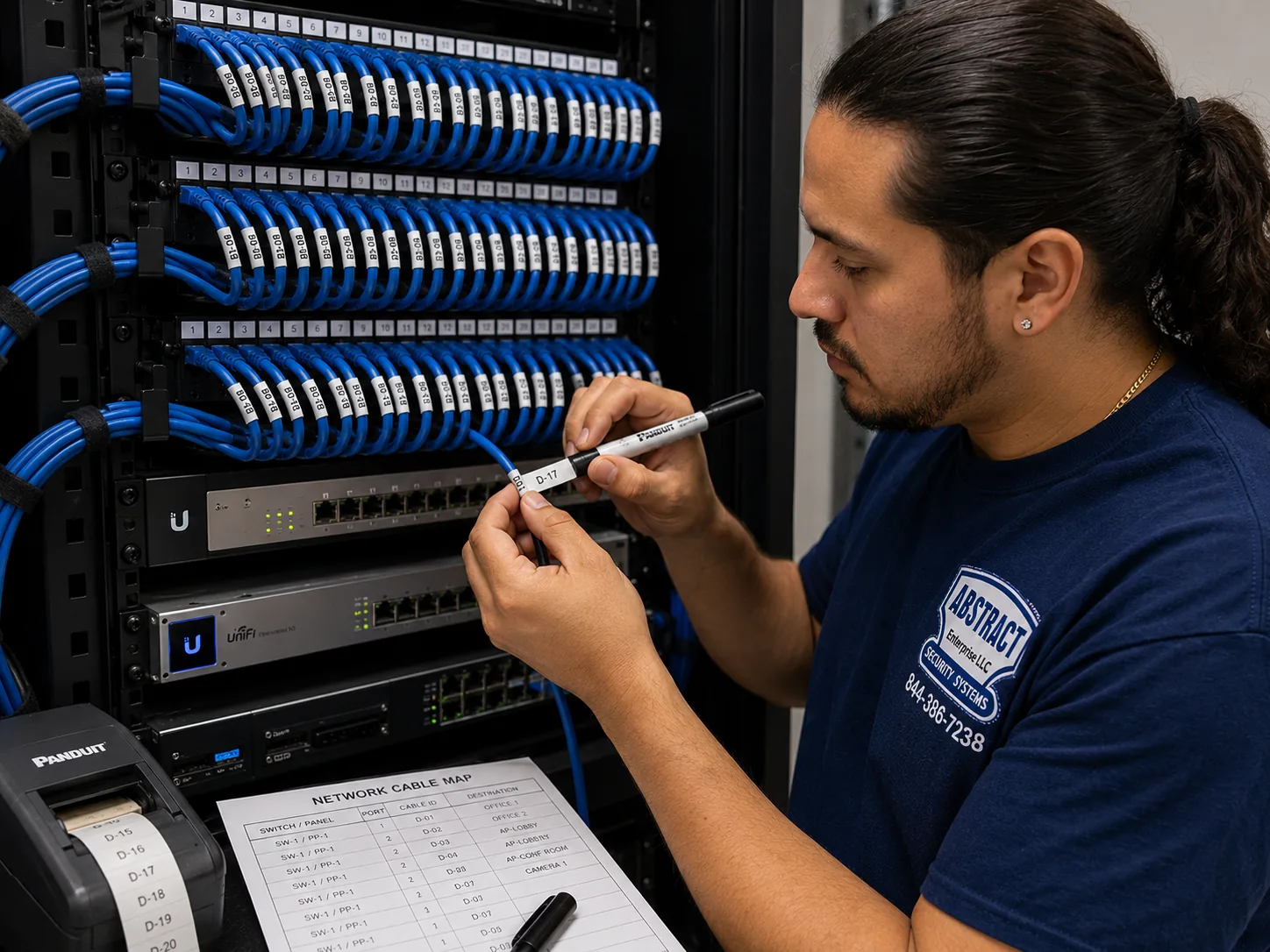
South Slope, Brooklyn security camera installation job-library photo: a technician printing cable labels at a patch panel beside a printed port map
Photo from our job library, not taken in South Slope: a technician printing cable labels at a patch panel beside a printed port map. In a South Slope row house the camera cables for the stoop, the street door, the hall and the back yard often meet on a cellar shelf near the meters, so each one is labeled at both ends and written onto a paper map the owner keeps with the deed.
South Slope Camera Quote
Tell us the street and cross street, the kind of building, and which door, stoop, lobby, car or counter worries you most

✅
Request Sent!
We'll call about your South Slope cameras the same business day.
25+
Years Experience
✓
Same-Day Estimates
100%
Licensed & Insured
4.7★
201 Google Reviews

Owner-operated since 2002 · Thousands of jobs completed · Booked within 2 hours

Security camera installation in South Slope costs from $850 for a four-camera package installed on our Brooklyn rate, with a recorder, two weeks of continuous recording and phone viewing included; 4K packages start at $1,292, and camera systems for stores and restaurants on Fifth, Seventh and Fourth Avenues run $1,500 to $5,000 and up. Every South Slope building is quoted in writing after photos or a walk-through, with each camera, mount, masonry hole, cable run, recorder and extra storage period on its own line, and a recorder you own carries no monthly fee from us. The jobs we see most here are a face camera at the street door with a second camera on the lock side of that door, a box camera aimed under the stoop, a camera that watches the car parked on the block, lobby and mailbox cameras for walk-ups and the newer buildings on Fourth Avenue, Landmarks-ready fronts for houses inside the 2012 historic district extension, and door, counter and back-room cameras for shops. Requests are booked within 2 hours, estimates are free, and the work is done under NYS license #12000287431. Call (347) 934-8335 or use the form.

  • A face at the street door and a view of the lock side of that door, because the local break-ins and lobby thefts in the record began with a forced lock
  • A written answer, before work starts, on whether a co-op or condo board, a landlord, a store lease or the Landmarks Preservation Commission has to approve each camera
  • Cable routed through the cellar, closets and stair hall of a lived-in house, with masonry holes drilled behind each camera base and sealed
The Neighborhood

Why South Slope Properties Need Security Camera Installation

South Slope is a neighborhood of street doors, and nearly every theft in its recent record that left a trail started at one. It is the part of Park Slope south of Ninth Street, running down toward the Prospect Expressway between Fourth Avenue and Prospect Park West, and it is patrolled by the NYPD's 78th Precinct along with the rest of Park Slope. Its side streets are lined with two- and three-story brick rows with stoops, older wooden houses on blocks such as 11th and 12th Streets that now hide under vinyl and aluminum siding, walk-ups with apartments over the shops on Fifth and Seventh Avenues, a former clock factory turned co-op on 12th Street, and the newer apartment buildings that rose on Fourth Avenue after the city rezoned it in 2003. A camera installer meets the same thing on almost every one of those buildings: a street door that opens onto a short vestibule or a lobby, a stoop with a second door tucked beneath it, and a block where cars park bumper to bumper on both curbs. The camera plan has to start there.

The local cases show why. In February 2014, Bklyner reported that a UPS driver left a package under the stoop of a house on 16th Street between Sixth and Seventh Avenues at noon, without knocking. A neighbor saw an unfamiliar man in the front yard around 12:15, and less than a minute later he walked off with the box. When officers from the 78th Precinct came, they told the neighbor a report "wasn't really going to do much" because nobody had a good look at the man, and they suggested the household "invest in a security camera" and ask for signatures on deliveries. The officers also mentioned that the precinct had added patrols on those blocks because of an increase in car break-ins. That one short article holds most of a South Slope camera brief: the box under the stoop, the face of the person who takes it, and the car at the curb.

The second pattern is the forced street door. Patch reported in February 2020 that police were looking for one man tied to a string of break-ins across Park Slope and Boerum Hill from December into late January, most of them in daylight. He damaged the lock at 66 Seventh Avenue at about 3:30 in the afternoon and left with $52,000 in jewelry; he broke an apartment door at 51 Fifth Avenue at 3 p.m.; he forced a door on President Street at about 12:10 p.m.; and he forced the front door of a home near Seventh Avenue and Seventh Street. All told, the pattern came to at least $62,000 in jewelry, $5,000 in electronics and $400 in cash. Police had one camera clip to show the public, which Patch described as "grainy surveillance video." In January 2021, Patch reported a man who broke the front-door lock of a home on St. Marks Place between Fourth and Fifth Avenues at about 10:30 p.m. and took a package from the lobby, then did the same on Sixth Street near Fifth Avenue at about 1:30 a.m. and rode off on a black bicycle. He was caught on surveillance video both times. Those addresses are north of South Slope, but the buildings are the same kind, the precinct is the same, and the lesson is the same: the camera that matters most is the one that shows a face and the lock at the moment the door gives.

The latest numbers make the case without any need for alarm. The 78th Precinct recorded 107 burglaries in 2026 through November 8, against 104 at the same point in 2025, an increase of 2.9 percent; over the latest four weeks the count was 14 against 11. Grand larceny auto, the line that covers stolen cars, was up 28.8 percent for the year, 76 against 59. Robberies were down 4.5 percent for the year, though the latest four weeks showed 14 against 6. Grand larcenies were down 11.3 percent and petit larcenies, the category that takes in most stolen packages, were down 5.1 percent, at 1,007 for the year. Over the longer run the change is dramatic: the precinct recorded 1,644 burglaries in 1990 and 119 in all of 2025, a drop of 92.8 percent. A South Slope block is a far safer place than it was a generation ago. What the current counts point to is where a camera earns its keep: the forced door, the lifted box and the car on the block are the cases that still happen, and they are the ones a clear recording can close.

South Slope facts that shape a camera installation

  • The precinct's own advice: after the 2014 box theft on 16th Street, 78th Precinct officers told the neighbor to consider a security camera, because without a good look at the man a report would not do much, per Bklyner.
  • Doors that give: the 2019–2020 pattern in Park Slope and Boerum Hill began with damaged locks and forced front doors, mostly in daylight, and was publicized with only grainy video, per Patch.
  • Cars on the block: grand larceny auto in the 78th Precinct rose to 76 in 2026 through November 8, from 59 a year earlier, up 28.8 percent, per NYPD CompStat.
  • A district line through the middle: the Park Slope Historic District Extension, approved unanimously on April 17, 2012, added about 600 buildings, generally from Seventh to 15th Streets between Seventh and Eighth Avenues, per CityLand.
  • Old wood under new skins: South Slope keeps rare wooden houses on 11th and 12th Streets, many layered with asphalt, aluminum or vinyl over the original clapboard, per Urban Omnibus and the Wooden House Project.
  • A newer avenue: Fourth Avenue was rezoned in 2003 from Warren Street to 15th Street, which brought the mid-rise apartment buildings whose lobbies and package shelves now need cameras, per Brownstoner.

A good share of South Slope owners who put in cameras also ask us about the door itself, because a camera records a forced lock but does not stop one. Many pair the street-door camera with a video intercom or an access control reader, so tenants and guests are let in by a known person, and the camera and the entry system share one recorder. For the rest of the borough, see our Brooklyn security camera installation page.

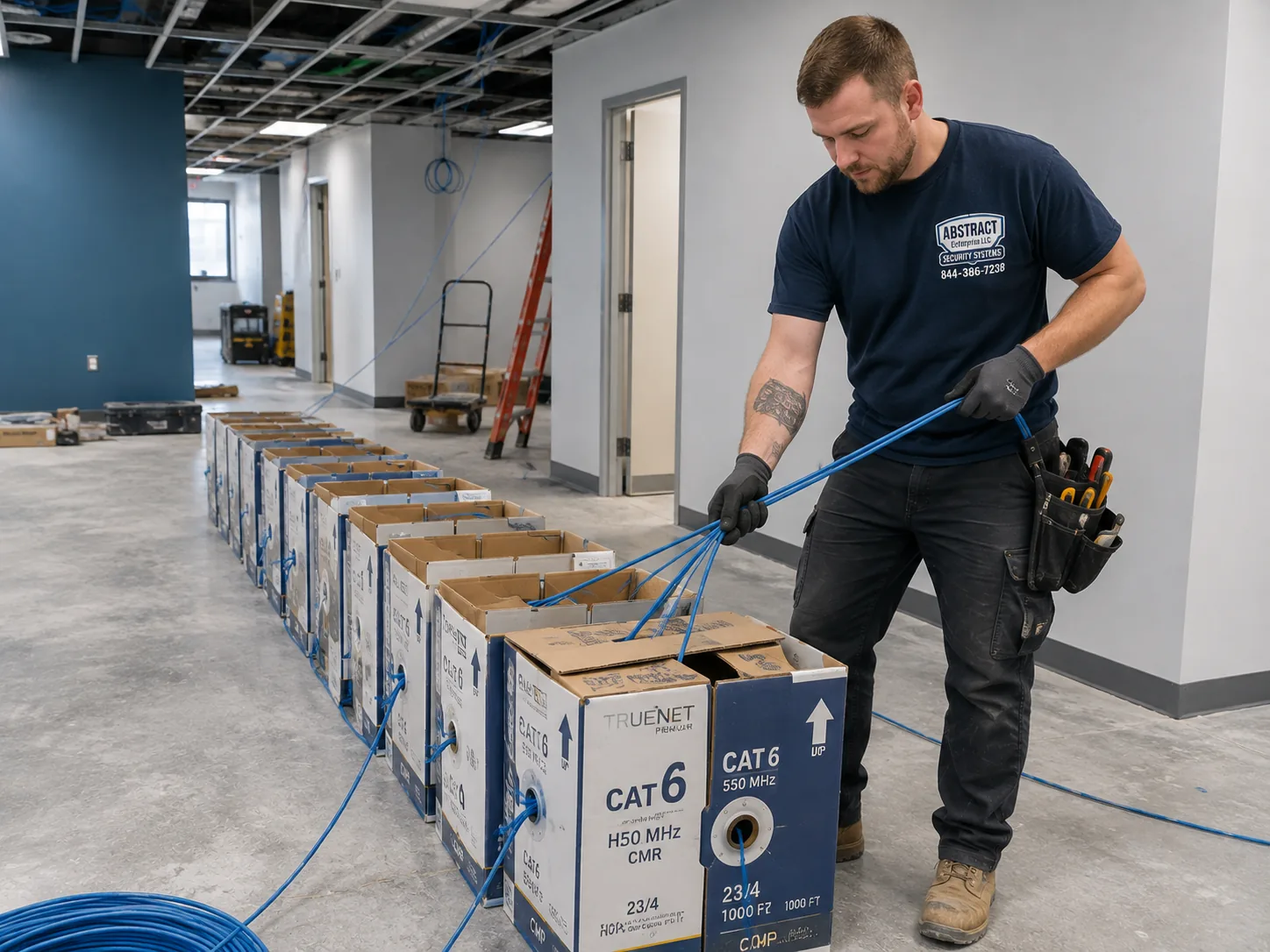
South Slope, Brooklyn security camera installation job-library photo: boxes of cable staged together for a multi-drop pull on a working premises
Photo from our job library, not taken in South Slope: boxes of cable staged together for a multi-drop pull on a working premises. On a South Slope walk-up with cameras planned for the street door, the vestibule, the under-stoop door, the stair, the cellar and the back yard, every run starts from one staging point in the cellar, so the tenants see the work in one place instead of in every hallway.

Lock Forced at the Street Door, a Box Taken From Under the Stoop, or a Car Window Broken on the Block? Fast Camera Help in South Slope

The urgent South Slope calls tend to arrive in one of three ways. A tenant or owner comes home to a street door that will not latch and scratches around the cylinder, and wants to know whether the hallway camera saw who did it. A household finds that the package the tracking page called delivered is not under the stoop, and the doorbell clip shows only the top of a hood. Or someone walks out to the car on Prospect Avenue or a numbered street and finds glass on the seat. If anyone was hurt or threatened, call 911 first and tell the officers you have video. Leave the recorder running; unplugging it to carry it to the station can cost you the clip. Note which camera and roughly what time, and if you know how, copy that stretch of footage to a USB stick or your phone. Recorders write over the oldest footage first, and on a system recording around the clock two weeks passes faster than most people expect. Call (347) 934-8335 and a technician is booked within 2 hours of your request to help save the clip, work out why the camera missed the face or the lock, or get a dead camera back. We do not promise a same-day installation, but we make sure the footage you already have is safe first.

The Street Door

Stoop, Under-Stoop Door, Vestibule, Lobby: Where a South Slope Camera Actually Goes

Most camera quotes for a house start with a doorbell on the door frame. On a South Slope row house with a stoop, that is usually the wrong first camera, because the door with the bell sits a full flight above the sidewalk, the box gets left under the stoop where the bell cannot see, and the man who takes it stands in the front yard. Here is how we break the front of a typical house or walk-up into the places a person actually stands, and what a camera has to record at each one.

The top of the stoop: a face, not a hood

A doorbell camera mounted beside a parlor-floor door looks down at the person ringing it, which is why so many clips show the crown of a cap and a pair of shoulders. A face shows when the camera looks at a person at close to eye level as they turn toward the door. On a stoop that usually means a small camera on the wall a little to one side of the door and only slightly above head height, aimed across the landing, or a camera in the vestibule looking out through the door glass when the outer door stays open by day. We frame it so the steps themselves are in view, because the person climbing toward the camera is the one whose face it gets.

Under the stoop: where the boxes actually land

The 16th Street box in the Bklyner story was left under the stoop, at the garden-level entrance, which is where carriers leave packages on a large share of South Slope houses because it is out of the rain and out of sight from the street. Out of sight cuts both ways. A camera on the top landing cannot see under the stoop at all. So the box camera goes below: under the stoop arch or just inside the areaway gate, aimed at the garden door and the spot where packages sit, low enough to record a face as someone bends to pick one up. Cable for it usually comes straight through the front wall of the garden floor or the cellar, so nothing runs down the stoop where it can be cut.

The front yard and the areaway gate: the approach

The neighbor on 16th Street saw the man first in the front yard. Between the sidewalk and the house most South Slope rows have a small yard or areaway behind a low iron fence and gate, and that strip is where a person decides whether to go for the box, the bike locked to the railing or the door. A wider camera set high on the facade or under the cornice line of the parlor floor, aimed down at the gate and the yard, records arrival: the time, the clothes, what the person carried and which way they came from. It does not need a perfect face, because the stoop and under-stoop cameras get that. It needs to show the whole approach in one frame.

The vestibule and the lock side of the door

The break-ins and lobby thefts in the record began when a lock gave way. A camera inside the vestibule or the ground-floor hall, aimed at the inside of the street door from the hinge side so it looks across the lock and the latch, records the moment a door is forced, kicked or pried, and shows whether someone came in on a resident's heels or because the door was left on the latch. In a walk-up, the same camera shows the mailboxes and the package shelf if the vestibule is laid out the usual way, with boxes on one wall and a shelf or radiator cover opposite. It is the camera that answers the question a landlord, an insurer and a detective all ask first: how did they get in?

The curb and the car

South Slope has very few driveways. Cars park on the street, usually within sight of the owner's front windows but not of any camera aimed at the stoop. With grand larceny auto in the 78th Precinct up 28.8 percent this year, more owners ask for a camera on the curb. A camera can watch a car on your side of the street, framed from the parlor-floor facade along the curb, and on a narrow numbered street it can often reach the far curb as well, at the cost of detail. What it cannot do is read every plate on a busy avenue at night. We set the expectation in writing before the camera goes up: what it will show at your car, and how far out it stops being useful.

The back of the house

Behind most South Slope rows is a yard, often with a one-story rear extension and glass doors onto it, and beyond the back fence are the yards of the next street. The back is quieter than the front here, but it is where a ground-floor window or a garden door can be tried without anyone on the sidewalk seeing. A camera on the rear wall aimed across your own yard toward the back fence covers it. New York's Civil Rights Law section 52-a lets a neighbor sue over a camera installed on neighboring property to record their backyard with intent to harass, annoy or alarm them, so we aim the yard camera at your yard and mask out anything of the neighbors' that cannot be framed away.

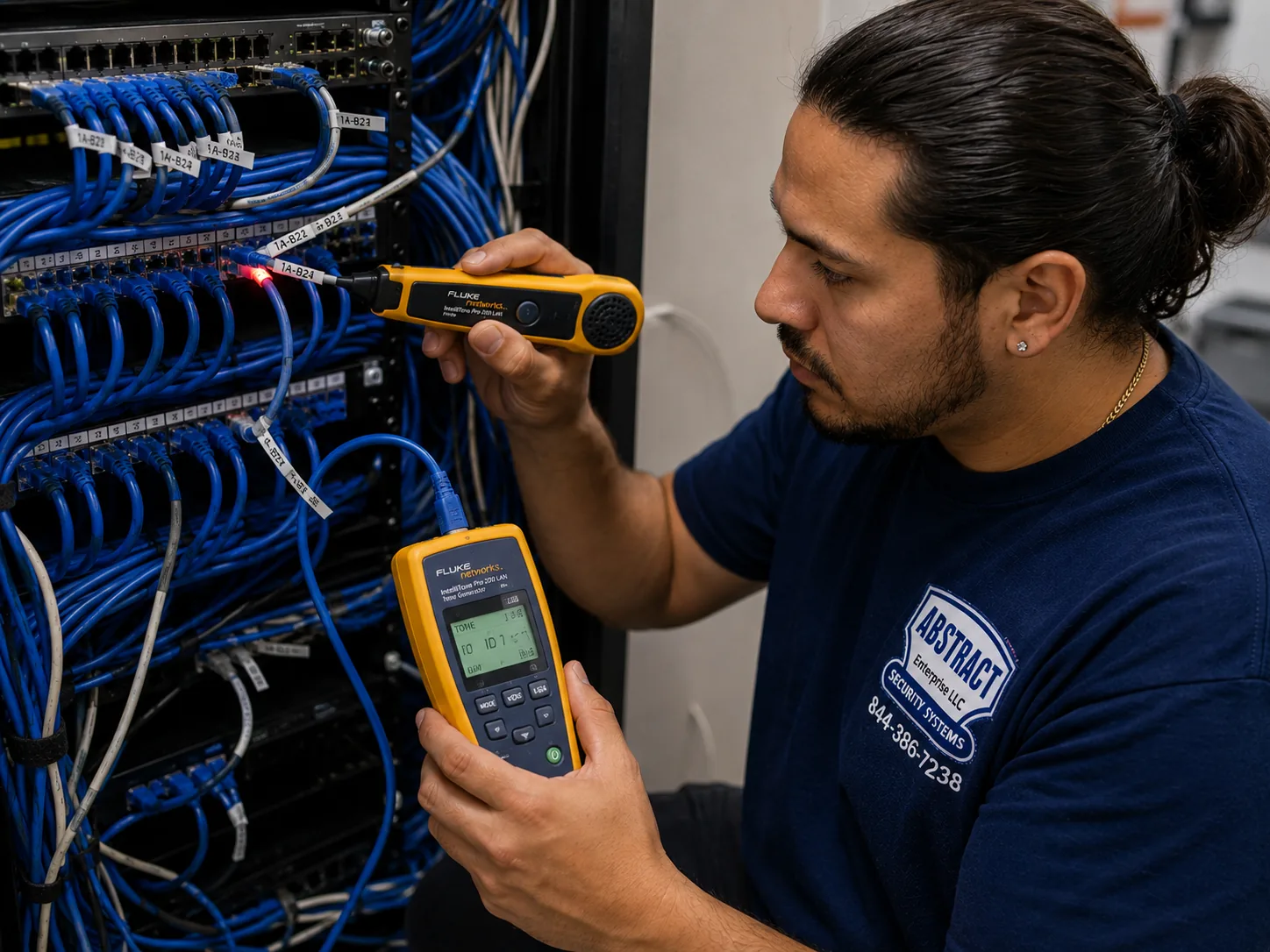
South Slope, Brooklyn security camera installation job-library photo: a technician tracing an unidentified cable run at a patch panel with a tone generator and probe
Photo from our job library, not taken in South Slope: a technician tracing an unidentified cable run at a patch panel with a tone generator and probe. Older South Slope houses often already carry a few unmarked cables from the cellar to the stoop or the front wall, left by an old alarm, an earlier camera or a long-gone phone line; tracing each one tells us whether it can carry a new camera or should come out.
What We Install

Security Camera Installation Services in South Slope

These are the camera jobs South Slope homeowners, landlords, co-op and condo boards and shopkeepers ask us for most. Each one is quoted in writing after photos or a walk-through, and a recorder system you own carries no monthly fee from us.

🚪

Street Door Face and Lock Cameras

A face camera at the top of the stoop or the lobby entrance and a second camera inside on the lock side of the door, so a forced entry shows both who and how.

📦

Under-Stoop Package Cameras

A low camera under the stoop arch or inside the areaway gate aimed at the garden door, where carriers leave boxes out of the rain and out of view of the street.

🚲

Front Yard, Gate and Railing

A wide arrival view from the facade over the areaway, gate and front railing, where bikes and strollers are locked and where a person stops before the door.

🚗

Curbside Car Cameras

A camera framed along your curb from the parlor floor or a second-floor window line, with a written note of what it shows at your car and where detail runs out.

🏢

Walk-Up and Lobby Systems

Vestibule, mailbox, package shelf, stair, cellar and roof door cameras for walk-ups and the Fourth Avenue mid-rises, with accounts for the owner, the managing agent and the super.

🏛️

Landmarks-Ready Fronts

Front cameras for houses and apartment buildings inside the 2012 historic district extension, spaced to the Landmarks count, finished to match and wired from behind the wall.

🏪

Shop, Bar and Restaurant Cameras

Door, register, bar, back-room and rear-door cameras for businesses on Fifth Avenue, Seventh Avenue, Prospect Avenue and Fourth Avenue, set for the hours after the gate comes down.

🔨

Renovation Pre-Wiring

Camera cable pulled to every planned position while a house is open for a gut renovation or a new rear extension, capped and labeled for the cameras to go on later.

🔧

Takeovers and Replacements

Systems left by a previous owner or a developer traced, tested and relabeled, cameras kept or replaced one at a time, and passwords moved to whoever owns the building now.

Building Specialists

Security Camera Installation for South Slope's Architecture

South Slope's buildings run from wooden houses older than most of the Slope to apartment buildings put up on Fourth Avenue after 2003, and the camera work changes with each. These are the types we plan for most often, drawn from the neighborhood's histories, the 2012 designation record and its building listings.

🏛️

Neo-Grec and Italianate Rows

The rows inside the 2012 extension, more than 200 of them in the simpler Neo-Grec style and the earliest from 1869 to 1875 in the Italianate, with stoops, cornices and flat masonry fronts.

🪵

Wooden Houses Under Siding

Rare frame houses on blocks such as 11th and 12th Streets, often wrapped in asphalt, aluminum or vinyl over the old clapboard, with no masonry to anchor into.

🧱

Two- and Three-Family Brick Houses

The plainer brick houses of the numbered streets below the district line, with one street door for two or three households and a door under the stoop.

🏬

Mixed-Use Avenue Buildings

Walk-ups on Fifth and Seventh Avenues with a shop at street level and a residential door beside it, where two businesses or two owners often share one facade.

🏗️

Fourth Avenue Mid-Rises

Apartment buildings from the years after the 2003 rezoning, with glass lobbies, package rooms, intercom panels that carry their own cameras, and a board or management company in charge.

⏰

Ansonia Courts and Loft Conversions

The former Ansonia Clock Company factory at 420 12th Street, a full block around an open courtyard and now a co-op of about 70 units, and other industrial buildings converted to homes.

Neo-Grec and Italianate rows: masonry fronts and the Landmarks count

The rows that the Landmarks Preservation Commission brought into the Park Slope Historic District in 2012 are the most demanding South Slope fronts for a camera and the easiest to wire. CityLand's account of the designation counts more than 200 rowhouses in the plain Neo-Grec style, with flat masonry fronts, incised lintels and heavy bracketed cornices, and an earliest row from 1869 to 1875 in the more ornate Italianate. Inside, nearly every one of these houses has a cellar that runs the depth of the house and a stair hall that stacks from the garden floor to the top, which gives camera cable an easy route. Outside, every hole is a hole in masonry the Commission cares about. We drill from the inside where we can, so the cable comes out directly behind the camera base, set anchors in plain brick or mortar rather than carved stone, and keep cameras off the cornice, the lintels and the ironwork. The front gets its count from the rules covered in the next section; the back of the house, the cellar door and the yard are planned alongside it so the whole system goes in at once.

Wooden houses under siding: nothing solid where you would expect it

The Wooden House Project, interviewed by Urban Omnibus, lists wooden houses at 233 to 243, 377 to 383 and 565 11th Street and at 337, 363 to 378, 382 to 388 and 457 12th Street, survivors from before the city's fire limits outlawed wood construction. Their founder, Elizabeth Finkelstein, called them "historic houses that just don't show their history," because most have been re-skinned with shingles, then asphalt, then aluminum or vinyl over the original clapboard. For a camera, that layered wall is the whole problem. A camera screwed through vinyl into nothing will loosen and let water behind the siding. We mount each outside camera on a block or a siding mount fixed through to the sheathing and framing, seal the cable entry behind it, and on many of these houses run the cable through the attic or a closet rather than the wall, because a wood house of this age often has no cellar route to the front at all.

Two- and three-family brick houses: one door, several households

Below 15th Street, outside the district line, the numbered streets include many plainer brick houses with two or three apartments, a street door at the top of the stoop shared by the upper floors and a separate door under the stoop for the garden apartment. When the owner lives in one unit and rents the others, the cameras on the shared door, the vestibule and the yard belong to the owner, and the tenants will reasonably want to know where they point. One recorder with separate accounts works well: each household sees the door it uses and nothing inside anyone's apartment. If the households would rather keep things fully apart, two small systems on one facade can be planned so neither looks into the other's windows.

Mixed-use avenue buildings: the shop door and the residents' door

On Fifth and Seventh Avenues, a typical building has a store at street level with its own glass front and a narrow residential door beside it that leads straight to the stair. Sometimes one owner holds both; often the store leases its space and the landlord keeps the upper floors. The store wants its door, register and back room; the landlord wants the residents' door, the stair and the mailboxes. Both can share one facade without staring into each other's entrances if the cameras are planned together. Cable for the upstairs cameras usually runs up the stair hall or a shaft beside it; cable for the store stays in the store's ceiling and cellar, so neither party needs the other's keys to service its own system.

Fourth Avenue mid-rises: lobbies, package rooms and an intercom with its own camera

The city rezoned Fourth Avenue from Warren Street to 15th Street in 2003, and many of the avenue's newer apartment buildings went up in the years after. Buildings of this kind usually have a glass lobby, a package room or shelves, a video intercom panel at the street door with a camera built in, a trash room, a bike room, a roof door and, in some, a garage or a loading door on a side street. The intercom's camera is not a security camera in any useful sense: it wakes up when someone presses a button and rarely records. We add a camera on the inside of the lobby looking at the doors, one in the package room or at the shelves, and cameras at the secondary doors, feeding a recorder in the building's telecom or super's room, with the board or management deciding who has access.

Ansonia Courts and loft conversions: courtyards and long corridors

Brownstoner's history of 420 12th Street describes the Ansonia Clock Company factory as built in 1880 and 1881 by the architect Samuel Curtiss Jr. after the original 1879 plant burned, filling the block between 12th and 13th Streets and Seventh and Eighth Avenues around an open courtyard, and residential since 1982. It is now a co-op of about 70 units, inside the 2012 historic district extension. A building like this has several entrances, a courtyard visible from apartments on every side, and long interior halls. The camera plan follows the doors and the courtyard gate rather than every corridor, and courtyard cameras are framed so they show who enters the courtyard without looking into anyone's windows across it. In a co-op, all of that is the board's decision, and we work from the board's written policy on access.

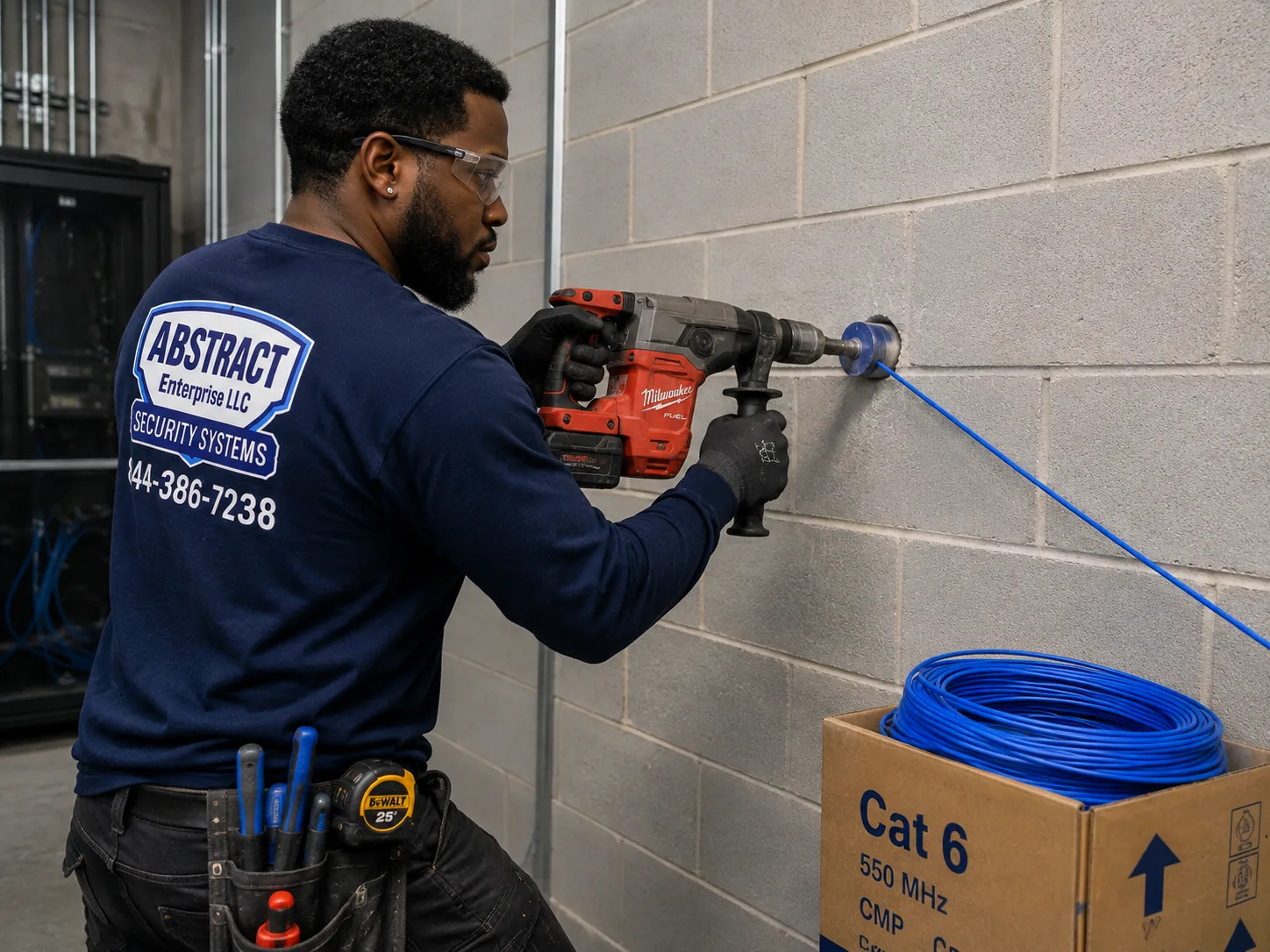
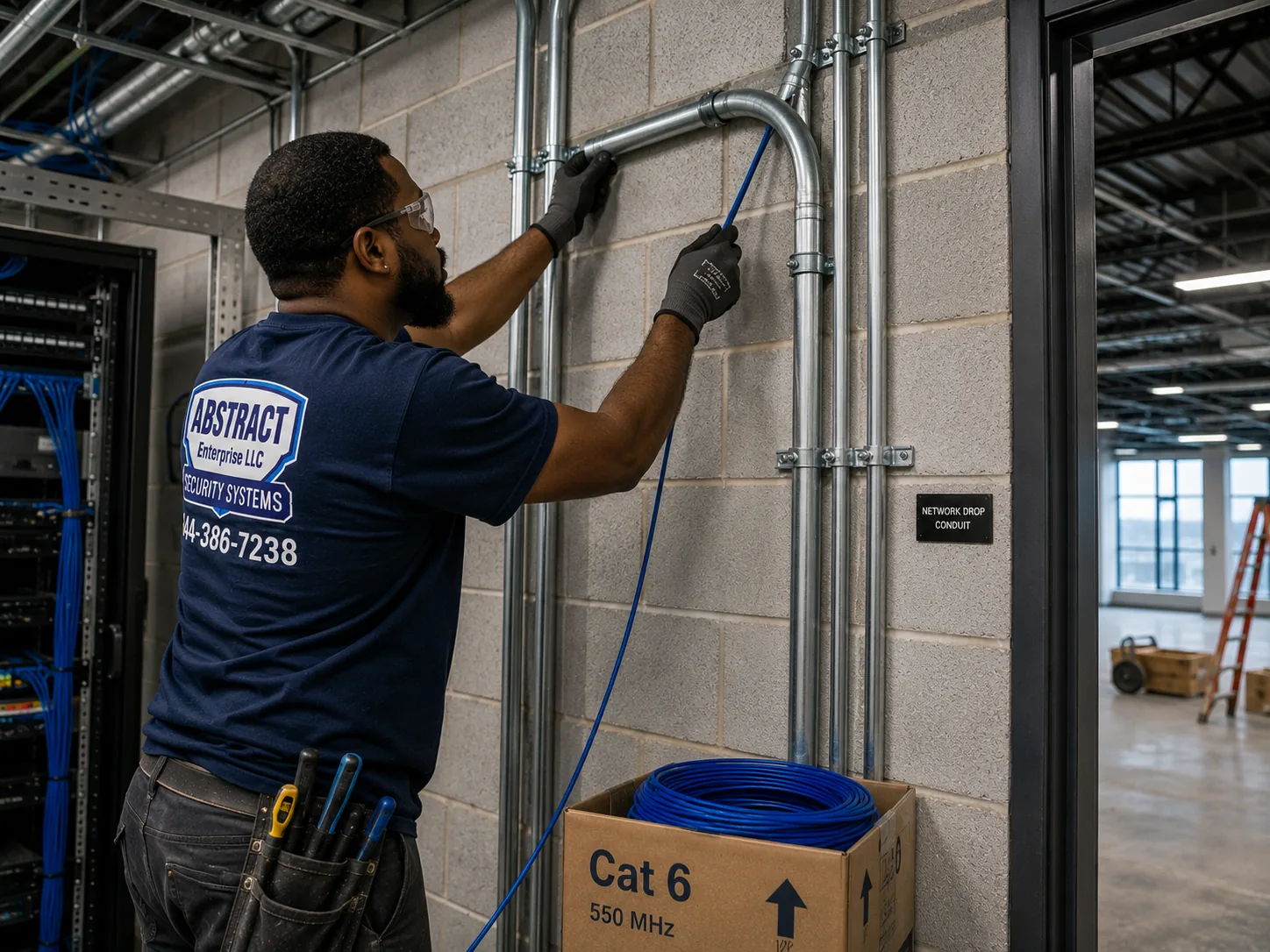
South Slope, Brooklyn security camera installation job-library photo: a technician core drilling a block wall to carry cable through to a network room
Photo from our job library, not taken in South Slope: a technician core drilling a block wall to carry cable through to a network room. The same kind of drilled, sleeved and sealed hole carries camera cable from a Fourth Avenue lobby into the building's telecom room, or through a row house's cellar wall to the camera under the stoop.
Commercial Security Camera Installation

Business Security Camera Installation in South Slope

South Slope's businesses are mostly small: restaurants, bars, cafes, wine shops, groceries, salons and service businesses, usually in an older building with apartments upstairs and a cellar below. That shapes a camera plan as much as the trade does. These are the corridors we work on and what tends to matter on each.

🍽️

Fifth Avenue

The neighborhood's main restaurant and shopping street, served by the Park Slope Fifth Avenue Business Improvement District, where the 2016 break-ins at Aji Sushi, Postmark Cafe and Acme Wine and Spirits were reported.

☕

Seventh Avenue

Cafes, shops and services on the ground floors of walk-ups, with the residential door beside the store door and the district line running along part of the avenue.

🏗️

Fourth Avenue

Ground-floor commercial space in the newer apartment buildings, alongside older commercial and service buildings on a wide, fast avenue.

🚇

Prospect Avenue

Shops and takeout counters near the Prospect Avenue R station at Fourth Avenue, with steady foot traffic to and from the train.

🍺

Bars and Late Kitchens

Businesses on Fifth Avenue that stay open late, where the risky hours are the last hour of service, the walk-out with the cash, and the empty hours after the gate comes down.

🏫

Studios, Offices and Small Schools

Upstairs offices, music and fitness studios and small education programs whose clients share a street door with the apartments above.

Fifth Avenue: what the 2016 break-ins teach a store

In March 2016, Patch reported that at least three businesses on Fifth Avenue, Aji Sushi, Postmark Cafe and Acme Wine and Spirits, had been broken into within a week, with one location hit twice. The 78th Precinct's commander called it a worrying trend at the precinct community council, and said surveillance video was helping police identify the people responsible. Mark Caserta, who led the Park Slope Fifth Avenue Business Improvement District, named the three businesses. For a Fifth Avenue store, the useful takeaway is about the hours. A break-in happens when the store is dark, the gate is down and nobody is watching a screen, so the cameras that matter are the one inside the front door looking at the entrance from behind the gate, one in the back room or at the rear door, and one on the register or the safe. All of them need to see in the dark of a closed store, which means their own infrared or a small light left on, and they need to record continuously, because a motion trigger can miss the first seconds of a break-in when the camera is waking up.

Restaurants and bars: kitchens, cellars and the closing walk

A restaurant on Fifth Avenue usually has more doors than it looks: the front, a cellar hatch or a sidewalk door for deliveries, a back door to a yard or an alley, and a cellar where stock and the walk-in live. Kitchen grease and steam film a lens over a few weeks, so we keep cameras out of the kitchen line and put them at the doors, the bar and the register, and on the cellar stair. For a bar, the last hour matters: the cash count, the staff walking out together and the gate going down. We put a camera on the spot where the gate locks and another on the bar's register from behind, set to show hands and money, and set the alerts to start only after the last person leaves.

Seventh Avenue: two doors on one front

On Seventh Avenue, a store's camera and the building's camera often have to share a few feet of facade. The landlord wants the residents' door and the stair; the store wants its own glass door, the counter and the stockroom. Two systems can sit on one front if the cameras are planned so each frames its own door, with privacy masking on the recorder to black out the other entrance. Where part of Seventh Avenue lies inside the 2012 district extension, any camera on the storefront or the facade goes through the Landmarks Commission, the same as a house. Cameras mounted inside the store, looking out through the glass, keep the facade clear and still record a face at the door if they are set for the glare of the window.

Fourth Avenue and Prospect Avenue: wide streets and the train

Fourth Avenue is far wider than the side streets, with fast traffic and long blocks, so a storefront camera there sees a lot of street and very little detail at the far side. We set storefront cameras to the store's own door and the stretch of sidewalk immediately outside it, and leave the avenue to the city. Near the Prospect Avenue R station the issue is volume: a steady stream of people walking past the door all day. A door camera set a little above head height just inside the entrance, aimed at the doorway, records everyone who comes in singly even when the sidewalk outside is busy, and person detection keeps the alerts to the door rather than the passing crowd.

Rules and limits for business cameras in South Slope

License. New York's General Business Law section 69-m requires anyone in the business of installing security or fire alarm systems to be licensed; Abstract Enterprises Security Systems installs under NYS license #12000287431 and carries insurance, and you should ask any installer for both. Restrooms and changing areas. No camera we install views a restroom, a changing room or a staff changing area, and we will not install one that does. Sound. The cameras we install record video; we leave audio recording off unless the owner has taken advice on it. Landmarks. A storefront or facade inside the 2012 district extension needs a Landmarks permit for exterior cameras, as a house does. Sharing with police. The city's business camera program, launched citywide in 2024 on the Fusus platform, is voluntary and, in the words of the police commissioner at the launch, "completely free for the business"; stores can join through the NYPD or a business improvement district, and nothing about our installation signs you up. Public property. We do not mount private cameras on street trees, light poles, subway entrances or sidewalk sheds.

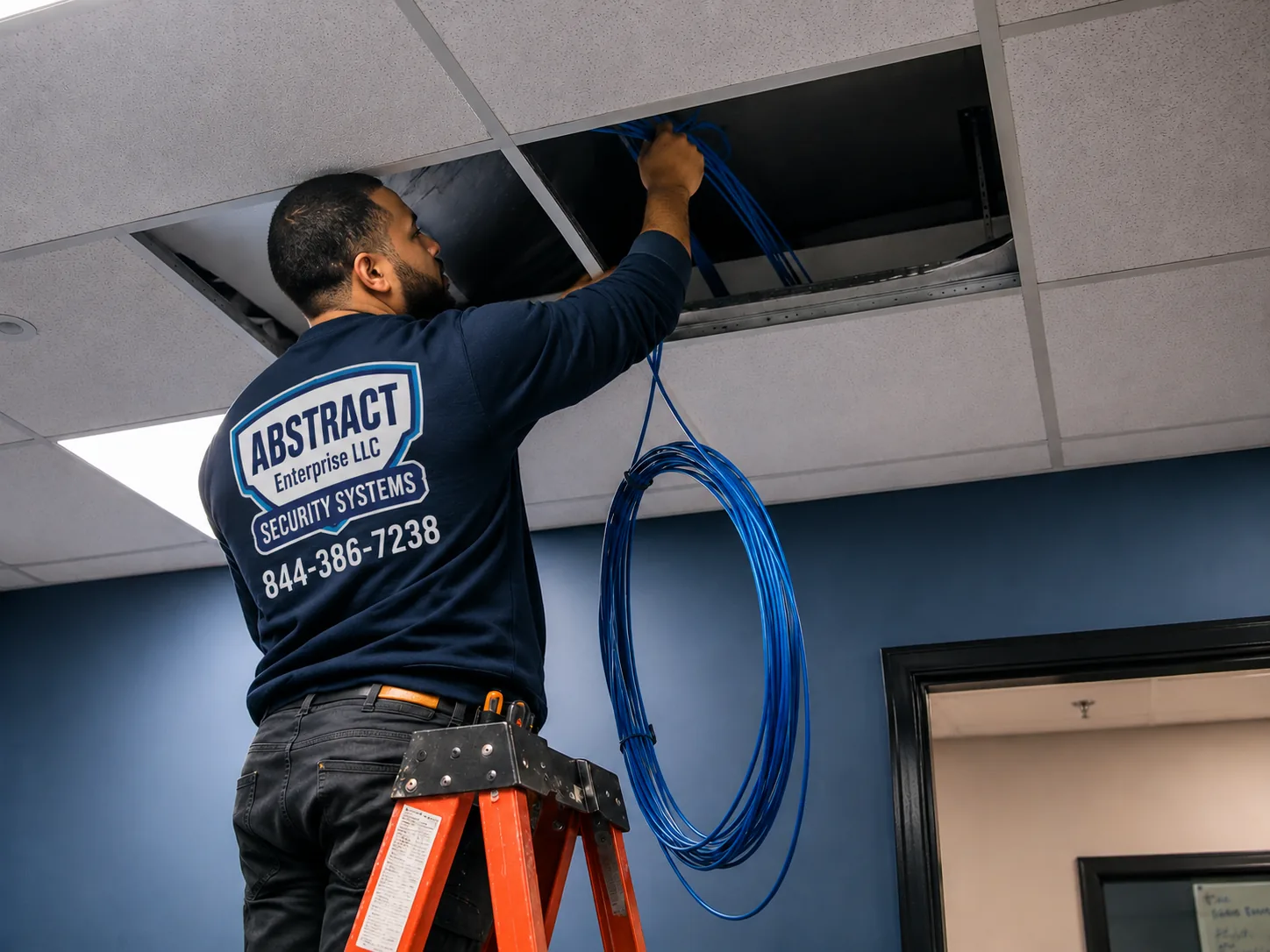
South Slope, Brooklyn security camera installation job-library photo: a technician feeding cable through a ceiling in an occupied commercial space
Photo from our job library, not taken in South Slope: a technician feeding cable through a ceiling in an occupied commercial space. A cafe or wine shop on Fifth or Seventh Avenue usually stays open while its cameras go in, so cable for the door, register and back-room cameras is fed above the ceiling one section at a time, before the lunch rush or after close.
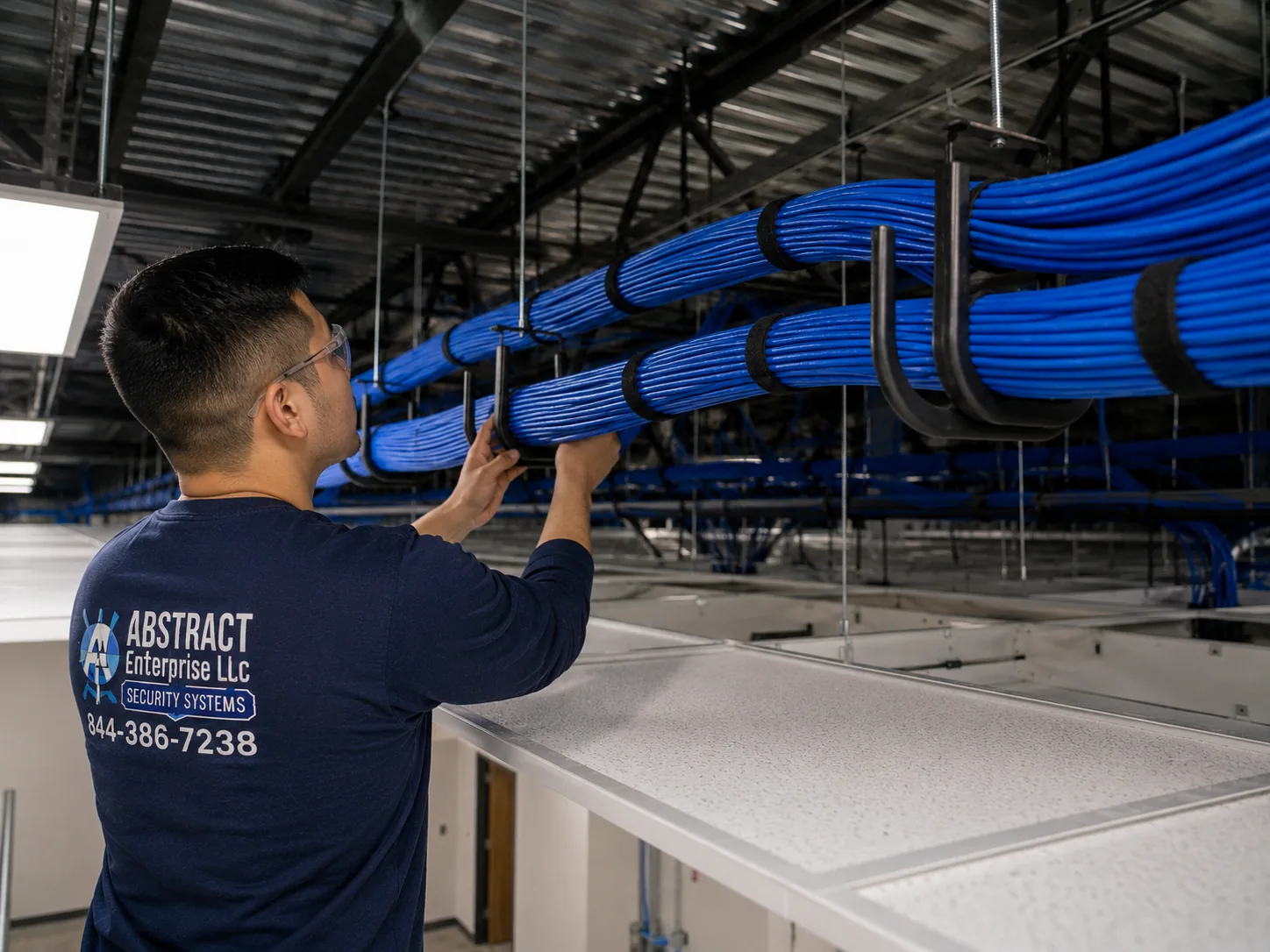
South Slope, Brooklyn security camera installation job-library photo: J-hooks carrying dressed cable bundles across a commercial ceiling
Photo from our job library, not taken in South Slope: J-hooks carrying dressed cable bundles across a commercial ceiling. In the cellar of a Fourth Avenue building or a large Fifth Avenue restaurant, camera cable shares the ceiling with pipes, sprinkler lines and other trades, so it rides on its own hooks, bundled and labeled, instead of lying across ducts.
Historic District

Cameras Inside the 2012 Park Slope Historic District Extension: What the Landmarks Rules Allow on a South Slope Front

On April 17, 2012, the Landmarks Preservation Commission voted unanimously to extend the Park Slope Historic District south and west, adding about 600 buildings. CityLand described the extension as generally bounded by Seventh Street on the north and 15th Street on the south, between Seventh and Eighth Avenues, plus the buildings on 15th Street between Prospect Park West and Eighth Avenue on the northwest side of Bartel-Pritchard Square and a group facing Prospect Park West between Ninth and Tenth Streets. That puts a large part of upper South Slope, from Tenth to 15th Street between Seventh and Eighth, inside a city historic district. Commissioner Michael Devonshire, who lived in the district, said he was "turning inside out with joy" that the area would be protected. For a homeowner who wants cameras, the extension means one thing: a camera on the street face of the house needs a permit from the Commission. That is less of an obstacle than it sounds, because the Commission's own permit guidebook spells out what its staff can approve.

How many cameras the front can carry

Chapter 11 of the guidebook says staff can approve security cameras that meet its criteria. Cameras "must be well spaced to avoid a cluttered, haphazard appearance," and on small residential or commercial buildings "no more than two security cameras can be installed for every 25 feet of street frontage." Large residential, commercial and institutional buildings get up to three per 25 feet. Many South Slope row houses are 25 feet wide or less, so in practice the front of a single house of that width is planned around two cameras. That fits the plan we already favor: one at the top of the stoop for faces and one under the stoop for packages, with the vestibule camera inside the house, where the count does not reach.

Where the cable can go

The guidebook is strict about wiring on the outside of a historic wall. Conduit "must be concealed by going through plain masonry or wall cladding behind the installation," and only where that is impossible may staff approve about ten inches of visible conduit. On a South Slope row, that means drilling through a plain brick or mortar area directly behind the camera base and carrying the cable inside to the vestibule, the garden floor or the cellar. The guidebook also says equipment cannot be placed on or in front of a primary facade unless no other option exists, which is one more reason to look first at the underside of the stoop, the inside of the vestibule and the areaway before the face of the house.

What the camera should look like

The guidebook illustrates dome-type cameras "finished to match surrounding materials." On a brownstone or brick front, that usually means a small dome or turret in a color that disappears against the stone or the trim, rather than a long bullet camera on a bracket. The application asks for the manufacturer's cut sheet for each camera; we prepare those along with photos and a marked-up picture of the facade showing each position. The guidebook lists in-kind replacement of an existing security camera as not needing new elevation drawings, which keeps a like-for-like swap simpler later.

Where the district stops

Much of South Slope is outside the city district: most houses south of 15th Street, the blocks between Fourth and Seventh Avenues below the old district, and Fourth Avenue itself. The National Register's Park Slope Historic District is a separate federal listing and, by itself, does not put a house under the city Commission's permit rules. Before we plan a front, we look up the exact lot in the Commission's records, because the line runs down the middle of some blocks and the house across the street can be under different rules from yours.

Lobbies & Packages

Forced Locks and Cut-Open Boxes: Camera Plans for South Slope Walk-Up and Mid-Rise Lobbies

The lobby is where a South Slope apartment building's camera system pays for itself or fails. Two kinds of case appear in the local record, and they ask different things of a camera.

The broken lock

The man Patch described in January 2021 broke the front-door lock of a home on St. Marks Place at night and took a package from the lobby, then did the same on Sixth Street near Fifth Avenue at 1:30 in the morning. He was caught on video both times. For a building owner, the first question after a case like that is whether the door was forced or left on the latch, because the answer decides the repair, the insurance claim and any conversation with tenants. A camera inside the vestibule, aimed back at the street door from the hinge side, answers it in a few seconds. A second camera aimed at the mailboxes and the package shelf shows what was taken and how long the person stayed.

The lobby where people take their time

In August 2019, CBS New York reported that three people walked into a Park Slope apartment building's lobby, cut open packages, took clothing worth close to $500 and pushed past a building employee on their way out; the video showed one of them holding what appeared to be a knife, and they left a box cutter on top of the boxes. One resident, Theresa Ocol, said management asked residents to keep track of who comes and goes. Cameras recorded all of it, which is what gave police something to work with. What a camera cannot do on its own is make a stranger feel watched. In a lobby where packages pile up, a camera placed where people can see it, at the doors and above the shelf, and in some buildings a small screen in the lobby showing the live picture, changes behavior at the shelf in a way a hidden camera does not.

Who sees the lobby footage

Tenants who lose a package usually want to see the video. Brick Underground's Realty Bites column put it plainly in December 2023: a landlord is not obligated to let tenants view building footage, though a police request or a court order can require it. Jennifer Rozen of the Rozen Law Group suggested tenants instead "advocate for the landlord to install a better lock/intercom system or a package locker." In a co-op or condo, FirstService Residential advises boards to delegate access to the property manager, keep a log of who viewed what, and not hand copies to residents without board and legal approval; "Limiting access protects the privacy of residents and helps prevent potential misuse," said Christina Forbes, president of its Manhattan condo and co-op division. We set up the recorder to match whatever policy the owner or board adopts, with accounts that can see only what each role needs.

How long the lobby keeps its video

FirstService Residential notes that building footage is commonly kept for 30 to 90 days, depending on building size and storage. Our standard four-camera systems include two weeks of continuous recording, with one-time upgrades for longer storage; a lobby system with more cameras is sized on the quote to the number of days the board chooses. The longer a package room keeps its video, the more likely a tenant who finds out late that a box went missing can still find the clip.

South Slope, Brooklyn security camera installation job-library photo: a technician running cable into EMT conduit beside a telecom room in an industrial building
Photo from our job library, not taken in South Slope: a technician running cable into EMT conduit beside a telecom room in an industrial building. In the cellar or garage level of a Fourth Avenue building, camera cable to the package room, the bike room and the loading door runs in metal conduit like this, so carts, bikes and storage cannot damage it.
Field Notes

Field Notes: Standing on the Sidewalk Before We Look at the Cellar

This describes how we approach South Slope houses and walk-ups, not one particular job. We start on the sidewalk across the street, because that is where a stranger first sees the house. From there we note what is visible: whether a box under the stoop can be seen from the curb, whether bikes are locked to the front railing, whether the street door has glass that shows the hall, and whether the house sits inside the 2012 district line. Then we cross, climb the stoop and stand where someone ringing the bell would stand, and ask the owner which way most visitors come from. A camera that faces the direction people arrive from records faces; one that faces the way they leave records backs.

Only after that do we go inside and down to the cellar, to find the route: where the internet comes in, where a recorder can sit out of sight of the street door, and how cable can reach the stoop and the under-stoop door without crossing a finished room. We ask the owner to send a photo of the stoop after dark with the lights as they usually are. Then we write the quote, one line per camera, each with its job beside it: stoop face, under-stoop box, vestibule lock side, curb, yard.

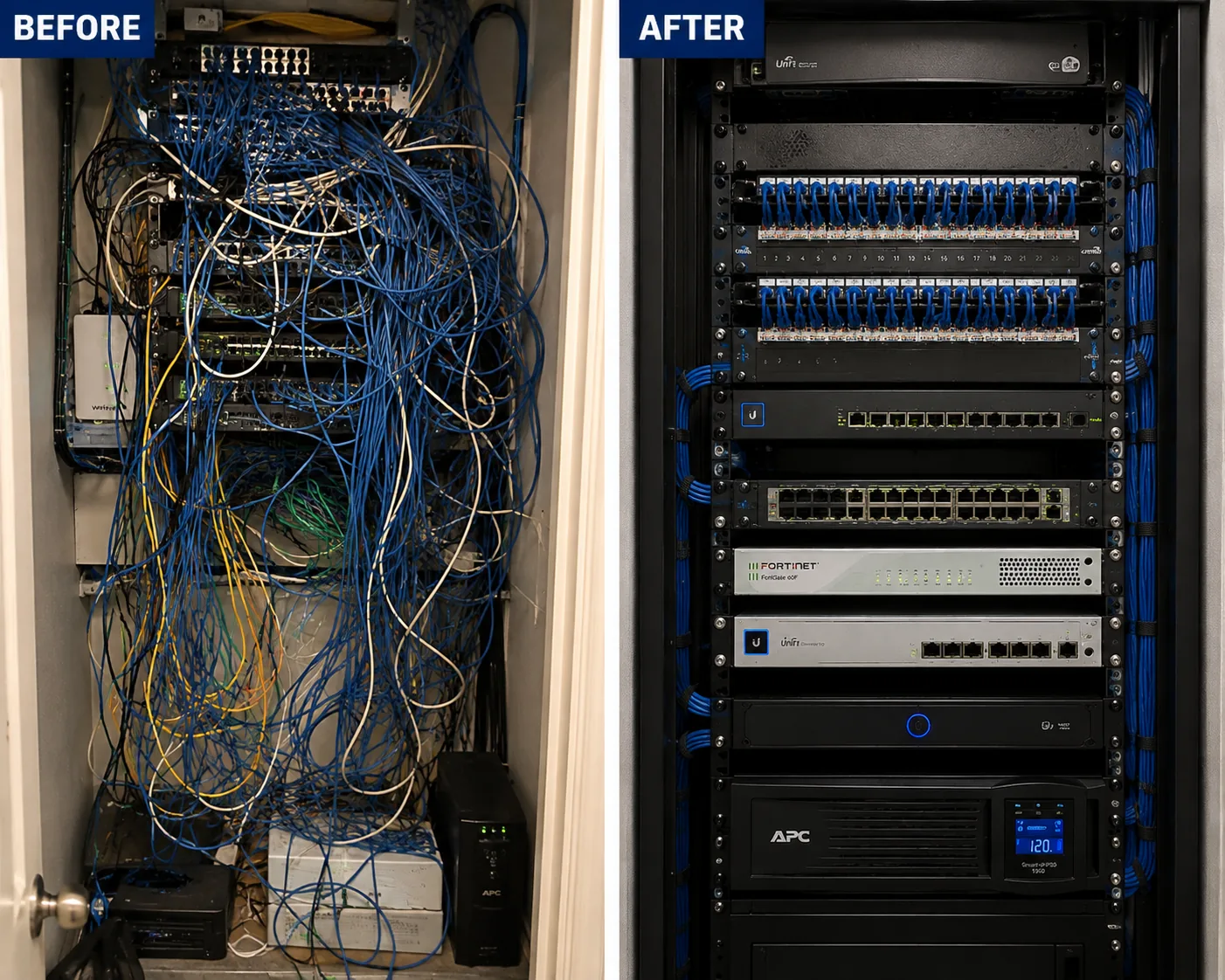
South Slope, Brooklyn security camera installation job-library photo: before-and-after views of a network rack, an unlabelled tangle rebuilt into a dressed and identified rack
Photo from our job library, not taken in South Slope: before-and-after views of a network rack, an unlabelled tangle rebuilt into a dressed and identified rack. When a South Slope house or walk-up changes hands, the old recorder, modem and power supplies are often found on a cellar shelf in much the same state, and sorting them out like this is often the first morning of a takeover.
Your Questions Answered

Security Camera Installation in South Slope: Questions Answered

When the box disappeared from under the stoop on 16th Street, officers said a report would do little without a good look at the man. In camera terms, what is a good look?

A face, front-on or nearly so, large enough in the frame that someone who knows the person would recognize them, with a time stamp that matches the clock. That usually takes a camera within a few feet of where the person bends or stops, at roughly head height, rather than one high on the facade covering the whole yard. Under a stoop, the box camera sits low under the arch or inside the gate, aimed at the garden door, so the face is in frame at the moment the box is lifted. A wide camera from above still helps by showing which way the person came and went.

The Park Slope burglar who forced front doors in daylight in late 2019 was publicized with only grainy video. What separates grainy from usable at a South Slope front door?

Mostly distance, angle and light, not the number on the box. A 4K camera set high and wide still renders a face at the door as a handful of pixels, and a camera looking from a shaded vestibule toward a bright street can turn the face into a silhouette. Usable footage comes from a camera close to the door, set for the person rather than the sky behind them, and saved at the recorder at full quality rather than a reduced stream to save space. We check every door camera on site at midday as well as after dark before we leave.

Our walk-up's packages sit on a shelf inside the inner door. If someone breaks the street-door lock the way the St. Marks Place thief did, which camera shows how they got in?

The one inside the vestibule, aimed back at the street door from the hinge side so it looks across the lock and latch. It shows whether the door was forced, kicked or simply pushed because it had not latched, and it catches the person's face as they step in. The package shelf gets its own camera, aimed down at the shelf from the opposite wall, so the recording shows which boxes were taken. Together they answer how they got in and what they took, which is what an insurer, a landlord and a detective each ask first.

The lobby thieves in the 2019 CBS New York report took their time cutting open boxes in front of a camera. Would a screen in our lobby showing the live picture have changed anything?

It can, in a lobby where people linger. A visible camera with a small live-view screen beside the mailboxes tells anyone at the shelf that they are on camera right now, and some people walk away. It will not stop someone determined, and it only works if the camera is recording as well as displaying. We mount the screen out of reach, keep the recorder in a locked room so the screen is the only thing in the lobby, and leave the decision to the owner or board, since some buildings would rather keep the picture private.

Our wooden house on 11th Street has no proper cellar under the front, only a crawlspace. Where does the recorder go?

Usually upstairs, in a closet or a cabinet near where the internet comes in, with a small battery unit beside it. A crawlspace is damp and hard to reach, both bad for a recorder that has to run every day and be reachable when you need a clip. From a closet, cable for the front cameras can drop through the floor to the crawlspace and run to the front wall, or go up through the attic and come down behind the eave. We trace the route on the walk-through and price it on its own line.

Ansonia Courts has a courtyard nobody can see from 12th or 13th Street. Do cameras facing into the courtyard need a Landmarks permit the way a street-front camera does?

The guidebook's camera count is written around street frontage, and its rule against equipment on a primary facade is about the visible street face, so a courtyard camera is a different question from a front one. The building is inside the 2012 district extension, though, so we ask the Commission's staff before mounting anything on the exterior, including the courtyard walls, and include the answer in the board's quote. In a co-op, the board also decides what each courtyard camera may show, and we frame them away from apartment windows.

Car thefts in the 78th Precinct are up 28.8 percent this year. Can a camera on our house watch our car parked across the street?

On a narrow numbered street, often yes, with less detail than on your own curb. A camera from the parlor-floor facade can usually show the car across the street and anyone walking to it, though at night the far side is darker and faces are harder. For the car itself, the best view is your own side of the street, framed along the curb from a window line or the facade. We tell you in writing which spots the camera covers well and which it does not, because a car parks wherever there is space.

Our Fifth Avenue wine shop closes at night with a roll-down gate. After the 2016 break-ins on the avenue, which camera should record the hours the store is dark?

A camera inside, just behind the front door, aimed at the door and the gate from the inside, records anyone who gets past the gate and the glass; a second camera in the back room or at the rear or cellar door covers the other way in; and a third over the register or the safe shows what they went for. All three need their own infrared or a small light left on, and should record continuously after close. The 2016 cases were followed with surveillance video, which is the point: footage from inside a dark store is what identifies people.

We keep bikes in the front hall of our two-family because there is nowhere else. In the 2015 Sterling Place case the thief kicked in the door glass. Can a hall camera see that coming?

It can record it clearly. A camera at the back of the hall, aimed toward the street door, shows the glass breaking, the face of the person reaching in and the bike leaving. Police in that case warned owners not to leave bikes in plain view inside buildings, so the camera works best alongside a frosted film on the door glass and a lock that cannot be reached through it. If the hall is shared with a tenant, the camera faces the door and the bikes, not the tenant's apartment door.

The 78th Precinct's robberies over the last 28 days were 14, against 6 a year earlier. Should our Prospect Avenue shop change its camera plan because of a short spike?

Not the plan itself, but it is a good reason to check the cameras you have. For the year, robberies in the precinct are down 4.5 percent, so the four-week jump may be short-lived. What a robbery asks of a store camera is a clear face at the counter at the moment of the demand and a view of the door as the person leaves, in daylight as well as at night. If your counter camera shows the top of heads or a silhouette against the window, fix that first; it matters whatever next month's numbers say.

Our Seventh Avenue shop and the apartments above have the same landlord. Is one recorder for both simpler, or should the store have its own?

If one owner holds the building and runs the store, one recorder with separate accounts is usually simpler: the store manager sees the store cameras, the landlord sees everything, and tenants see nothing inside the shop. If the store is a tenant, give it its own recorder, because a lease ends and the next tenant should not inherit the previous one's footage or passwords. We can mount both sets of cameras in one visit and plan the facade so they do not overlap.

Our house backs onto the gardens of the next street over. Can a camera watch our rear extension's glass doors without recording the neighbors' yards?

Yes. The camera goes on the rear wall above or beside the extension, aimed down at the glass doors and across your own yard, with the frame stopped at your back fence. Anything of the neighbors' that cannot be framed out is blacked out on the recorder with a privacy mask, so it is never recorded at all. New York's Civil Rights Law section 52-a gives neighbors a claim over cameras aimed at their backyard to harass or alarm them, and a careful frame avoids the argument.

Our brownstone stoop still has its original cast-iron railing. Could the stoop camera clamp to the railing so nothing is drilled into the stone?

We avoid it. Cast iron can crack when a clamp is overtightened, a camera on a railing is easy to knock or twist, and the cable would have to run along the ironwork to reach the house. Inside the district, the Commission's guidance on attaching entry equipment names mortar joints, plain masonry, wood or metalwork and steers away from cast iron and decorative surfaces, which describes most original stoop railings. The cleaner choice is a small camera on a plain section of wall beside the door or inside the vestibule, with the cable drilled straight in behind it.

We are gutting a row house on 14th Street and adding a rear extension. When in the job should camera cable go in?

Right after rough electrical and before insulation and drywall, once the window and door positions are final. We pull cable to every likely camera spot, front, under the stoop, vestibule, rear wall, extension doors and roof door, plus a spare or two, and bring it all back to one closet where the recorder will live. Each end is labeled and capped. Pulling it then takes a fraction of the time it takes later, and you decide on the cameras themselves after the move-in.

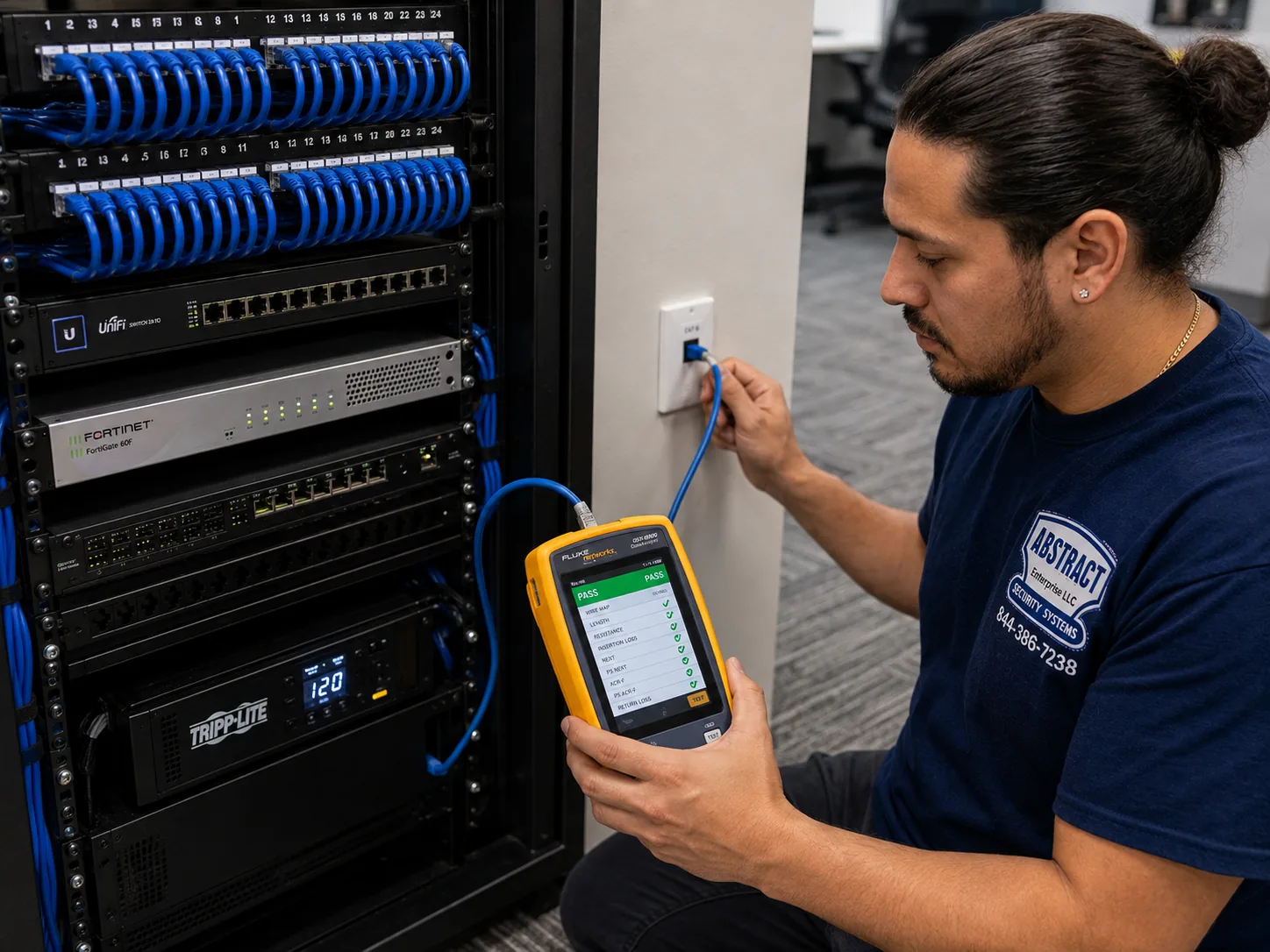
South Slope, Brooklyn security camera installation job-library photo: a technician certifying a data drop with a cable analyzer showing a PASS result
Photo from our job library, not taken in South Slope: a technician certifying a data drop with a cable analyzer showing a PASS result. A cable pulled into the walls of a South Slope gut renovation may wait months for its camera, so it is certified the day it goes in, while the wall is still open and a bad run can be fixed in minutes.
Equipment

Types of Security Cameras We Install

These are the cameras and parts we expect to fit South Slope row houses, wooden houses, walk-ups, Fourth Avenue buildings and shops. Every item is named on the written quote so you can look it up before you agree to anything.

🎯

Compact Turrets and Mini Domes

For the top of the stoop, the vestibule and Landmarks-district fronts, small enough to finish in a stone or trim color and sit beside a door without crowding it.

☀️

Wide Dynamic Range Door Cameras

For vestibules and glass street doors that look out from shade toward a bright sidewalk, so the face on the steps is exposed rather than lost in shadow.

📦

Low-Mount Package Cameras

Small cameras for under the stoop arch or inside the areaway gate, aimed at the garden door and the spot where carriers leave boxes.

🔎

Varifocal Bullets

Lenses zoomed on site for a curb view along a numbered street, a long Fourth Avenue lobby or a rear yard that runs to the back fence.

🛡️

Vandal-Resistant Domes

Hard-cased domes for walk-up vestibules, package shelves, store doors and cellar stairs, where someone could reach up and knock a camera aside.

🚨

Active Deterrent Cameras

Cameras with a built-in light and siren that can be set to come on when someone steps into a rear yard or a closed store at night, on our F and D Series packages.

🔔

Video Doorbells

For a parlor-floor door where the owner wants to see and talk to visitors, wired where possible, with the under-stoop camera covering what the doorbell cannot see.

💾

Recorders (NVR and DVR)

Sized for continuous recording, kept in a closet or locked room away from the street door, with separate accounts for each household, board, landlord or store.

🔌

PoE Switches and Battery Backup

Power and picture over one cable to each IP camera, with a battery unit that keeps the recorder, switch and modem running through short outages and restarts them alone.

Doorbell kit, national plan or a local installer: how each fits a South Slope building

Plenty of South Slope households start with a Wi-Fi doorbell or a nationally advertised plan, and each has its place. This table compares how each fits the buildings here without putting anyone's prices side by side.

QuestionDoorbell or self-install kit (Ring and similar)National monitored plan (ADT, SimpliSafe and similar)Abstract Enterprises Security Systems as a local installer
Box left under the stoopNot visible from a doorbell at the parlor doorDepends on the devices chosenA low camera under the stoop aimed at the garden door
Forced street-door lock in a walk-upA tenant's doorbell does not see the shared vestibuleUsually sold per household, not per buildingVestibule camera on the lock side, plus the package shelf
Front inside the 2012 district extensionOwner handles any Landmarks permitOwner usually handles itPositions, cut sheets and concealed wiring prepared for the application
Wood house under vinyl sidingAdhesive or screw mounts into sidingVariesMounts fixed through to the framing, entries sealed
Monthly feesOptional cloud plansMonitoring plan requiredNo monthly fee from us for a recorder you own
Getting a clip to a detectiveFrom the app, if the plan stores itDepends on the planExport to USB or phone practiced with you at handover
Best forA single apartment door or a simple frontPeople who want professional alarm monitoringRow houses, walk-ups, lobbies and shops that need the door, stoop and lock covered
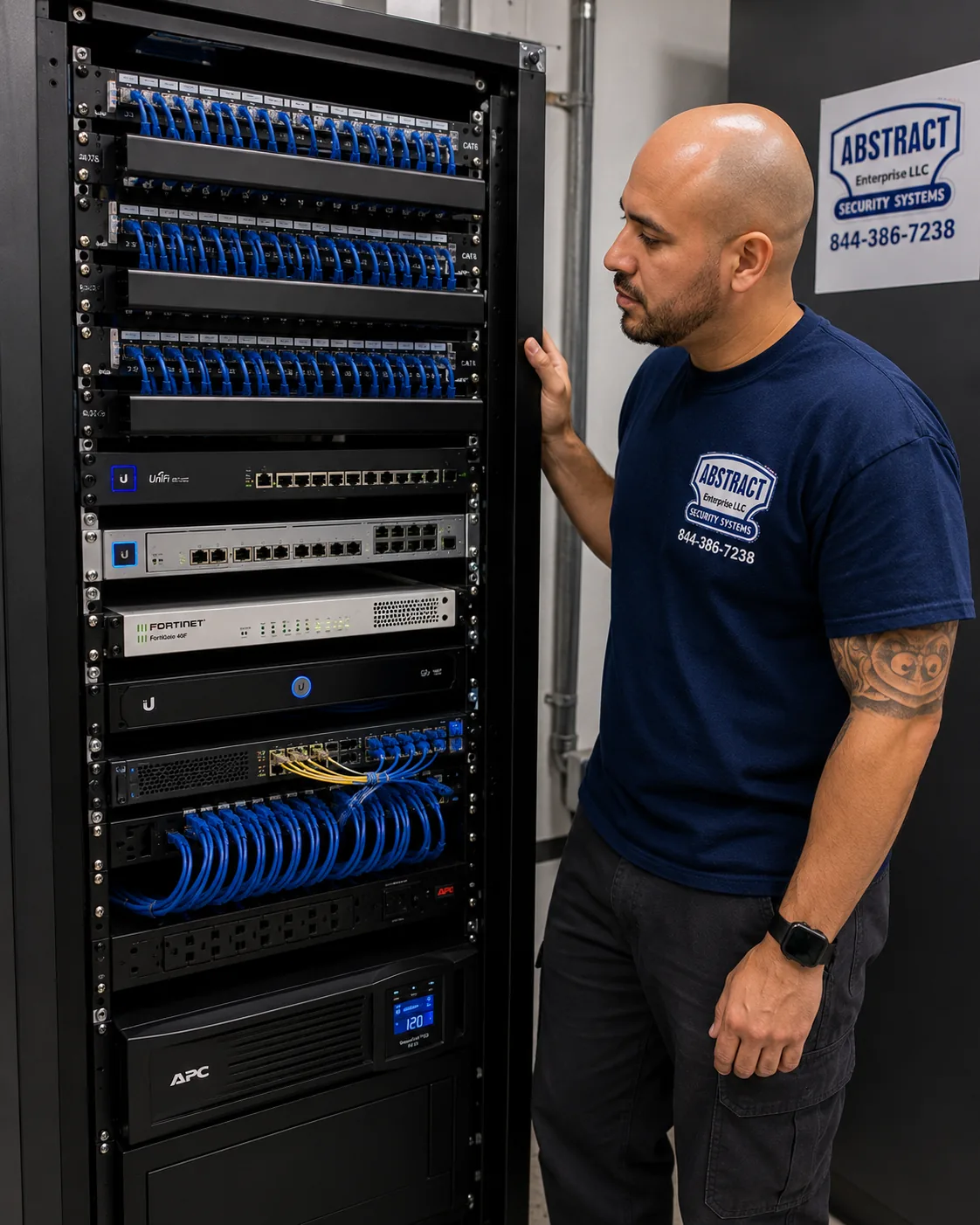
South Slope, Brooklyn security camera installation job-library photo: a finished network rack with patch panels, switching, firewall and battery backup, dressed and identified
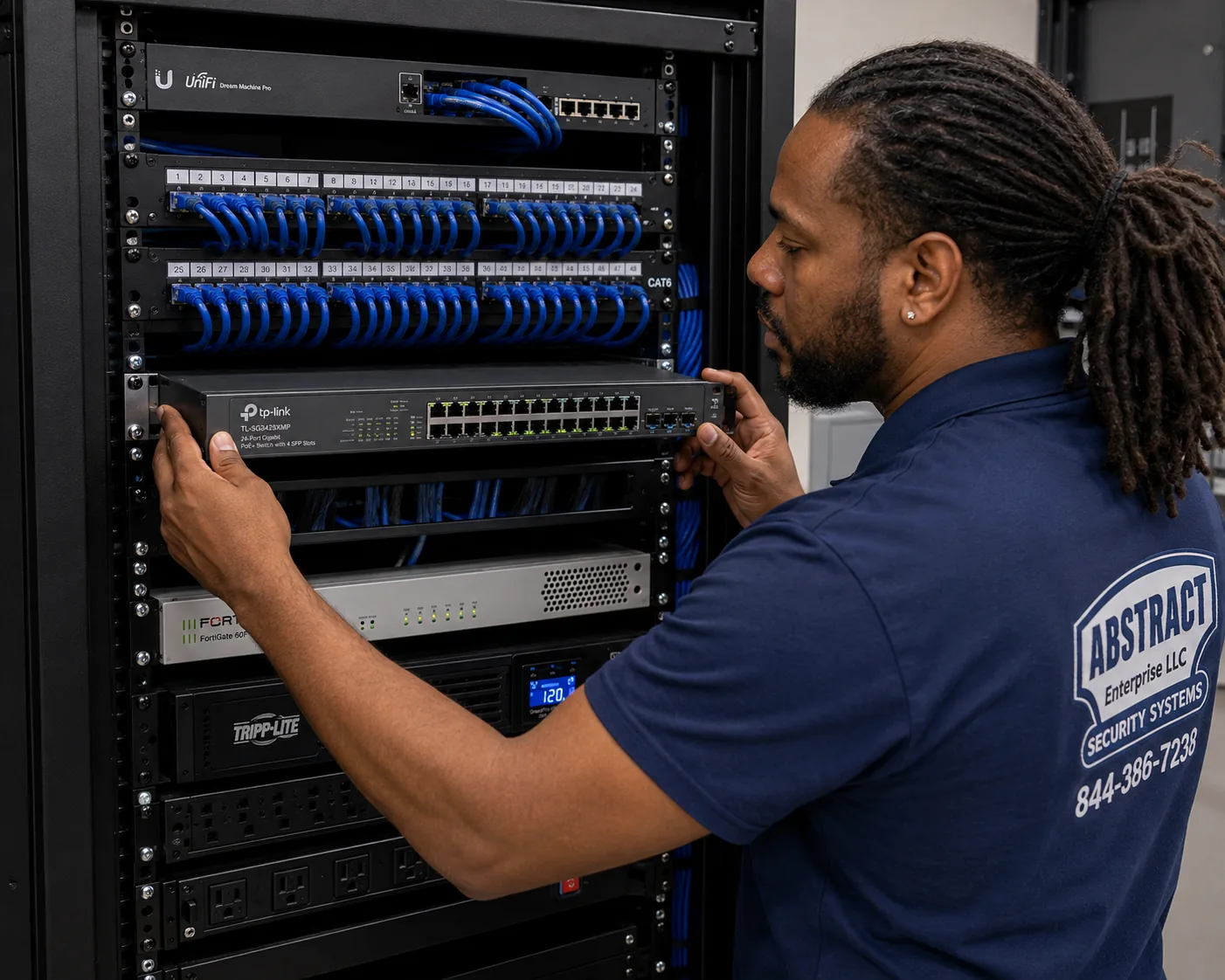
Photo from our job library, not taken in South Slope: a finished network rack with patch panels, switching, firewall and battery backup, dressed and identified. A Fourth Avenue building with cameras at the lobby, package room, bike room, roof and loading door ends up with a small version of this in its telecom room, with the battery unit carrying the recorder through an outage.
South Slope, Brooklyn security camera installation job-library photo: a technician mounting a managed PoE switch below patch panels in a commercial network rack
Photo from our job library, not taken in South Slope: a technician mounting a managed PoE switch below patch panels in a commercial network rack. One switch like this powers every IP camera in a South Slope walk-up over its data cable, so the camera under the stoop or at the roof door needs no outlet of its own.
AI Overview Reality Check

What AI Gets Wrong About Security Camera Installation in South Slope

The claims below turn up again and again in AI-written answers, cost guides and directory sites such as Angi, HomeAdvisor and Thumbtack when people ask about cameras for a Brooklyn row house or shop. Where a claim comes from a named source, we say so. Each is followed by what we see on South Slope buildings.

"A video doorbell covers the front of a house."

On a house where the front door is at sidewalk level and the package lands on the mat, it nearly does. On a South Slope row with a stoop, it covers one door out of two, and usually the less important one.

The 16th Street box in the 2014 Bklyner report was left under the stoop, and the man who took it was seen in the front yard. A doorbell at the parlor door sees neither the garden door nor most of the yard, and it looks down at the people who do climb the stoop.

We plan the front as two or three cameras with separate jobs: a face at the top of the stoop, a low camera at the garden door, and, where the owner wants it, a wide view of the gate and the yard. A doorbell can be one of them, but not all of them.

"Brooklyn camera installation averages about $1,400."

HomeAdvisor's Brooklyn page gives an average of $1,416, a typical range of $680 to $2,145 and a full spread from $160 to $3,500 for camera installation and repair. Those figures blend one-camera repairs with full systems, and say little about any one building.

What moves a South Slope price is the building, not the borough average. Drilling a brownstone front from inside, mounting through vinyl to the framing of a wooden house, running cable up the stair hall of an occupied walk-up, and preparing a Landmarks application each add time a per-camera figure does not show.

That is why we publish package starting prices, beginning at $850 for four cameras installed, and then quote every building in writing with each camera, hole and cable run on its own line, so you can see exactly what is driving the number.

"Landmarked houses can't have cameras on the front."

They can. The Landmarks Preservation Commission's permit guidebook lets its staff approve security cameras on a district building when they meet its criteria: well spaced, no more than two for every 25 feet of street frontage on a small building, finished to match, and with conduit concealed behind the wall.

What a house inside the 2012 Park Slope Historic District Extension cannot do is put cameras up first and apply later, or run cable along the face of the brownstone because it was quicker. Those are the installations that lead to trouble with the Commission.

We prepare the positions, the cut sheets and the marked-up facade photos the application needs, and plan the vestibule, rear and cellar cameras alongside, since most of those never touch the street face.

"Wireless cameras are just as good in an apartment building."

In one apartment with a router in the next room, often. In a South Slope walk-up, where the camera that matters is in a shared vestibule or a cellar and the router is in someone's apartment two floors up, rarely.

Masonry party walls, plaster on brick and steel lintels all eat Wi-Fi, and a battery camera in a vestibule is exactly the camera nobody remembers to charge. A camera that drops off the network the night the street door is forced has recorded nothing.

A wired camera gets power and connection through one cable, records to a recorder in the building whether the internet is working or not, and does not go flat. We use wireless only where a cable genuinely cannot go, and say so on the quote.

"More megapixels means you'll be able to identify anyone."

Resolution helps, but the 2019–2020 Park Slope daylight burglaries were publicized with what Patch called "grainy surveillance video," and grainy footage is more often a placement problem than a camera problem.

A high-resolution camera mounted high on a facade still makes a face at the door a small patch of the frame, and a camera aimed from a dim vestibule into a bright street turns that face into a shadow whatever its sensor. Recorders set to save a reduced stream to stretch storage make it worse.

We place the door camera close, set it for the person rather than the street, and save the full-quality stream, then check the result on site at midday and after dark. A well-placed 5MP camera at the door beats a 4K camera on the cornice.

"Crime is rising in Brooklyn, so you need cameras now."

Not on the 78th Precinct's long-run numbers. The precinct recorded 1,644 burglaries in 1990 and 119 in 2025, a drop of 92.8 percent, and grand larcenies in 2026 through November 8 were down 11.3 percent on the year before.

Some lines did rise. Burglaries were up 2.9 percent for the year, 107 against 104, and stolen cars were up 28.8 percent, 76 against 59. Those are real, but they are not a reason to panic-buy.

The honest case for cameras in South Slope is not fear. It is that when a lock is forced, a box is lifted or a car is broken into, a clear recording from the right spot is what lets an owner, a board or a detective find out what happened.

"A cloud subscription is needed to keep the footage."

Only for cloud cameras. A recorder in the building stores everything on its own drive, keeps recording when the internet drops, and lets you watch on your phone through the app without a monthly plan.

Our standard four-camera systems include two weeks of continuous recording. Longer storage is a one-time upgrade on the recorder, not a subscription: one month, two, three or four, each priced in the table below.

If an off-site copy of selected clips suits a building, for example a co-op that wants lobby footage kept away from the lobby, we say so on the quote and name the service, including whether it carries a fee.
Get in Touch

Request a Free Quote

Tell us the street and cross street, the kind of building, who owns or manages it, and which door, stoop, lobby, car or counter worries you most. Photos of the stoop, the under-stoop door and the street door from inside help most. Prefer to talk? Call (347) 934-8335.

✅
Request Sent!
We'll call about your South Slope cameras the same business day.
How It Works

Our Installation Process

Every South Slope camera job, from two cameras on a stoop to a Fourth Avenue lobby system, follows the same eight steps. The walk-through starts on the sidewalk, because that is where a stranger first sizes up the house.

1. Send photos of the stoop, door and lobby

The stoop, the under-stoop door, the street door from inside and out, the lobby or hall, the back of the house and where the internet comes in, plus the address. Every request is booked within 2 hours.

2. Check the district line and who signs off

We look up whether the lot is inside the 2012 extension and whether a board, a landlord or a store lease approves each camera, and how each view sits against the neighbors.

3. Walk the building from cellar to roof

A technician finds the cable route first: cellar, under-stoop space, closets, stair hall, risers and roof, and checks the street door in daylight and after dark.

4. Give every camera one written job

Stoop face, under-stoop box, vestibule lock side, package shelf, curb, yard, register hands: each camera gets a job on paper, and the recorder gets a locked spot.

5. Write the line-by-line quote

Every camera, mount, masonry hole, cable run, switch, recorder, drive, storage period and setup task on its own line, with Landmarks paperwork listed separately.

6. Run cable and mount the cameras

Through cellars, closets and stair halls, labeled at both ends, with masonry drilled behind each camera base and sealed and siding mounts fixed to the framing.

7. Test in daylight, after dark and through a restart

Each run certified, the clock synced, faces checked at the door at midday and at night, and the system restarted from battery to prove it comes back alone.

8. Hand over accounts, the cable map and an export test

You export a clip while we watch, each person gets only the cameras they should see, and we leave a written map of every camera and cable.

Coverage Area

Security Camera Installation Near South Slope's Landmarks

These are places the sources tie to South Slope, and what a camera job on the blocks around each one tends to involve.

Ansonia Courts, 420 12th Street

The 1880–81 clock factory built around a courtyard, residential since 1982 and now a co-op, where cameras follow the entrances and the courtyard gate under a board policy.

Ladder Company 122 on 11th Street

The red-brick firehouse from the 1880s inside the 2012 extension; the row houses around it are planned to the Landmarks camera count.

Bartel-Pritchard Square

The circle at Prospect Park West and 15th Street, whose northwest side was added to the district in 2012; houses facing it get stoop and curb cameras that stop short of the square.

Prospect Park West, Ninth to Tenth Streets

The group of buildings facing the park that the 2012 extension brought into the district, where entrance cameras and Landmarks-ready fronts are planned together.

Prospect Avenue Station

The R train stop at Fourth Avenue, where shop door cameras are set for a steady stream of riders passing the entrance.

Fourth Avenue–Ninth Street Station

The transfer point at the neighborhood's northern edge, where the newer buildings rezoned in 2003 begin along Fourth Avenue.

We also install security cameras in nearby Carroll Gardens, Boerum Hill, Red Hook and Crown Heights, and across the borough from our office at 1282 Troy Avenue, Brooklyn.

Pricing

Security Camera Installation Cost in South Slope

South Slope is priced on our Brooklyn base rate. Our four-camera packages start at the prices below with professional installation, a recorder, two weeks of continuous recording and phone viewing included, and most include a 20-inch monitor. What moves a South Slope quote above the starting price is mostly the building: masonry holes drilled from inside a brownstone front, mounts fixed through siding on a wooden house, cable run up the stair hall of an occupied walk-up, a camera under the stoop reached through the garden-floor wall, Landmarks paperwork for a district front, more than four cameras and more days of storage. Every building is quoted in writing after photos or a walk-through, and financing is available.

Item (Brooklyn rate)PriceWhat it is
A Series, 4 cameras, 2MP HD 1080p with DVRStarting at $850Entry package with night vision, motion detection, full-color night vision, audio and remote access; 2 weeks of recording included
F Series, 4 cameras, 5MP 2K with DVRStarting at $898Eyeball, bullet and dome options with active deterrent siren and lights and a 20-inch monitor
E Series, 4 cameras, 4-5MP IP 2K with 4K NVRStarting at $1,057IP cameras on a network recorder, IP67, smart detection, full-color, 20-inch monitor
C Series, 4 cameras, 8MP 4K with DVRStarting at $1,2924K eyeball and long-range options, monitor included
D Series, 4 cameras, 8MP 4K IP (top tier)Starting at $1,2924K IP eyeball and bullet, active deterrent, two-way talk, 20-inch monitor
Recording storage on a standard 4-camera system2 weeks $100 (included) · 1 month $180 · 2 months $270 · 3 months $360 · 4 months $450Continuous recording before the oldest footage is overwritten
Commercial CCTV$1,500 – $5,000+Stores, restaurants, bars, offices and apartment buildings, depending on cameras, building and any intercom or access control
Monthly fees$0The recorder stores footage locally; no cloud subscription, contract or monitoring fee from us

Everything beyond the package, including extra cameras, longer cable runs, under-stoop and rear-wall routes, Landmarks paperwork, switches, lighting, cabinets and labor, is priced in writing for your building before any equipment is ordered, and nothing is added later without your agreement.

Full terms — including 50% deposit, one-year parts-only warranty on Abstract Enterprises Security Systems-supplied products, and the late-fee schedule — are set out in the service agreement.
Shop Our Systems

Security Camera Installation Packages & Pricing

Most South Slope jobs begin from one of three packages. Each starting price covers four cameras installed, a recorder and two weeks of recording; your quote shows exactly what your building adds.

Starter: A Series from $850

Four 1080p cameras on a DVR, a good fit for a row house that needs the top of the stoop, the under-stoop door, the vestibule and the yard covered. Night vision, motion detection and remote viewing included.

Standard: E Series from $1,057

Four IP cameras on a 4K network recorder with smart detection, the usual choice for a two- or three-family or a walk-up where faces at the door and the package shelf matter most and more cameras may follow.

Premium: D Series from $1,292

Four 8MP 4K IP cameras with active deterrent and two-way talk, for a Fifth Avenue shop after close, a curb view of a parked car, or a lobby where detail decides what happened.

Already bought your cameras? Labor-only installation and setup

Some South Slope owners come to us with a kit bought online, a system a previous owner or developer left behind, or Wi-Fi cameras that keep dropping off in the vestibule. We install and set up customer-supplied cameras on a labor-only basis, quoted after photos of the cameras and the building. That covers mounting, cable runs, taking over the passwords, syncing the recorder clock, naming each camera by its job, separate accounts for each household, board member or store manager, alert schedules for the hours a lobby or yard should be quiet, a restart test after a power cut, and an export practice. Customer-supplied equipment is not covered by our product warranty, so it pays to check the cameras' own warranty and condition before the visit.

Complete Services

Every Security Camera Installation Service in South Slope

Row Houses and Wooden Houses

Stoop, under-stoop, vestibule, curb and rear cameras for brick rows, two- and three-families and sided wooden houses. Request a quote.

District Fronts

Positions, cut sheets and concealed wiring for houses and apartment buildings inside the 2012 historic district extension, with the rear and interior planned alongside.

Walk-Ups and Fourth Avenue Lobbies

Vestibule, mailbox, package, stair, cellar, bike room and roof door cameras, with accounts and footage access set to the owner's or board's policy.

Shops, Bars and Takeovers

Door, register, bar, back-room and rear-door cameras on Fifth, Seventh, Prospect and Fourth Avenues, and old systems taken over. More on our Brooklyn camera page and our NYC security camera installation hub.

FAQ

South Slope Security Camera FAQ

Does the 2012 Park Slope historic district extension reach a house on 16th Street?
+

Generally not. CityLand describes the extension as running from Seventh Street to 15th Street between Seventh and Eighth Avenues, plus the 15th Street buildings on the northwest side of Bartel-Pritchard Square and a group on Prospect Park West between Ninth and Tenth Streets. A house on 16th Street is usually outside it, but we still check the exact lot in the Landmarks records before planning the front, because district lines can be drawn around individual lots.

Can the garden-floor tenant and the owner upstairs each see the street door camera without seeing each other's cameras?
+

Yes. One recorder can hold several accounts, each limited to chosen cameras. The tenant's account shows the under-stoop door and the shared street door; the owner's shows everything the owner installed. Nobody's account shows inside another household's rooms, and the owner can remove a tenant's account at the end of a lease without touching the rest of the system.

Our walk-up's street door is mostly glass. Will a camera inside the vestibule see faces through it after dark?
+

It can, if it is set up for the glass. A camera's own infrared light bounces off the glass and washes out the picture, so behind glass we turn the infrared off and rely on a light outside the door or the vestibule light, and mount the camera close to the glass at a slight angle. A camera outside the door, under the transom or beside the frame, avoids the problem entirely where the building allows it.

Why do online figures for Brooklyn camera jobs swing from $160 to $3,500?
+

HomeAdvisor's Brooklyn page gives that full spread, with an average of $1,416 and a typical range of $680 to $2,145, because it mixes small repairs with whole systems. A single camera adjustment and a six-camera walk-up system are different jobs. Our four-camera packages start at $850 installed on the Brooklyn rate, and every South Slope building gets a written, line-by-line quote.

Can a Fifth Avenue shop join the city's business camera program only when something happens, instead of sharing video around the clock?
+

At the 2024 launch, the deputy mayor said businesses that did not want round-the-clock participation could take part on an ad hoc basis, and the police commissioner said the program is free and voluntary. Stores sign up through the NYPD or a business improvement district. Nothing we install enrolls you, and if you join, the recorder we put in can usually be connected afterward.

Do cameras on the rear wall of a house inside the 2012 extension need the same Landmarks permit as cameras on the front?
+

Not necessarily the same one. The guidebook's camera count is written around street frontage, and its strictest rules are about the primary facade. Work visible from a street may still need review, and every district building is different, so we ask the Commission's staff about rear cameras before mounting them and plan them in the same application as the front where needed.

Our wooden house on 12th Street is being re-sided next year. Should camera cable go in while the old layers are stripped off?
+

Yes, if you can. With the siding off, cable can be run inside the wall to each camera position and mounting blocks fixed to the framing, so the new siding goes on around them. Tell your siding contractor the positions in advance and we will pull and label the cable during the open window, then mount the cameras once the siding is finished.

Can the camera under our stoop alert us when a carrier leaves a box, so we can get to it first?
+

Many of the cameras we install can send a phone alert when a person enters a set zone, and we draw that zone around the garden door so passersby on the sidewalk do not trigger it. The alert arrives as the carrier steps in, with a short clip. It does not guarantee you get there first, but it tells you within seconds, and the camera keeps recording whoever comes next.

Our building is a two-unit condo. Do both owners have to agree before cameras go on the shared stoop and hall?
+

Usually, because the stoop, the street door and the hall are common elements, and the condo's bylaws decide who can change them. Before we mount anything, we ask for a written agreement from both owners, or the board's approval if the bylaws require one, and we can set up separate accounts so each owner sees the shared cameras on their own phone.

Will the camera on our stoop record everyone walking past on the sidewalk all day?
+

Only if it is framed that way. We frame the stoop camera on the steps and the door, so the sidewalk sits at the edge of the picture or out of it, and set its detection zone on the steps alone. The recorder records what the camera sees, but alerts and searches can be limited to people who actually climb the stoop or step through the gate.

Our managing agent is changing. How does the camera system pass to the new company without anyone being locked out?
+

The main administrator account should belong to the owner or the board, not the agent. Before the change, we move the owner account to the building, give the outgoing agent's login an end date, create the new agent's account and write the recovery details on a sealed sheet kept by the owner. The cameras and recordings stay exactly as they were.

Can our walk-up's video intercom and the new security cameras record to the same recorder?
+

Often, yes. Many video intercom panels can send their camera picture to a network recorder alongside the security cameras, so a visit at the door is stored with everything else. Whether yours can depends on the make and model, so we check the panel on the walk-through and say on the quote whether it connects or whether a separate door camera is the better choice.

More Security Camera Installation near South Slope

CCTV & Security Camera Installation Brooklyn, NY | Abstract Enterprises Security Systems · Security Camera Installation NYC | Licensed Installer · Security Cameras Installed in Manhattan · Security Camera Installation Queens NY · Security Camera Installation Bronx | No Monthly Fees · Staten Island Security Camera Installation · Long Island Security Camera Installation NY · Hudson Valley Security Cameras · Security Camera Installation Nassau County NY · Security Camera Installation Suffolk County NY · Westchester Security Camera Installation · Rockland County Camera Installation · Orange County NY Security Cameras · Putnam County Camera Installation · Dutchess County Security Cameras · Ulster County Security Camera Installation | Kingston NY

Security Camera Installation Bath Beach Brooklyn NY · Security Camera Installation Bay Ridge Brooklyn NY · Security Camera Installation Bedford-Stuyvesant Brooklyn NY · Security Camera Installation Bensonhurst Brooklyn NY · Security Camera Installation Bergen Beach Brooklyn NY · Security Camera Installation Beverley Square Brooklyn NY · Security Camera Installation Boerum Hill Brooklyn NY · Security Camera Installation Borough Park Brooklyn NY · Security Camera Installation Brighton Beach Brooklyn NY · Security Camera Installation Brooklyn Chinatown Brooklyn NY · Security Camera Installation Brooklyn Heights, Brooklyn NY · Security Camera Installation Brooklyn Navy Yard Brooklyn NY · CCTV & Security Camera Installation Brooklyn, NY | Abstract Enterprises Security Systems · Security Camera Installation Brownsville Brooklyn NY · Security Camera Installation Bushwick Brooklyn NY | Abstract Enterprises Security Systems · Security Camera Installation Cadman Plaza Brooklyn NY · Security Camera Installation Canarsie Brooklyn NY | Abstract Enterprises Security Systems · Security Camera Installation Carroll Gardens Brooklyn NY · Security Camera Installation City Line Brooklyn NY | Abstract Enterprises Security Systems · Security Camera Installation Clinton Hill Brooklyn NY · Security Camera Installation Cobble Hill, Brooklyn NY · Security Camera Columbia Street Brooklyn NY · Security Camera Installation Coney Island Brooklyn NY · Security Camera Installation Crown Heights Brooklyn NY

Other services in South Slope

Security Camera Repair South Slope Brooklyn NY · TV Installation South Slope Brooklyn · Fire Alarm Installation South Slope Brooklyn NY · Intercom Installation South Slope Brooklyn NY | Abstract Enterprises Security Systems · Door Buzzer Repair South Slope Brooklyn NY | Walk-Ups · Access Control Installation South Slope Brooklyn NY · Alarm Installation South Slope Brooklyn NY | By the Record · Structured Cabling Installation South Slope Brooklyn NY · Door Buzzer Installation South Slope Brooklyn NY

Ready to Put a Face and a Lock on Camera at Your South Slope Door?

Whether it is a Neo-Grec row inside the 2012 extension, a wooden house on 11th or 12th Street, a two-family below 15th Street, a walk-up over a Fifth Avenue store, a Fourth Avenue lobby or a shop on Seventh or Prospect Avenue, send a few photos of the stoop, the street door and the lobby with the address, and we will tell you which cameras matter most, who has to approve them and what the written quote will cover. Requests are booked within 2 hours, estimates are free, and the work is done under NYS license #12000287431 from our Brooklyn office at 1282 Troy Avenue. Call (347) 934-8335, message us on WhatsApp, or go back up to our Brooklyn security camera installation page for the rest of the borough.