Same-Day Service · All Brands · High-Rises · Co-ops · Brownstones · Commercial
Professional door buzzer repair across all Manhattan neighborhoods. High-rises, pre-war co-ops, brownstones, and commercial properties. Most repairs completed same day.
Component-level diagnosis. We isolate the failed part before quoting a replacement.
Certificates of insurance issued to owners, boards, and managing agents before work starts.
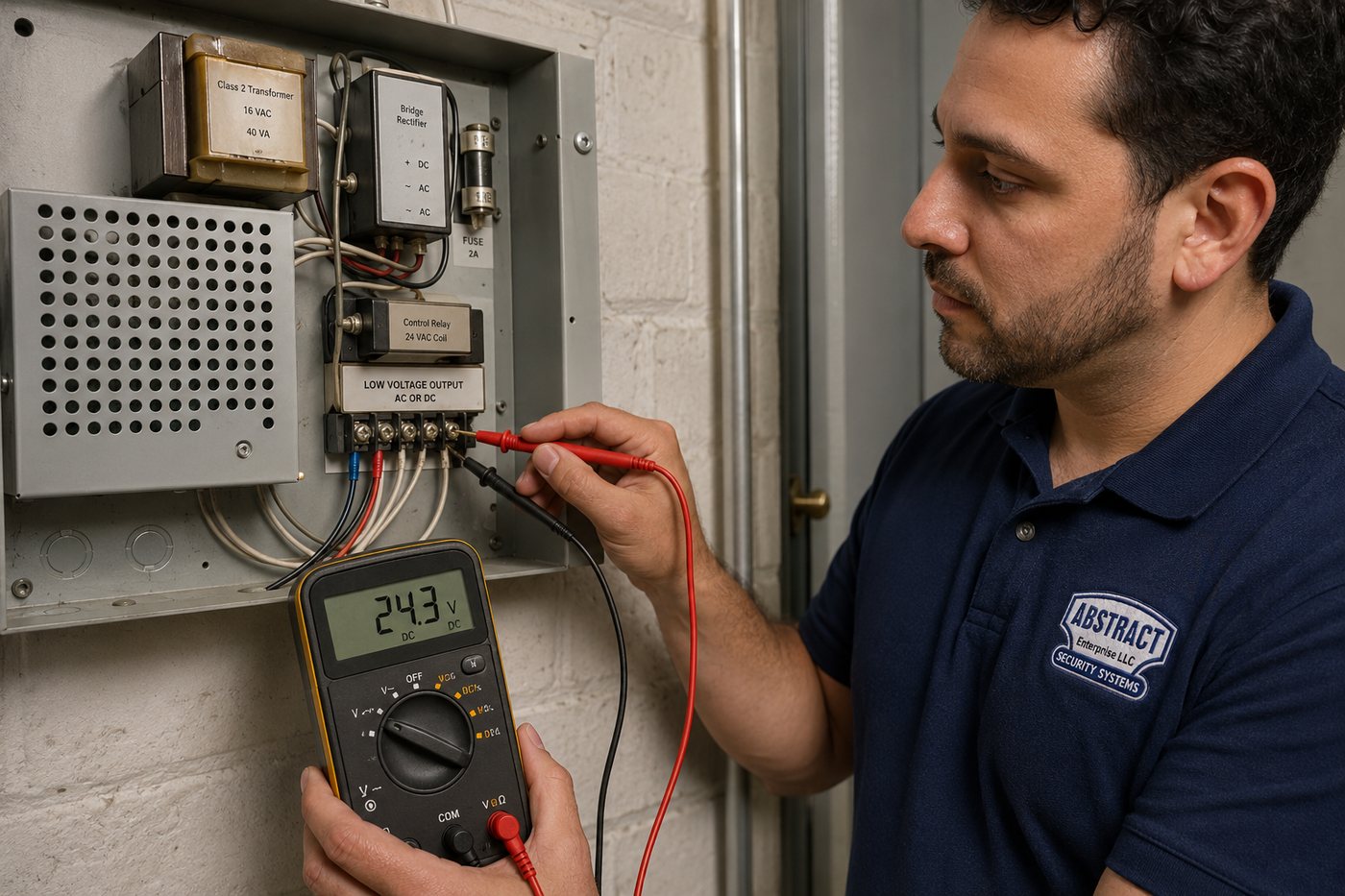
Maglock and power supply under test — life-safety hardware tied to egress.
Need Buzzer Repair in Manhattan Today?
In Manhattan the constraint is rarely the hardware. It is access — board approval, building windows, and getting to a riser inside an occupied pre-war apartment line. A dead entry door is an access and life-safety problem, not a maintenance ticket — tenants get locked out, deliveries stop, and the front door ends up propped, which defeats the system entirely.
Manhattan entry systems fail in the same three layers as anywhere else. The talk path carries the call to your apartment. The release path carries the unlock signal to the door. The mechanical layer is the door itself. What differs here is scale and duty: a Midtown or Upper East Side entrance may see several hundred releases a day, and components rated for a six-unit walk-up do not survive that.
If the buzzer rings and you can speak, the talk path is intact and the fault is downstream. If nothing rings, the fault is upstream. That single distinction narrows a whole-building mystery to a handful of components, and it is why a proper diagnostic beats a blind replacement quote.
Layer 1 — the talk path
High-rise stock runs telephone-entry or IP platforms where the common fault is programming rather than wiring — a unit's number never updated after a sale or a sublet. Pre-war co-ops run conventional risers where the fault is the conductor, and the riser is behind plaster in an occupied line.
Verifying the talk path with the resident before closing the call.
Layer 2 — the release path
Duty cycle dominates. AC strike coils are rated for intermittent use, and a busy Manhattan entrance with commercial tenants below cooks them. A strike that lasted twelve years in a small building may last three here.
Layer 3 — the mechanical layer
Heavy glass and metal entrance doors with commercial closers preload strikes hard. Add a century of frame settlement in a pre-war building and alignment becomes a scheduled maintenance item, not a one-time fix.
The Buzzer Works But the Door Stays Locked
Manhattan release failures are a duty-cycle problem more than an alignment problem. A Midtown or Upper East Side entrance can trigger several hundred releases a day and AC strike coils are rated for intermittent use.
The pattern is a strike that lasts twelve years in a small building and three in a busy one. Replacing it with the same part restarts the same clock. The correct answer is a strike rated for the traffic and a check that the release timer is not holding the coil longer than needed.
Preload still appears, usually on heavy glass or metal entrance doors with commercial closers. Those exert far more force than a residential closer, and in a settled pre-war frame the latch ends up jammed against the keeper.
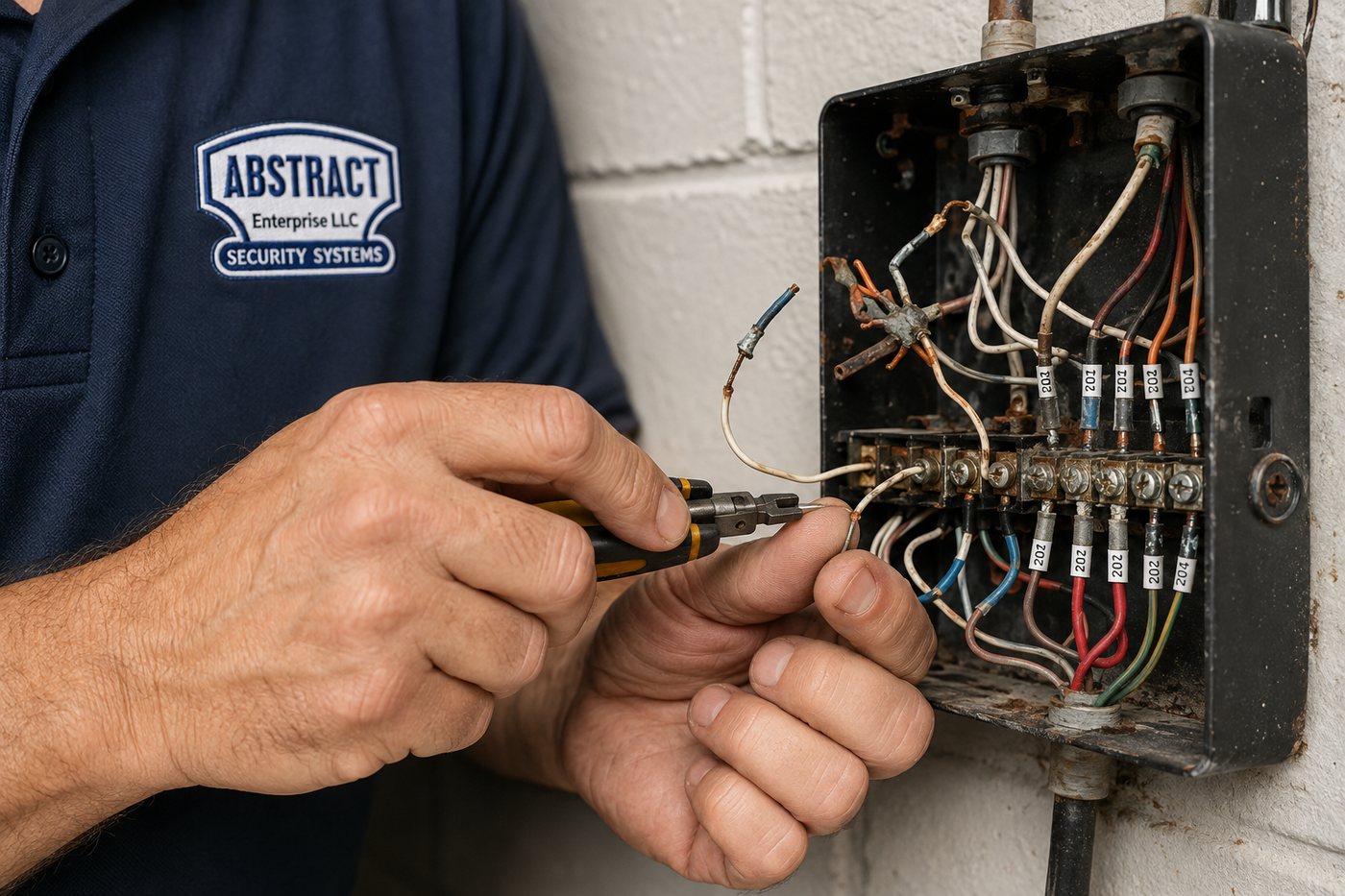
Corroded terminals — the usual cause of static and dead lines.
Not sure whether yours is a part swap or a wiring job? The diagnostic answers that, and the fee applies either way.
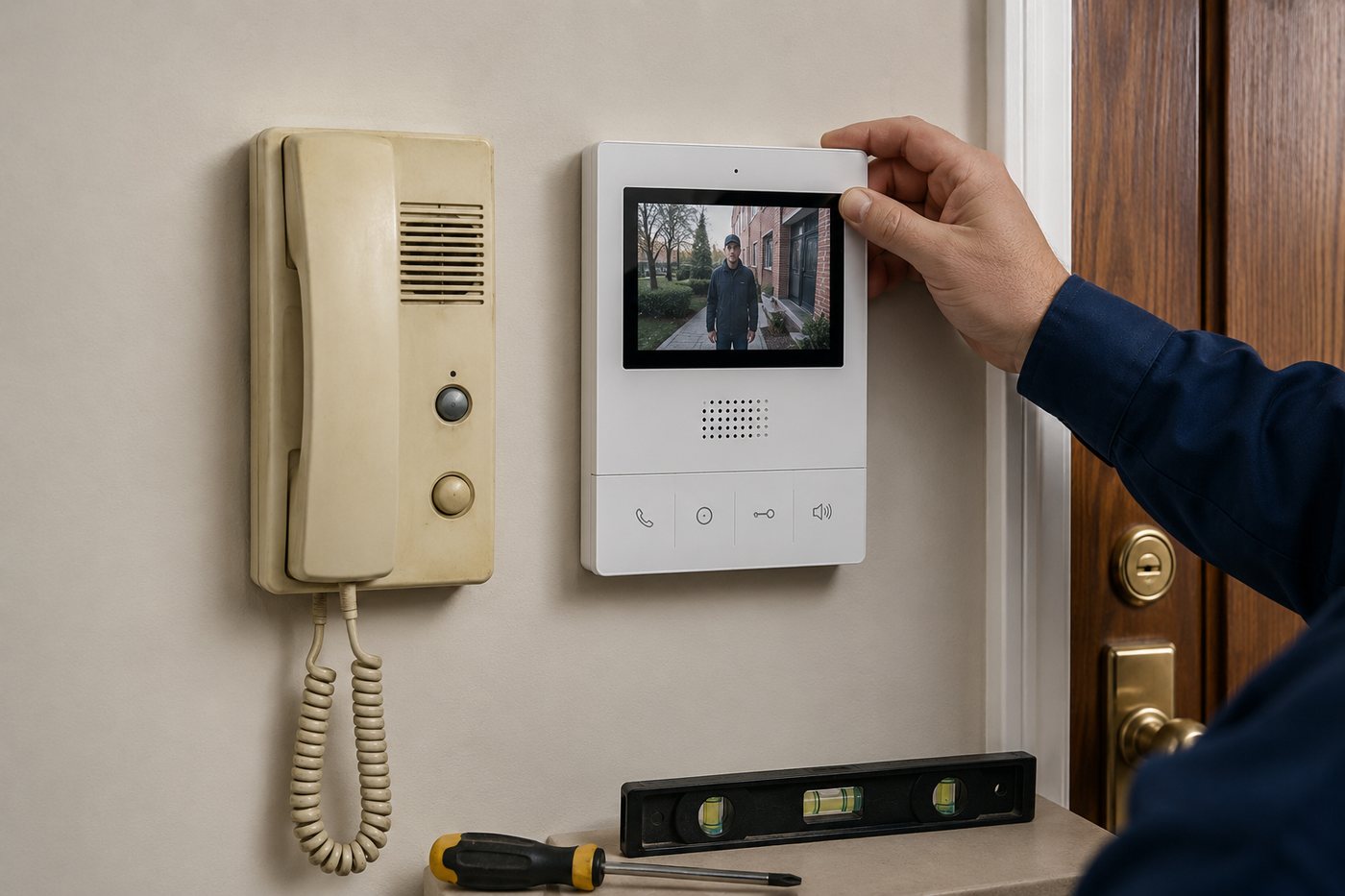
Audio station replaced with a video monitor on the existing pair.
No Sound, No Power, or a Buzzer That Will Not Stop
In pre-war Manhattan co-ops whole-building silence is the transformer or the amplifier, and both live in a basement equipment room that is usually accessible without disturbing residents — which makes this the easiest Manhattan diagnosis to confirm.
In high-rise stock running telephone-entry the equivalent symptom is not electrical at all. If one apartment gets no calls, check the directory before the wiring: after a sale or sublet the number on file often never gets updated.
Continuous buzzing in a mixed-use building is a security matter rather than a nuisance. A welded relay holding the strike open leaves an entrance shared with ground-floor commercial tenants permanently unlocked.
Only One Apartment Is Dead
One dead line out of forty in a Manhattan co-op proves every shared component is functioning. Boards are told otherwise more often here than anywhere else we work.
Confirming it is the slow part. Riser access in an occupied pre-war line means coordinating entry to several apartments on the same day, plus a certificate of insurance on file and freight elevator time. The repair is short; the choreography is not.
If you have a full-replacement quote in hand for a single dead apartment, get a second diagnostic before the board votes on it.
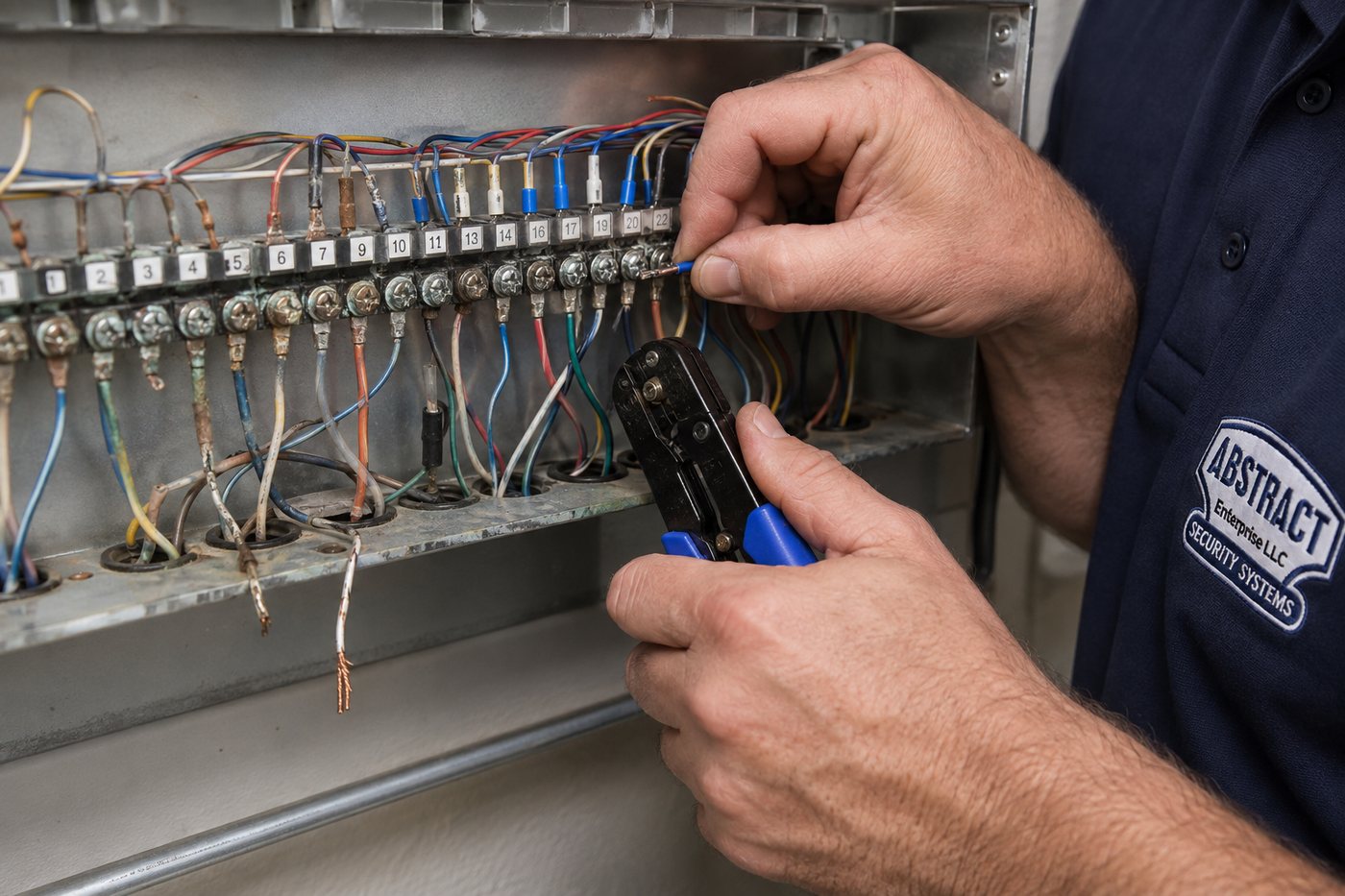
Re-terminating a labelled block rather than rewiring the riser.
What We Actually Replace
Buzzer repair is component work. Below is the hardware behind the terms you will see on an invoice, so you can read a quote and tell a genuine part swap from a padded one.
24V transformer
Low-voltage supply for the whole system. Fails gradually — weak buzz, dropped calls, then silence.
Door release relay
Switches power to the strike when you press release. Contacts weld shut or stop making altogether.
Electric strike
The powered keeper in the frame. Fail-secure locks on power loss; fail-safe unlocks.
Magnetic lock
Holds by electromagnet, always fail-safe. Needs alarm integration and a manual release to be compliant.
Riser wiring
The vertical pairs from the basement to each unit. Corrosion here causes static and dead lines.
Apartment station
The in-unit handset. Cord conductors, hookswitch and speaker all wear out.
Lobby panel
Buttons, directory, speaker and microphone at the entrance. Weather and vandalism take these first.
Request-to-exit
Interior release button or sensor. On a maglock this is life-safety hardware, not a convenience.
We service legacy analog hardware including Lee Dan, TekTone and Alpha Communications and keep common stations and transformers for those platforms on the truck. System-wide video, gate and driveway entry and brand-specific catalogs are covered on our intercom pages.
Is Your Manhattan Landlord or Board Required to Fix It?
Yes, and the enforcement path is the strongest in the state.
State Multiple Dwelling Law covers post-1968 buildings with eight or more units. The NYC Housing Maintenance Code layers on a requirement for a functioning intercom so residents can admit visitors without leaving the apartment, and HPD classifies a dead intercom as a Class B hazardous violation carrying penalties in the $250 to $500 per day range.
Buildings with a 24-hour doorman may be treated differently, since a physical presence performs the same security function. That exception comes up more in Manhattan than anywhere else and is worth confirming for your specific building rather than assuming.
Escalation runs written notice to management, then 311 or HPD, then an HP proceeding in Housing Court if needed. For co-ops — which is most of Manhattan's residential stock — the building-wide system belongs to the corporation, not the shareholder. General information, not legal advice.
Board Approval, Access Windows and Landmark Districts
The technical work in Manhattan is rarely the hard part. Getting to it is.
Board approval governs anything touching shared infrastructure. A managing agent can usually authorise a component swap; a riser project or a visible panel change generally needs board sign-off, and that timeline is measured in meetings rather than days. We provide dated diagnostic reports written for that purpose.
Access windows are the second constraint. Most co-ops restrict contractor work to weekday business hours, require certificates of insurance naming the corporation before anyone enters, and control freight elevator time. Riser work in an occupied apartment line means coordinating entry to several units on the same day.
Landmark districts add a third. Visible exterior hardware in a designated district — much of the Upper East Side, Greenwich Village, Harlem's historic rows and SoHo — can require Landmarks review. That does not affect an interior repair, but it does affect replacing a street-facing panel with a different model.
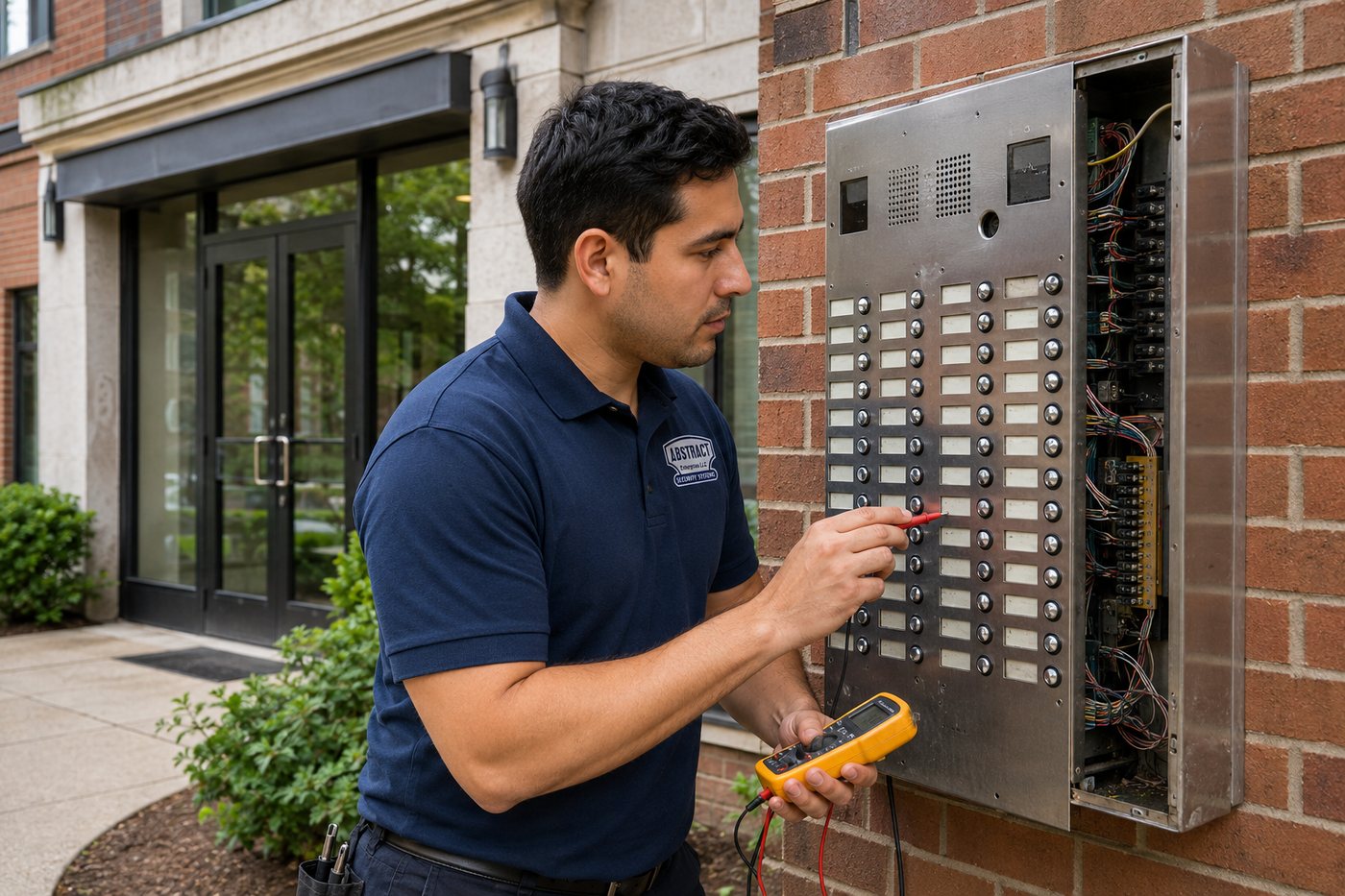
Directory panel service on a large multi-unit entrance.
What Buzzer Repair Costs in Manhattan
Our service call is $250 and includes on-site diagnosis: we identify the failed component and give you the repair number before parts work begins. Most single-fault repairs finish in that visit.
Service call + on-site diagnostic$250
Apartment station replacement$250 – $525
Door release relay or button$250 – $475
24V transformer replacement$325 – $650
Electric strike replacement + alignment$450 – $950
Lobby panel repair or faceplate$650 – $1,800
Riser pair repair / re-termination$850 – $2,400
Aggregator sites quote a national average with no idea whether your fault is a $250 button or a $2,400 riser. The number only means something after someone has looked at the panel.
Repair or Replace?
Manhattan economics are dominated by access and approval, not by hardware cost.
Repair whenever the fault is a component. A managing agent can normally authorise that without a board vote, which is often the difference between a repair this week and a project next quarter.
Replace when the riser is genuinely failing, and time it to a renovation if one is coming. Riser work in an occupied line is disruptive enough that doing it alongside plumbing or electrical work is materially cheaper and less intrusive.
Cloud and IP platforms belong in that same conversation. They carry a monthly fee and they do not fix a preloading door or a burned strike, but when walls are already open they are worth pricing.
Transformer output measured under load. Below six volts means replace.
Where We Work Across Manhattan
Upper East and Upper West Sides
Pre-war co-op stock where riser access means opening plaster in occupied lines, alongside post-war high-rise with telephone-entry systems. Board process and access windows drive scheduling more than travel time does.
Midtown and Murray Hill
High-density residential over commercial. The heaviest duty cycles we see anywhere, and the most frequent strike replacements as a result. Mixed-use entries where a storefront and residential share one door need care that the release logic serves both.
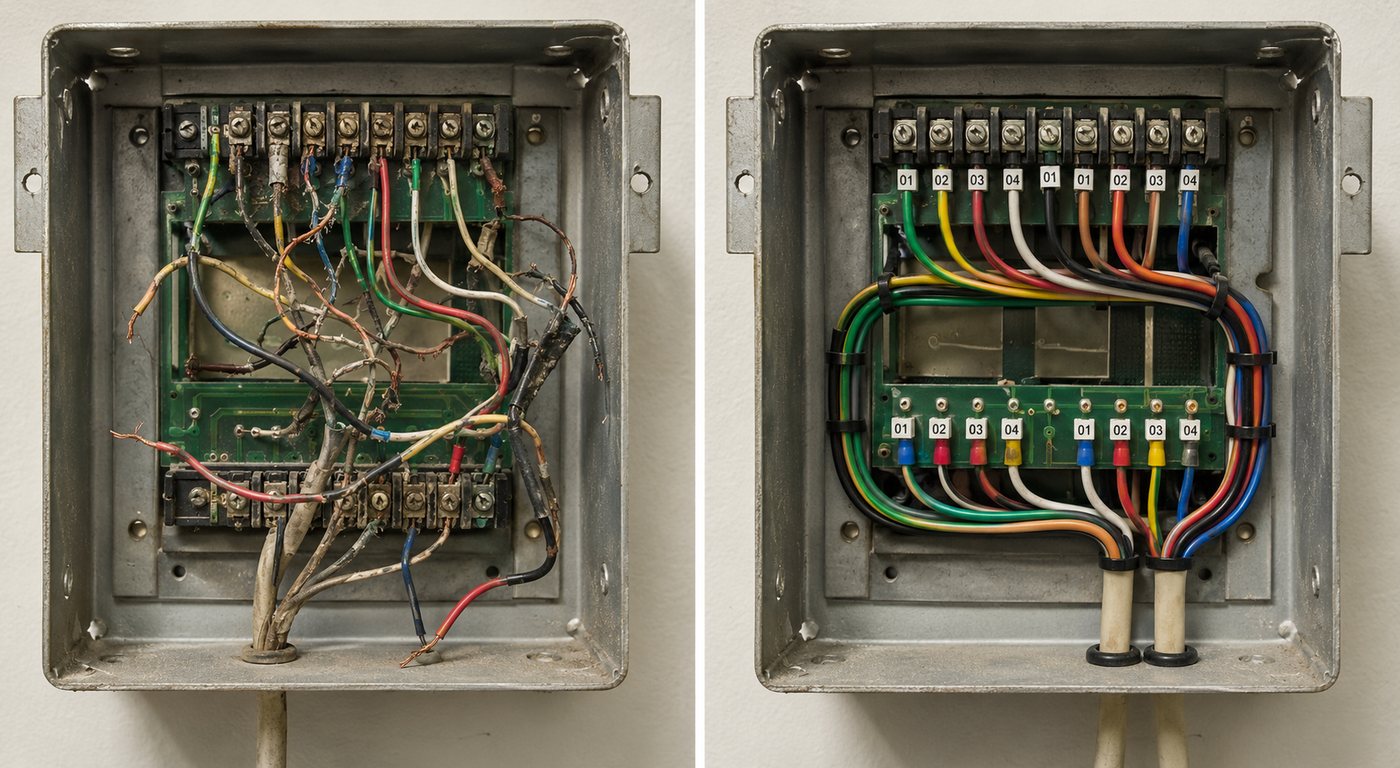
Junction box before and after re-termination and labelling.
Downtown
Greenwich Village, SoHo, Tribeca, the Lower East Side and the Financial District. Loft conversions with entry systems retrofitted into industrial buildings, landmark constraints on visible hardware, and a high proportion of IP platforms in newer conversions.
Harlem and Upper Manhattan
Harlem, East Harlem, Hamilton Heights, Washington Heights and Inwood. Brownstone rows with original risers and large pre-war apartment buildings, many still on supportable analog platforms.
Chelsea, Hell's Kitchen and the West Side
Mixed stock from tenement walk-ups to new towers, with a high renovation rate that produces splice faults in older risers.
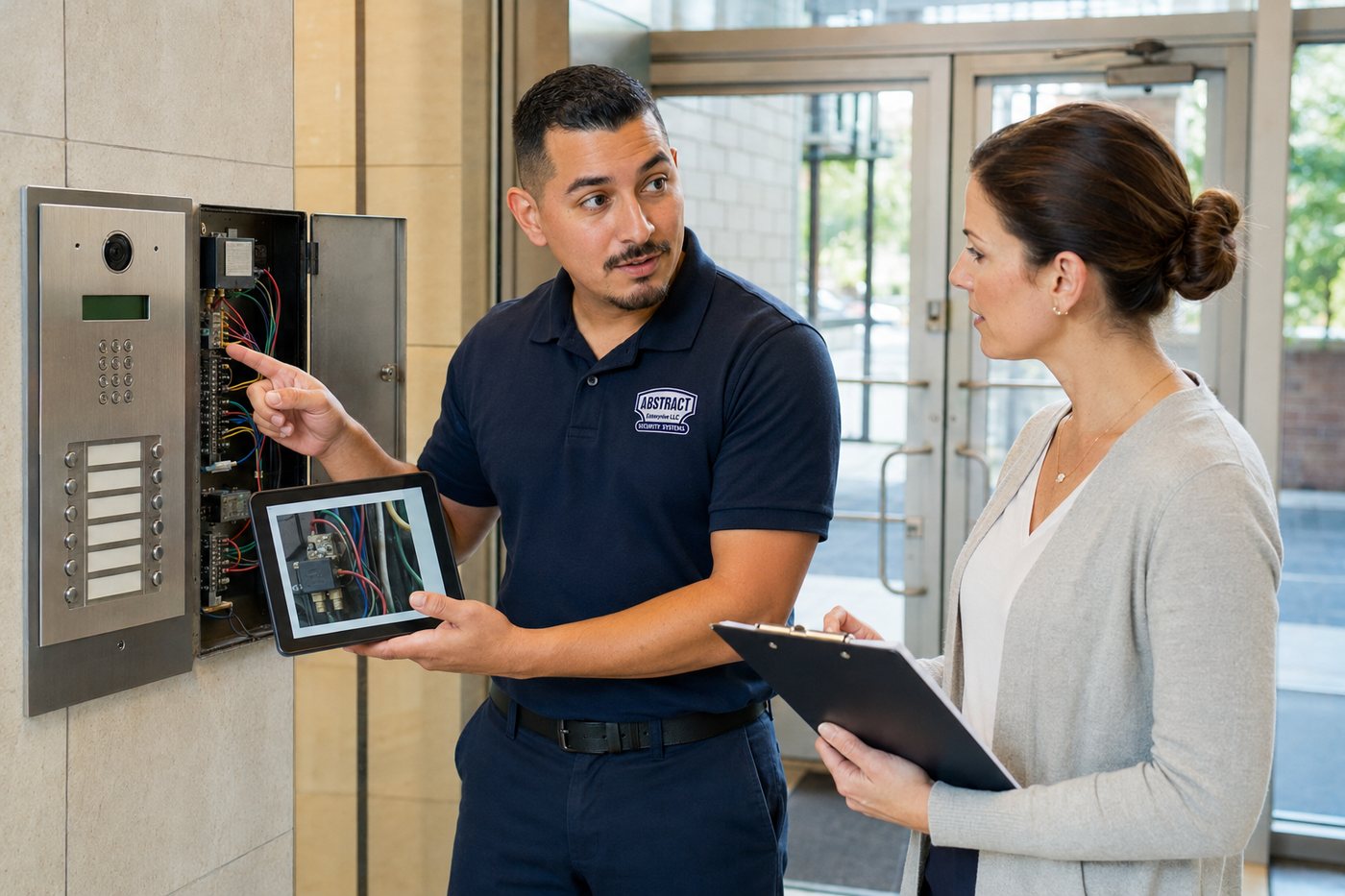
Walking an owner through the diagnostic findings on site.
Field Notes
Three things account for most Manhattan callouts, and none are what the board expects.
First: programming, not hardware. On telephone-entry systems a unit stops working after a sale or sublet because nobody updated the directory. It presents exactly like a dead line and costs nothing to correct.
Second: burned coils from duty cycle. A busy entrance cooks AC strikes. The fix is not a bigger system, it is the correct strike for the traffic and confirmation that the release is not being held longer than needed.
Third: preload from commercial closers. Heavy entrance doors with strong closers jam the latch against the keeper. Hold the door slack, trigger release — if it opens, the electronics are fine and the door needs adjusting.
Door Buzzer Repair Manhattan — Questions
How much does door buzzer repair cost in Manhattan?
Service call $250 with diagnosis included. Station $250–$525, transformer $325–$650, strike with alignment $450–$950. Riser work in an occupied pre-war line runs $850–$2,400 and upward, because the cost is access and coordination rather than parts.
Entry panel service on a brick facade.
Our telephone-entry system stopped working for one apartment.
Check programming before anything else. After a sale or a sublet the directory often never gets updated, so the system dials a number that no longer answers. It presents exactly like a dead line and costs nothing to correct.
Why do our strikes keep burning out?
Duty cycle. A busy Manhattan entrance can see several hundred releases a day, and AC strike coils are rated for intermittent duty. The answer is a strike rated for the traffic and confirmation the release is not being held longer than needed — not a larger system.
Is my Manhattan landlord or board required to fix it?
Yes for covered buildings. State MDL covers post-1968 buildings with eight or more units and the NYC Housing Maintenance Code requires a functioning intercom; HPD treats failure as a Class B hazardous violation at roughly $250–$500 per day. Buildings with a 24-hour doorman may be treated differently. General information, not legal advice.
Strike plate alignment — preload reads as an electrical fault and is not one.
Does our co-op board need to approve the work?
For a component swap a managing agent can normally authorise it. Riser work or a visible panel change usually needs board sign-off. We issue dated diagnostic reports naming the failed component specifically so boards can act on them.
What access do you need?
A certificate of insurance naming the corporation before we enter, freight elevator time if the building requires it, and — for riser work — coordinated access to several apartments in the same line on the same day.
We are in a landmark district.
Interior work is unaffected. Replacing a street-facing panel with a different model can require Landmarks review, so we specify hardware likely to be approved rather than installing and appealing.
Two-point verification: visitor at the panel, technician on the station.
The visitor can hear us but we cannot hear them.
One-way audio is nearly always the pair, not the stations. In pre-war buildings it is the riser conductor; in newer IP installations it is more often a configuration or network issue.
Do you offer same-day service in Manhattan?
Frequently, but building access governs it more than our schedule does. If the managing agent can grant entry and the COI is on file, same day is realistic.
One line is dead and the board was quoted a full replacement.
Get a second diagnostic. One dead line out of forty proves every shared component is working. That is a quoting decision, not a technical one.
Can you work on IP and cloud intercoms?
Yes, and the honest advice is that a cloud platform does not solve a broken $250 button or a preloading door. It is the right answer when the riser is failing anyway and walls are already coming open.
Can I check anything myself?
Whether neighbours are affected, whether your handset cord is seated, and on phone-entry whether management has your current number. Not the lobby panel or the basement — one mistake there affects the whole building.
Reviewed and updated September 2026.
Get the Buzzer Fixed
Component-level diagnosis across Manhattan. We identify the failed part and quote the repair before touching anything — no system-replacement pitch on a $250 fault.