Every View Planned for What It Must Prove · Wired, Labelled and Certified · Priced From Your Borough's List
Capture camera installation in New York City is mostly a building problem before it is a camera problem. The Rent Guidelines Board puts 54 percent of the city's housing units in buildings put up before 1947, and the Citizens Housing & Planning Council says more than 80 percent of the housing stock is over 50 years old. That means brick party walls, plaster ceilings, cellars full of old cable, landlords and boards who must agree, and in thousands of cases a Landmarks Preservation Commission rule about what can go on the front of the building. We install Capture cameras and recorders, and plate-capture cameras where a gate or lot needs them, in walk-ups, elevator buildings, rowhouses, storefronts and parking areas across Brooklyn, the Bronx, Manhattan, Queens and Staten Island. We plan every camera around the one thing it has to show, run real cable to it, and price the job from the Capture price list for your borough.
Reviewed and updated November 5, 2026 by Anwar Timothy, NYS license #12000287431 · Sources: the NYC Rent Guidelines Board 2026 Housing Supply Report, the Citizens Housing & Planning Council housing stock visualization, the NYC Independent Budget Office (May 2026), HPD's 2023 NYC Housing and Vacancy Survey initial findings, HPD's Tenant Data Privacy Law page and self-closing door reports, the LPC Rules (2018 amendments) and LPC Permit Guidebook Chapter 11, Local Law 128 of 2024 (intro.nyc), NYC 311's Community Camera Sharing Program article, amNY (May 16, 2024), CBS New York (May 16, 2024), NYCHA testimony (November 30, 2023) and the April 15, 2025 City Council public housing hearing, the Mayor's Office releases on sidewalk sheds (April 2025 and March 2026), the NYC Council Data Team internet access page, the Bronx Times and PIX11 (October 2026), NY1 (October 2, 2026), NYREJ, THE CITY (April 12, 2019), Wikipedia's entries for The Hub and the Third Avenue–149th Street station, the Village Voice, Spectrum News (December 23, 2025), Multiple Dwelling Law §50-a and a Justia attorney answer on common-area cameras · Dispatched from 1282 Troy Ave, Brooklyn

Owner-operated since 2002 · Thousands of jobs completed · Booked within 2 hours
Quick answer: a Capture camera installation in New York City is priced from the Capture price list for your borough, includes the cameras you choose, the recorder, cable runs, mounting, aiming and phone setup, and is booked within two hours of your request. The borough sets the rate: our area pricing runs from the Brooklyn and Bronx base through Queens, Staten Island and Manhattan, and each one has its own price page. What moves a quote most is how many cameras you need, how far the cable has to travel through the building, what the walls are made of, and whether a plate-capture camera is part of the job. Send photos and the address and we will tell you which lines apply before you book. Call (800) 486-0943 or see the Capture camera installation prices for NYC.
New York City is a city of old buildings, many owners and very little room, and a camera system has to work inside all three. The Rent Guidelines Board's 2026 Housing Supply Report counts 3,705,000 housing units in the city and says 54 percent of them are in buildings constructed before 1947. The Citizens Housing & Planning Council puts it another way: more than 80 percent of the housing was built more than 50 years ago, and roughly two million units predate 1947. The same council describes a range that runs from mansions in Riverdale to small homes in Midland Beach, garden apartments in Sunnyside, high-rises near Central Park, brownstones and tenements. Every one of those is a different camera job. A turret camera in the vestibule of a 1910 walk-up is fixed into plaster over brick, fed by a cable that has to find its way down from the second floor to a recorder in the cellar. The same camera in a 1960s elevator building may be fixed into a concrete ceiling with a cable running through a hung ceiling to a locked closet. A camera at a Staten Island driveway goes on wood siding, and one at a Bronx storefront goes under a roll-down gate housing on a facade the owner may not even control.
The second reason is ownership. According to the Independent Budget Office's May 2026 report, about two-thirds of the city's roughly 3.7 million homes are rentals and about one million are rent stabilized. HPD's 2023 Housing and Vacancy Survey found 829,200 units, 22 percent of the stock, in buildings with 100 or more apartments. In practice that means most people who want a camera in New York do not get to decide alone where it goes. A tenant needs the landlord. A shareholder needs the co-op board. A storefront tenant needs the building owner for anything on the facade, and sometimes the business improvement district has already put its own cameras on the block. We ask who owns what at the start of every call, because the answer decides whether a camera can be drilled into the hallway ceiling, whether the cable can run through a common shaft, and who keeps the password to the recorder when the job is done.
The third reason is what the city itself is doing with cameras. In October 2026 the Bronx Times reported that the Third Avenue Business Improvement District had installed 18 security cameras across 10 locations at The Hub, the old shopping crossroads at East 149th Street and Third Avenue, funded through the state's Downtown Revitalization Initiative, along with 75 solar-powered lighting fixtures on 30 storefronts. PIX11 reported the count as fifteen cameras on ten storefronts, live and viewable by BID members. The BID worked with the NYPD to choose locations using areas with high volumes of 311 complaints and 911 calls, and the cameras face storefronts to help with illegal parking, suspected drug sales and people in crisis. That is a good example of how a serious camera plan in this city starts: with evidence about where problems actually happen, not with a box of cameras and a ladder. It is also a reminder that a public or BID camera on the block does not replace a merchant's own view of the register, the stockroom door or the back alley.
Safety is the reason people call, and the research is specific about it. NY1 reported on October 2, 2026 that in a city-funded survey of The Hub, nearly three in four merchants and over three in four shoppers said safety needed to improve, and that in June Bronx prosecutors had charged 32 people across five alleged drug trafficking organizations operating there. PIX11 quoted Siraj Bhaiyat, who has owned Plaza Discount for 25 years, saying he hoped the new cameras would deter drug use and shoplifting. Elsewhere in the city the stories are smaller and more common. CBS New York covered a 2:30 a.m. theft of lobby furniture from the Robeson on Lenox Avenue in Harlem, a building where entry needs a key code and police found no forced entry, and a man caught on video taking packages from a lobby on Lawton Street in Bushwick. Security.org's 2026 package theft report found apartment residents were more than three times as likely as single-family residents to have a package stolen in the previous three months, 10 percent against 3 percent. Lobbies, vestibules and mailrooms are where most New York camera jobs begin.
Then there are the rules, which are tighter here than almost anywhere else in the state. The Landmarks Preservation Commission's rules bar many kinds of equipment, security cameras included, from a primary facade unless there is no feasible alternative or an agency requires that spot, and its Permit Guidebook asks that a camera on a primary facade be as small as possible and painted to match. Wikipedia counts 1,460 individual landmarks, 121 interior landmarks and 12 scenic landmarks citywide, on top of the historic districts. Since December 21, 2025, under Local Law 128 of 2024, wiring under 50 volts for signaling, communication, alarm and data no longer needs a city electrical permit when a licensed master electrician, special electrician or qualified person does it, which covers most camera cabling, but any new 120-volt outlet still belongs to a licensed electrician. HPD's Tenant Data Privacy Law limits what smart-entry data a landlord can collect when cameras are paired with fobs or app entry. None of that is a reason not to install cameras. It is the reason the plan has to be made with the building's rules in hand.
Finally, a word on the word "capture." Capture is one of the camera lines we price and install, and every borough has its own Capture price page linked from this one. People also search "capture camera" when they mean a license-plate capture camera, the narrow, purpose-built camera that reads plates at a gate or lot entrance. We do both, and this page covers both: Capture systems for buildings and businesses, and plate capture wherever vehicles are part of the problem. When we talk about what a specific Capture model does, we check it against the current price list rather than repeat a spec from memory.
We also want to be open about what our research could not find. We could not see Google's People Also Ask boxes, related searches, AnswerThePublic, Bing or DuckDuckGo results from our build environment, and we found no Reddit thread about capture or plate cameras in New York. We found no Yelp complaint text about camera installers in the city, only praise. Where this page talks about what we find in walls, cellars and conduit, it comes from the age and type of the buildings in the public record and from our own field practice, not from a survey of any one building.
What property owners often add once the cameras are up. In New York apartment buildings, the next request after cameras is usually the front door itself: an intercom that tenants can answer by phone, or fob entry that ties into the same recorder. Multiple Dwelling Law §50-a already requires an intercom at the main entrance of many class A buildings, so the camera plan and the entry plan are worth making together, with one cable path from the front door to the cellar instead of two.

The calls we move on first are the ones where evidence is at risk: a recorder that has stopped writing to its drive, a camera that went dark right before an incident, or a landlord who needs footage from last night before the system overwrites it. Do not unplug or reset the recorder, because that can cost you the footage you need. Note the date and time of the event, write down the recorder's brand if you can see it, and call (800) 486-0943. Tell us the borough, the building type and whether anyone still has the admin password. The other urgent New York call is the store or building that has just had a break-in and wants cameras up before the next night. Tell us how many entrances and what must be covered first, and we will tell you honestly when we can get there and what can go up in one visit.
We price each borough from its own Capture list, but price is the smallest difference between them. What really changes from one borough to the next is what the camera gets fixed to, how the cable travels, who has to say yes, and where the vehicles are. The table below sets out the patterns we plan for. The building facts come from the sources named in the stamp above; the last column is our working assumption for planning, confirmed on site every time.
| Borough | What the sources say about the building stock | Typical first camera request | What we plan for |
|---|---|---|---|
| Brooklyn | Brownstones and rowhouses spread here as the borough was linked to Manhattan; a secondary analysis of PLUTO data puts about 57 percent of residential buildings before 1940 | Stoop and areaway, vestibule, rear yard | Plaster over brick, cable down through the parlor floor to the cellar, landmark districts on many blocks |
| Bronx | After the subway arrived, small frame buildings gave way to New Law tenements and large business buildings; The Hub is the borough's oldest major shopping area | Storefront register and sidewalk, apartment lobby and mailroom | Masonry facades, roll-down gate housings, recorders in basements, low broadband in some districts |
| Manhattan | Prewar walk-up tenements, elevator apartment houses of the 1910s–30s, and the largest share of big buildings | Lobby, package room, service entrance, garage ramp | Co-op boards, alteration agreements, service elevator bookings, landmark facades |
| Queens | Garden apartments in places like Sunnyside, attached and detached houses, high-rises in Long Island City | Driveway, side door, shared alley, storefront | Driveways and plate capture, aluminum and vinyl siding, long runs between buildings |
| Staten Island | Mostly one- and two-family houses, according to the housing stock research we use | Driveway and front porch, yard gate | Wood framing, longer outdoor runs, plate cameras on driveways and small business lots |
Brownstone Brooklyn is the place where people most often want a camera that nobody notices. A rowhouse owner usually wants the stoop, the areaway gate under the stoop and the rear yard covered, and a two-family owner wants the shared vestibule where packages land. The front of the house may sit in a historic district, which means the front camera must be small, tucked into a reveal or under the cornice line where LPC staff would approve it, and painted to match. Inside, the walls are often lath and plaster, and the cable route from the front of the house to a recorder in the cellar usually runs down an interior wall, through the floor in a closet and along the cellar ceiling. We plan that route before we pick the camera spot, because a camera in the perfect position with no clean way to get cable to it ends up on a surface raceway across a parlor ceiling, and nobody wants that.
The Bronx calls we get split between merchants and buildings. A store on a corridor like Third Avenue at The Hub wants the register, the front door and the sidewalk outside, and often the back door to the alley. The camera on the facade has to live with a roll-down gate housing, a sign, and in many cases a landlord's rules about what goes on the front. Inside an apartment building of New Law tenement age, the lobby and mailroom cameras sit on plaster over masonry, with the recorder in the basement near the boiler room, which is often the warmest and dampest place in the building. We mount recorders up off the floor, away from heat and leaks, in a locked cabinet where the super can reach the screen but a stranger cannot reach the drive. And because the City Council Data Team found 44 percent of households in Melrose–Mott Haven–Port Morris without broadband, we ask early whether the building has a wired internet line for remote viewing, or whether we need to plan around a cellular or 5G connection.
Manhattan jobs are paperwork first. A co-op or condo board may want an alteration agreement, a certificate of insurance naming the managing agent and the corporation, the hours of work, and a service elevator booking. Many buildings allow contractor work only on weekdays during set hours. The camera work itself is usually lobby, package room, service entrance and, in buildings with parking, the garage ramp, where a plate-capture camera earns its place. Ceilings in prewar elevator buildings can be plaster on metal lath under steel beams with masonry arches, which takes a hammer drill and patience, while newer buildings often have hung ceilings that make cable runs fast. We read the building's rules before we quote, because a job that has to stop at 4:30 p.m. for the elevator is a different job from one that can run through the afternoon.
Queens has more driveways than any borough except Staten Island and more variety than any borough at all. A semi-attached house in one neighborhood shares a driveway with the house next door, which means a camera aimed down it also sees the neighbor's side door, and the aim and privacy mask have to be set with that in mind. A garden apartment complex may want cameras across several buildings tied back to one recorder, which brings longer cable runs, buried or overhead paths between buildings, and sometimes a second network switch. Storefront strips under elevated lines bring vibration and dust that loosen poor mounts. And Queens is where the NYPD's Connect New York pilot began, according to amNY, with a demonstration that started in Flushing and College Point, so it is where we get the most questions about sharing footage with a precinct.
Staten Island jobs look the most like suburban installs: one- and two-family houses with a driveway, a front porch, a side gate and a backyard. The walls are often wood frame with siding, which takes mounting blocks so the camera sits flat and the siding stays watertight. Cable runs go through an attic or a basement rim joist rather than a shaft. Driveways and small business lots are where plate capture is most often requested, because a car pulling in and out is the event that matters. The distances are longer than in the other boroughs, so we pay more attention to cable length limits and to where the recorder sits relative to the farthest camera.

Most of the time lost on a New York camera job is lost before the first camera goes up: a super who did not know we were coming, a locked cellar, a recorder nobody has the password to, a board that wanted paperwork we never saw, or a storefront that opens at 9 a.m. with ladders still in the aisle. A short walk around the property with a phone camera prevents nearly all of that. Please do not open walls, pull old cable or reset an old recorder yourself; just look, photograph and send us what you find.
| What to check | Why it matters in New York | What to send us |
|---|---|---|
| Who owns the building and who signs off | Tenants need the landlord, shareholders need the board, storefronts need the owner for the facade | The name and email of the owner, managing agent or super |
| Whether the building is landmarked | LPC limits cameras on primary facades; 311 can tell you a building's status | The address, so we can check it ourselves too |
| Where the old recorder is, and its password | Old systems are often abandoned in cellars with no login, and the cable may still be usable | A photo of the recorder's front and back, and any login you have |
| Where the internet comes in | Remote viewing needs a wired line or a planned cellular option; many buildings have the router upstairs and the recorder downstairs | A photo of the modem or router and where it sits |
| The entrances and what each one sees | Front door, service door, rear yard, roof bulkhead and gate all need different camera choices | A photo from inside and outside each door |
| Lighting at night | A camera aimed at an unlit hall or alley records grey noise; adequate common-area lighting is already a Multiple Dwelling Law requirement | A photo of the area after dark |
| Vehicle movement | Plate capture needs to know where cars slow, stop and turn | A short phone video of a car coming in and out |
| Business hours and building hours | Drilling and ceiling work fit around store opening times and building contractor hours | Your hours and any building rules |
Before you think about how many cameras, think about what you will need to show someone afterwards. A landlord dealing with lobby theft needs a clear face at the inside of the front door, not a wide shot of the whole lobby. A store owner dealing with a dispute at the register needs hands, the till and the counter. A building with cars going in and out of a garage needs a readable plate and a separate wide view showing the car's color and make. Write a single sentence for each spot: "this camera must show the face of anyone coming through the vestibule door." That sentence decides the lens, the height and the distance, and it is the first thing we will ask you about.
In old New York buildings, there is usually one path that makes a job simple: an abandoned dumbwaiter shaft, a pipe chase beside the stairs, an old phone riser, a hung ceiling in the first-floor hallway, or the cellar ceiling running front to back. If you know of one, tell us. If the building had an older camera system, its cable path is often still there, and we can test the old cable or pull new cable along the same route. What we avoid is any path through a fire-rated door assembly or a firestopped penetration unless it is properly sealed again, because those exist to stop smoke and fire moving between floors.

These are the jobs landlords, supers, co-op boards, homeowners and business owners across the five boroughs book us for. Each one is priced from the Capture price list for your borough. Where a job needs something extra, such as a core-drilled pass-through, a long outdoor run or a second technician on a lift, the quote names it before you agree.
Face-level views at the inside of the front door and the vestibule, a wider view of the mailboxes and package shelf, and placement that meets the common-area rules without aiming into any apartment.
A dedicated plate camera set close to where plates pass, paired with a wider overview camera, at garage ramps, parking lot gates, driveways and loading docks.
The register, the front door, the aisles that matter, the stockroom door and the sidewalk, with facade cameras placed around gate housings and signs.
Stoop, areaway, side gate and rear yard, with discreet front-facade cameras where landmark rules apply and cable hidden inside the house.
Old DVRs and recorders replaced with a Capture recorder, existing cable tested and reused where it passes, and footage from the old unit saved first where it can be.
Phone and computer viewing with a separate login for each person, set up around the building's actual internet connection, including buildings where only cellular or 5G is available.
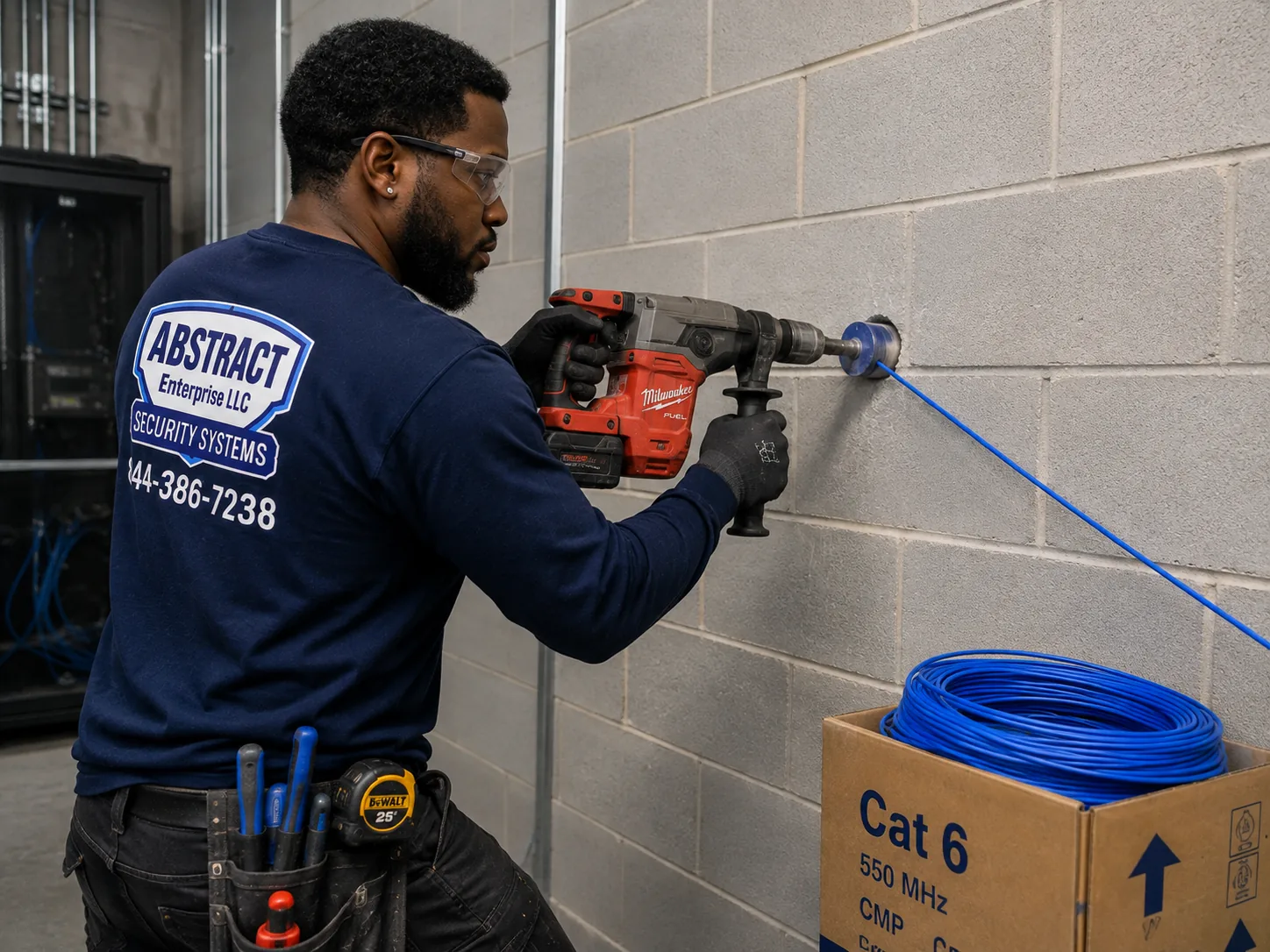
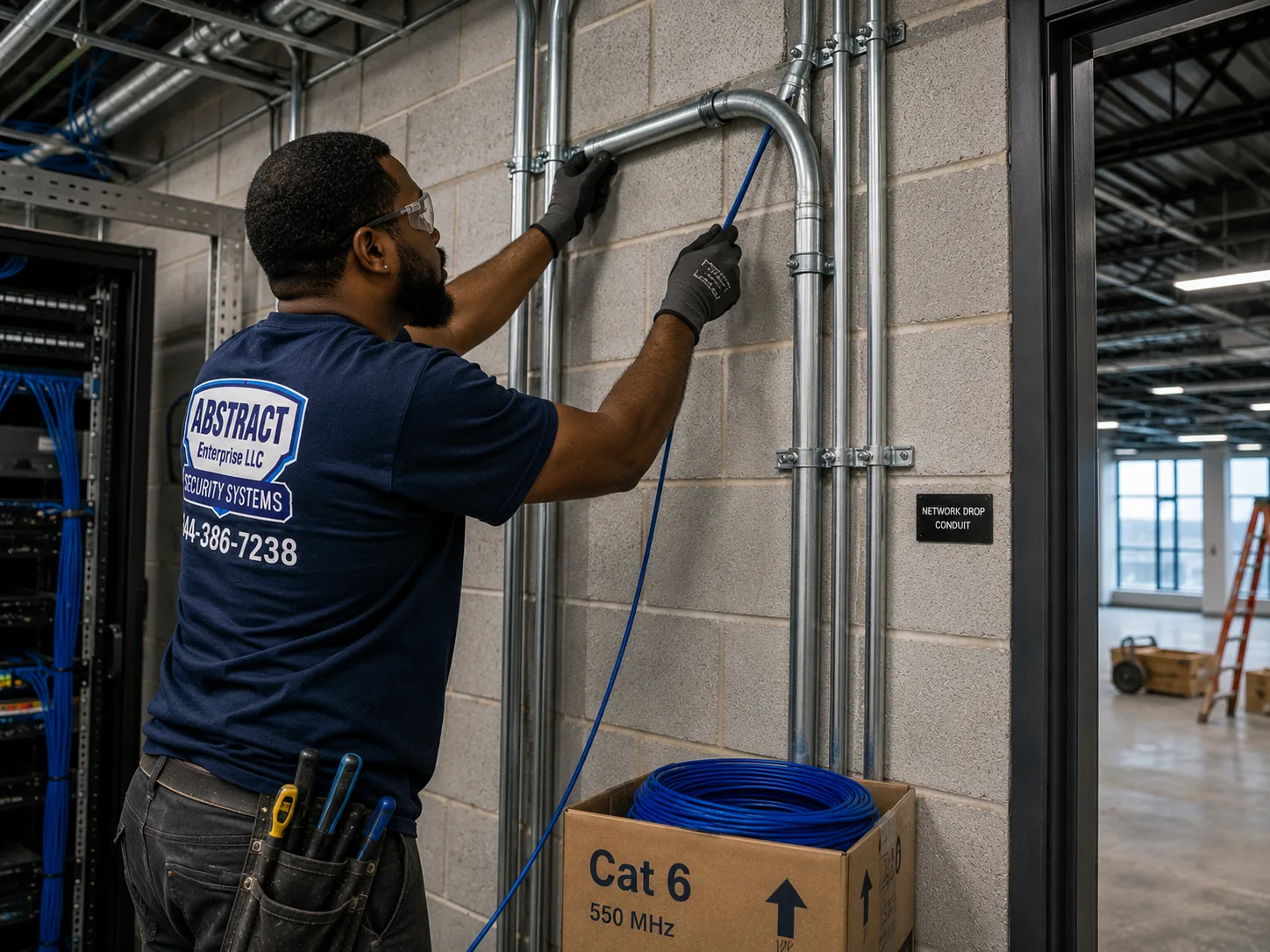
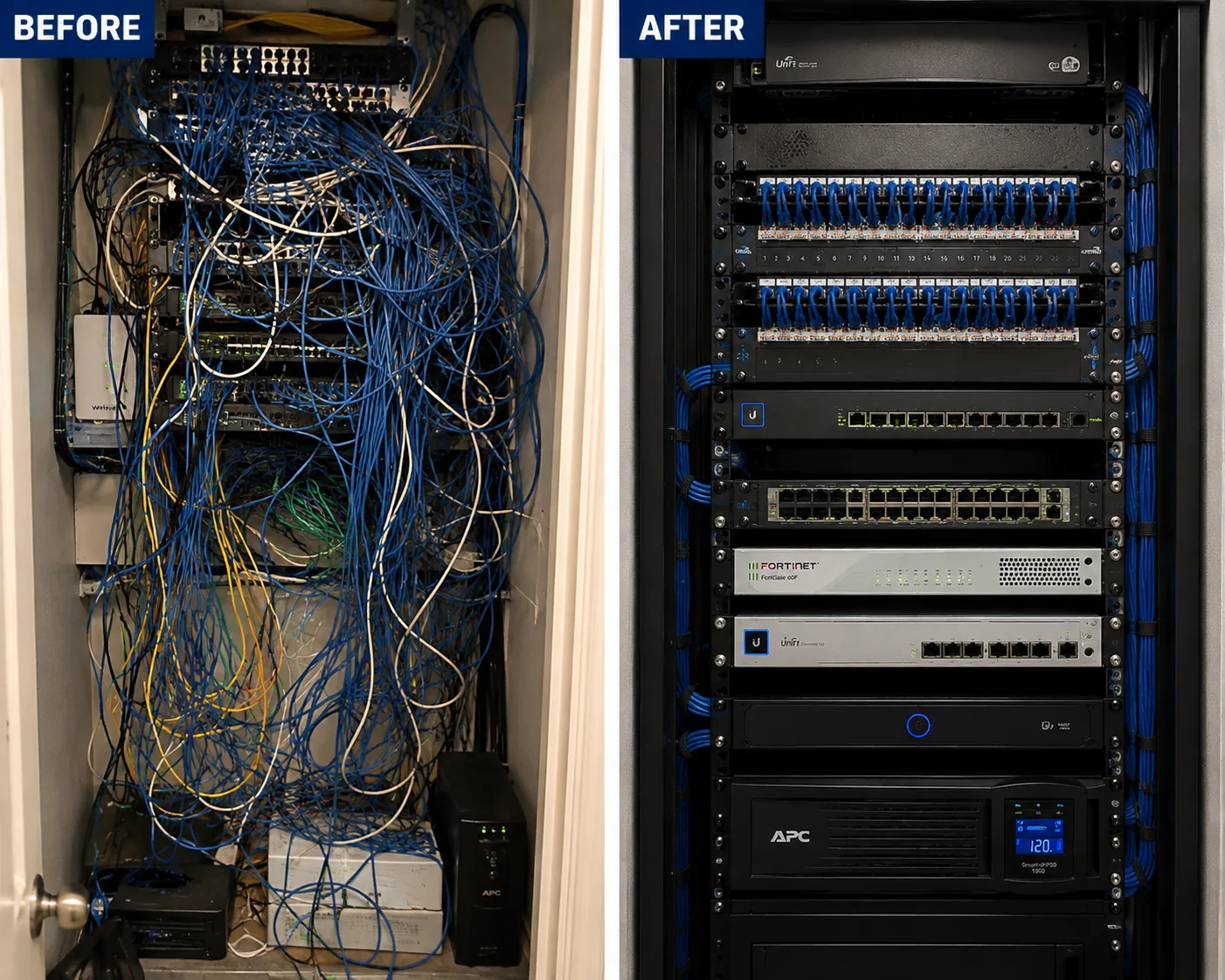
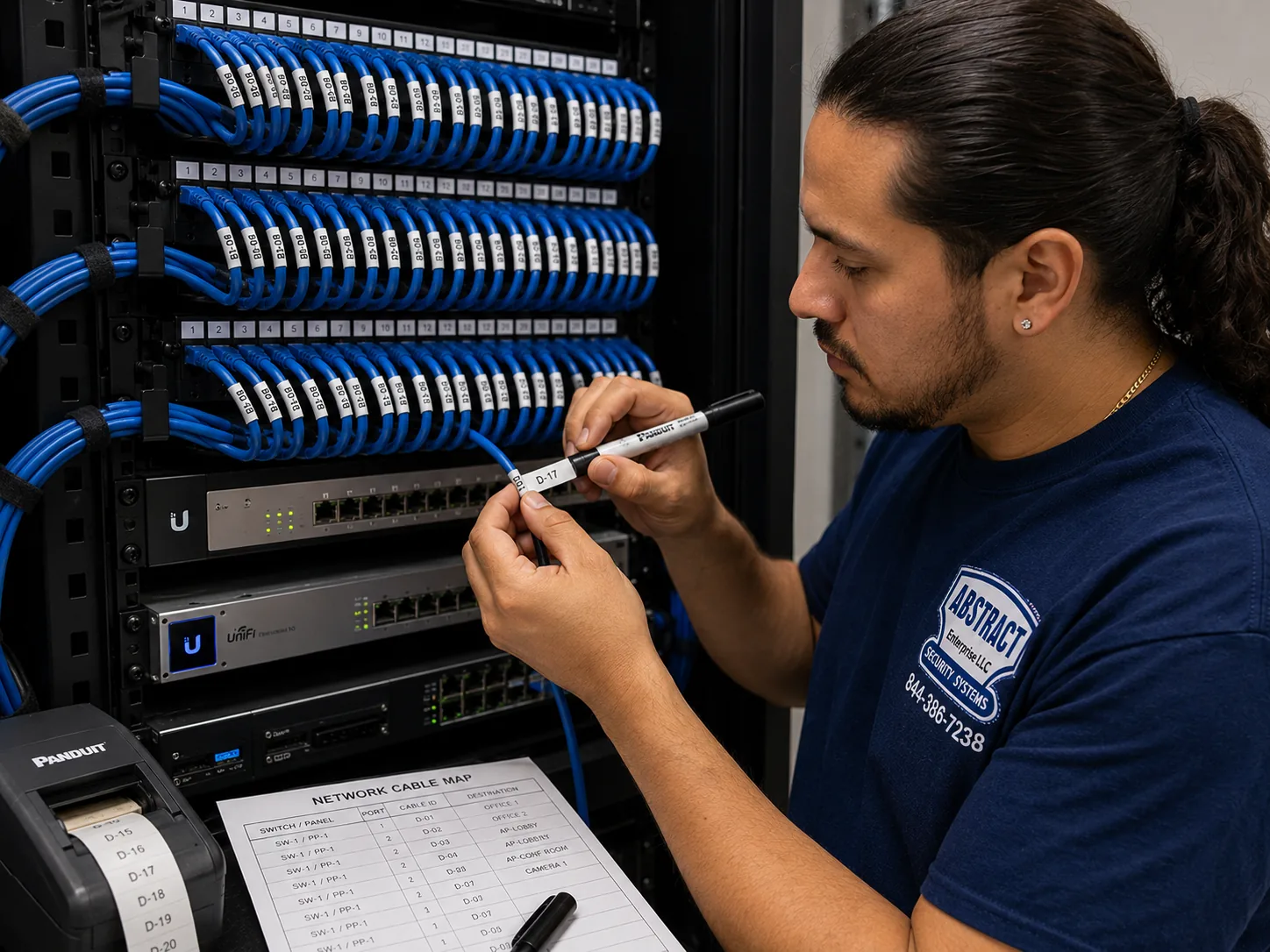
Certified camera runs through cellars, shafts, ceilings and conduit, core-drilled masonry pass-throughs sealed afterwards, and every run labelled at both ends.
Loading docks, yard gates, perimeter fences and high interior racks, with cameras on poles, parapets or steel and longer cable runs to a central recorder.
Dead cameras, dropped feeds and full drives diagnosed, and extra cameras added to an existing Capture system once we have tested what is already there.
If your building already has cameras from another company and you want to add to them, we test before we promise anything. Some older systems accept new cameras easily, some only with a recorder change, and some are worth retiring. We tell you which, with the reason, and price only what we can stand behind.

New York's buildings change three things about a camera job: what the camera is fixed to, how the cable travels to the recorder, and who must agree before we drill. These are the building types the public record and our sources describe across the five boroughs, and how we handle each.
Five- and six-story walk-ups on lots often 25 feet wide, with New Law tenements of 1901 and later on wider lots and around courtyards. Masonry walls, plaster ceilings, narrow halls, recorders in cellars.
Apartment houses from the 1910s to the 1930s, many of them co-ops. Plaster ceilings under steel and masonry arches, doormen or supers, boards that approve every alteration.
Brooklyn and Manhattan rowhouses, many in historic districts. Front facades under LPC rules, lath-and-plaster interiors, cellars running front to back.
Concrete slab buildings, including the 22 percent of homes in buildings of 100 or more units. Hung ceilings in places, long corridors, central security rooms and garages.
Frame houses in Staten Island, Queens and the Bronx. Siding, driveways, attics and basements, a single owner who decides everything.
Apartments over shops on commercial corridors, like the buildings around The Hub that the Bronx Times and PIX11 describe. Facades shared with signs and gate housings, two sets of rules in one building.
| Building | What holds the camera | How cable usually travels | Who signs off |
|---|---|---|---|
| Walk-up tenement | Masonry anchors in brick, or fixings through plaster into masonry | Down a stair chase or old riser to the cellar, along the cellar ceiling | The owner or managing agent |
| Prewar elevator co-op | Anchors in plaster-on-metal-lath ceilings or masonry walls | Through ceilings and service spaces, often booked around the service elevator | The board, through the managing agent |
| Rowhouse or brownstone | Small mounts tucked into reveals on the front, standard mounts in the rear | Inside the house to the cellar; never a visible run across the front | The owner, plus LPC where the house is landmarked |
| Postwar slab building | Concrete anchors in slabs and walls | Hung ceilings, conduit and the building's existing low-voltage risers | The owner, board or management company |
| Detached or semi-attached house | Mounting blocks on siding into framing | Attic or basement, then through a sealed hole in the rim joist | The owner |
| Mixed-use over shops | Masonry facade, or the steel of a storefront frame | Through the store ceiling to a recorder in the back room or cellar | The building owner, and the store tenant for anything in the store |
On tenements. The 1901 Tenement House Act required courtyards, running water and a window in every room, and the architects who built under it put up the bulkier New Law buildings that still line streets across Manhattan, Brooklyn and the Bronx. For cameras, those buildings share a few habits. The front door opens into a narrow vestibule and a long hallway with a stair at the back, so a camera at the inside of the vestibule door, set low enough to see faces rather than the tops of heads, does more than any wide-angle camera in the hall. The cellar is usually reachable from inside, and the recorder goes there, raised off the floor. The light is often poor, so we look at the hallway fixtures before we choose a camera, and we tell the owner plainly when a corridor needs better lighting before any camera can record something useful in it.
On plaster ceilings. In prewar buildings, a camera on a ceiling is often going into plaster laid over metal lath, under a structure of steel beams and masonry or terracotta arches. That plaster is hard and brittle. We score the surface, drill slowly, use fixings sized for the depth we find, and use a mounting box where the camera's base is too small to cover a slightly chipped edge. Where the ceiling is not worth the risk, a wall mount just below the ceiling line does the same job with less drilling.
On historic facades. The LPC's Permit Guidebook allows staff to approve security cameras that meet its criteria, and asks that a camera on a primary facade be as small as possible and painted to match. In practice that means we look first for a secondary facade, a recess, the underside of a lintel or a spot inside the vestibule looking out through the glass. Where the front of the building is the only option, we pick the smallest camera that can still do the job and plan for the paint. The owner files the LPC application; we provide the camera drawings, sizes and locations the application needs.


Commercial camera work in New York happens on corridors, and each corridor has its own problems. The ones below are described in the sources we used for this page. We have no information about the camera systems inside any named business and do not claim any of them as clients; we name them to show the kinds of places and problems a business camera plan has to handle.
Where East 149th Street, Willis Avenue, Melrose Avenue and Third Avenue converge, the oldest major shopping area in the Bronx, per Wikipedia. NYREJ reports 613 storefronts in the district and a plan for at least 20 new cameras.
The Village Voice called The Hub the city's busiest intersection outside Times Square, with over 200,000 pedestrians a day. The BID's new cameras face storefronts here.
NY1 reported open drug use around the plaza in October 2026. Merchants nearby want views of their own doors and sidewalk frontage, not just the BID's.
Where the NYPD's Connect New York demonstration began, according to amNY, letting businesses link their cameras to the local precinct.
Police1 reported new NYPD cameras going into East Harlem, Harlem, Washington Heights and Inwood, several aimed at bodegas. A store's own interior cameras remain its own job.
Wherever vehicles enter and leave, from a Manhattan garage ramp to a Staten Island business lot, plate capture and an overview camera work as a pair.
A camera in a New York storefront works harder than one in a house. The front-door camera faces daylight streaming through glass for half the day and headlights at night, so it needs a sensor and settings that handle a bright doorway and a darker shop at the same time. The register camera has to see hands and the counter from an angle where the customer's head does not block the view. The camera outside, on the facade, has to live with a roll-down gate that rises and falls past it twice a day, a sign that may be replaced, and in some corridors a landlord or BID with its own ideas about the facade. And the recorder has to sit somewhere an angry customer or a burglar cannot simply walk off with it, which in a small shop usually means a locked cabinet in the back room or cellar with the cables running through the ceiling. We plan each of those spots with the owner, one at a time, before we price the job.
The Third Avenue BID's camera project is useful for any business owner because of how it was planned. According to the Bronx Times, the BID chose locations with the NYPD using the places with the most 311 complaints and 911 calls, and the cameras face storefronts. The BID's Commercial District Needs Assessment, which ran from September 2024 to June 2025, found respondents overwhelmingly named public safety and cleanliness as the top priorities. That is the approach we take on a smaller scale: look at where problems actually happen in your own store or building, write down when and how, and put cameras there first. A merchant on the same block will still want their own camera on their own door and register, because a BID camera aimed at the street will not show who took what from the shelf.


We do not publish stories about a particular building unless we can document them, so this is not a tale about one address. It is the routine our technicians follow when a camera job starts in the kind of cellar that sits under thousands of walk-ups and storefront buildings across the city: a boiler, a meter bank, an old phone block on the wall, and somewhere a recorder from a previous installer with a blank screen.
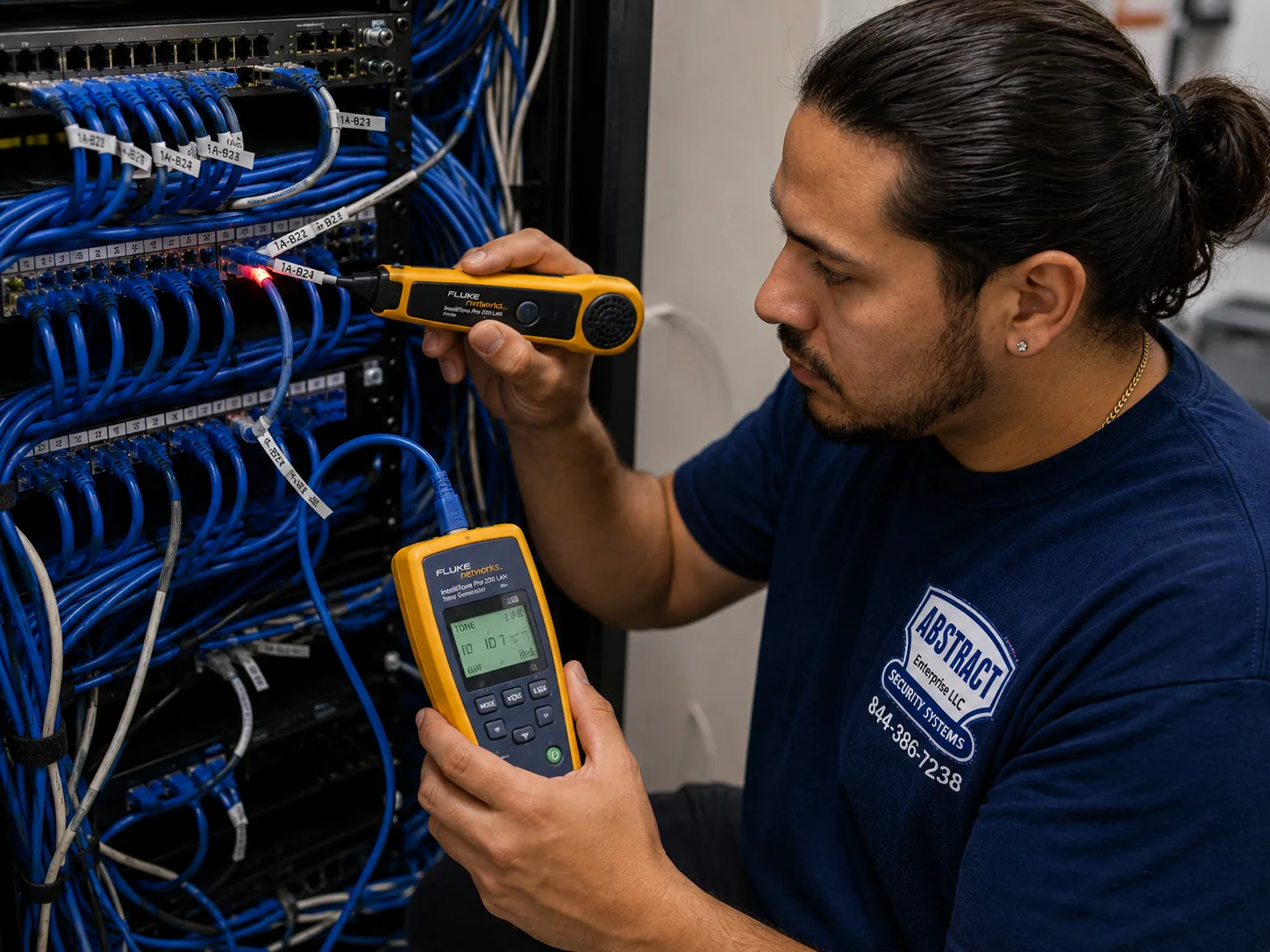
Before we touch anything, we photograph the old recorder, front and back, and write down every cable that goes into it. If it still powers on, we check whether anyone needs footage from it before we disconnect. Then we trace. Each old camera cable gets a tone generator at one end and a probe at the other, and as each one is found it gets a temporary label. We look at where the internet line comes into the building and how far it is from where the new recorder should go. We look up at the cellar ceiling for the cleanest path toward the front of the building and up the stair chase. We check for water marks, because a recorder under a leaking pipe will not last a winter. Only when we know which old cables pass, which have to be replaced and where the new recorder will live do we go upstairs and start talking about camera positions. In old buildings, that order saves hours.
Plate capture at gates, ramps and lots
Because those are two different jobs that pull a camera in opposite directions. A wide view needs a short focal length and a high position to see the whole entrance, while a readable plate needs the camera close to where plates pass, zoomed in tight, at a shallow angle, with a fast shutter so a moving car does not smear. One New York installer describes plate capture as a two-camera setup: an overview camera that records the vehicle and a dedicated plate camera positioned within about 10 feet of where plates pass. We plan it the same way. The overview camera tells you a grey sedan came in at 11:42 p.m.; the plate camera tells you which one.
Manufacturer guidance cited by a New York commercial installer puts the camera at least about one meter, roughly three feet, above headlight level and keeps the angle to the plate within about 25 to 30 degrees. Too high or too far to the side and the characters stretch and blur; too low and headlights wash out the image at night. In practice that usually means a short pole, a wall bracket beside the gate or a mount on the ramp structure, aimed where cars slow down, such as at a gate arm or the top of a ramp. We set it with real vehicles going past, day and night, rather than guessing from a ladder.
Usually the setup. Plates are reflective and headlights point straight at the camera, so a camera set for a general night view will overexpose the plate into a white rectangle. A plate camera needs exposure and shutter settings made for plates, an angle that keeps the headlights out of the center of the frame, and infrared that suits the distance. We tune those settings on site and review night footage before we sign the job off, because a plate camera that only works in daylight solves half the problem.
Old buildings, old cable
Sometimes. Old analog systems ran coax to each camera, and depending on the recorder and cameras chosen, some of that cable can carry a new signal while other runs are too damaged, too long or too badly spliced to trust. We trace and test each run before deciding. Where the old coax follows a good path, we may pull new network cable along it using the old cable as a guide, which saves opening walls. We give you a run-by-run answer and price the job on what we actually find.
Through the inside of the building wherever possible: a core-drilled hole through the facade wall behind the camera, sleeved and sealed, then into the cellar or the first-floor ceiling and along to the recorder. We avoid surface runs across the front of the building, both because they look bad and because they are easy to cut. On landmarked buildings the hole and the camera are planned together so the approved location is the one the cable can actually reach.
Remote viewing and internet
Usually yes, but it has to be set up differently. Many 5G and cellular home internet services sit behind carrier-grade address sharing, which blocks the inbound connections that old port-forward setups depend on. We use the recorder's cloud connection or the app's relay service instead, and we tell you honestly how many cameras you can watch at once on that connection before the picture stutters. In districts where many homes lack broadband, such as Melrose–Mott Haven–Port Morris at 44 percent, this is one of the first things we ask about.
A wired camera feeding a wired recorder does not use Wi-Fi to record, so a jammer that disrupts wireless signals does not stop it. In December 2025 Spectrum News reported New York authorities warning that some package thieves use Wi-Fi jammers to disrupt doorbell camera footage. That is one of the reasons we run cable to every camera we can. Remote viewing on your phone still travels over the internet, but the footage itself stays on the recorder.
Building rules and the city
The shed will block most of their view, and the work under it may knock them out of alignment. Under the Facade Inspection and Safety Program, buildings over six stories are inspected on a cycle and must put up protection such as a shed when a facade is found unsafe. NYCHA told the City Council in 2023 that it relocates cameras blocked by sheds or other obstructions, and private owners need the same plan. We can move cameras under or onto the shed for the duration where the shed contractor agrees, add a temporary camera at the entrance, and put them back when the shed comes down.
HPD's page on the law, Local Law 63 of 2021, covers smart access systems such as fobs, cards, apps and biometrics in class A multiple dwellings. The owner must give tenants a privacy policy, collect only minimal data, get express consent for reference data, destroy authentication data within 90 days unless it is anonymized, never sell it and never use it to harass tenants. HPD's page does not mention cameras directly, but when cameras and entry are tied together, we set them up so camera footage is used for monitoring entrances, exits and common areas, and we keep any face-recognition feature switched off.
Mostly a lighting problem. The Multiple Dwelling Law already requires adequate lighting in common areas, and a camera aimed down an unlit corridor records grainy grey shapes no matter how good it is. Infrared helps at short range but turns faces into flat silhouettes when there is a bright exit sign or window behind them. We tell the owner which fixtures need fixing before cameras go up, and we choose cameras and positions that work with the light the building actually has after dark.
Storefronts and BIDs
For most stores, yes. The Third Avenue BID's cameras at The Hub face storefronts and the street to help with problems like illegal parking and drug sales, and PIX11 reported they can be viewed by BID members. They are not aimed at your register, your aisles or your stockroom door, and you do not control how long their footage is kept. Your own cameras answer your own questions: who was at the counter, who went into the back, what happened at closing. A BID camera and a store camera do different jobs and work best side by side.
Out of sight and out of easy reach: a locked cabinet in the back room, a cellar, or a closet behind the office, never on the counter under the register. A recorder that walks out with the burglar takes its footage with it. We mount it in a cabinet with ventilation, run the camera cables through the ceiling so they are hard to follow, and set up remote viewing so the footage can be checked from a phone even if someone tampers with the screen.
Power and reliability
A battery backup on the recorder and the PoE switch that powers the cameras. Without one, a short outage or a tripped breaker reboots the whole system, and the gap in recording comes exactly when something might be happening. Battery backup sized for the recorder and switch keeps the system up through short outages and lets it shut down cleanly in a long one. We recommend it on every system that matters, and we put it on the quote as a separate line so you can see it.
These are the camera types and components we fit in New York buildings and businesses. The exact Capture models, their features and their prices are listed on the Capture price page for your borough. We will not quote a specification on this page that we have not checked against the current list; on the day, we confirm the model on the box against what you booked.
Compact cameras for vestibules, lobbies and hallway ceilings, easy to aim after mounting and less prone to infrared glare from a dome cover. The usual choice for walk-up entrances.
Longer-reach cameras for alleys, yards, driveways and parking areas, visible enough to deter, fixed to masonry or on brackets where the view needs reach.
Low-profile, tamper-resistant cameras for storefronts, mailrooms and places within reach of a hand, where a camera that cannot easily be turned or knocked is worth more.
Dedicated cameras with narrow views and settings for reading plates, mounted close to where cars slow, and always paired with an overview camera.
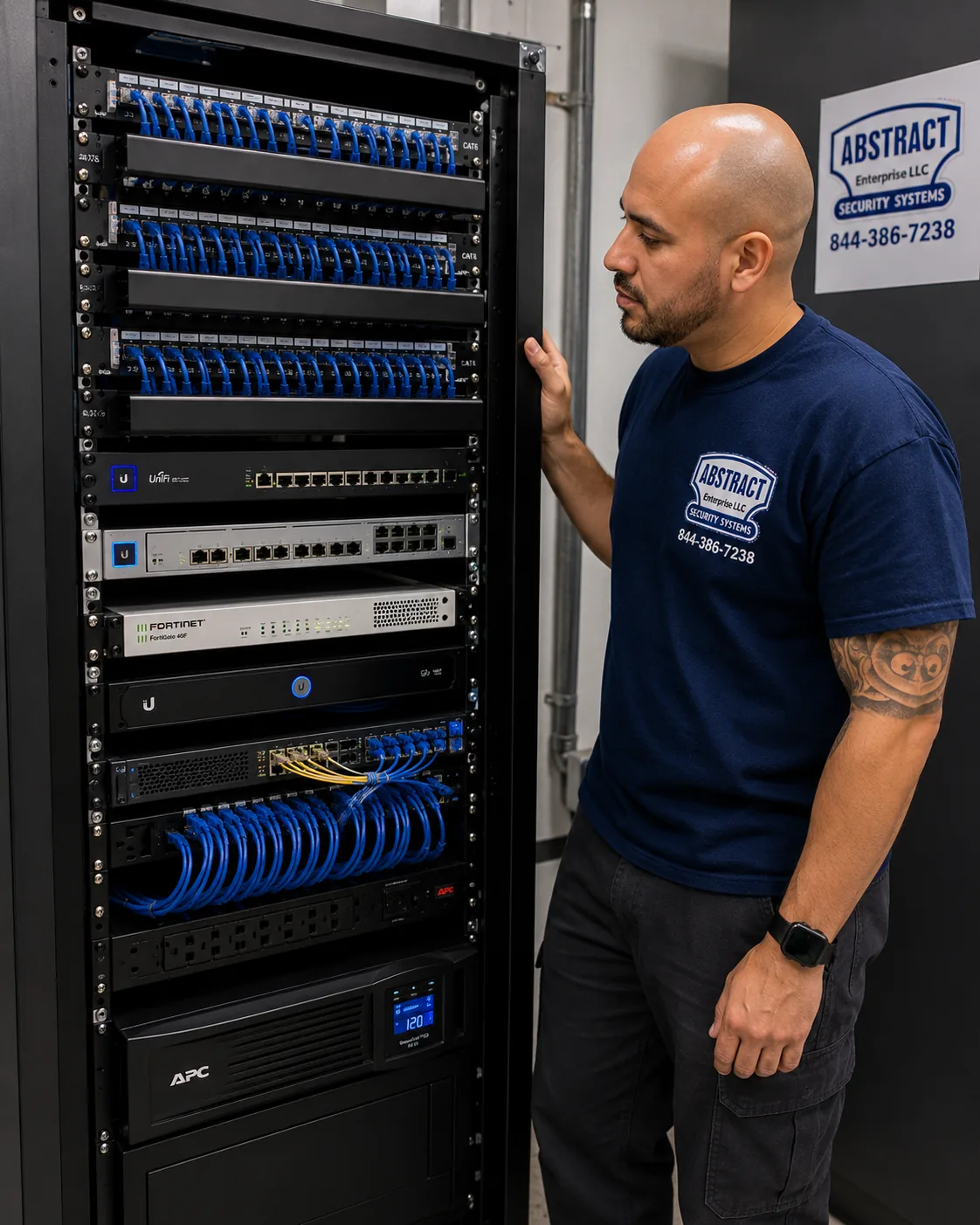
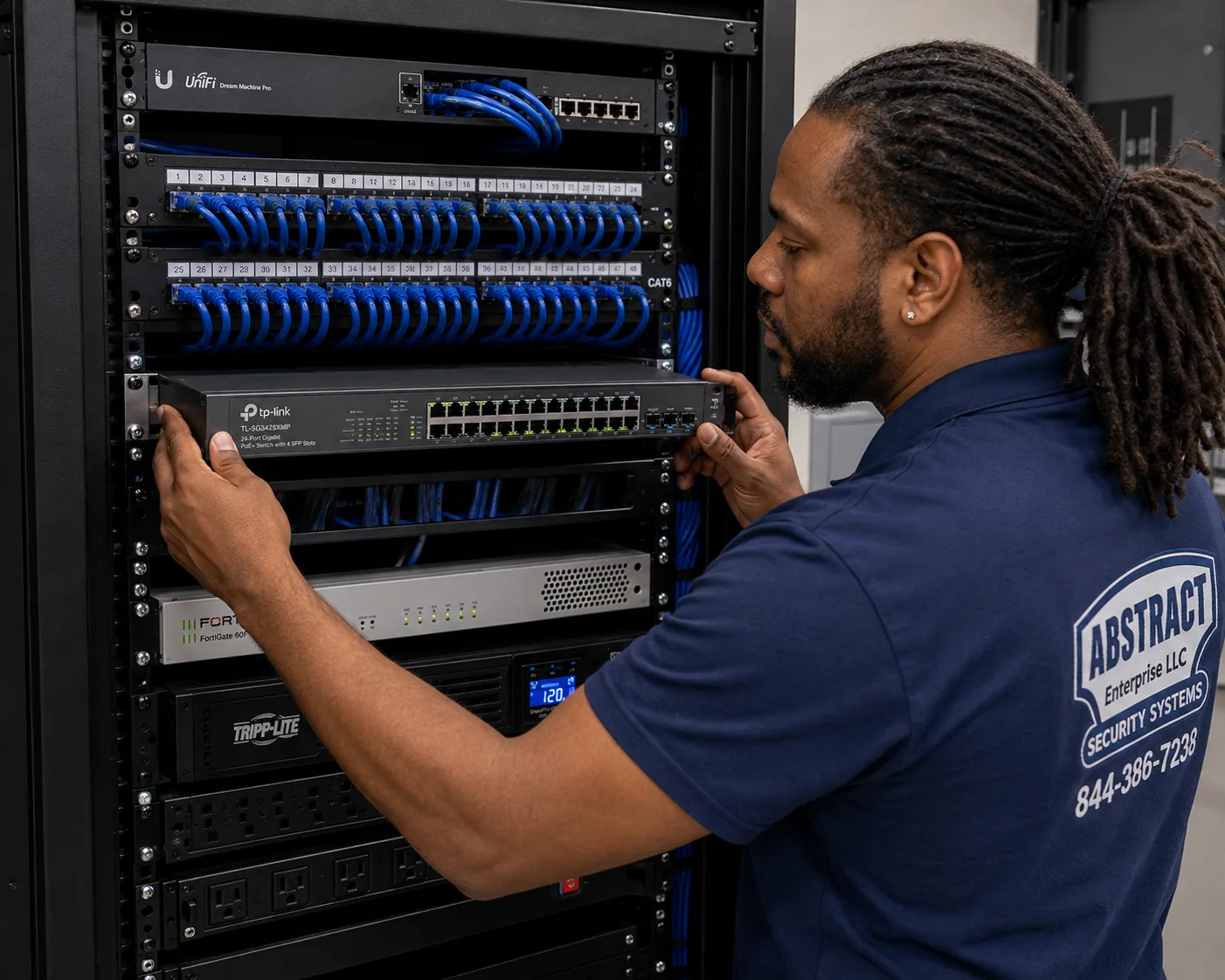
Network recorders sized for the number of cameras and the days of footage you want to keep, mounted in a locked, ventilated space with battery backup.
Switches that send power and video over one cable to each camera, so no camera needs its own outlet, sized for the total power the cameras draw.
Units that keep the recorder and switch running through short outages and protect them from the power dips old buildings are prone to.
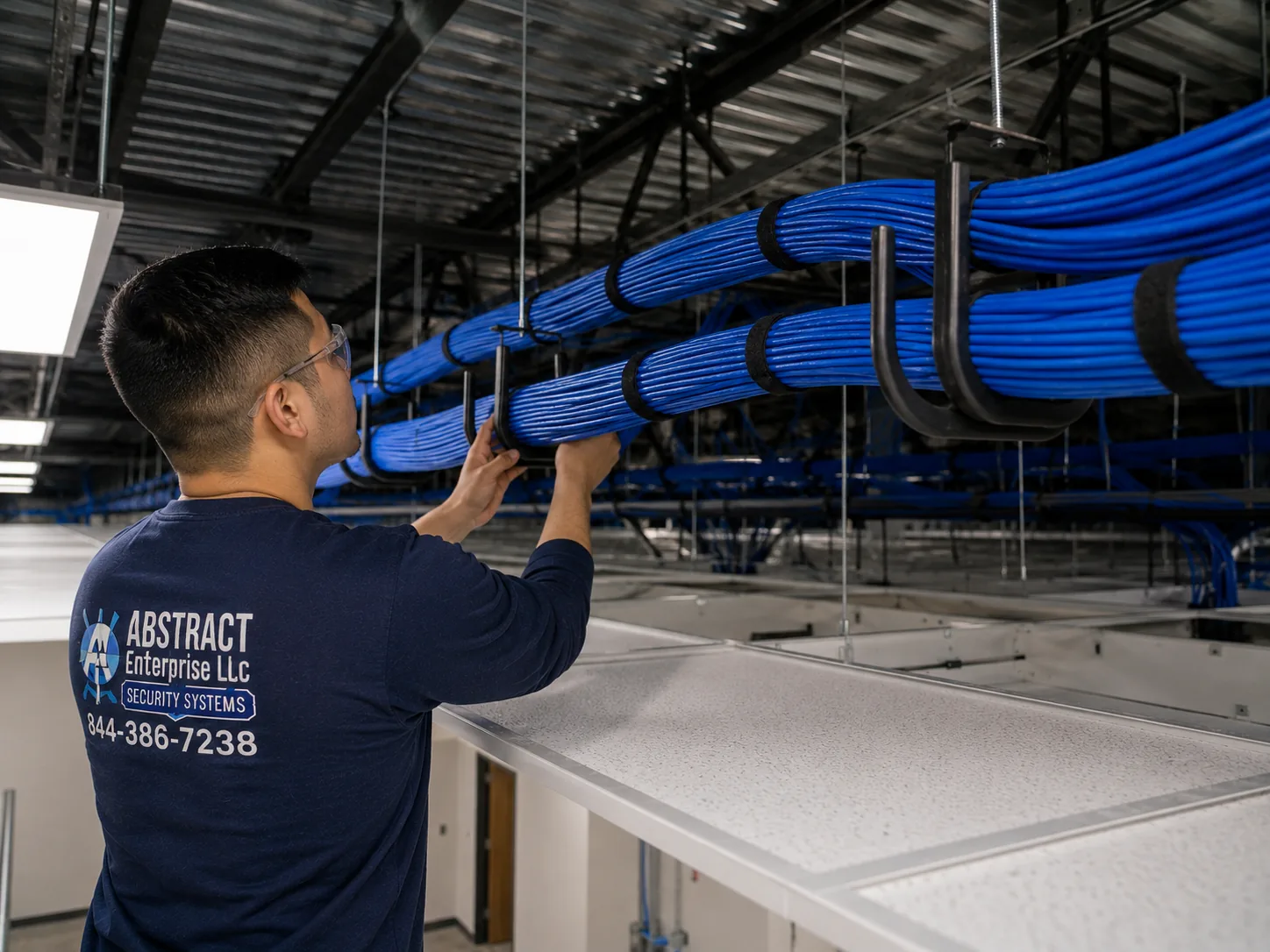
Certified network cable, outdoor-rated cable for exterior runs, EMT conduit where cable needs protection, J-hooks in ceilings, and sealed sleeves through masonry.
People sometimes ask whether they should go with a big national name instead. ADT is best known for monitored alarm systems, and Ring and SimpliSafe for doorbells, cameras and self-install kits that run mostly on Wi-Fi and the cloud. Those can suit a renter who cannot drill or a homeowner who wants a quick doorbell. What they do not do is plan a plate-capture camera at a garage ramp, trace forty years of cable in a Bronx cellar, write the camera drawings for an LPC application on a Brooklyn rowhouse, or put a wired recorder in a locked cabinet where a jammer and a burglar cannot reach it. A Capture system installed by a licensed local installer is wired, recorded on site, and owned by you, with no camera that stops working if a subscription lapses.
| Question | Self-install Wi-Fi kits (Ring, SimpliSafe) | Monitored national provider (ADT) | Wired Capture system by AESS |
|---|---|---|---|
| How cameras connect | Mostly Wi-Fi | Depends on the package | Cable to each camera wherever the building allows |
| Where footage is kept | Mostly cloud, by plan | Depends on the package | On your recorder, with remote viewing |
| Plate capture at a gate | Not designed for it | Not their usual focus | Planned as a two-camera setup |
| Old cable and cellars | Not addressed | Varies | Traced, tested and reused where it passes |
| Landmark and board paperwork | Up to you | Varies | We supply drawings and insurance papers |

We could not capture Google's AI Overview or the People Also Ask boxes for this topic from our build environment, so we are not going to pretend to quote them. What follows are claims we see repeated in quick online answers about camera installation in New York, set against what the public record and our field practice say. Marketplaces such as Angi, HomeAdvisor and Fixr publish national cost guides that feed many of those answers; they are fine for a rough sense of scale, but they are not a plan for a cellar in the Bronx or a garage ramp in Manhattan.
This is the claim that leads to the most disappointed calls. Resolution matters, but a plate is a small target moving across the frame, often at night, often lit by its own car's headlights. A wide 4K camera thirty feet from a gate can show you a car and still turn its plate into a smudge.
What reads plates is placement and settings: a camera close to where plates pass, within about 10 feet according to one New York installer, at least about three feet above headlight level, at an angle no wider than about 25 to 30 degrees, with a shutter fast enough to freeze motion.
That is why we install plate capture as a pair: a dedicated plate camera and an overview camera, each doing the job it is built for, both tested with real cars before we leave.
Answers on this vary, and some sources state flatly that low-voltage work needs a Department of Buildings permit. Since December 21, 2025, under Local Law 128 of 2024, wiring under 50 volts for signaling, communication, alarm and data circuits does not need a city electrical permit when a licensed master electrician, special electrician or qualified person does the work.
That does not mean no paperwork at all. Work that alters a fire-rated door assembly, changes a means of egress or ties into a fire alarm can still need filing, any new 120-volt outlet is a licensed electrician's job, and a landmarked building needs LPC approval for exterior cameras.
So the honest answer is "it depends on the building and the work," and we tell you which parts of your job need what before we start.
Wireless cameras avoid running cable, but they still need power, they still get mounted, and in New York they have to send video through brick, plaster on metal lath and concrete, often across a building full of competing networks.
They can also be jammed. Spectrum News reported in December 2025 that New York authorities warned some package thieves use Wi-Fi jammers to disrupt doorbell camera footage.
A wired camera on certified cable records to a recorder on site whatever happens to the Wi-Fi. We use wireless only where cable truly cannot go, and we tell you what you give up when we do.
There is no blanket law in the city's Administrative Code requiring every apartment building to install cameras. What the law does require in many buildings is an intercom at the main entrance under Multiple Dwelling Law §50-a, self-closing and self-locking entrance doors, and adequate common-area lighting.
HPD enforces the door rules: its self-closing door inspections for July 2023 to June 2024 produced 3,151 violations. A camera bracket or cable on a door or frame must never interfere with the closer.
Owners install cameras because of package theft, lobby incidents and insurance questions, not because a statute demands them. We plan them alongside the required door and intercom equipment so the two do not fight each other.
Not anywhere. An attorney answering on Justia wrote that common-area cameras in hallways and stairwells are lawful as long as voice is not recorded and the camera is not aimed to look into an apartment when its door is open. Cameras inside a tenant's apartment are another matter entirely, and installer guidance treats them as off limits for landlords.
Owners of rent-stabilized buildings should also be careful about removing building-wide services. New York's housing agency lists "security" among building-wide services on its decrease form, without defining it.
We set each hallway camera with privacy masks over apartment doors where they fall in the frame, leave audio off, and recommend owners document the security reason and notify tenants before cameras go live.
It works on most, but not always the way online guides describe. The City Council Data Team found 24.5 percent of New York households without a broadband subscription and 12.8 percent relying on a cellular data plan only. Many 5G and cellular home internet services share addresses in a way that blocks the port forwarding older guides recommend.
On those connections we use the recorder's cloud or relay connection instead, and we limit how many streams you try to pull at once so the picture stays usable.
The cameras record either way. Remote viewing is a window onto the recorder, and we size that window to the connection the building actually has.
National guides and AI answers tend to give one range for the whole city. Our own pricing does not work that way: each borough has its own Capture price list, with Brooklyn and the Bronx at the base rate and Queens, Staten Island and Manhattan above it, reflecting travel, access and parking.
Within any one job, the building moves the price far more than the borough. Eight cameras in a postwar building with a hung ceiling and a recorder closet off the lobby is a different job from eight cameras in a walk-up where every run goes down a stair chase to the cellar.
That is why we link every borough's price page from this one and ask for photos first, so the quote is built from the list and from your building, not from a citywide average.
Send photos of the entrances, the old recorder if there is one, and the gate or driveway if plates matter, and a technician will tell you how many cameras the job really needs, where the cable can travel, and which borough's Capture price list applies. Call (800) 486-0943, message us on WhatsApp, or use the quick form.
Every Capture camera job in New York follows the same eight steps, whether it is two cameras at a Staten Island driveway or thirty across a Bronx apartment complex. The order matters most in old buildings, where a cable path planned too late is the usual reason a camera ends up in the wrong place.
The borough and street, whether it is a walk-up, elevator building, rowhouse, storefront or lot, and photos of the entrances, the street front and any old recorder. We match the job to your borough's Capture price list.
Landlord, co-op or condo board, managing agent, store owner, and the LPC where the building is landmarked. We prepare a certificate of insurance and camera drawings where they are needed.
On site we agree what every camera must prove: a face, a plate, a register, a package shelf. Each view gets a height, angle and lens; plate cameras get their own spot.
A secure, dry, ventilated place for the recorder and switch, and a mapped route to each camera through cellars, shafts, ceilings, conduit or a sealed core hole, clear of fire-rated assemblies.
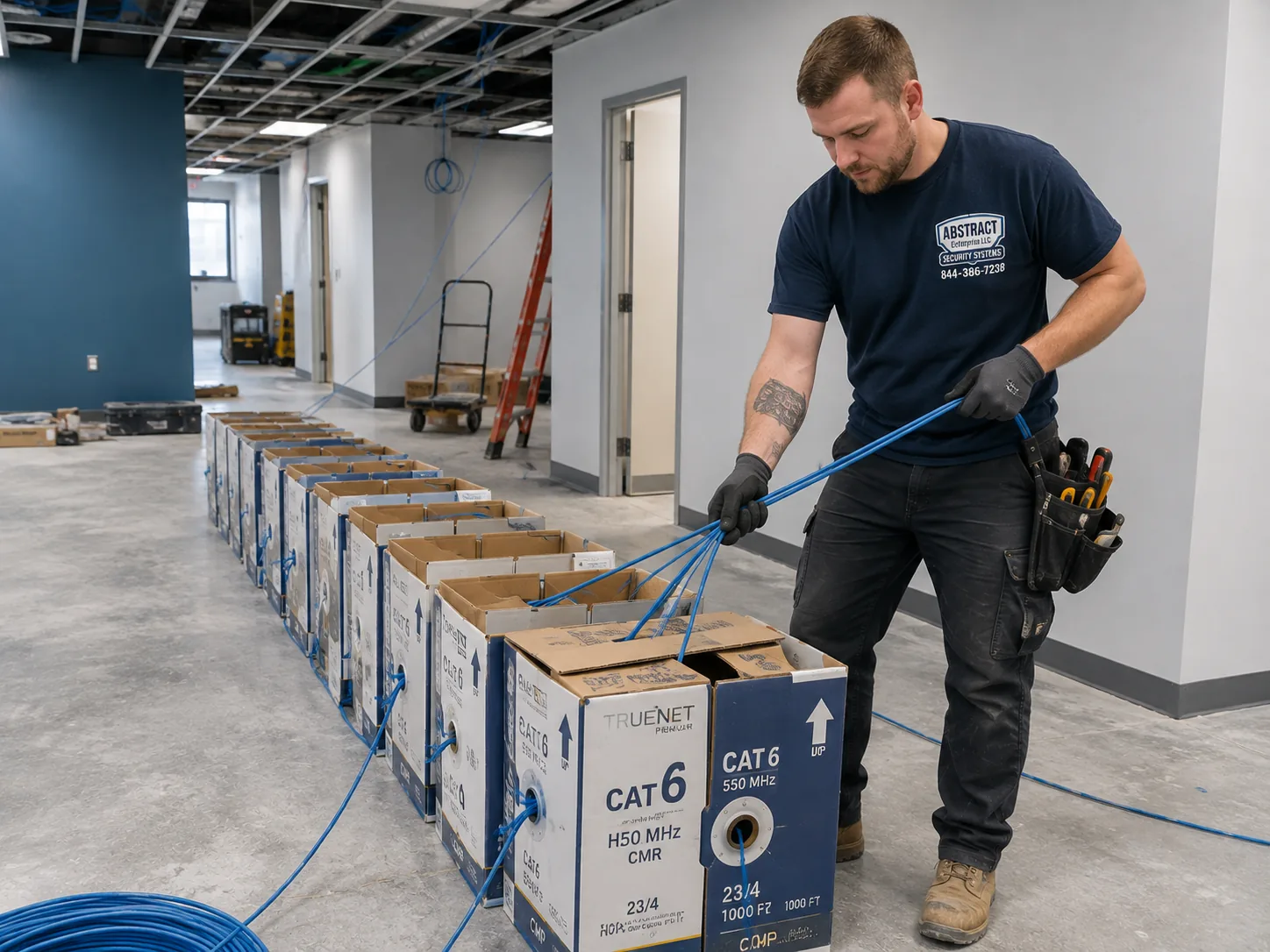
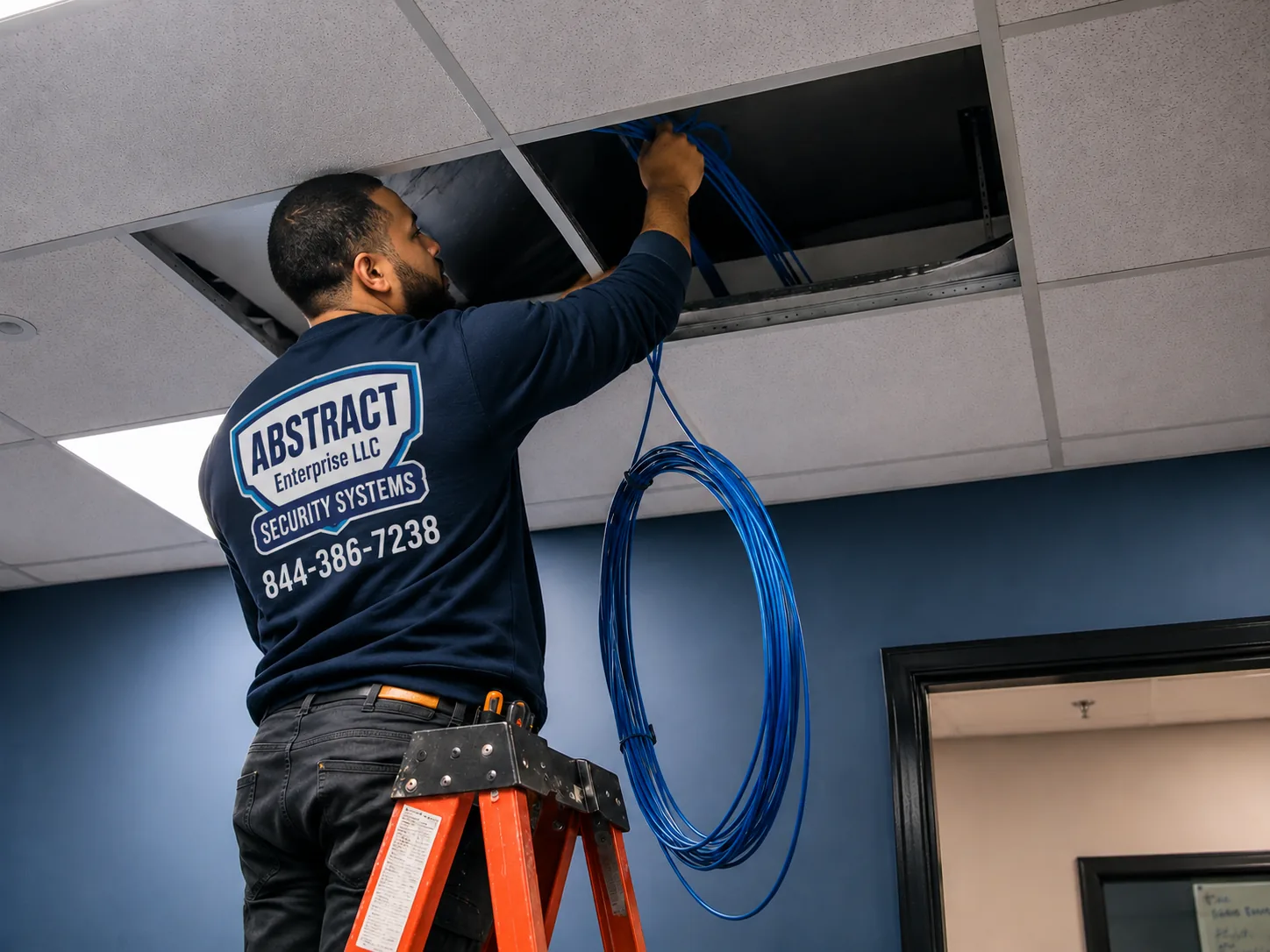
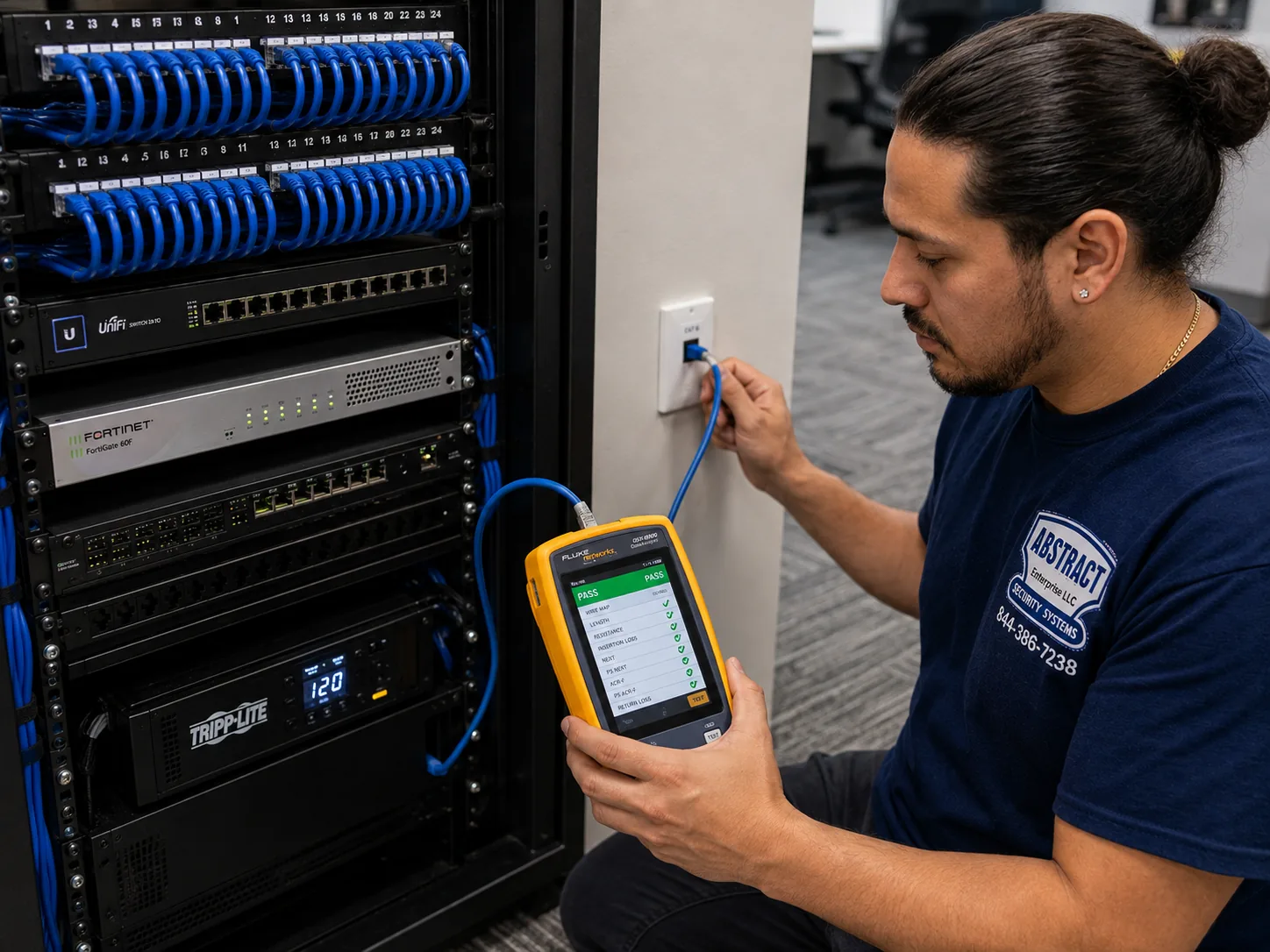
Every run pulled, supported on hooks or in conduit, labelled at both ends and tested with a cable analyzer before any camera goes up.
Cameras fixed into masonry, framing, concrete or steel with fixings rated for the material; recorder, PoE switch and battery backup mounted and dressed.
Focus, exposure, privacy masks and recording schedules set; plate shots checked with real vehicles; night footage reviewed before sign-off.
A separate login for each person, a walkthrough of finding and exporting footage, and a sheet listing camera locations, cable labels, recorder details and retention.

A citywide page needs anchors. These are places our sources describe in ways that bear directly on camera work, from a business district that just mapped its cameras to 911 calls to the precincts where businesses first linked cameras to the police.
The Bronx's oldest major shopping area, named for the meeting of rapid transit and trolley lines in the early 20th century; the Third Avenue El spur above East 149th Street closed in 1973.
A seven-story Beaux-Arts office building of 1901–1902 by architect Michael J. Garvin for brewer Mathias Haffen, an individual landmark at The Hub where LPC rules govern anything on the facade.
Completed in 1914, described by the Village Voice as where the Bronx was born as the 62nd and last county of New York State.
Named in the MTA's October 2026 plan for taller glass-panel fare gates at 20 more stations, a reminder of how much foot traffic passes the storefronts above.
Buildings A and B at 556 and 600 Bergen Avenue, with nearly 500 income-restricted units, a YMCA and a BronxNet production studio, per Norwood News; new construction near the old Hub.
Where the NYPD's Connect New York demonstration began in June 2023, according to amNY, before the pilot grew to nine precincts across five boroughs.
We install Capture camera systems in every borough, each priced from its own list: Brooklyn Capture camera prices, Bronx Capture camera prices, Manhattan Capture camera prices, Queens Capture camera prices and Staten Island Capture camera prices. Outside the city we also serve Long Island and the Hudson Valley; see Long Island Capture pricing and Hudson Valley Capture pricing. For everything else we do, start at the AESS home page.
Every Capture camera job in New York City is priced from the Capture price list for its borough, and nothing on the day is added that is not on that list or agreed in writing first. We do not print a citywide number on this page because there is not one: Brooklyn and the Bronx sit at our base rate, Queens a little above it, Staten Island above that, and Manhattan highest, reflecting the cost of travel, access and parking in each. Open the price page for your borough, add up the lines that match your building, and send us photos so we can confirm them.
| Where the property is | Price list to use | What usually drives the total there |
|---|---|---|
| Brooklyn | Brooklyn Capture prices | Rowhouse cable routes to the cellar, landmark-friendly front cameras |
| Bronx | Bronx Capture prices | Storefront facades, tenement lobbies, recorder cabinets in basements |
| Manhattan | Manhattan Capture prices | Board rules, service elevator time, prewar plaster ceilings, garage plate capture |
| Queens | Queens Capture prices | Driveways, shared alleys, long runs between garden apartment buildings |
| Staten Island | Staten Island Capture prices | Outdoor runs on frame houses, driveway plate capture |
| Not sure, or several boroughs | NYC Capture prices | Portfolios with buildings in more than one borough |
Take a six-unit walk-up that wants a vestibule camera, a lobby and mailbox camera, a rear yard camera and a camera at the cellar door, with a recorder in the cellar and remote viewing for the owner. On the borough's price list that is four general cameras, a recorder sized for them, four cable runs at the lengths the building needs, battery backup, and setup of the viewing app. Add a garage or lot with cars coming in and out, and the quote gains a plate-capture camera and an overview camera at the gate. Move the same building from Brooklyn to Manhattan and the lines stay the same while the borough's rate changes. Nothing else is added on the day unless you ask for it and agree to it in writing.
If you already own cameras or a recorder and want them installed or reused, tell us. We test them first and price labor for what passes, as set out below.
Full terms — including 50% deposit, one-year parts-only warranty on AESS-supplied products, and the late-fee schedule — are set out in the service agreement.Three common New York jobs, built only from lines on your borough's Capture price list. Open the price page for your borough to see the figure for each line; there is no package premium and no hidden extra.
Two to four cameras covering the stoop or porch, the front door or vestibule, the side gate and the rear yard, a recorder sized for them in the cellar or a closet, cable runs inside the house, and viewing on the owners' phones. Suits Brooklyn brownstones, Queens semi-attached houses and Staten Island two-families. Prices on your borough's Capture price page.
Six to eight cameras: vestibule, lobby, mailroom, hallway or stair, rear yard and cellar door for a building, or front door, register, aisles, stockroom and sidewalk for a store. A locked recorder cabinet with battery backup, a PoE switch, certified and labelled runs, and separate logins for owner and super or manager.
The standard building system plus a plate-capture camera and an overview camera at the garage ramp, lot gate or loading dock, longer outdoor runs in conduit, a larger recorder for more days of footage, and a night review of plate shots after installation.
If you already own cameras, a recorder or cable that you want installed, we install it at labor-only prices from the same borough list, as long as the equipment is in sound condition and suited to the job. We test cameras and recorders on site before they go on a wall, and if something is not up to it, we say so plainly and show you what on the Capture list would replace it. Old cable in the building is traced and tested run by run, and only the runs that pass are reused.
The full Capture price list for New York City, for portfolios across boroughs. Capture camera installation prices NYC
Brownstones, rowhouses and walk-ups at the base rate. Capture camera prices in Brooklyn
Storefront corridors like The Hub and apartment buildings at the base rate. Capture camera prices in the Bronx
Co-ops, condos, garages and prewar elevator buildings. Capture camera prices in Manhattan
Driveways, garden apartments and storefront strips. Capture camera prices in Queens
Houses, driveways and small business lots. Capture camera prices on Staten Island
Long Island homes and businesses on their own lists. Nassau County Capture prices · Suffolk County Capture prices
The nearest Hudson Valley counties. Westchester County Capture prices · Rockland County Capture prices
Orange County · Putnam County · Dutchess County · Ulster County Capture prices.
It depends on the borough and the building, which is why each borough has its own Capture price page. A four-camera job is built from four camera lines, a recorder sized for four, the cable runs at the lengths your building needs, and phone setup, with battery backup recommended. Brooklyn and the Bronx are at our base rate, and Queens, Staten Island and Manhattan are priced above it. Send photos and the address and we will tell you exactly which lines apply.
Labor is built into each line of the borough price list rather than charged as an open-ended hourly figure, so a camera line covers mounting, aiming and connecting that camera, and a cable line covers pulling and testing that run. Things that genuinely add time, such as core drilling through masonry, conduit in exposed areas or lift access to a high facade, are listed separately so you can see them before you agree.
Usually not for the camera cabling itself. Since December 21, 2025, Local Law 128 of 2024 says wiring under 50 volts for signaling, communication, alarm and data needs no city electrical permit when done by a licensed master electrician, special electrician or qualified person. A new 120-volt outlet does need a licensed electrician, work affecting fire-rated doors, egress or a fire alarm can need filing, and landmarked buildings need LPC approval for exterior cameras.
Generally yes for your own living space, as long as audio recording follows New York's consent rules, which is why we usually leave audio off, and as long as the camera does not record a roommate's private space or a neighbor's home. Renters should still check the lease before drilling, because mounting holes and cable runs are alterations, and a camera on a shelf or a no-drill mount avoids that question.
For anything that drills into the building or goes in a common area, yes. Drilling inside a rented apartment usually needs written approval, and hallways, lobbies and facades belong to the owner. A 2012 report described a Bronx public housing resident threatened with eviction after putting up her own cameras. Get the landlord's agreement in writing first; we are happy to send the owner a description of exactly what we plan to install and where.
Sometimes, with the building's permission. Most New York apartments have a buzzer or intercom rather than doorbell wiring, so a wired doorbell often is not an option. A small camera above the door or a peephole-style camera can cover your doorway, but the hallway belongs to the owner, sources disagree on what a tenant may do there without consent, and the camera must not aim into a neighbor's apartment. Ask the landlord or board first and keep audio off.
No general city law requires cameras in every apartment building. What the law requires in many buildings is an intercom at the main entrance under Multiple Dwelling Law section 50-a, self-closing and self-locking entrance doors, and adequate lighting in common areas. Owners install cameras because of package theft, lobby incidents and insurance, and the best plans put cameras alongside those required items.
Cameras covering common areas such as entrances, hallways and stairwells are generally lawful, according to an attorney answering on Justia, as long as voice is not recorded and the camera is not aimed to look into an apartment when its door opens. A camera trained on one resident's door to watch that person is a different matter. We set privacy masks over apartment doors in the frame and recommend boards and owners tell residents before the cameras go live.
New York State requires security and alarm system installers to be licensed, and the city's low-voltage permit exemption depends on the work being done by a licensed electrician or qualified person. AESS works under NYS license number 12000287431. Ask any installer for their license number and certificate of insurance before they start, and check that the name on both matches the company you hired.
Sharing is voluntary. The city's Community Camera Sharing Program lets a business with cameras share live feeds with the NYPD during emergencies, with registration through NewYorkCityConnect.org, and amNY reported in 2024 that businesses in the Connect New York pilot choose how and when footage can be accessed. If you want to take part, we make sure the recorder and network can support it without giving anyone more access than you intend.
Long enough to cover the gap between an incident and someone asking for the video. Package thefts and lobby incidents are often noticed days later, and NYCHA has described 21-day retention on its newer cameras. We size the recorder's storage for the number of cameras and the days you want, set the retention on the recorder, and write it on the system sheet so the owner and super know when footage will be overwritten.
A few cameras at a house or small store are usually a one-day job. A walk-up or storefront with six to eight cameras is often one long day, depending on how hard the cable route is. Larger buildings, plate capture with outdoor conduit, or jobs limited by board hours and service elevator bookings can take more than one visit. We give you a time estimate with the quote and tell you which parts are noisy.
Look past the star rating to what reviewers describe: whether the installer explained where each camera would go, cleaned up afterward, labelled the cables, handed over the passwords and came back when something needed adjusting. Then check the basics yourself: a state license number, a certificate of insurance, a written list of what is included, and whether the equipment and recorder become yours with no subscription needed to keep them recording.
Tell us the borough and address, the building type, how many entrances there are and what each camera needs to show. Photos of the entrances, the gate or driveway and any old recorder make the quote exact. Prefer to talk? Call (800) 486-0943.
From a walk-up vestibule in the Bronx to a brownstone stoop in Brooklyn, a garage ramp in Manhattan, a shared driveway in Queens or a business lot on Staten Island, the job starts the same way: photos of the entrances, a clear sentence about what each camera must show, and an honest match to your borough's Capture price list. Call (800) 486-0943, message us on WhatsApp, or send the quote form, and we will tell you exactly what your building needs before anyone drills.
Capture Camera Installation by neighborhood: NYC hub, NYC capture camera installation
Capture Camera Installation by neighborhood: Hudson Valley hub, Hudson Valley capture camera installation