
Warehouse Security Camera Installation
in Rockland County
4K PoE camera systems built for the way Rockland warehouses actually work: the Route 303 corridor, Route 59 food floors loading before dawn, contractor yards from Congers to Haverstraw, and a state line minutes from every dock. The recorder, footage and passwords stay yours — the monthly fee stays zero.
Get a Free Warehouse Security Quote
Fixed pricing, model numbers included — a tech replies fast.
This is our Rockland County warehouse camera page. Start from the NYC warehouse camera hub for the five boroughs, or the Abstract Enterprises Security Systems homepage for everything we install.
Get a Rockland County Warehouse Camera Quote
- Free site walks across the county — book a warehouse security assessment by phone or the 60-second form
- A fixed estimate in writing, camera by camera with model numbers on it — never a phone-script guess
- Three-year warranty on AESS-supplied products, installed under NYS low-voltage license #12000287431
Warehouse Security Camera Installation Built for Rockland County Buildings
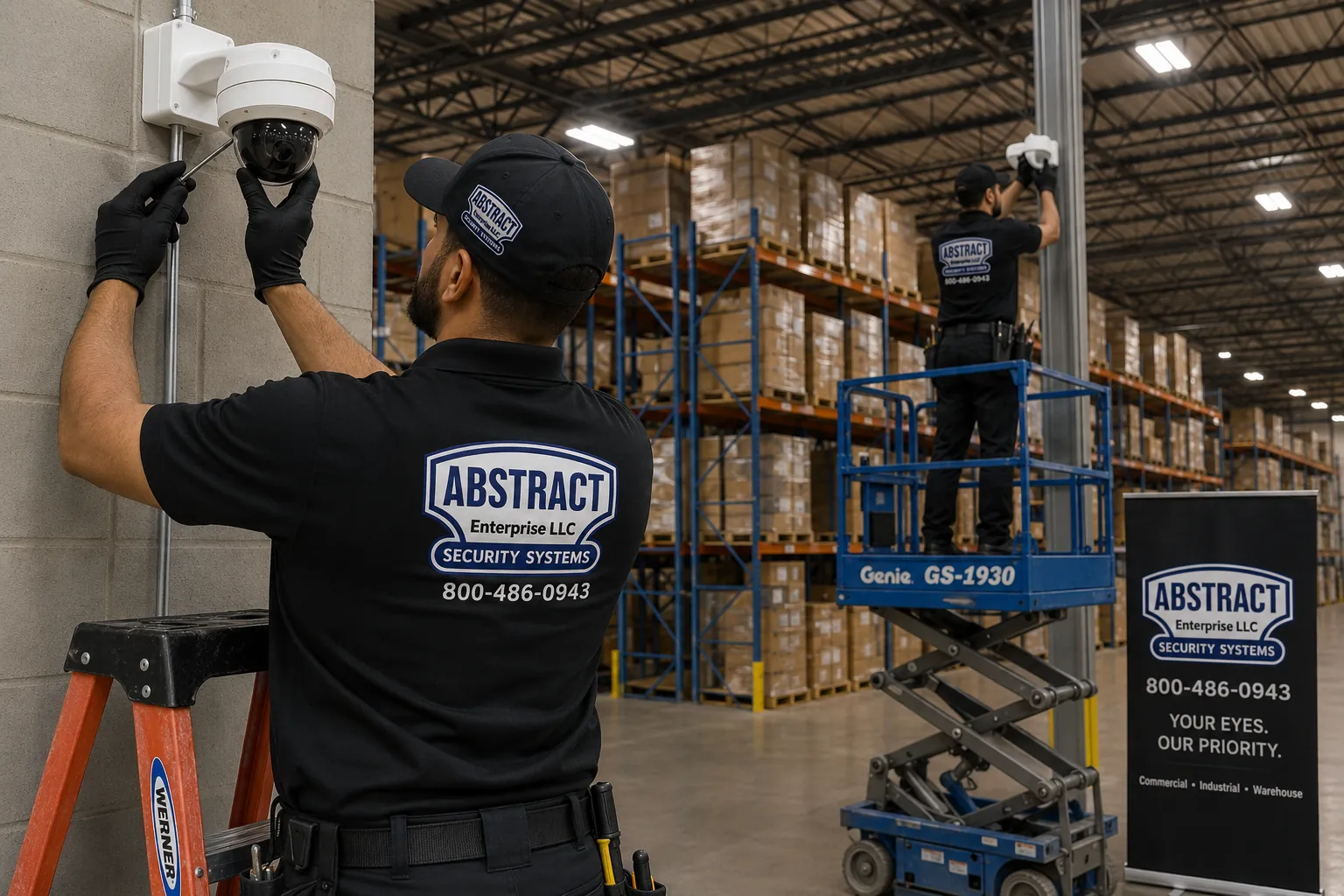
A Rockland warehouse leaks money at coordinates you can name: the cage where copper and premium stock concentrate, the driveway a loaded trailer exits toward the state line, the cooler door where route shrink hides, the shared 303 truck court three tenants argue over, the fence leg past the reach of anybody's WiFi. Driveway cameras and warehouse-club kits were engineered for none of those coordinates — and this county, from a Route 59 food floor to a Haverstraw materials yard, exposes generic design fast. We work from the property outward: count the decision points across your docks, cage, gates, and fence legs, read the audit clauses and certification language your operation actually carries, and engineer the coverage against all of it at once.
Abstract Enterprises Security Systems is a New York State licensed low-voltage security contractor, license #12000287431, and Rockland runs as a scheduled weekly leg — up the Palisades from our Fordham Road office to the 303 corridor, Route 59, and the river towns, on a route instead of an apology. A single build standard rides the whole route: commercial 4K IP cameras over hardwired Cat6, PoE switching that holds reserve ports, an NVR on your own floor sized to a retention figure approved in writing, and remote viewing demonstrated on your phone before the truck clears your gate. No subscription exists anywhere in the design, no per-camera monthly line — the identical promise behind every security camera installation we do across Rockland County.
Half-dead systems hold a standing lane on the same schedule: recorder swaps, camera replacement, cable repair, and full adoption of orphaned installs whose original company stopped crossing the Hudson — handled by the crew behind our Rockland County camera repair calls, usually same day. What follows: the design logic for buildings like yours, county-wide pricing with nothing hidden, the questions Rockland owners actually ask, and the blind spots almost every first walk uncovers. Use what helps, then call (845) 640-3835 or take the 60-second form.
Price My Rockland County Warehouse Cameras
Four fast answers — and the reply comes from an installer, never a call center. Use it for fast numbers, or skip it and call to put the job on the calendar directly. No obligation, no spam.
Why Rockland County Warehouses Need Purpose-Built Camera Coverage
Rockland compresses a full industrial economy into the state's smallest county outside the city — and hangs nearly all of it on one road. Route 303 carries the distribution stock from Orangeburg and Blauvelt up through West Nyack, Valley Cottage, and Congers; Route 59 runs one of the Northeast's densest food-wholesale economies through Spring Valley and Monsey; Suffern and Hillburn work the Thruway interchange where three highways and two states meet; Pearl River holds the pharma-legacy and lab-support floors; and Haverstraw and Stony Point keep the county's river industry — aggregates, marine work, contractor yards — running on the Hudson. The geography's defining fact never changes: the Bergen County line sits minutes from almost every loading dock, which means anything that leaves your property can be in another state before the phone gets answered.
The losses follow that map. Cargo theft causes up to $35 billion in estimated annual U.S. losses, according to the National Insurance Crime Bureau — and a county wedged between the Thruway, the Palisades, and the state line collects its share, alongside the homegrown patterns: enclosed trailers vanishing from 303-corridor yards overnight, converter and fuel crews sweeping fleet rows near the interchanges, cases walking off Route 59 wholesale floors one hand truck at a time. When the count comes up short, a gate lane that logged every plate and a cage covered at identification density are what turn a Rockland County Sheriff report into a case that survives the state line — instead of a description of a dark pickup headed for the bridge.
Above the theft layer sits the paperwork layer: food-distribution and certification audits that dictate coverage and retention, pharma-support contracts carrying chain-of-custody language, landlords enforcing insurance limits, towns running their own permit desks, and the state cannabis regulator applying its surveillance rules to a licensed Rockland floor exactly as it does downstate. And when a forklift claim or slip-and-fall lands in a county courtroom, a single time-stamped clip from a recorder you own settles in one afternoon what testimony would drag across a year. In this county the cameras' first assignment is documentation the entire operation stands on — put in by a crew that drives this county weekly on a schedule, never on a dare.
Warehouse Camera Systems We Install Across Rockland County
4K PoE IP Camera Systems
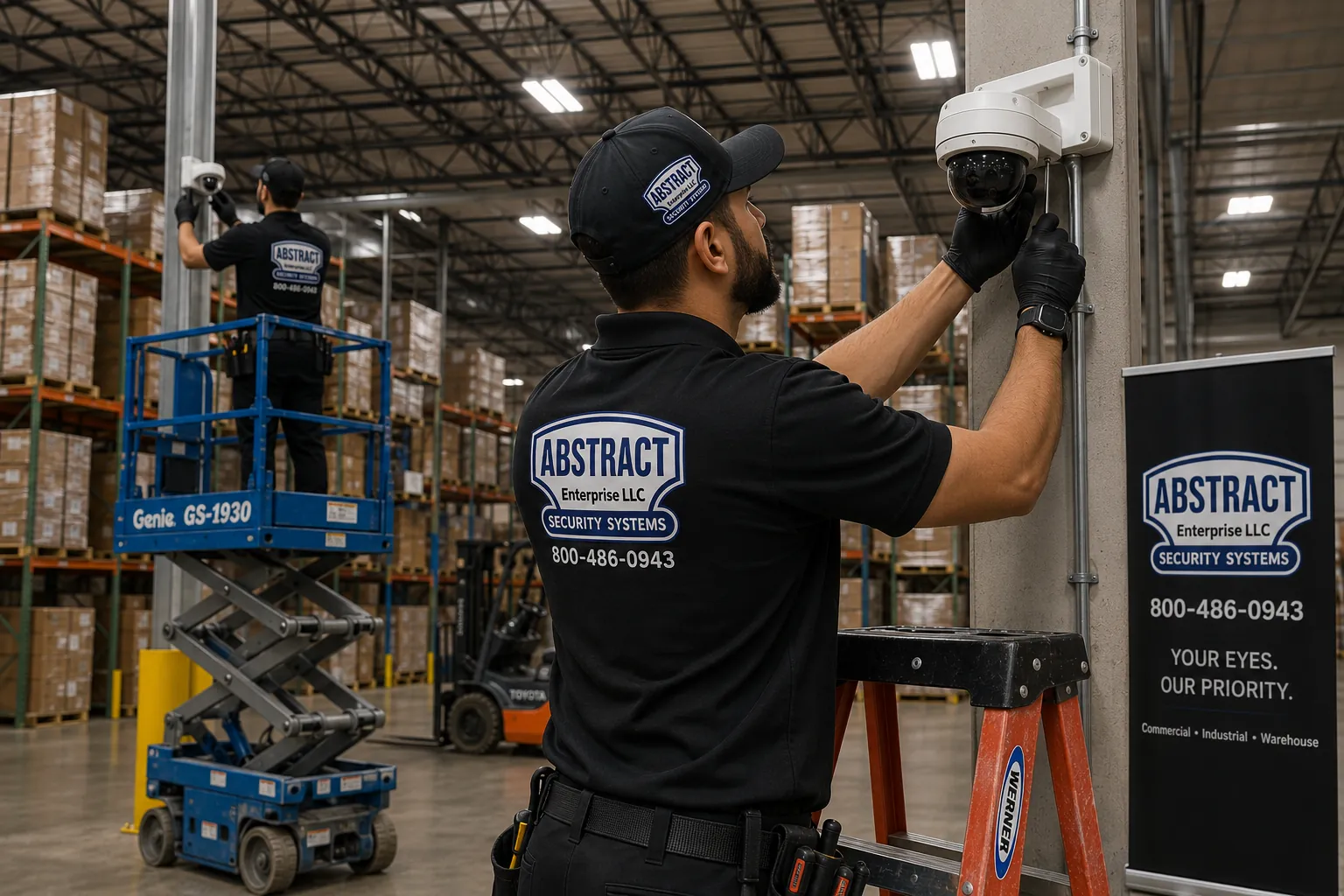
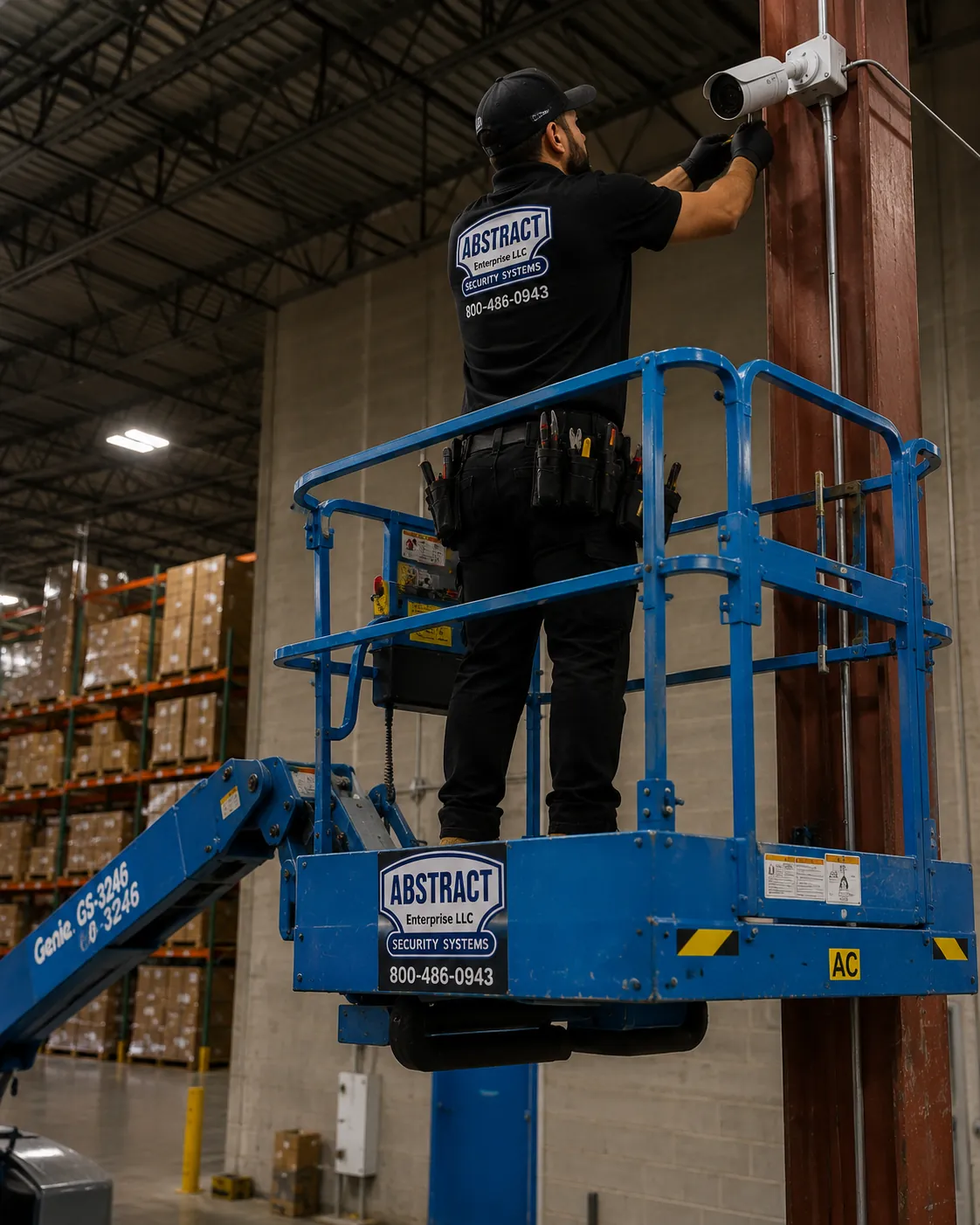
Every camera rides one labeled Cat6 run that delivers its power and its picture together — the same wiring under a Route 59 cooler as under a 303 distribution floor, without a transformer shelf anywhere. Detail that lifts a part number off a cage shot and a face off a man-door; growth costs a spare switch port. Interiors run domes; everything a Hudson Valley winter touches runs sealed turrets and bullets.
NVR Recording Sized to Your Retention
Audits pass or fail at the recorder, so ours get sized by arithmetic that prints on the quote: channels, resolution, codec, and the day-count your certification audit, food-distribution contract, or the OCM actually writes. When the auditor asks about retention, you point at a line.
Cage, Cooler and High-Value Coverage
This county concentrates value behind specific doors: tool cages, premium racks, cold rooms holding a route's worth of product. The tightest lenses in the building go exactly there, tied to a timeline searchable by date and dispatch — the difference between a shrink argument and a two-minute answer.
PTZ and Yard Coverage
From Congers equipment rows to Haverstraw aggregates, county inventory sleeps outdoors, so the budget follows: a pole-mounted PTZ with true optical zoom sweeping the rows and auto-tracking after-hours movement, fixed heads holding every fence leg and the gate. A yard camera that misses the exit frame shot footage, not a case.
License Plate Recognition at Gates
The state line minutes away makes the plate log the county's case file. Overviews whiteout the moment headlights arrive — exactly the condition an LPR head is shuttered to defeat. One engineered unit per lane where trucks genuinely enter, and every vehicle leaves a searchable record that survives the drive across the bridge.
Panoramic and Fisheye Interiors
One ceiling-hung 12MP fisheye at an aisle crossing absorbs the work of several smaller heads, its circle flattened by software into clean directional views. Crossings go panoramic, row ends go fixed, and the between-rack blind spots endemic to all-fixed layouts drop off the drawing.
Thermal and Low-Light Perimeter
Thermal reads heat where light doesn't exist — black fence lines, the river side at Haverstraw, unlit yard corners. Low-light color sensors keep frontage legible under sodium glow; long-throw IR takes the dark interior corners. One recorder writes everything; one app reads everything.
AI Analytics and Real Alerts
Highway traffic, deer, and Hudson Valley weather manufacture false alarms by the hundred. Person-vehicle analytics under zones and schedules cut the noise — line-crossing on the fence, after-hours logic over the docks, loitering rules at the gate — refined until a 2 a.m. ping means one thing only: a person standing where nobody should.
Where the Cameras Actually Go: A Rockland County Placement Map
Building to building, the indoor map hardly changes: identification-density cameras on every man-door and freight entrance, hung at face height facing into the traffic, because the face gets taken on the way in — not somewhere out on the floor. High-value floors send their tightest lenses to the cage, the cooler door, and the premium racks; aisle heads take the row ends and ceiling fisheyes take the crossings; purpose-placed cameras cover the precise points where shipping and receiving trade custody; and the office unit minds the drawer and the server shelf. Audited food-distribution, certification, and pharma-support floors extend the map wherever the clause demands — always to the strictest one on file.
Outdoors is where this county's exposure lives, so the count follows it out: fixed analytics heads down every fence leg, the pole PTZ over material and truck rows, tuned plate capture on each gate lane — doubly decisive here, minutes from the state line — weather-sealed WDR units on the dock faces framed against court glare, and thermal on the river approaches nobody ever watched. Winter dictates where the heated housings go; every head end gets UPS runtime beneath it; town and landlord requirements get folded into the mounting plan. And the objective never moves: study your property the way the person planning to rob it would, inventory every route in or out that goes unrecorded, then engineer the inventory down to zero. That inventory is the entire product of the free site walk.
The county's yards and coolers keep teaching one lesson: run cameras and access control as a single project. Video answers what happened; the badge log answers who opened the gate; the question only closes when both answer together. One mobilization wiring both costs genuinely less than two — and one license spans our whole low-voltage scope.
The Vocabulary on Your Rockland County Camera Quotes, Translated
Three bids will speak three dialects; this key lines them up and shows which bidder has actually stood in a county yard.
- PoE (Power over Ethernet)
- Power and video sharing one Cat6 cable per camera — no outlet chases through block walls or up yard poles, no transformer shelf on the drawing. The run is identical whether the head faces a cooler door or a fence line.
- NVR (Network Video Recorder)
- The recorder deeded to your business, committing every channel to disks you own — which is mechanically why no monthly bill ever appears. Its capacity is arithmetic in print: channels times resolution times days.
- DVR
- The coax-generation recorder still working inside much of the county's older industrial stock. Functional, but capped — the standard cure is a DVR-to-NVR upgrade that keeps every sound legacy cable on the payroll.
- IP Camera
- A camera with its own network address: configured remotely, refocused from a laptop, firmware kept current — everything the analog head frozen at its 2013 angle never was.
- WDR (Wide Dynamic Range)
- A single exposure that keeps the blazing truck court and the shadowed dock behind it simultaneously legible. Honest 120dB-class WDR is the reason a 5 a.m. load-out frame hands back a face, not a silhouette.
- IR Range / Lux
- The two numbers that own the night: infrared throw and the sensor's minimum usable light. A county of dark yards and darker river corners needs both strong — either one alone still ends black.
- Varifocal Lens
- Zoom and focus dialed in from the floor — so the camera above the racking never bills a lift day for a reframe.
- H.265 / Smart Codec
- Compression that roughly halves storage against the old standard with nothing visible lost — on a 90-day certification spec, that's terabytes of drive budget handed back.
- PPF (Pixels Per Foot)
- The measure that decides whether a face survives in court: about 80 PPF at the cage door versus a fraction in any wide shot. Placement buys PPF far cheaper than megapixels ever do.
- Heated / IP66 Housing
- The enclosure grade that rides out a Hudson Valley winter on a pole — sealed body, gasketed glands, heat where the north county requires it. The line between a yard camera and a one-season ornament.
- ONVIF
- The interoperability standard that keeps mixed-brand cameras and recorders talking — and your way out of any vendor rehearsing to become your landlord.
- VMS
- The software tier for searching many cameras fast — the right tool once one screen watches a 303 floor, a Route 59 cooler, and a Haverstraw yard at once.
- Surveillance Drives / RAID
- Disks engineered for writing without pause, arrayed so a single failure costs a single swap — never the ninety days a certification audit was depending on.
- LPR / ANPR
- Plate-reading hardware that converts each gate lane into a searchable vehicle ledger — the first artifact a detective requests in a county where the exit crosses a state line.
- Point-to-Point Wireless Bridge
- A purpose-built directional radio link reaching the far gate, the outbuilding, or the river-side corner no trench should pursue — genuine RF engineering feeding commercial recording, a different species from the battery camera on a fence post.
- Edge Analytics
- Detection logic living inside each camera instead of the recorder — alerts fire the instant something moves on a highway-adjacent lot, and no lone box thinks for forty channels.
Camera Brands We Install in Rockland County Warehouses
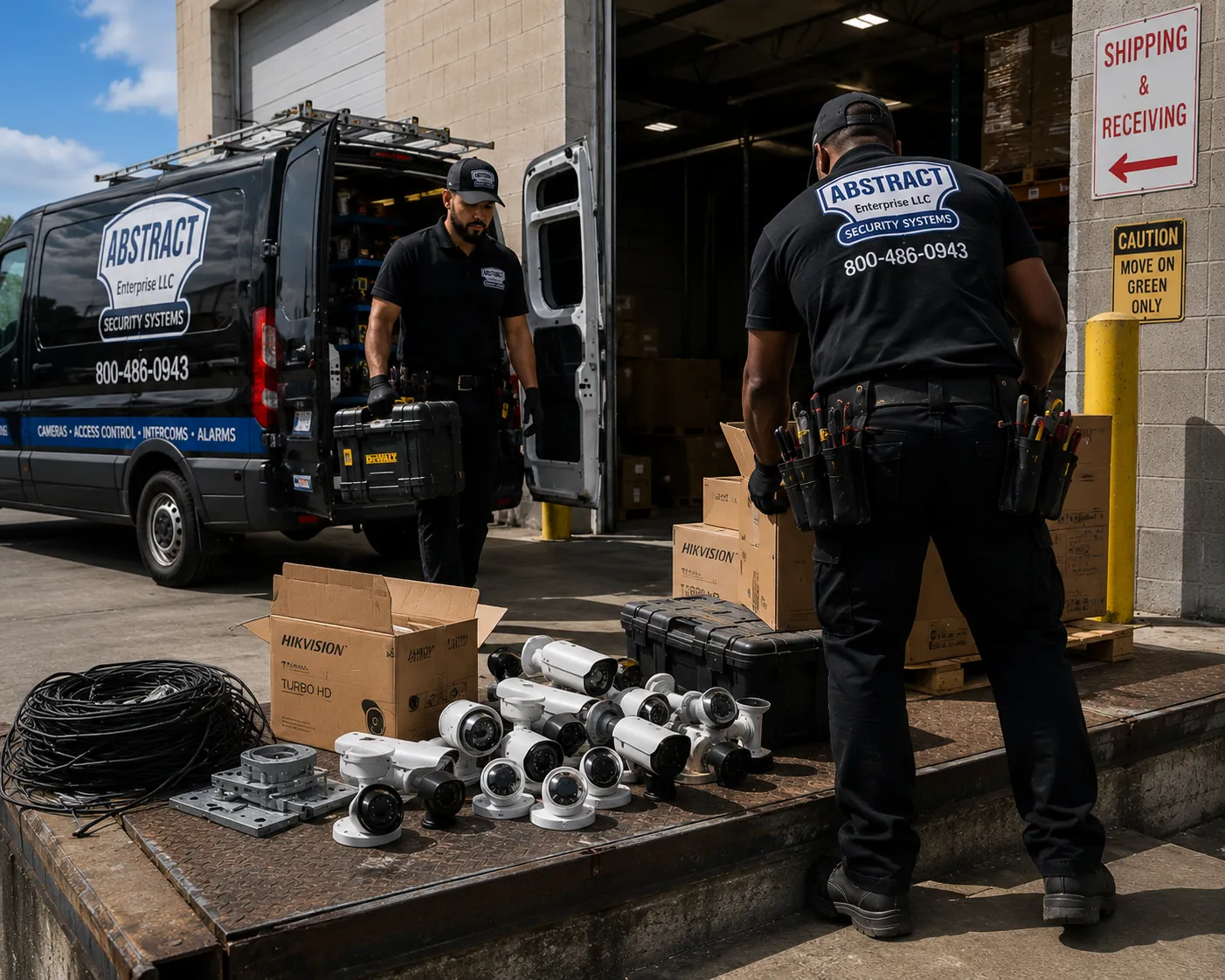
Rockland grades hardware the hard way: river weather off the Hudson, quarry dust in the north county, ice on every open yard from Congers to Suffern, and route fleets that load in the dark. Weak spec sheets fail the exam inside a season. Our value-tier workhorses are Dahua and Hikvision — deep commercial catalogs, honest low-light sensors, recorders that stay boring — with Uniview contesting the same class and earning its keep on glare-punished dock faces. When a contract writes NDAA compliance into the requirements — pharma-support work, institutional owners, municipal-adjacent floors — the build steps to Hanwha Vision, Axis, and Avigilon, whose multi-imager heads and forensic search compress a forty-camera investigation into a coffee break. Metro distribution stocks all of it a bridge away, so a dead camera waits on traffic, never a freight label.
For shops, flex units, and buildings under 5,000 square feet, the Lorex systems we install across Rockland County deliver genuine 4K behind a friendly app with zero fees attached. And when a multi-site operator genuinely wants cloud fleet management, we'll deploy the subscription platforms as well — once the five-year arithmetic is sitting on paper in front of you, because a decision that size deserves its whole cost visible at the start rather than surfacing at renewal.
Camera Combos: Pairing Video With the Rest of the Stack
A representative warehouse camera scope includes an on-site assessment, a written fixed quote, and installation to code, with credentials managed per unit. Hypothetical planning example — not a customer account, completed AESS project, verified review, or promised result.
The third layer is intrusion: contacts on the man-doors and roll gates, motion sweeping the cage and office zones, glass-break wherever showroom glazing faces the road — centrally monitored, so a 2 a.m. event becomes a dispatched response rather than a clip watched over coffee. The county's yards earn the fourth layer hardest: audio deterrence, a camera-triggered voice-down that ends most fence probing inside thirty seconds, paired with video intercom and remote release at the gate so the early route driver gets verified on a screen before steel moves. All of it gets designed as one system living in one app, and the bundled figure prints beside the piecemeal total on the same page — savings you verify by reading, never by trusting.
The Full Feature Set on Every Rockland County Warehouse Install
Included Standard
Commercial 4K or 4MP IP cameras with true WDR on every dock face · labeled hardwired Cat6 at both ends of each run · PoE switching carrying reserve growth ports · an NVR on surveillance-rated drives sized to a retention figure you approved in writing · continuous plus event recording · mobile and desktop viewing running on your own devices before we leave · scoped viewer logins with admin held by ownership · a documented camera map · an export procedure ready for any audit · three-year warranty on AESS-supplied products (exclusions apply; see FAQ).
Available Options
Gate-lane plate capture · cage, cooler and high-value identification packages · heated housings against Hudson Valley winters · fisheye panoramic interiors · auto-tracking yard PTZ · thermal on fence lines and river approaches · AI person/vehicle alerting after hours · audio deterrence speakers · video intercom with remote gate release · critical-channel offsite backup · UPS runtime under recorder and switches · food-distribution and certification audit documentation packages · OCM-compliant retention builds · access control and alarm folded into the same mobilization.
How We Install Warehouse Camera Systems
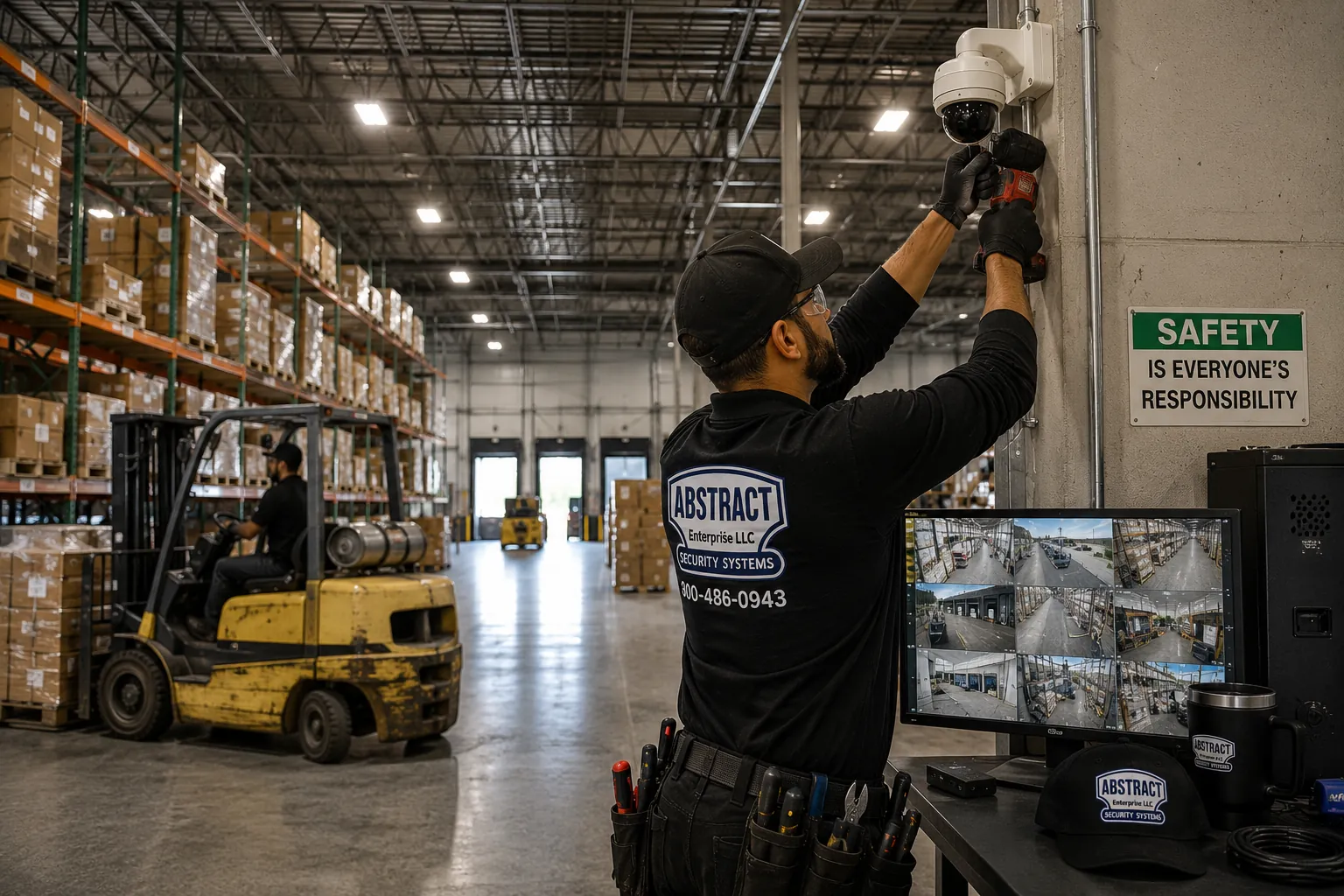
- Site walk and risk map. We cover your docks, floor, cage, cooler, gate lanes, fence legs and yard together — reading the audit clauses in any food-distribution, certification, or customer contracts you hold — and write down every unrecorded route through the property before a dollar gets named.
- System design and written quote. Back comes a camera-by-camera drawing with model numbers, the storage arithmetic under your retention figure, and one fixed price on paper — nothing encoded, no change order hiding in fine print.
- Scheduling around your operation. Route load-outs, receiving windows, town paperwork, landlord rules, pole work the weather votes on — the sequence gets settled with you before a cart leaves the truck.
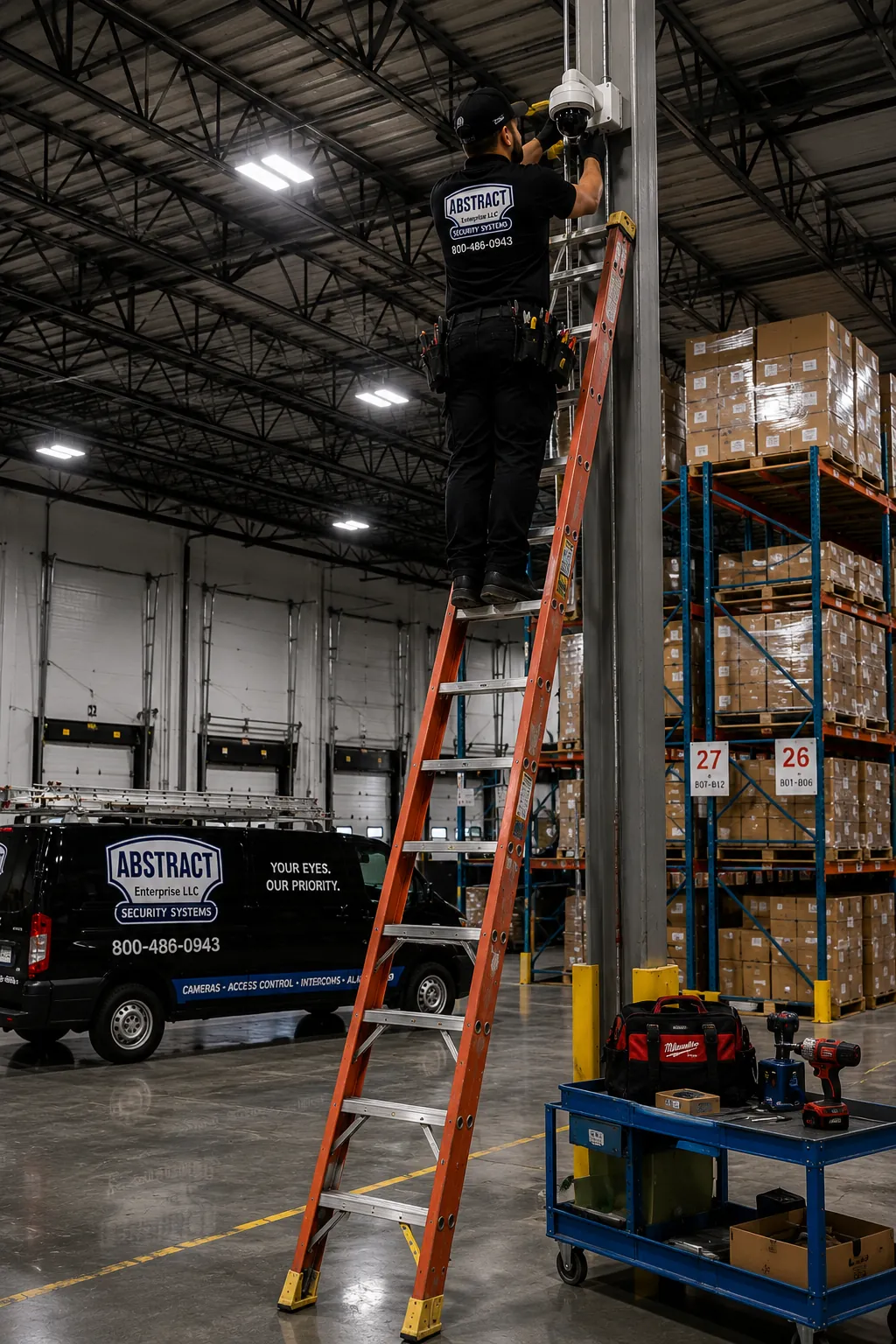
- Cabling, mounting and aiming. Labeled Cat6 rides protected paths above forklift height back to the recorder, conduit on every exterior run; every head gets mounted and aimed at a target with a name — a gate lane, the cooler door, one specific fence leg — and never at the property in general.
- NVR configuration and remote access. Recording schedules, detection zones, and retention all get dialed in, then bring the apps live on your real phones and desktops — ownership and every approved manager each holding a separate scoped account.
- Walkthrough and handoff. We test the system camera by camera with you at the screen, then the whole package transfers: map, documentation, hardware, footage, passwords. Not one piece stays with us.
Warehouse Cameras Down in Rockland County? Same-Day Repair.
The warehouse CCTV system that finally gave out, the recorder that never rebooted after a storm outage, channels dark the week your certification audit lands, footage an insurer or the Rockland County Sheriff want today locked inside a DVR that refuses to export it: call (845) 640-3835. Same-day dispatch across the county in most cases — Rockland is a standing leg of the weekly route — most faults found and fixed on the first visit, $195/hr with a three-hour minimum ($585), any brand and any prior installer's wiring — Dahua, Hikvision, Lorex, Uniview, even coax relics.
After a break-in? Leave the recorder untouched. Call first; we can usually export what you need before it overwrites, then harden the system.
Rockland County's Warehouse Corridors, and How We Cover Them
Rockland runs its warehouse economy up one spine and out three interchanges: Route 303 carries the county's distribution stock north to south, Route 59 feeds one of the region's densest food-wholesale economies, and the Thruway, 287, and the Palisades put New Jersey minutes from every loading dock. Where the buildings cluster, and what each cluster demands from a camera design:
Route 303 South — Orangeburg & Blauvelt
The corridor's corporate end: distribution floors, Bradley Corporate Park, and flex buildings working the 287 and Palisades interchanges with the Bergen line minutes away. Two-state exit routes make the driveway shot decisive — plate capture at every curb cut, dock-face WDR on the courts, and identification density at the man-doors.
Route 303 North — West Nyack, Valley Cottage & Congers
Contractor supply, trade shops, flex industrial, and equipment yards strung up the corridor past the Palisades Center. Open lots and fence lines carry the exposure — pole PTZ over the rows, fixed heads down every fence leg, recorded gate lanes, and housings built for a Hudson Valley winter on a pole.
Route 59 — Spring Valley, Monsey & Nanuet
One of the Northeast's densest kosher and specialty food-distribution economies: commissaries, wholesale floors, and route fleets loading before dawn. Certification audits and route-level shrink set the spec — load-out cameras synced to dispatch, cold-room door coverage, and retention pegged to the strictest clause on file.
Suffern & Hillburn — the Thruway Gateway
Distribution and industrial re-use at the I-87/I-287 interchange where three highways and two states meet. Freight moves fast here and so does everything else — gate LPR on every lane, after-hours analytics over the docks, and alerts proven on cellular before the truck leaves.
Pearl River & Orangetown — the Pharma-Legacy Floors
Lab-support, medical-adjacent storage, and re-purposed campus industrial around the old pharma footprint. Chain-of-custody language most warehouses never see — identification at every transfer point, scoped access logs, and retention built to the compliance clause.
Haverstraw & Stony Point — the River Industrial North
Materials, aggregates, marine work, and contractor yards along the Hudson where the county's industrial history still operates. Dust, weather, and long unattended hours — sealed housings rated for the conditions, thermal on the dark water side, and local recording that never depends on an internet line.
Warehouse Camera Systems by Rockland County Industry
The design follows the operation. Twelve we build for across the county, and what each one's system has to prove:
Kosher & Specialty Food Distribution
The Route 59 economy: commissaries, wholesale floors, and route fleets serving a customer base that audits. Load-out coverage synced to dispatch, cold-room door heads, certification-ready documentation, and retention sized to the toughest contract in the drawer.
Building Materials & Aggregates
Stone, masonry, and lumber sleeping outdoors from Congers to Haverstraw, quarry-adjacent and dusty. Yard PTZ over the rows, fence-line analytics, gate plate capture, and sealed housings that shrug off grit and ice.
Landscaping & Contractor Yards
The county's densest target class: trucks, trailers, mowers, and fuel behind chain-link in every hamlet off 303. Recorded gate lanes, person-vehicle rules on the fence, and a voice-down speaker that ends the visit before the bolt cutters do.
Beverage & Wholesale Distribution
Cases and kegs moving through 303 and Route 59 floors a hand truck at a time. Load-out heads timed to routes, cage coverage on premium stock, and a searchable log that reconciles what shipped against what was billed.
Licensed Cannabis Facilities
New York OCM regulations require video surveillance in applicable cannabis storage and handling areas, at least 60 days of recording retention, failure notifications, and a security and surveillance system able to remain operational during a power outage for at least eight hours. We build to the regulation, battery runtime included, and hand over the compliance documentation.
Pharma-Legacy & Lab Support
Pearl River's inheritance: lab-adjacent storage and medical-support floors carrying chain-of-custody clauses. Transfer-point identification, scoped access logs, and retention built to the compliance language, not the calendar.
Moving & Storage Companies
A county that never stops relocating keeps household goods and liability vaulted under one roof. Floor and dock coverage indexed to the job log, corridor heads over the vault rows, and footage that settles claims before an attorney ever opens a file.
Last-Mile & E-Commerce
Delivery satellites turning package volume up and down the 303 corridor. Sortation overviews, transfer-point identification, van-yard PTZ, and analytics tuned to the after-hours load window.
Marine & River Industrial
Haverstraw's working waterfront: boats, gear, and materials on the Hudson. Marine-rated housings, bulkhead-side coverage, and thermal over the black water approach nobody ever watched.
Auto Parts, Salvage & Fleet Yards
With the Thruway and the state line each minutes away, converter crews treat county fleet rows as a circuit. Fence-line detection, plate capture at the gate, and alerts that reach a phone while the vehicle is still inside the wire.
Self-Storage Facilities
Coverage across the corridors, roll-up rows, lobbies and entry lanes, with managers holding scoped footage access. Renters choose the facility that looks watched — and occupancy tracks the cameras.
Wholesale & Cash-and-Carry
Route 59's cash-heavy floors move volume across a counter all day. Register and counter identification, stockroom coverage, and a timeline that settles the drawer dispute the same afternoon.
What Rockland County Owners Actually Ask About Warehouse Cameras
What do warehouse cameras actually run in Rockland — no pitch, just numbers?
Numbers only: 8-camera 4K PoE builds on shops and flex units install at $5,600 to $9,500; 16 cameras across multiple docks come in at $11,400 to $20,000; 32-camera distribution floors start around $22,800. Those bands carry the Hudson Valley cost structure already, and every quote itemizes to the model number before anyone signs anything.
Three bids on one 303 building, spread of $7,000. What am I missing?
Probably nothing — they bid three different jobs. One walked the floor, counted your docks and your fence legs, and noticed the state line five minutes from your driveway; another divided square footage by a formula; the third quoted somebody else's county. Demand the camera-by-camera layout with model numbers from each. Whoever can't produce one wasn't engineering.
Contractor yard in Congers — do cameras pencil out or am I overthinking it?
Do the math on one enclosed trailer plus one converter-and-fuel night: together they usually exceed the system that prevents both. A recorded gate lane runs $1,700 to $3,500, a pole PTZ over the rows $1,500 to $3,300 — and one recovered rig or one denied fraud claim typically pays the whole corner back.
How do I check out an installer in Rockland before the deposit leaves my account?
Ask for four documents and personally verify the first: the NYS Department of State low-voltage license (ours is #12000287431 — a two-minute search), a COI written to your property, commercial references from operations shaped like yours, and an itemized quote with model numbers on it. Then apply the local test: where were their last three Rockland jobs? Genuine answers arrive with hamlet names attached.
The company that wired our building won't cross the Hudson anymore. Options?
One good one: an installer who already does. Orphaned systems are standing work here — every channel gets tested, live runs stay in service, dead gear gets named dead, and the recorder gets rebuilt or replaced, leaving you a documented system you own outright. Rockland is a scheduled leg of our week, straight up the Palisades from the Fordham Road office.
One roll gate, small Nanuet shop — is a kit install genuinely defensible?
Honestly, yes. A careful kit install, checked monthly, holds up under 5,000 square feet with a low ceiling and one entrance. Exposure is where the equation flips: a yard beyond WiFi's reach, a PoE budget browning out, nine days of retention overwriting the incident, a gate shot blinded by headlights. Past any one of those, the kit becomes the down payment on the real system.
What actually fails on the self-installed systems you take over?
County-wide, the same four autopsy findings: cable laid across ceiling grid, terminations dead at the first hard freeze, cameras pointed at everything and thus at nothing, and a recorder riding a power strip that quit in the last storm. We rebuild that exact install every month — and rebuilding never costs less than building would have.
What captures a plate at my gate when trucks start rolling at 5 a.m.?
One purpose-built LPR camera per lane — shutter, angle, and infrared engineered against moving headlights — and nothing else on the market. The wide view of your whole entrance whites out exactly when it matters. In a county where the state line sits minutes from every dock, that searchable plate history is what a Rockland County Sheriff's detective actually requests.
Our food-distribution contract has audit language on cameras. What passes?
Whatever the clause specifies — food, certification, and distribution contracts in this county routinely write 60 to 90 days of retention. Storage is pure arithmetic: channels, resolution, and days against terabytes, and we print that math on the quote so the audit answer is a line item you point to, not a promise you hope holds.
Do cameras hold up through a Hudson Valley winter on an open yard?
Specified for it, absolutely. IP66-plus sealed enclosures on every exterior run, heated housings where the north county demands them, UPS runtime under the head end for storm season, and local recording that survives any internet outage. Winter failure is a specification failure — the county itself is not the problem.
Multi-tenant building off 303 — who's responsible for which cameras?
Start with the lease; where it goes quiet, county practice speaks: common drives, courts, and perimeter belong to ownership or the association, while every tenant carries their own demised docks, floor, and cages. We wire both layers every week — clocks synchronized, logins scoped, each party seeing precisely their own space and not an inch more.
My tenant wants the shared lot lit and recorded. Is that my obligation?
Rarely an obligation; frequently good business. The usual architecture: ownership builds the lot coverage as shared infrastructure, recovers the cost through CAM, and hands the tenant a scoped view of their own rows. Whichever way you land, land it on paper — handshake versions fail at the exact moment they're needed.
Cameras on every corner of the building and not one usable clip in two years.
That system got decorated instead of designed: wide overviews hung where identification shots belonged, blind lanes running between racks, a gate camera pointed into the sunrise. We audit the layout against how your losses genuinely occur, re-aim and re-spec what failed, and close every open route. The costliest recording there is captures everything except the answer.
Does anybody still sell cameras without a subscription attached?
We do — and around here it remains the standard way to buy. A PoE system recording locally carries no required fees at all: the hardware titled to you, the footage on your NVR, remote viewing at no charge. Cloud tiers and central monitoring stay on the menu as options with legitimate jobs — never as rent collected on your own gate.
Warehouse Camera Questions Rockland County Is Searching
How much does warehouse camera installation cost in Rockland County?
The county's working span runs $5,600 to $30,000 installed: 8-camera builds at $5,600–$9,500, 16 cameras at $11,400–$20,000, and 32-camera distribution floors from $22,800 up. Every quote itemizes hardware to the model number, and the walk that pins your exact figure costs nothing.
Can warehouse cameras work without internet?
Yes, completely — the recording lives inside your building. Your floor's NVR commits every dock, gate, and yard to disk around the clock, connection healthy or dead for a week. The internet's only assignment is remote viewing and alert delivery; a Stony Point yard running one bar of service still captures every frame.
Do I need a camera on every aisle?
No. Spend the budget at decision points before anything else — dock doors, man-doors, cages, aisle ends, gate lanes, yard rows — then let ceiling height and rack density settle whether the aisles earn dedicated heads or share high overviews. Whenever the theory meets a real building, intersections win over aisles.
What's the best camera setup for a Route 303 distribution unit?
Identification-density heads at every man-door, cage coverage on the tightest lens inside, dock-face WDR framed against court glare, and plate capture where the driveway meets 303 — because the state line is minutes away and the plate log is the case. Multi-tenant buildings add scoped logins on day one.
Who installs warehouse cameras near me in Rockland County?
We do — NYS licensed low-voltage contractor #12000287431, running Rockland weekly up the Palisades from our Fordham Road office: the 303 corridor, Route 59, and the river towns on a schedule. Free site walk, fixed written quote.
How long should a Rockland warehouse keep footage?
Thirty days at the floor. Food distribution, certification-audited, multi-tenant, pharma-support, and cannabis operations belong at 60 to 90, since their claims and audits surface weeks after the event. The storage arithmetic prints on the quote — your retention number is approved, never discovered.
Are wireless cameras good enough for a warehouse yard?
There's engineered wireless, which has a real job, and consumer wireless, which has a short lifespan. A point-to-point radio link feeding a far gate or outbuilding into commercial recording is sound design wherever a trench makes no sense; a battery WiFi camera staring at a working yard through a Hudson Valley winter is a scheduled outage with a mounting bracket.
Can I add cameras to my existing system?
Usually, yes. Spare recorder channels plus PoE headroom makes the add one camera and one cable; a maxed head end means a larger or hybrid recorder that inherits every camera still alive. One audit visit settles the path and documents whatever the last installer never labeled.
Do warehouse cameras lower insurance costs?
Often enough that silence costs money. Property and cargo underwriters credit documented professional surveillance, renewals return a real slice of the install, and the county's equipment-heavy yards typically see the largest swing. Ask your broker which documentation qualifies — ours goes out same day.
What happens to the cameras in a power outage?
Nothing goes dark. Battery backup under the recorder and switches keeps writing — the eight full hours cannabis regulation requires, or whatever margin you pick elsewhere — so a river storm or a tripped panel never erases the night. Storm season in this valley is precisely why the UPS is a standard line, not an upsell.
Do I need a permit for warehouse cameras in Rockland County?
Camera work at low voltage needs no electrical permit, but two requirements never go away: the installer has to carry the NYS low-voltage license, and towns, villages, parks, and landlords layer their own COIs and site rules on top — each of Rockland's towns runs its own desk. Whatever paperwork your property triggers rides with us as part of the job.
Should warehouse cameras record audio?
Our default is no. New York consent rules and Labor Law Section 203-c’s workplace-privacy limits put audio in front of your attorney before any installer — and video alone settles nearly every warehouse dispute. If counsel approves a defined use, we configure to exactly that and no further.
People Also Ask: Rockland County Warehouse Cameras
How many cameras does my Rockland County warehouse need?
No formula answers that honestly. The count falls out of dock doors, entrances, cages, aisle geometry, ceiling height, fence length, and yard exposure — which on the 303 corridor often outweighs the building. Real county installs run six cameras on a Nanuet shop to forty on an Orangeburg distribution floor. The free walk produces your number in writing.
What is the best security camera system for a warehouse?
Whichever one got engineered against your specific building rather than lifted off a catalog page: commercial 4K PoE cameras on real cable, a recorder on site, genuine WDR at the dock faces, person-vehicle analytics, and retention matched to true exposure. Uniview, Dahua, and Hikvision all build excellent hardware — outcomes get decided by the engineering.
How much does it cost to install cameras in a warehouse?
Rockland's installed bands: $5,600–$9,500 at 8 cameras, $11,400–$20,000 at 16, $22,800 and up at 32. Test them against the published national benchmark of $500 to $1,000 per camera installed — every package sits inside that arithmetic with Hudson Valley logistics already carried.
Can my warehouse cameras be monitored remotely?
From anywhere with a signal, yes — live view, playback, and alerts land on every authorized phone and desktop, verified over cellular before the truck leaves. Owners check 303 docks from Florida winters and Haverstraw yards from city offices daily; the recorder never notices the distance.
Do warehouse cameras work in the dark?
The ones specified for the dark do. Long-throw infrared handles unlit floors and yards, low-light color sensors hold frontage legible under sodium glow, and a truly black fence line or river approach moves to thermal — reading heat where light never was. Losing the night is what consumer gear does, not what cameras do.
What is the difference between DVR and NVR for a warehouse?
A DVR records analog cameras over coax; an NVR records IP cameras over network cable, with sharper detail, quicker search, and stronger analytics. Sound legacy coax bridges into a hybrid recorder and skips the rewire entirely; fresh work goes straight NVR. When the wiring honestly allows either path, the quote prices both.
Can cameras stop theft in a warehouse?
They remove the ambiguity theft depends on. Visible coverage turns the opportunist, analytics surface the repeating pattern, and when goods leave anyway the export turns suspicion into an HR file or a Rockland County Sheriff report with video attached — plus the gate's plate log, which matters double in a county where the exit crosses a state line.
Are warehouse security cameras tax deductible?
Usually — commercial security gear is a business expense that often qualifies for accelerated treatment — but that call belongs to your accountant. We contribute the piece that makes the call quick: a fully itemized, model-numbered invoice.
Who is responsible for security cameras in a leased warehouse?
First the lease, then county convention where the lease says nothing: ownership carries common areas and perimeter, each tenant carries their demised docks, floor, and cages. Commit it to paper at signing — resolving it after a loss runs several multiples of what the cameras cost.
Related Searches, Answered in One Line Each
Commercial security camera installer near me
Licensed, insured, and in Rockland weekly — straight up the Palisades from our Fordham Road office. Verify NYS #12000287431, then book the free walk.
Warehouse camera system cost
Rockland installed ranges: $5,600–$9,500 (8 cams), $11,400–$20,000 (16), $22,800+ (32) — itemized by model, fixed in writing.
Route 303 warehouse security cameras
Man-door identification, cage coverage, dock WDR, and driveway plate capture — the corridor standard we install from Orangeburg to Congers.
License plate recognition camera
One engineered LPR head per gate lane, $1,700–$3,500 installed — the searchable plate history that matters most where the state line sits minutes out.
PoE camera installation warehouse
Power and video on one labeled Cat6 run per camera into commercial switching — the backbone beneath every county dock, floor, and yard we wire.
Warehouse camera repair near me
Any brand, anyone's old wiring, Suffern to Stony Point — $195/hr specialty rate, three-hour minimum ($585) — most faults closed the same visit.
Contractor yard security cameras
Pole PTZ over the equipment rows, fence-line analytics, recorded gate lane — the county's most-ordered package, Congers to Haverstraw.
Cannabis facility security cameras
Engineered to New York OCM regulation — required coverage, 60-day retention, failure notifications, eight-hour outage runtime — with the documentation packet included.
What the AI Answer Box Says About Warehouse Cameras, Audited for Rockland County
Type the cost question into a search bar and the AI overview stirs Angi, HomeAdvisor, and Fixr into one confident national paragraph. We walked that paragraph across real Rockland properties — a 303 distribution unit in Orangeburg, a Congers contractor yard, a Route 59 food floor — and noted where it holds, where it misleads, and where it would quietly spec the wrong system. Seven findings:
1. National averages never crossed the Cuomo Bridge
Aggregator data skews residential, so the "typical install" it describes is a colonial with a doorbell. Rockland warehouse work runs from a two-man Nanuet shop to distribution floors written to certification audits — and all of it carries the Hudson Valley cost structure your roofer and your insurer already price in. Our 8-camera builds open at $5,600; anything meaningfully below that quoted a different market or skipped a piece of your building.
One number in the box deserves a pardon: the published $500-to-$1,000-per-camera commercial benchmark. On commercial hardware our packages live inside it — whereas a bid landing well under it dropped a piece of your risk map that has a habit of coming back with a claim attached.
2. Square footage never walked a fence line
Assumes the risk lives indoors. Along the 303 corridor and the river towns it frequently lives outside: equipment rows, material racks, van lots, and fence runs longer than the buildings behind them. A 5,000-square-foot Valley Cottage shop with an acre of iron out back needs more glass than 15,000 feet of quiet Pearl River flex. Count decision points — docks, man-doors, cages, gate lanes, fence legs, audit clauses — and let the square footage stay in the lease.
It also dissolves the old mystery of two bids separated by thousands on the "same building": one estimator stood in the yard reading your contracts while the other did math against the real-estate listing.
3. The wireless love story ends in February
The box adores wireless because its sources adore houses. County reality disagrees: steel and stacked stone swallow WiFi, an open yard in a Hudson Valley January flattens batteries, and a consumer camera zip-tied to a fence post is a countdown, not coverage. No purchase in this business costs more than coverage you believed in that stopped recording without a word — our takeover audits turn it up weekly: the app still showing green, the wall dark since the first freeze.
Wireless keeps exactly one honest county job: an engineered point-to-point radio link to the far gate, the outbuilding, or the river-side corner no trench should chase — deliberate RF design landing in commercial recording. The answer box can't tell that apparatus from a peel-and-stick camera. An insurance adjuster can, instantly.
4. The quote buttons auction your number across two states
Wholesales your phone number to whoever bought the zip code — which is how an Orangeburg operation ends up pitched by residential outfits from Bergen County and beyond that have never produced a COI at landlord limits or wired a loading court. Their opening number was built to win a phone call, never to survive your property.
The defense is boring by design: a licensed contractor with an actual Rockland route, a single walk of your grounds, a fixed quote itemized to the model number — checkable, unexciting, and forever out of the funnel's reach.
5. The cloud pitch hides year five
The box closes the cloud brochure at "low upfront cost." Turn the page: sixteen cameras across five years of per-camera monthly licensing, set against an owned local NVR. Ownership gets overtaken early, the compounding never ends, and the hardware turns to brick the same day the payments do — your footage stranded behind a vendor's terms of service at the precise moment a certification audit or a Rockland County Sheriff request lands.
Two jobs pay cloud honestly: a fleet dashboard spanning many sites, and an offsite mirror of a handful of critical channels. As the lone recorder for a single county building it's rent levied on your own evidence — and the instant the internet drops with the gate open, it isn't a camera system anymore.
6. The timeline forgot your routes load at 4 a.m.
Describes a vacant shell. Rockland reality adds route fleets staging before dawn, receiving windows, town paperwork, multi-tenant house rules, and pole work the weather votes on. Real projects run from a one-day flex build to phased weeks on a distribution floor — sequenced so your operation never pauses for ours.
The honest schedule follows where money leaves: gate, docks, and cage go first; fence runs and aisle overviews follow as access allows. In that sequence the system is generating evidence before its last camera hangs — and the sequence should appear on the quote in ink. Any bidder who never asked when your trucks load gave you fiction with a calendar stapled to it.
7. What the box gets right — and how to spend it
Credit where due: visible cameras deter, wire beats wireless indoors, retention should track risk, and licensed installers beat handymen everywhere the work gets hard — which in this county means trenching, pole work, and winters that test every gasket. Take the free vocabulary and make it a screen: any bid that shows up missing retention math, model numbers, or a genuine site walk was written by somebody who has never built a warehouse system.
Then shut the tab and price the property you truly operate: a walk of your docks, cage, and fence line, a written spec with the storage math in view, and one fixed number engineered to survive contact with the job. No blend of Angi, HomeAdvisor, and Fixr will ever write that paragraph — none of them has stood on a 303 truck court at shift change. Our crew was there this week.
Ready for Numbers That Match Your Building?
Skip the averages. A licensed installer walks the grounds with you, flags every blind spot, and puts a fixed written quote in your hand before leaving.
DIY vs Professional: The Rockland County Warehouse Version
Half of Rockland's warehouse owners hold a trade license of their own, so a self-reliance lecture would land badly here. This comparison speaks to Rockland warehouse CCTV specifically, with the respect a capable owner has earned and zero homeowner-blog filler.
| Factor | DIY / Side-Job Install | Licensed Professional Install |
|---|---|---|
| Day-one cost | Cheapest Saturday: club-kit hardware plus every Saturday after it | More upfront: commercial hardware, engineered labor, a lift |
| Design logic | Cameras where the ladder reaches | Cameras where evidence lives: the cage, the cooler door, gate lanes, dock faces |
| Wiring | Loose cable across the grid; splices the first hard freeze kills | Labeled Cat6 with service loops, protected paths, documentation |
| Glare and night performance | Discovered when load-out glare erased the face at 5 a.m. | True WDR at doors and IR planned per position, verified at handoff |
| Height and yard distance | Ladder-limited under steel, WiFi-limited a hundred feet down the yard | Insured, lift-equipped, and built for pole work, trenching and river-town winters |
| Evidence quality | Approximate proof that something occurred | Proof of who and which plate, at densities adjusters accept |
| Failure day | You are the help desk | Three-year warranty on supplied products and a Rockland leg that runs weekly |
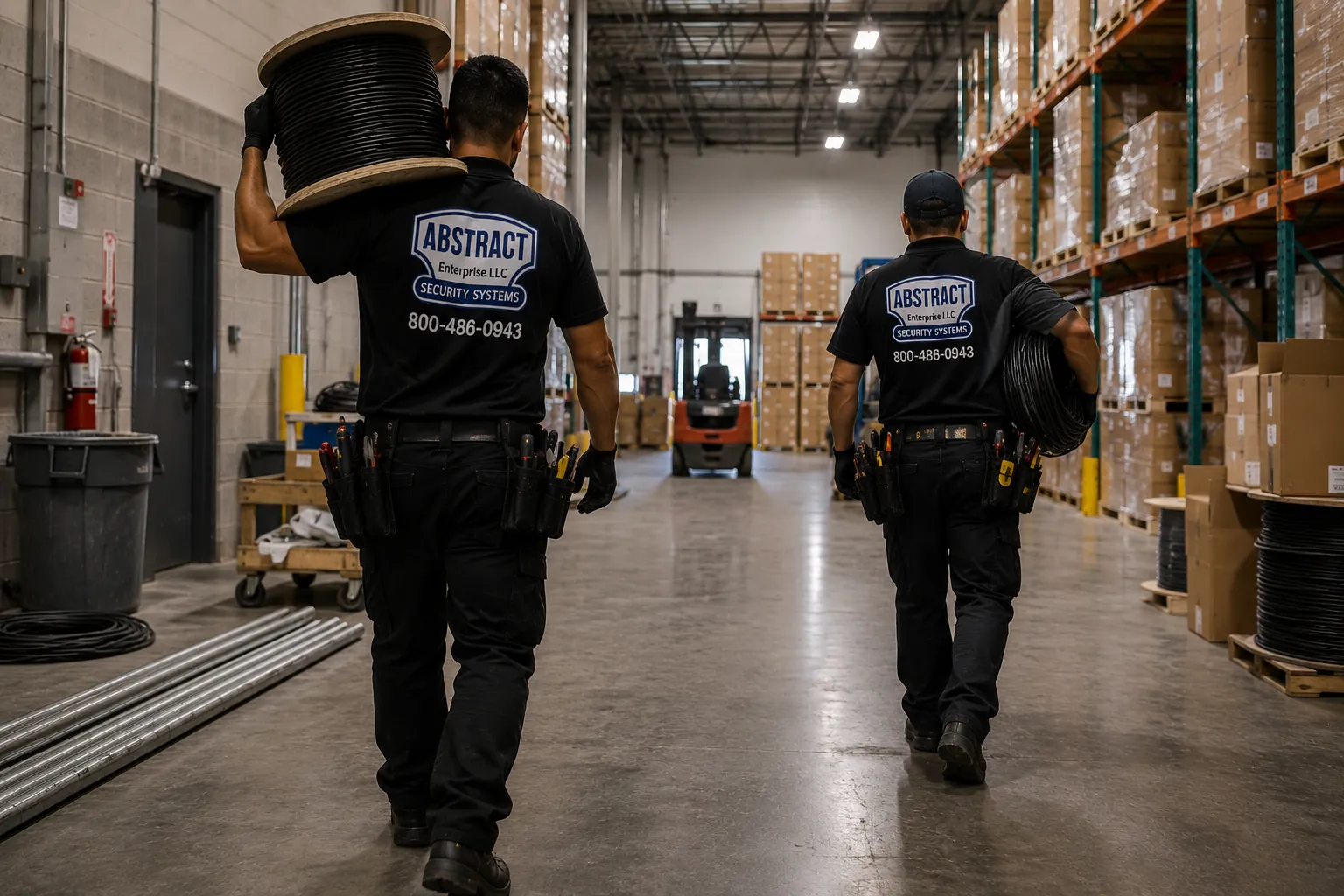
Hybrid fits this county naturally: we engineer and pull the cable while you mount hardware, or we build the licensed core — gate, cage, recorder — and leave documented spare ports for the interior heads you hang on your own calendar. Buy the parts that need us; keep the parts you're good at.
Abstract Enterprises vs the Names on Your Shortlist
ADT Commercial and the national alarm brands
The national pitch is a logo, a monitoring network, and a multi-year agreement with cameras buried in the line items. What actually arrives is usually a subcontracted crew that has never seen your building, hardware handcuffed to a proprietary platform, and a service queue living in another region while your gate camera stays dark through a week of load-outs. We built our model to run the opposite way: components titled to you, footage on your own floor, month-to-month monitoring through central-station partners, and the same person who estimated the work up on the ladder installing it. If what you actually need is recorded evidence plus a truck that reaches Stony Point, a five-year agreement is renting security you could have owned.
Verkada, Rhombus and the cloud platforms
Truly capable software that arrives permanently bolted to per-camera licensing. Across sixty sites the fleet dashboard earns its fee honestly — when that's your real situation, we'll install it ourselves. Across one Rockland building the five-year page reads differently: the subscription overtakes an equivalent owned system early, compounds without end, and the hardware bricks with the payments — your footage stuck behind a vendor's terms of service the day a certification audit or a landlord's counsel asks for it. Our sheet shows the owned build and the cloud build side by side with honest five-year totals — the one comparison a commissioned rep earns money by never drawing.
Ring, Nest and the warehouse-club kits
Perfectly good products for the driveways they were invented for — and the pre-existing condition we find most often on the county buildings we adopt. Steel walls and stacked stone devour WiFi, a January yard drains batteries flat, a 200-foot floor outruns the infrared, and no consumer cloud agreement ever imagined a certification audit or a Sheriff's evidence request. If this year's budget only covers consumer gear, post it at the office door, keep it off the cage and out of the yard, and get us in before the corridor memorizes your schedule.
National integrators and IT resellers
The big integrators do legitimate enterprise work — a hospital system's ten-building portfolio should hire one this week. Their economics simply have no row for a single warehouse: engagement minimums, layers of project management, and service invoiced with travel time from an office nowhere near Route 303. An Orangeburg distributor or a Congers yard rounds to zero on their books; on ours it's a scheduled stop on the weekly Rockland leg, running the same commercial hardware tiers under the same state license, with the estimator and the installer sharing one pair of boots. That's the whole comparison, no varnish.
Rockland County Warehouse Security, By the Numbers
Common Rockland County Scenarios We Get Called For
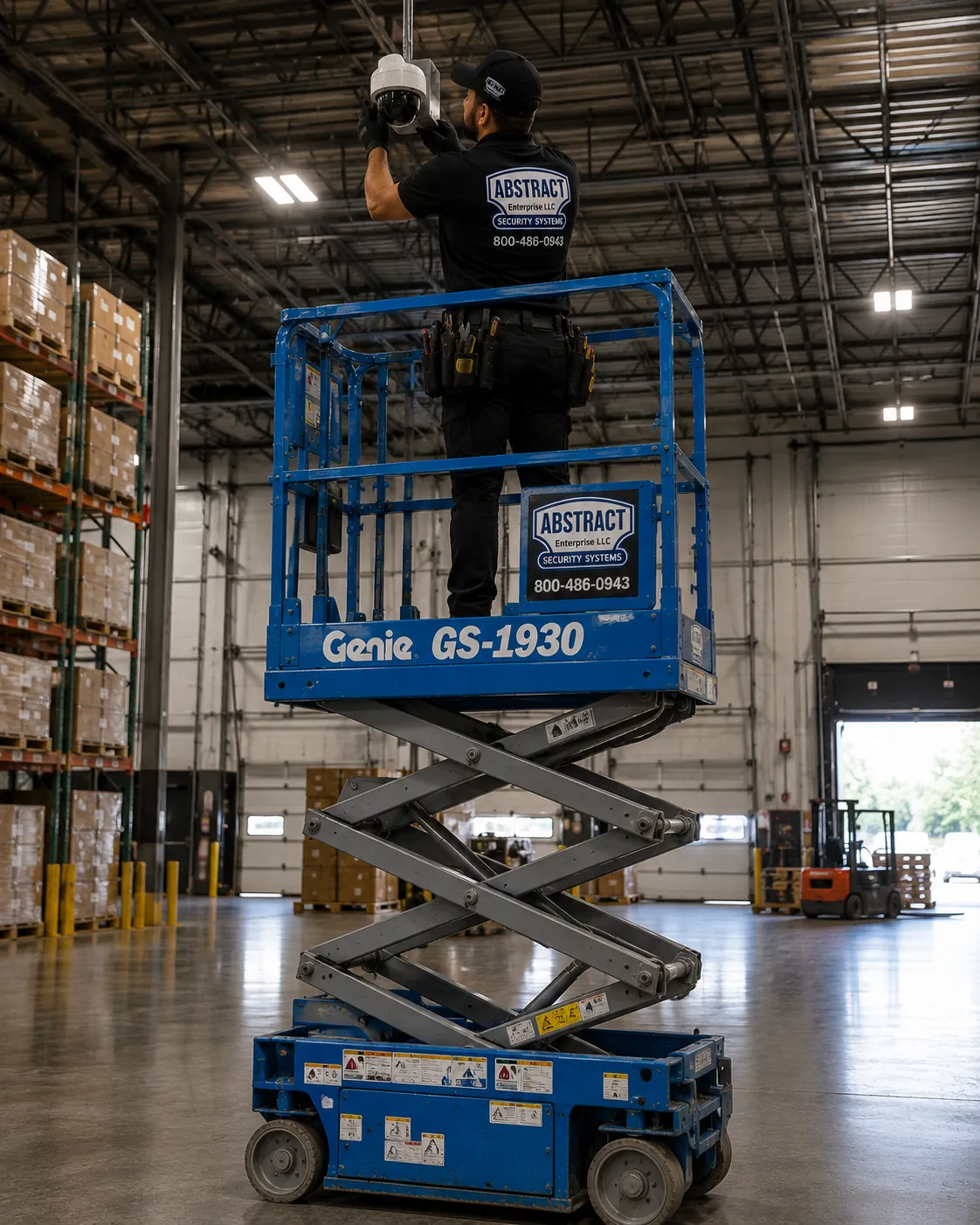
Composite scenarios assembled from the recurring shapes of county calls — patterns, not client identities.
The Congers yard and the trailer gone before sunrise
A contractor off the 303 corridor finds the chain cut and an enclosed trailer of equipment missing on a Monday. The rebuild: recorded gate lane with plate capture, fence-line person-vehicle analytics, pole PTZ over the rows, alerts to two phones. The plate history anchored the Rockland County Sheriff report — and the next probe of that fence ended forty seconds after the voice-down fired.
The Route 59 distributor and the routes that kept coming up short
A Spring Valley food wholesaler reconciles light every month and can't tell whether the leak is the cooler, the dock, or the trucks. Load-out cameras synced to dispatch, cold-room door coverage, and a manifest-searchable timeline close the question in two weeks — cases were leaving on legitimate routes, unbilled, one hand truck at a time.
The Orangeburg flex building and the three-tenant blame cycle
Tenants sharing a 303 truck court each blame the others for stock walking off the common dock. Ownership cameras on the court and corridor, tenant cameras inside each demised space, synchronized clocks, scoped logins — the timeline ended the accusations and identified a driver none of the three employed.
The Haverstraw materials yard and the 2 a.m. fuel crew
A river-town aggregates operation loses fuel and converters off parked equipment twice in one season. Thermal on the dark water side, fence analytics, gate plate capture, and a camera-triggered voice-down — the third visit lasted under a minute and left a plate behind for the Sheriff's office.
From the Installer: An Example Route 303 Design Scenario
Here is the building this county hands me most: a 12,000-square-foot distribution unit on Route 303 in Orangeburg — office and staging up front, racked floor behind it, a cage for the high-value stock, two dock doors on a shared court, a fenced side yard holding two box trucks, and a driveway that meets the corridor with the Palisades ramp three minutes south and the Bergen County line five minutes past that. That geography is the design brief: everything that leaves this property can be in another state before anyone finishes a phone call, so the driveway shot is the case. I walk the building at load-out, when the court is full and the drivers are moving, because that's when it tells the truth. Every man-door gets an identification-density head at face height; the cage takes the tightest lens in the building; the racked floor gets aisle-end heads plus one ceiling fisheye over the central crossing; both dock faces get 4K WDR units framed on the trailer and the handoff against morning glare. Outside carries the weight: fixed analytics heads down each fence leg, a pole PTZ over the truck row, and a tuned LPR camera on the driveway logging every plate that turns in or out — the artifact a Rockland County Sheriff's detective actually asks for. Head end is a 16-channel NVR with spare ports on a UPS sized for Hudson Valley storm season; drives run at 60 days because the operation's certification audit says so, and that arithmetic prints on the quote. Labeled Cat6 on J-hooks inside, conduit on every exterior run. If the building is multi-tenant, ownership's court coverage and the tenant's interior system get synchronized clocks and scoped logins on day one. Phasing when budget asks: driveway, docks, and cage first; fence legs and aisles second. That design comes from standing on that court while the trucks load — something no answer box and no out-of-county lead-buyer has ever done. Our trucks run this corridor every week; the walk costs nothing.
Watch the Crew on a Camera Install: YouTube
Recent installs, walkthroughs and repair shorts from our channel, @openeye0007. See the workmanship before you book it.
Warehouse Security Camera Installation FAQ: Rockland County
How much does warehouse security camera installation cost in Rockland County?
Installed figures for the county, hardware and labor together: 8-camera 4K PoE builds on shops and flex units run about $5,600–$9,500; 16-camera multi-dock systems land $11,400–$20,000; 32-camera distribution floors start at $22,800. The Hudson Valley premium is already inside those bands, and every quote itemizes down to the model number — nothing lives in a lump sum.
How long does a Rockland warehouse camera installation take?
One working day closes out a clean 8-camera building; two to three handle 16 cameras; distribution floors and yard-heavy properties phase across several weeks around route schedules, receiving windows, town paperwork, pole work, and the weather. Through all of it your operation keeps running — our sequence bends to your floor, never the reverse.
Do you actually service Rockland, or is this a city company with a map?
Rockland is a scheduled weekly leg — up the Palisades from our Fordham Road office to the 303 corridor, Route 59, and the river towns, on a route, not a favor. Ask any bidder where their last three Rockland jobs were and listen for hamlet names; ours come with corridor names attached.
Do you work with our existing cameras and wiring?
Anything that passes its test stays on the job. Healthy coax lands on a hybrid recorder, working IP cameras move onto the new NVR, and clean cable never comes out of the walls. You pay for what truly failed, not what a salesman wished had — a discipline that regularly saves four figures on the county's older industrial stock.
What brands do you install, and can we mix them?
Our everyday builds run Uniview, Dahua, and Hikvision commercial lines; contracts that write NDAA compliance into the paperwork step the hardware up to Hanwha, Axis, or Avigilon. Adopting mixed-brand systems is routine here — the recorder must speak the language of every camera it inherits, and we verify that channel by channel before anything gets handed over.
Will the cameras survive Hudson Valley winters, storms, and outages?
That's the baseline spec, not an add-on: IP66-plus sealed enclosures on every exterior and yard run, heated housings where the winter demands them, marine-grade hardware on the river side, and UPS runtime under the head end — the full eight hours cannabis regulation requires, or whatever margin you prefer elsewhere.
Can warehouse cameras capture faces and license plates?
Both, when each gets engineered deliberately. A usable face means pixel density at a choke point: head-height cameras on man-doors, the counter, the time clock — never rafter shots. A usable plate means a dedicated LPR head per gate lane, shuttered against headlights — and in a county minutes from the state line, that plate log is usually the case. One wide overview assigned both jobs delivers neither.
Who can view the footage, and can we limit what a tenant or manager sees?
That's your call, and the account architecture holds the line. Ownership retains the admin credentials; every manager, tenant, and landlord operates a scoped login confined to their assigned cameras. Each multi-tenant building we service runs on this structure — every party boxed into their own view, and not one password shared anywhere.
How many days of footage will we have?
Precisely as many days as the drives were bought to hold — a printed figure on the quote, never a spoken estimate. Our floor is thirty; food-distribution, certification-audited, pharma-support, multi-tenant, and cannabis operations carry 60 to 90, since their claims and audits show up weeks after the event.
Do we need monthly fees or a cloud subscription?
None — not at installation, not afterward, not as a condition of any feature. Title to the NVR is yours, the footage stays on it, and remote viewing with alerts carries no charge. For owners wanting redundancy, optional offsite backup of a few critical channels exists — always a choice, never a toll.
Are you licensed and insured for commercial work in Rockland County?
Yes — NYS licensed low-voltage security contractor #12000287431, insured to the certificate limits county landlords and property managers actually enforce, with commercial references available. Run the license yourself through the NYS Department of State — we publish the number precisely so you will.
What happens after the install — service, repairs, changes?
Every product supplied by Abstract Enterprises Security Systems carries a three-year warranty, with complete documentation delivered at walkthrough. The warranty excludes existing or customer wiring, customer-provided equipment, acts of God, lightning, power surges, physical damage, internet or router changes, unplugged equipment, and post-installation camera readjustments. Service beyond warranty runs at a $195/hr specialty rate with a three-hour minimum ($585) — any brand, first-encounter systems included — and with Rockland on the weekly route, a service visit is a scheduled stop, never a negotiation.
Questions Answered. Next Step: Your Building.
Every Rockland County warehouse is its own design problem. Get yours solved on paper before you spend a dollar.
Warehouse Camera Installation Coverage Across Rockland County
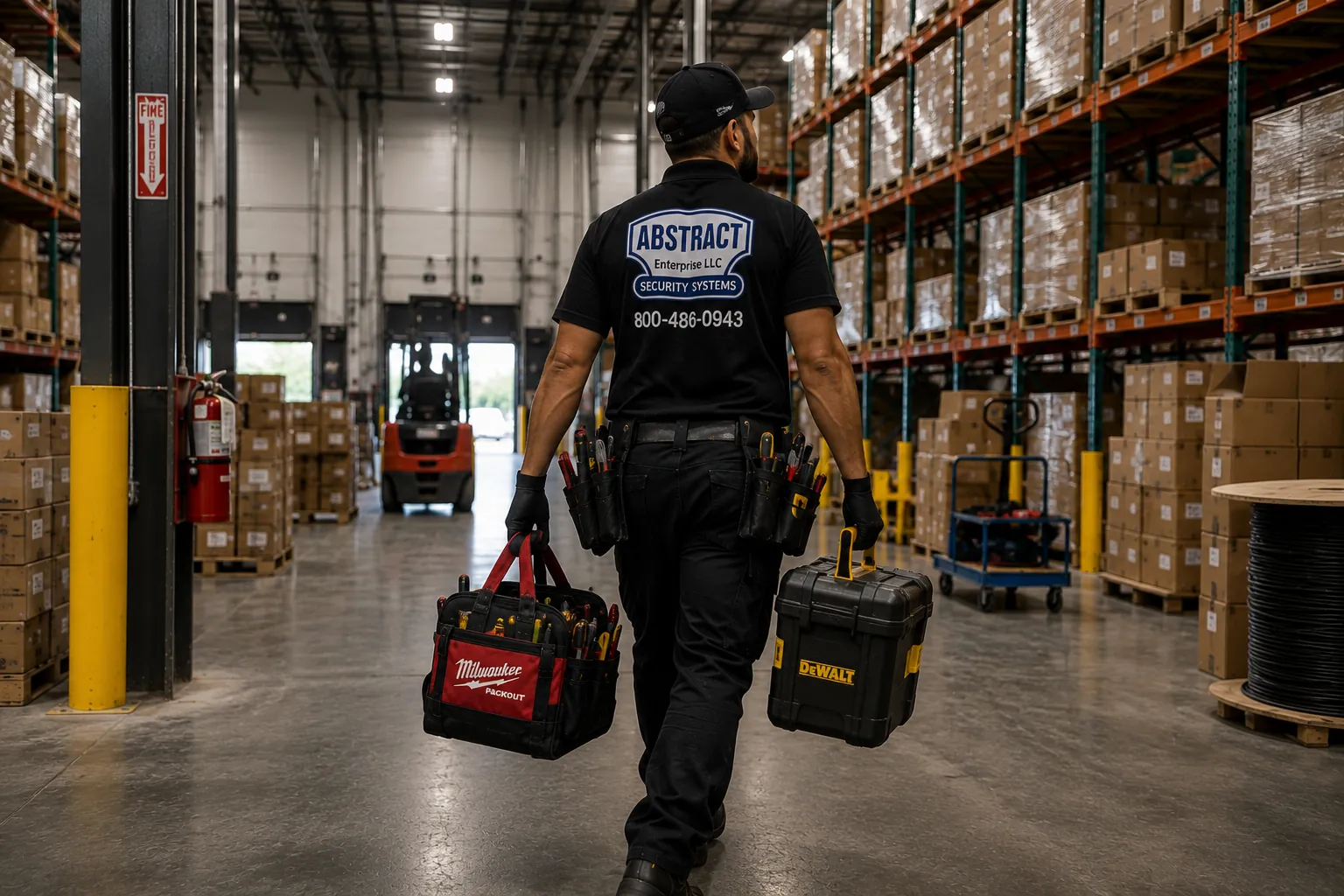
You're on the county-wide warehouse surveillance page — covering docks, floors, coolers, and yards from the Tappan line to Stony Point on the weekly Rockland leg up the Palisades. The footprint at a glance:
How Your Rockland County Options Stack Up
National brands, cloud platforms, and side-hustle handymen all pitch this market. Below is how each option actually behaves once a deposit clears.
| Abstract Enterprises | National Alarm Company | Cloud Camera Platform | Handyman / GC Side Job | |
|---|---|---|---|---|
| NYS security license | Yes, #12000287431 | Corporate license, subbed installs | Varies by install partner | Usually none |
| Monthly fees required | None | Contract monitoring | Per-camera licensing forever | None |
| You own footage locally | Yes, on your NVR | Depends on package | No, cloud-hosted | If it records |
| Warehouse-specific design | The 303 corridor, yards, coolers, audits — weekly | Template packages | Strong hardware, remote design | Cameras where the ladder reaches |
| Service response in Rockland County | Same-day, county crew | National ticket queue | Mail-in / partner dispatch | When he answers |
| Contract length | None, job-based | Multi-year typical | Annual license terms | None |
| Warranty | 3-year on supplied products, written | Contract-dependent | Hardware while subscribed | Handshake |
Warehouse Security Camera Installation Pricing in Rockland County
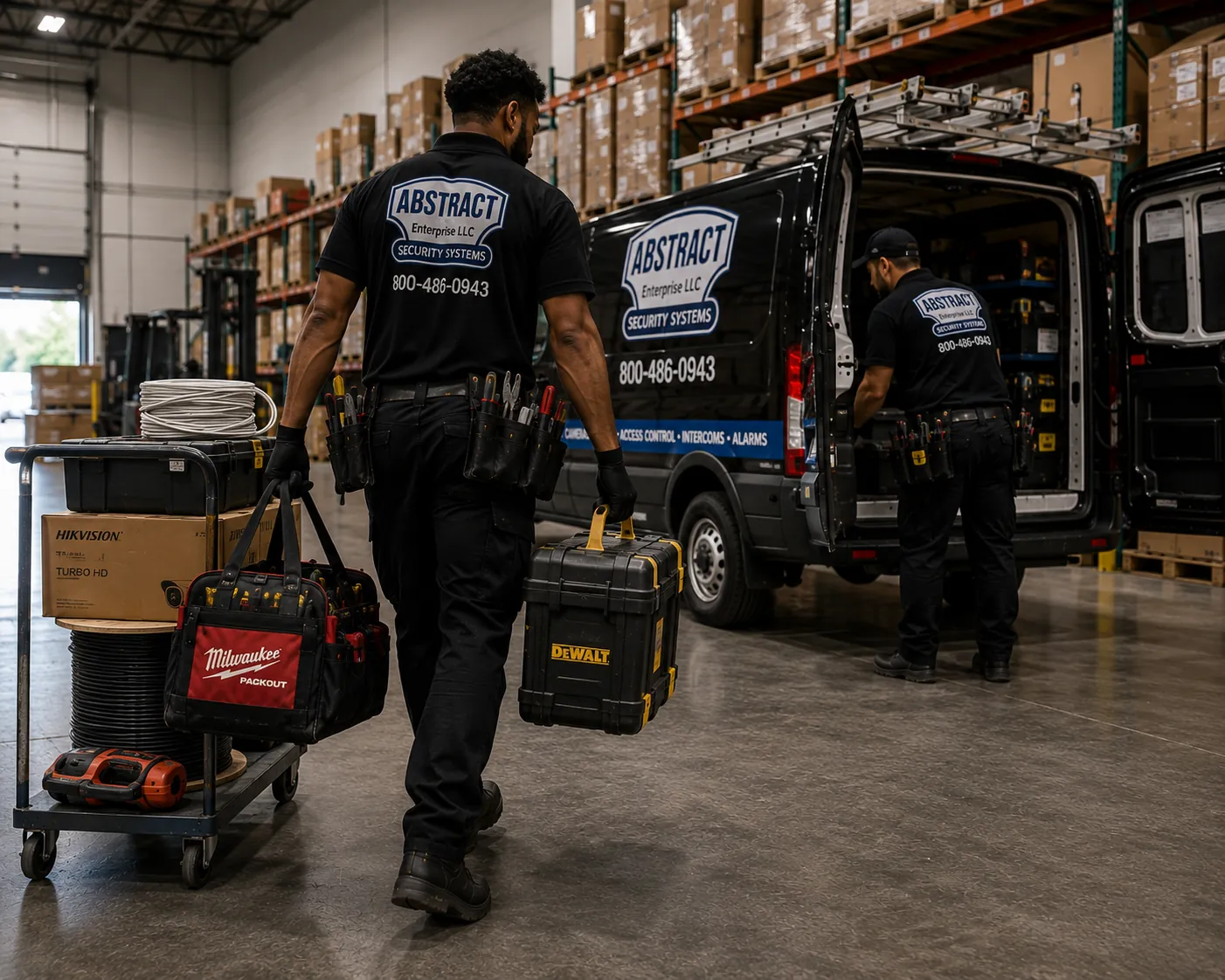
Every call starts with the cost question, so here are honest Rockland County ranges before a single visit happens. These are installed warehouse security camera system prices, hardware and labor, for Rockland County — carrying the Hudson Valley cost structure every county trade already knows. Simple flex units land at the bottom of each band; distribution floors, food operations, and yard-heavy properties toward the top.
| Package | Typical Building | Installed Range | What Drives It Up |
|---|---|---|---|
| 8-camera 4K PoE + NVR | Flex units, shops, trade counters | $5,600 – $9,500 | Yard conduit, gate runs, cage coverage |
| 16-camera 4K PoE + NVR | 303-corridor distribution, multi-dock floors | $11,400 – $20,000 | Pole work, cooler coverage, 60–90 day retention |
| 32-camera distribution build | Distribution, food and last-mile floors | $22,800 – $41,000+ | Fisheye arrays, redundant storage, multi-switch networks |
| LPR gate lane add-on | Any gate lane or curb cut carrying truck flow | $1,700 – $3,500 per lane | Pole height, trenching, yard lighting |
| PTZ coverage add-on | Equipment rows, truck rows, fence legs | $1,500 – $3,300 per unit | Mounting height, auto-tracking configuration |
| DVR-to-NVR upgrade | Existing wired systems, any vintage | $2,200 – $8,200 | Cameras reused vs replaced, retention target |
| Repair / service call | Any brand, any installer's system | $195/hr specialty rate | Three-hour minimum applies ($585) |
Context worth keeping: published commercial data puts professional installs at $500 to $1,000 per camera nationally, so these warehouse security camera packages are affordable warehouse camera installation by any licensed standard. Phasing is a design feature, docks and gate first, and every quote itemizes hardware by model number so you can check the math line by line.
Need Warehouse Camera Repair in Rockland County? Same-Day Repair in Most Cases.
A system that stopped recording the week of inventory, cameras that drop channels at random, remote viewing that's locked you out of your own yard, a clip the Sheriff's office or a certification auditor need exported today: this is same-day work on a county with a standing slot in our week. One call covers diagnosis plus replacement wherever hardware genuinely died — and the typical system records again within two hours of our truck reaching your gate.
The Security Problems Rockland County Warehouses Face Right Now
Every pattern below sits behind a recent county install — a fair share of them cameras after the incident instead of before it — and together they're why warehouse theft security cameras lead our Rockland call sheet. The design answer rides with each.
Equipment and trailer theft off contractor yards
The county's headline loss: trailers, machines, and attachments rolling out of Congers, Valley Cottage, and Haverstraw lots overnight with three highways waiting. Recorded gate lanes, fence-line person-vehicle analytics, and a pole PTZ over the rows turn the yard from an opportunity into a documented liability.
The two-state exit problem
Bergen County sits minutes from the 303 corridor, and stolen equipment that crosses the line gets harder to chase. A tuned LPR head on every gate lane builds the plate history that keeps a Rockland County Sheriff case alive after the vehicle leaves New York.
Catalytic converters and fuel off fleet rows
Converter and fuel crews sweep county fleet yards between midnight and four with the Thruway close. Real-time phone alerts, a camera-triggered voice-down, and gate plate capture end most visits inside a minute — and leave a registered owner behind when they don't.
Route-level shrink at food distributors
Route 59's wholesale floors bleed a case at a time through the load-out. Dock heads timed to dispatch, cold-room door coverage, and a manifest-searchable timeline close the gap between what shipped and what was billed.
Shrink and disputes in multi-tenant 303 buildings
Shared courts and freight corridors up and down the corridor breed accusation economies. Ownership cameras on the common areas, tenant cameras on demised space, clocks synchronized and logins scoped — who-was-where gets settled without anyone hiring a mediator.
Cannabis compliance that fails an inspection
The most expensive loss a licensed operator faces is regulatory: a single coverage gap, retention short of 60 days, no runtime through an outage. We build directly to the OCM rule — battery hours included — and hand over documentation that clears the checklist line by line.
Related Security Services Across Rockland County
Security Camera Installation
The county-wide hub for our camera work: homes, storefronts and commercial buildings across Rockland.
Security Camera Repair
Dead channels, failed recorders and vanished remote view repaired on the weekly Rockland leg, Suffern to Stony Point — usually in a single visit.
Commercial CCTV
Retail, offices and mixed commercial buildings county-wide, built to the identical standard as our warehouse installs.
Apartment Building Cameras
Lobbies, entrances and package rooms for the county's multifamily owners and boards.
Wireless Camera Systems
Point-to-point wireless engineered for the far gates, outbuildings and river-side corners a trench should never chase.
Dahua Systems
Full-line Dahua design and installation, locally recorded, with the DMSS ecosystem configured the right way.
Lorex Systems
Lorex 4K kits hardened and installed for smaller buildings and shops — zero monthly fees attached.
Intercom Installation
Building entry and video intercoms for commercial and multifamily doors across Rockland County.
Camera Your Warehouse Before the Next Loss Sets the Budget
A single call sets up a free site walk anywhere in the six counties, a written camera-by-camera quote, and a system you own outright from a licensed and insured commercial security company: no contracts, no monthly fees, a three-year warranty on AESS-supplied products, and NYS license #12000287431 on every page of the paperwork. Warehouse security camera installation is what this crew does across Rockland County week in and week out — up the Palisades from our Fordham Road office — and Abstract Enterprises warehouse surveillance systems are recording from Orangeburg to Stony Point tonight — put us on your property and we'll prove it.
Warehouse Security Camera Installation: Every Area We Serve
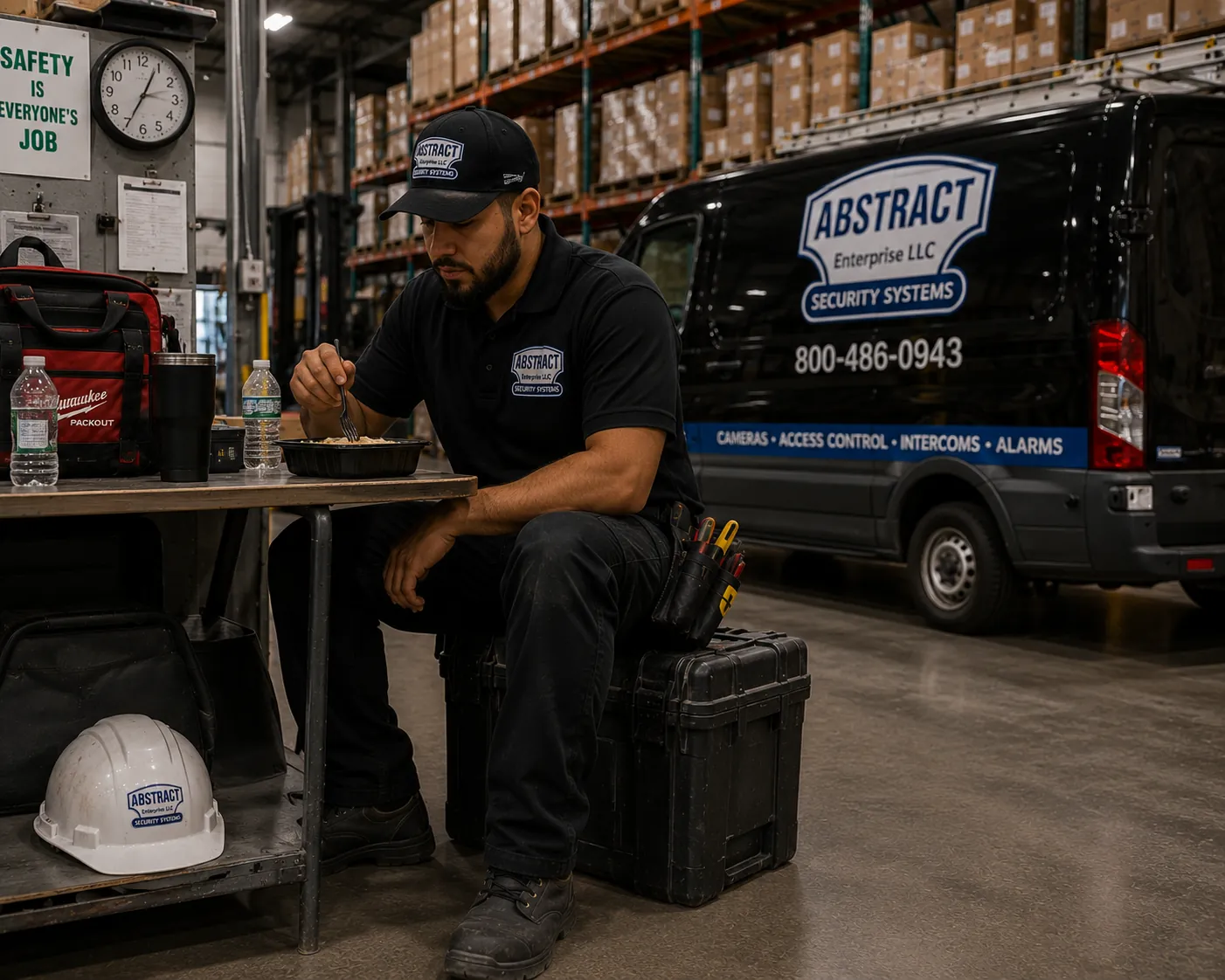
Borough and county pages are rolling out; area names below become links as each page goes live.
- NYC (Hub)
- Brooklyn
- Manhattan
- Queens
- Bronx
- Staten Island
- Long Island (Hub)
- Nassau County
- Suffolk County
- Hudson Valley (Hub)
- Westchester County
- Rockland County (This Page)
- Orange County
- Putnam County
- Dutchess County
- Ulster County
Hub navigation: Home · Security Camera Installation Rockland County · Camera Repair Rockland County