Planned Backwards From the Morning After
Most people in Nassau find out whether their cameras were any good on one particular morning: a car gone from the driveway, a box missing from the step, a side door that was forced, and a police officer or village detective on the walk asking what the system caught. We design home camera systems backwards from that moment. Every camera is placed for a face or a car at a distance it can actually resolve, the recorder keeps true time through an outage, footage stays long enough to be asked for, and you can hand over one clip in a couple of minutes without giving anyone the keys to the whole system.
Reviewed and updated October 18, 2026 by Anwar Timothy (NYS licence #12000287431) · Nassau homes are booked through our Brooklyn office on Troy Avenue

Three answers let us price a Nassau house on the phone. How many outside doors the house has (a split-level often has four), whether the cars sleep in the driveway or a garage, and which village or hamlet you are in, because that decides who answers the alarm and whether a local camera registry exists. Ring the Nassau line on (516) 346-5778 or send the short form.
Nassau is a county of owners. The Census Bureau puts the owner-occupied share of homes at about 82 percent and the median owner-occupied value near $685,000, across a population of just under 1.4 million at the 2020 count. People here are not renting a unit for a year and moving on; they are protecting a house they expect to hold for decades, a car or two that sit outside every night, and the deliveries that now land on the step most days of the week. That changes what a camera system is for. In an apartment the question is often who came through the lobby. On a Nassau lot it is what happened at each of four or five doors, in the driveway and along the side yard, and whether the recording is good enough to do something about it.
The news from the last few years explains the shape of most of our Nassau work. In November 2023 CBS New York reported Nassau police warning about a pair of thieves who, six times in eleven days, took new phones and tablets from porches in Massapequa Park, Massapequa and Wantagh minutes after FedEx dropped them off. That same week ABC7 reported a man arrested at the Baldwin train station about two hours after a Ring camera recorded him lifting a box from a 72-year-old resident's porch on Eastern Parkway. In January 2024 ABC7 covered the launch of a Nassau police burglary task force and the department's view that burglars are drawn to cars in people's driveways, and a county legislator's 2022 bulletin passed on the police warning about cars stolen after being left unlocked with the key fob inside, and the reminder that licence plate numbers are “extremely valuable” to investigators.
Put those together and a pattern appears. The crimes Nassau homeowners talk about happen at the front step, in the driveway and at the side or rear door, often in a few minutes, often by someone who arrives on foot or in a car that does not stop for long. The cameras that help are the ones that show a face at the step from a metre or two away, a person walking between parked cars, and a vehicle on the street with enough detail to describe it. The cameras that disappoint are the wide, high, everything-at-once views that look reassuring on the phone and show a smudge when an officer asks for the face.
The county's structure adds a second layer most installers ignore. Nassau has two cities, three towns, 64 incorporated villages and more than 60 unincorporated hamlets. Some villages run their own police, their own alarm permits and their own camera programmes: Garden City's police department keeps a voluntary private camera registry, Floral Park issues its own alarm permits with a false-alarm fee scale, and Hewlett Harbor launched a resident-run camera-sharing scheme in 2019. Across most of the county, the Nassau County Police Department issues the burglar alarm permit and answers the call. A camera system that works with whichever of those you live under, rather than against it, is a large part of what this page is about.
When the plan starts from the morning after, three practical things change. Cameras at the doors drop lower and closer, so faces are large in frame rather than tiny under a cap brim. The driveway gets its own camera aimed along the cars, not across the whole front of the house, so movement between vehicles is obvious. And the recorder is treated as evidence equipment: on a battery, on a network time source, with retention measured in weeks, and with an export routine you have tried before you need it. Most of our Nassau camera installations for houses look like this, and most households pair them with a wired video doorbell at the main entry.

If something has just happened and the system is not showing it, stop recording over it first: on most recorders, switching the affected cameras to manual record does not delete anything, but a full drive keeps overwriting the oldest days. Then call (516) 346-5778. We book the next open two-hour window, usually same day, and most faults are fixed within one to two hours on site — a failed power supply, a camera knocked out of aim, a recorder that lost its clock or its network after an outage. If police need footage before we arrive, we can talk you through exporting it over the phone.
A camera at every outside door, mounted low enough to see under a hood or cap and close enough that a face fills a useful part of the frame. On a split-level that can mean four doors on three levels, each with its own angle.
A wired doorbell camera for faces at the step plus a second view that holds the package spot and the path back to the street, with an alert that fires when a person reaches the step rather than every car that passes.
A view down the length of the driveway that shows someone walking between the cars or trying a door handle, plus, where the geometry allows, a narrow view of the street for a vehicle description.
Recorders and cameras that mark the footage when the alarm trips, so you can look before police are sent and keep a clean record for the permit office if a false alarm is ever questioned.
Recorder, network switch and modem on a battery sized for the camera count, with the recorder's clock locked to a time server so every clip carries the right date after the lights come back.
A small camera on the stairs, the back hall or the room where the safe is, and none where family or guests undress. Privacy shutters or scheduled switch-off for the hours when everyone is home.
Separate app logins for each adult, a view-only account for a grandparent or sitter, and an owner account that alone can delete footage or change settings.
Help signing up for a village camera registry where one exists, and a tested way to send a single clip to a detective without sharing a login, a password or live access.
Password recovery where the maker allows it, firmware brought current, cameras re-aimed for the morning-after test, and anything that cannot be secured replaced.

Levittown and the blocks built in its image: small houses on lots about 60 by 100 feet, on slabs with no basement, most since expanded with dormers, second storeys or rear additions. Short distances make identification easy; the challenge is a home for the recorder and a cable path without a cellar.
Hicksville, Plainview, Syosset, Bethpage, East Meadow and much of the South Shore: a front door at half-height, a lower-level door at grade beside the garage, a rear slider off the kitchen and often a side door. Each level needs its own camera and the cable has to step between floors.
Garden City, Rockville Centre, Manhasset, Port Washington and Massapequa Park: deeper lots, detached garages at the back, two full storeys, plaster in the older houses and soffits deep enough to hide cameras and cable.
Island Park, Oceanside, Freeport, Baldwin, the Bellmores and Long Beach, where many houses were lifted after Sandy. Parking and storage now sit under the living floor, stairs lead to an entry a storey up, and anything below the flood line has to be expendable or removable.
Old Westbury, Muttontown, the Brookvilles, Lattingtown and Mill Neck, with two-acre or larger zoning. Long driveways, gates, outbuildings and tree cover push recorders and switches to the main house and turn the gate into the most important camera on the property.
Elmont, Valley Stream, Hempstead, Franklin Square and parts of Glen Cove, where an upstairs or basement unit means two households, two entrances and a decision about who sees which camera.
Slab-built Levitt houses. With no cellar, the recorder usually goes into a hall closet, a bedroom closet or the attic over the original house, and the attic is only acceptable if it is ventilated and the recorder sits on a battery beside the modem. Cable runs through the attic to the eaves, then drops outside in paintable raceway or inside a downspout-coloured cover to the door cameras. Because the lots are narrow, a single camera at the front corner of the house often sees both the step and the driveway apron, which keeps camera counts low; the money goes into getting the door camera low and close rather than adding more views.
Split-levels. The mistake we see most often is one camera on the upper front corner trying to cover a door that is half a level down and a garage door that is a full level down. From that height it sees roofs and hats. We put the main-entry camera under the overhang at the half-level, the lower-level door gets its own camera at the garage side, and the rear slider is covered from the kitchen eave. Cable usually travels in the joist bay between the lower level and the main floor, which split-levels conveniently provide, and the recorder lives in the lower-level utility room.
Colonials and Tudors. Two full storeys give us height we do not always want. Second-floor eaves are good for an overview of the back yard, but faces need first-floor positions: the front porch ceiling, the side-door canopy, the garage soffit. In the older plaster houses of Garden City and Rockville Centre, we drill from the attic and basement rather than opening walls, and the detached garage at the back is reached either by a short trench to an existing conduit or by a wired camera on the house aimed down the drive.
Raised houses. Lifting a house moves the front door a storey up and leaves an open space underneath where cars, bikes and kayaks live. That space becomes the most important view and the most exposed equipment. We mount cameras under the floor framing, above the level the house was raised to clear, and run their cable up inside the structure rather than along piles. The recorder goes upstairs, never in the space under the house, and outdoor connections get drip loops and sealed boxes because spray and standing water are not hypothetical on Reynolds Channel.
Two-acre lots. Distances that are trivial in Levittown become the design problem: a gate 400 feet from the house, a pool house, a barn or a guest cottage. Network cable is limited to 100 metres a run, so long runs go to a weatherproof switch at an outbuilding, through existing conduit, or across a pair of point-to-point radios. Gate cameras need their own light, because a dark lane gives a night camera nothing to work with, and their own power supply rather than a long thin wire from the house.
Two-families. The second household changes access, not just camera count. Common areas — the shared driveway, the side path, the front walk — can be visible to both units; each unit's private door belongs to that unit alone. We set the recorder up with separate user groups so the tenant upstairs sees the shared views and their own door, and the owner sees everything, and we never place cameras inside a unit someone else lives in.

Most of these houses also have doors worth locking electronically — a side door the dog walker uses, a garage entry the kids forget — and owners often pair the cameras with smart locks for Nassau homes so a door event and its video sit side by side in the same history.
Plenty of Nassau houses are also somebody's workplace or income: a dental office in a converted house near Mineola, a landlord's two-family in Elmont, a contractor's yard behind a ranch, flats above shops on a village main street. These are residential cameras with a business layer, and they are planned around the streets where they sit.
Flats over shops in Rockville Centre, Great Neck Plaza, Floral Park, Massapequa Park and Sea Cliff, where the residential entrance is a side door beside a storefront and the camera must show the stair door without filming the shop next door's customers.
Houses and two-families a block off the turnpike in Elmont, Franklin Square, West Hempstead, Uniondale and East Meadow, where the houses sit a block from a busy commercial road and the driveway view does most of the work.
Valley Stream, Lynbrook, Rockville Centre, Baldwin, Freeport and Merrick, close to LIRR stations where cars are left and walkers pass at all hours; the Baldwin porch theft that ended in an arrest at the station is the sort of case these views help with.
Medical, legal and accounting offices in former houses along Old Country Road, Northern Boulevard and the village centres, which need a camera on the client door, the rear lot and the records room, with footage access limited to the practice.
Owners of one or two rental houses or two-families across the Town of Hempstead, who need shared-area coverage, a clear record of who came and went at turnover, and remote checks without driving over.
Landscapers, roofers and electricians who keep trucks, trailers and tools behind the house in Levittown, Hicksville or Oceanside, where the yard camera has to see a trailer hitch and a van door at night.
These are the questions Nassau homeowners actually bring to us, grouped by the moment they matter. The common basics — overall cost, camera counts, wiring choices — are covered on our other area pages and in the pricing section below; here we stay with what is particular to houses in this county.
Three things: the clip, the time, and a still. The clip should cover the event from a minute before the person appears to a minute after they leave, exported from the recorder or the app in the maker's standard format and, if possible, a common MP4 copy as well. The time should be visible in the image and correct, because an officer comparing your footage with a neighbour's or with a licence-plate reader on the main road needs the clocks to agree. The still should be the clearest single frame of the face or the vehicle, which saves everyone scrubbing through video on a doorstep. We set the recorder and the app up so all three are a few taps away, and we have you practise once before we leave.
Because footage from several houses gets lined up to follow one person or one car along a block, and a recorder that drifted twelve minutes after the last power cut breaks that chain. Cheap systems keep time on an internal clock that wanders, and some reset to a default date after an outage. We point every recorder at an internet time server, set the right time zone and daylight-saving rule, and put the recorder on a battery so a short flicker does not reset it at all. After a long outage like Isaias, when the internet comes back last, the recorder resynchronises on its own; you do not need to remember to fix it.
Closer than most people expect. A typical wide doorbell or turret lens gives a useful face at roughly two to four metres; beyond that the face shrinks to a handful of pixels, and a cap brim or hood from a high camera removes it entirely. That is why we place door cameras at about head-and-shoulder height to just above the door frame, aimed at the spot where a visitor stops, rather than up at the gutter. Where the path to the door is long, a second camera with a narrower lens is aimed at the point everyone has to pass, such as the gate in a front fence or the top of the porch steps. Resolution helps, but position does more.
Aim for at least thirty. Burglaries and car break-ins are often noticed days later, when a neighbour mentions it or a receipt turns up on a credit card, and the Garden City police describe asking residents for video from a finite period during their evidence gathering, not necessarily yesterday. Thirty days of continuous recording from six to eight cameras is comfortably within a properly sized surveillance drive; if you would rather record only when something moves, the same drive lasts much longer. We size the drive at installation, show you how far back the recorder currently reaches, and set an alert if a drive fails, so the retention you think you have is the retention you actually have.
No. The Garden City Police Department describes its Private Camera Registration Program as voluntary and says plainly that it does not give the department access to privately owned systems. What it does is give detectives a list of addresses with cameras, so after a crime they can come to you rather than canvassing every door. You are then asked for footage from a particular window of time, and you decide what to provide. If you sign up, the useful thing on our side is making sure the cameras you listed actually record and that you can export quickly; we can also add a view that covers your stretch of sidewalk if it helps a block-wide picture without looking into anyone's house.
A wired recorder can take part in any scheme where residents choose what to send. Hewlett Harbor's Operation Private Eyes, launched in 2019 around Ring doorbells, was described by the village as resident-controlled: people look at their own footage and, if they see something suspicious, send it to village security or the Nassau County police. A recorder-based system does the same with an exported clip. What a wired system will not do is appear automatically inside another company's neighbourhood app, which some owners see as an advantage. If your street's scheme is built on one app, a wired doorbell from that maker can sit at the front door alongside the recorder so you can participate there too.
Yes, and you should. The cleanest route is an export to a USB stick from the recorder, or a share link for a single event from the app that expires after a set period. Neither gives anyone your login. What we advise against is adding a stranger as a user on your system, even temporarily, or reading your password out on the doorstep. If police need more than one clip — several cameras over an hour, for example — we can come out and make the export ourselves at the service rate, and we keep no copy afterwards.
The Nassau County police permit is for burglar alarms, systems intended to summon police response, and the application asks for your central monitoring company. Cameras that record and send alerts to your phone are not a burglar alarm in that sense, and the county's application page says nothing about camera-only systems. Where cameras are part of a monitored alarm, the permit applies: $100 for a residence, valid two years and renewable, with the certificate posted at or near the panel. If you live in a village with its own alarm permit, such as Floral Park, the village's rules apply instead. When in doubt, the county's alarm permit section or your village clerk will confirm for your address.
They can make the check quick enough to matter. Floral Park's code sets a fee scale that starts at $25 for the first false alarm and reaches $250 from the fifth, and charges $150 for any false robbery, panic or burglary-in-progress call. When the alarm trips, a recorder linked to the panel flags the event and pushes a snapshot from the camera nearest the zone that tripped, so you or your monitoring company can see a wind-blown door or the cat before confirming a dispatch. Whether the monitoring company will wait for you depends on your contract; the cameras give them, and you, something to look at in the seconds that matter.
Sometimes, but we do not force it. Several camera makers now sell sirens and door sensors that run in their own app, and several alarm platforms accept a limited range of cameras. Those single-app setups are convenient but tie you to one company's hardware for both jobs. Our usual Nassau arrangement keeps the permitted, monitored alarm on its own panel and the cameras on their own recorder, then links the two with a simple wired connection so an alarm event marks the video. You end up with two apps, each excellent at its job, and neither company holding the other hostage.
The gap between the cars and the line from the street to the driver's door. Nassau police advice is to lock the car even in your own driveway and park in well-lit places, and a county legislator's 2022 bulletin passed on the police observation that thieves look for cars with folded-out mirrors as a sign they are unlocked. A camera from the corner of the garage aimed down the length of the driveway catches a person stepping between vehicles and testing handles, which a camera across the front of the house shows only as a shape. We pair it with a motion light or a camera with its own light, because a lit driveway is both a deterrent and the difference between a colour image and a grainy one.
Within seconds, if the camera is set to look for a person at the step rather than any motion. The CBS New York report described packages taken minutes after a FedEx drop, which means the alert that matters is the one when the driver leaves, not an hour later in a daily summary. We draw the detection zone tightly around the step and the package spot, filter it to people, and send that one alert as a priority notification while other cameras stay quiet. Some owners add a second, broader alert for anyone who reaches the step within a few minutes of a delivery. The fastest alert still does not stop the theft by itself; a lockbox or a delivery instruction to the side door does more, and the camera records whether it worked.
Yes. A camera on your house can record your own car parked on a public street, and the street itself, because no one has a reasonable expectation of privacy on a public road. The care needed is the same as for any front camera: aim at your car and your frontage, not into the windows of the houses opposite, and mask anything that takes in a neighbour's yard or doorway. On narrow Levittown lots where the car is parked at the kerb a few metres from the door, the door camera often covers it already; where it is further away, a narrow-lens camera on the porch post or the garage corner is the better tool.
Usually a hall or bedroom closet on the main floor, on a shelf with the modem and a battery backup, because it needs ventilation, power and a network connection, and closets in these houses sit close to the attic hatch where the camera cables come down. An attic is a fallback only when it is ventilated and the recorder can be placed away from summer heat at the ridge. We avoid the garage where one exists, because it is the first room a burglar reaches and the one most exposed to winter cold. A small recorder hidden in a closet also cannot be carried off with the television.
By treating each door as its own job. The front door on the half-level gets a camera under its own overhang; the lower-level door, usually beside the garage, gets one at its own height; the rear slider gets one from the kitchen eave. Then we check the gaps: the side yard between the garage and the back, and the path from the street to the lower door. On many split-levels the garage corner position covers both the driveway and the lower door, which saves a camera. The wiring is easier than it looks, because the joist space between levels carries cable from one side of the house to the other.
The entrances to the under-house space and whatever you store there: cars, bikes, boats and kayaks, and the stair up to the front door. Lifted houses on the South Shore often have open sides at grade, so anyone walking along the canal or the side yard can reach the space underneath without passing a door. We mount the camera under the floor framing looking out towards the street and the water side, keep the cable inside the structure where wind-driven spray cannot reach it, and keep the recorder upstairs. Because that space is designed to flood, nothing is mounted low, and we leave a service loop so a camera can be taken down quickly before a storm if you prefer.
One or two adults, and nobody else. We set up the recorder with an owner account that can change anything, adult accounts that can view and export, and view-only accounts for grandparents, a sitter or a dog walker that can see live cameras but not play back or delete. Teenagers usually get view-only access to the outside cameras. The point is not suspicion; it is that a clip someone needs later cannot be deleted by accident, and that when a sitter or contractor stops working for you, removing their account takes one tap and changes nothing else.
One or two, in the right places, are worth having: the foot of the stairs, a back hall where the rear door opens, or the room where a safe or a collection is kept. They answer the question an outside camera cannot — where did the person go once inside — and they are often what identifies someone who came in through a door that has no outside camera. We do not put cameras in bathrooms or bedrooms, and for living rooms we prefer cameras with a privacy shutter or a schedule that switches them off when the household is home. Indoor cameras also help with older relatives living alone, provided the person being watched agrees.
That is for the contract of sale, but most buyers expect fixed cameras and the recorder to stay unless excluded. Either way, wipe your accounts first: factory-reset the recorder or remove your users and delete footage, remove the system from your app, and leave the admin details for the buyer in writing. Many Nassau buyers inherit systems whose previous owner still has the app on their phone, which means a stranger can see into the yard. If you are the buyer in that position, we reset the system, change every password and bring firmware up to date on the first visit.
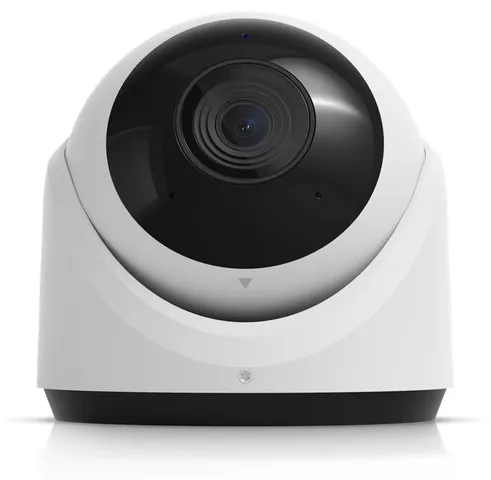
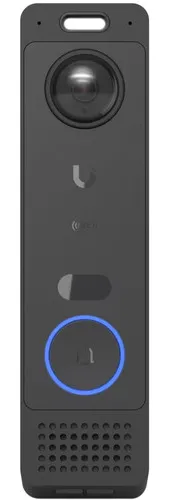
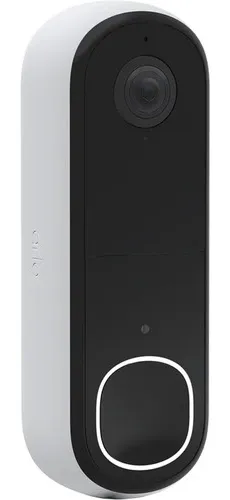
Powered from the existing doorbell transformer or over a single network cable, so they never need charging and keep a steady connection. The camera at the spot where every visitor stops, and the one most often asked for after a porch theft.
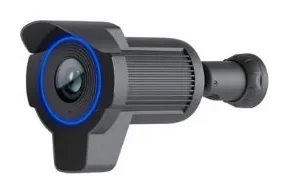
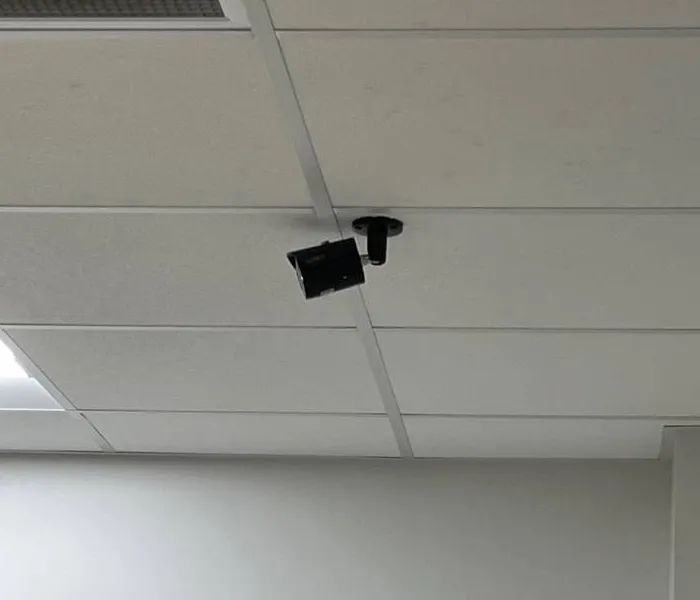
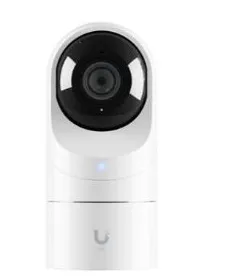
Our default for doors and corners on Nassau houses: a ball-in-socket body that aims easily under a soffit or porch ceiling, with no dome bubble to collect spider webs or glare from a porch light.
Longer lenses for the driveway, the street in front of the house, a gate at the end of a long lane, or the point on a path every visitor must pass. They trade width for detail at a distance.
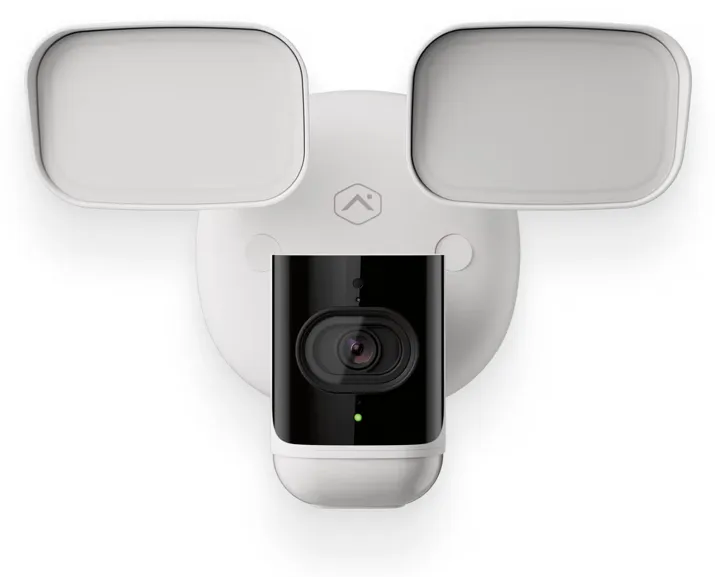
A camera and two lights in one fixture, for the driveway, the back yard and the side path. The light deters, and it gives the camera colour at night. Mounted on an existing outdoor light box where one is in the right place.
Small cameras for a stair foot or a back hall, with a privacy shutter or schedule, sitting on a shelf or a small wall bracket rather than a ceiling mount.
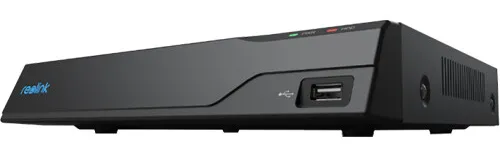
A box in a closet that records every camera to a surveillance-rated drive, powers the cameras over their network cables, and lets the app reach it securely without a subscription.
A desktop battery sized for the recorder, its cameras and the modem, so recording continues through short outages and the recorder shuts down cleanly in long ones rather than corrupting its drive.
For two-acre lots, pool houses and detached garages: a weatherproof switch at the outbuilding or a pair of point-to-point radios carrying the camera feeds across the lawn.
The small wired link between a burglar alarm panel and the recorder, so an alarm event is marked on the video and a snapshot is pushed to your phone.
Battery and Wi-Fi cameras are fine for a renter or a single spot, and we install them where they make sense. On houses people own, wired cameras win for reasons that matter on the morning after. They record continuously rather than in short clips that start after the person is already at the door. They keep recording when the Wi-Fi is overloaded or the router restarts. They do not go quiet in a cold January because their battery is low. And because their recordings live on a recorder in the house, nobody else decides how long your footage is kept. A Levitt cape or a split-level is easy to wire through the attic and the joist bays; on a raised or waterfront house, wired cameras also avoid batteries baking in a sunny south-facing spot.
For each position we ask what the camera must prove: a face, a vehicle, or simply that someone was there. Face cameras get a standard lens within a few metres of where people stop. Vehicle cameras on the driveway get either a standard lens aimed along the cars or a narrower lens aimed at the street. Overview cameras on the back of the house get the widest lens, because their job is to show the sequence of events, not to identify. Night performance comes from light as much as from sensors, so we prefer cameras with their own white light at the doors and driveway, and infrared on the back yard where neighbours would object to a light coming on.

We could not open Google's AI Overview from our research environment, so we cannot quote it directly. What follows are claims that AI summaries tend to repeat because they are drawn from the same cost guides, retailer pages and forum threads we could read — each one quoted from its published source — and what the claim misses on a Nassau house.
That figure comes from Angi's national cost guide, which describes professional installation at $100 to $200 per camera on top of the camera's own price, and HomeAdvisor gives a range of $593 to $2,040 for a complete home setup. Those are national averages built from simple jobs, often a few wireless cameras screwed to a wall with the owner supplying everything else.
A Nassau house planned for the morning after has more in it than cameras on screws: a doorbell wired to its transformer or to network cable, cable routed through an attic or between levels, a recorder with a drive sized for a month, a battery, a time server, detection zones, user accounts and an export you have rehearsed. On a split-level with four doors or a colonial with a detached garage, cable routing alone is a large share of the labour.
That is why the ranges on this page start at $1,093 for a condo entry and run to $9,200 for a large detached property. They are all-in figures with equipment, not labour added to a shopping cart, and they are scaled from our Brooklyn base by the county multiplier we publish rather than invented for the page.
A Long Island Reddit thread on home cameras has exactly that advice: “Simple Ring camera doorbell and Wyze cameras are as good as you can find. They are plug and play and not expensive.” Other replies in the same forum recommend Eufy for ease of set-up and Ubiquiti for having no subscription. All of those can be good products.
The weakness is not the brand; it is the way plug-and-play cameras are usually placed. They go where there is an outlet or where a battery is easy to reach, which on a Nassau house tends to mean high on a corner or on a window sill, far from where a face appears. And battery cameras record short clips that start on motion, so the first second of the person's approach is often missing.
The Baldwin porch theft in November 2023 was solved partly because a Ring camera recorded it, which shows a doorbell in the right place does its job. Our view is simply that the doorbell should be one camera in a planned set, wired so it never sleeps, with a driveway view and a side door view that a doorbell cannot provide.
Cost guides and brand pages present cameras alongside monthly plans: Ring's Protect plans start at $4.99 a month per device, SimpliSafe charges $9.99 for self-monitoring with camera recordings and $22.99 to $79.99 for professional monitoring, and ADT advertises monitoring from $24.99 a month for self-set-up systems and pro-install contracts of 36 months.
For burglar alarms, professional monitoring is genuinely valuable, and in Nassau it is tied into the police alarm permit system. For cameras, the subscription mostly pays for cloud storage of clips and for features that a local recorder provides on its own. A recorder in your closet keeps weeks of continuous video and sends alerts to your phone with no plan at all.
The two are not either-or. Many of our Nassau clients keep a monitored alarm and add a recorder-based camera system with no subscription, linked so the alarm marks the video. You pay for monitoring where it brings police, and nothing where it does not.
Retailer pages lean heavily on 4K, and AI answers repeat that more pixels means better identification. More pixels do help, but only when the face is in the part of the image where those pixels are, at a size the camera can resolve.
A 4K camera on the second-floor eave of a colonial, looking down at a front walk ten metres away, sees the top of a hood. A modest camera at door height, two metres from the step, sees the face. The same is true of driveway cameras: aim and distance decide whether you have a person or a shape.
This is the single most common fault we find when we take over Nassau systems: expensive cameras in the wrong places. We would rather install fewer cameras, lower and closer, than a high ring of 4K units that photograph roofs.
There is truth in the premise. StateScoop reported in November 2025 that the Nassau county executive ordered police to install licence-plate readers and other cameras along the county's border with New York City, and village police departments have added plate readers of their own. AI summaries sometimes conclude that a home camera adds little.
Public cameras watch roads and borders. They do not see your side door, your back yard or the gap between your cars, and they cannot tell an officer what happened on your step. What they can do is confirm where a vehicle went after leaving your street, which is precisely why the time on your recorder needs to be right.
Home footage and public plate readers work best together: your camera describes the person and the car and fixes the minute; the plate readers on the main roads take it from there. That is the reason Garden City's police set up a registry of private cameras rather than relying on their own.
Home security articles and AI answers often recommend a single wide camera “covering the front of the house” or a 360-degree camera on a corner. On a 60-by-100 Levitt lot, a camera like that also takes in two neighbours' driveways, the house across the street and the sidewalk.
That matters for two reasons. It dilutes detail, because the view has to stretch over far more than your door. And it raises the privacy question that New York's Civil Rights Law ยง52-a addresses for back yards: neighbours who feel watched complain, and on a tight block a camera that films next door's patio can sour a street.
The answer is more, narrower views aimed at your own doors, driveway and yard, with privacy masks over anything that is not yours. It is better evidence and better neighbouring at the same time.
Battery cameras keep their own power, and some guides present that as outage-proof. But a battery camera still needs the house Wi-Fi and the internet connection to send its clip anywhere, and both go down with the power unless they are on a battery too.
LIPA's own report on Tropical Storm Isaias counted about 645,000 customer outages and eight days to full restoration. Through an outage like that, a cloud-only camera may detect motion and have nowhere to put the recording. A wired system with the recorder, switch and modem on a battery records locally for as long as the battery lasts and fills in the gaps when the internet returns.
No home battery lasts eight days, and we do not pretend otherwise. What we size for is the first several hours, when most outages end and when an empty, dark house is most tempting, and for a clean shutdown and automatic restart, with the right time, when power comes back.
Tell us the house and the street; we will tell you where the faces, the cars and the clock need to be. A Nassau installer answers on the direct line.
A Nassau house quote needs four things: the village or hamlet, the house style, how many outside doors it has, and where the cars are parked overnight. Photos of the front and back of the house help us place cameras before we arrive.
Thanks — it is in. An installer will look over the house details and ring you back the same business day with a written figure.
We start at the kerb and walk the drive, the step, the side gate and the back door, asking at each point which camera would show a face and from how far. We photograph the eaves, the attic access and the recorder location.
You get camera positions marked on photos, the lens for each, where the recorder and battery go, and a written figure on the Nassau price table, usually the same business day.
Cable goes through the attic, the joist space between levels or the structure of a raised house, then drops to each camera in paintable raceway or inside the soffit. New outlets, if needed, are done by a licensed electrician.
Door cameras go low and close to where visitors stop; the driveway camera looks along the cars. One of us stands at each stopping point while the other checks the picture, day and with lights off.
Surveillance drive sized for at least thirty days, battery backup, time server and time zone, drive-failure alert, and a link to the alarm panel where there is one.
An owner account, adult and view-only users, privacy masks over neighboursโ yards and windows, and person alerts drawn around the step, the driveway and the gate.
We export a clip to USB and send a share link, have you do it once yourself, then switch the power off and on to prove the recorder restarts with the right time.

The village whose police department, at 349 Stewart Avenue, runs the voluntary private camera registry. Colonials and Tudors on deep lots, many with detached garages at the back, and residents who can register their cameras with the detective division.
The post-war community built on concrete slabs, where 17,447 houses went up by 1951, bordered by the turnpike's commercial strip past the Levittown Public Library. Narrow lots, expanded capes and ranches, recorders in closets.
Where a Ring camera recorded a porch theft in November 2023 and police found the man at the Baldwin train station about two hours later. Split-levels and colonials close to the LIRR, with steady foot traffic at all hours.
The South Shore communities where Nassau police warned in 2023 of a pair stealing new phones from porches minutes after FedEx deliveries. Capes and hi-ranches where the porch and driveway cameras do most of the work.
A low-lying village largely under water in Sandy, where state and federal drainage projects now protect homes along roads such as Long Beach Road and Suffolk Road. Raised houses, cameras under the floor framing and recorders upstairs.
The South Shore villages around Lawrence and Hewlett Harbor: home to Hewlett Harbor's 2019 resident-run camera-sharing programme, and to Lawrence's 2005 proposal for cameras at 18 village entrances after an armed home invasion.
We also serve Muttontown, Old Westbury and the Brookvilles on the North Shore, Floral Park and New Hyde Park at the city line, Hicksville, Plainview and Syosset mid-island, Freeport, Merrick and the Bellmores on the South Shore, and Glen Cove and Long Beach, the county's two cities. For the rest of the island, see our Long Island home camera hub.

Our home camera prices start from one published Brooklyn base and are scaled to each area by a fixed multiplier; Nassau's is 1.15, reflecting travel and the larger houses and lots. The table below is that base multiplied out for the house types we see here. These are all-in figures — cameras, cable, recorder, drive, mounting, set-up and handover — with no monthly fee from us. The written quote after we have seen the house is the figure we hold to.
| Property | Cameras | Nassau range | Typical scope |
|---|---|---|---|
| Condo, co-op or townhouse entry | 1–3 | $1,093–$2,300 | Doorbell camera hard-wired at the main door, with up to two more views over a terrace, carport or assigned space; footage kept on a recorder you own |
| Cape, ranch or two-family | 4–8 | $2,300–$5,175 | Front step, driveway, side and rear doors, back yard; recorder in a closet on a battery |
| Split-level or colonial, full coverage | 6–10 | $4,025–$8,050 | Every door on every level, driveway along the cars, detached garage, one or two indoor cameras |
| Large detached or North Shore lot | 6–12 | $4,025–$9,200 | Gate and long drive, outbuildings via switch or wireless bridge, pool house, perimeter |
| Service visit after installation | — | $195 an hour, 3-hour minimum ($585) | Later re-aiming, additions, post-storm checks and footage exports done for you |
What moves a Nassau price up. Doors on several levels, as on a split-level; a detached garage or pool house that needs its own cable or radio link; a raised house where cable must be routed inside the structure; plaster walls that have to be fished from above and below; a gate at the end of a long drive that needs its own power and light; and any part of the job that needs a licensed electrician or a permit.
What keeps it down. An open attic over the whole house, as on many capes and ranches; an existing doorbell transformer in good order; outdoor light boxes already in the places floodlight cameras should go; and a household that knows which three or four views matter most. Fewer, better-placed cameras are nearly always cheaper and more useful than a ring of cameras on every corner.
Ring. A Ring doorbell is a good front-door camera and many Nassau households already have one. Its recordings and alerts depend on a Ring Protect plan from $4.99 a month per device, on the house Wi-Fi and on the internet connection. Where a client already has one, we keep it, wire it so it never needs charging, and build the rest of the system around it with local recording on the driveway and side doors.
ADT. ADT's strength is the monitored burglar alarm and the central station, which in Nassau sits inside the police alarm permit system. Its cameras come with its monitoring contracts, advertised from $24.99 a month for self-set-up and on 36-month terms for professionally installed systems. If you value monitoring, keep it; we can link an owned recorder to the alarm so events are marked on the video, without adding to the monthly bill.
SimpliSafe. Built around sensors and a base station, with cameras added on; $9.99 a month for self-monitoring with recordings and $22.99 to $79.99 for professional monitoring. It is a sensible choice for a renter or a household with no wiring. On an owned house where the cameras need to be placed for faces and cars, and record continuously, we think an owned wired system is the better use of the money.
| Part of the job | Why it matters on the morning after |
|---|---|
| Cable routing through attic or between levels | Lets door cameras sit low and close instead of where an outlet happens to be |
| Wired doorbell | The face at the step, recorded continuously, never asleep on a cold morning |
| Driveway camera aimed along the cars | Shows a person between vehicles rather than a shape across the lawn |
| Recorder and surveillance drive | Thirty days or more, kept in the house, under your control |
| Battery and time server | Recording through short outages and a correct clock afterwards |
| Accounts, masks and export rehearsal | The right people can see and share; the neighbours are not filmed; a clip is ready in minutes |
The camera cost calculator gives a quick starting figure by camera count, and Nassau camera pricing compares brands across full systems.

Three starting points on the Nassau figures above. Each is adjusted to the house after we have walked it, and anything on an outbuilding or a gate is priced separately in the written quote.
$1,093–$2,300
1–3 cameras. A wired doorbell at the main entry, a camera on the package spot or patio, and a third on the parking space or rear door. Local recording, app accounts for the household, and a rehearsed export. Suits condos, co-ops, townhouses and small capes.
$2,300–$5,175
4–8 cameras. Every outside door at face height, the driveway along the cars, the back yard and side path, with a recorder in a closet on a battery and a time server. The usual choice for capes, ranches, hi-ranches and two-families.
$4,025–$9,200
6–12 cameras. Split-levels and colonials covered level by level, detached garages and pool houses linked, a gate camera with its own light on larger lots, one or two indoor cameras, and an alarm link where you have a monitored panel.
If you already have a recorder and cameras, or a box of them from a warehouse club, we install them labor-only. Before the visit we check that the cameras and recorder are compatible, that the recorder can be secured and updated, and that the cameras can be placed where the morning-after test needs them. Then we run the cable, mount, aim, set detection, accounts, time and battery, and rehearse an export. Equipment you supply carries its maker's warranty rather than ours. Our bring-your-own-equipment page explains how labor-only jobs are priced.

One call, a few photos of the house, and a written range the same business day. No pressure to buy a plan, because we do not sell one.
Camera systems for houses, shops and offices across the county.
Wired doorbells at the main entry, the camera most often asked for after a porch theft.
Light and camera together for driveways, side paths and back yards.
Burglar alarms that work with the police permit system and link to your cameras.
The recorder at the centre of a wired system, set up for retention and time.
Keep working coax cameras and replace an old or failing recorder.
Where cable cannot reach: battery, solar and radio-linked cameras.
Dead channels, lost clocks and knocked-out cameras after storms.
Yearly checks of drives, lenses, aim and firmware.
Keypads and app locks for side doors, linked in time with the cameras.
Routers, switches and Wi-Fi the cameras and app depend on.
Lorex recorders and cameras installed and set up properly.
Before I mark a single camera position on a Nassau house, I walk the property the way a police officer would the morning after something happened. I start at the kerb, look at the house the way someone casing it would, then walk up the drive between the cars, to the front step, round the side to the gate, and to the back door. At each point I ask the same question: if someone stood here at two in the morning, which camera would show their face, and from how far away?
On most houses the answer at the side door and the rear slider is “none”, even when the owner already has six cameras. They are high on the corners, pointed at lawns. So the plan comes from that walk, not from a count: one camera where each person must stop, one along the cars, one overview of the yard, and then whatever the house needs on top.
The last thing I do before leaving is the same on every job. I pick a moment from earlier in the visit, find myself walking up the drive on the recorder, export it to a USB stick, and hand the stick to the owner to play on their own laptop. If that takes more than a couple of minutes, the job is not finished. — Anwar Timothy, NYS licence #12000287431

A front-door set of one to three cameras usually takes a few hours. A cape, ranch or split-level with four to eight cameras is normally a single working day, and larger houses with detached garages, gates or a raised structure can take a second day. We tell you the expected length with the written quote, and we finish each day with whatever is installed recording, never with cameras half-connected.
Yes. Siding is not a structural surface, so we mount cameras on a proper mounting block or junction box fixed through to the sheathing behind it, seal every penetration, and bring the cable in with a drip loop so water runs off before it reaches the hole. Where a soffit or porch ceiling is available we prefer it, because nothing then goes through the siding at all.
Usually it can stay. Most popular doorbells keep working in their own app beside a recorder-based system, and some makers let their doorbells record onto their own recorders as well. If yours runs on a battery, we can often wire it to the existing doorbell transformer so it stops needing a charge. If the doorbell cannot do what the house needs, we say so and quote a wired replacement.
Yes. The simplest way is a cable from the recorder to a nearby television or a small monitor; the other is a streaming device or smart television app from the camera maker, where one exists. Many Nassau owners like a small screen in the kitchen showing the front step and the driveway, so a knock or a car pulling in can be checked without picking up a phone.
Very little. The cameras and the recorder talk to each other on their own network and keep recording whatever the internet is doing. When the router changes, the recorder usually picks up a new address on its own and the app reconnects; if it does not, it needs its network settings re-entered. We leave those details in writing, and if you would rather we do it, it is a short service visit.
An adult needs to be there at the start, to walk the plan with us and open the attic and closets, and at the end, for the handover and the export rehearsal. In between, many owners go about their day. If no one can be there for the handover, we arrange a short follow-up call to set up the app accounts with you.
Yes, if the recorder is sized for it. We usually fit a recorder with more channels than the first stage uses, leave spare ports on the network switch, and note where a future cameraโs cable would run. Adding a camera later then means one cable and one mount, not a new recorder.
Badly set-up recorders have been taken over this way, which is why we never open ports on your router for the cameras. Remote viewing goes through the makerโs secure connection or a private network, every account has its own strong password, default accounts are disabled and firmware is brought current at installation. Recorders that can no longer be updated are replaced rather than left online.
Only if you want it. Some recorders can learn faces and tell family from visitors, which cuts down alerts, but it means keeping face data for everyone who comes to the door. We leave it off by default and use person detection with tight zones instead. If you turn it on, we enrol only household members who agree and keep the data on the recorder in your house.
Yes. Old cameras and their brackets are removed, cables are pulled out or cut back and capped, and the holes in siding, trim or brick are sealed. Painting to match is not included, but we leave the surface clean and sealed so it can be touched up. Old recorders are left for you to keep or, if you prefer, removed with the drive wiped first.
For the island as a whole, start at the Long Island residential camera hub, which sets Nassau beside Suffolk. Each page below is written for its own houses and streets.
NYC home cameras · Brooklyn · Queens · Manhattan · the Bronx · Staten Island
Hudson Valley home cameras · Westchester · Rockland · Orange County · Putnam · Dutchess · Ulster
If the job is larger than cameras — a monitored alarm, keypad locks, a network that reaches the garage — every service is listed on the Abstract Enterprises Security Systems site, and the company page covers our licence and insurance.
Every Nassau fact on this page comes from one of these publications; entries marked “excerpt” were read as a search-result summary rather than opened in full. AESS prices are our published Brooklyn base multiplied by the Nassau factor, plus our standard service rate.
A theft from the porch, a car tried in the driveway, a door forced — and the cameras did not show it, or you cannot get the clip out. Phone (516) 346-5778. We book the next two-hour window, usually the same day, export what the system has for the police, and fix what let you down so the next morning is different.
Abstract Enterprises Security Systems · call or text the Nassau number, (516) 346-5778 · WhatsApp · booking office: 1282 Troy Ave, Brooklyn, NY 11203
Licensed by New York State for low-voltage work (#12000287431) and fully insured for Nassau homes · same-day written estimates · rated 4.7★ by 201 Google reviewers
Each camera, recorder and drive also comes with its maker's own warranty.
Full terms โ including 50% deposit, the 30-day warranty and optional paid extended warranty, and the late-fee schedule โ are set out in the service agreement. See our warranty page.
Page reviewed and updated October 18, 2026. Changelog: Nassau residential camera page rebuilt from new research around what homeowners need the morning after an incident — door-height identification, driveway coverage after police car-theft warnings, delivery-theft alerts, recorder clocks and retention, the Garden City camera registry and Hewlett Harbor's sharing programme, county and village alarm permits, raised South Shore houses, slab-built Levitt houses, split-levels and two-acre North Shore lots — on the silo's published Brooklyn prices at the Nassau multiplier.