Driveways · Backyards · Pools · Sheds & Detached Garages · Junction-Box Wiring or New Circuits Run · Built-In Siren · Color Night Vision · No Monthly Fees
Professional floodlight camera installation across Long Island — Nassau and Suffolk — the motion-activated light-plus-camera-plus-siren combo that lights up a driveway, backyard, pool deck, or detached garage and records everyone who trips it. Long Island is floodlight country: real driveways, deep backyards, pools, sheds, and outbuildings, most of them dark and many with no power where you actually want the camera. We replace an existing exterior fixture on your junction box in under an hour, or run brand-new wiring and set a UL-listed box out to the garage, the shed, or the back of the yard — the part most homeowners hit a wall on. Ring, eufy, Lorex, Reolink, and Nest, wired for 24/7 power, with color night vision, a built-in siren, and no monthly fees on local storage. This is our Long Island floodlight hub — jump to Nassau County or Suffolk County, see our full security camera installation on Long Island, or build it into a complete residential camera system.
Last updated June 2026 · Reflects current Long Island floodlight camera pricing, wiring rules, and the floodlight models we install across Nassau and Suffolk.
✅ Licensed NYS #12000287431✅ We Run New Wiring to the Garage✅ No Monthly Fees
Why a Floodlight Cam
Why Long Island Homeowners Install Floodlight Cameras
A floodlight camera is three deterrents in one fixture: a bright motion-activated light, a recording camera, and a built-in siren. When something crosses the driveway, the backyard, or the pool deck, the lights snap on, the camera records in full color, and your phone buzzes — and most would-be intruders are gone before the second floodlight finishes warming up. On Long Island that combination hits harder than almost anywhere, because this is the suburban property the device was built for: a real driveway, a deep backyard, a detached garage, a shed, a pool. Those are exactly the dark, unwatched approaches a floodlight cam turns into the most visible spots on the lot — covering the late-night driveway, the side yard nobody can see from the street, and the back of the property at once.
The catch — and the reason Nassau and Suffolk homeowners call us instead of doing it themselves — is power. A floodlight camera runs on 120–240V hardwired through a junction box — it’s not a stick-on battery cam. If you’re replacing an existing exterior light by the front door or garage, the box and wiring are already there and the swap takes under an hour. But the spot you actually want it — the detached garage, the shed at the back of the yard, the dark corner of a long driveway, the pool house — usually has no power at all. That’s where most DIY jobs stall: New York requires a licensed hand to run a new circuit and set a UL-listed weatherproof box, and on a Long Island lot that can mean fishing power tens of feet out to an outbuilding, trenching, or pulling a line across the yard. We do both — the quick fixture swap and the full new-wiring run out to the garage or shed — plus the camera setup, the app, and the motion tuning so passing cars on the street don’t trip it all night.
What We Install
Floodlight Camera Systems We Install on Long Island
Every property is different, so we start with where the dark spots and the power are, not a boxed bundle. On Long Island most jobs are one of two things: a fast swap onto an existing fixture by the door or garage, or a new-wiring run out to a shed, detached garage, or the back of the yard. Here’s what we put up.
💡
Wired Floodlight Cams
The standard install — a floodlight camera hardwired to your junction box for 24/7 power, no batteries to recharge, recording around the clock with the lights on motion.
🔌
New-Wiring to Garage & Shed
No power at the detached garage, shed, or back of the yard? We run a new circuit, set a UL-listed weatherproof box, and power a floodlight cam where there was never light — the classic Long Island job DIY kits can’t handle.
🔊
Floodlight + Siren Deterrent
Models with a 95dB+ built-in siren and two-way audio — lights hit, alarm sounds, and you can talk through the camera, turning a passive recording into an active scare-off from your phone.
🔆
High-Lumen Driveway Coverage
2,000 to 4,000+ lumen floodlights aimed to wash a whole driveway or backyard in light, each panel adjusted so the coverage lands on your property and not the neighbor’s window.
🌙
Color Night Vision
The floodlight itself delivers true-color footage after dark instead of gray infrared — a readable face, a real car color, a license plate at the end of the driveway at 2am.
🏊
Pool, Patio & Yard Double-Duty
A floodlight cam over the pool, patio, or deck both lights the space for evening use and records it — one fixture that does outdoor lighting and security together.
Where They Go
The Spots a Floodlight Cam Earns Its Keep on Long Island
A floodlight camera works hardest exactly where a property is darkest and least watched — and on a Long Island lot, that’s the driveway, the backyard, and the outbuildings. These are the placements we wire most across Nassau and Suffolk.
🚗
Driveways & the Car
The number-one floodlight spot on Long Island — light and record anyone approaching the cars in the driveway, with a plate-readable angle on the street end.
🏡
Backyards & Side Yards
The deep, dark rear and side yards intruders prefer — a floodlight cam turns the one unlit approach into the most visible part of the property.
🚙
Detached Garages & Sheds
Garages and sheds at the back of the lot almost never have a fixture — the classic new-wiring floodlight job that finally lights and records the blind side of the property.
🏊
Pools, Patios & Decks
A floodlight over the pool and patio lights the space for evening use and records it — doubles as outdoor lighting and a deterrent at the back of the house.
🚪
Front Doors & Walkways
A floodlight over the entry and walkway deters package theft and lights the steps, pairing naturally with a doorbell camera at the door itself.
🌿
Pool Houses & Outbuildings
Pool houses, workshops, and detached structures out across a larger Suffolk or Nassau lot, lit and recorded so the whole property is covered, not just the house.
Plain English
Floodlight Camera Terms, Decoded
You don’t need the jargon to get a good install, but a few terms come up on every Long Island floodlight quote. Here’s what they mean in plain English.
Junction Box
The electrical box behind an exterior fixture that a floodlight camera wires into. Have one by the door or garage? Quick swap. Want it out at the shed with no power? We set a UL-listed weatherproof box and run a line to it.
Lumens
How bright the floodlight is. Most run 2,000 to 4,000+ lumens — enough to wash a Long Island driveway or backyard. We angle the panels so the light falls on your lot, not next door.
PIR vs Radar Motion
PIR sensors trigger on heat and throw false alerts — passing cars on the street, headlights, sun on the siding. Radar-motion models cut those down hard, worth it on a busy road.
Color Night Vision
The floodlight delivers true-color footage at night instead of gray infrared, so you get a real face, car color, and plate after dark at the end of the driveway.
Built-In Siren
A 95dB+ alarm in the camera you can trigger on motion or manually — the difference between quietly recording someone in the yard and actively driving them off.
New-Wiring Run
Running power from the panel out to a spot that never had it — the garage, the shed, the back fence line — usually priced per linear foot. The Long Island install DIY kits can’t do.
Hardware
The Floodlight Camera Brands We Install
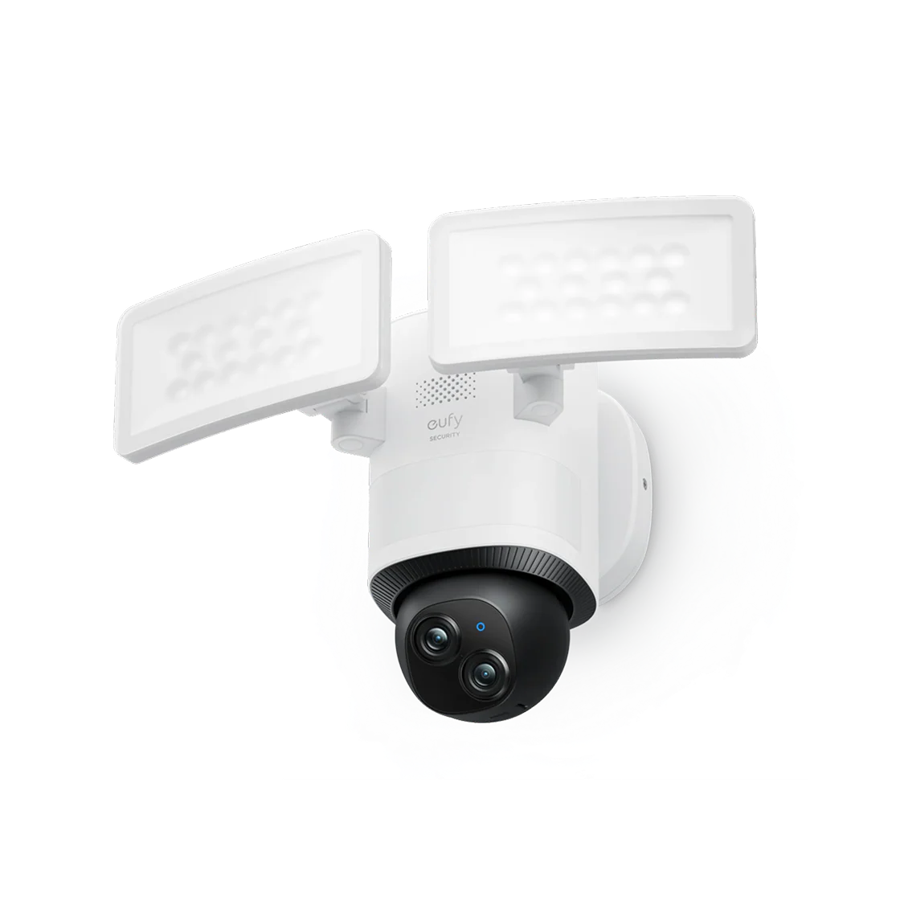
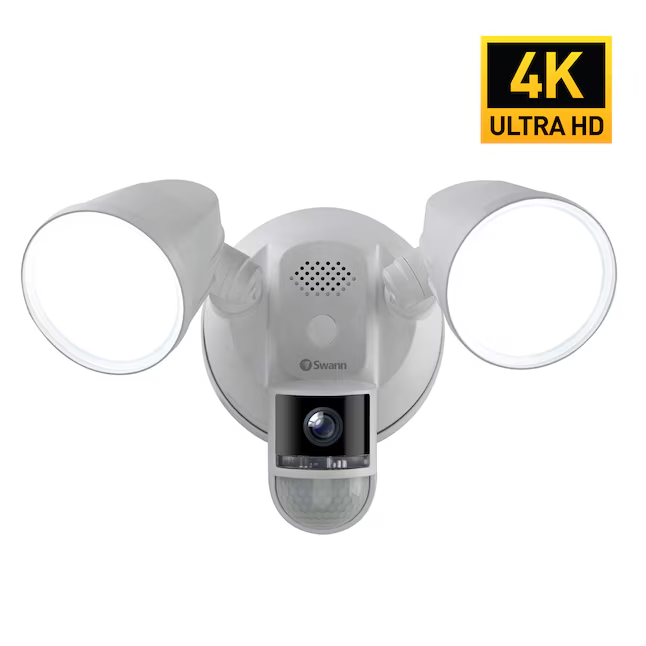
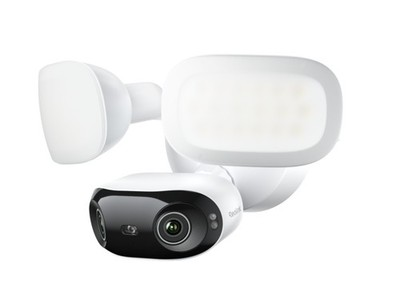
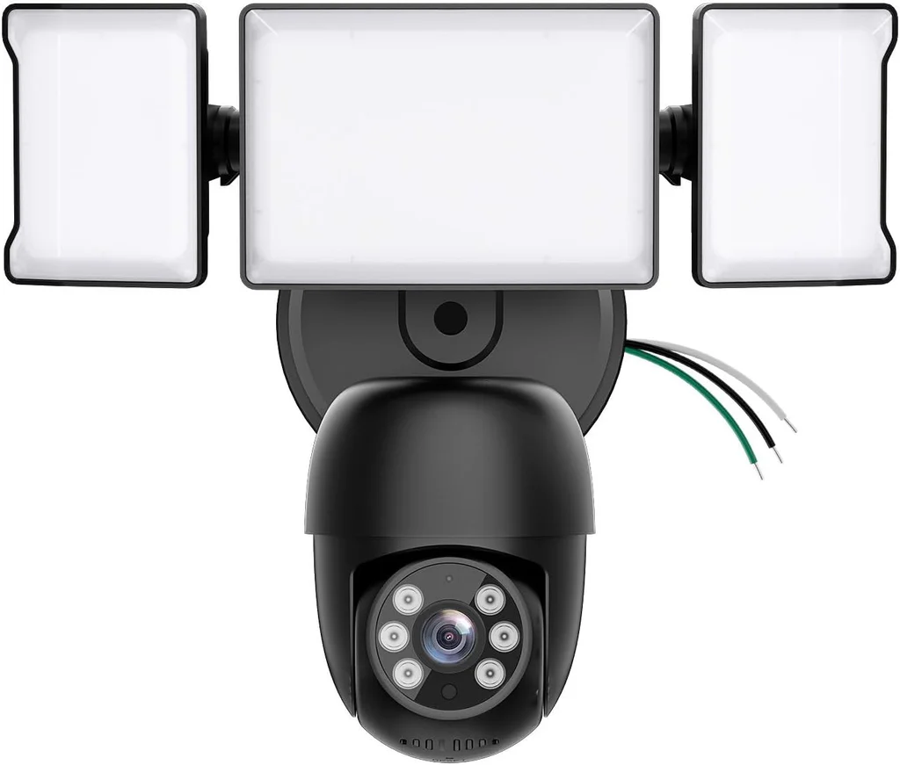
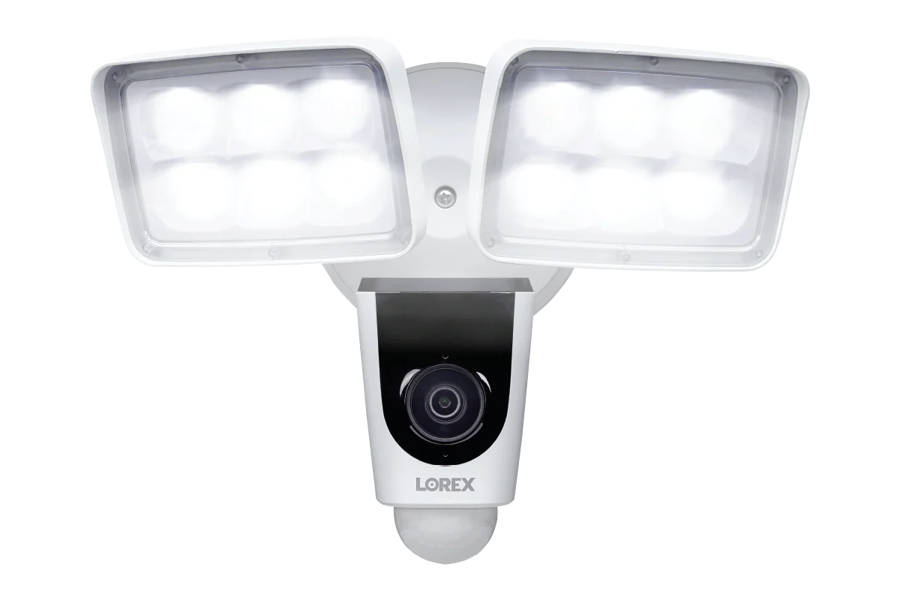
We install the floodlight cameras that actually hold up through a Long Island winter, and we’re honest about which ones charge a monthly fee and which don’t. eufy (Floodlight Cam E340, 2,000–2,500 lumen, built-in siren, local storage, no monthly fee) and Lorex (4K and 1080p WiFi floodlight, dual 4,000-lumen panels, local microSD, no fee) are our go-to no-subscription picks for a driveway or backyard. Reolink (Duo Floodlight, dual-lens 180°) records locally too and is excellent over a wide driveway. Ring (Floodlight Cam Pro, 110dB siren) and Google Nest (Floodlight Cam) are popular and easy to live with, but gate AI alerts, smart zones, and video history behind a monthly plan — we install them if you want the ecosystem, but you’ll know the recurring cost before you buy. For a larger estate or a commercial property we’ll spec a floodlight-equipped Dahua or Hikvision camera tied into an NVR. We earn nothing extra steering you toward a brand — we pick what fits the spot, the lumens you need, and your budget, change default passwords, and secure the camera so it can’t be hijacked. We’re also glad to mount a floodlight cam you picked up yourself.
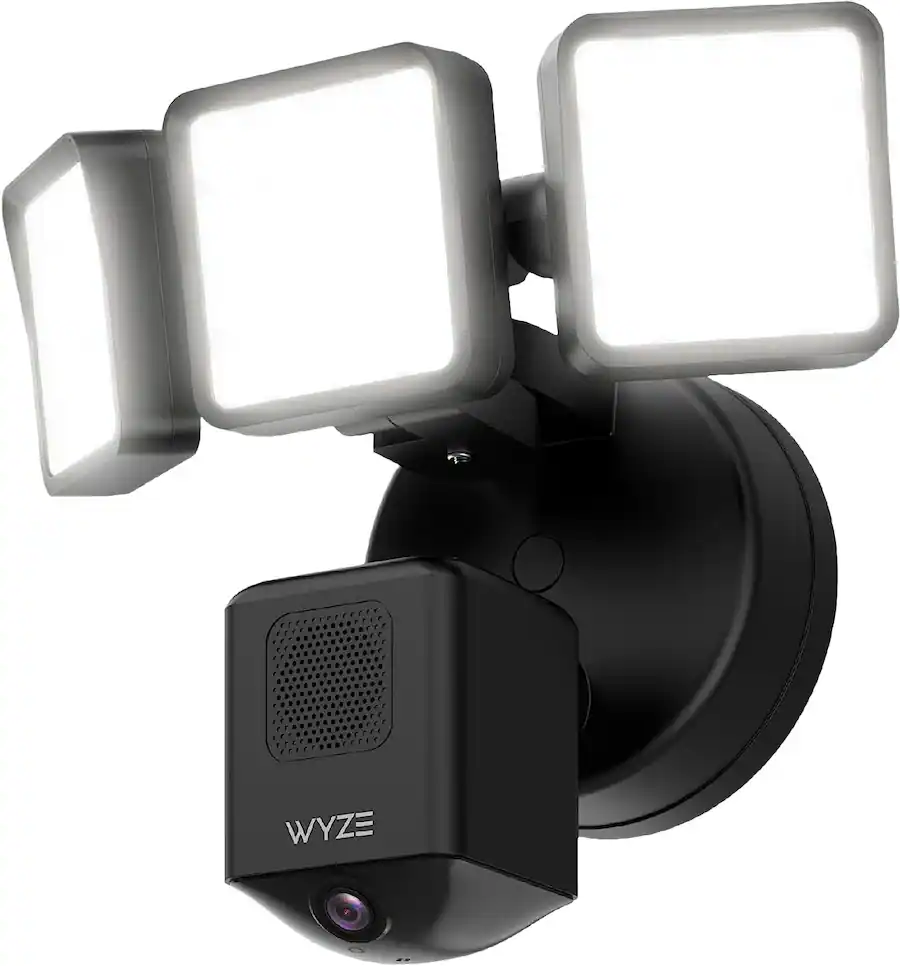
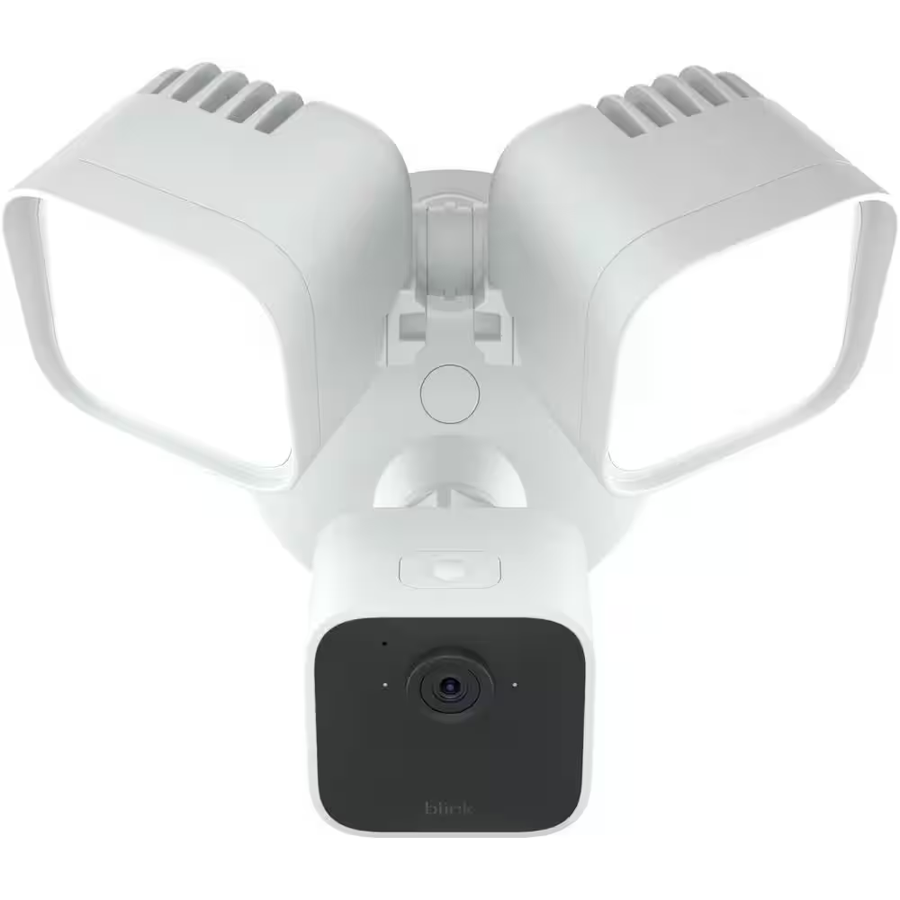
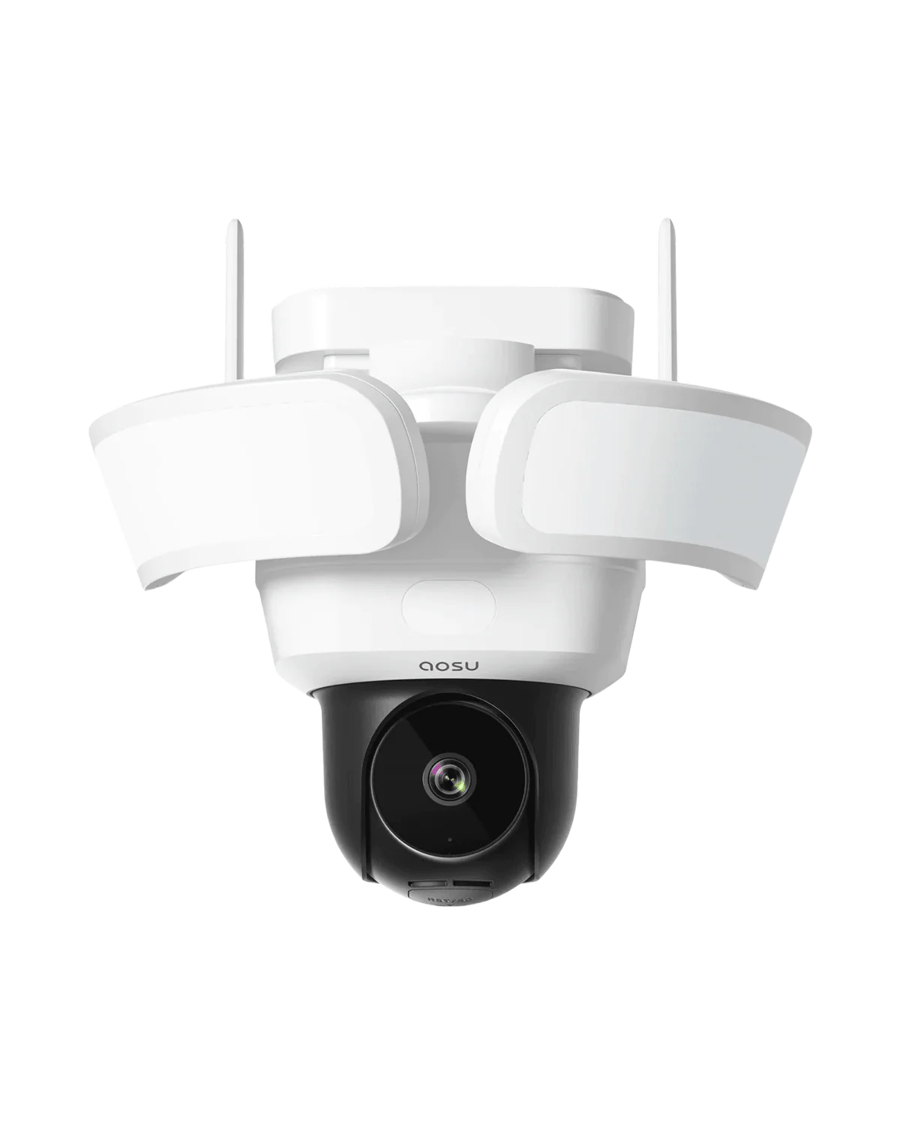
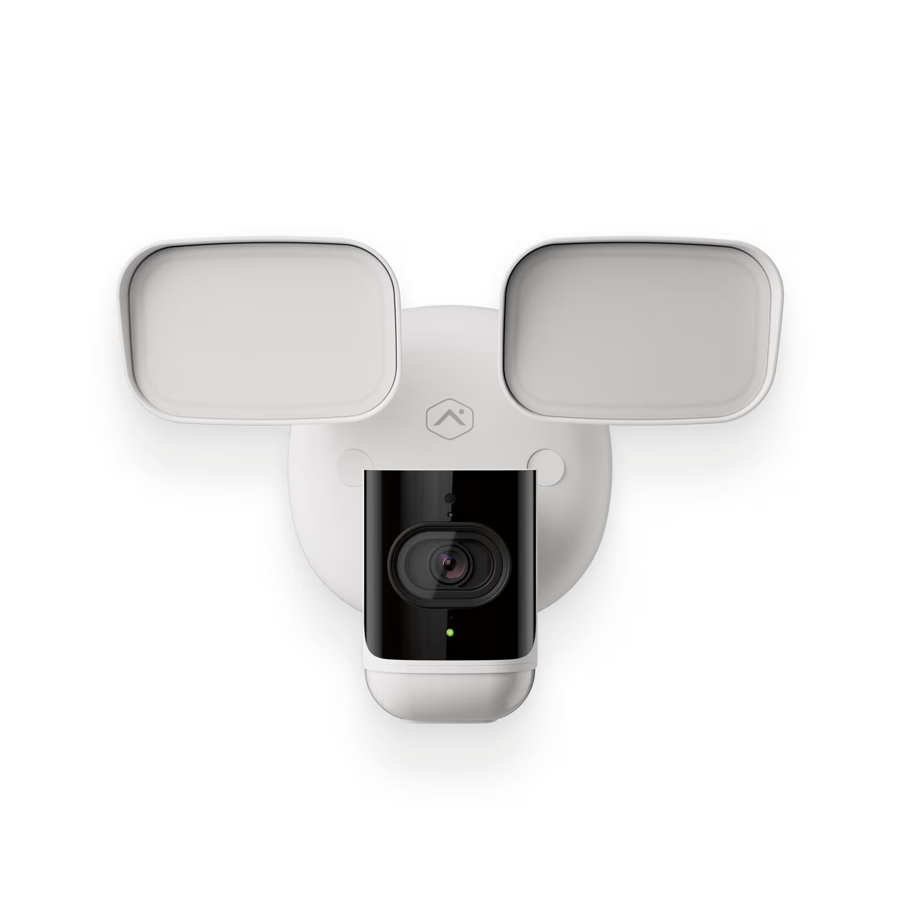
The brand list runs deeper than the big names, and on Long Island we install across all of it. Wyze’s Floodlight Cam Pro (3,000 lumens, 180°) is a budget standout, and Blink’s 2,600-lumen Wired Floodlight is an easy, low-cost Alexa-friendly option for a Nassau or Suffolk back yard. TP-Link Tapo’s C720 keeps costs down with free local storage, while Swann’s 4K floodlight suits a homeowner who wants sharper footage of a driveway or pool deck. If you run a monitored system, Alarm.com’s ADC-V729AC and Night Owl’s FWIP3-FL floodlight integrate cleanly, and Olafus and AOSU fill out the affordable end. We don’t push a house brand — we match the cam to your property.
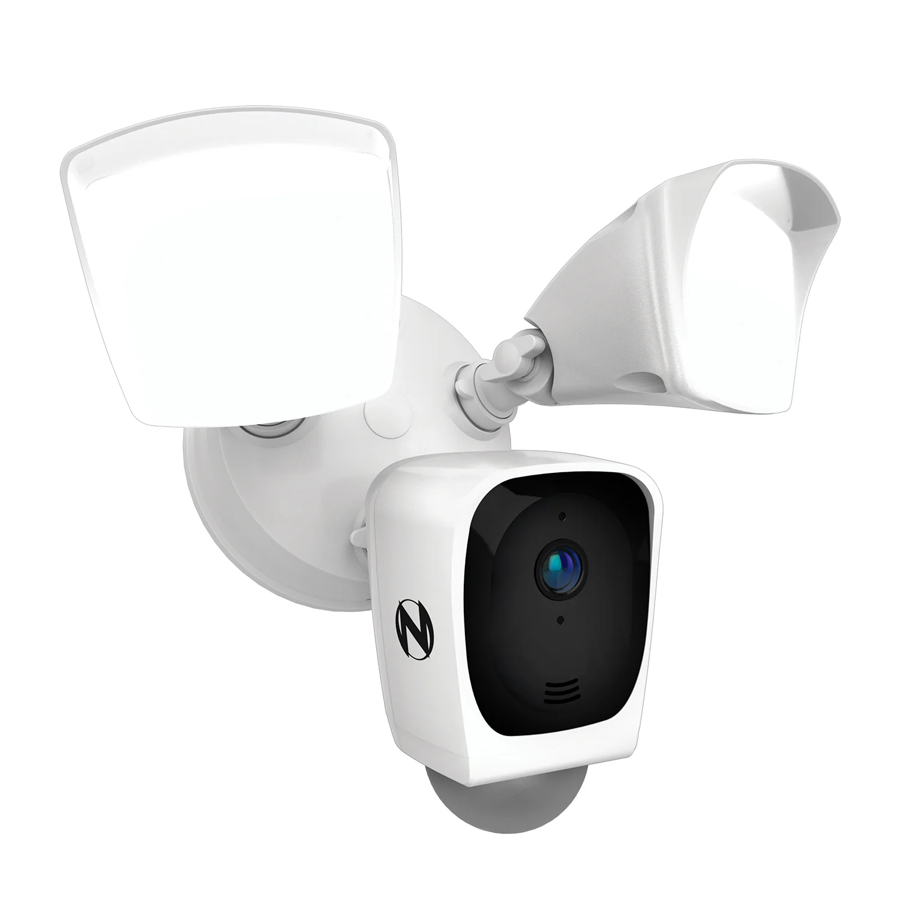
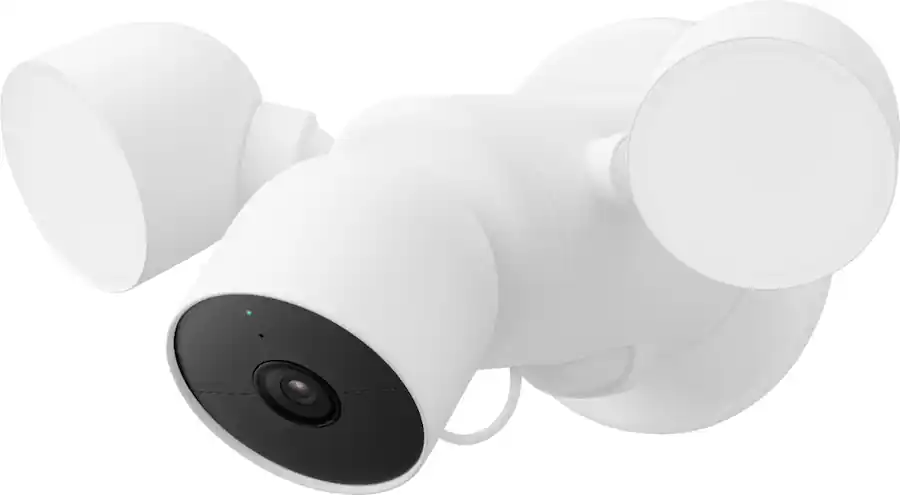
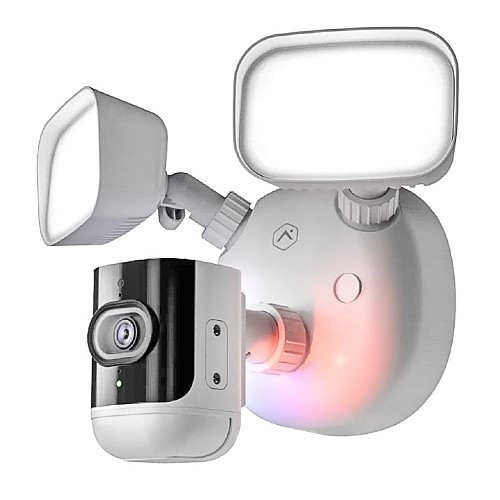
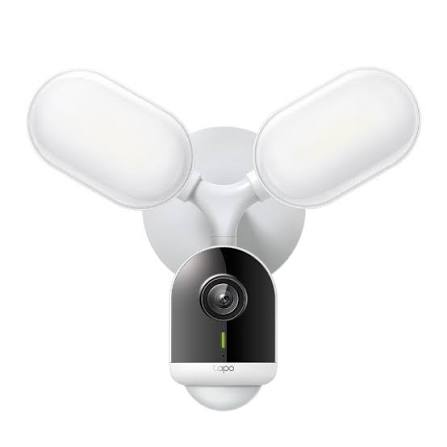
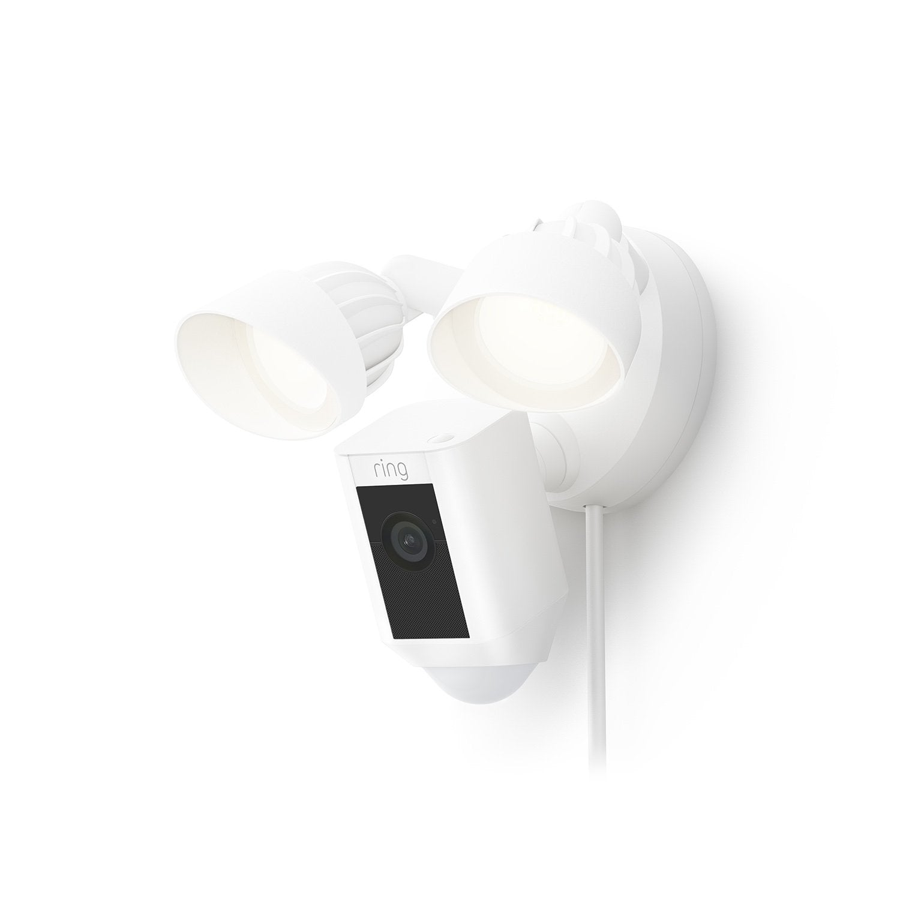
eufy Floodlight Camera E340Night Owl FWIP3-FL floodlight cameraBlink Wired Floodlight CameraAOSU dual-light floodlight PTZ cameraReolink floodlight security cameraOlafus 2K smart floodlight cameraLorex floodlight security cameraGoogle Nest Cam with floodlightAlarm.com ADC-V729AC floodlight cameraTP-Link Tapo C720 floodlight cameraRing Floodlight Cam PlusRing Floodlight Cam ProWyze Floodlight Camera ProSwann 4K floodlight security camera
Floodlight camera brands we install and service in Long Island — eufy, Lorex, Reolink, Ring, Google Nest, Wyze, Blink, TP-Link Tapo, Swann, Olafus, Alarm.com, Night Owl, and AOSU.
Honest Pricing
What Floodlight Camera Installation Costs on Long Island
Every quote is fixed-price after we see the spot — here are honest ranges so you can budget first. What moves the price most is simply whether power already reaches the spot you want covered. A swap onto an existing fixture is quick and cheap; running new wiring out to a detached garage or the back of a Long Island lot is more labor — usually priced by the foot — but it’s the only way to light the spot that actually needs it. The camera itself is extra, and local-storage models carry no monthly fee.
Fixture-Swap Install
1 floodlight cam
$275 – $550
You have an existing exterior light and junction box by the door or garage — we swap in a floodlight camera, seal it, and set up the app. Fast, clean, same-day.
New-Wiring Install
1 floodlight cam
$550 – $1,400
No power at the spot — we run a new circuit out to the garage, shed, or yard, set a UL-listed box, and mount the cam. Price depends on the run length across the lot.
Multi-Floodlight / Property
2–4 cams
$1,200 – $3,600
Several floodlight cams covering the driveway, backyard, pool, and outbuildings of a Nassau or Suffolk home, a mix of swaps and new runs.
Floodlight + Camera System
Custom
Custom
Floodlight cams wired into a full NVR system with bullet and turret cameras for whole-property coverage on a larger lot or estate — quoted after a walk-through.
How It Works
From First Call to Lights On, Recording
01
Free On-Property Assessment
We come out to the Nassau or Suffolk property, check whether there’s an existing fixture and junction box or a new run is needed out to the garage or yard, measure the coverage and the run length, and hand you a written fixed-price quote.
02
Wiring & Mounting
We swap the existing fixture or run a new circuit across the lot and set a UL-listed weatherproof box, mount the floodlight cam at the right height for its motion range, aim the panels at the driveway or yard, and silicone-seal it against the weather.
03
Setup, App & Motion Tuning
We power it up, set up live view and alerts on your phone, tune the motion zones so cars on the street and the neighbor’s yard don’t trigger it, test the lights and siren, and walk you through the app before we leave.
Real Questions
Floodlight Camera Questions Long Island Actually Asks
Cost & Budget
How much does floodlight camera installation cost on Long Island?
If there’s already an exterior light and junction box where you want it — usually by the door or garage — a swap runs $275 to $550 plus the camera. If there’s no power there and we run new wiring out to a shed, detached garage, or the back of the yard, it’s $550 to $1,400 depending on how far the run is across the lot. We quote a fixed price once commonly seen the spot in person.
Why is running new wiring to the garage so much more than a swap?
A swap is straightforward — the power and box already exist. A new run means pulling a circuit from the panel, getting it across the lot, sometimes trenching to a detached garage or shed, setting a weatherproof box, and tying it in to code. It’s real electrical labor priced by the foot, but it’s the only way to light the outbuilding or dark corner that never had power.
DIY vs Pro
Can I just install a floodlight camera myself?
If you’re swapping an existing fixture and comfortable killing the breaker and matching three wires, some Long Island homeowners do. The moment there’s no existing wiring — the garage, the shed, the far end of the yard — it’s a different job: New York requires a licensed hand to run a new circuit, and a bad outdoor splice is a shock and water hazard. Most of our calls are exactly that: someone bought the cam for the garage, then found there was no power out there.
What about the plug-in floodlight cams that need no junction box?
Models like the eufy E340 with an AC plug skip the junction box, but you still need an outdoor outlet within the cord’s reach — rare on the detached garage or back fence where Long Islanders want coverage — and the cord looks messy. For a clean, permanent install we hardwire, but if a plug-in genuinely fits your spot we’ll tell you and save you the wiring cost.
Technical
How high should a floodlight camera be mounted?
Most floodlight cams want 8 to 10 feet up for the best motion range — high enough to cover a 30 to 40 foot driveway, low enough to read a face and a plate. Mount it too high and you get the tops of heads; too low and it’s within reach. We match the mounting height to the camera model and the location.
My floodlight keeps triggering on cars going by — can that be fixed?
Yes — that’s a PIR sensor reacting to headlights and heat off the road, common on a Long Island street. We tune the motion zones to ignore the street and the sidewalk, drop the sensitivity, and on a busy road we’ll recommend a radar-motion model that cuts the false alerts way down so your phone only buzzes for real activity in the driveway or yard.
Will one floodlight cover my whole backyard?
Often one well-placed 3,000–4,000-lumen unit covers a typical Long Island backyard, but a deep or L-shaped yard, or one with a pool and a shed, may want two so there’s no dark gap behind the garage or fence. We chart the coverage during the walk-through so no corner is left dark.
Quality & Trust
Do I need a licensed contractor for a floodlight camera?
For a simple fixture swap, not strictly — but the second any new wiring is involved, like running power out to the garage, New York wants a licensed hand, and the work should be permitted and to code. We’re NYS licensed #12000287431 and insured — everything wired to code, weatherproofed, and warrantied.
How do I avoid a bad floodlight install?
Watch for anyone who quotes a new-wiring run to the garage sight unseen, leaves the junction box unsealed, or mounts the cam so low it’s reachable. A sealed weatherproof box, the right mounting height, panels aimed at your property, and tuned motion zones are what separate a real install from a cam that leaks, false-triggers on traffic, or gets ripped down.
Seasonal & Estates
I’m only out here part of the year — can I watch the house remotely?
Yes — live feeds, recorded clips, and motion alerts on your phone, so a Suffolk seasonal or vacation home is covered while it sits empty off-season. The floodlight lighting up and the siren are a strong deterrent on a property nobody’s watching.
Can you cover a larger lot with a pool house and outbuildings?
Yes — bigger Nassau and Suffolk lots are where floodlight cams earn their keep. We run power and mount units at the pool house, the detached garage, and the outbuildings so the whole property is lit and recorded, not just the main house.
Reality Check
Floodlight Camera Installation on Long Island: An Honest Reality Check
Search “floodlight camera installation cost” and the AI Overview, Angi, HomeAdvisor, and Fixr hand you a flat national number that has little to do with a real Long Island install. Here’s what they leave out.
The “average cost” number ignores the one thing that matters
Angi, HomeAdvisor, and Fixr publish a flat floodlight-install average — around $400 a light — that ignores the single biggest factor on Long Island: whether there’s already power where you want it. A swap by the front door and a new circuit run out to a detached garage are completely different jobs at completely different prices, and a national average hides exactly the thing that decides yours.
National results assume the easy spot, not the garage
Almost every “how to install a floodlight camera” guide quietly assumes a junction box is already there. The hard, valuable Long Island install — running a new line out to the shed, the detached garage, the back of a deep yard that never had a fixture — is the part those guides skip and the part most homeowners here actually need.
“Best floodlight camera” lists are paid placement
Those roundups rank whichever brand bought the slot, not what fits a Long Island property. The right floodlight cam depends on the lumens a driveway or backyard needs, whether you want a siren, whether you’ll tolerate a monthly fee, and the false-alert problem from street traffic — not a sponsored ranking.
The subscription trap nobody mentions up front
Ring and Nest floodlight cams paywall AI alerts, smart zones, and even video history behind a monthly plan, while eufy, Lorex, and Reolink record locally for free. National results rarely lead with this, and it’s the difference between a one-time cost and a bill forever — multiplied across the three or four cams a Long Island lot usually wants.
The false-alert problem on a suburban street gets ignored
A PIR floodlight facing the road triggers all evening on passing cars and headlights, so people mute the alerts and the camera becomes useless. Tuned motion zones or a radar-motion model fix it, but a generic guide never warns you — and on a Long Island street it’s the difference between a useful camera and one you ignore.
Weather and the long run are afterthoughts online
An outdoor floodlight box that isn’t silicone-sealed lets water in and fails through a Long Island winter; and national content never accounts for the cost and labor of getting power tens of feet out to a detached garage or shed. Those are the two things that actually decide whether your install lasts and what it costs.
The honest bottom line for a Long Island floodlight
A floodlight camera is the highest-impact single device you can put outside a Long Island home — light, camera, and siren in one, exactly where a suburban lot is darkest: the driveway, the backyard, the garage. But the value is in the install: power run to the right spot even when it’s the far end of the yard, the box sealed, the height right, the motion tuned off the street, and a brand whose monthly-fee story you understand. The smart move isn’t the cheapest sight-unseen quote — it’s a licensed installer who sees the lot first.
Easy to live with but a monthly plan unlocks AI alerts, smart zones, and video history — a bill forever, times every cam on the lot. We default to no-fee local storage and install Ring or Nest only if you want that ecosystem.
vs. a Handyman
A swap maybe, but no license for new wiring out to the garage, no code-compliant circuit, no sealed weatherproof box, no warranty. We’re a licensed contractor who runs power properly across the lot and stands behind it.
vs. DIY Plug-In Kit
Works only if there’s an outdoor outlet exactly where you want the cam — rare on a detached garage or back fence — and the cord looks it. We hardwire clean and permanent.
vs. Separate Light + Camera
Two devices, two installs, two failure points. A floodlight cam is light, camera, and siren in one fixture on one feed — less to mount over a driveway or pool, less to maintain.
Our Model
Free on-property assessment, fixed price, fixture swap or full new-wiring run to the garage or yard, sealed weatherproof box, right mounting height, tuned motion zones, no-fee local storage, warrantied — licensed NYS #12000287431.
Coverage
Floodlight Cams Across Nassau & Suffolk
This is our Long Island floodlight hub. Jump to your county for local floodlight installation, see our full Long Island camera service, or build it into a complete residential system. Back to our home page for everything we do.
Floodlight Cameras Nassau County
Floodlight installs across Nassau — colonials, splits, and ranches with driveways, pools, and garages.
We run a new circuit out to the garage and set a weatherproof box, then mount a floodlight cam so the blind side of the property finally lights up and records.
“My floodlight triggers all night on cars going by.”
We tune the motion zones to ignore the street and, on a busy road, fit a radar-motion model so you only get alerts that matter in the driveway and yard.
“Packages keep disappearing off my porch.”
A floodlight over the entry and walkway lights and records the approach, paired with a doorbell cam at the door — the combo that actually stops porch piracy.
“Someone’s been in my backyard at night.”
A high-lumen floodlight cam with a siren over the rear yard lights it, records it, and gives you a button to scare them off from your phone.
“I bought a floodlight cam and there’s no wiring at the shed.”
The most common call we get on Long Island — we run the power out across the lot, set the box, and mount the cam you already bought, clean and to code.
“My old floodlight cam leaks and fogs after winter.”
An unsealed box and the wrong IP rating. We re-mount a properly weather-rated unit and silicone-seal the box so water stays out through the season.
Customer Reviews
What Long Island Floodlight Customers Say
Illustrative scenario — a representative floodlight camera job includes assessing the property, selecting equipment matched to the site, clean installation, and a walkthrough of the finished system and app. Hypothetical planning example — not a customer account, completed AESS project, verified review, or promised result.
Hypothetical planning example — not a customer account, completed AESS project, verified review, or promised result.
Illustrative example — for floodlight camera, a typical visit covers an on-site review, a written scope and fixed quote, and professional installation or repair completed to code. Hypothetical planning example — not a customer account, completed AESS project, verified review, or promised result.
Hypothetical planning example — not a customer account, completed AESS project, verified review, or promised result.
Illustrative field note — with floodlight camera work, common calls involve diagnosing an existing setup, confirming whether a firmware, configuration, or component fix will resolve the issue before recommending replacement, and completing the work efficiently. Hypothetical planning example — not a customer account, completed AESS project, verified review, or promised result.
Hypothetical planning example — not a customer account, completed AESS project, verified review, or promised result.
Illustrative scenario — a representative floodlight camera job includes assessing the property, selecting equipment matched to the site, clean installation, and a walkthrough of the finished system and app. Hypothetical planning example — not a customer account, completed AESS project, verified review, or promised result.
Hypothetical planning example — not a customer account, completed AESS project, verified review, or promised result.
From the Field
Field Notes from a Long Island Floodlight Install
A Suffolk County colonial that shows why the Long Island floodlight job is really a wiring job: the owner had bought a 4,000-lumen floodlight cam to cover the detached garage and the long driveway leading back to it, and assumed it was an afternoon’s work. The problem was the garage sat sixty feet off the back of the house with no power run to it — the one structure that needed light and a camera was the one with no electricity at all. The actual install was electrical: we pulled a new circuit off the panel, ran it out through the soffit and across to the garage, trenched the last stretch, set a UL-listed weatherproof junction box on the garage wall, and only then mounted the camera. We set it at nine feet so it covered the length of the driveway and read a plate at the street without being reachable, aimed the two panels so one washed the drive and the other the garage apron, silicone-sealed the box against the weather, and tuned the motion zones to ignore the road so it wouldn’t fire every time a car passed. Lights, camera, and a siren you trigger from the app — all recording locally, no monthly fee. The camera was the easy part — the value was getting power sixty feet out to a dark garage safely and to code, which is exactly where a DIY kit leaves a Long Island homeowner stranded.
Need Repair?
Floodlight Cam Down on Long Island? Fast Repair
Floodlight not coming on, camera offline, lights stuck on, triggering on every passing car, fogged-up or leaking lens after winter, siren dead, or a run to the garage that quit? We diagnose and fix floodlight cameras across Nassau and Suffolk — re-seal a leaking box, re-tune runaway motion off the street, re-run a bad circuit to an outbuilding, or replace a unit that was never rated for a Long Island winter. Same-day in most of Long Island.
Floodlight Camera Services People Search For on Long Island
Nassau and Suffolk homeowners find us under many of these searches. Every one points to the same licensed crew — from a single motion-activated floodlight camera installation to a full multi-building floodlight system, plus wiring, repair, and service.
Floodlight Camera InstallationFloodlight Camera Installer Long IslandFloodlight Camera Installation ServiceFloodlight Security Camera InstallationFloodlight Surveillance Camera Installation Long IslandSmart Floodlight Camera InstallationOutdoor Floodlight Camera InstallationWireless Floodlight Camera Installation Long IslandWired Floodlight Camera InstallationWiFi Floodlight Camera InstallationMotion Sensor Floodlight Camera Installation Long IslandMotion Activated Floodlight Camera InstallationLED Floodlight Camera InstallationResidential Floodlight Camera Installation Long IslandCommercial Floodlight Camera InstallationHome Floodlight Camera InstallationBusiness Floodlight Camera Installation Long IslandFloodlight Camera SetupFloodlight Camera ConfigurationFloodlight Camera Programming Long IslandFloodlight Camera IntegrationFloodlight Camera MountingFloodlight Camera Wiring Long IslandFloodlight Camera RewiringFloodlight Camera Electrical InstallationFloodlight Camera Replacement Long IslandFloodlight Camera UpgradeFloodlight Camera RepairFloodlight Camera Maintenance Long IslandFloodlight Camera TroubleshootingFloodlight Camera SupportFloodlight Camera Service Long IslandFloodlight Camera TechnicianFloodlight Camera SpecialistFloodlight Camera Contractor Long IslandFloodlight Camera Installation CompanyFloodlight Camera Installation ContractorProfessional Floodlight Camera Installation Long IslandCertified Floodlight Camera InstallerExpert Floodlight Camera InstallationFloodlight Camera Installation Experts Long IslandFloodlight Camera Installation ProfessionalsFloodlight Camera Installation Near MeFloodlight Camera Installer Near Me Long IslandFloodlight Camera Repair Near MeFloodlight Camera ConsultationFloodlight Camera Assessment Long IslandFloodlight Camera EstimateFloodlight Camera QuoteFloodlight Camera System Installation Long IslandFloodlight Camera Monitoring SystemFloodlight Camera Remote Viewing SetupFloodlight Camera Mobile App Setup Long IslandFloodlight Camera Motion Detection SetupFloodlight Camera Night Vision SetupFloodlight Camera Network Setup Long IslandFloodlight Camera WiFi SetupFloodlight Camera Connection SetupFloodlight Camera Recording Setup Long IslandFloodlight Camera Storage SetupFloodlight Camera Video MonitoringFloodlight Camera Security Monitoring Long IslandFloodlight Camera Live View SetupFloodlight Camera Outdoor SecurityFloodlight Camera Perimeter Security Long IslandFloodlight Camera Driveway SecurityFloodlight Camera Backyard SecurityFloodlight Camera Front Door Security Long IslandFloodlight Camera Garage SecurityFloodlight Camera Entryway SecurityFloodlight Camera Property Protection Long IslandFloodlight Camera Home SecurityFloodlight Camera Business SecurityFloodlight Camera Crime Prevention Long IslandFloodlight Camera Intrusion DetectionFloodlight Camera Motion AlertsFloodlight Camera Smart Home Integration Long IslandFloodlight Camera Firmware UpdateFloodlight Camera Software UpdateFloodlight Camera Offline Troubleshooting Long IslandFloodlight Camera Not RecordingFloodlight Camera Not ConnectingFloodlight Camera Image Quality Issues Long IslandFloodlight Camera Night Vision ProblemsFloodlight Camera Motion Detection ProblemsFloodlight Camera Recording Issues Long IslandFloodlight Camera PlaybackFloodlight Camera StorageFloodlight Camera Installation and Setup Long IslandFloodlight Camera Installation and RepairFloodlight Camera Installation and MaintenanceFloodlight Camera Installation and Monitoring Long IslandSame Day Floodlight Camera InstallationEmergency Floodlight Camera RepairUrgent Floodlight Camera Service Long IslandFast Floodlight Camera Installation
Questions
Long Island Floodlight Camera Questions Answered
How much does floodlight camera installation cost on Long Island?
+
A swap onto an existing fixture and junction box — usually by the door or garage — runs $275 to $550 plus the camera. A new-wiring install out to a shed, detached garage, or the back of the yard runs $550 to $1,400 depending on the run length across the lot. Several cameras or a whole-property system gets quoted after we walk the lot. No monthly fee on local-storage models.
Do you run new wiring out to a detached garage or shed?
+
Yes — that’s the install most Long Island homeowners actually need and the one DIY kits can’t do. We pull a new circuit from the panel, get it across the lot (trenching if needed), set a UL-listed weatherproof box on the garage or shed, and mount the floodlight cam, all to code.
Can I install a floodlight camera myself?
+
If you’re swapping an existing fixture and comfortable killing the breaker and matching three wires, sometimes. The moment new wiring is involved — out to the garage or the far end of the yard — it’s a licensed job in New York, and a bad outdoor splice is a real shock and water hazard. Most of our calls are people who bought the cam for the garage and found no power out there.
What floodlight camera brands do you install?
+
eufy, Lorex, and Reolink for no-monthly-fee local storage; Ring and Nest if you want that ecosystem (they charge monthly for AI and history); and Dahua or Hikvision floodlight-equipped cameras tied into an NVR for a larger estate or commercial property. We’ll mount one you already purchased, too.
Which floodlight cameras have no monthly fee?
+
eufy, Lorex, and Reolink record to local storage with no recurring fee for basic motion recording. Ring and Nest paywall AI alerts, smart zones, and video history behind a plan. We tell you exactly which features are free and which aren’t before you buy — it adds up across the three or four cams a Long Island lot usually wants.
How high should a floodlight camera be mounted?
+
Usually 8 to 10 feet — high enough to cover a 30 to 40 foot driveway and stay out of reach, low enough to read a face and a plate. Mounting height is set to the exact camera model and location.
My floodlight keeps triggering on cars going by — can you fix that?
+
Yes — that’s a PIR sensor reacting to headlights and heat off the road. We tune the motion zones to ignore the street and sidewalk and drop the sensitivity, and on a busy road we’ll fit a radar-motion model that cuts the false alerts way down.
Does the floodlight record in color at night?
+
Yes — the floodlight produces true-color footage after dark instead of gray infrared, so you get a real face, car color, and plate at night at the end of the driveway.
Will it survive a Long Island winter?
+
Yes — we install IP65/IP66-rated units and silicone-seal the junction box so rain, snow, and salt air stay out. The most common reason an old floodlight cam fails here is an unsealed box, which we fix on every install.
Can a floodlight camera scare off an intruder, not just record one?
+
Yes — models with a built-in 95dB+ siren and two-way audio let you trigger the alarm and speak through the camera, turning a passive recording into an active deterrent. On a dark Long Island backyard the light coming on is often enough on its own.
Do I need a licensed contractor for a floodlight camera?
+
For a simple swap, not strictly, but any new wiring — especially a run out to the garage — is a licensed job in New York and should be permitted and to code. We’re NYS licensed #12000287431 and insured, wire to code, and warranty the work.
Can you cover a larger lot, an estate, or a seasonal home?
+
Yes — bigger Nassau and Suffolk lots, waterfront estates, and seasonal homes are where floodlight cams earn their keep. We run power and mount units at the pool house, detached garage, and outbuildings, with remote viewing so you can watch a vacation home off-season.
Illustrative example — for floodlight camera, a typical visit covers an on-site review, a written scope and fixed quote, and professional installation or repair completed to code. Hypothetical planning example — not a customer account, completed AESS project, verified review, or promised result.
Marcus T. — Brooklyn, NY
★★★★★
Illustrative field note — with floodlight camera work, common calls involve diagnosing an existing setup, confirming whether a firmware, configuration, or component fix will resolve the issue before recommending replacement, and completing the work efficiently. Hypothetical planning example — not a customer account, completed AESS project, verified review, or promised result.