Several Languages on One Wall · Several Live Feeds at Once · Health Department Menu Icons Built In · Low-Voltage Work Licensed in New York State
A display wall in Queens rarely talks to one audience. A Flushing food-hall counter needs its dishes readable in Chinese and in English from the back of the queue. A Jackson Heights restaurant wants a second language printed beside every price. A bar in Astoria or Sunnyside may be asked for a cricket match, a Premier League game and a Knicks broadcast on the same night, with sound for only one of them. An office lobby near Court Square shows building notices and a tenant's brand side by side. We plan the wall around those sources, scripts and rules first, and only then choose panels, mounts and cable paths — so the wall that goes up is the one the business actually needed.
Reviewed and updated October 18, 2026: Census QuickFacts for Queens County, the NYC Health Department's calorie, sodium and added-sugar menu rules, the Department of Buildings sign guide and Administrative Code §28-105.4.7 on low-voltage work, the ADA protruding-objects standard, and 2026 reporting on Queens watch parties and the Tangram food hall · Anwar Timothy, NYS license #12000287431 · Queens visits dispatched from our office on East Fordham Road in the Bronx

Start with three photos. Stand where your customers stand and photograph the wall you want to use; then photograph the back of whatever already feeds your screens (cable box, streaming stick, menu player, a laptop on a shelf); then photograph the nearest outlet and any ceiling tile you can lift. Text all three to (347) 434-6392 with your cross streets. From those pictures we can usually tell whether the job is a two-by-two LCD wall, a row of portrait menu screens, a direct-view LED wall or a repair, and what the building will let us do, before anyone loses a lunch service to a site visit.
Most video-wall advice is written for one kind of room: a corporate lobby with a single brand, a single language and a single source. Queens businesses ask for something harder. The Census Bureau's QuickFacts table for Queens County puts the share of residents aged five and over who speak a language other than English at home at 55.4 percent, and the foreign-born share of the population at 47.6 percent, in the 2020–2024 American Community Survey. The Endangered Language Alliance, which has spent years mapping where languages are spoken across the New York area, estimates that as many as 800 languages are spoken in New York City and that no place on its map has more than Queens. A sign or a screen in this borough is read by people who arrived from dozens of countries, and a good share of them read a script other than the Latin alphabet first.
That changes what a video wall is for. On a corridor such as Main Street in Flushing or Roosevelt Avenue in Jackson Heights, the screen behind a counter is often doing the job a printed bilingual menu used to do, but with more items, more photos and prices that change with the supplier's invoice. Scripts such as Chinese, Devanagari or Bengali generally need more height on screen than a line of English to stay comfortable to read at the same distance, so the size of the wall is set by the hardest script it has to show, not by the width of the counter. We size and lay out a Queens menu wall by counting the longest line in every language the owner wants, not by picking a television size first.
Live sport pulls the other way: more feeds, not more text. In July 2026 the real-estate site 6sqft listed Queens places to watch the World Cup final — the Queens Night Market in Flushing Meadows-Corona Park with a 30-foot LED screen, the Queens Botanical Garden with three jumbotrons on its lawn, Queens Borough Hall with a 16-by-9-foot LED screen, and Pig Beach in Astoria with a 28-foot jumbotron outdoors and dozens of televisions inside. A neighborhood bar does not need a jumbotron, but it does get asked to put a match from one continent beside a game from another, sometimes with different audio for different rooms. That is a switching and audio problem before it is a display problem, and we treat it that way.
Then there are the rules. Chain restaurants in New York City with 15 or more locations must show calories on their menu boards, and the Health Department's rules add a salt-shaker icon for items with at least 2,300 mg of sodium and, since October 2025, an added-sugar icon for certain high-sugar items. Screens in storefront windows can become signs in the eyes of the Department of Buildings. The power behind the wall is licensed electrical work. None of that is unusual on its own; what is unusual about Queens is how often all of it lands on one small business with one wall and one weekend to get it done.
Language on storefronts has been a public argument here before. In 2011 a Flushing council member proposed requiring store signs in the city to be at least 60 percent English, a story the New York Times covered under the headline “Queens Councilman Wants English to Dominate Store Signs.” Whatever one thinks of that debate, it shows how visible the language mix of a Queens shopfront is to the people walking past it. A screen in the window is part of that mix, and owners usually want both their regular customers and newcomers to feel addressed. We leave the choice of languages and their order entirely to the owner and make sure the hardware and layout can carry whatever they decide.

Most Queens owners who add a menu or game wall pair it with cameras over the counter and register, and the two systems can share the same cabling route. Our Queens commercial camera team and the video-wall crew plan those runs together, so the ceiling is opened once.
A dark wall during service is lost sales, so repair calls go to the front of the queue. Typical Queens faults are small and fast once someone is standing at the wall: a media player that lost its schedule after a power cut, an HDMI or HDBaseT link that drops when the walk-in compressor starts, a panel set back to factory input after a firmware update, a menu that stopped updating because the restaurant's Wi-Fi password changed. Most single faults are fixed within one to two hours of arrival.
Service and repair visits are billed at our standard rate of $195 an hour with a 3-hour minimum ($585). That rate covers diagnosis, re-seating and re-terminating cables, reconfiguring players and controllers and testing every source; replacement panels, players and mounts are quoted separately once we know what failed. If you did not install the wall with us, send photos of the labels on the back of a panel and the player first — it tells us which spare parts to bring.

Every wall below starts from the same question: who stands in front of it, how far away, reading what. The panel type follows from the answer.
Rows of landscape or portrait commercial displays behind a counter, driven by one player per wall or one player per screen. Layouts built so the longest line in the most demanding script still reads from the back of the queue, with price, calories and any required icons on the same slide as the item.
Two-by-two or larger LCD walls that can show one picture across all panels or a different match on each, switched from a tablet behind the bar. Audio follows the feed you choose, room by room, instead of every screen fighting for the same speakers.
High-brightness panels that stay legible facing a sunny avenue, mounted on floor stands or ceiling drops behind the glass so nothing is fixed to the facade. We size and program them with the Department of Buildings sign guide in mind, and say plainly when a design needs a sign permit.
Narrow-bezel LCD or fine-pitch direct-view LED walls for office lobbies, reception areas and conference rooms, with a content system that lets a building manager post notices without calling us. Common around Court Square, Queens Plaza and the office floors of Flushing's newer mixed-use buildings.
Monitor walls for production offices, edit suites and green rooms in western Queens, where several camera or playback feeds need to be watched at once. Fed by a matrix switcher or video-over-IP so a coordinator can move any source to any screen.
Walls for classrooms, student lounges, community halls and worship spaces that must carry captions or translation alongside the main picture. Built so a volunteer or a staff member can change the layout from one control panel.
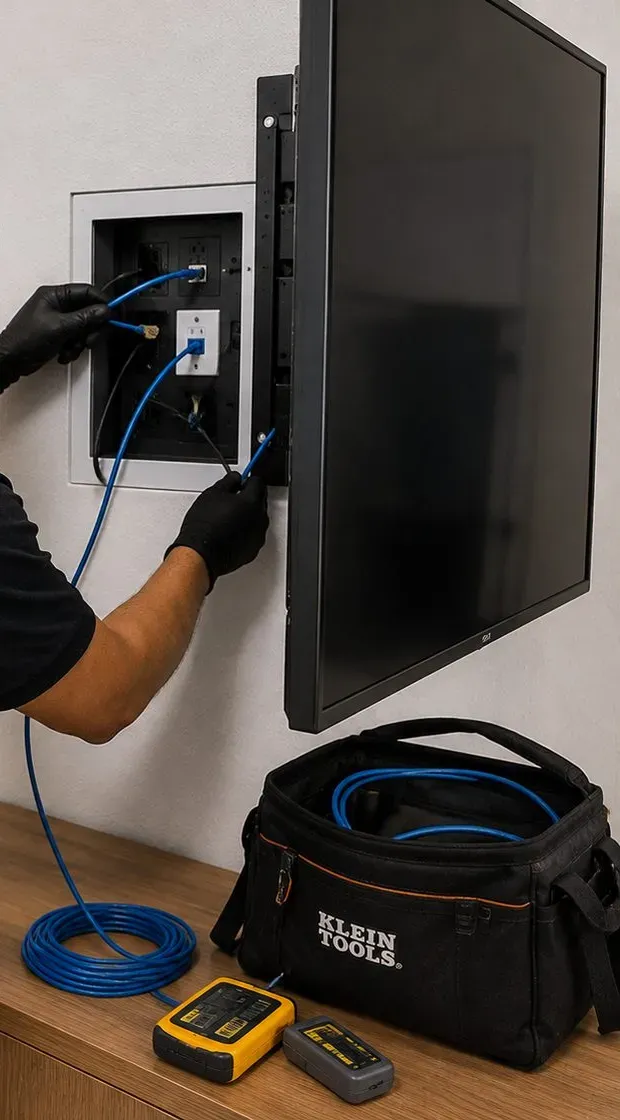
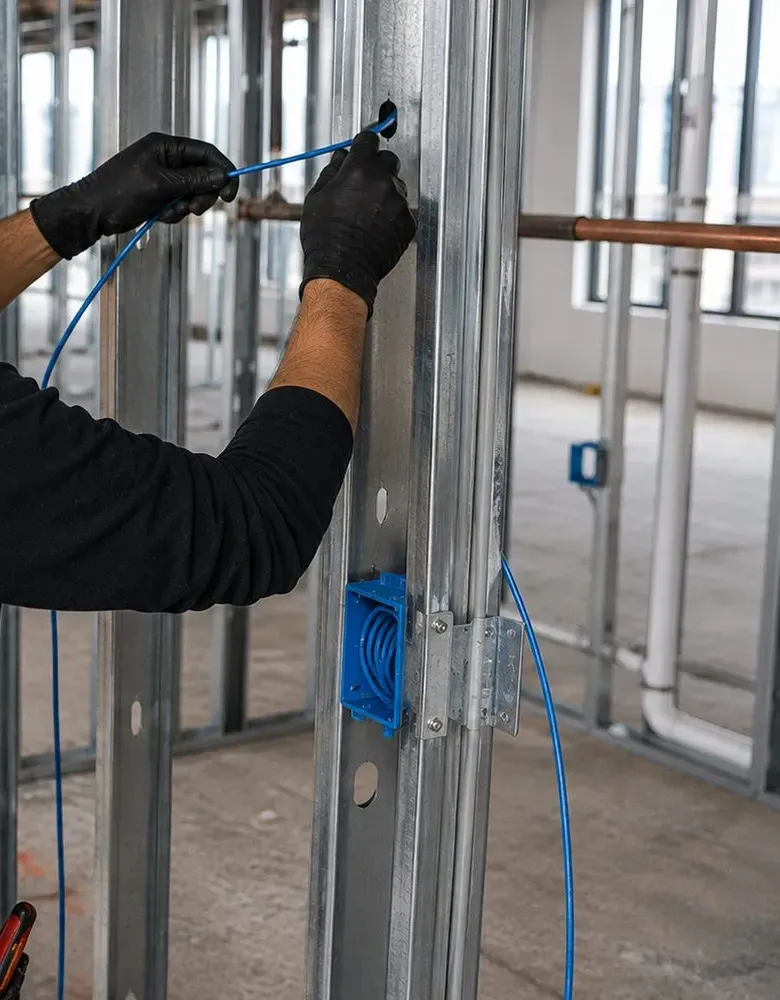
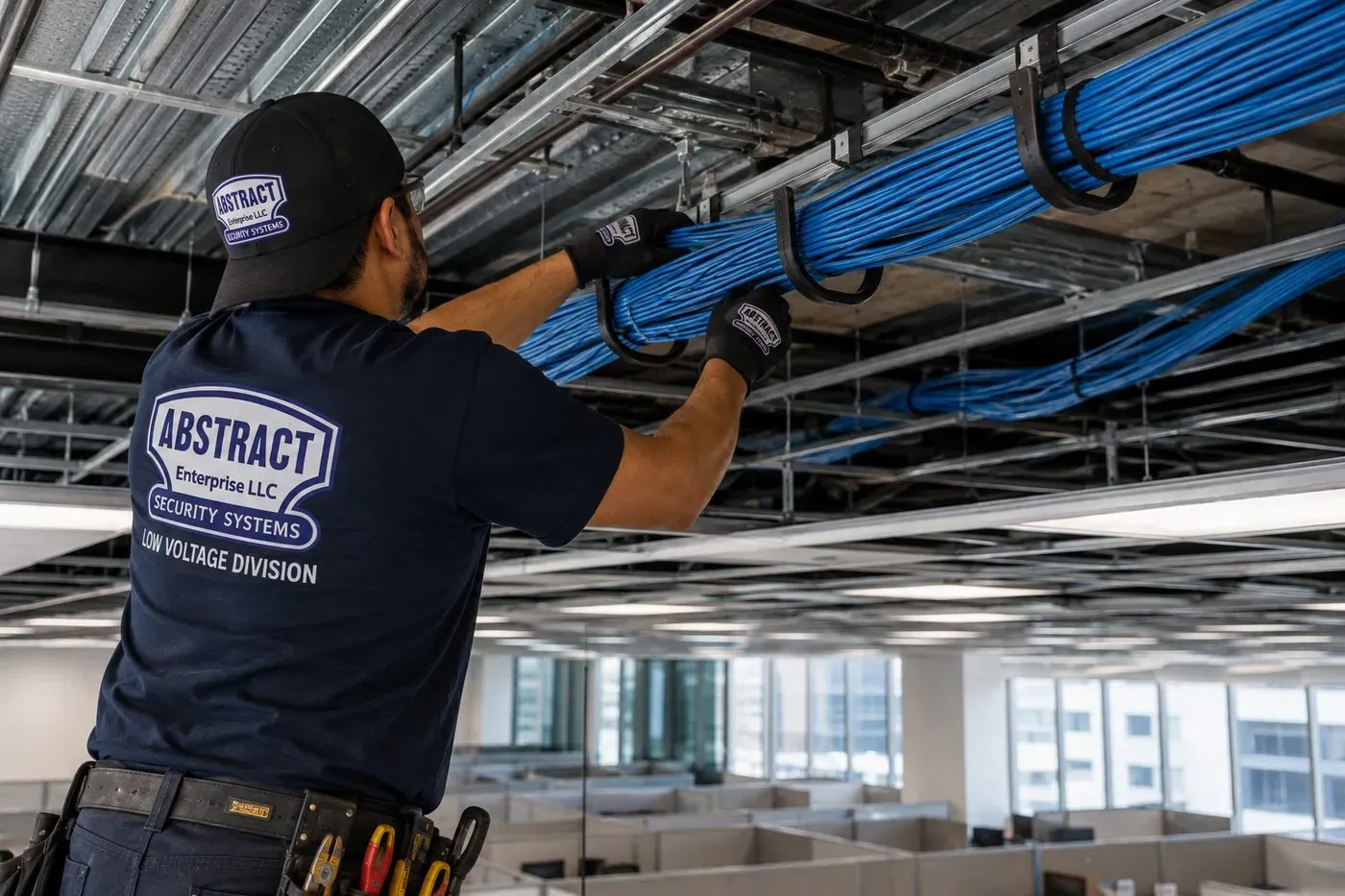
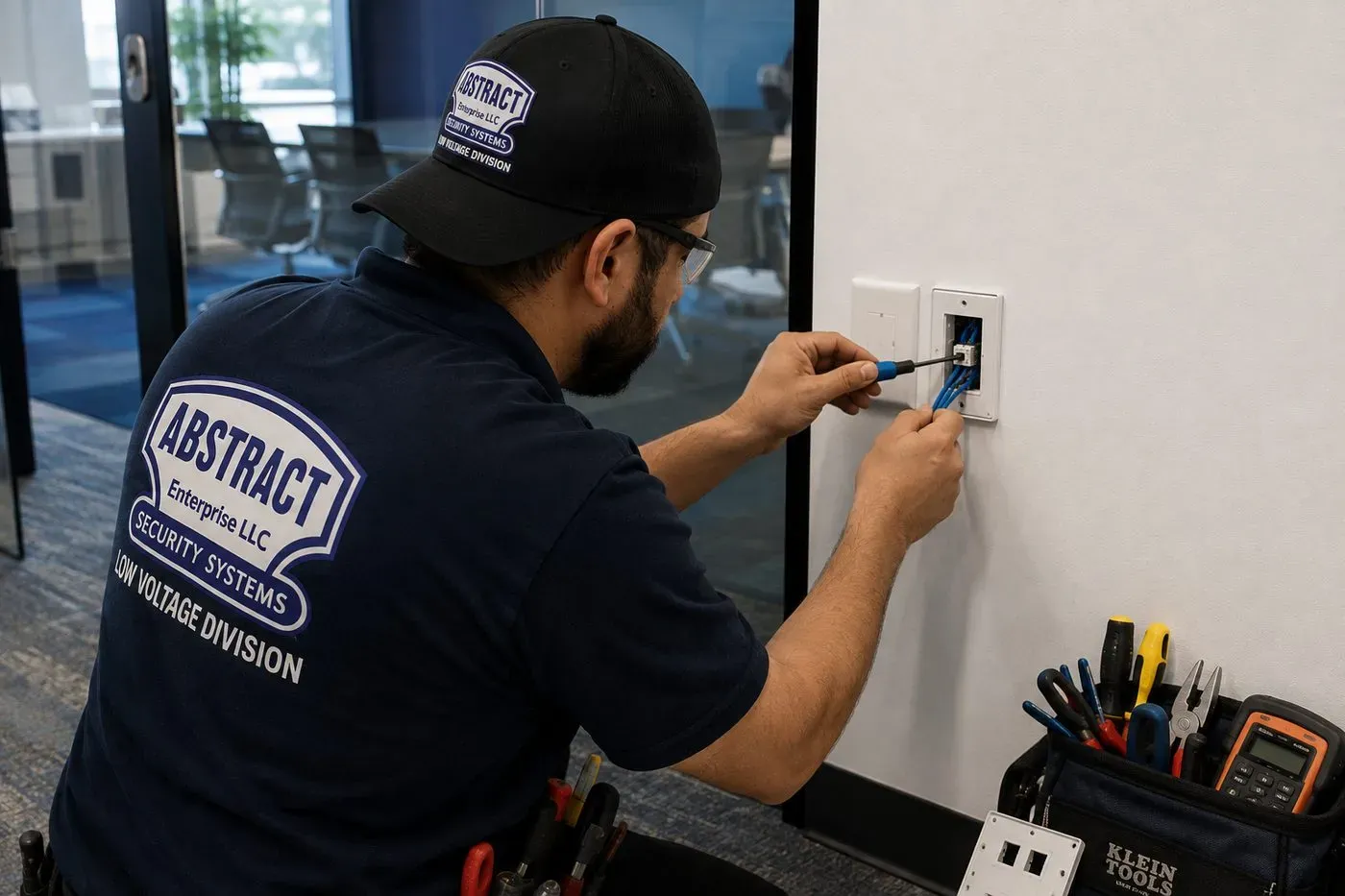
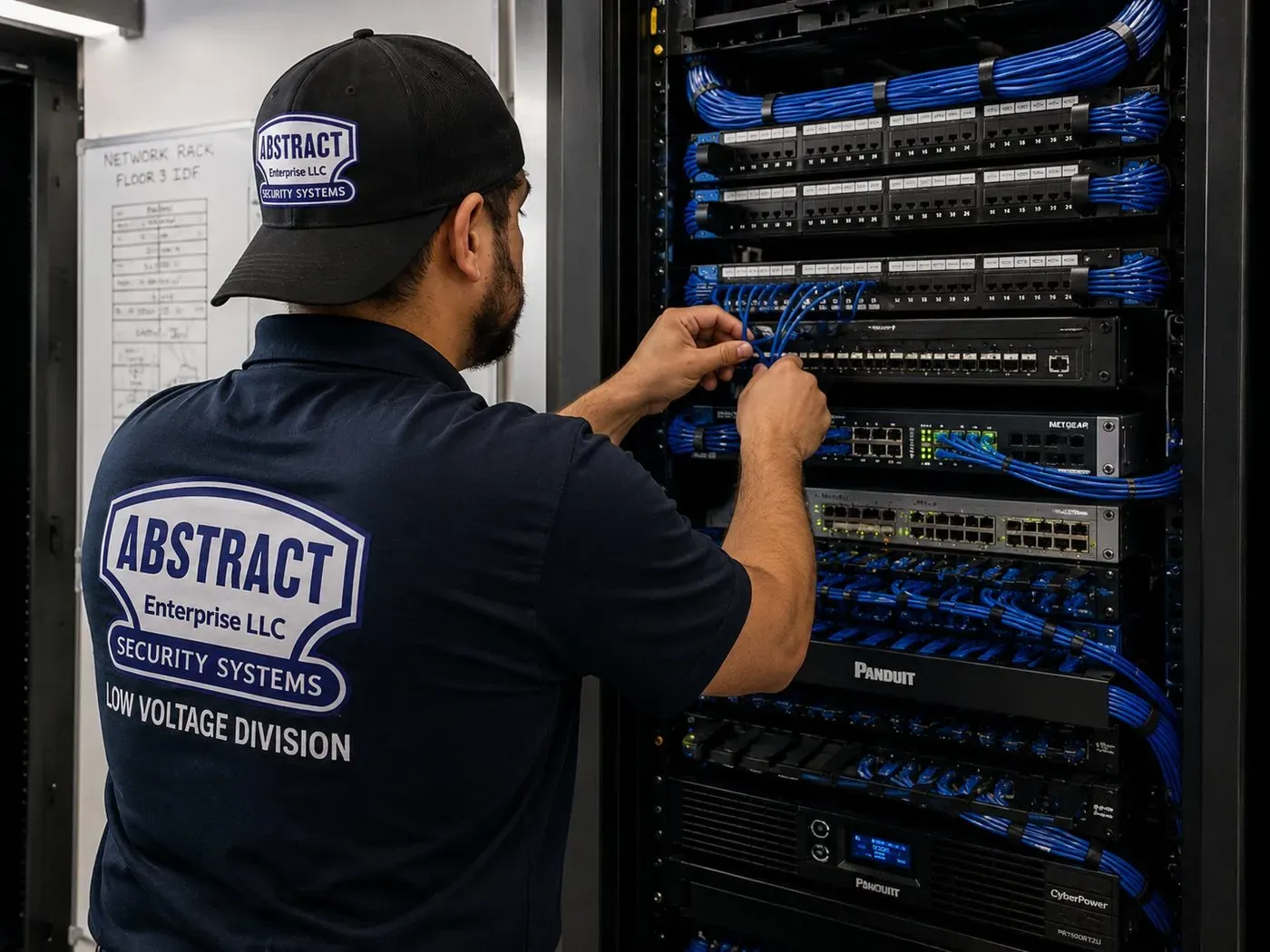
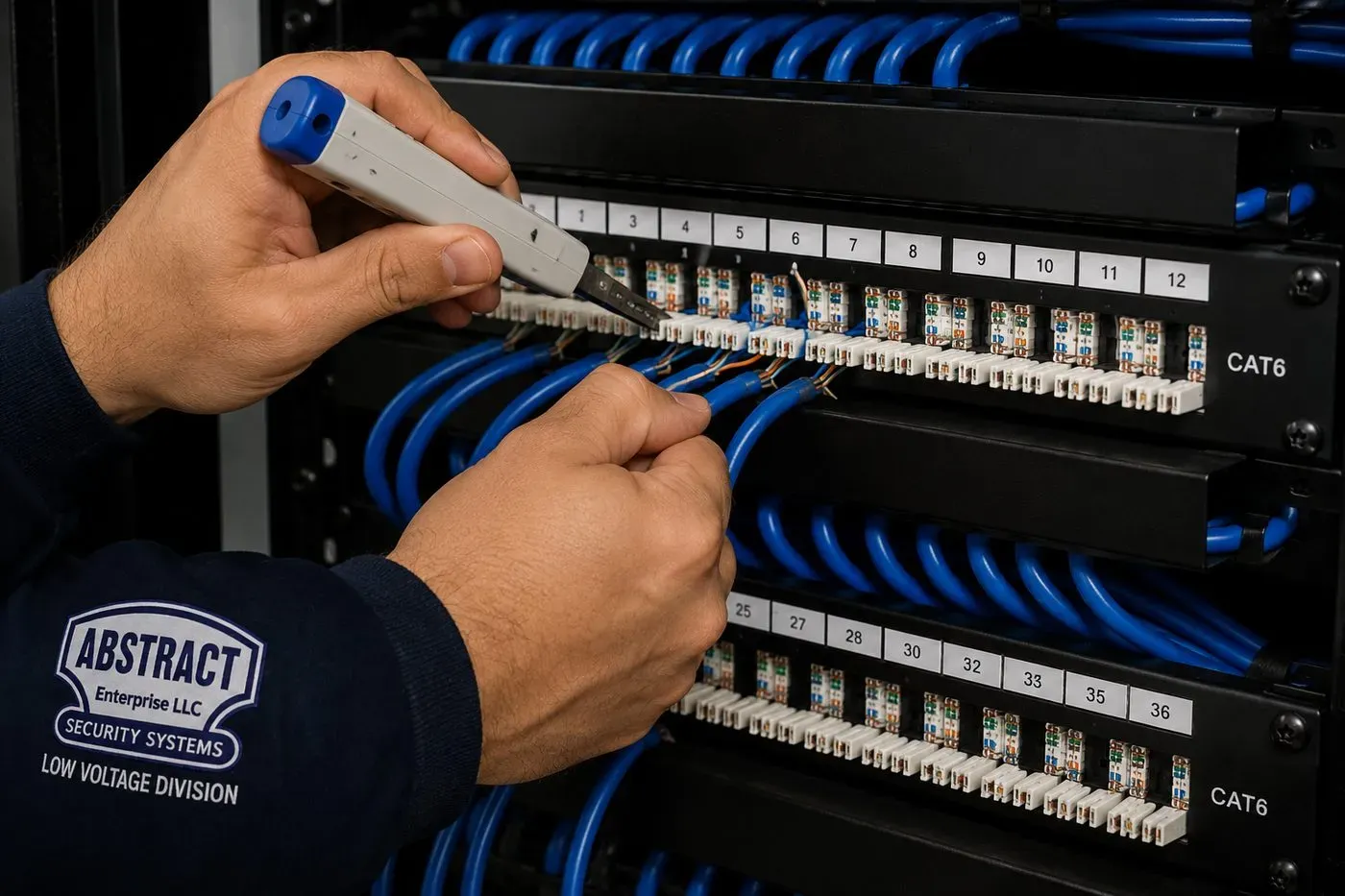
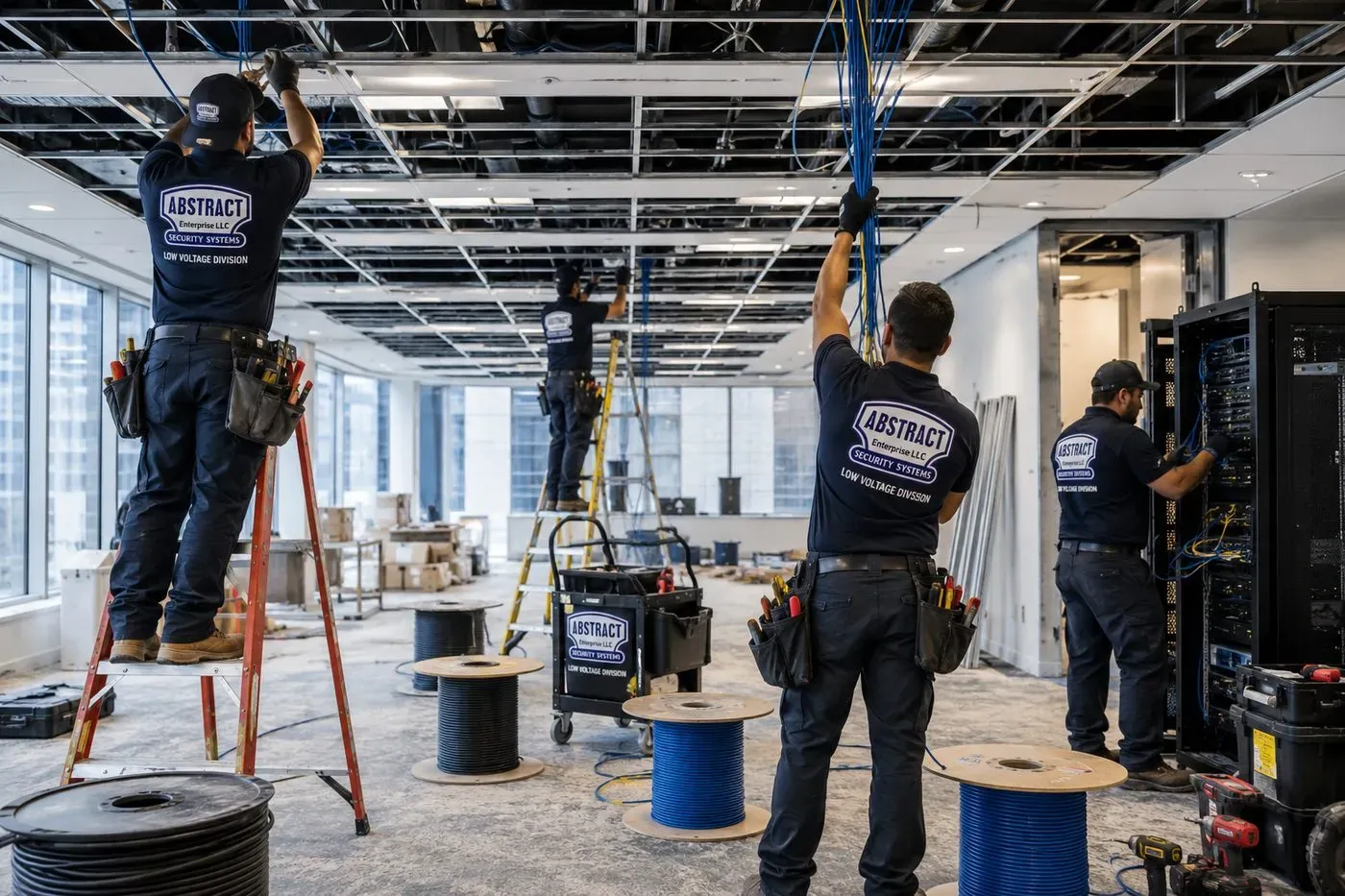
Category cable, HDBaseT runs, fiber where distances demand it, recessed media boxes and labeled patching at the rack. This is the part we do ourselves under our New York State license; the power circuit is coordinated with a NYC licensed master electrician.
Walls installed by someone else that no longer behave: mismatched panels after a replacement, a controller nobody has the password to, a menu stuck on last year's prices. We document what is there, recover access where the owner can prove ownership, and fix or rebuild.

Queens commercial space comes in a handful of recognizable shapes, and each one decides where a wall can hang, how cable reaches it and who has to approve the work.
Flushing's Tangram mall runs a second-floor food court that Grub Street reported in April 2026 as booming while other New York food halls closed, and New World Mall in downtown Flushing has its own food court. Stalls here sit under a shared ceiling, on the landlord's power and often the landlord's network, with mall rules on working hours and on what may hang over the common aisle.
The typical Roosevelt Avenue, 37th Avenue, Steinway Street or Jamaica Avenue shop: a ground-floor store under one or more floors of apartments. Walls are frequently masonry party walls, ceilings may be pressed tin or plaster above a dropped grid, and the cellar is the only practical route for cable.
Glass towers such as One Court Square, the 50-story office tower in Long Island City, sit a few blocks from former factories converted to offices and studios. Towers bring raised standards for contractor paperwork and freight elevators; conversions bring concrete ceilings, steel columns and long exposed runs.
Kaufman Astoria Studios on 36th Street and Silvercup Studios on 22nd Street in Long Island City host film and television production. Production offices and support spaces in and around studios like these are where monitor walls and playback screens get moved and re-patched from one show to the next.
Queens College on Kissena Boulevard in Flushing and St. John's University's Queens campus off Utopia Parkway are the largest campuses in the borough's center. Work in buildings like these goes through facilities departments with their own IT, network and scheduling rules.
One- and two-story commercial buildings along the boulevards — Northern, Queens, Hillside — with their own roofs and service, used for restaurants, banquet rooms and community halls. These give the most freedom on cable routes and the most responsibility on power, because nobody else's riser is there to share.
Concrete slabs and columns. In Long Island City conversions and newer towers we fix wall mounts to concrete with anchors rated for the load and the substrate, and where the wall is drywall over steel studs we add a backing plate or a floor-supported frame rather than trust thin-gauge studs with a tiled wall. Cable rides in surface raceway or in the ceiling plenum, and in a plenum space it must be cable rated for that space.
Masonry party walls. In older Queens storefronts the wall the owner wants is often brick shared with the next building. We drill only into the owner's side, keep anchors well clear of the neighbor's face, and bring cable down from the ceiling or up from the cellar through a single sleeve rather than chasing a channel through old brick.
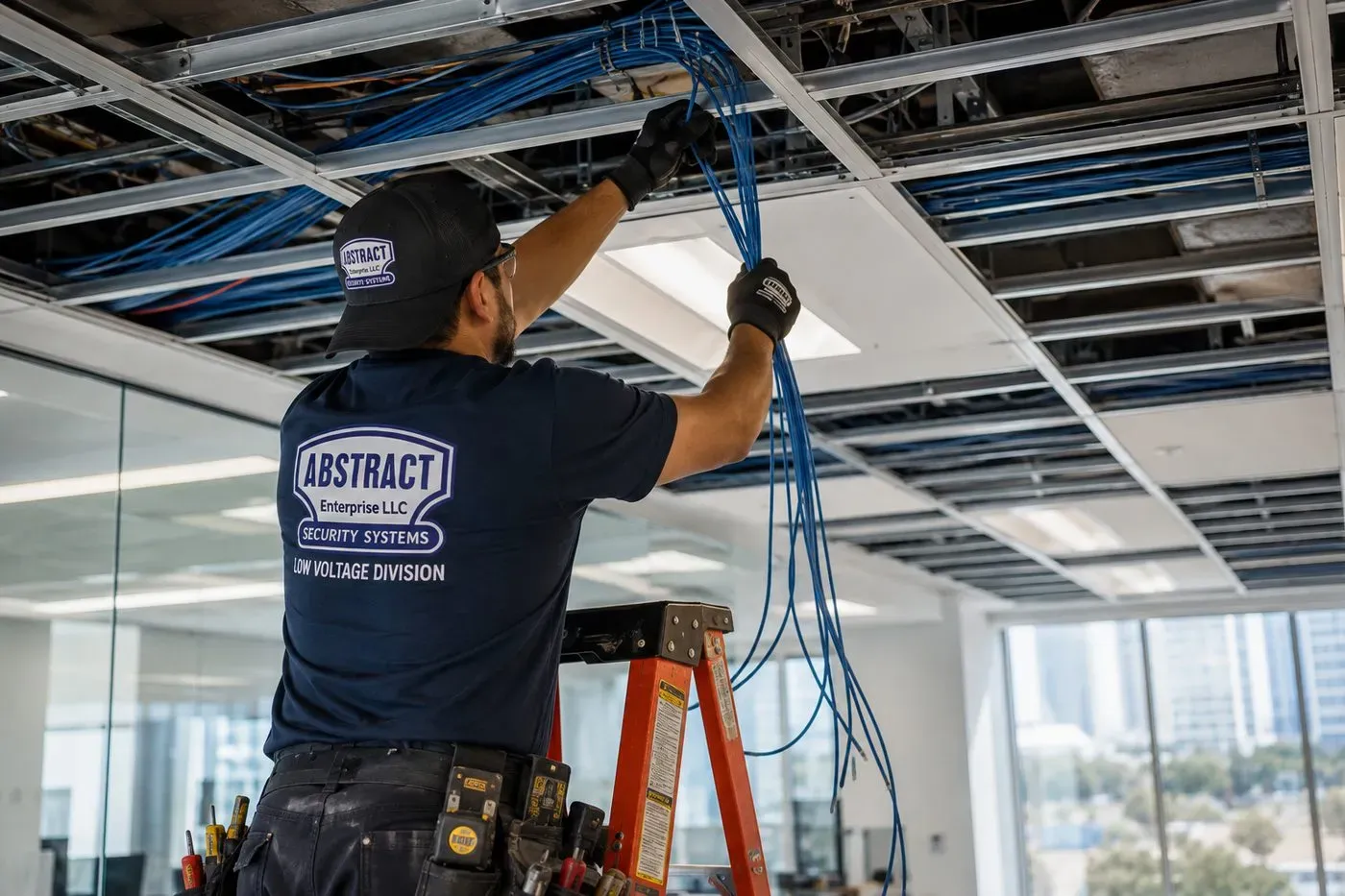
Shared ceilings in food halls. Above a food-hall stall the space is usually a common dropped ceiling carrying sprinkler pipes, ducts and other tenants' cable. We confirm with mall operations which tiles we may lift, hang cable on its own supports instead of tying it to pipes or ceiling wires, and keep heavy screens on wall or floor structure rather than on the grid.
Studio campuses. Western Queens has some of the largest production space in the city. CoStar reports that Kaufman Astoria Studios spans more than 500,000 square feet of production space with 11 soundstages totaling more than 147,000 square feet and New York's only studio backlot, and that it is billed as the first motion picture studio in the United States listed on the National Register of Historic Places; it also reports that Silvercup Studios runs 23 soundstages and about 558,000 square feet across its three lots, 13 of them at the Long Island City flagship on 22nd Street. In space like this, a monitor wall is usually temporary or semi-permanent: it belongs to a production office or a support room rather than to the building. We build these walls on rolling or floor-supported frames where the studio's rules call for it, keep every cable labeled at both ends, and leave a patch sheet so the next crew can re-route sources without tracing wires.
Retail strips. The Census Bureau's Economic Census puts total retail sales in Queens County at about $23.0 billion in 2022, roughly $10,100 per resident. Much of that passes through ordinary storefronts on the corridors described below, which is why window displays and promotional walls come up as often as menus. In these narrow shops the wall the owner wants is usually the one facing the door, the deepest point of the room; we plan cable from the cellar or the ceiling to that wall first, because it decides everything else about the layout.
Kitchens behind the counter. A menu wall over a wok line or a fryer lives in heat and grease. We mount screens out of the direct plume, choose displays rated for the temperature, leave room behind them for air to move and put the media player where a cook will not hang a towel over its vents.

These are the commercial corridors that came up most in our research for this page, and the kinds of walls their businesses ask for.
Downtown Flushing's malls, food courts, bakeries, bubble-tea shops and restaurants. Typical requests are menu walls in Chinese and English and promotional screens near mall entrances. Tangram's food hall is on 39th Avenue; New World Mall is a few minutes' walk away.
Under and beside the elevated 7 train: restaurants, sweet shops, jewelers, travel and money-transfer offices, many of them family-run. Screens here often carry a second or third language next to English, and storefront displays have to compete with the light under the el.
Cafés, bars and restaurants, including Pig Beach's Astoria location, which ran World Cup watch parties on a 28-foot jumbotron in 2026. Sports walls and bar screens that change from coffee-hour content to match-day feeds are the typical job.
More than 400 businesses on the main commercial corridor, per the Jamaica Center BID, with the LIRR's Jamaica Station nearby. The BID notes that city legislation passed in June 2022 to combine downtown Jamaica's three business improvement districts into one, so storefront and street-facing displays here increasingly sit inside a single district-wide program. Retail promotional screens and information displays for service businesses near the transit hub.
Office towers and corporate tenants — JetBlue moved its headquarters to 27-01 Queens Plaza North in 2012 — plus coworking floors and new residential towers with amenity lobbies. Lobby walls, conference-room walls and digital directories.
Neighborhood bars and restaurants that fill up for international football; NYC Tourism's World Cup guide singled out a Sunnyside bar as a home of soccer in Queens. Multi-game walls with feed switching and zoned audio.
Menu-board rules (NYC Health Department). Restaurants with 15 or more locations under the same name nationally must post calories on menus and menu boards, as noticeably as the item's name or price (Health Code §81.50 and the city's Calorie Posting guidance). The same chains must put a salt-shaker warning icon beside items with 2,300 mg or more of sodium, and since October 4, 2025 an added-sugar icon beside qualifying high-sugar items, with summonses carrying a $200 fine from January 2026. A digital menu board is a menu board; the icons belong on screen.
Sign rules (Department of Buildings). The DOB's business-sign guide sets size and illumination limits by zoning district. In its chart, up to three illuminated, non-flashing window signs totaling no more than eight square feet are exempt from the surface-area count; C3 districts permit no illuminated signs at all, and C1 and C2 districts cap illuminated signs at 50 square feet. A screen facing the street through a window can fall inside those rules, so we check the zoning district on the city's ZoLa map before designing a window display.
Electrical permits and low-voltage work. Under NYC Administrative Code §28-105.4.7, wiring that runs at under 50 volts for signaling, communication and data does not need an electrical permit when done by a licensed master electrician, special electrician or qualified person, but any point that interfaces with a control circuit switching light, heat or power circuits must be done by a licensed master or special electrician. New outlets and circuits behind a wall are general electrical work that the DOB says needs a NYC licensed master electrician and a permit.
Accessibility (ADA). In a corridor or other circulation path, a wall-mounted object whose leading edge sits between 27 and 80 inches above the floor may protrude no more than 4 inches (2010 ADA Standards §307.2). A screen on a standard tilting mount in a narrow restaurant passage can exceed that; we recess it, mount it higher or move it out of the path.

The questions below are grouped in the order the decisions usually have to be made on a Queens job: language first, rules second, cable and power third, then feeds, content and leases. Your own wall will raise a few more, which is what the walk-through at the counter or the bar is for.
We test it before anything is ordered. At the site visit we take the longest dish name in each language the owner wants, set it at the size the proposed screen would show it, and hold a printed or tablet mock-up at the counter while someone reads it from where the line actually forms. If the hardest script fails, the answer is a bigger screen, fewer items per slide or a second screen — not smaller text. A layout that only works in English is the mistake this test exists to catch.
It depends on how customers order. Where most of the queue reads one language and a minority another, a single bilingual layout per screen keeps everyone on the same item number and avoids confusion at the register. Where two groups of customers are roughly equal, separate screens per language let each layout breathe and keep the font large. A third option many counters like is a fixed column of item numbers and prices with the descriptions alternating language every few seconds; it works if the price never moves and the cycle is slow enough to read once.
The owner supplies or approves every word; we never machine-translate a menu and publish it. Our part is technical: making sure the media player has fonts that contain every character in the menu, so a dish name does not turn into empty boxes, and that the content software handles right-to-left text if Arabic or Urdu is involved. Before handover we put every slide on the wall and ask a staff member who reads that language to check it line by line, then save that version as the master copy.
Recent phone cameras are good enough for a menu wall if the pictures are taken with care: daylight or a bright, even light, a plain background, the dish shot from the same angle each time, and the photo cropped to the shape the template uses. What ruins menu walls is not the camera but inconsistency — twenty photos taken under twenty different lights. We give owners a one-page shooting guide with the exact frame size the template expects, and we drop any photo that is too small to fill its space sharply rather than stretch it.

Yes. The city's rule covers menus and menu boards for restaurants with 15 or more locations under the same name or ownership, and its guidance says calorie information must be as noticeable as the item's name or price. A digital board is still a menu board. We build the calorie figure into the same template line as the name and price, in the same or larger type, so it cannot be dropped when someone edits a price on a phone at closing time.
We do not design it that way, and we advise against it. The Health Department's sodium rule requires the warning icon next to each item with 2,300 mg or more of sodium, and the added-sugar rule that took effect on October 4, 2025 requires an icon next to qualifying items plus a written warning; summonses carry a $200 fine from January 2026. The safe layout keeps the icon beside the item on whatever slide shows that item and its price, and keeps the warning statement on screen whenever those items are. If a chain's brand team supplies the templates, we check them against the rule before they go live and point out gaps; the final compliance call belongs to the operator and the Health Department.
Under the city's calorie posting rule, restaurants with fewer than 15 locations do not have to post calories; the sodium and added-sugar icons are tied to the same chain threshold. Many independents still show item numbers, photos, spice levels or allergens on their walls because customers ask for them, and those are worth building into the template once rather than adding by hand later. If you franchise or expand past the threshold, the template already has a place for the numbers.
The DOB's business-sign guide says a permit is not required for certain small signs, including wall signs of no more than six square feet, and that anything larger needs one; even signs that need no permit must still comply with zoning. Its zoning chart also exempts up to three illuminated, non-flashing window signs totaling no more than eight square feet from the surface-area count. A typical 55-inch display is well over six square feet of screen, so a street-facing window display of any real size deserves a check against your district's rules on the city's ZoLa map before it is ordered. We do that check and tell you in writing when a sign permit, a licensed sign hanger or a registered design professional is needed.
The DOB guide treats flashing signs separately from illuminated ones, does not permit illuminated or flashing signs at all in C3 districts, and says illuminated signs that change periodically to show the time, temperature or similar information are not considered flashing. It does not give a simple yes or no for full-motion video in a window, and we do not pretend it does. Our default for a street-facing screen is content that changes on a slow cycle rather than constant motion and strobing, and for anything more ambitious we recommend a permit expediter or registered design professional confirm the plan with the DOB first.
Brighter than any television. Ordinary indoor displays wash out in direct afternoon sun on a south- or west-facing window, which is why manufacturers sell separate high-brightness window models with anti-glare glass and thermal designs meant for sun on the face of the panel. We check which way the window faces, whether an awning or the elevated tracks shade it, and the hours the store is open, then choose the panel and set a brightness schedule so it is readable at noon without glaring into apartments across the street at night.
Yes, but part of that job belongs to an electrician. The keypad, its low-voltage wiring and the commands that turn screens and switchers on and off are low-voltage work, and NYC Administrative Code §28-105.4.7 exempts wiring under 50 volts for signaling, communication and data from an electrical permit when a licensed master electrician, special electrician or qualified person does it. The same section makes an exception for any point that connects to a control circuit switching light, heat or power circuits: that connection may only be made by a licensed master or special electrician. So we wire and program the keypad and the AV side, and your electrician makes the connection to the lighting controls, with both trades working from one drawing.
Several ways, and we pick the one the landlord will accept. If the stall has its own internet service, the player sits on the stall's own router on a wired port. If it has none, a small cellular router dedicated to the screens is often simplest. If updates are rare, the player can run entirely from local storage and be updated by USB or by a laptop on site. What we avoid is a player that depends on a guest network whose password changes without notice, because a changed password silently stops every update until someone notices.
Usually, and it is often the best route. In a mixed-use storefront the cellar ceiling is open framing or exposed joists, so cable can run from wherever the cable box, network and player live to a point directly below the wall and come up through one sleeve. We keep low-voltage runs off the building's electrical and gas lines, seal every floor penetration with a listed firestop product, and stay out of the residential stairs and halls unless the landlord asks for a route through them and approves it in writing.

Yes, that is what a video wall processor or a matrix switcher with wall modes is for. Each panel takes its own source most of the night, and a preset joins two, four or all panels into one picture when the match everyone came for starts. We program the presets the bar actually uses — “four games”, “two plus one big”, “one game across the wall” — onto buttons on a tablet or wall keypad behind the bar, so staff never have to open a panel menu with a remote.
The audio is switched separately from the video. Each source's sound goes into a small digital audio matrix, and each speaker zone — the bar, the back room, the patio — is set to follow one source. On a busy night the back room can listen to the cricket while the front bar listens to the football, and the rest of the screens stay silent with captions on. That is also the cleanest way to keep the sound level under control for neighbors upstairs.
Because the feeds take different paths. A cable or satellite box, a streaming app and an over-the-air antenna each add their own delay, and two streaming apps carrying the same match rarely agree. A video wall cannot remove that delay. What we can do is make sure every screen showing the same game is fed from the same source through the switcher, rather than from separate boxes, so the whole room cheers at the same moment and nobody's phone spoils the goal for the rest.
Yes. Presets can be scheduled as well as pressed. A wall can open in the morning with a European match across all panels, switch at a set time to a split layout for afternoon games, and change again for an evening broadcast, with the audio zones following each change. Staff can still override any preset from the tablet if a match runs into extra time. For venues in Queens that draw fans of sports played in many time zones, a weekly schedule set once saves someone re-patching screens all day.
One for every different game you want on screen at the same time, plus one spare if you never want a dead panel on a big night. A four-panel wall that shows four separate matches needs four sources; a wall that rarely shows more than two games needs two, and the rest of the panels can carry menus, promotions or the same game. The subscription side — which services, which commercial licenses for public viewing — is between the venue and its providers; we build the wall around whatever boxes and apps the venue is entitled to use.
Yes, with role-based accounts. Most content systems for menu boards separate the right to change availability from the right to change prices, layout or language text. We give counter staff a limited account, often on a tablet or phone, that can grey out or hide an item for the rest of the day, while price and template changes stay with the owner and one manager. The sold-out flag clears itself at closing or the next morning, so the full menu returns without anyone remembering to switch it back.
Yes. Most content systems let one master template drive several walls while each location keeps its own price list, specials and opening-hours schedule. A Flushing branch and an Elmhurst branch can show the same layout and photos, with prices and a few local items that differ. Changes to the design are made once and flow to every wall; a price change at one location stays at that location. Keep in mind that the city's calorie rule turns on a chain having 15 or more locations, so a small group does not trigger it by sharing a template.
Often. Many point-of-sale and kitchen display systems offer an order-status screen that runs in a web browser or on a small device, and that can be one zone of the wall or a separate screen beside it. Whether it works depends on your POS provider, so we ask for the system name and check its documentation before promising anything. In busy food-hall stalls this one screen saves staff from shouting numbers over the noise, which is why we usually plan a place for it even when it is added later.
Often, yes. A floor-supported video wall frame or a freestanding stand carries the panels on its own feet, with at most a small tie-back to stop it tipping, which some landlords accept where they refuse anchors. Ceiling drops are another option where the structure above is accessible and the landlord agrees. We read the lease clause or the mall's tenant rules with you, propose the least invasive method that is still safe, and put the fixing method in the request we send to the landlord, so the approval covers exactly what we will do.
It comes with you if you want it to. Commercial panels, mounts, players and switchers are reusable; cable that has been run inside the walls or ceilings usually stays behind, along with recessed boxes. Many leases require the tenant to restore the wall when leaving, so we keep a record of every fixing and penetration at installation, which makes removal and patching straightforward. If the next tenant wants to keep the screens, that is a deal between you, the landlord and them; we can transfer the content account and logins cleanly either way.
If the big screen is only needed for a few weeks, renting is usually the better answer. The large outdoor screens Queens saw during the 2026 World Cup — 6sqft reported a 30-foot LED screen at the Queens Night Market and a 16-by-9-foot screen at Queens Borough Hall — are the kind of thing event companies bring in on a trailer or truss and take away afterward. A permanent wall makes sense when you will use it most weeks of the year. We are happy to plan the power, sources and audio for a rented screen so it connects to your existing system on the night.
Only if it is built for outdoors. Outdoor-rated LED cabinets and outdoor displays are sealed against rain and dust, cooled for sun on the face and bright enough to compete with daylight; an indoor television under an awning is not, and condensation and heat shorten its life. Outdoor LED on our published Queens list is $4,725 to $8,925 per square meter. We also plan the cable entry from the building, weatherproof every connection, put outdoor power on protected circuits through your electrician, and set the volume and brightness with the neighbors' windows in mind.
Yes, with a split layout and separate permissions. The content software divides the wall into zones; the building manager can publish to the notice zone and the tenant's marketing team to the brand zone, and neither can touch the other's area. In Long Island City lobbies that serve several tenants, we also set a priority override so an emergency or service notice from management takes over the whole wall when needed.
That is the reason to build the monitor wall around a matrix or a video-over-IP system instead of plugging each source into its own screen. Sources are encoded once and any of them can be sent to any display or combination of displays from a control page. When the office moves to the next show, the wall is re-labeled rather than re-cabled, which matters in western Queens production space where layouts change often.
Yes. The wall's processor can reserve a band or a separate panel for a second-language text feed typed or spoken into captioning software by an interpreter, while the speaker's camera or slides fill the rest. For halls and worship spaces in Queens that serve two or three language groups at the same event, this keeps everyone watching the same wall instead of switching the whole picture from one language to another every few minutes. We set up the interpreter's laptop connection and a preset that brings the translation band in and out with one button.
Usually, once the university's IT team approves the set-up. Campus networks such as those at Queens College or St. John's are managed centrally, so the player has to be registered and placed on whatever network segment IT assigns. After that, the content system can give the department its own publishing account limited to its own screens, while IT keeps control of the devices themselves. We work through the facilities and IT offices' process rather than around it, which is slower at the start and far smoother afterward.
Yes. Commercial displays can lock their buttons and ignore infrared remotes, and the controller or player can be the only device allowed to change inputs or power. In shared lobbies and amenity rooms we enable those locks, hide the player in a recessed box or a locked cabinet, and leave the override in the hands of the building manager. It prevents a familiar lobby-wall problem in shared buildings: a screen someone switched to the wrong input that nobody else knows how to switch back.
We are not tied to one manufacturer. These are the equipment families we specify most often for Queens walls, and where each fits.
Commercial LCD tiles built to sit edge to edge, with thin bezels and calibration for color matching across the wall. The workhorse for two-by-two and three-by-three walls in restaurants, bars and lobbies where viewers stand a few meters away.
Seamless walls built from LED cabinets with no bezels at all, chosen by pixel pitch for the closest viewing distance. Suited to large lobby features and event spaces; heavier, more power-hungry and more expensive per square foot than LCD.
Commercial displays rated for long daily hours and mounted in portrait orientation, usually three to six in a row behind a counter. Each can carry its own section of the menu or all of them can play one tall layout.
Displays engineered to stay readable with sun on the glass, with thermal management for a hot window bay. Mounted on floor stands or ceiling drops behind the window so the facade is untouched.
Small dedicated players or system-on-chip panels that run scheduled playlists from local storage, with cloud or on-site management. We set them up so the owner, not the installer, controls the account.
The hardware that splits, joins and routes sources across panels: wall controllers for one-picture-across-many, HDMI matrices for bars with several boxes, and video-over-IP encoders and decoders for larger or changing layouts.
HDBaseT extenders over category cable for runs too long for HDMI, fiber where distance or interference demands it, and recessed media boxes behind the panels so connectors and power stay inside the wall line.
Pop-out or push-to-release mounts that let any single panel be serviced without taking down its neighbors, and floor-supported frames where a wall cannot carry the load or a landlord will not allow fixings.
Small digital audio matrices, amplifiers and wall keypads or tablets so staff can pick which game is heard in which part of the room, and one-button presets for opening, closing and match-day layouts.
For most Queens restaurants, bars and small lobbies, tiled LCD is the better value: it is sharper up close, cheaper per screen, lighter, and easy to replace one panel at a time. Its weakness is the thin seam between panels, which matters for a single big picture and hardly at all for menus, where each panel usually carries its own section anyway.
Direct-view LED earns its higher price where the wall must be seamless, very large or unusually bright: a lobby feature, an event room, a showroom. Pixel pitch is chosen from the closest point anyone will stand, and the cabinets need a sturdier structure, more power and more ventilation than LCD. We will tell you plainly when LED would be money spent on something your customers will not notice.

Google's AI Overview could not be captured by our research tools for this edition, so this section tests the claims that feed those summaries instead: published 2026 cost guides from LED vendors, and owner and installer comments in Reddit's commercial-AV and digital-signage communities. Each claim is quoted or summarized from its source, then checked against how a Queens job actually runs.
A 2026 cost guide from an LED supplier puts a complete package at anywhere from $9,500 for an entry-level indoor wall to more than $200,000 for premium MicroLED. The low end of that range is real for what it describes, which is hardware for a small indoor wall.
What it does not describe is a finished wall in a Queens storefront or lobby: a mounting structure suited to the substrate, a new circuit from a licensed electrician, low-voltage cabling, a controller, content set-up, calibration and the paperwork a landlord or mall asks for before anyone drills. On our published Queens list, a 2.5 mm direct-view LED wall is $36,750 to $57,750 installed.
The useful way to read an entry-level number is as a floor for hardware, not a budget for the project. If a quote is near that figure, ask what is missing from it before comparing it to anything else.
One digital-signage vendor's 2026 guide lists exactly that: a 10-by-5-foot P2.9 indoor kit with processing at roughly $11,000 to $15,000. To its credit, the same table lists what is not in the box — wall structure, power circuits, installation and calibration.
Those missing items are where Queens costs come from. A food-hall stall may need the landlord's approval and an evening work window; a mixed-use storefront may need the cable brought up from the cellar; a converted loft in Long Island City may need a frame bolted to concrete because the drywall cannot carry the cabinets.
Kits are not a bad idea for every buyer. We install customer-supplied equipment at labor-only rates, and we will tell you before the visit whether a kit you are looking at suits the wall you have.
This is the most repeated shortcut in forum threads, and the replies in r/digitalsignage and r/CommercialAV push back hard: consumer televisions are not built to run all day with a static image, and commercial displays rated for 16 or 24 hours a day are the usual recommendation. One commenter adds that some manufacturers shorten consumer-TV warranties when the set is used commercially.
We cannot verify that warranty claim across every brand, so treat it as a question to put to the seller, not a fact. What we do see is that menus are mostly still images, shown for long hours, often in a warm room near a kitchen — the conditions commercial displays are designed for.
For a single bar television watched a few nights a week, a good consumer set can be fine. For a wall that is the menu, the cost of a dark screen at lunch is higher than the price difference.
Another 2026 guide prices LED walls installed at roughly $1,400 to $2,400 per square foot for fine pitch (P1.5 to P1.9) and $700 to $1,300 for P2.5 to P3. Square-foot figures are a reasonable way to compare large walls with each other.
They break down on small walls, which is most of Queens. A counter menu or a two-by-two bar wall carries nearly the same fixed costs — site visit, electrician coordination, controller or player, programming, travel and handover — as a much bigger wall, spread over far fewer square feet.
That is why our Queens pricing is set out by configuration, not by area, and why the cost per square foot of a small wall will always look high next to a lobby-sized one.
In a Reddit thread on video wall pricing, an installer estimated that the mounting structure alone for a large wall could reach $20,000. That is for big, heavy walls, but the direction is right: structure is not an afterthought.
Our own published range for mounting structure and custom fabrication is $1,500 to $9,000, and where a Queens job lands inside it depends on the wall behind the screen — concrete, old brick, steel studs, or a landlord who will only allow a floor-supported frame.
Pop-out mounts cost more than fixed ones and are worth it on any wall of four or more panels, because they let one panel be serviced without taking down the others.
Generic signage advice often suggests that a second language is a matter of turning on auto-translate in the content software. In a borough where more than half of residents speak another language at home, customers notice a bad translation immediately.
The technical part is real — the player needs fonts with every character, and right-to-left scripts need software that handles them — but it is the smaller part. The bigger part is that the owner has to approve every line, and text in some scripts needs more height to stay legible at the same distance.
We build multilingual templates and test them on the wall with a reader of each language before handover. We do not write or translate menus.
The work splits along a line that New York City draws in law. New outlets and circuits need a NYC licensed master electrician and a permit; low-voltage signaling and data wiring under 50 volts is exempt from the permit when done by a licensed master electrician, special electrician or qualified person, under Administrative Code §28-105.4.7.
A video wall needs both sides done well, and each trade is better at its own side. An electrician who does not plan for recessed boxes and cable paths leaves outlets in the wrong place; an AV installer who extends power with cords breaks the electrical rules.
Our approach is to run the low-voltage side ourselves under our New York State license and coordinate the electrical side with a licensed master electrician, with the outlet locations drawn on the same plan.
Many Queens leases and mall agreements say what a tenant may fix to walls and ceilings. A short call before you agree to those terms, or before you order screens, can save a second round of approvals.
Describe the space in a sentence or two — a stall in a Flushing food hall, a bar on Steinway Street, a reception in Court Square — along with how wide the wall is, which scripts the menu uses or how many games run at once, and whose permission the work needs. We reply in writing the same business day using the published Queens figures. Prefer a conversation? Ring (347) 434-6392.
Received. A technician is reading your Queens details and will phone you today. If it cannot wait, the Queens line is (347) 434-6392.
A row of three menu screens and a sixteen-panel lobby wall follow the identical sequence. Content and permissions come early because in Queens they, more than the panels, decide what can be built.
Three photos β the wall, whatever feeds your screens now, and the nearest outlet β plus a short call about the space, the landlord and your opening hours.
We mock up the longest menu line in every language at the proposed size, or walk the bar to see which tables see which screen, before choosing hardware.
Price from the published Queens list, a wall drawing with outlet locations for the electrician, a sign-rule check for window displays, and a certificate of insurance for the landlord or mall.
A NYC licensed master electrician installs the outlets; we pull, label and test every low-voltage run and set recessed boxes behind the panels.
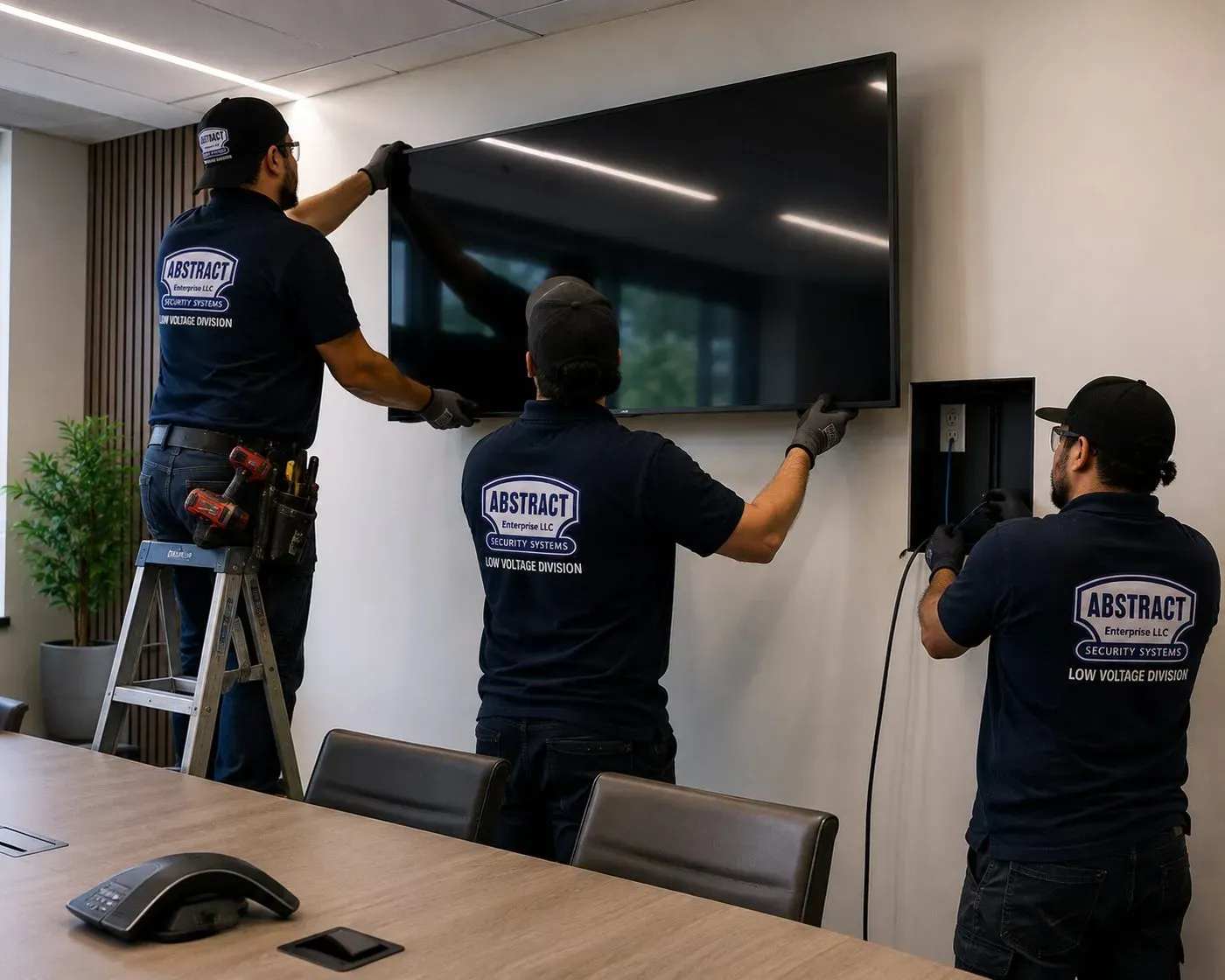
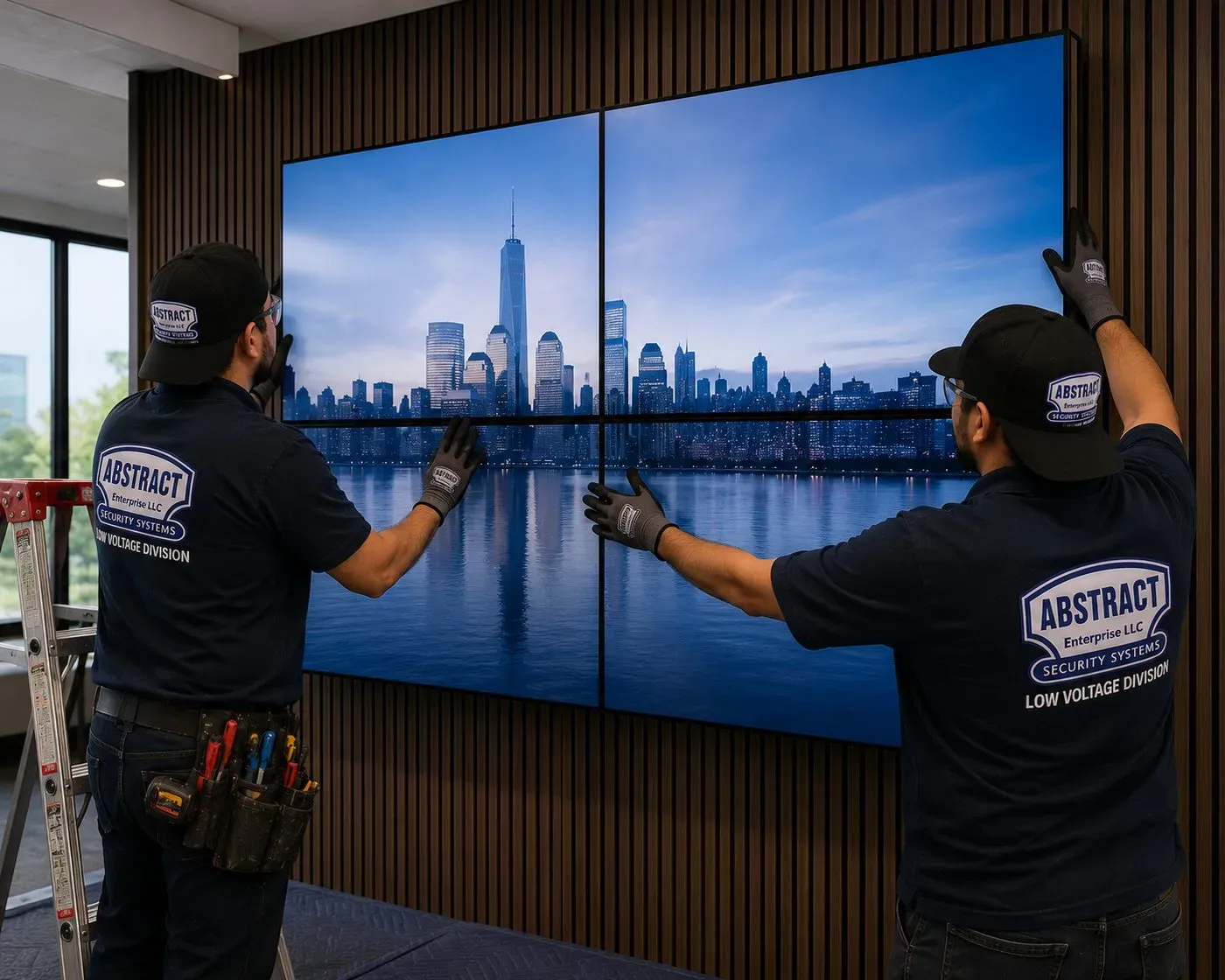
Mounts fixed to the right substrate or a floor frame, panels hung, leveled and aligned, and the controller or matrix racked and cooled.
Templates loaded and checked by a reader of each language; game presets and audio zones programmed onto a simple control for staff.
Owner logins changed by the owner, a one-page operating sheet in the language staff prefer, and a test of every preset with the person who will use it.

Walls that are looked after last longer and fail less often in the middle of service. The routine we leave with Queens owners is short. Wipe the screens with a dry microfiber cloth, never with kitchen degreaser, and keep anything from leaning on or hanging over them. Once a week, glance at the wall at opening to confirm the schedule switched it on and the current menu is showing. Once a month, check that the vents behind the player and the panels are not blocked by boxes, towels or grease build-up. After any power cut, walk the wall and check every panel came back on the right input. And before a big night — a festival week, a final, a private event — press every preset once so surprises happen in the afternoon, not at kick-off. Anything outside that routine is a call to us.
Our crews cover all of Queens, from the Rockaways to College Point. The six places below turned up again and again while researching this page, and between them they show most of the ways screens get used in the borough: food courts, open-air screenings, studio lots and a busy shopping avenue.
Flushing's largest shopping mall, whose second-floor food hall Grub Street described in April 2026 as a hit while food halls elsewhere in the city closed — the kind of setting where stall menu walls compete for attention.
Home of the Queens Night Market, which screened the 2026 World Cup final on a 30-foot LED screen outside the New York Hall of Science, according to 6sqft.
Hosted a free World Cup final watch party on its front lawn with a 16-by-9-foot LED screen in July 2026.
The historic Astoria studio complex on 36th Street, opened in 1920 and home to Sesame Street since the early 1990s, with the museum next door.
Opened in 1983 on the site of the former Silvercup bread bakery, with two Long Island City lots whose production offices and support spaces are typical homes for monitor and playback walls.
More than 400 businesses on a corridor its BID calls one of New York City's most vibrant shopping destinations, served by the Jamaica Center BID near the LIRR's Jamaica Station.
We also serve Astoria, Sunnyside, Woodside, Jackson Heights, Elmhurst, Corona, Forest Hills, Rego Park, Kew Gardens, Richmond Hill, Ozone Park, Howard Beach, the Rockaways, Bayside, Whitestone, College Point, Fresh Meadows, Hollis, Queens Village, Ridgewood, Maspeth and Middle Village, and the neighboring Brooklyn, Manhattan, Bronx and Nassau County.
Configuration prices below are our published video wall installation ranges at the Queens area rate, which is 1.05 times our Brooklyn base. They are installed prices for the wall and its mounting, cabling and set-up; sales tax is added, and the exact figure follows a site visit. Equipment add-ons and annual services are shown at the rates published across our video wall pages.
| Configuration or item | Queens price | Typical Queens use |
|---|---|---|
| 2x2 LCD wall (55-inch panels) | $12,600 – $18,900 | Restaurant or café feature wall, small lobby, conference room |
| 3x3 LCD wall (55-inch panels) | $25,200 – $39,900 | Large counter menu wall, sports bar, office reception |
| 4x4 LCD wall (multi-game) | $44,100 – $68,250 | Sports bar showing up to sixteen feeds or one giant picture |
| 2.5 mm direct-view LED (about 110-inch equivalent) | $36,750 – $57,750 | Seamless feature wall in a hall, lounge or showroom |
| 1.9 mm direct-view LED (about 138-inch equivalent) | $57,750 – $89,250 | Long Island City office lobby, flagship retail |
| 1.5 mm direct-view LED (about 165-inch equivalent) | $89,250 – $147,000 | Close-viewing lobby or showroom wall |
| Outdoor LED (per square meter) | $4,725 – $8,925 | Patio or courtyard screens |
| Video wall controller | $2,500 – $15,000 | Joining and splitting sources across panels |
| 16x16 HDMI matrix | $4,500 – $12,000 | Multi-game routing for bars |
| Mounting structure or custom fabrication | $1,500 – $9,000 | Frames for concrete, masonry or no-fix leases |
| Content management system (annual) | $1,200 – $5,000 a year | Scheduling and remote menu updates |
| Maintenance contract (annual) | $2,400 – $9,000 a year | Scheduled inspections and priority response |
| Service or repair visit | $195 an hour, 3-hour minimum ($585) | Diagnosis and repair; parts quoted separately |
How the Queens figures are set. Our video wall ranges are published at a Brooklyn base, and each area applies a fixed multiplier for travel, parking and the typical access conditions of its buildings; Queens is 1.05. A three-by-three LCD wall published at $24,000 to $38,000 at the base is therefore $25,200 to $39,900 in Queens. Controllers, matrices, mounting structures, content subscriptions and maintenance contracts are shown at the same figures on every page because their cost does not change with the borough.
What raises a Queens price. A wall that must be carried on a floor frame because the lease forbids fixings. Masonry party walls or concrete that need a different mount. A new circuit that has to come a long way from the panel. Night or early-morning work windows in malls and food halls. A window display that needs a sign permit and a registered design professional. More live sources than the bar has boxes for. Several languages that push the wall to a bigger panel size.
What lowers it. An outlet and a clear cable path already where the wall will go. A cellar or open ceiling directly below or above the wall. Content supplied in final form by the owner or a brand team. A wall size chosen after the readability test rather than before it, so nothing has to be changed after the screens arrive.
Items without a published figure — sign-permit filings, translation, electrician's work, and labor-only installation of customer-supplied screens — are quoted after the site visit. For single screens rather than walls, see TV mounting prices in Queens.
Three facts are enough to start a written estimate: how wide the wall is, what kind of business it serves, and how many scripts or live games it has to carry. Extras that only your building needs, such as a floor frame or a night window, appear as separate lines so nothing is hidden in a total.
A two-by-two wall of 55-inch commercial LCD panels with mounts, cabling, a media player and set-up, at $12,600 to $18,900 in Queens. Suits a restaurant menu or café feature wall, or a small lobby. Includes a bilingual template built and tested on the wall with a reader of each language.
A three-by-three LCD wall at $25,200 to $39,900, for a long counter menu, a bar that shows one big picture or several games, or an office reception. Add a 16x16 HDMI matrix ($4,500 to $12,000) when a bar needs to route many boxes to many screens.
A 1.9 mm direct-view LED wall of about 138 inches, at $57,750 to $89,250, for a Long Island City lobby, a showroom or a flagship retail space where bezels would break up the picture. Includes controller set-up and calibration.
We mount, cable and program customer-supplied displays, players and switchers on a labor-only basis, priced after we see the equipment list and the wall. Two cautions before you buy. Check that the screens are sold for commercial use and long daily hours if they will be your menu, and check the warranty terms for commercial installation. And confirm the mounting pattern and weight of each panel so the right mounts are ordered; we review a parts list with you before you order.
TV installation in Queens · TV mounting prices · AV and sound systems · soundbars · Sonos
low-voltage installation · structured cabling · Cat6 installation · fiber optic runs · network installation
commercial cameras · access control · alarm systems · commercial security systems
Flushing soundbars · Long Island City fiber · Astoria Sonos · Flushing Cat6 repair
Most Queens restaurants and bars that add a video wall also want cameras over the register and the door, and the same cellar route can carry both; we quote them together when asked.
The step that saves Queens owners the most money takes ten minutes and costs nothing. Before we price a menu wall, we ask the owner for the longest dish name on the menu in every language they want to show, and the price and any icons that go with it. We set that line at the size the proposed screen would display it, put the mock-up on the counter, and walk to where the queue actually forms at the busiest hour — often out past the door of a narrow shop.
If someone at the back can read it comfortably in every script, the wall size is right. If not, we change the plan on paper: a bigger panel, fewer items per screen, or one screen per language. It is much cheaper to have that conversation with a printed sheet in hand than after four screens are on the wall and the owner discovers that the second language only works up close.
The same habit applies to sports walls, with a different test: we stand at the far end of the bar and ask which screen each table can see, and which game the owner expects each part of the room to want on a busy night. The answers decide the panel count, the number of boxes and the audio zones. Hardware is the last decision, not the first.
There is one more test we run in every Queens space with apartments above or beside it: the sound check with the doors closed. We play a match at the level the owner expects on a busy night, then step outside and, where the landlord or a neighbor allows, into the hallway upstairs. If the commentary carries, we lower the speaker level, turn speakers away from the shared wall or add a zone so only the room that wants the game hears it. A wall that keeps the neighbors happy keeps the landlord happy too, and that matters the next time the owner asks for permission to change something.
None of these tests needs special equipment — a printed sheet, a phone and twenty minutes of the owner's time. They are on every Queens site visit because they answer the questions that decide whether the finished wall gets used.
It depends on where people decide what to order. If customers make up their minds while standing in line, the screens belong where the line faces, which in many narrow Queens shops is a side wall rather than the wall behind the register. If they decide at the counter, above and behind the cashier works, as long as the bottom edge clears staff heads and equipment and the top is not so high that people strain to read it. We stand in the queue at a busy hour before choosing, and sometimes split the menu between both positions.
Yes. A QR code in a fixed corner of the menu lets customers in a long queue order ahead or save the menu to their phone. It has to be large enough to scan from where people actually stand, on a plain high-contrast background, and it should stay on screen rather than rotate away. We test it from the back of the line with a couple of different phones before handover, and we point it at a page the owner controls so it can be changed without editing the wall.
Yes. Dietary and religious marks are built into the template as icons beside each item, the same way required calorie figures or warning icons are, so they stay attached to the right dish when prices change. Which marks appear, and whether the business is entitled to use a certification mark, is the ownerβs decision and responsibility; we only make sure they display clearly and consistently in every language version of the menu.
Yes, if the wall is built on content software with a phone or web editor, and that is how we set up most Queens menu walls. Prices sit in fields the owner can edit without touching the layout, so the font, the icons and the second language stay in place. For walls that run offline, price changes are made on a laptop or USB stick instead. Either way, the owner holds the login, not the installer.
Not directly above it. Heat and grease rise from the cooking line, so we place menu screens out of the direct plume, behind the counter rather than over the range, and choose commercial displays whose rated operating temperature suits the room. We leave space behind each panel for air to move and keep the playerβs vents clear. If the only possible position is close to the cooking line, we discuss an enclosure or a different layout before installing anything.
Usually, if the wall was sized with room to spare. Adding a language means new text in every item, which takes space; on a wall that was already full, the choice is between smaller text, more slides or another screen. When a Queens owner tells us at the start that a third language may come later, we plan the template and the screen count for it, so adding it later is a content job rather than a hardware one.
Yes. The wall processor or player can place a live television picture in a window on one screen, or give one whole screen to a live feed while the others carry the menu. Staff can switch it off for a quiet lunch and on for a match. We keep the live picture away from prices and required icons, so a busy broadcast never covers information the customer needs to order.
Yes. A display turned to portrait needs a mount and adapter rated for portrait use, and the display itself has to be approved by its manufacturer for portrait orientation, because cooling and the internal layout are designed around one direction. We confirm both before ordering, line the screens up at the same height so the menu reads as one row, and keep the connectors reachable through a recessed box or a pop-out mount.
Technically yes, and some owners do it through advertising networks that supply players and pay per display. Two checks come first. Your lease may restrict advertising for other businesses, and the Department of Buildings treats advertising signs differently from business signs, permitting them only in certain zoning districts, which matters if any screen can be seen from the street. Inside the shop and facing customers, the main question is whether the ads crowd out your own menu.
Yes. We set up menu walls with the everyday menu as the base layout and a separate promotion zone or playlist that can be scheduled for a date range. A holiday set menu, a festival special or a match-day offer can be loaded ahead of time to start and stop on its own, and the regular menu returns automatically when it ends. Festival weeks are busy for many Queens restaurants, so we make that change something staff can schedule in a few minutes.
This page sits under the NYC video wall installation hub. Each borough, Long Island and Hudson Valley page is written for its own businesses, buildings and prices.
Video wall installation in NYC (hub) · Manhattan · Brooklyn · the Bronx · Staten Island
Video wall installation in the Hudson Valley (hub) · Westchester · Rockland · Orange County · Putnam · Dutchess · Ulster
Before anyone drills into your wall, check who they are: the about page lists the license and insurance behind Abstract Enterprises Security Systems.
We read each of the following in October 2026 while writing this page; the Queens statistics, city rules and local reporting above come from them. Prices are not from outside sources: they are our own published video wall ranges multiplied by the Queens rate.
Some sources we normally check were out of reach this time: Google's question boxes, related searches and AI Overview, Answer the Public, Bing and DuckDuckGo autocomplete, and Yelp reviews. Because we could not see them, nothing here relies on them.
When the lunch menu freezes, a tile sits on the wrong input, the bar's presets vanish the day before a final, or the window screen refuses to wake, ring (347) 434-6392. Repair calls are slotted into the next free two-hour arrival window, and a single fault is normally sorted within an hour or two of the technician walking in.
Queens jobs are dispatched by Abstract Enterprises Security Systems from 460 E Fordham Rd in the Bronx (NY 10458). Call or text the Queens line at (347) 434-6392, or send pictures of the wall, the screens and the boxes behind them over WhatsApp.
Google rating 4.7★ from 201 reviews. New York State license #12000287431. Same-day written estimates. Insurance certificates go to the landlord, mall office or managing agent ahead of the first visit.
Full terms β including 50% deposit, one-year parts-only warranty on AESS-supplied products, and the late-fee schedule β are set out in the service agreement. See our warranty page.
Revision log, October 18, 2026: page rebuilt from scratch around multilingual menu walls and multi-feed sports walls, the two requests that dominate Queens. New research covered Census language and business figures, Health Department menu icons, DOB sign and low-voltage rules, the ADA protrusion limit, the Tangram food hall and 2026 World Cup screenings. Prices were recalculated at the Queens rate of 1.05 and the service rate was confirmed.